

10 Best Kofluence Alternatives for Influencer Marketing
Managing influencer programs today goes far beyond finding creators—it requires the right influencer marketing software to streamline discovery, outreach, campaign execution, and performance tracking, especially for D2C brands focused on measurable growth. Kofluence has built a strong position with its India-focused creator network and performance-driven campaigns, but it comes with trade-offs like limited global coverage, lack of transparent pricing, a smaller review footprint, and some usability inconsistencies in workflows. These gaps are pushing many brands to explore Kofluence alternatives that offer better ecommerce integrations, clearer pricing, or more scalable global capabilities. Whether you’re evaluating influencer marketing tools for the first time or looking to upgrade your current stack, choosing the right platform can directly impact ROI and operational efficiency.
In this guide, we compare the 10 best Kofluence alternatives—including Upfluence, SARAL, GRIN, Influencer Hero, IZEA, Later, Ainfluencer, indaHash, Influencity, and Modash—to help you find the right fit.
Key Criteria for Evaluating Influencer Marketing Platforms
Core Features
Evaluation of essential influencer marketing capabilities, including influencer discovery, outreach, CRM, campaign management, reporting, and content workflows.
Pricing & Flexibility
Comparison of pricing models, subscription plans, and contract terms to match different budgets and growth stages.
Customer Reviews & Satisfaction
Analysis of user feedback from trusted review platforms, focusing on usability, reliability, customer support, and overall performance.
Pros & Cons
Review of each platform’s strengths and limitations to highlight where it performs well and where it may fall short based on different use cases.
Integrations
Review of the most important integrations (e.g., Shopify and other tech tools), highlighting what each integration enables in one sentence.
Kofluence Overview

Kofluence is an India-first influencer marketing platform that combines creator discovery, campaign execution, and performance marketing into a single solution. Positioned as an AI-led platform, it helps brands identify relevant creators, run end-to-end campaigns, and track measurable outcomes like engagement, installs, leads, and sales. With a large creator base and a growing focus on performance-driven campaigns, Kofluence is particularly popular among brands looking to scale influencer marketing with ROI visibility.
Key Features
• Extensive creator network (750K+ creators) Access a large pool of influencers across categories and tiers—from nano to celebrity—making it easier to scale campaigns within specific niches, especially in the Indian market.
• AI-powered influencer discovery & profiling Advanced matching algorithms analyze audience demographics, engagement quality, brand affinity, and content style to recommend high-fit creators.
• Fraud detection & authenticity checks Built-in tools help identify fake followers, suspicious engagement patterns, and low-quality creators to reduce campaign risk.
• End-to-end campaign management Manage the full lifecycle—from creator sourcing and outreach to content approvals, execution, and payments—within a single workflow.
• Performance-based influencer marketing (PMC model) Go beyond fixed-fee collaborations by running campaigns tied to outcomes like clicks, installs, leads, or sales, aligning spend with results.
• Real-time analytics & ROI tracking Track metrics such as engagement, reach, CPC, CPI, CPA, and conversions through a centralized dashboard for better campaign optimization.
• Creator app & collaboration workflow Influencers can apply to campaigns, submit content, and track payments through a dedicated app, streamlining communication and execution.
• Multi-platform campaign support Supports campaigns across major platforms including Instagram, YouTube, LinkedIn, Facebook, and X (Twitter).
Pricing
Kofluence does not publicly disclose pricing on its website.
• Pricing model: Custom / quote-based
• Contract type: Likely campaign-based or annual agreements depending on scope
• Campaign structures:
• Influencer Marketing Campaigns (flat-fee collaborations)
• Performance Marketing Campaigns (pay-for-results: clicks, installs, sales, etc.)
Reviews
Not available
Integrations
• AppsFlyer — Track installs, conversions, and attribution for mobile campaigns.
• Shopify — Connect influencer campaigns to eCommerce sales and revenue tracking.
• WooCommerce — Monitor influencer-driven purchases and performance across online stores.
• Branch — Create deep links and measure user journeys from influencer campaigns.
• Singular — Attribute marketing performance across channels and optimize ROI tracking.
Pros
• Performance-driven campaign model (PMC) Unlike many platforms, Kofluence allows brands to structure campaigns around actual outcomes (CPI, CPA, sales), making it more ROI-focused than traditional influencer tools.
• Strong creator base in the Indian market With 750K+ creators, it offers strong coverage for brands targeting India, including regional and niche influencers.
• Actively evolving creator and campaign workflows Continuous updates to the creator app (payments, approvals, campaign matching) indicate ongoing improvements in usability and execution efficiency.
Common Drawbacks of Kofluence
Lack of transparent pricing
No clear pricing tiers or entry-level plans make it difficult for smaller brands to evaluate affordability upfront.
Limited global coverage
Heavily focused on the Indian market, which may not suit brands looking for strong international influencer discovery.
Smaller review ecosystem
Compared to competitors, there is less publicly available feedback, making it harder to benchmark performance and reliability.
Product maturity and UX inconsistencies
Ongoing fixes and updates suggest that some parts of the platform (especially workflows and usability) may still feel less polished than more established tools.
Best Kofluence Alternatives
| TOOL | REVIEWS | BEST FOR | TRIAL INFO | PRICING | ||
|---|---|---|---|---|---|---|
1 |
|
⭐ | Influencer discovery | Book Demo | Pricing | Website |
2 |

|
⭐ | UGC creator collaborations | Book Demo | Pricing | Website |
3 |

|
⭐ | DTC creator management | Book Demo | Pricing | Website |
4 |

|
⭐ | Influencer CRM & automation | Book Demo | Pricing | Website |
5 |
|
⭐ | Influencer marketplace | Book Demo | Pricing | Website |
6 |

|
⭐ | Social media & influencer campaigns | Book Demo | Pricing | Website |
7 |
|
⭐ | Influencer discovery & outreach | Book Demo | Pricing | Website |
8 |
|
⭐ | Enterprise creator campaigns | Book Demo | Pricing | Website |
9 |

|
⭐ | Campaign management | Book Demo | Pricing | Website |
10 |

|
⭐ | Influencer discovery | Book Demo | Pricing | Website |
Upfluence

Upfluence is an all-in-one influencer and affiliate marketing platform built primarily for ecommerce brands. It is especially strong for brands that want creator discovery, outreach, affiliate management, gifting, and revenue attribution in one workflow, with particularly deep support for Shopify- and Amazon-led programs.
Key Features
• Large creator database with advanced filtering — Upfluence’s platform is built around large-scale influencer discovery, with filtering by niche, audience, engagement, geography, and social profile data to speed up creator sourcing.
• Jaice AI campaign copilot — Jaice AI helps structure campaigns, creator targeting, briefs, and outreach using real campaign data rather than functioning as a basic copy generator.
• Affiliate and ambassador management — Brands can generate promo codes, manage affiliate links, define compensation structures, and connect creator activity directly to conversions and sales.
• Strong ecommerce attribution — Upfluence’s native integrations with Shopify and Amazon are a major selling point, especially for brands that need influencer activity tied back to revenue, gifting, and customer data.
• Influential customer identification — The platform can surface creators from your existing customer or subscriber base, which is useful for ambassador recruitment and lower-friction partnerships.
• Bulk outreach and CRM workflows — Upfluence supports email outreach, campaign organization, conversation tracking, and creator relationship management in one place.
• Payment workflows — With Upfluence Pay powered by Stripe, teams can automate creator payments and centralize transaction tracking.
Pricing
• Pricing model: Upfluence uses custom pricing rather than a public fixed plan table.
• All plans are custom made. There’s a minimum full year of service you have to commit to with monthly payments. On average plans start around $1,276 - $2,000/month ($24,000 yearly)
Reviews
4.3/5.0 (Capterra)
Pros
• Excellent for Shopify and Amazon brands — Upfluence is one of the stronger options for brands that want creator campaigns directly tied to ecommerce revenue, gifting, and marketplace attribution rather than top-of-funnel awareness alone.
• Jaice AI is more operational than generic AI helpers — It is positioned as a campaign copilot connected to creator and campaign data, helping with targeting, briefs, and workflow planning.
• Influencer-from-customer discovery is a real differentiator — Upfluence can identify creators already in your customer or email ecosystem, which is valuable for ambassador, seeding, and affiliate strategies.
Cons
• Long contract commitment — Upfluence requires a 12-month minimum contract, which makes it less flexible than newer monthly options.
• Learning curve and rigid workflows — Some teams report that campaign setup can feel clunky, with limited editability once campaigns are built.
• Pricing can be steep for smaller brands — Between annual commitment and add-on costs, Upfluence can be harder to justify for lean teams or early-stage programs.
Integrations
• Shopify — Identify influential customers, manage gifting, and track creator-driven sales from your store.
• Amazon — Generate promo-code and attribution workflows for creator campaigns tied to Amazon revenue.
• Klaviyo — Enrich subscriber data with influencer insights and turn visitors or subscribers into ambassador candidates.
• Stripe — Automate creator payments through Upfluence Pay and centralize transaction handling.
• Outlook / Gmail — Sync email communication so outreach and replies stay tied to creator records and campaign workflows.
Kofluence vs Upfluence
Kofluence is more India-centric and campaign-marketplace oriented, with a strong local creator network and support for performance-led influencer campaigns inside that ecosystem. Upfluence is more ecommerce-stack oriented, with deeper support for Shopify, Amazon, affiliate tracking, customer-to-creator discovery, and CRM-based creator operations. Kofluence is better suited to brands prioritizing India reach and local creator execution, while Upfluence is the stronger fit for DTC and marketplace brands that care about tying creator activity directly to sales. Upfluence also offers a more mature integration layer for Shopify, Klaviyo, Stripe, and Amazon, while Kofluence’s clearest public integrations focus on attribution and commerce measurement tools like AppsFlyer, Shopify, WooCommerce, Branch, and Singular.
SARAL
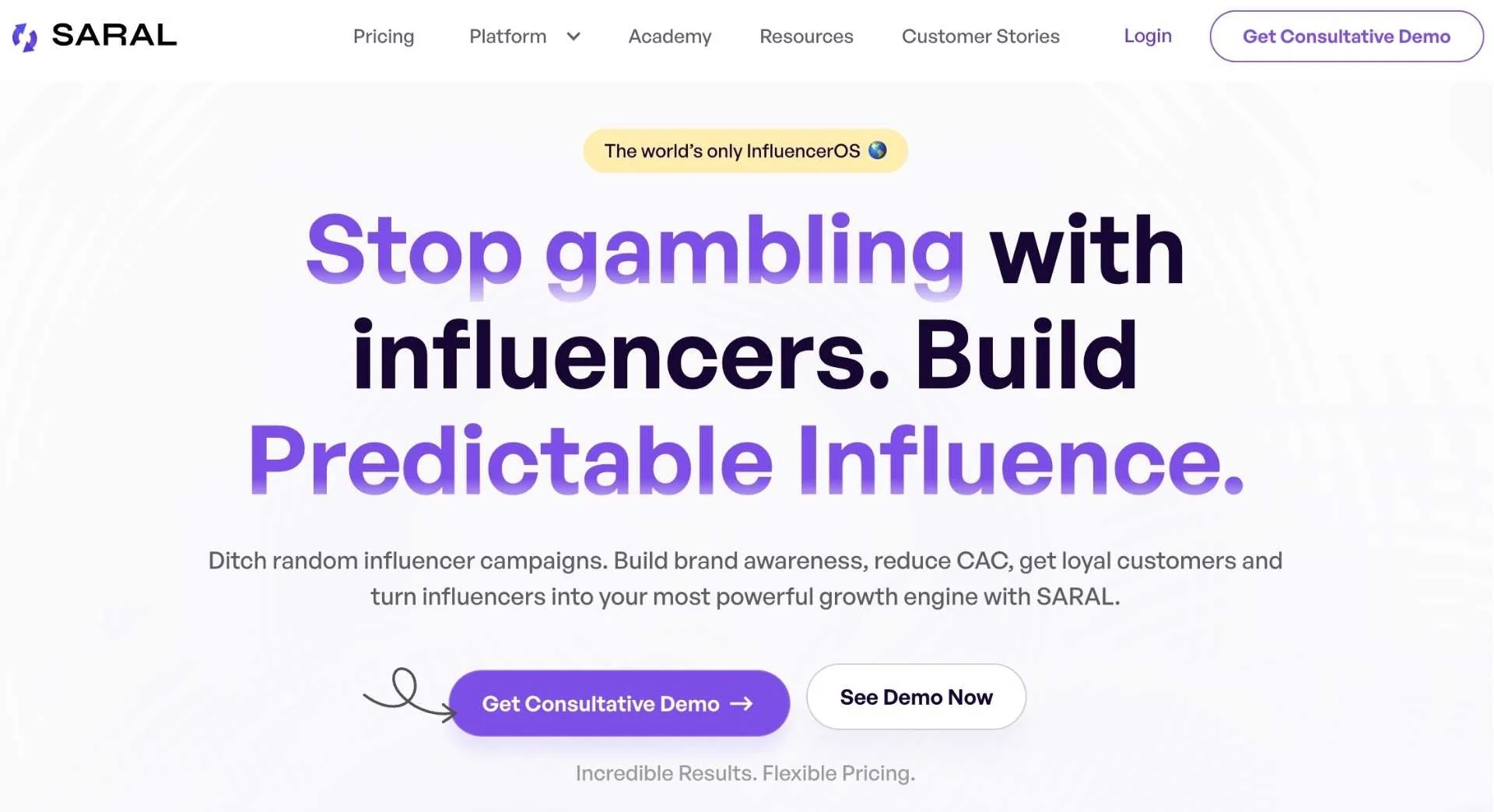
SARAL is an influencer marketing platform built for ecommerce and DTC brands that want a simpler, more operationally focused system for discovery, outreach, seeding, relationship management, and sales tracking. Its positioning is much less enterprise-heavy than many older platforms, with a strong emphasis on usability, transparent pricing, and predictable ROI-focused creator programs.
Key Features
• Influencer discovery for ecommerce brands — SARAL helps brands find creators in bulk, search by keyword or similar creators, and organize influencer sourcing without requiring creators to opt in first.
• Automated outreach — The platform is designed to automate personalized email outreach, follow-ups, and response tracking to reduce manual prospecting work.
• Influencer relationship management — SARAL’s “InfluencerOS” combines creator relationship tracking, campaign stages, and performance visibility in one dashboard.
• Product seeding and affiliate tracking — SARAL supports gifting, discount codes, tracking links, and sales attribution for ecommerce campaigns.
• Performance reporting — Brands can track how creator inputs affect sales and ROI, rather than only viewing vanity metrics.
• Social listening — SARAL includes social listening to track tagged content and surface creator posts for monitoring and reuse.
• Usage-rights and whitelisting workflows — Brands can request usage rights and whitelisting access directly from detected creator content.
• Hands-on onboarding and strategy support — SARAL bundles strategic help, onboarding, and customer success support into the product experience.
Pricing
SARAL offers tiered pricing primarily billed annually or quarterly:
• Starter Plan – $12,000/year or $3,600/quarter Includes 100 active partnerships, 300 new influencers/month, limited post tracking, and 1 user seat.
• Business Plan – $15,000/year or $4,500/quarter Includes 500 active partnerships, 800 new influencers/month, unlimited tracking, and 3 seats.
• Professional Plan – $25,000/year or $7,500/quarter Includes 1,000 active partnerships, 2,000 new influencers/month, full social listening, and 10 seats.
Reviews
4.7/5.0 (G2)
Pros
• Transparent pricing is a big differentiator — Unlike many sales-led platforms, SARAL publishes annual and quarterly plans publicly and highlights the absence of hidden fees.
• Built for lean ecommerce teams, not just enterprise programs — The product is intentionally simple, fast to implement, and paired with strategic onboarding and Slack/Zoom support.
• Strong operational workflow for seeding + affiliates — Discovery, outreach, shipping, sales tracking, and payments are packaged into one practical DTC workflow.
Cons
• Social listening is still maturing — SARAL’s help documentation notes that parts of social listening are still in beta, and some post logging remains manual.
• Less enterprise-oriented than larger platforms — It is optimized for ecommerce execution rather than global enterprise governance, cross-region complexity, or heavy custom analytics.
• Review footprint is still relatively limited — Compared with larger legacy platforms, public third-party review depth is lighter.
Integrations
• Shopify — Connect through GoAffPro to send products, generate codes, and track influencer-driven sales.
• WooCommerce — Also connects through GoAffPro for gifting, affiliate links, and store-based tracking.
• Klaviyo — Sync onboarded influencer data into Klaviyo to support lifecycle and newsletter workflows.
• Slack — Receive workflow updates and keep collaboration tied to SARAL activity.
• PayPal — Handle creator payments from within the broader SARAL operations stack.
Kofluence vs SARAL
Kofluence is more of an India-focused influencer platform with a larger localized creator network and performance-campaign positioning, while SARAL is more of a practical DTC operating system for brands that want simple discovery, outreach, seeding, and sales tracking. Kofluence is better suited to brands wanting local scale and managed influencer execution in India; SARAL is a better fit for ecommerce teams that prioritize transparent pricing, simple workflows, and easier operational control. Kofluence also has clearer performance-marketing positioning around installs, leads, and conversions, whereas SARAL leans more into predictable ecommerce creator programs, seeding, affiliate tracking, and founder-friendly ease of use.
GRIN

GRIN is a creator management platform built for brands that want to run structured influencer programs with strong ecommerce workflows. It combines creator discovery, CRM, gifting, affiliate management, content organization, payments, and analytics, and it has recently repositioned itself with free-to-start access and Gia, its AI-driven creator marketing assistant.
Key Features
• Creator discovery and CRM — GRIN offers creator search, tagging, stage management, and relationship tracking to support long-term creator programs rather than one-off marketplace transactions.
• Integrated email and outreach — Email is built directly into the platform, helping teams manage creator communications and campaign workflows without switching tools.
• Gifting and affiliate management — Even lower tiers include gifting management and affiliate tools, while higher tiers add advanced attribution and approvals.
• Automated creator payments and tax handling — GRIN’s higher tiers include payments automation and 1099 processing, which is useful for US-heavy creator programs.
• Content management — The platform centralizes creator content and can sync it into Google Drive, Dropbox, or Box for broader team use.
• Social listening and landing pages — GRIN includes social listening and branded landing pages for inbound creator recruitment.
• Gia AI assistant — Gia is GRIN’s AI-native assistant designed to help with creator discovery, outreach, gifting, and performance tracking.
• API access for advanced teams — The Complete plan includes API access for custom integrations and workflow automation.
Pricing
• Official pricing model: GRIN’s current pricing page promotes a 30-day free trial and more flexible packaging than before, including self-serve access.
• Public starting price benchmark: Recent software directories list GRIN from $999/month, though enterprise pricing still appears to scale materially based on features and program size.
• Enterprise benchmark pricing: Recent sales benchmarks and product overviews still place GRIN commonly starts at $25,000/year (approx. $2,050/month), with no discounts for upfront payment. Contracts require a full-year commitment with monthly billing.
Reviews
4.5/5.0 (G2)
Pros
• Gia is one of the more ambitious AI launches in the category — GRIN is explicitly repositioning around AI-assisted creator workflows rather than just adding light AI copy help.
• Free-to-start and month-to-month pricing are major changes — Compared with older contract-heavy influencer platforms, GRIN is now more accessible for brands that want to test before scaling.
• Very strong ecommerce workflow depth — GRIN remains especially attractive for brands that need gifting, creator payments, tax forms, affiliate attribution, and structured creator management in one system.
Cons
• Can still feel complex at scale — Some users mention the platform takes more discipline to manage correctly, especially around status tracking and creator deliverables.
• Higher-value features are tiered upward — Advanced reporting, deep links, stronger attribution, and API access are reserved for higher plans.
• Content and upload workflows can create friction — Review feedback still points to some operational friction around creator uploads and organization.
Integrations
• Shopify — Use Shopify for fulfillment, product seeding, and creator-commerce workflows.
• Klaviyo — Connect creator workflows to email templates and brand messaging.
• PayPal — Pay creators, automate payment alerts, and track payouts and tax documents.
• DocuSign — Make contract execution easier inside GRIN workflows.
• Google Drive — Sync creator content out of GRIN’s media library into Drive for broader internal use.
Kofluence vs GRIN
Kofluence is stronger if your priority is tapping into India’s influencer ecosystem and running campaign-led programs with local reach and performance marketing. GRIN is stronger if you need a dedicated creator management system for ecommerce operations, especially product seeding, creator payments, landing pages, affiliate workflows, and content organization. Kofluence is more marketplace-and-campaign oriented, while GRIN is more CRM-and-ops oriented. GRIN also now offers transparent month-to-month tiers and a free trial, while Kofluence still appears to run on a custom sales process with no public pricing tiers for brands.
Influencer Hero
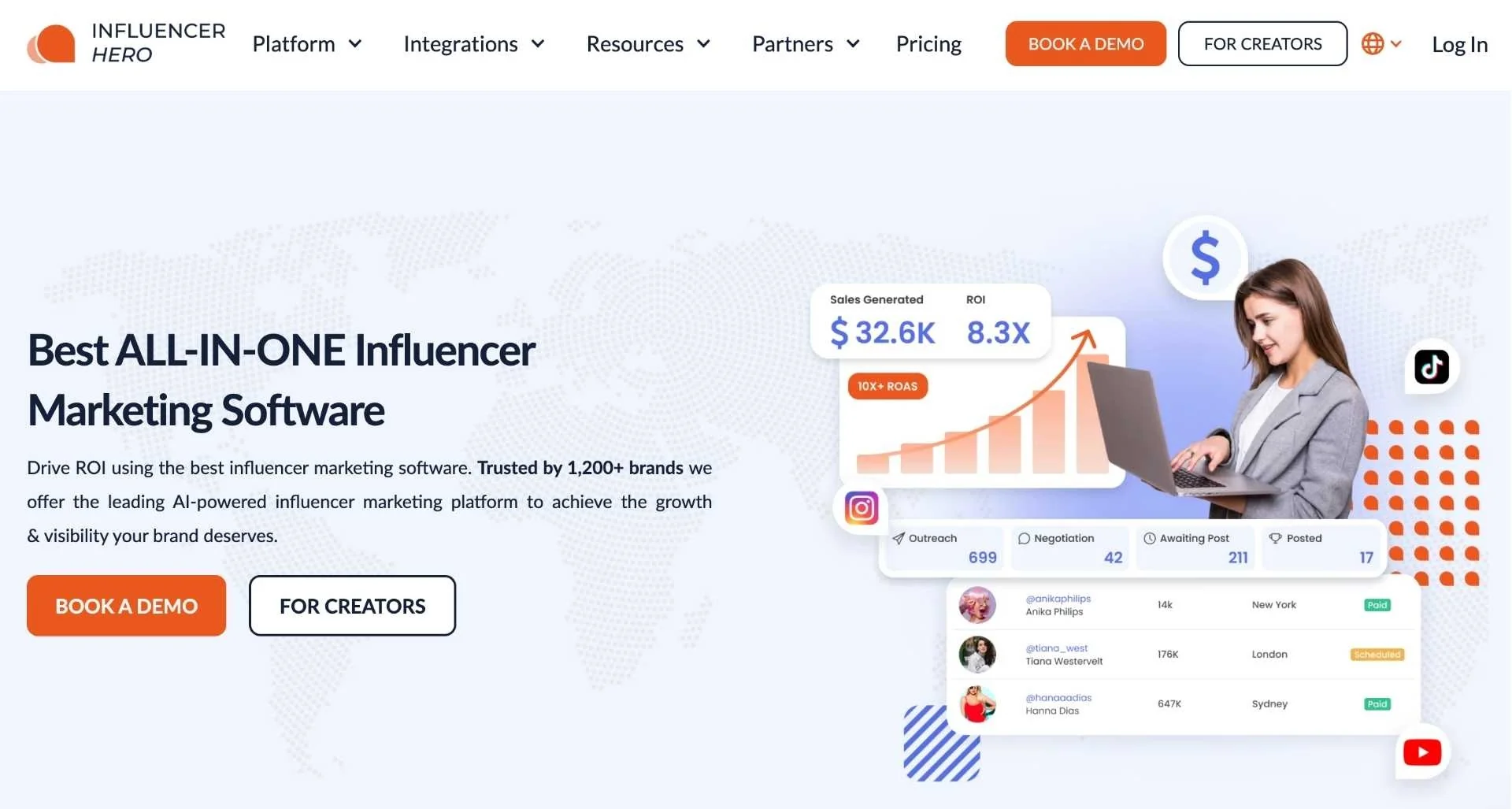
Influencer Hero is an all-in-one influencer marketing platform for DTC brands and agencies that want discovery, outreach, CRM, gifting, affiliate tracking, UGC management, and reporting in one place. It positions itself as a more accessible end-to-end alternative to larger enterprise tools, with transparent base pricing and a heavy focus on automation and ecommerce integration.
Key Features
• Influencer search and campaign sourcing — Influencer Hero supports creator discovery, campaign management, and analytics in a single platform experience.
• Automated outreach workflows — It includes bulk email outreach, multi-step flows, reply tracking, and CRM boards to manage creator pipelines more efficiently.
• Campaign-centric CRM — The platform emphasizes structured boards, bulk actions, and stage-based creator management for high-volume programs.
• Affiliate and gifting support — Brands can manage gifting, affiliate links, codes, and payouts through ecommerce connections.
• Reporting and ROI tracking — It includes campaign-level and influencer-level performance views to support more revenue-focused reporting.
• AI workflow tools — Influencer Hero highlights AI-assisted outreach, creator recommendations, and predictive workflow automation.
• Brand-follower identification — One standout capability is helping brands identify creators who already follow or engage with the brand.
• Multi-platform coverage — Public materials position it as supporting influencer work across multiple social channels while staying particularly ecommerce-friendly.
Pricing
Influencer Hero offers flexible pricing based on outreach volume and you can have unlimited creators in your CRM:
• Standard — $649/month (up to 1,000 outreaches per month)
• Pro — $1,049/month (up to 5,000 outreaches per month)
• Business — $2,490/month (up to 10,000 outreaches per month)
• Custom / Agency — Tailored pricing
Custom pricing is available for agencies and larger teams
Reviews
4.9/5.0 (Capterra)
Pros
• Campaign-centric automation is a core differentiator — Its CRM is built around bulk actions, dealflow boards, and automated communication, which is ideal for brands managing lots of creators without adding headcount.
• Very strong ecommerce flexibility — Influencer Hero is positioned around Shopify, WooCommerce, and related ecommerce workflows rather than treating ecommerce as an add-on.
• AI-powered workflows built for scale — Influencer Hero streamlines the full campaign lifecycle—from discovery to outreach—with automation, predictive scoring, and smart campaign suggestions, helping teams reduce manual work without losing control.
Cons
• No free trial — Makes it harder for teams to evaluate the platform before committing
• Higher pricing for smaller teams — May be less accessible for early-stage brands or those with limited budgets
• Steep learning curve — Feature depth means onboarding and setup can take time
Integrations
• Shopify — Connect store data for gifting, affiliate codes, and sales attribution.
• WooCommerce — Track clicks and sales, create codes and links, and sync affiliate performance into the CRM.
• Klaviyo — Measure how creator campaigns influence retention and lifecycle value, not just first-click sales.
• Gmail — Use connected inbox workflows for outreach and creator communication.
• WhatsApp — Sync and manage influencer conversations directly in the CRM, with real-time messaging, automation, and full chat history.
Kofluence vs Influencer Hero
Kofluence is stronger for brands that want India-first influencer scale and performance-led campaign execution in that market. Influencer Hero is stronger for brands that want a broader, CRM-heavy operating system with outreach automation, gifting, affiliate workflows, and transparent base pricing. Kofluence is more localized and campaign-execution focused, while Influencer Hero is more stack-oriented and designed for brands building repeatable creator operations across DTC workflows. For ecommerce brands that need direct control, automation, and clear pricing, Influencer Hero is the more flexible alternative; for India-specific creator access and localized campaign scale, Kofluence has the clearer edge.
IZEA
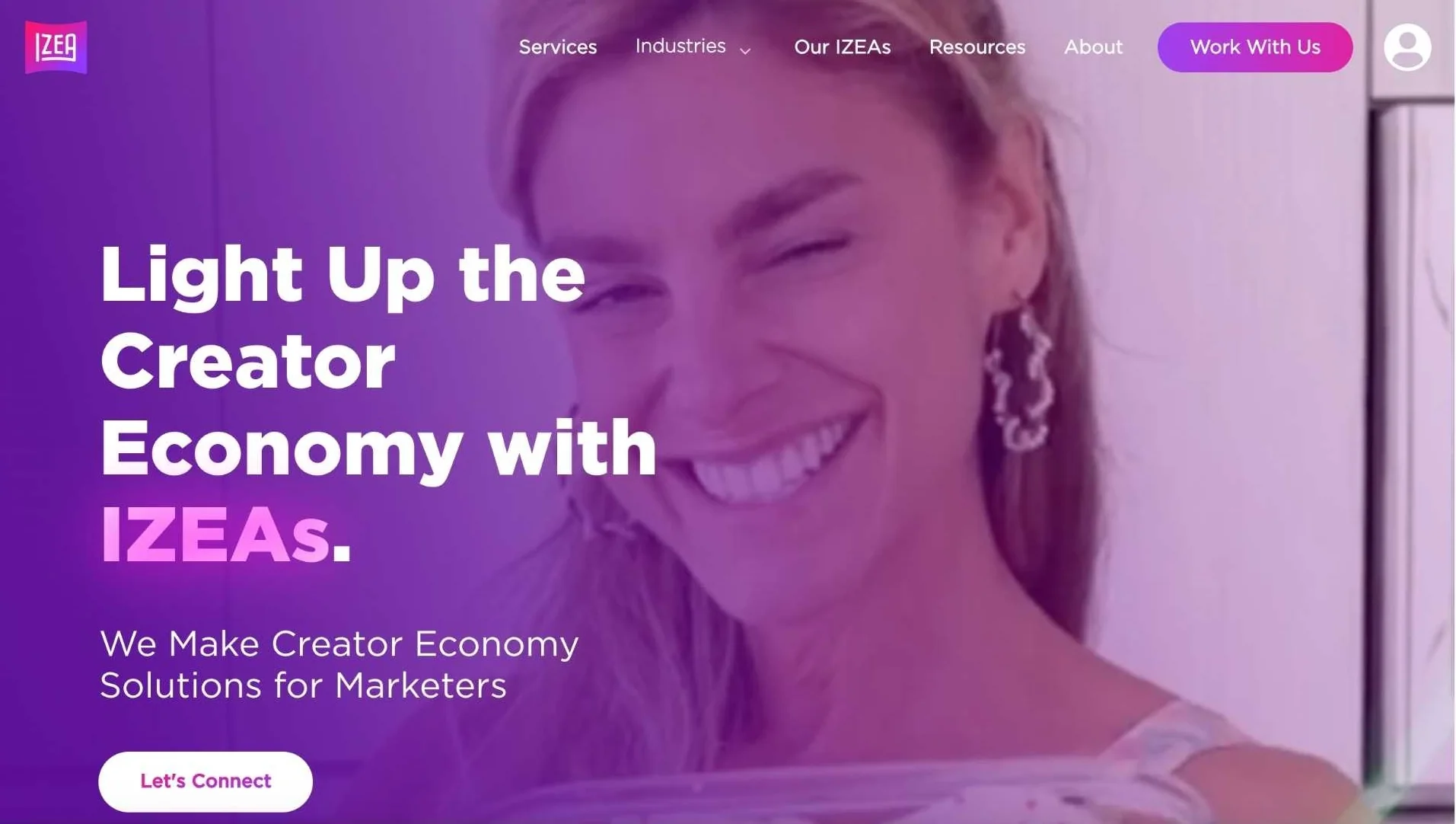
IZEA is one of the longer-standing names in influencer marketing and the broader creator economy, combining managed services, creator marketplace tools, AI content tools, and enterprise workflow software. Today, its positioning is split between IZEA Flex for managed campaign operations and The Creator Marketplace for self-serve creator sourcing and casting calls, with FormAI and IZZY adding AI functionality.
Key Features
• Creator Marketplace — Brands can search talent, purchase creator listings, and publish casting calls to receive creator pitches.
• IZEA Flex campaign hub — Flex powers campaign approvals, creator review, content review, and performance tracking in one central place.
• Discover, Contacts, Campaigns, Contracts, and Transactions — IZEA publicly references core Flex modules for creator discovery, relationship handling, contracts, content, tracking links, and payments.
• Content approval and draft review — Flex Portal allows stakeholders to review drafts, request edits, and approve creator submissions.
• Tracking links and analytics — Flex is positioned as data-centric, with exportable data and campaign performance tracking.
• FormAI — IZEA’s AI suite includes image generation, editing, GPT-4 chat access, assistants, audio, and video capabilities.
• IZZY AI assistant — IZEA added IZZY inside Flex to provide campaign optimization, profile analysis, and recommendations based on past performance data.
• Budget management and creator offer negotiation — IZEA has added budget controls and creator-side offer negotiation features into Flex.
Pricing
• Starter: $130/month on annual billing, or $165/month month to month. Includes core tools like Discover, ContentMine, ShareMonitor, and Tracking Links.
• Power: $500/month on annual billing, or $600/month month to month, for up to three users, with Transactions, unlimited integrations, and expanded usage.
• Free trial: 10 days. Older launch materials also referenced a free tier, but current visible pricing is most clearly centered on Starter and Power.
Reviews
3.9/5.0 (G2)
Pros
• Broader creator-economy stack than many competitors — IZEA combines managed services, marketplace sourcing, enterprise workflow tools, and AI creation tools under one brand.
• Recent AI product motion is meaningful — IZZY in Flex and the broader FormAI suite make IZEA more differentiated than marketplace-only influencer tools.
• Marketplace access is low-friction — The free plan and Marketer Pro give smaller brands an easier entry point than fully enterprise, demo-gated platforms.
Cons
• Public third-party integrations are less extensive than ecommerce-first rivals — Publicly documented integrations are clearly lighter than what platforms like Upfluence, GRIN, or Influencer Hero expose.
• Workflow complexity can be higher — IZEA spans marketplace, managed services, Flex, and AI tools, which can feel broader and less streamlined than simpler single-product alternatives.
• Review profile is more mixed — Its public rating footprint is respectable, but not as strong as the highest-rated creator-management competitors.
Integrations
• Shopify — Track campaign impact down to orders and connect creator activity to commerce outcomes.
• Google Analytics — Tie influencer campaigns to site engagement, conversions, and revenue metrics.
• ChatGPT-4 / OpenAI via FormAI — Use built-in AI chat and assistants inside the IZEA ecosystem for ideation and content workflows.
• Instagram — IZEA supports Instagram account authentication and creator content workflows inside its platform.
• TikTok — TikTok authentication and TikTok content submission are supported within IZEA’s creator workflow stack. (
Kofluence vs IZEA
Kofluence is more focused on influencer campaign execution in India, with a strong local creator network and a clear emphasis on performance marketing campaigns. IZEA is broader and more modular: it mixes marketplace sourcing, managed services, enterprise workflow software, and AI tooling for content and campaign operations. Kofluence is the more localized choice for India-first creator marketing, while IZEA is the more diversified creator-economy option for brands that want self-serve casting calls, managed services, and AI-assisted campaign infrastructure under one umbrella. IZEA also gives smaller brands a lower-friction marketplace entry through free and Marketer Pro plans, while Kofluence still appears to rely mainly on quote-based sales for brand-side access.


Later
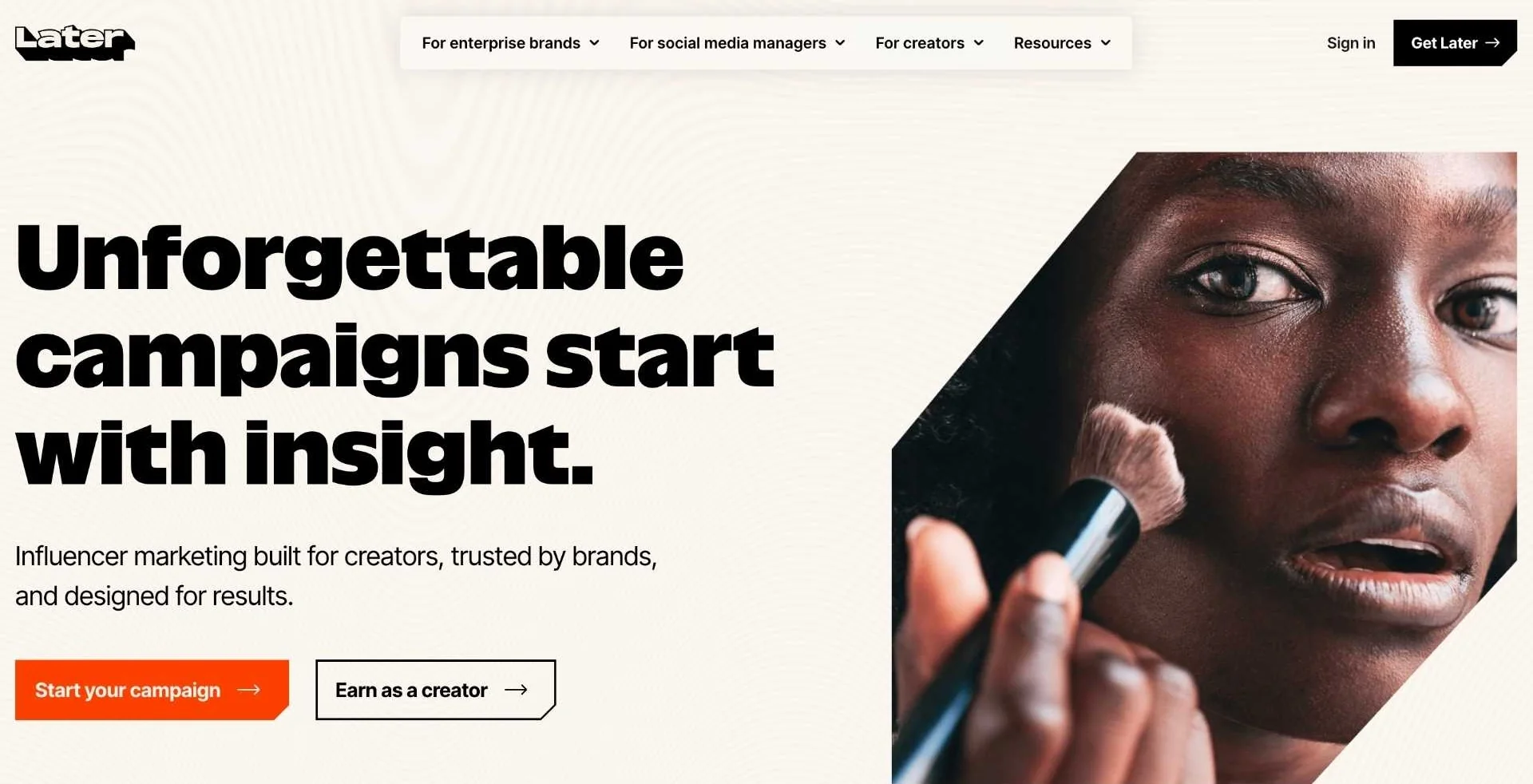
Later is an influencer marketing and social media platform that now combines the former Mavrck influencer engine with Later’s social publishing stack and Mavely’s affiliate commerce layer. It is built mainly for brands that want to run creator campaigns, collect ratings and reviews, manage gifting, and connect influencer activity to commerce outcomes in a more enterprise-ready workflow.
Key Features
• End-to-end influencer campaign management — Later Influence handles creator discovery, vetting, outreach, workflow automation, approvals, and reporting from one platform.
• Ratings and reviews programs — A major differentiator is the ability to collect influencer and advocate product reviews, then syndicate them into ecommerce and marketing channels.
• Affiliate and conversion tracking — Later supports affiliate links and creator commerce workflows, and its Mavely connection helps brands track conversion-oriented creator programs more directly.
• Shopify gifting workflows — Brands can connect Shopify, create unique creator codes, automate product selection and shipping, and track what was sent in one place.
• AI-powered campaign intelligence — Later EdgeAI uses its proprietary campaign, social, and commerce dataset to improve creator selection, forecasting, and campaign decision-making.
• Brand suitability and social listening — Later positions its intelligence layer around brand safety, sentiment, and better-fit creator selection rather than just basic search filters.
• Unlimited users and campaigns on influencer plans — Its pricing page highlights unlimited users, campaigns, and creator partnerships across plan types, which is attractive for larger teams.
Pricing
Later’s influencer marketing platform (Later Influence) uses custom pricing, and brands need to request a demo for exact costs.
Based on our research, there are different plans:
• Essentials Plan: Starts at $28,500/year. Best for brands starting in influencer marketing.
• Pro Plan: Starts at $42,000/year. Best for data and automation to make your campaigns run faster and achieve better ROI.
• Premier Plan: Starts at $60,000/year. Everything you need for a scaled influencer program.
• All plans come with an additional one-time onboarding fee of $5,000 for all new customers.
Reviews
4.4 / 5.0 (Capterra)
Pros
• Later EdgeAI is one of the more meaningful recent product additions — it is positioned as a predictive intelligence engine trained on Later’s first-party campaign, social, and commerce data, not just a lightweight AI assistant.
• The Mavely layer strengthens creator commerce — Later’s Mavely acquisition added a stronger affiliate and social commerce angle, giving brands a more direct path from creator content to trackable sales.
• Ratings-and-reviews syndication is unusually strong — the Bazaarvoice, PowerReviews, and Yotpo connections make Later especially compelling for brands that want influencer content to support ecommerce conversion, not just awareness.
Cons
• No public pricing transparency — brands must go through sales for all influencer plan costs, which makes fast budgeting harder.
• No free trial for influencer plans — unlike several newer SaaS competitors, Later requires a sales-led evaluation process.
• Best fit skews toward larger, more structured programs — the product is powerful, but its positioning and workflow depth are more enterprise-oriented than lightweight SMB tools.
Integrations
• Shopify — connect your store, generate creator-specific codes, automate gifting, and measure product sends and conversions.
• Stripe — pay creators cash incentives directly through Later and track payout status in real time.
• Tango Card — send and track digital gift card incentives inside Later’s incentive workflow.
• Bazaarvoice — collect influencer product reviews and syndicate them across ecommerce and marketing channels.
• Yotpo — manage influencer-generated reviews inside Yotpo for broader onsite and retention use.
Kofluence vs Later
Kofluence is more India-centric and campaign-network driven, while Later is more enterprise-oriented and built for brands that want influencer programs tied to reviews, affiliate commerce, gifting, and broader social operations. Kofluence is the stronger fit for brands prioritizing India creator access and localized campaign execution; Later is the stronger fit for brands that want a more mature creator-commerce and ratings-and-reviews workflow.
Later also has a heavier ecommerce and enterprise integration story, especially with Shopify, Stripe, Bazaarvoice, PowerReviews, Yotpo, and Mavely. Kofluence has a more performance-marketing angle around installs, leads, and sales, but Later offers a broader social proof stack for brands that want content, reviews, affiliate links, and commerce tracking in one system.
Ainfluencer
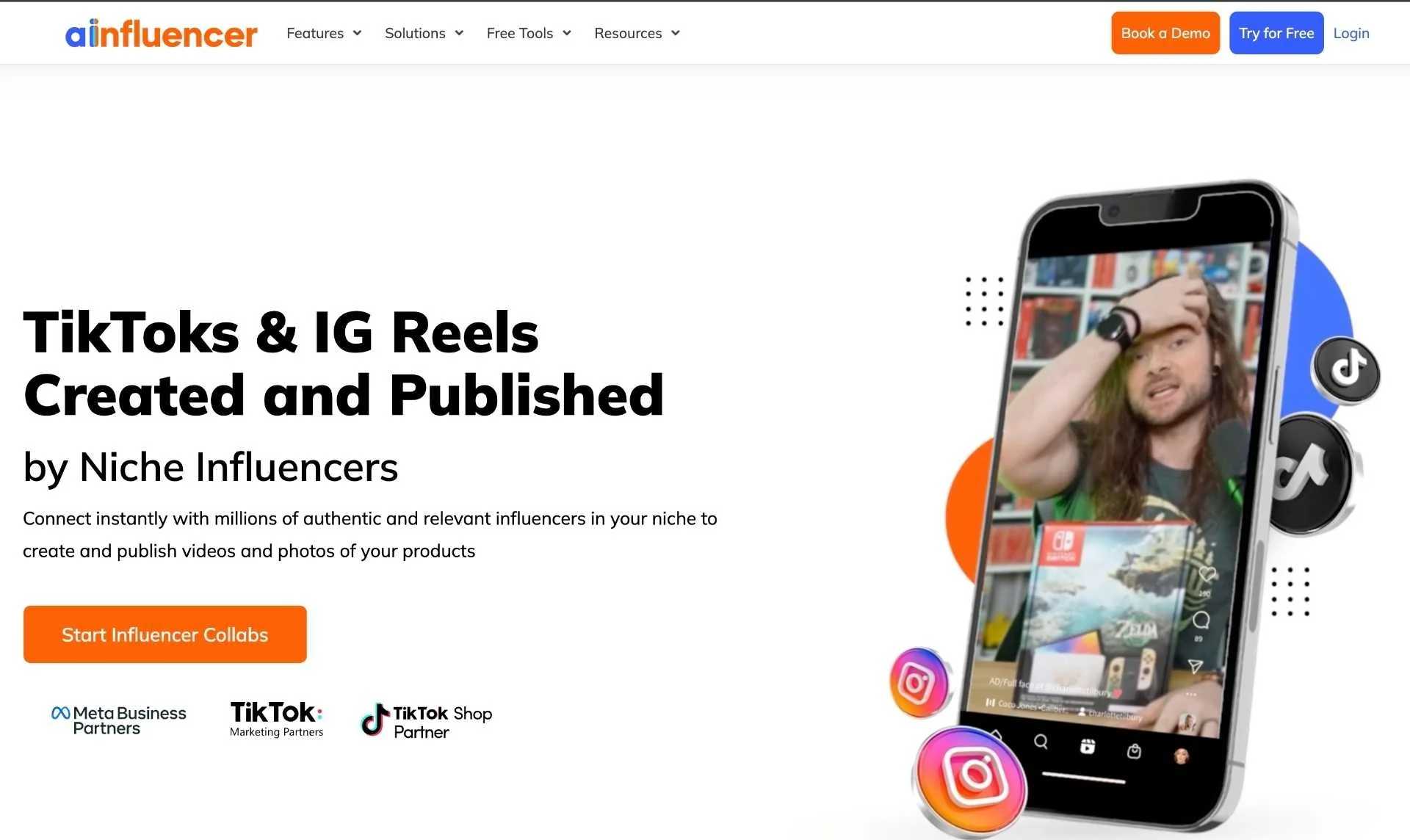
Ainfluencer is a self-serve influencer marketplace designed to make creator collaborations more accessible for smaller brands, startups, and ecommerce teams. Its main pitch is that brands can discover influencers, launch campaigns, negotiate deals, and manage collaborations without paying a platform subscription, while using built-in escrow-style payments and marketplace workflows to reduce manual back-and-forth.
Key Features
• Marketplace-based influencer discovery — brands can browse a large database of creators, review profile metrics and past collaboration details, and invite unlimited influencers to campaigns.
• Free self-serve campaign creation — Ainfluencer emphasizes a DIY model where brands can post campaigns and receive offers without paying a recurring software fee.
• Built-in negotiation and messaging — brands can negotiate terms, approve or reject content, send templates, and manage deadlines within the platform.
• Escrow-style payment protection — funds are held in-platform and only released after deliverables are completed and approved, which reduces some payment risk.
• Ecommerce and affiliate workflows — Ainfluencer supports Shopify campaigns, Amazon affiliate use cases, gifting, and commission-based programs.
• AI-assisted tools — the platform now highlights AI features such as campaign creation help, an AI DM inviter, and AI video translation/localization.
• Content approval and downloadable library — brands can review submissions, request edits, and download creator content inside the workflow.
Pricing
• Free Plan (Core Offering): $0/month
• Commission-Based Model: ~20% service fee deducted from influencer payouts
• Managed Campaign Packages (Optional)
• Viral: $7,999 (1 month)
• Scale: $9,999 (2 months)
• Super Scale: $15,000 (3 months)
• Turbo Viral: $29,999 (4 months)
• Custom pricing available depending on campaign scope
Reviews
4.8 / 5.0 (G2)
Pros
• One of the few truly free brand-side options — Ainfluencer’s biggest differentiator is that brands can run self-serve influencer campaigns without the standard SaaS subscription overhead.
• Escrow payments add useful protection — payment is tied to approved deliverables, which is especially attractive for brands that worry about no-shows or weak accountability.
• The AI toolset is expanding — newer add-ons like AI video translation and AI DM outreach give the platform a more modern, automation-friendly edge than many free marketplaces.
Cons
• User feedback is more mixed than top SaaS peers — while many reviewers like the low-cost access, the public review profile also includes complaints about wallet funding, disputes, and campaign quality.
• Better for SMBs than enterprise teams — the marketplace model is useful, but it is less suited to brands that need deep workflow customization, complex reporting, or global enterprise controls.
• Quality control still needs active management — because it is an open marketplace, brands still need to vet responses carefully rather than relying on a heavily curated creator layer.
Integrations
• Shopify — connect your store to launch influencer campaigns, manage gifting, and track outcomes from creator activity.
• Amazon — run affiliate-oriented creator campaigns tied to Amazon products and sales workflows.
• Stripe — support payment handling and wallet-based transaction flows for creator deals.
• PayPal — gives users an additional payout option for handling creator payments and withdrawals.
• Instagram — supports creator discovery, account connections, and campaign collaboration around Instagram-first influencer programs.
Kofluence vs Ainfluencer
Kofluence is more of a structured influencer platform for brand campaigns, especially in India, while Ainfluencer is a free marketplace built around self-serve discovery, negotiation, and escrow-protected deals. Kofluence is better for brands that want a more guided platform with performance-marketing orientation; Ainfluencer is better for brands that want to experiment cheaply and keep software costs near zero.
Ainfluencer is also much more aggressive on free access, while Kofluence remains sales-led and quote-driven on the brand side. On the other hand, Kofluence looks stronger for brands that want a more established campaign structure and a clearer India-market positioning.
indaHash
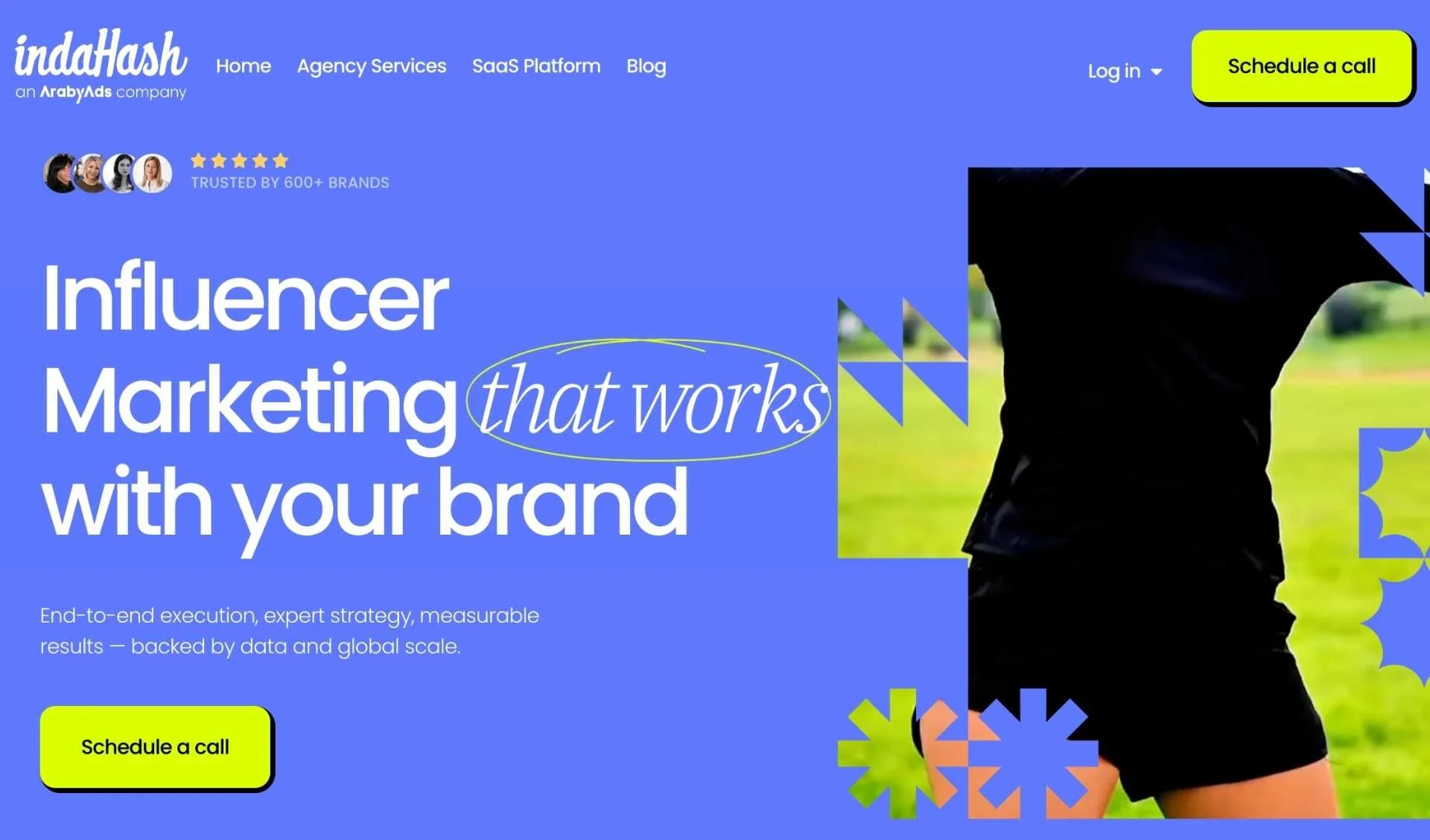
indaHash is a global influencer marketing platform and agency that supports both managed services and self-serve SaaS workflows. It is positioned around creator discovery, campaign automation, approvals, reporting, and performance optimization, with a strong emphasis on global execution and scalable multi-market campaigns.
Key Features
• Creator discovery and vetting — indaHash helps teams search for creators, build lists, check competitor activity, and evaluate audience fit before launch.
• AI image recognition — one of its most distinctive features is AI-powered image recognition that finds creators based on visual content patterns, not just keywords.
• Creator CRM and collaboration tools — the platform includes campaign communication, approvals, creator management, submission handling, and team/client collaboration modes.
• Audience overlap and competitor checks — brands can analyze overlap, compare creators, and surface competitor-linked posts to sharpen targeting and reduce wasted spend.
• Advanced report builder — indaHash highlights auto-generated, customizable campaign reports and deeper publication-level performance insights.
• Ecommerce API integration — the platform supports ecommerce connections for coupon-based sales measurement and creator commerce workflows.
• Broad platform support — indaHash promotes native support for Instagram, TikTok, Snapchat, and YouTube, plus broader agnostic support across 20+ platforms.
Pricing
indaHash does not publicly disclose full pricing on its website, and most plans are offered on a custom or quote-based model. However, publicly listed pricing tiers include:
• Creator Discovery – $499/year
• Discovery & Campaign Management – $999/month
• White Label (Agencies) – $9,990/year
• Enterprise License – $4,999 (one-time)
• Free Trial: Available
Reviews
4.7 / 5.0 (G2)
Pros
• AI image recognition is a real differentiator — indaHash goes beyond standard keyword filtering by letting teams discover creators through visual analysis and content recognition.
• Very strong for multi-market campaigns — the company positions itself around global execution, with campaigns in 100+ countries and a hybrid software-plus-services model.
• Self-serve SaaS is a newer, notable move — indaHash now pushes a self-serve platform and free-subscription/trial entry point more prominently than older agency-only positioning.
Cons
• Public pricing is still unclear — the site promotes free entry and demos, but does not make the full paid structure easy to compare.
• Smaller public review base — its ratings are solid, but the review sample is much thinner than more established review-heavy competitors.
• May be more than smaller brands need — indaHash’s global campaign depth and hybrid model are attractive, but can feel heavier than lean SMB-focused platforms.
Integrations
• Shopify — connect ecommerce data to track coupons, creator-driven sales, and commerce impact.
• WooCommerce — support coupon attribution and sales measurement for creator campaigns.
• Instagram — native support for Instagram creators and content tracking inside campaigns.
• TikTok — native support for TikTok creators and campaign content monitoring.
• YouTube — includes native creator support and performance visibility for YouTube campaigns.
Kofluence vs indaHash
Kofluence is more focused on India-first influencer marketing and performance-led campaign execution, while indaHash is more global and now blends agency services with self-serve SaaS for in-house teams. Kofluence is the more localized option; indaHash is the stronger fit for brands running broader multi-country programs.
indaHash also leans harder into creator discovery innovation with AI image recognition and broader cross-market support. Kofluence, by contrast, is likely the better fit when the priority is India creator density and local campaign execution rather than multinational orchestration.
Influencity
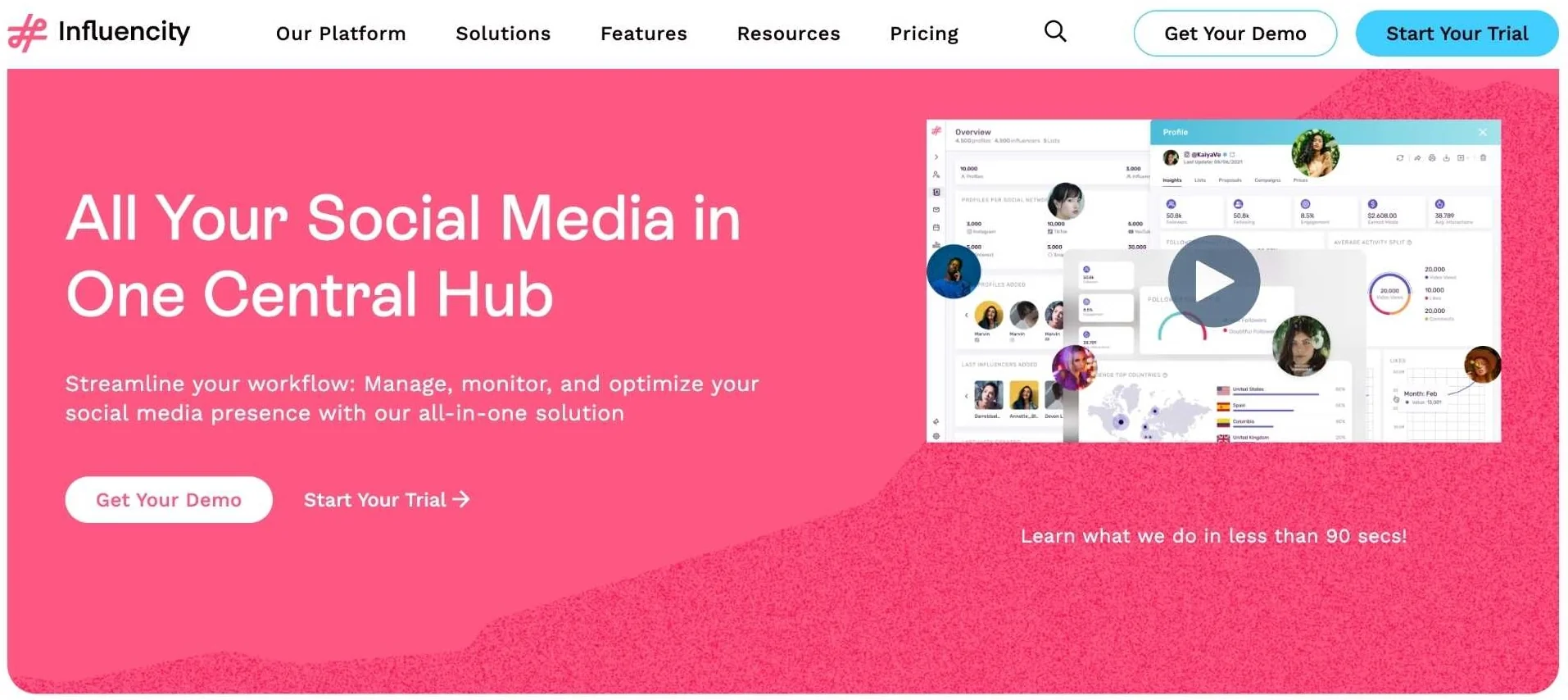
Influencity is an end-to-end influencer marketing platform that combines creator discovery, relationship management, campaign execution, reporting, payments, and an expanding social listening and social media management suite. It is built for brands and agencies that want a more complete operating layer than discovery-only influencer tools.
Key Features
• Large influencer database and analytics — Influencity positions its platform around a large creator database, audience analysis, fake-follower detection, and advanced search filters.
• Influencer relationship management — the IRM layer stores influencer profiles, communications, statuses, and campaign history to support long-term programs.
• Campaign management and reporting — brands can plan campaigns, track content, and generate reports without stitching together multiple tools.
• Shopify seeding programs — Influencity’s Programs feature connects Shopify with gifting and product-seeding workflows.
• Payments and invoicing — the platform supports bulk payments, invoicing, and global payment workflows inside campaign operations.
• Email outreach and sequences — users can integrate their email provider, run bulk outreach, and build email sequences inside the platform.
• Social Hub and brand management — Influencity now positions itself as more than influencer software, with social publishing, inbox, monitoring, and brand management tools.
Pricing
Influencity offers three main pricing tiers, along with add-ons:
• Professional Plan: $318/month or $3,816/year
• Business Plan: $798/month or $9,576/year
• Enterprise Plan: Custom pricing
• Auto-Tracker Add-On: $660/year (for 50 influencers)
Reviews
4.3 / 5.0 (G2)
Pros
• Broader suite than most influencer-only tools — Influencity now bundles influencer marketing, social listening, social publishing, and brand management into one platform.
• Transparent mid-market pricing — compared with many enterprise-first alternatives, Influencity has publicly visible plans and a free trial.
• Strong Shopify-led seeding workflow — the Programs feature gives ecommerce brands a more direct route from discovery to product seeding and campaign logistics.
Cons
• There is a learning curve early on — some reviewers mention that discovery filters and campaign setup take a little time to understand at first.
• Cancellation and billing complaints do appear in public reviews — the review profile is generally positive, but not spotless.
• The platform can feel broad rather than lightweight — because it spans influencer, social, listening, and payments, it may be more tool than very small teams need.
Integrations
• Shopify — connect your ecommerce store to power seeding, gifting, and program tracking.
• Personal email provider — integrate your email account so creator conversations stay inside Influencity’s CRM.
• PayPal — use PayPal pools or PayPal invoice details to support influencer payments.
• Zexel Pay — supports secure creator onboarding and global payout handling.
• X / TikTok / Pinterest / Twitch — connect social accounts directly into Influencity’s Social Hub for content management, analytics, and monitoring.
Kofluence vs Influencity
Kofluence is more focused on influencer campaign execution and creator access in India, while Influencity is a broader software suite that stretches into social publishing, listening, payments, and brand management. Kofluence is the more localized campaign choice; Influencity is the better fit for teams that want one platform to cover more of the day-to-day workflow.
Influencity also has clearer public pricing and a lower-friction self-serve starting point. Kofluence stands out more on India-market relevance and performance-campaign positioning, while Influencity stands out on breadth and operational flexibility.
Modash
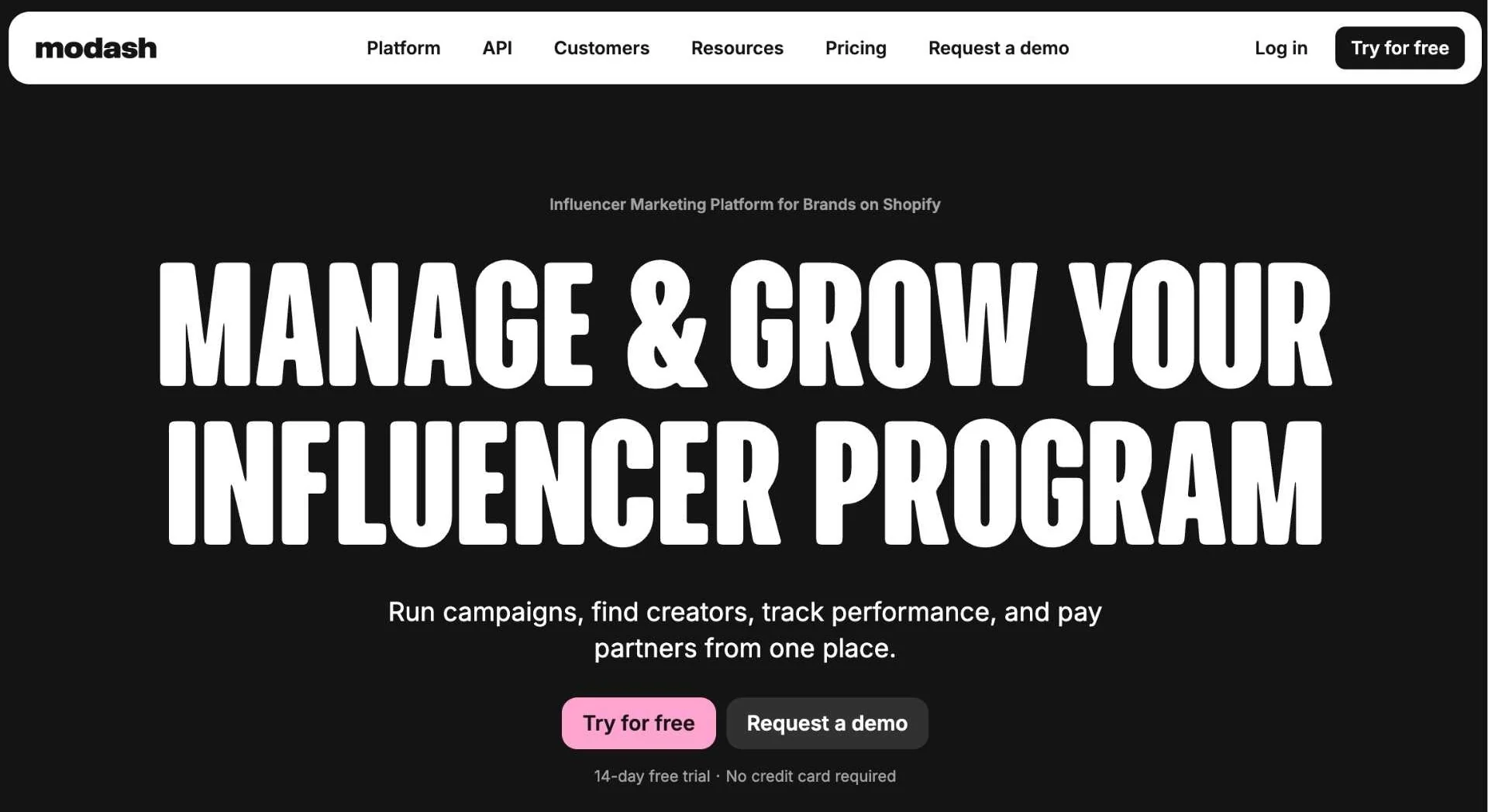
Modash is an influencer marketing platform built around creator discovery, relationship management, tracking, gifting, affiliate sales, and creator payments. It is especially popular with ecommerce brands because it combines a very large public creator database with transparent pricing, Shopify workflows, and a lighter-weight SaaS model than many enterprise competitors.
Key Features
• Large public creator database — Modash says it indexes 350M+ public creator profiles across Instagram, TikTok, and YouTube, which gives brands broad discovery coverage without opt-in limitations.
• AI-powered creator discovery — discovery includes advanced filters and AI-powered search to surface better-fit creators faster.
• CRM and outreach workflow — brands can manage creator lists, track relationships, and sync Gmail or Outlook for outreach.
• Automatic content and campaign tracking — Modash automatically captures creator posts and tracks performance across campaigns.
• Shopify gifting and affiliate tools — connect Shopify to run product gifting, discount-code campaigns, affiliate tracking, and creator sales attribution.
• Creator payments — higher plans support payouts and affiliate commission handling, with fee-free thresholds before payout fees kick in.
• Free trial and flexible billing — Modash offers a 14-day free trial and allows monthly or annual billing with no mandatory long-term contract.
Pricing
• Essentials: ~$199/month (paid annually)
• Performance: ~$499/month (paid annually)
• Enterprise: custom pricing
• Typically billed annually, with scaling based on usage and team size.
Reviews
4.9/5.0 (Capterra)
Pros
• Very transparent pricing for the category — Modash clearly lists plan costs, trial access, billing options, and feature thresholds, which is still uncommon in influencer software.
• The database and AI discovery are standout strengths — broad public-profile coverage plus AI-assisted search make discovery one of Modash’s strongest differentiators.
• Excellent fit for Shopify brands — gifting, discount codes, affiliate sales tracking, and creator payouts are all closely tied to Shopify workflows.
Cons
• Best ecommerce features are Shopify-centric — affiliate sales tracking and several commerce workflows are strongest through Shopify, which limits flexibility for other ecommerce stacks.
• Platform coverage is narrower than some rivals — public reviews still note that the core workflow is centered on Instagram, TikTok, and YouTube rather than a broader channel mix.
• Usage caps can matter as you scale — some users mention wanting extra credits or more monitoring capacity without jumping plan tiers.
Integrations
• Shopify — sync store data to run gifting, discount codes, sales tracking, and affiliate management from one place.
• Gmail — connect Gmail to run influencer outreach inside Modash rather than from a separate inbox.
• Outlook — supports Outlook inbox syncing for creator communication and relationship tracking.
• Shopify Payments / payout workflow — supports creator payouts and affiliate commission flows tied to commerce performance.
• Modash API / AI Search API — advanced teams can use the API layer for natural-language and visual influencer discovery workflows.
Kofluence vs Modash
Kofluence is stronger for India-focused influencer programs and local creator access, while Modash is stronger for brands that want a transparent, self-serve SaaS platform with very strong discovery and Shopify commerce workflows. Kofluence is the more localized campaign platform; Modash is the better fit for ecommerce-led global discovery and creator operations.
Final Thoughts on Kofluence Alternatives
Kofluence stands out for its India-focused creator network and performance-driven campaign approach, but the alternatives highlighted in this list show a wide range of strengths depending on business needs. Platforms like Upfluence, GRIN, and Modash excel in ecommerce integrations and creator management, while tools like SARAL and Influencer Hero focus on simplicity and operational efficiency for DTC teams. Meanwhile, solutions like Later, indaHash, and Influencity offer broader enterprise capabilities, including social listening, global campaign execution, and advanced analytics. Ultimately, the right choice depends on whether a brand prioritizes local market reach, global scalability, pricing transparency, or deeper ecommerce and automation capabilities.
.png)


.jpg)