

10 Best Julius Alternatives • Key Criteria • Julius Overview • Best Julius Alternatives • Influencer Hero • Upfluence • Aspire • CreatorIQ • Later • IZEA • Traackr • Influencity • Heepsy • Lefty • Final Thoughts • FAQs
10 Best Julius Alternatives for Influencer Marketing
Running influencer marketing without the right software quickly becomes messy for D2C teams—especially when you’re juggling creator discovery, outreach, product seeding, and tracking real ROI. Platforms like Julius help solve this by offering structured workflows, curated influencer data, and campaign management tools, making it easier to scale partnerships. However, many teams start exploring Julius alternatives due to limited pricing transparency, higher costs, and the need for stronger eCommerce integrations or automation. That’s where newer influencer marketing software options come in, offering more flexibility, better attribution, or easier onboarding depending on your stage of growth.
In this guide, we compare the 10 best Julius alternatives—Influencer Hero, Upfluence, Aspire, CreatorIQ, Later, IZEA, Traackr, Influencity, Heepsy, and Lefty—to help you find the right fit for your influencer marketing strategy.
Key Criteria for Evaluating Influencer Marketing Platforms
Core Features
Evaluation of essential influencer marketing capabilities, including influencer discovery, outreach, CRM, campaign management, reporting, and content workflows.
Pricing & Flexibility
Comparison of pricing models, subscription plans, and contract terms to match different budgets and growth stages.
Customer Reviews & Satisfaction
Analysis of user feedback from trusted review platforms, focusing on usability, reliability, customer support, and overall performance.
Pros & Cons
Review of each platform’s strengths and limitations to highlight where it performs well and where it may fall short based on different use cases.
Integrations
Review of the most important integrations (e.g., Shopify and other tech tools), highlighting what each integration enables in one sentence.
Julius Overview

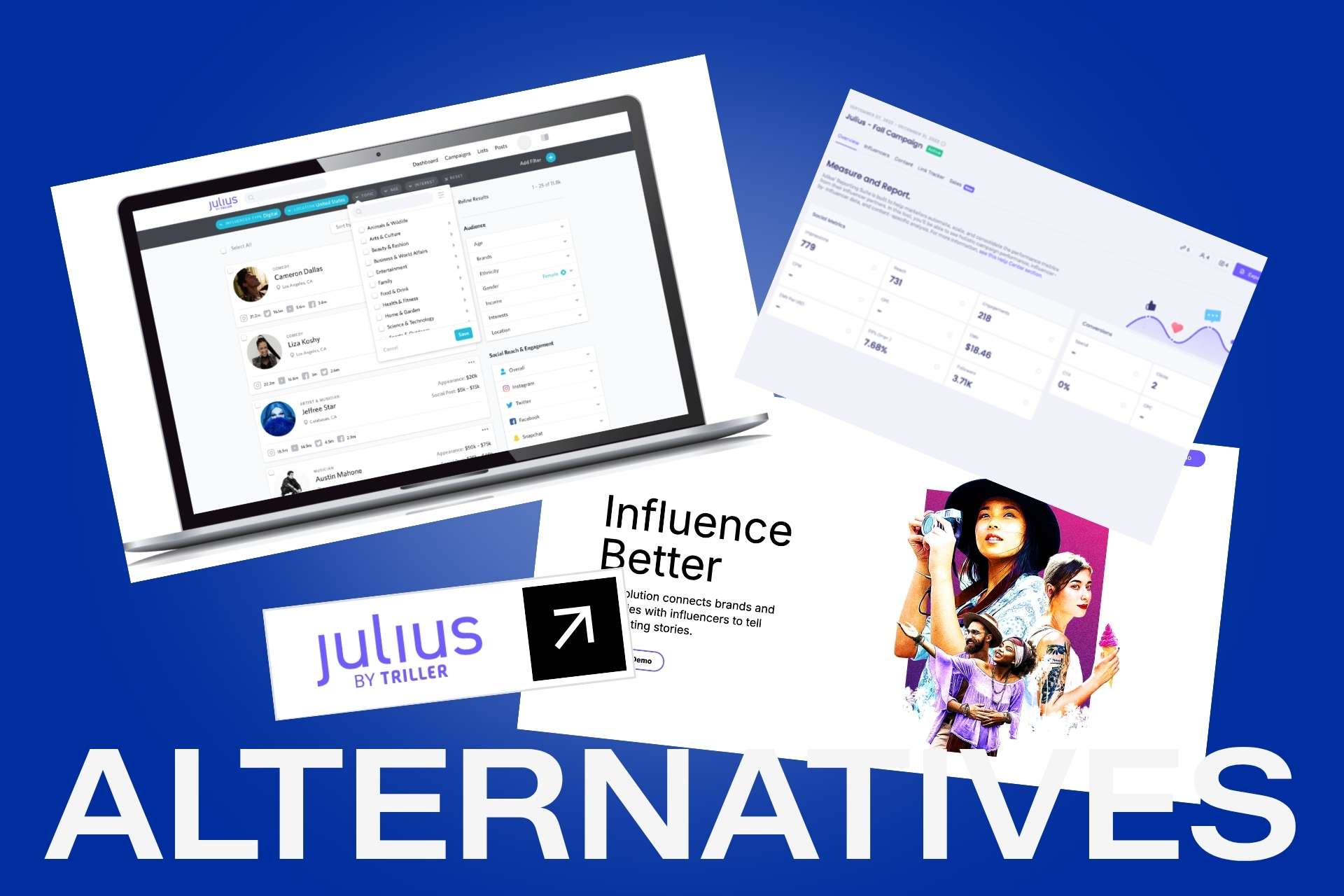
Julius is an enterprise-focused influencer marketing platform designed to help brands and agencies discover, vet, and manage influencer partnerships at scale. The platform combines a large creator database with human-verified profiles, advanced search filters, and built-in campaign management tools—making it particularly suited for teams that prioritize data accuracy, brand safety, and structured workflows.
Unlike many newer self-serve tools, Julius leans heavily into curated data and social listening capabilities, giving marketers deeper insights into influencer relationships, past brand collaborations, and campaign performance.
Key Features
• Advanced Influencer Discovery Julius offers highly granular search filters across multiple platforms (Instagram, TikTok, YouTube, Facebook, Snapchat, Pinterest, X, Twitch), allowing brands to identify creators based on demographics, interests, audience data, and past collaborations.
• Human-Verified Influencer Profiles A standout capability is Julius’ analyst-reviewed database, where profiles are curated and enriched manually—helping brands access more reliable and contextual creator data compared to purely automated tools.
• Social Listening & Brand Affinity Insights Search by keywords, hashtags, and mentions to identify creators already talking about your brand or competitors. This helps uncover authentic partnerships and avoid misaligned collaborations.
• Influencer CRM & Workflow Management Manage outreach, track conversations, organize creators into lists, and collaborate internally with notes, tags, and status tracking—all within a centralized CRM.
• Campaign Tracking & Autodetection Automatically detect influencer posts tied to campaign hashtags or brand mentions and pull them into reporting dashboards—reducing manual tracking and improving campaign visibility.
• Content Review & Compliance Tools Built-in workflows for reviewing influencer deliverables and ensuring FTC compliance, helping brands manage approvals and maintain regulatory standards.
• Performance Analytics & Reporting Track campaign performance with metrics like engagement, reach, and content performance. Export reports and benchmark campaigns to optimize influencer ROI.
Pricing
Julius does not publicly disclose transparent pricing tiers, and all plans are customized based on business needs.
Third-party listings suggest pricing starts at a premium level, positioning Julius as an enterprise-grade solution rather than a budget-friendly or self-serve platform.
Reviews
4.5 / 5.0 (G2)
Integrations
• Shopify – Track influencer-driven sales through discount codes and attribute revenue directly to campaigns.
• Instagram – Discover creators, monitor content, and track campaign performance on Instagram.
• Meta (Facebook ecosystem) – Extend campaign visibility and influencer tracking across Meta platforms.
• X (Twitter) – Monitor conversations and discover influencers through keyword and hashtag tracking.
• Bitly – Create and track shortened campaign links for cleaner reporting and attribution.
Pros
• High-quality, human-verified data Julius’ analyst-reviewed profiles provide deeper insights into creators, reducing reliance on inaccurate or incomplete automated data.
• Strong social listening capabilities Ability to analyze historical content, brand mentions, and competitor collaborations gives marketers a strategic edge in influencer selection.
• Automated campaign tracking (Autodetection) Automatically captures influencer content tied to campaigns, significantly reducing manual tracking and reporting effort.
Common Drawbacks of Julius
Lack of pricing transparency
With no public pricing tiers, brands must go through a sales process, making it harder to evaluate cost upfront.
High cost for smaller teams
The platform is generally positioned for enterprise use, making it less accessible for startups or smaller D2C brands.
Steeper learning curve
The interface and feature depth can require onboarding and training, especially for teams new to influencer marketing platforms.
Data and workflow limitations in some cases
Some users report missing influencer data, outdated contact details, and limitations in tracking certain content types (e.g., Stories), which can affect campaign execution.
Best Julius Alternatives
| TOOL | REVIEWS | BEST FOR | TRIAL INFO | PRICING | ||
|---|---|---|---|---|---|---|
1 |

|
⭐ | Influencer CRM & automation | Book Demo | Pricing | Website |
2 |

|
⭐ | Influencer discovery | Book Demo | Pricing | Website |
3 |

|
⭐ | Influencer partnerships | Book Demo | Pricing | Website |
4 |

|
⭐ | Enterprise influencer marketing | Book Demo | Pricing | Website |
5 |

|
⭐ | Social media & influencer campaigns | Book Demo | Pricing | Website |
6 |

|
⭐ | Influencer marketplace | Book Demo | Pricing | Website |
7 |

|
⭐ | Enterprise influencer analytics | Book Demo | Pricing | Website |
8 |

|
⭐ | Campaign management | Book Demo | Pricing | Website |
9 |

|
⭐ | Influencer discovery | Book Demo | Pricing | Website |
10 |

|
⭐ | Influencer analytics & discovery | Book Demo | Pricing | Website |

Influencer Hero
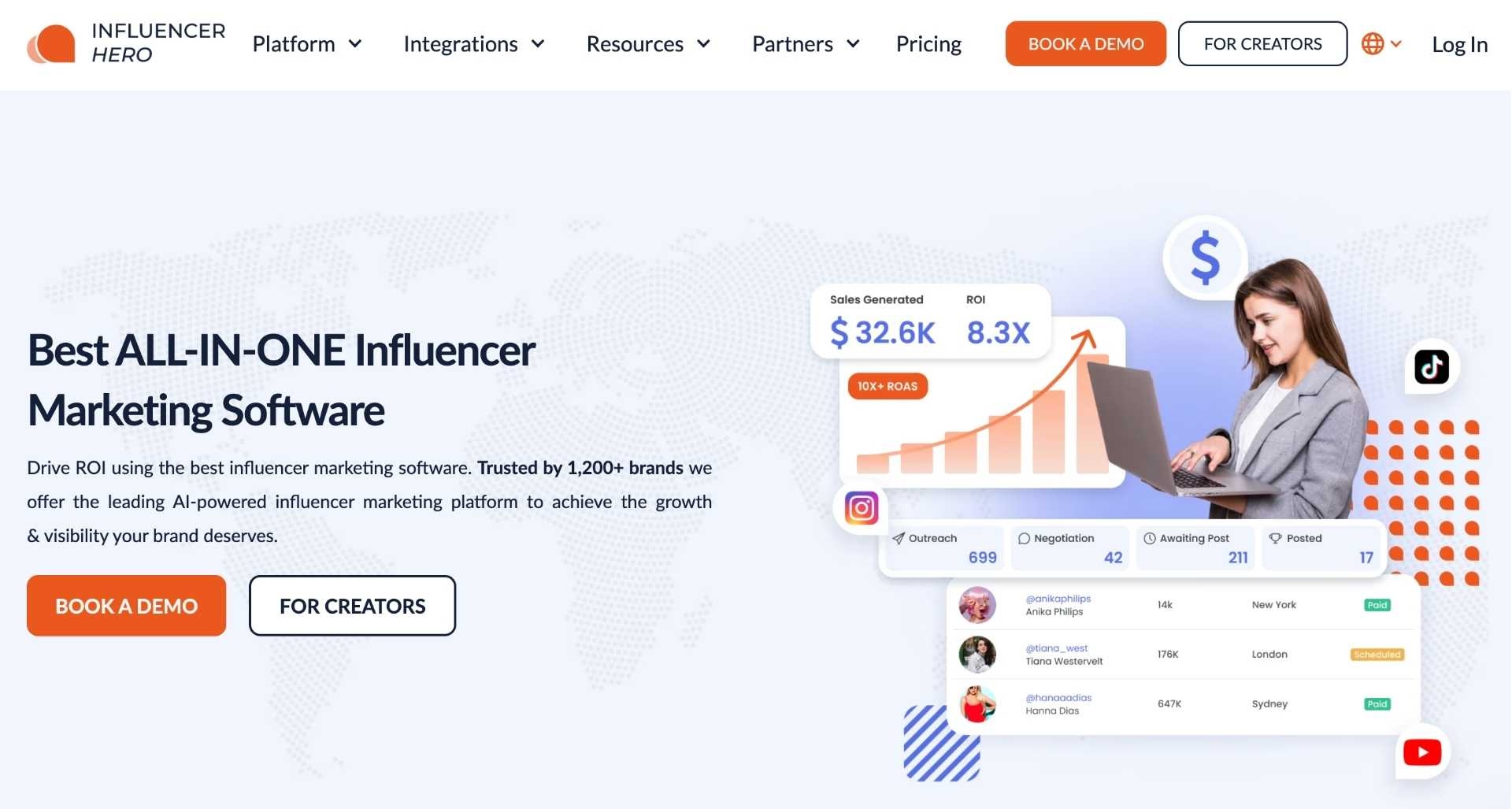
Influencer Hero is an all-in-one influencer marketing platform built for DTC and eCommerce brands that want discovery, outreach, gifting, affiliate tracking, and ROI measurement in one place. Its positioning is especially strong for teams that care about tying creator activity back to store revenue instead of treating influencer marketing as a top-of-funnel channel only.
Key Features
• Influencer discovery: Find creators across major platforms using advanced filters for audience, engagement, location, and niche, with built-in fraud detection and lookalike suggestions
• Outreach & automation: Scale personalized email outreach with AI-generated messages, automated follow-ups, and multi-step sequences
• Creator CRM: Manage influencer relationships in a centralized pipeline, tracking conversations, campaign stages, and deliverables
• Gifting workflows: Streamline product seeding with automated order creation, shipping, and delivery tracking
• Affiliate tracking & payouts: Generate unique links and discount codes, track performance, and handle commissions and payments in one system
• Campaign analytics & ROI tracking: Monitor performance across engagement, clicks, conversions, and revenue with real-time reporting dashboards
• UGC library: Automatically collect and organize influencer content for reuse across ads, social media, and product pages
• Application pages & storefronts: Capture inbound creators through branded application pages and enable influencers to promote products via custom storefronts
• eCommerce integrations: Sync with platforms like Shopify and WooCommerce to connect influencer activity directly to sales
• API & integrations: Extend workflows with API access and integrations like Klaviyo, Slack, Zapier, and email providers
Pricing
Influencer Hero offers flexible pricing based on outreach volume and you can have unlimited creators in your CRM:
• Standard — $649/month (up to 1,000 outreach messages per month)
• Pro — $1,049/month (up to 5,000 outreach messages per month)
• Business — $2,490/month (up to 10,000 outreach messages per month)
• Custom / Agency — Tailored pricing
Custom pricing is available for agencies and larger teams
Reviews
4.9/5.0 (Capterra)
Pros
• Strong eCommerce integrations: Its Shopify and WooCommerce integrations are a major differentiator because they connect gifting, links, discount codes, commissions, and attributed revenue inside the campaign workflow.
• Broad integrations beyond commerce: The platform’s integration library includes tools like Klaviyo, Slack, DocuSign, Zendesk, and Amazon, which makes it more operationally flexible than many influencer-only tools.
• Stronger creator-brand fit through data: Features like brand follower identification and AI-powered UGC search help teams find creators who already engage with the brand or produce relevant content, improving authenticity and campaign performance.
Cons
• No free trial: Makes it harder for teams to evaluate the platform before committing
• Can require setup work upfront: Because the platform is built around automation and integrated workflows, teams may need initial onboarding to fully configure it around their process.
Integrations
• Shopify: Sync products, send gifts, create creator-specific discount codes, and track attributed revenue directly inside campaign workflows.
• WooCommerce: Connect store data to affiliate tracking, discount codes, and creator-level sales reporting.
• Klaviyo: Match influencers already in your email audience and export influencer data back into Klaviyo for retention and segmentation workflows.
• Slack: Push creator replies, UGC posts, shipment updates, and sales notifications into Slack channels for faster team visibility.
• Amazon: Support affiliate and commerce workflows tied to Amazon-focused creator programs.
Julius vs Influencer Hero
Julius is a stronger fit for brands that prioritize human-vetted influencer profiles, brand safety, and curated discovery. Influencer Hero is more commerce-oriented, with a heavier emphasis on outreach automation, gifting, affiliate workflows, and eCommerce attribution.
Julius feels more enterprise-discovery-first, while Influencer Hero is built more like an operational CRM for DTC teams that want creator campaigns tied directly to sales. Julius also has more limited public integration visibility, whereas Influencer Hero leans into a broader stack of commerce, email, and workflow integrations. For brands that care more about campaign execution and ROI tracking than analyst-curated discovery, Influencer Hero is the more hands-on alternative.
Upfluence

Upfluence is an influencer and affiliate marketing platform built around creator discovery, campaign management, and commerce attribution. It is especially well known for helping eCommerce brands identify influencers within their own customer base and tie creator partnerships to store and marketplace revenue.
Key Features
• Influencer discovery across major platforms: Upfluence supports creator search using filters like audience, niche, engagement, demographics, and past content, with data designed to help brands shortlist creators quickly.
• Customer-to-creator identification: A standout capability is identifying influential customers and subscribers from connected commerce and email systems, which can help brands recruit warmer creator partners.
• Affiliate and promo code management: The platform can generate promo codes, track affiliate performance, and measure creator-driven revenue across store integrations.
• Bulk outreach and campaign management: Upfluence supports outreach, influencer relationship management, and campaign reporting in one platform.
• Amazon support: Upfluence is one of the more commerce-focused platforms for brands that also sell through Amazon, with attribution and affiliate functionality designed for that use case.
Pricing
• Pricing model: Upfluence uses custom pricing rather than a public fixed plan table.
• All plans are custom made. There’s a minimum full year of service you have to commit to with monthly payments. On average plans start around $2,000/month ($24,000 yearly)
Reviews
4.3/5.0 (Capterra)
Pros
• Excellent eCommerce fit: Shopify, Amazon, WooCommerce, Magento, and BigCommerce integrations make Upfluence one of the strongest options for brands that need creator activity tied to real commerce outcomes.
• Customer-as-influencer recruitment: Its ability to identify influencers among customers and email subscribers remains one of its strongest differentiators.
• AI-assisted workflow positioning: Upfluence is currently positioning Jaice AI and automated promo-code generation as part of its end-to-end workflow for influencer and affiliate teams.
Cons
• Contract rigidity and pricing opacity: Pricing is quote-based on the official site, and public feedback still points to annual commitments and a higher cost for smaller teams.
• Can feel complex early on: Reviews frequently highlight an onboarding curve, particularly for campaign setup and workflow management.
• Some workflow friction remains: Public user feedback still surfaces issues around campaign editability, UI clarity, and occasional data accuracy gaps.
Integrations
• Shopify: Find influencers in your customer base, send products, create codes, and track sales from creator campaigns.
• Amazon: Run creator and affiliate campaigns tied to Amazon Attribution and marketplace revenue.
• Klaviyo: Identify influential subscribers and connect influencer workflows with email audiences.
• Gmail: Manage outreach and email workflows from connected inboxes.
• Outlook: Sync outreach and communications into the Upfluence workflow for centralized management.
Julius vs Upfluence
Julius is more discovery- and vetting-oriented, with stronger emphasis on curated profiles and brand-safe influencer selection. Upfluence is more commerce-native, with deeper eCommerce integrations and a clearer focus on customer identification, affiliate tracking, and revenue attribution.
For brands selling heavily through Shopify or Amazon, Upfluence is usually the more practical operational choice. Julius is better suited to teams that want richer profile curation and traditional influencer discovery, while Upfluence is stronger when influencer marketing is expected to function like a measurable acquisition or retention channel.
Aspire

Aspire is an influencer marketing platform for eCommerce brands that positions itself as a “word-of-mouth commerce” platform. It combines influencer discovery, inbound creator applications, campaign workflows, affiliate tracking, and content management, making it especially appealing to brands that want both inbound and outbound creator sourcing.
Key Features
• Inbound and outbound creator discovery: Aspire stands out by combining traditional influencer search with an inbound creator marketplace where creators can apply directly to brands.
• Automated campaign workflows: The platform supports automation across invitations, contracts, briefs, approvals, gifting, and follow-ups to reduce campaign coordination work.
• Affiliate and ROI tracking: Aspire positions itself around attributable ROI, including affiliate sales, links, codes, and campaign-level performance reporting.
• UGC and content management: It supports content collection, approval workflows, and reuse of creator content for social and paid campaigns.
• Social and commerce partner ecosystem: Aspire highlights partnerships with Meta, TikTok, Pinterest, Shopify, WooCommerce, and Slack.
Pricing
Aspire does not publish full public package pricing on its website. Public and recent market sources indicate:
• Custom pricing
• Often reported at about $2,000+/month
• Recent quoting indicated around $2,300/month for a mid-tier setup
• Typically sold with a 12-month commitment rather than month-to-month self-serve plans
Reviews
4.0/5.0 (Capterra)
Pros
• Inbound creator marketplace: Aspire’s biggest differentiator is its ability to let creators raise their hands and apply, which reduces reliance on cold outbound prospecting.
• Strong workflow automation for ambassador-style programs: It is especially good for brands running seeding, affiliate, and repeat creator programs at scale.
• Direct social and commerce partnerships: Aspire highlights official partner relationships with Meta, TikTok, Pinterest, Shopify, and WooCommerce, which strengthens both data quality and workflow depth.
Cons
• Pricing can rise as programs scale: Aspire is usually not positioned as a lightweight or low-cost option for small teams.
• Can have a moderate learning curve: Because the platform covers many workflows, onboarding and navigation can take time.
• Mixed feedback on reporting depth and technical issues: Public reviews mention some friction around integrations, reporting polish, and occasional platform bugs.
Integrations
• Shopify: Sync product catalogs, manage gifting, and connect creator campaigns to store data.
• WooCommerce: Extend gifting and commerce workflows beyond Shopify into WooCommerce storefronts.
• Meta: Use official partner-connected data and workflows for influencer campaigns that intersect with Meta channels.
• TikTok: Benefit from official partner status and stronger platform-connected workflows.
• Slack: Keep internal collaboration and campaign visibility tied to your broader team workflow.
Julius vs Aspire
Julius is more traditional in its enterprise influencer-platform approach: curated discovery, campaign management, and reporting with strong vetting emphasis. Aspire is more modern and commerce-led, with clearer strengths in inbound creator recruitment, affiliate tracking, UGC generation, and product-seeding workflows.
For brands that want creators to apply directly, run ambassador-style programs, and connect influencer content to affiliate sales and ads, Aspire is the more flexible platform. Julius is still stronger for teams that place a premium on manually curated influencer data and classic enterprise discovery workflows.
CreatorIQ

CreatorIQ is an enterprise creator marketing platform built for large global programs that need discovery, governance, reporting, and payments at scale. Its current positioning leans heavily into creator-led growth, AI-native workflows, and deep platform integrations for enterprise teams managing creator activity across paid, owned, earned, commerce, and community channels.
Key Features
• Public creator discovery with content-first search: CreatorIQ surfaces creators through content-aligned search, brand mentions, and richer creator intelligence rather than relying on a small opt-in-only marketplace.
• Enterprise creator CRM: It centralizes creator relationships, campaign data, approvals, and workflows in one system built for large internal teams.
• Custom dashboards and live reporting: CreatorIQ is known for highly customizable reporting and stakeholder-friendly live dashboards.
• Commerce and affiliate capabilities: The platform supports revenue generation from affiliate creator programs, link/code workflows, and commerce measurement.
• Payments and compliance: CreatorIQ supports centralized payments and tax documentation, which is useful for multinational programs with finance oversight.
Pricing
There are different plans:
• Basic Plan: Starts at $35,000/year. Includes 1,000 contact creators per month
• Standard Plan: Starts at $50,000/year. Includes 2,500 contact creators per month
• Professional Plan: Starts at $90,000/year. Includes 5,000 contact creators per month
• Enterprise Plan: Starts at $200,000/year. Includes 7,500 contact creators per month
Reviews
4.4/5.0 (Capterra)
Pros
• Very strong first-party and platform-connected data story: CreatorIQ continues to deepen official platform integrations, including recent YouTube creator API integration work, which improves audience insights and workflow quality.
• Enterprise-grade reporting and governance: The platform is built for global organizations that need customizable analytics, approvals, and finance/compliance controls.
• Broad creator-led growth positioning: CreatorIQ now positions itself beyond influencer campaigns alone, into paid, owned, earned, commerce, and community programs, which is meaningful for larger brand ecosystems.
Cons
• High annual pricing: CreatorIQ is firmly in the enterprise tier and is often too expensive for smaller DTC teams.
• Can be complex to implement: Public reviews consistently note a learning curve because of the depth of the platform.
• Affiliate attribution may require more manual setup than affiliate-first tools: It is powerful, but not always the most lightweight choice for pure commerce execution.
Integrations
• Shopify: Support gifting workflows and connect store data to creator reporting and campaign execution.
• YouTube: Use first-party creator and audience data through CreatorIQ’s expanded YouTube integration.
• TikTok: Integrate campaign and reporting workflows with TikTok data for enterprise creator programs.
• Meta: Pull in creator marketing data through deep platform partnerships and reporting workflows.
• Snapchat: Support broader creator intelligence and multi-platform program visibility.
Julius vs CreatorIQ
Both Julius and CreatorIQ target larger brands, but they solve slightly different problems. Julius is more centered on curated influencer discovery, brand safety, and campaign management with human-reviewed profiles. CreatorIQ is broader and more enterprise-system-like, with deeper governance, reporting customization, global payment handling, and large-scale workflow control.
If a brand’s priority is enterprise reporting, multi-team collaboration, official platform integrations, and global compliance, CreatorIQ is usually the stronger choice. If the priority is curated discovery and a simpler influencer-platform experience without moving into a much larger operating system, Julius remains the more focused option.
Later
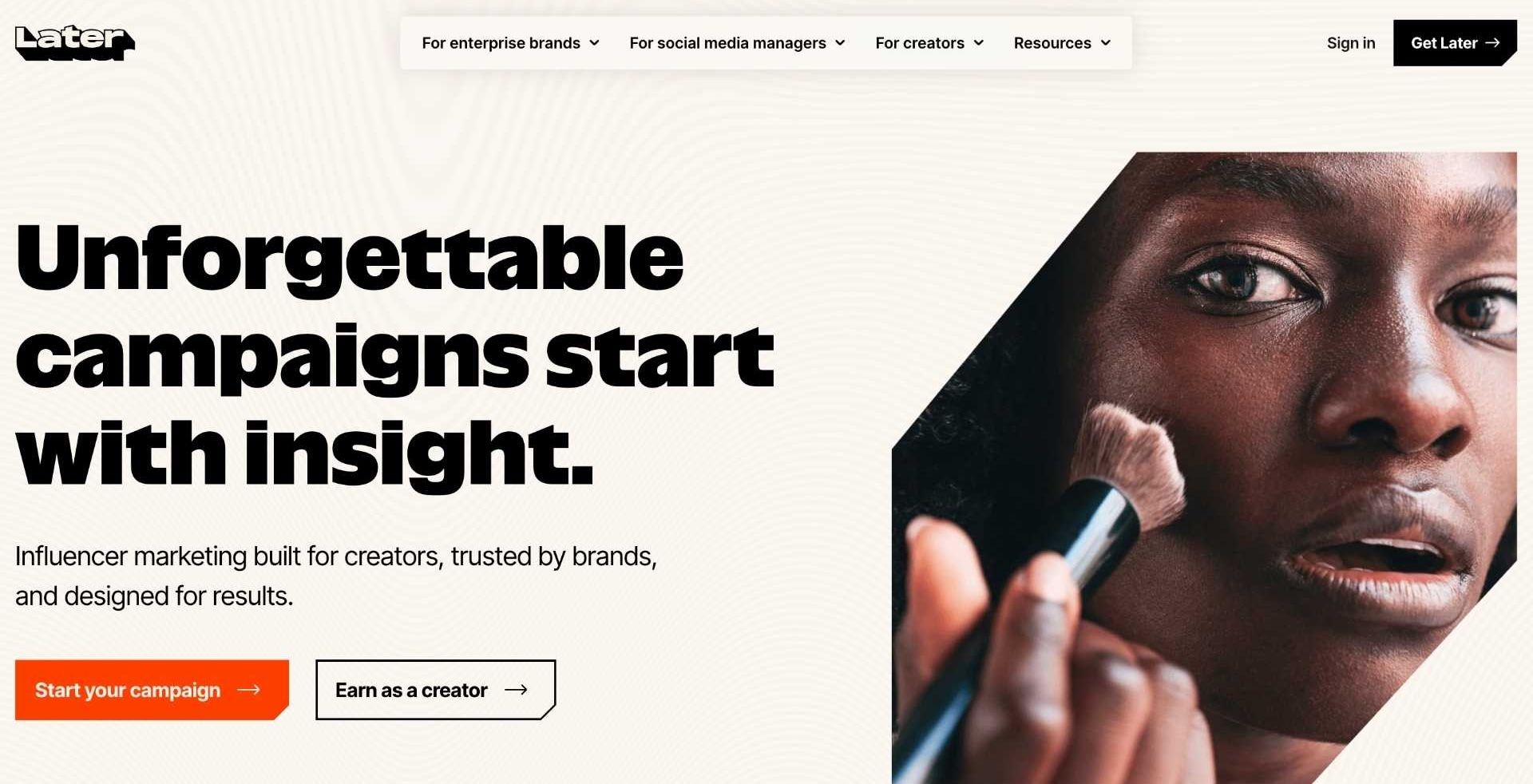
Later Influence is Later’s influencer marketing platform and services offering, built around creator discovery, campaign management, reporting, and social-commerce measurement. It has expanded its positioning beyond classic influencer workflows by combining creator intelligence, social listening, affiliate capabilities, and predictive AI into a broader brand-growth platform.
Key Features
• Creator discovery and outreach: Later offers influencer search tools with smart filters for audience, demographics, and brand fit, along with outreach tools to recruit and activate creators.
• End-to-end campaign workflows: Brands can run campaigns with automation, performance tracking, draft review, and unlimited users, campaigns, and creator partnerships under platform licenses.
• Social listening and brand health monitoring: Later explicitly includes social listening and sentiment monitoring as part of its influencer platform offering.
• Affiliate and social commerce support: Later supports affiliate programs and now integrates Later Influence with Mavely to manage affiliate links and track creator performance within the platform.
• Predictive AI and measurement: Later is heavily pushing Later EdgeAI, its predictive intelligence layer built on first-party data from social listening, campaign intelligence, Linkin.bio, and the Mavely network.
Pricing
Later’s influencer marketing platform (Later Influence) uses custom pricing, and brands need to request a demo for exact costs.
Based on our research, there are different plans:
• Essentials Plan: Starts at $28,500/year. Best for brands starting in influencer marketing.
• Pro Plan: Starts at $42,000/year. Best for data and automation to make your campaigns run faster and achieve better ROI.
• Premier Plan: Starts at $60,000/year. Everything you need for a scaled influencer program.
• All plans come with an additional one-time onboarding fee of $5,000 for all new customers.
Reviews
4.4 / 5.0 (Capterra)
Pros
• Later EdgeAI is a meaningful recent differentiator: Later is now positioning predictive AI as a core layer for influencer planning and performance forecasting.
• Strong mix of platform plus managed services: Brands can choose self-serve software, software plus expert support, or fully managed services, which is more flexible than many competitors.
• Expanded social-commerce capabilities through Mavely: The Mavely integration strengthens Later’s affiliate and creator-commerce story beyond basic campaign reporting.
Cons
• No public price transparency for influencer plans: Buyers still need a sales conversation to understand actual cost.
• Better suited to brands that want a combined platform-and-services model: Teams looking for a simple pure-software tool may find the offering broader than necessary.
• Some public feedback still mentions occasional platform glitches and creator account-connection friction: That remains a common complaint across review sources.
Integrations
• Shopify: Connect your store to automate product gifting, creator selection, and campaign result tracking.
• Mavely: Run affiliate workflows with creator links and track affiliate performance directly inside Later Influence.
• Instagram: Use Later across influencer and social workflows tied to Instagram campaign execution and measurement.
• TikTok: Later supports creator discovery, campaign measurement, and broader social platform workflows tied to TikTok.
• YouTube: Later’s creator network and campaign reporting also extend across YouTube.
Julius vs Later
Julius is more of a classic influencer marketing platform: curated discovery, brand-safe vetting, and campaign reporting. Later is broader. It combines influencer marketing with social listening, social commerce, affiliate workflows, managed services, and a larger brand-marketing stack.
For brands that want creator marketing connected to broader social and commerce programs, Later is the more expansive option. Julius is the more focused choice for teams that mainly want influencer discovery and management without moving into a multi-layer platform-and-services model. Later also appears more active right now in predictive AI and creator-commerce positioning, while Julius remains more rooted in curated influencer operations.

IZEA

IZEA is one of the older names in influencer marketing software, and its current platform, IZEA Flex, is built to help brands and agencies manage creator relationships, campaign workflows, approvals, tracking, and payments in one system. The platform is especially notable for combining influencer operations with its own AI tooling and creator marketplace ecosystem.
Key Features
• Influencer relationship management: IZEA Flex lets teams manage creator contacts, build smart lists, and keep influencer records updated from social handles, making it easier to organize long-term programs.
• Tracking links and revenue attribution: Built-in tracking links measure time on site, products purchased, and revenue generated from creator campaigns.
• Email-linked creator workflows: Its Gmail integration connects creator emails to contact records, making outreach and relationship tracking easier to manage in one place.
• AI content creation tools: FormAI adds AI-assisted copy, image generation, voice tools, and GPT-4-powered workflows for content ideation and production.
• Contracts and stakeholder approvals: IZEA has built contracts and approval workflows into Flex, reducing the need to manage creator paperwork outside the platform.
Pricing
• Starter Plan: starts at $130/month.
• Power Plan: starts at $500/month.
• Free trial: 10 days.
• Managed Services: custom proposal-based pricing for fully managed campaigns.
Reviews
3.9/ 5.0 (G2)
Pros
• Built-in AI stack for creator marketing: FormAI combines GPT-4, image generation, voice cloning, and AI video tools in a way few influencer platforms currently match.
• Strong creator relationship and communication layer: IZEA’s Gmail integration and creator contact system make it easier to connect outreach, payments, content, and campaign history in one place.
• Recent Flex feature rollout cadence: IZEA continues to push regular product updates, including contracts, creator offers, and new AI assistant features inside Flex.
Cons
• Publicly documented integrations are still relatively limited: The clearest named integrations on IZEA’s public materials are Shopify, Google Analytics, and Gmail, so the broader ecosystem appears less transparent than some competitors.
• Review footprint for Flex is smaller than some larger competitors: There is public validation, but the volume of recent third-party product reviews is thinner than more established enterprise suites. (G2)
• Some advanced features are split across IZEA’s broader product ecosystem: Marketplace, AI creation, and managed services sit around Flex rather than always feeling like one simple self-serve product.
Integrations
• Shopify – Connects store data so brands can track product purchases, revenue, and campaign performance tied to creators.
• Google Analytics – Pulls conversion and site-performance data into campaign reporting for deeper attribution.
• Gmail – Syncs creator email conversations to contact records so outreach history stays connected to campaigns and payments.
• ChatGPT / GPT-4 – Powers AI-assisted content ideation and copy generation inside FormAI.
• Stable Diffusion – Supports AI image generation workflows within FormAI for creative production.
Julius vs IZEA
Julius is more focused on curated influencer discovery, brand vetting, and classic enterprise campaign management. IZEA is broader around creator operations, with stronger native AI tooling, creator communications, and built-in tracking links tied to Shopify and Google Analytics. Julius feels more discovery-first, while IZEA leans more into workflow execution and creative enablement.
Traackr
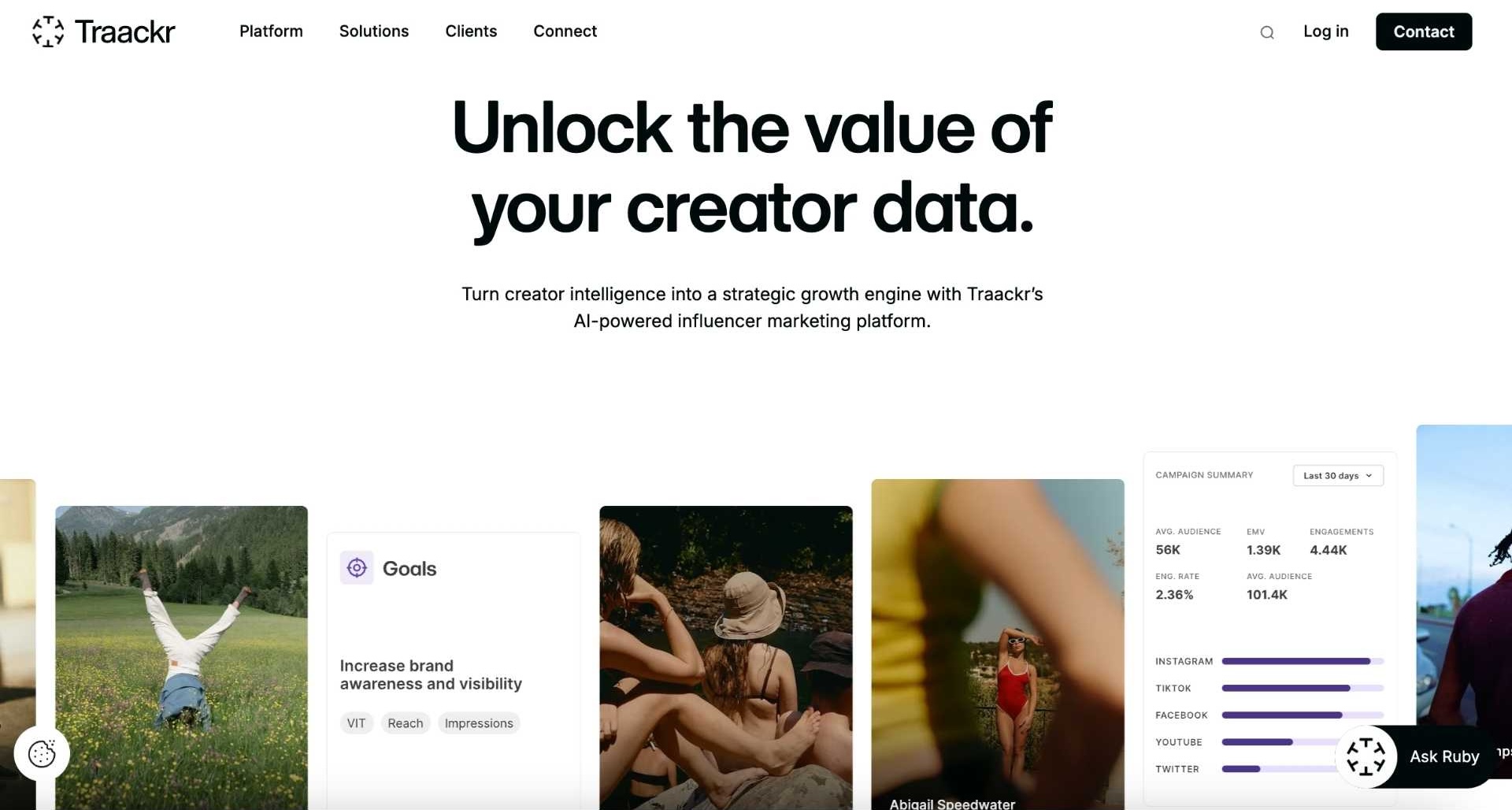
Traackr is an enterprise influencer marketing platform built for brands that care deeply about benchmarking, budget allocation, performance efficiency, and long-term creator relationship management. It is less about lightweight outreach and more about turning influencer marketing into a measurable performance channel across markets and teams.
Key Features
• Influencer discovery and vetting: Traackr provides creator discovery with filters for engagement, audience demographics, past collaborations, and performance history.
• Influencer CRM: Teams can store notes, tags, statuses, and historical relationship data to manage creators over time instead of campaign by campaign.
• Advanced reporting and ROI analysis: The platform reports on CPC, CPE, CPV, engagement, reach, ROI, and other efficiency metrics.
• Live benchmarking: Traackr benchmarks campaign results against industry and market data so teams can compare performance in context.
• Affiliate, payouts, and gifting support: It also supports product seeding, affiliate links, commission tracking, and creator payouts.
Pricing
• Official pricing: custom / request a quote.
• Public benchmark: pricing starts around $32,500/year for a standard plan, with additional modules available on request.
• Contract type: generally annual enterprise contracts.
Reviews
4.3 / 5.0 (G2)
Pros
• Brand Vitality Score: Traackr’s BVS is one of the clearest differentiators in this category, giving teams a proprietary way to compare brand influence versus competitors.
• Budget Optimization Calculator: The platform goes beyond reporting by helping teams estimate what to spend on each creator based on expected performance and ROI.
• Strong current push into AI-assisted workflows: Traackr is now positioning itself around AI-powered discovery and scalable AI-assisted creator workflows for global teams.
Cons
• High price and annual commitment: It is firmly aimed at enterprise buyers, which makes it a difficult fit for smaller DTC programs.
• Can feel dense and slower to navigate: Public feedback repeatedly points to a learning curve, occasional lag, and tracking delays in some campaign workflows.
• Less execution-first than commerce-heavy tools: Compared with DTC platforms, Traackr can feel more like a reporting and benchmarking layer than an outreach-and-seeding operating system.
Integrations
• Shopify – Connects ecommerce data to creator performance and revenue measurement.
• Email tools – Supports communications through integrated email workflows for outreach and creator management.
• Payments systems – Supports creator payouts and payment workflows inside the platform ecosystem.
• SSO – Gives larger organizations centralized authentication and access control across teams.
• Data Lake / data warehouse connections – Helps enterprise teams move influencer data into broader analytics environments.
Julius vs Traackr
Julius is stronger as a curated discovery and campaign-management platform, while Traackr is stronger as a benchmarking and budget-optimization platform. If the priority is human-vetted influencer discovery, Julius has the more classic influencer-platform feel; if the priority is spend efficiency, market benchmarks, and enterprise reporting, Traackr is the more analytics-heavy choice.
Influencity
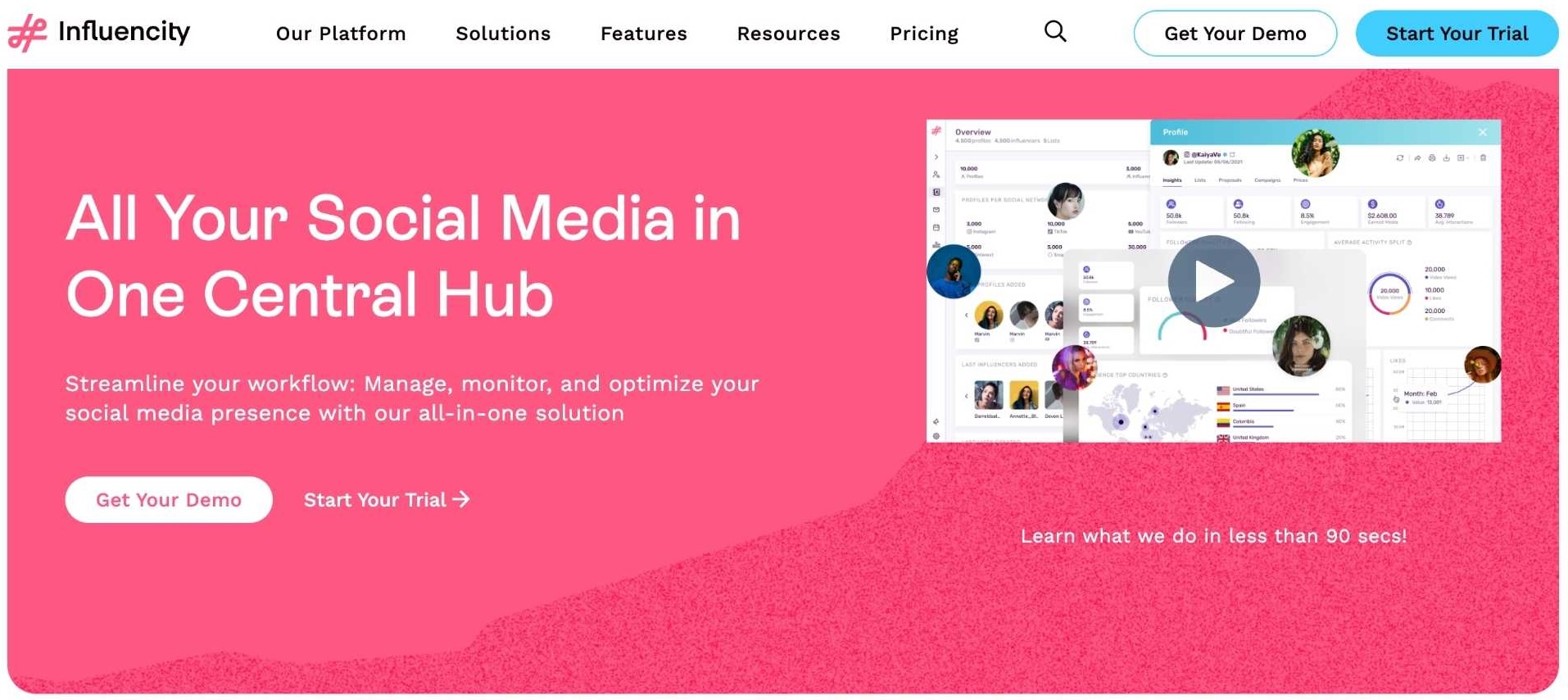
Influencity is an all-in-one influencer marketing platform that combines creator discovery, relationship management, outreach, seeding, campaign reporting, and social listening in one hub. It is positioned as a flexible option for brands and agencies that want end-to-end workflows without moving into full enterprise pricing too early.
Key Features
• Influencer discovery at scale: Influencity offers a very large creator database with filtering by audience, demographics, fake-follower indicators, and campaign fit.
• Influencer relationship management: The platform includes a central hub for lists, outreach, follow-ups, campaign coordination, and creator segmentation.
• Campaign manager and reporting: Teams can track content, mentions, hashtags, budgets, deliverables, and campaign-level results in one place.
• Seeding and payments: Influencity supports ecommerce-connected seeding plus influencer payments in multiple currencies.
• Social hub and listening tools: It also extends into social inbox, analytics, content planning, and competitor monitoring, which makes it broader than many influencer-only tools.
Pricing
Influencity offers three main pricing tiers, along with add-ons:
• Professional Plan: $318/month or $3,816/year
• Business Plan: $798/month or $9,576/year
• Enterprise Plan: Custom pricing
• Auto-Tracker Add-On: $660/year (for 50 influencers)
Reviews
4.3 / 5.0 (G2)
Pros
• Very broad feature scope for the price tier: Discovery, IRM, campaign tracking, social hub, listening, and reporting are all bundled into one platform.
• Useful fit for ecommerce teams: Shopify-linked seeding and creator payments make it more operational than analytics-only tools.
• Recent emphasis on integrated social + influencer workflows: Influencity now positions itself as a combined influencer marketing, social management, and listening platform rather than a narrow point solution.
Cons
• Lower public review volume than some category leaders: The review scores are solid, but the verified review base is still smaller on some directories.
• Can feel less intuitive at first: Public feedback notes some early confusion with discovery filters and workflow setup.
• Scaling limitations can show up for very large programs: It is powerful, but some users still see it as lighter than top-tier enterprise suites.
Integrations
• Shopify – Connects ecommerce data to seeding, discount code workflows, and campaign measurement.
• Instagram – Supports creator discovery, content tracking, and campaign reporting on Instagram.
• TikTok – Supports discovery, campaign monitoring, and analytics on TikTok.
• YouTube – Extends creator discovery and reporting into YouTube campaigns.
• X / Twitter analytics – Supports analytics coverage for X as part of broader multi-channel tracking.
Julius vs Influencity
Julius is more specialized around curated discovery and campaign vetting, while Influencity is broader and more modular, combining influencer marketing with social media management and listening. For teams that want a wider operational stack and public entry pricing, Influencity is the more flexible choice; for teams that value human-reviewed influencer data more than breadth, Julius stays more focused.
Heepsy

Heepsy is a creator discovery and campaign-management platform aimed more at small and mid-sized brands than large global enterprises. Its value is strongest in search, vetting, outreach, and straightforward ecommerce-linked tracking, making it a practical option for teams that want usable functionality without enterprise complexity.
Key Features
• Creator discovery and filtering: Heepsy lets brands search influencers by niche, audience size, engagement, audience demographics, and authenticity indicators.
• Audience quality and fake follower detection: The platform helps teams screen creators before investing in gifting or paid collaborations.
• Bulk outreach and follow-ups: Heepsy supports outreach templates, follow-ups, and project-based creator contact management.
• Campaign CRM and reporting: It includes campaign boards, reporting, media tracking, and content monitoring via hashtags and mentions.
• Sales tracking on higher plans: With store integrations enabled, Heepsy can track traffic, sales, and commissions tied to influencer campaigns.
Pricing
• Free — limited free access is available.
• Starter — recent official Heepsy blog references place Starter at $89/month.
• Plus — recent official Heepsy blog references place Plus at $249/month.
• Advanced — recent official Heepsy blog references place Advanced at $369/month.
• Heepsy also says users can choose monthly or annual billing, with annual subscriptions discounted versus monthly rates.
Reviews
4.5 / 5.0 (G2)
Pros
• Good value for smaller teams: Heepsy is one of the more accessible platforms in this category, with public entry pricing and a simpler workflow than enterprise tools.
• Practical Shopify-linked tracking: Its Shopify integration helps brands connect creator activity to traffic and sales without building a complex stack.
• Balanced discovery + outreach workflow: Heepsy combines creator search, outreach, CRM, reporting, and payments in a more approachable package than many analytics-heavy platforms.
Cons
• Advanced commerce features are gated higher up: Sales tracking and deeper affiliate workflows sit mainly in the Advanced plan.
• Less powerful for enterprise automation: Compared with full-suite platforms, its workflow automation and deeper ops tooling are more limited.
• Some gaps remain in creator coverage and support quality: Public feedback mentions filtering limitations, service issues, and cases where smaller creators are harder to work with in-platform.
Integrations
• Shopify – Links your product catalog to creator offers and automatically tracks traffic and sales from influencer campaigns.
• WooCommerce – Supports affiliate-style sales tracking for WooCommerce stores on higher plans.
• Creator payments – Connects sales-based commission calculations to payment workflows for collaborators.
• Instagram – Supports discovery, analytics, and reporting for Instagram creator campaigns.
• TikTok / YouTube – Extends creator search and analytics coverage into TikTok and YouTube.
Julius vs Heepsy
Julius is the more enterprise-style platform, with stronger emphasis on curated discovery and structured campaign oversight. Heepsy is more accessible and easier to buy into, with public pricing and a clearer fit for small to mid-sized teams that need discovery, outreach, and basic sales tracking. If budget and simplicity matter most, Heepsy is the lighter alternative; if brand vetting depth matters more, Julius is the stronger fit.
Lefty
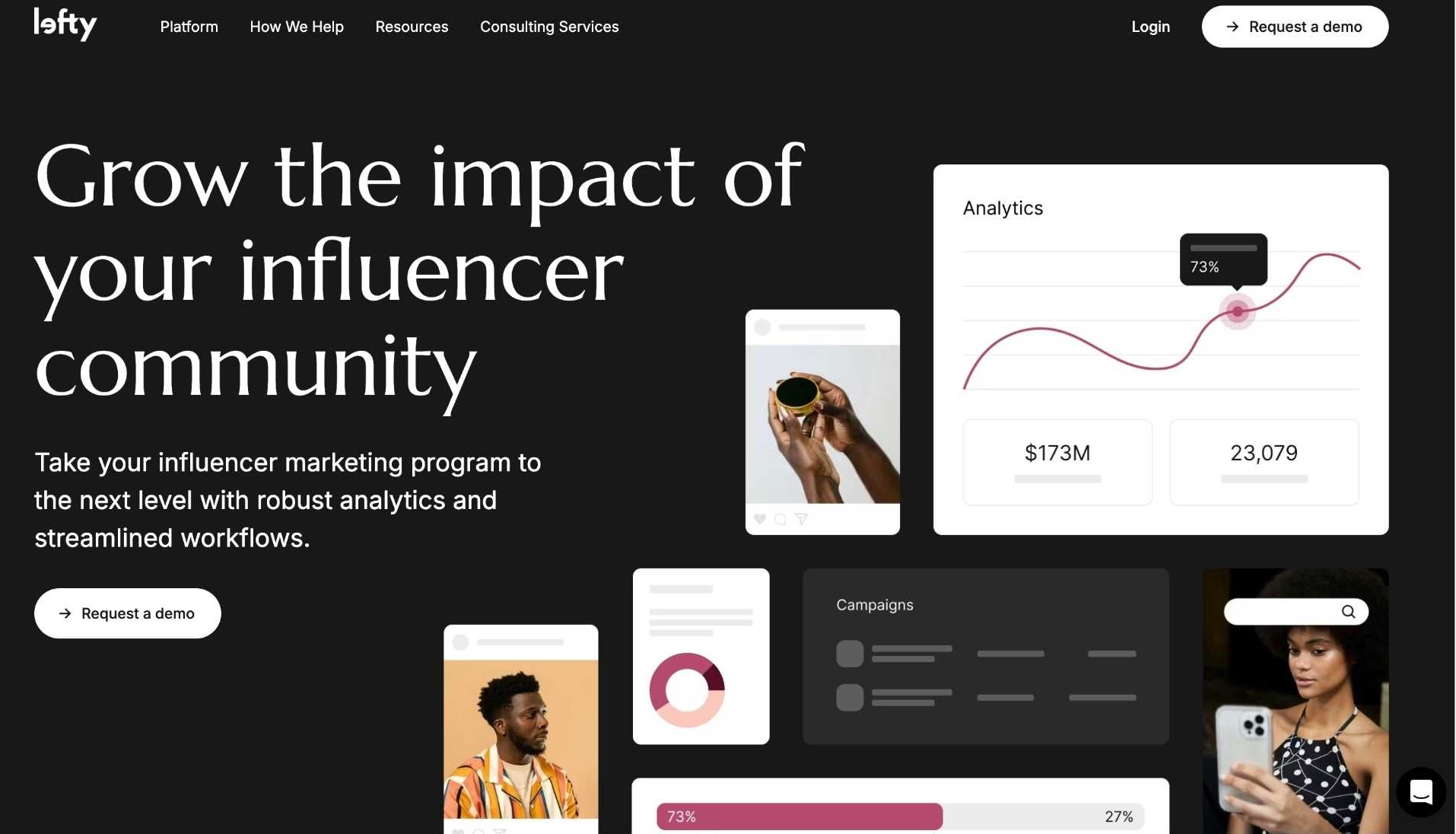
Lefty is a data-driven influencer marketing platform built for brands and agencies, with particular strength in fashion, beauty, luxury, and lifestyle. It combines discovery, campaign management, product seeding, affiliate tracking, and analytics, and has recently leaned harder into ecommerce integrations and AI-assisted workflows.
Key Features
• Influencer discovery with vetted profiles: Lefty says it indexes more than 30 million influencer profiles using proprietary search and API-based data collection.
• Campaign management and reporting: The platform automates campaign monitoring and reporting across global social networks, including stories.
• Direct email outreach: Brands can connect Gmail or Outlook and manage influencer communication directly through Lefty.
• Product gifting and seeding: Lefty supports store-connected gifting, inventory syncing, and product requests for influencer campaigns.
• Affiliate and revenue tracking: The platform generates affiliate links and promo codes, then reports on revenue and top-performing influencers, products, and posts.
Pricing
• Starting Price: ~€590 per month.
• Pro Plan: ~€990/month, including 2 users, 5 campaigns, and unlimited reports.
• Premium Plan: ~€1,690/month, which adds a dedicated manager.
• Premium+ Plan: ~€3,490/month for 10 users and 25 campaigns.
Reviews
4.7/5.0 (G2)
Pros
• Strong ecommerce push in recent updates: Lefty has recently shipped stronger ecommerce integrations, affiliate tools, product gifting automation, and seeding workflows.
• Direct email outreach is a newer operational advantage: The addition of direct emailing through Gmail and Outlook reduces friction versus platforms that rely more on in-app messaging.
• AI capabilities are becoming a bigger part of the product: Lefty is actively highlighting new AI features using computer vision and LLMs for influencer marketing analysis and prediction.
Cons
• Pricing transparency is limited: Brands still need to go through a demo-led sales process to understand actual commercial terms.
• Best fit is still skewed toward lifestyle categories: Lefty’s branding and customer examples remain especially concentrated in fashion, beauty, luxury, and similar verticals.
• Public pricing and integration documentation are less detailed than some competitors: Core use cases are clear, but many details still need to be confirmed in sales conversations.
Integrations
• Shopify – Connects your store for product gifting, inventory syncing, affiliate links, promo codes, and revenue tracking.
• Salesforce Commerce Cloud – Supports ecommerce syncing for gifting, fulfillment, and product seeding workflows.
• Magento – Lets brands connect Magento stores to manage product gifting and inventory-linked creator workflows.
• Gmail – Enables direct influencer outreach with automated personalization and conversation tracking.
• Outlook – Supports email-based influencer communications directly from Lefty for teams using Microsoft’s email stack.
Julius vs Lefty
Julius is more traditional in its enterprise influencer-platform positioning, with stronger emphasis on curated discovery and brand-safe selection. Lefty is more commerce-forward, with clearer strengths in affiliate links, promo codes, product gifting, and revenue analysis. For fashion, beauty, and lifestyle brands that want influencer marketing tied more directly to ecommerce outcomes, Lefty is the more modern alternative; for teams that care more about analyst-reviewed discovery depth, Julius remains more focused.
Final Thoughts on Julius Alternatives
Julius remains a strong choice for brands that prioritize curated influencer discovery, brand safety, and structured campaign management, but many alternatives offer more flexibility depending on specific needs. Platforms like Influencer Hero, Upfluence, and Aspire lean heavily into eCommerce integrations and ROI tracking, while tools like CreatorIQ and Traackr cater to enterprise teams with advanced reporting and scalability. Meanwhile, solutions such as Heepsy, Influencity, and IZEA provide more accessible pricing and broader feature sets for growing teams. Ultimately, the right alternative depends on whether a brand values discovery accuracy, workflow automation, commerce attribution, or overall scalability in its influencer marketing strategy.

.png)


.jpg)