

10 Best IZEA Alternatives • Key Criteria • IZEA Overview • Best IZEA Alternatives • GRIN • Upfluence • CreatorIQ • Influencer Hero • NeoReach • Lefty • Insense • Kolsquare • Skeepers • Creator.co • Final Thoughts • FAQs
10 Best IZEA Alternatives for Influencer Marketing
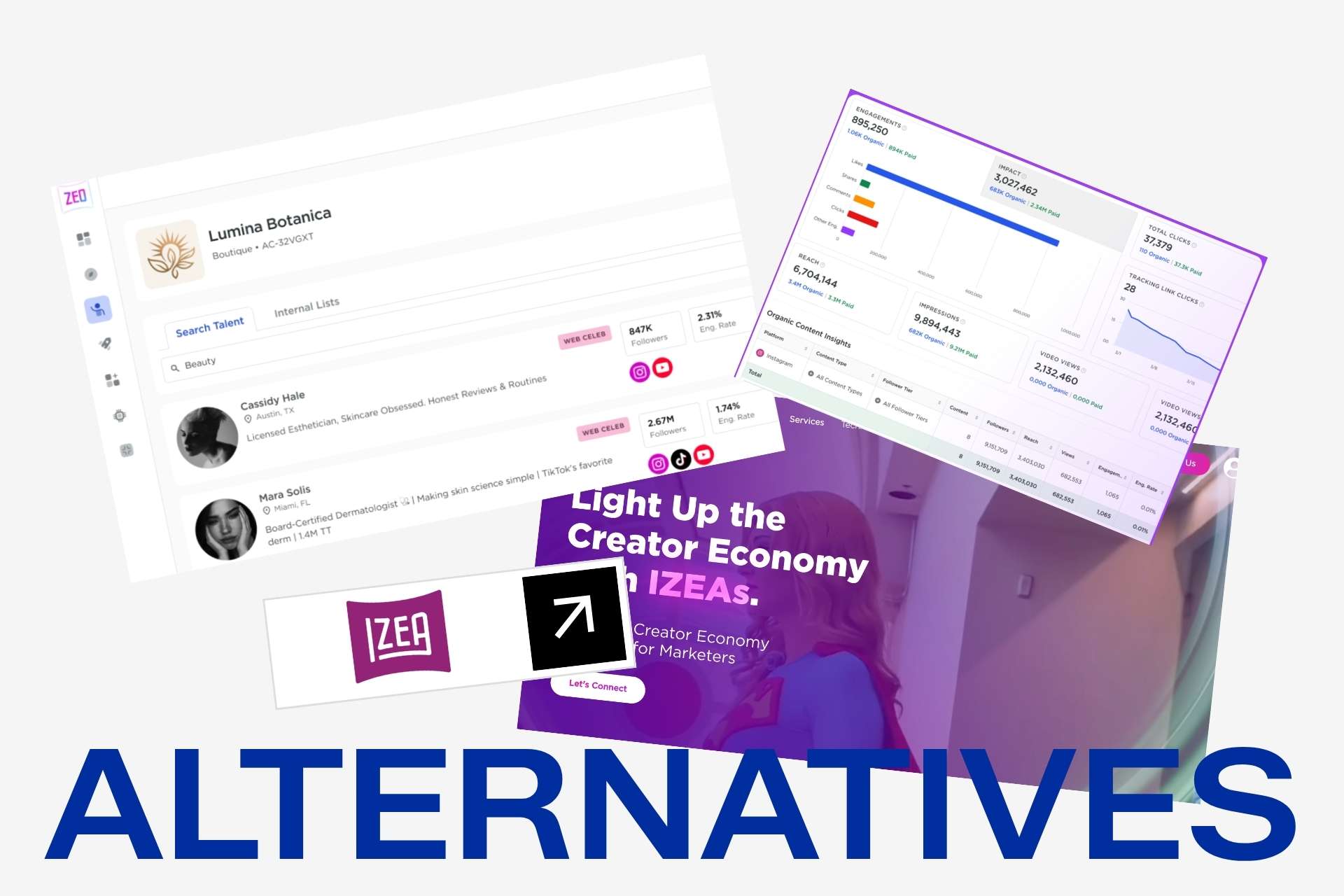
D2C brands today rely heavily on influencer marketing software to scale creator discovery, streamline outreach, manage campaigns, and tie performance back to revenue. IZEA is one of the more established platforms in this space, offering a mix of marketplace access, campaign tools, and managed services, but it also comes with trade-offs like a fragmented pricing structure, clunky workflows, and limitations in usability and communication. As a result, many brands start exploring IZEA alternatives that better align with their growth stage, budget, and need for eCommerce integrations or advanced analytics. Whether you're building your first creator program or optimizing an existing one, understanding how different influencer marketing software compares is key to making the right investment.
In this guide, we’ll break down the 10 best IZEA alternatives—GRIN, Upfluence, CreatorIQ, Influencer Hero, NeoReach, Lefty, Insense, Kolsquare, Skeepers, and Creator.co—to help you find the right fit.
Key Criteria for Evaluating Influencer Marketing Platforms
Core Features
Evaluation of essential influencer marketing capabilities, including influencer discovery, outreach, CRM, campaign management, reporting, and content workflows.
Pricing & Flexibility
Comparison of pricing models, subscription plans, and contract terms to match different budgets and growth stages.
Customer Reviews & Satisfaction
Analysis of user feedback from trusted review platforms, focusing on usability, reliability, customer support, and overall performance.
Pros & Cons
Review of each platform’s strengths and limitations to highlight where it performs well and where it may fall short based on different use cases.
Integrations
Review of the most important integrations (e.g., Shopify and other tech tools), highlighting what each integration enables in one sentence.
IZEA Overview
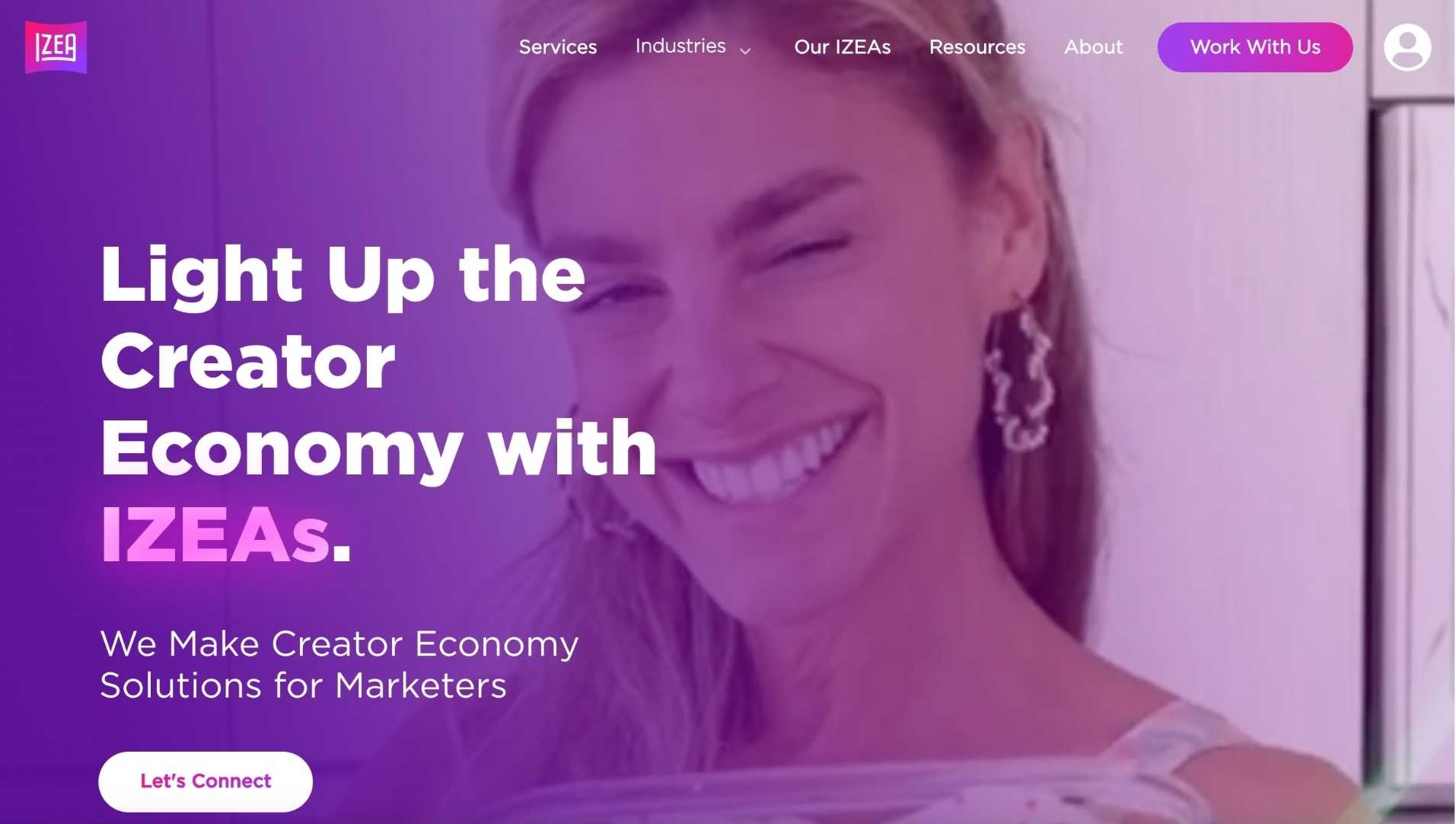
IZEA is one of the pioneers in the influencer marketing space, founded in 2006 and widely recognized for helping shape the creator economy. Today, it operates as both a software platform and a managed services provider, enabling brands to discover influencers, run campaigns, manage relationships, and track performance from a single ecosystem.
Its core product, IZEA Flex, is designed for end-to-end influencer campaign management, while its Creator Marketplace allows brands to directly connect and transact with creators. In addition, IZEA offers fully managed services for brands that prefer a hands-off approach, covering everything from strategy to execution.
Key Features
- Influencer Discovery & Search
Access a large database of creators and filter by audience demographics, niche, engagement metrics, and platform to find relevant influencers for your campaigns. - Creator Marketplace
A built-in marketplace where brands can browse creator profiles, purchase content services directly, or post casting calls for influencers to apply. - Campaign Management & Workflow Tools
Plan, execute, and manage campaigns with tools for assigning deliverables, tracking timelines, and coordinating with internal teams and creators. - Content Review & Approval System
Review draft content, request revisions, and approve posts before they go live—all within the platform. - Social Listening & Campaign Monitoring
Track hashtags, keywords, and brand mentions across social platforms to monitor both campaign performance and organic buzz. - Performance Tracking & Analytics
Measure campaign success through engagement metrics, reach, and conversion tracking using custom links and UTMs. - Creator CRM & Relationship Management
Store creator data, manage communication history, and build long-term relationships with influencers through a centralized CRM. - Payments & Transactions
Handle influencer payments directly within the platform, simplifying financial workflows and creator compensation. - AI-Powered Tools (IZZY & FormAI)
AI features help with influencer discovery, campaign recommendations, and content generation, improving efficiency and decision-making. - Managed Services
For brands that want support, IZEA offers end-to-end campaign execution including strategy, influencer sourcing, content production, and reporting.
Pricing
IZEA offers multiple pricing tiers depending on whether you’re using the marketplace or its enterprise platform:
- Creator Marketplace (Free Plan)
Free forever with limited features and up to 3 casting call pitches per month. - Creator Marketplace – Marketer Pro
$99/month (annual billing) or $129/month (monthly)
Includes unlimited casting calls, creator messaging, analytics, and AI credits. - IZEA Flex – Starter Plan
Starts at ~$130/month (annual) or ~$165/month (monthly)
Includes core tools like influencer discovery, campaign tracking, and analytics. - IZEA Flex – Power Plan
Starts at ~$500/month (annual) or ~$600/month (monthly)
Adds advanced workflow tools, creator transactions, and expanded integrations. - Managed Services
Custom pricing depending on campaign scope and level of support required. - Free Trial
10-day free trial available for IZEA Flex.
Reviews
3.9/ 5.0 (G2)
Integrations
- Shopify – Track influencer-driven sales, manage product seeding, and connect campaigns directly to eCommerce performance.
- Google Analytics – Measure traffic, conversions, and on-site behavior generated by influencer campaigns.
- Gmail – Sync email conversations with creators directly into IZEA’s CRM for streamlined communication.
- PayPal – Manage and automate influencer payouts securely within the platform.
- Meta (Facebook Login) – Simplifies account access and user authentication within IZEA tools.
Pros
- Flexible model (self-serve + managed services)
IZEA stands out by offering both software and fully managed influencer marketing services, making it suitable for teams of all sizes. - Strong recent AI enhancements
The addition of AI tools like IZZY improves influencer discovery, campaign insights, and overall workflow efficiency. - Improved content approval workflows
Built-in draft reviews, revision requests, and approval systems help streamline collaboration between brands and creators.
Common Drawbacks of IZEA
Clunky communication workflows
Messaging and creator communication can feel fragmented, which slows down outreach and collaboration.
User interface can be unintuitive
Some users find navigation, search functionality, and campaign setup less intuitive compared to newer platforms.
Platform reliability issues
Occasional bugs, timeouts, and lost progress can impact productivity, especially during active campaigns.
Complex pricing structure
With separate pricing for Marketplace, Flex, and managed services, it can be difficult to understand total costs upfront.
Best IZEA Alternatives
| TOOL | REVIEWS | BEST FOR | TRIAL INFO | PRICING | ||
|---|---|---|---|---|---|---|
1 |

|
⭐ | DTC creator management | Book Demo | Pricing | Website |
2 |
|
⭐ | Influencer discovery | Book Demo | Pricing | Website |
3 |

|
⭐ | Enterprise influencer marketing | Book Demo | Pricing | Website |
4 |

|
⭐ | Influencer CRM & automation | Book Demo | Pricing | Website |
5 |
|
⭐ | Influencer campaigns & data analytics | Book Demo | Pricing | Website |
6 |

|
⭐ | Influencer analytics & discovery | Book Demo | Pricing | Website |
7 |

|
⭐ | UGC creators & paid social ads | Book Demo | Pricing | Website |
8 |

|
⭐ | Data-driven influencer discovery & campaign analytics | Book Demo | Pricing | Website |
9 |

|
⭐ | Influencer gifting & UGC campaigns with micro-influencers | Book Demo | Pricing | Website |
10 |

|
⭐ | Influencer campaigns & creator marketplace | Book Demo | Pricing | Website |
1. GRIN
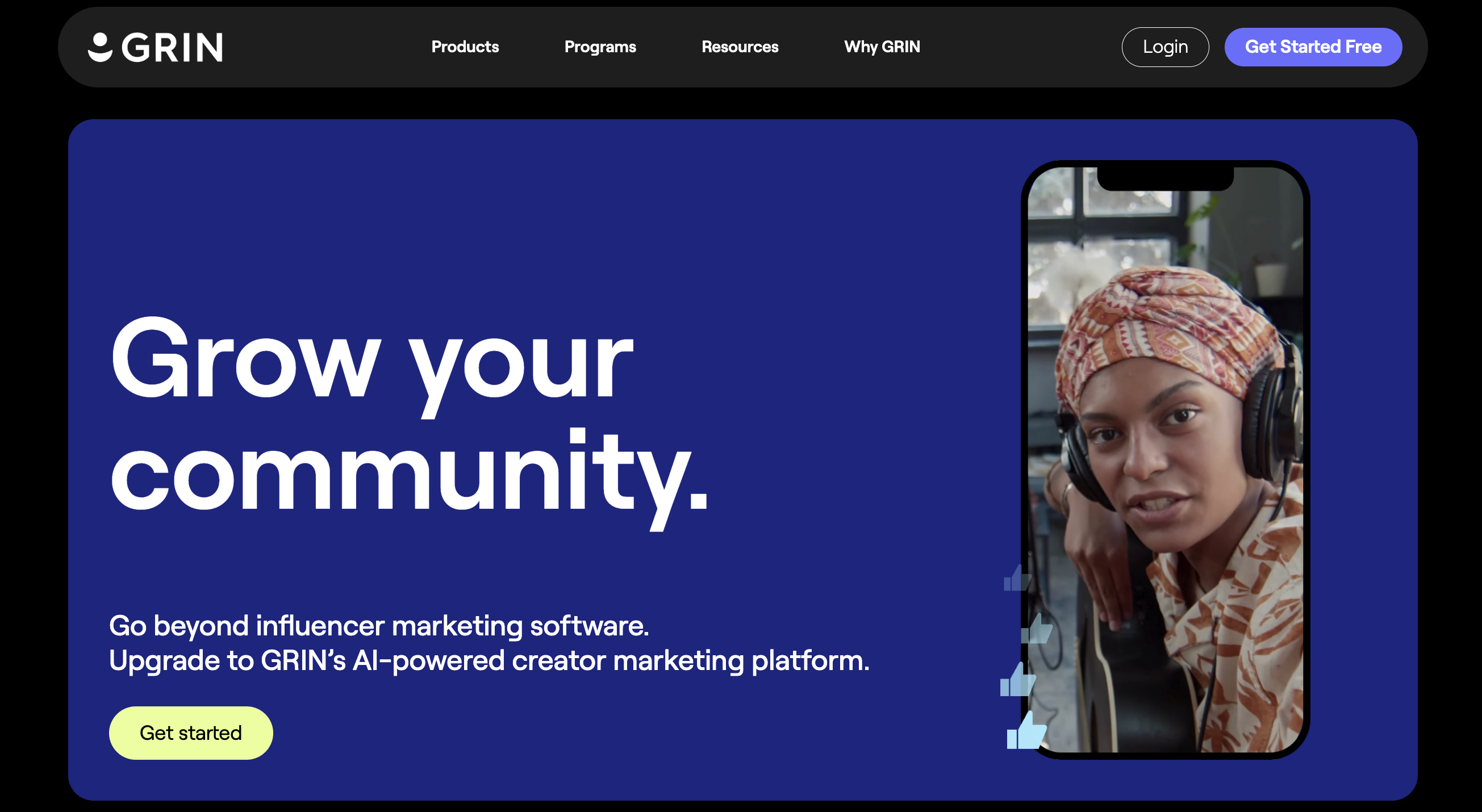
GRIN is an influencer marketing platform built primarily for eCommerce brands that want to manage creator discovery, outreach, gifting, affiliate programs, content collection, and payments in one system. Its positioning is especially strong for DTC brands that care about tying creator activity directly to revenue, not just engagement.
Key Features
- Creator discovery with AI support: GRIN lets brands search a large creator database with filters across audience, niche, and performance signals, and now layers in Gia, its AI assistant, to help surface high-fit creators faster.
- Creator CRM and relationship management: The platform is designed around long-term creator management, with campaign tracking, communication history, deliverables, and creator portals all centralized.
- Product seeding and gifting workflows: GRIN’s eCommerce integrations make it easy to send products to creators, generate discount codes, and keep shipping tied to campaign execution.
- Affiliate and revenue tracking: Brands can generate affiliate links and codes, measure conversions, and connect creator activity back to store revenue.
- UGC library and rights workflows: GRIN stores creator content in a centralized library so teams can repurpose assets across ads, email, and web.
- Payments infrastructure: The platform supports creator payouts directly in-platform, which reduces operational overhead for larger programs.
Pricing
- Official pricing model: GRIN’s current pricing page promotes a 30-day free trial and more flexible packaging than before, including self-serve access.
- Public starting price benchmark: Recent software directories list GRIN from $999/month, though enterprise pricing still appears to scale materially based on features and program size.
- Enterprise benchmark pricing: Recent sales benchmarks and product overviews still place GRIN commonly starts at $25,000/year (approx. $2,050/month), with no discounts for upfront payment. Contracts require a full-year commitment with monthly billing.
Reviews
4.5/5.0 (G2)
Pros
- Gia AI assistant: GRIN’s biggest recent move is Gia, an AI-native assistant embedded into the platform to help with creator discovery, outreach drafting, and workflow acceleration.
- Affiliate Hub launch: GRIN recently introduced Affiliate Hub, giving brands a more dedicated space to manage affiliate-style creator programs without splitting work across multiple systems.
- Creator Shops via CreatorCommerce: Its new CreatorCommerce integration adds co-branded creator shops and landing pages, which is a strong differentiator for brands leaning into creator-led commerce.
Cons
- Can get expensive quickly: GRIN is still positioned above entry-level tools, especially once brands move beyond trial or self-serve usage.
- Steeper learning curve than lighter tools: Users often like the depth, but the platform can feel complex for smaller teams or first-time influencer programs.
- Performance and usability complaints still appear: Some users continue to mention glitches, slow loading, and friction around content and workflow management.
Integrations
- Shopify – Sync products, fulfill creator orders, generate codes, and track influencer-driven revenue directly from your store.
- WooCommerce – Run gifting and affiliate workflows for WooCommerce storefronts without handling fulfillment manually outside the platform.
- PayPal – Send creator payouts directly through GRIN’s payment workflow instead of handling compensation in separate finance tools.
- Gmail / Outlook – Centralize creator outreach and communication tracking through your connected inbox.
- Klaviyo – Connect email and commerce data more tightly to identify and activate creator relationships inside broader retention and customer workflows.
IZEA vs GRIN
IZEA and GRIN both cover discovery, campaign management, and reporting, but they serve slightly different operating models. IZEA is more balanced between software and managed services, while GRIN is more deeply oriented around eCommerce-native creator operations like gifting, affiliate tracking, storefront-linked workflows, and product seeding.
GRIN is usually the stronger fit for brands that want creator marketing tied closely to Shopify or WooCommerce revenue. IZEA is broader and more flexible for brands that also want marketplace hiring and agency-style support, but GRIN is generally stronger when the goal is to turn creator marketing into an always-on revenue channel with deeper commerce workflows.
2. Upfluence
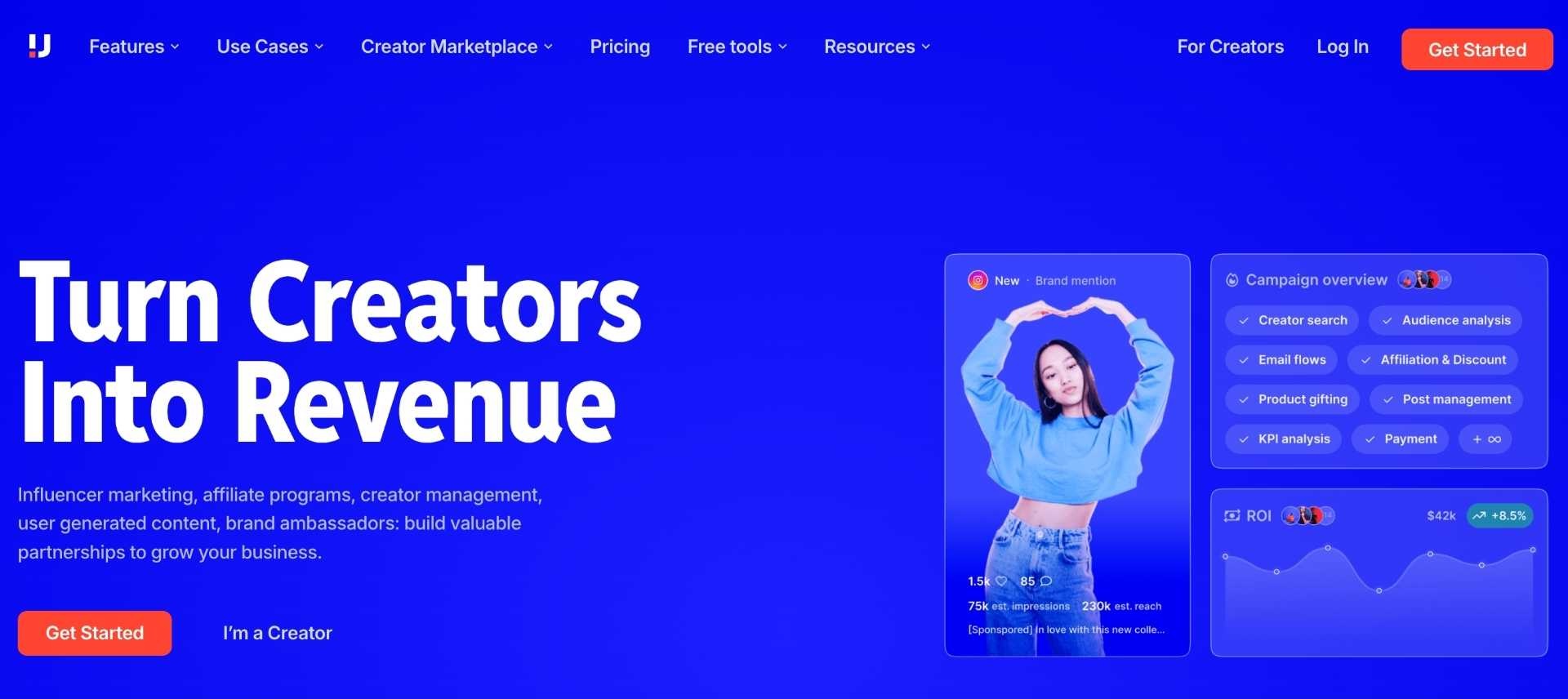
Upfluence is an all-in-one influencer and affiliate marketing platform built around creator discovery, outreach automation, CRM, and eCommerce attribution. It is especially well known for helping brands identify influencers within their own customer base and connect creator marketing directly to platforms like Shopify and Amazon.
Key Features
- Large creator discovery database: Upfluence’s pricing page currently highlights a 14M+ creator database with advanced search and filtering.
- Customer-to-creator identification: A major differentiator is its ability to find influential customers inside your CRM or eCommerce data, helping brands recruit creators who already know the product.
- Mass outreach and email workflows: Upfluence supports unlimited outreach, email templates, inbox syncing, and higher-tier drip sequences for automation at scale.
- Jaice AI campaign support: Jaice helps with creator search, campaign setup, and personalized outreach generation, bringing more AI into execution.
- CRM, affiliate, and campaign management: The platform includes influencer CRM, discount codes, affiliate tracking, product shipment workflows, and sales dashboards.
- Social listening and performance tracking: Upfluence also supports social listening and campaign analytics tied to clicks, conversions, and revenue.
Pricing
- Pricing model: Upfluence uses custom pricing rather than a public fixed plan table.
- All plans are custom made. There’s a minimum full year of service you have to commit to with monthly payments. On average plans start around $2,000/month ($24,000 yearly)
Reviews
4.3/5.0 (Capterra)
Pros
- Jaice AI: Upfluence’s biggest recent differentiator is Jaice, its AI campaign co-pilot for creator search, campaign design, and outreach personalization.
- Excellent eCommerce and customer-data matching: Upfluence is still one of the strongest platforms for identifying influencers from existing customers and blending CRM plus creator marketing in one workflow.
- Amazon + Shopify strength: It remains a standout option for brands selling across both DTC and Amazon because attribution and affiliate workflows are more mature than in many influencer-first tools.
Cons
- Annual commitment reduces flexibility: Upfluence requires a 12-month minimum contract, which can feel rigid for brands still testing the channel.
- Can be dense for new users: The breadth of CRM, eCommerce, and campaign features creates a steeper setup curve than lighter discovery tools.
- Workflow complaints still surface: Users still mention campaign-editing limitations, UI friction, and uneven support experiences.
Integrations
- Shopify – Identify influential customers, run gifting, generate discount codes, and attribute creator-driven sales back to store data.
- Amazon – Track affiliate links, revenue, and creator-attributed performance for Amazon-focused programs.
- Gmail – Sync outreach and creator conversations into Upfluence so communication stays centralized.
- Outlook – Manage influencer communication through Microsoft inboxes while keeping activity tied to campaign records.
- Klaviyo – Enrich customer data and help identify creator opportunities directly from retention and email marketing workflows.
IZEA vs Upfluence
IZEA is more balanced between influencer marketplace software and managed services, while Upfluence is more tightly built around eCommerce, CRM, and affiliate attribution. If your team wants to identify creators from customers, sync store data, and manage both influencer and affiliate workflows together, Upfluence is usually the more commerce-driven option.
IZEA is easier to position as a broader creator-marketing ecosystem with managed-service support and marketplace access, but Upfluence is usually stronger for brands that need customer matching, Amazon support, and deep store-data workflows. That makes Upfluence the more natural fit for performance-minded DTC teams, while IZEA is often better for brands that want a wider blend of software plus agency support.
3. CreatorIQ

CreatorIQ is an enterprise influencer marketing platform built for large brands that need governance, measurement, workflow control, and global scale. It emphasizes first-party data partnerships, structured reporting, compliance, and cross-functional collaboration more than lightweight campaign speed.
Key Features
- Public creator discovery with advanced filtering: CreatorIQ supports creator search across public profiles with rich filtering around audience, content, and campaign fit.
- Enterprise CRM and workflow control: Teams can tag creators, manage approvals, track campaign history, and coordinate across departments in a private CRM layer.
- Custom dashboards and live reporting: Its reporting stack is one of its core strengths, with executive-ready live dashboards and shareable views for stakeholders.
- Payments and tax compliance: CreatorIQ has strong global payment and compliance capabilities, including automated payment workflows and audit-ready processes.
- Creator Connect application pages: Brands can build branded creator signup pages to support inbound recruitment and structured onboarding.
- API and data exchange layer: ExchangeIQ is built to connect creator data with the broader enterprise stack for reporting, attribution, and governance.
Pricing
There are different plans:
- Basic Plan: Starts at $35,000/year. Includes 1,000 contact creators per month
- Standard Plan: Starts at $50,000/year. Includes 2,500 contact creators per month
- Professional Plan: Starts at $90,000/year. Includes 5,000 contact creators per month
- Enterprise Plan: Starts at $200,000/year. Includes 7,500 contact creators per month
Reviews
4.4/5.0 (Capterra)
Pros
- AI-native platform direction: CreatorIQ has recently repositioned itself as an AI-native operating system for creator-led growth, which signals a meaningful product evolution beyond classic influencer workflow software.
- Expanded YouTube first-party integration: Its recently deepened YouTube partnership strengthens first-party audience insight access and improves measurement quality for creator campaigns.
- Best-in-class compliance and payments: CreatorIQ remains one of the strongest platforms for global creator payments, tax handling, and finance-grade reporting controls.
Cons
- High enterprise entry point: CreatorIQ’s budget threshold is far above what most small and midsize DTC brands want to spend.
- More structured than agile: It is powerful, but many teams report a learning curve because the platform is optimized for control and governance over speed.
- Affiliate tracking is less turnkey: It supports affiliate workflows, but conversion reporting can feel more manual than in affiliate-first or commerce-native platforms.
Integrations
- Shopify – Support gifting workflows, sales visibility, and eCommerce-linked creator program reporting.
- YouTube – Access deeper first-party data through CreatorIQ’s expanded partnership for smarter creator evaluation and reporting.
- Meta – Pull creator and campaign data through direct platform integrations to improve reporting accuracy.
- TikTok – Use platform-level integrations for audience and campaign insight inside CreatorIQ dashboards.
- ExchangeIQ / API stack – Connect CreatorIQ to the rest of your enterprise data environment for reporting, governance, and operational visibility.
IZEA vs CreatorIQ
IZEA and CreatorIQ both support enterprise workflows, but CreatorIQ is much more deeply optimized for global governance, structured reporting, and first-party data integrations. IZEA is generally more approachable for teams that want a creator platform plus optional managed services, while CreatorIQ is more suited to multinational programs with finance, legal, and executive reporting requirements.
In practice, IZEA is the more flexible choice for brands that want software plus campaign support without going fully enterprise-heavy. CreatorIQ is the stronger option when the priority is compliance, stakeholder reporting, large-team permissions, and high-scale creator operations across regions.
4. Influencer Hero

Influencer Hero is an all-in-one influencer marketing platform designed for DTC and eCommerce brands that want discovery, outreach, CRM, gifting, affiliate tracking, payments, and ROI reporting in one place. Its positioning is notably more accessible than many enterprise tools, while still offering robust commerce-oriented workflows.
Key Features
- Influencer discovery: Find creators across major platforms using advanced filters for audience, engagement, location, and niche, with built-in fraud detection and lookalike suggestions
- Outreach & automation: Scale personalized email outreach with AI-generated messages, automated follow-ups, and multi-step sequences
- Creator CRM: Manage influencer relationships in a centralized pipeline, tracking conversations, campaign stages, and deliverables
- Gifting workflows: Streamline product seeding with automated order creation, shipping, and delivery tracking
- Affiliate tracking & payouts: Generate unique links and discount codes, track performance, and handle commissions and payments in one system
- Campaign analytics & ROI tracking: Monitor performance across engagement, clicks, conversions, and revenue with real-time reporting dashboards
- UGC library: Automatically collect and organize influencer content for reuse across ads, social media, and product pages
- Application pages & storefronts: Capture inbound creators through branded application pages and enable influencers to promote products via custom storefronts
- eCommerce integrations: Sync with platforms like Shopify and WooCommerce to connect influencer activity directly to sales
Pricing
Influencer Hero offers flexible pricing based on outreach volume and you can have unlimited creators in your CRM:
- Standard — $649/month (up to 1,000 outreach messages per month)
- Pro — $1,049/month (up to 5,000 outreach messages per month)
- Business — $2,490/month (up to 10,000 outreach messages per month)
- Custom / Agency — Tailored pricing
Custom pricing is available for agencies and larger teams
Reviews
4.9/5.0 (Capterra)
Pros
- Stronger creator-brand fit through data: Features like brand follower identification and AI-powered UGC search help teams find creators who already engage with the brand or produce relevant content, improving authenticity and campaign performance.
- Commerce-heavy integrations: Its store integrations, especially Shopify and WooCommerce, are designed to make revenue attribution, gifting, and creator payouts more operationally simple.
- AI-powered outreach and workflow automation: The combination of AI integration, automated follow-ups, and tested templates is a strong differentiator for lean teams that need scale without adding headcount.
Cons
- Higher pricing for smaller teams: May be less accessible for early-stage brands or those with limited budgets
- Setup still matters: To get the most from attribution and automation, brands need to configure workflows and store integrations correctly.
- Feature breadth can outpace basic use cases: Smaller teams that only need discovery may find the full-stack setup more than they need at first.
Integrations
- Shopify – Sync products, send gifts, create discount codes, and attribute creator-driven revenue inside the same workflow.
- WooCommerce – Connect creator campaigns to WooCommerce order and sales data for gifting and affiliate tracking.
- Gmail – Keep influencer outreach, replies, and email history centralized in one campaign thread.
- Outlook – Manage creator communication from Microsoft inboxes without splitting work across tools.
- Zapier – Push influencer and campaign data into other systems and automate custom workflows beyond native integrations.
- Slack — Send campaign updates, approvals, and internal alerts to team channels to keep workflows aligned and moving faster.
- DocuSign — Streamline contracts and agreements with influencers through automated document workflows.
IZEA vs Influencer Hero
IZEA is more established and broader in its mix of marketplace tools, managed services, and enterprise creator workflows. Influencer Hero, by contrast, is more aggressively positioned around all-in-one DTC execution with discovery, outreach, CRM, gifting, affiliate tracking, and store-linked ROI in a more accessible package.
For brands that want strong functionality without moving into enterprise pricing too early, Influencer Hero is usually the more cost-efficient option. IZEA is still the stronger fit for brands that want a longer-established platform with managed-service support, but Influencer Hero is often the more practical pick for fast-growing eCommerce teams that need revenue-linked creator workflows.
5. NeoReach
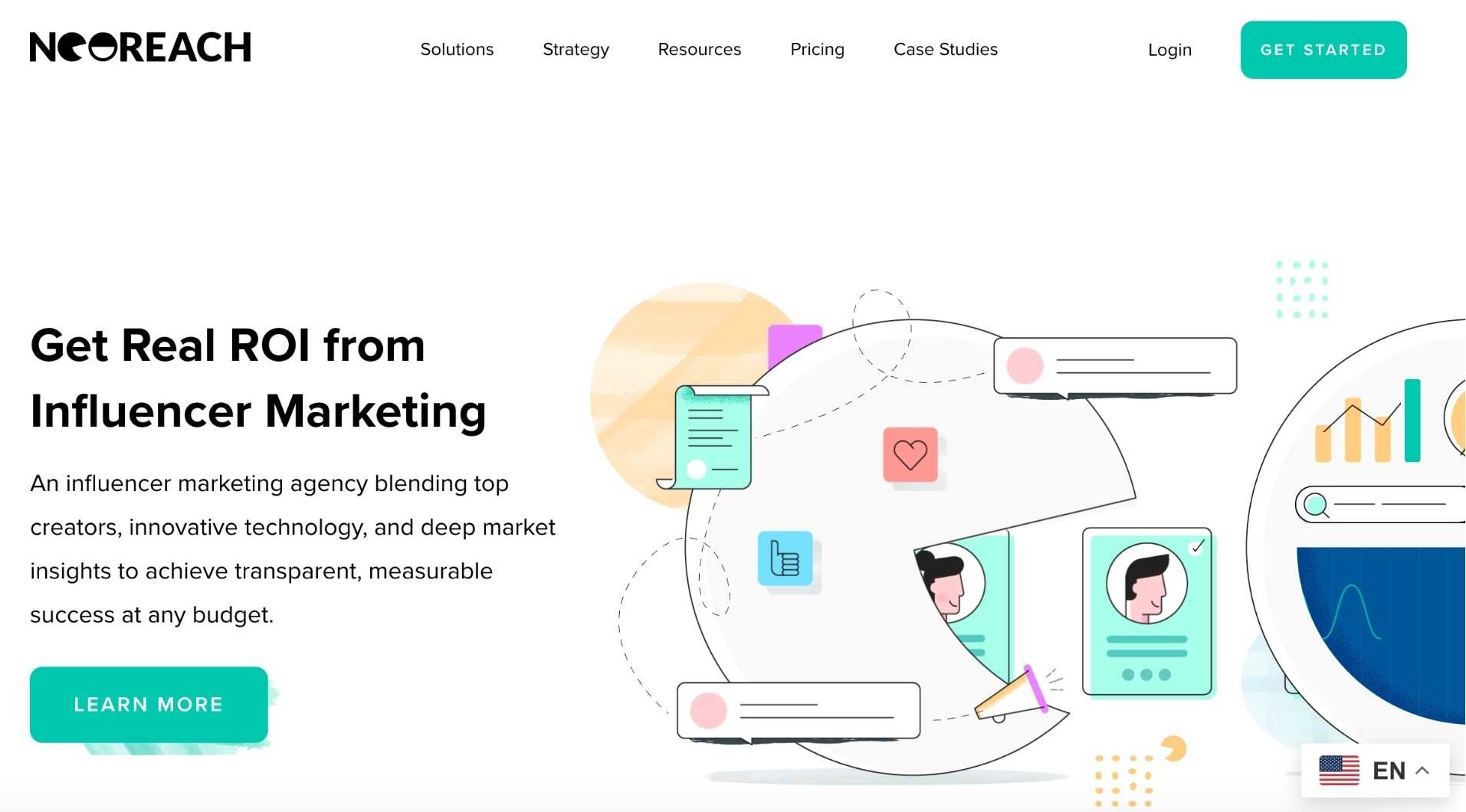
NeoReach is an enterprise influencer marketing platform and agency that combines creator discovery, campaign management, analytics, fraud detection, API access, and managed services. It is positioned for brands and agencies running larger-scale programs that need both software infrastructure and hands-on strategic support.
Key Features
- Influencer discovery and analysis: NeoReach’s software supports creator search with 40+ filters, including demographics, audience signals, performance, and brand-affinity style criteria.
- Campaign management at scale: The platform is built for brands that want to search, manage, and track campaigns in one system rather than bolt together several point solutions.
- Real-time measurement and ROI views: NeoReach highlights campaign, post, and influencer-level performance reporting across ROI, CPM, CPE, impressions, and engagements.
- Fraud detection: A notable capability is its dedicated fraud-detection layer for spotting fraudulent engagement and followers.
- Enterprise API access: NeoReach’s API gives brands access to 400+ custom data points and lets teams integrate creator data into internal tools and dashboards.
- Creator payments and managed services: NeoReach offers global automated creator payments and also supports brands through full-service campaign strategy and execution.
Pricing
- Official pricing model: NeoReach’s public pricing page does not list fixed dollar tiers and instead routes buyers to custom conversations.
- Current packaging: NeoReach currently separates pricing into Influencer Campaigns and Platform & API solutions, both sold on a custom basis.
- What is included: Public pricing copy emphasizes unlimited searches, unlimited campaigns, exportable influencer data, detailed audience demographics, platform customization, account management, onboarding, and optional API access.
Reviews
4.5/5.0 (G2)
Pros
- Strong enterprise API layer: NeoReach’s API and 400+ custom data points make it stand out for brands that want creator data inside internal dashboards, BI tools, or proprietary systems.
- Fraud detection as a named product capability: Unlike many platforms that bury authenticity checks inside discovery, NeoReach gives fraud detection more explicit product weight.
- Broader creator-economy expansion: Its acquisition of Influencers.com and partnership with Blueberry AI point to a wider creator-economy product ambition beyond classic campaign software alone.
Cons
- No transparent public pricing: NeoReach requires a sales conversation, which makes quick self-serve comparison harder than with more transparent competitors.
- Best suited to larger teams: Its feature set and service model lean enterprise, so it is usually not the easiest fit for smaller DTC brands.
- Users still mention interface friction: Some reviewers note a clunkier UI, slower loading, and room for improvement in search and usability.
Integrations
- NeoReach API – Push creator, campaign, and audience data into your internal systems using NeoReach’s REST API and 400+ data points.
- Internal BI / enterprise dashboards – NeoReach explicitly supports embedding influencer data into in-house dashboards and enterprise applications.
- Creator payment infrastructure – NeoReach offers global automated creator payments as part of its enterprise resource layer.
- Managed campaign services stack – Brands can pair the platform with NeoReach’s managed-service team for strategy, sourcing, licensing, and reporting.
- Custom enterprise tool integration – NeoReach emphasizes custom integration into brand-specific tools and technologies rather than a long public app marketplace.
IZEA vs NeoReach
IZEA and NeoReach both combine software with managed services, but NeoReach leans more heavily into enterprise-scale campaign execution, custom API usage, and data infrastructure. IZEA is generally easier to understand as a creator-marketing platform plus marketplace plus services, while NeoReach is more clearly built for larger brands that want deeper custom analytics and internal-system connectivity.
For teams that care most about custom data access, fraud detection, and enterprise deployment flexibility, NeoReach is often the stronger fit. For teams that want a more packaged creator-marketing ecosystem with marketplace functionality and simpler entry points, IZEA is usually the more approachable option.


6. Lefty
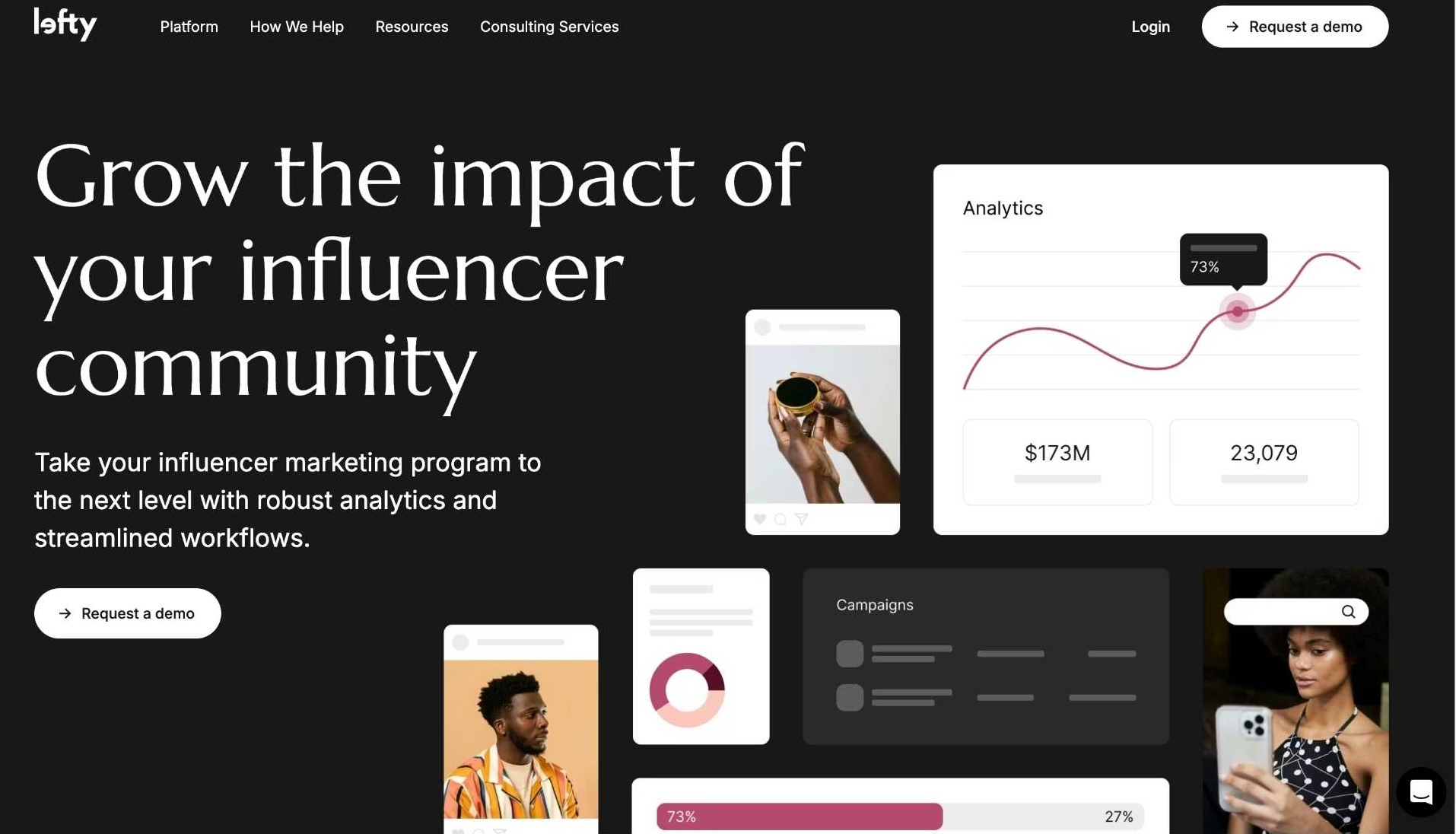
Lefty is a modern influencer marketing platform focused on helping brands discover creators, manage campaigns, and track performance with a strong emphasis on data accuracy and campaign transparency. It is particularly popular among fashion, beauty, and lifestyle brands that rely heavily on visual-first platforms like Instagram and TikTok.
Key Features
- AI-powered influencer discovery
Lefty offers a robust search engine with filters for audience demographics, engagement rate, brand affinity, and content style to help brands find highly relevant creators. - Real-time campaign tracking
Tracks campaign performance across posts, stories, and reels with metrics like impressions, engagement, and earned media value (EMV). - Audience quality and fraud detection
Provides detailed audience insights, including fake follower detection and audience authenticity scoring. - Campaign management dashboard
Manage influencer collaborations, approvals, deliverables, and timelines in a centralized interface. - Competitor benchmarking
Analyze competitor campaigns and influencer partnerships to refine strategy and positioning. - Content performance analytics
Evaluate top-performing content and creators to optimize future campaigns.
Pricing
- Starting Price: ~€590 per month.
- Pro Plan: ~€990/month, including 2 users, 5 campaigns, and unlimited reports.
- Premium Plan: ~€1,690/month, which adds a dedicated manager.
- Premium+ Plan: ~€3,490/month for 10 users and 25 campaigns.
Reviews
4.7/5.0 (G2)
Pros
- Strong visual analytics and EMV tracking
Lefty excels in tracking visual content performance and benchmarking influencer campaigns in industries like fashion and beauty. - Advanced audience quality insights
Its fraud detection and audience analysis tools help brands avoid low-quality influencers. - Competitive benchmarking tools
Few platforms offer such detailed competitor tracking baked directly into campaign workflows.
Cons
- Limited transparency in pricing
Requires sales engagement, making it harder for smaller teams to evaluate quickly. - Less focus on eCommerce workflows
Compared to platforms like GRIN or Upfluence, it is less optimized for direct revenue attribution. - UI can feel complex initially
The depth of analytics can create a steeper onboarding curve.
Integrations
- Instagram – Track influencer content, engagement, and audience insights directly from the platform.
- TikTok – Monitor creator performance and campaign analytics across TikTok campaigns.
- Google Analytics – Connect campaign performance to website traffic and conversions.
- Shopify – Limited integration for tracking campaign-driven traffic and conversions.
- Slack – Share campaign updates and reports internally for team collaboration.
IZEA vs Lefty
IZEA is more versatile with its marketplace and managed services, while Lefty is more specialized in data-heavy campaign analytics and benchmarking. Lefty stands out in industries where visual performance and brand positioning matter most, while IZEA is broader in terms of creator sourcing and execution options.
Brands focused on campaign insights and competitive intelligence may prefer Lefty, while those needing creator hiring flexibility and managed services will likely find IZEA more aligned.
7. Insense
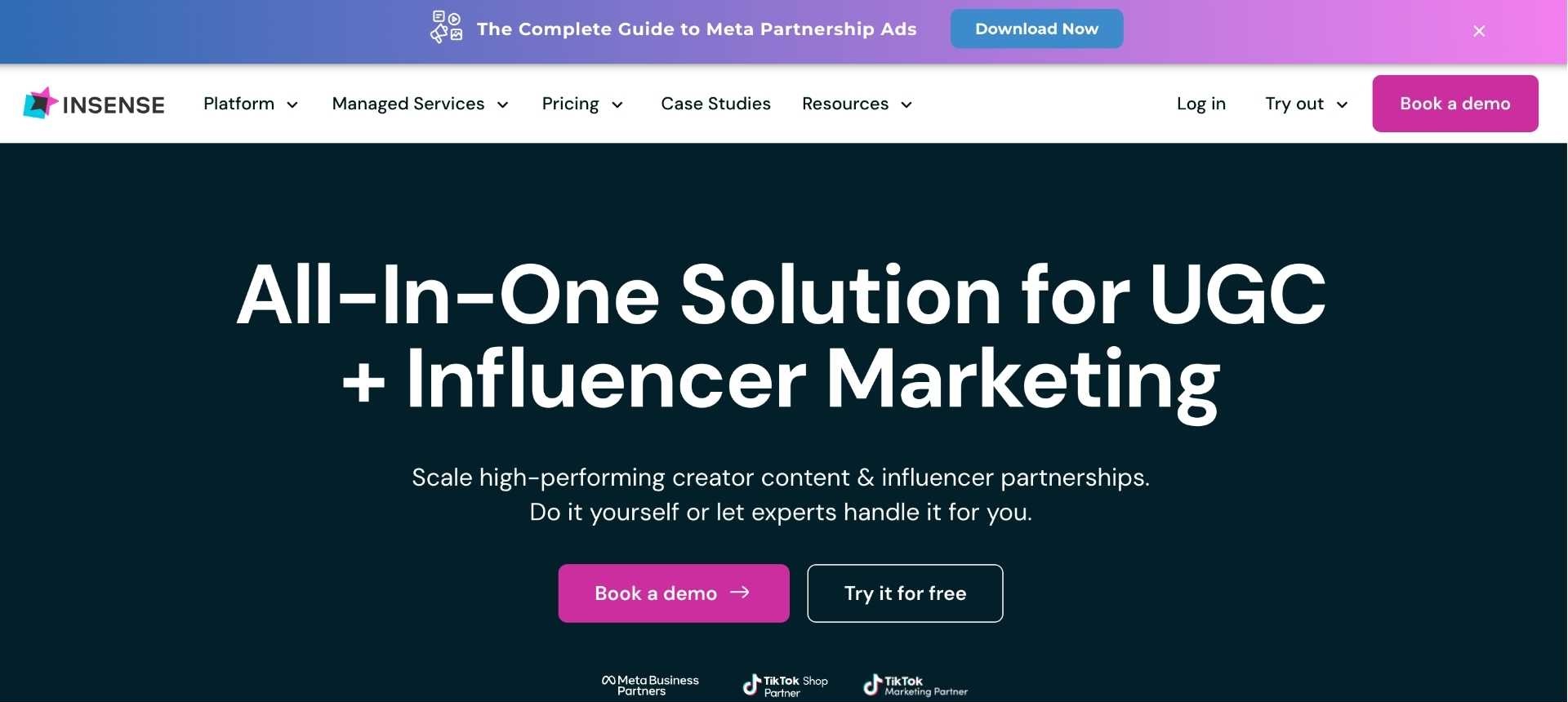
Insense is a creator marketing platform built specifically for brands running paid social and UGC-driven campaigns. It focuses on helping brands source creators, produce content at scale, and use that content in paid advertising across Meta and TikTok.
Key Features
- UGC creator marketplace
Brands can post briefs and receive applications from vetted creators who specialize in producing ad-ready content. - Ad-ready content production workflows
Insense is optimized for creating content specifically for paid ads, including whitelisting and licensing workflows. - Creator collaboration tools
Manage briefs, approvals, messaging, and deliverables within a structured workflow. - Paid media integration
Direct integrations with Meta allow brands to run ads using creator-generated content. - Content library and asset management
Store and reuse UGC across campaigns and channels. - Performance tracking for paid campaigns
Measure ad performance tied to influencer-generated creatives.
Pricing
- Trial: from $650/month, with an option to upgrade to a quarterly plan.
- Brand plan: from $500/month billed quarterly or $400/month billed annually.
- Agency plan: from $800/month billed quarterly or $640/month billed annually.
- Self-serve plans auto-renew every 3 months on quarterly billing, and creator payments are budgeted separately through a marketplace fee model.
Reviews
4.5/5.0 (G2)
Pros
- Built specifically for paid social
Insense is one of the strongest platforms for brands using influencer content in ads rather than just organic campaigns. - High-quality UGC marketplace
The creator network is curated for content production, not just influencer reach. - Seamless ad integration
Direct Meta integration simplifies running influencer-generated ads at scale.
Cons
- Limited focus on long-term influencer relationships
More transactional than CRM-driven platforms. - Not ideal for organic influencer campaigns
Better suited for UGC and paid media rather than ambassador programs. - Smaller discovery database compared to enterprise tools
Focus is on quality creators, not massive scale.
Integrations
- Meta (Facebook & Instagram Ads) – Run paid ads directly using influencer-generated content.
- TikTok Ads – Activate creator content in TikTok advertising campaigns.
- Shopify – Track campaign performance tied to product sales.
- Google Drive – Store and manage creative assets and campaign content.
- Slack – Share campaign updates and approvals internally.
IZEA vs Insense
IZEA is a full influencer marketing platform covering discovery, CRM, and managed services, while Insense is highly focused on UGC production and paid media activation. Insense is the better choice for brands prioritizing ad creative at scale, while IZEA is stronger for end-to-end influencer program management.
8. Kolsquare

Kolsquare is a European influencer marketing platform designed for brands and agencies that want strong analytics, compliance, and multi-market campaign management. It is particularly popular among teams running campaigns across multiple countries and languages.
Key Features
- Global influencer discovery
Access a large database of creators with filters for audience demographics, engagement, and geographic targeting. - Advanced analytics and reporting
Includes detailed KPIs like engagement, reach, EMV, and campaign ROI. - Compliance and brand safety tools
Helps brands ensure campaigns meet regulatory standards and brand guidelines. - Campaign management workflows
Manage influencer relationships, approvals, and deliverables across multiple markets. - Multi-market campaign support
Strong localization capabilities for international campaigns. - Influencer relationship tracking
Maintain long-term partnerships through built-in CRM features.
Pricing
- Discovery: starts at €500/month.
- Listening: custom pricing.
- Enterprise: custom pricing.
- Kolsquare’s pricing is described as flexible and tailor-made, with special pricing for some nonprofits, B Corps, and early-stage companies.
Reviews
4.5/5.0 (G2)
Pros
- Strong European market coverage
Particularly effective for brands targeting multiple regions across Europe. - Compliance and governance features
Helps brands meet legal and brand safety requirements. - Detailed reporting dashboards
Offers strong campaign insights and performance tracking.
Cons
- Less focus on eCommerce integrations
Not as strong for direct revenue attribution. - Custom pricing limits accessibility
Smaller teams may find it harder to adopt. - Learning curve for advanced features
Reporting and dashboards can take time to master.
Integrations
- Instagram – Track influencer performance and audience insights.
- TikTok – Analyze campaign metrics and creator engagement.
- YouTube – Measure video performance and audience reach.
- Google Analytics – Connect influencer campaigns to web traffic.
- CRM systems – Sync influencer data with internal marketing systems.
IZEA vs Kolsquare
IZEA offers broader flexibility with marketplace access and managed services, while Kolsquare is more focused on analytics, compliance, and multi-market execution. Kolsquare is ideal for international brands needing structured reporting, while IZEA is better for teams wanting flexibility and creator sourcing options.
9. Skeepers
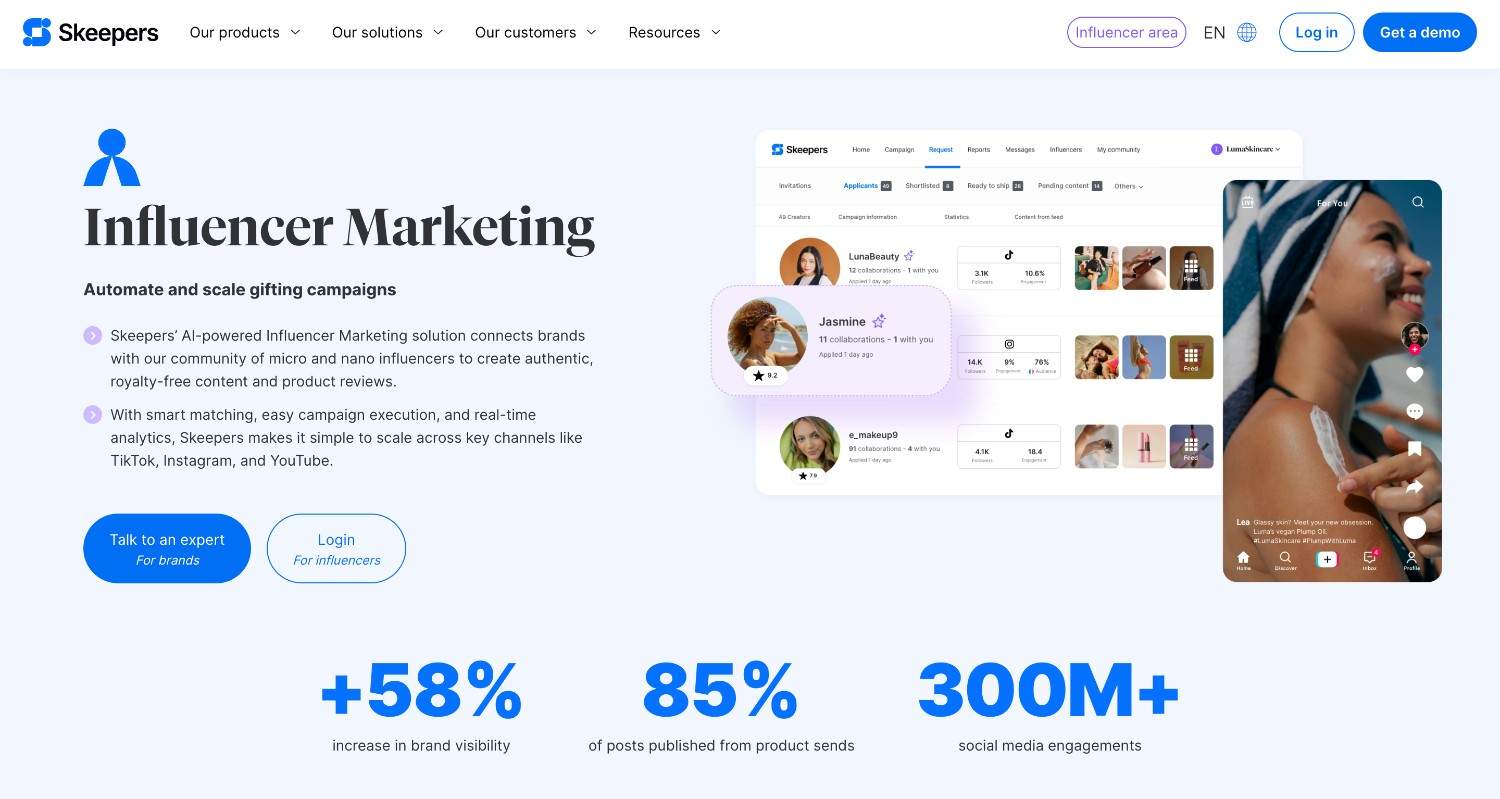
Skeepers is a unified platform for managing user-generated content, influencer marketing, customer reviews, and brand advocacy. It is designed for brands that want to combine influencer marketing with broader social proof and content strategies.
Key Features
- UGC and influencer campaign management
Combine influencer campaigns with customer-generated content in one platform. - Ratings and reviews integration
Collect and manage product reviews alongside influencer content. - Creator and ambassador programs
Build long-term communities of brand advocates. - Content distribution tools
Repurpose influencer and customer content across marketing channels. - Performance tracking
Measure engagement, reach, and campaign ROI. - Community management tools
Manage ambassadors and customers contributing content.
Pricing
- Skeepers does not publicly list a detailed pricing table for Influencer Marketing on its main site.
- Capterra lists a starting price of €1,250/month and says no free trial is available.
Reviews
4.3/5.0 (Capterra)
Pros
- All-in-one social proof platform
Combines influencer marketing with reviews and UGC, which few platforms offer. - Strong ambassador program capabilities
Ideal for brands building long-term advocacy communities. - Content repurposing tools
Makes it easy to reuse content across marketing channels.
Cons
- Not a pure influencer marketing tool
Influencer features may feel less advanced than dedicated platforms. - Custom pricing reduces transparency
Requires sales engagement. - Interface complexity
Multiple modules can make navigation overwhelming.
Integrations
- Shopify – Sync product reviews, UGC, and influencer campaigns with your store.
- Magento – Manage product content and reviews alongside influencer campaigns.
- Salesforce – Connect customer and influencer data with CRM workflows.
- Google Analytics – Track performance across campaigns and site traffic.
- Meta – Distribute and track content performance across social platforms.
IZEA vs Skeepers
IZEA is focused on influencer marketing as a standalone function, while Skeepers expands into UGC, reviews, and customer advocacy. Skeepers is better suited for brands building a holistic social proof strategy, while IZEA is more focused on creator campaigns and influencer execution.
10. Creator.co
Creator.co is an influencer marketing platform and marketplace that connects brands with creators for campaigns, product seeding, and content creation. It is especially popular with smaller brands and startups due to its accessible pricing and community-driven approach.
Key Features
- Influencer marketplace
Brands can browse creators or post campaigns for influencers to apply. - Campaign management tools
Manage outreach, collaboration, and deliverables within the platform. - Product seeding workflows
Send products to creators in exchange for content. - Content tracking and analytics
Track engagement, reach, and campaign performance. - Community-driven creator network
Focuses on connecting brands with engaged creators rather than just large audiences. - Subscription-based access
Offers straightforward pricing compared to enterprise platforms.
Pricing
- Self-Serve: $299/month, with a 3-month minimum commitment.
- Managed: $2,199/month, with a 3-month minimum commitment.
- Enterprise: Custom pricing, with an annual commitment.
- The pricing page also notes that after the initial term, monthly subscriptions move to month-to-month billing, while annual plans renew yearly at a discounted rate.
- Creator.co offers a free trial for Self-Serve.
Reviews
4.6 / 5.0 (G2)
Pros
- Accessible pricing for smaller brands
One of the more affordable platforms in the space. - Marketplace-driven approach
Makes it easy to find and collaborate with creators quickly. - Strong for product seeding campaigns
Works well for brands focused on gifting and content generation.
Cons
- Limited advanced analytics
Not as deep as enterprise platforms. - Smaller feature set
Lacks some of the advanced workflows of larger tools. - Less suited for large-scale programs
Better for small to mid-sized campaigns.
Integrations
- Shopify – Manage product seeding and track campaign-driven sales.
- Instagram – Track influencer content and engagement metrics.
- TikTok – Monitor campaign performance across TikTok creators.
- Stripe – Handle payments for influencer collaborations.
- Google Analytics – Measure traffic and conversions from campaigns.
IZEA vs Creator.co
IZEA is a more mature platform with enterprise capabilities and managed services, while Creator.co is more accessible and marketplace-driven. Creator.co is ideal for smaller brands or early-stage influencer programs, while IZEA is better suited for brands that need scalability, analytics, and campaign management depth.
Final Thoughts
IZEA remains a well-rounded platform with a mix of marketplace access, campaign management, and managed services, but its alternatives highlight how diverse the influencer marketing landscape has become. Platforms like GRIN and Upfluence lean heavily into eCommerce and revenue attribution, while CreatorIQ and NeoReach cater more to enterprise-scale programs with advanced data and compliance needs. Others such as Insense and Creator.co focus on UGC and accessibility, and tools like Skeepers and Kolsquare expand into broader content and multi-market strategies. Ultimately, the right choice depends on whether a brand prioritizes scalability, cost-efficiency, analytics depth, or commerce-driven performance.
.png)


.jpg)