


10 Best InsightIQ Alternatives for Influencer Marketing
InsightIQ sells one subscription and meters it against eight different counters. Searches, exports, analytics reports and tracked posts each get their own monthly ceiling. So do creator connects, comparison reports, comment analyses and brand safety reports.
Starter is $199 a month and gives you 200 exports. Growth is $899 and gives you 2,500. The numbers are published, which is more than most of this category manages, and the annual discount is unusually steep.
Price what happens after the export, though. There is no outreach, no CRM, no gifting, no contracts, no affiliate codes and no creator payments. You get very good answers about creators and campaigns. Then you go and run the campaign somewhere else.
The ten alternatives below run in this order: Aspire, IZEA, Influencer Hero, Afluencer, Modash, NeoReach, Social Cat, Influencity, Traackr and HypeAuditor.
Key Criteria for Evaluating Influencer Marketing Platforms
Core Features
Evaluation of essential influencer marketing capabilities, including influencer discovery, outreach, CRM, campaign management, reporting, and content workflows.
Pricing & Flexibility
Comparison of pricing models, subscription plans, and contract terms to match different budgets and growth stages.
Customer Reviews & Satisfaction
Analysis of user feedback from trusted review platforms, focusing on usability, reliability, customer support, and overall performance.
Pros & Cons
Review of each platform’s strengths and limitations to highlight where it performs well and where it may fall short based on different use cases.
Integrations
Review of the most important integrations (e.g., Shopify and other tech tools), highlighting what each integration enables in one sentence.
InsightIQ Overview
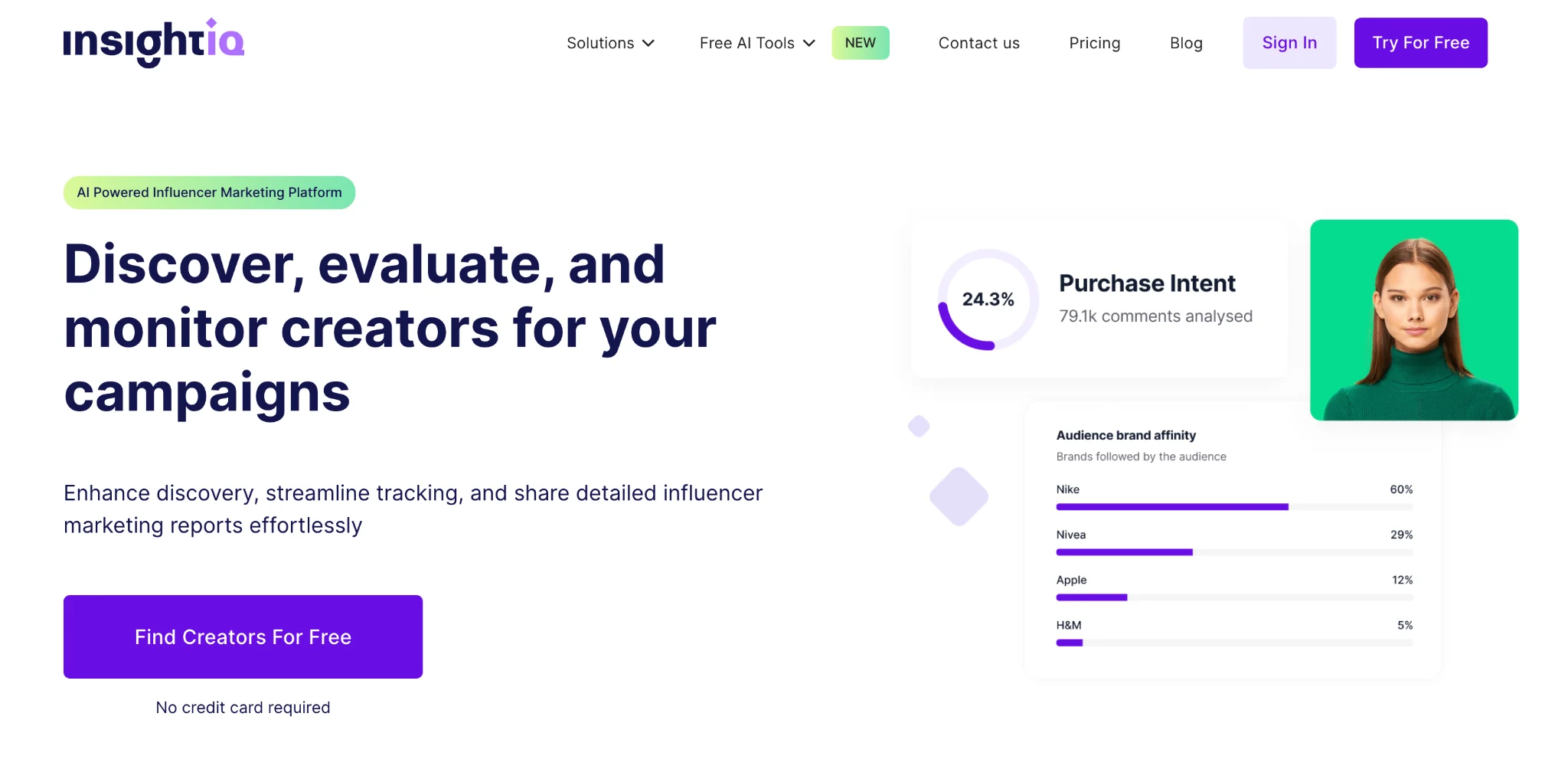
InsightIQ is a creator discovery and campaign measurement platform. The company states an index of more than 450 million profiles, around 15,000 new creators added a day, and a refresh cycle of roughly two weeks. You search with over 50 filters, pull audience and authenticity data, then track the posts a campaign produces.
Measurement is where it puts its effort. It reports cost per engagement and total media value. It sorts comments by sentiment and purchase intent. It also runs AI scans across creator content to flag brand safety problems before budget commits. As influencer discovery tools go, that is a strong front end for a team with a program already running.
What it does not do is run the program. Outreach, CRM, gifting, contracts, affiliate codes and payouts all live in other tools. The handoff between them is your job.
Key Features
- 450M+ creator index: Profiles across Instagram, TikTok, YouTube, X, Twitch, Pinterest, Facebook and LinkedIn.
- 50+ search filters: Creator and audience attributes, including topic analysis and image recognition.
- Purchase intent analysis: AI reads comment threads to sort audiences by sentiment and buying signals.
- Campaign tracking: Posts monitored automatically, with cost per engagement and total media value calculated.
- AI brand safety scans: Creator content checked for hate speech, obscenity, violence and nudity.
Pricing
- Starter: $199 a month, 3,000 search results, 200 exports, 50 analytics reports, 25 tracked posts
- Performance: $299 a month, 7,500 search results, 500 exports, 100 reports, 50 tracked posts, 25 creator connects
- Growth: $899 a month, 37,500 search results, 2,500 exports, 500 reports, 250 tracked posts, 150 connects, 5 brand safety reports
- Enterprise: custom pricing, with API access and bulk export
Annual billing drops those to $83, $150 and $599 a month, a discount of well over half. A free trial runs without a credit card, and API access is Enterprise only.
Reviews
No verifiable rating. The Capterra listing sits at zero reviews. The G2 entry under the InsightIQ name resolves to Phyllo, the creator-data company behind the product, which holds 4.5/5.0 from 10 reviews. Neither tells you how the brand-side platform performs day to day.
Integrations
- Shopify: Store connection used to attribute purchases back to creator content.
- Eight social networks: Data pulled through platform APIs rather than scraped.
- API access: Creator and campaign data available programmatically, on Enterprise only.
- Bulk export: Large creator lists taken out, also Enterprise only.
- Email and outreach tools: None published, so contact happens entirely outside the platform.
Pros
- Eight networks in the index: Twitch, Pinterest and LinkedIn alongside the usual three.
- Published tiers in a quote-only category: Three prices on the page, with limits attached to each.
- Brand safety is built in: AI content scanning that most discovery tools leave to you.
Common Drawbacks of InsightIQ
Eight counters on one bill
Eight different things meter separately, from searches and exports to comment analyses and safety reports. Hitting any one of them stops that part of your month, and it is hard to predict which you will hit first.
Brand safety is a Growth feature
The safety scanning is a headline feature, but you get five reports a month and only from the $899 tier. On Starter and Performance you get none.
The workflow ends at the report
Everything that turns a shortlist into a posted campaign happens elsewhere. Outreach, CRM, gifting, contracts, codes and payouts are all tools you buy separately.
No independent review record
Zero reviews on Capterra and nothing under its own name on G2. You cannot check data accuracy or support quality before you pay.
Best InsightIQ Alternatives
| TOOL | REVIEWS | BEST FOR | TRIAL INFO | PRICING | ||
|---|---|---|---|---|---|---|
1 |

|
⭐ | Influencer partnerships | Book Demo | Pricing | Website |
2 |
|
⭐ | Influencer marketplace | Book Demo | Pricing | Website |
3 |

|
⭐ | Influencer CRM & automation | Book Demo | Pricing | Website |
4 |

|
⭐ | Influencer marketplace campaigns | Book Demo | Pricing | Website |
5 |

|
⭐ | Influencer discovery | Book Demo | Pricing | Website |
6 |
|
⭐ | Influencer campaigns & data analytics | Book Demo | Pricing | Website |
7 |

|
⭐ | Micro-Influencer Campaigns | Book Demo | Pricing | Website |
8 |

|
⭐ | Campaign management | Book Demo | Pricing | Website |
9 |

|
⭐ | Enterprise influencer analytics | Book Demo | Pricing | Website |
10 |

|
⭐ | Influencer analytics | Book Demo | Pricing | Website |
Aspire
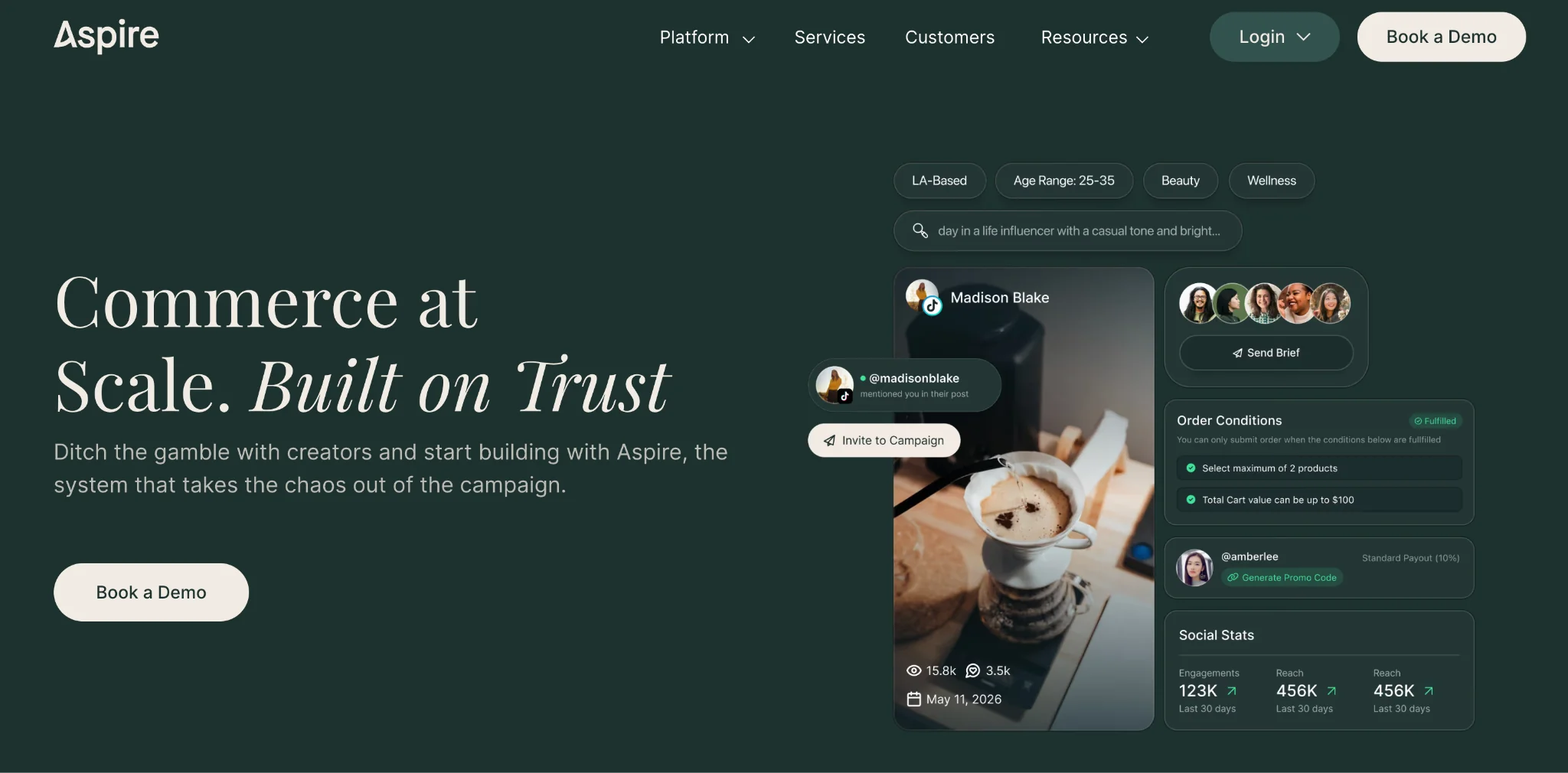
Aspire is built for brands running creator programs at volume. It handles the whole cycle: finding creators, shipping them product, briefing the work, approving the content and tying the resulting sales back to orders.
Key Features
- Creator matching: Feed it one creator who performed and it returns a list of similar profiles.
- Product send-outs: Product gifting handled at scale, with orders raised and tracked.
- Campaign briefs: Work requested, submitted and signed off in the platform.
- Sales attribution: Codes and links that connect creator activity to real revenue.
- Content licensing: Approved assets stored with usage terms for paid reuse.
Pricing
Not published. Third-party sources report an annual commitment starting around $2,000 a month, with other estimates near $2,499, and they disagree enough that only a quote settles it. There is no free trial.
Reviews
4.6/5.0 (G2, 146 reviews).
Pros
- Execution, not just analysis: Seeding, briefs, approvals and attribution all in one place.
- A 146-review record: Real independent evidence where InsightIQ has none.
- Nothing meters: No per-export or per-report ceilings to plan around.
Cons
- Price is behind a form: No published figure and no trial to test it with.
- Twelve months minimum: An annual signature against a monthly subscription.
- Overkill for a small roster: A reported $2,000-plus a month needs volume to justify.
Integrations
- Shopify: Seeding orders created and creator revenue tied back to sales.
- WooCommerce: Equivalent coverage for stores built on WordPress.
- Klaviyo: Creator contacts moved into your email programs.
- Slack: Campaign activity surfaced in team channels.
- Zapier: The rest of your stack, wired up without a native app.
InsightIQ vs Aspire
These two sit on opposite sides of the same campaign. InsightIQ tells you who to work with and what happened afterwards. Aspire does the part in between: shipping product, briefing creators, chasing content and attributing the sale.
The price gap follows from that. Roughly $2,000 a month against $199 buys execution rather than analysis, and you can run a discovery tool for a tenth of the money if execution is already handled. For a brand shipping product to fifty creators a month with nobody to manage it, Aspire is the closer fit.
IZEA
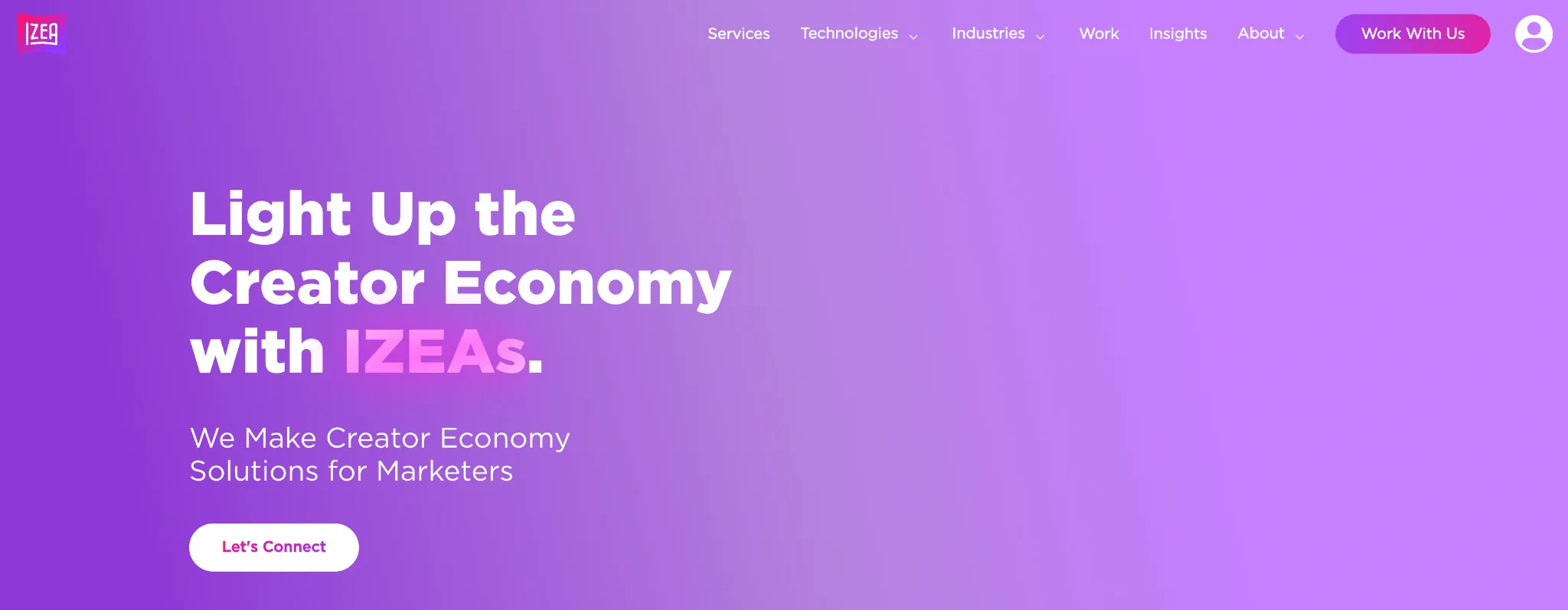
IZEA sells three things. There is a self-serve Creator Marketplace where brands post briefs and creators pitch, a platform called IZEA Flex for running campaigns end to end, and a fully managed service. Only the marketplace has a public price.
Key Features
- Open casting calls: Post a brief and let creators come to you rather than sourcing them.
- Priced creator offers: Creators publish set rates that brands can buy outright.
- AI credits: 60,000 of them monthly on the Marketer Pro plan, for matching and content tooling.
- Flex campaign workspace: Search, onboarding, workflow and payment inside one platform.
- Managed campaigns: IZEA staff handling strategy and execution on your behalf.
Pricing
Marketer Pro on the Creator Marketplace is $129 a month, or $99 a month on annual billing at $1,188 a year, with a free tier below it and a 10% seller service fee on transactions. IZEA Flex and managed services are quoted separately, with one directory listing Flex from around $149 per user a month.
Reviews
3.9/5.0 (G2, 32 reviews) for IZEA Flex, with no reviews on its Capterra listing. Support and platform breadth draw praise; slowness, bugs and low creator response rates draw the criticism.
Pros
- Creators apply to you: No cold outreach step to build or staff.
- A public marketplace rate: $99 to $129 a month, stated on the page.
- Payments handled in-platform: Creators paid on a 30-day cycle without a separate tool.
Cons
- A 3.9 average: Bugs and weak creator response rates come up repeatedly.
- A 10% cut on deals: Charged on marketplace transactions on top of the subscription.
- No price on the main platform: Flex, the tier that runs campaigns, is quote-only.
Integrations
- Instagram, TikTok and YouTube: Creator accounts connected so performance data is verified.
- Payments: Creator payouts run in-platform on a fixed monthly cycle.
- Analytics: Campaign and social reporting available inside Flex.
- API access: Creator and campaign data opened up on the higher tiers.
- eCommerce platforms: No Shopify app is named, so store attribution is not built in.
InsightIQ vs IZEA
InsightIQ assumes you already have a way to reach creators and just need better data on them. IZEA assumes the opposite. It removes the sourcing problem by having creators pitch against your brief, then handles the agreement and the payment.
On money they land close at the entry point, $99 to $129 a month against $199. The difference shows up once you actually pay creators, because IZEA takes 10% of every marketplace deal. If your bottleneck is finding creators willing to work with you rather than judging the ones you find, IZEA is the one to look at.
Influencer Hero
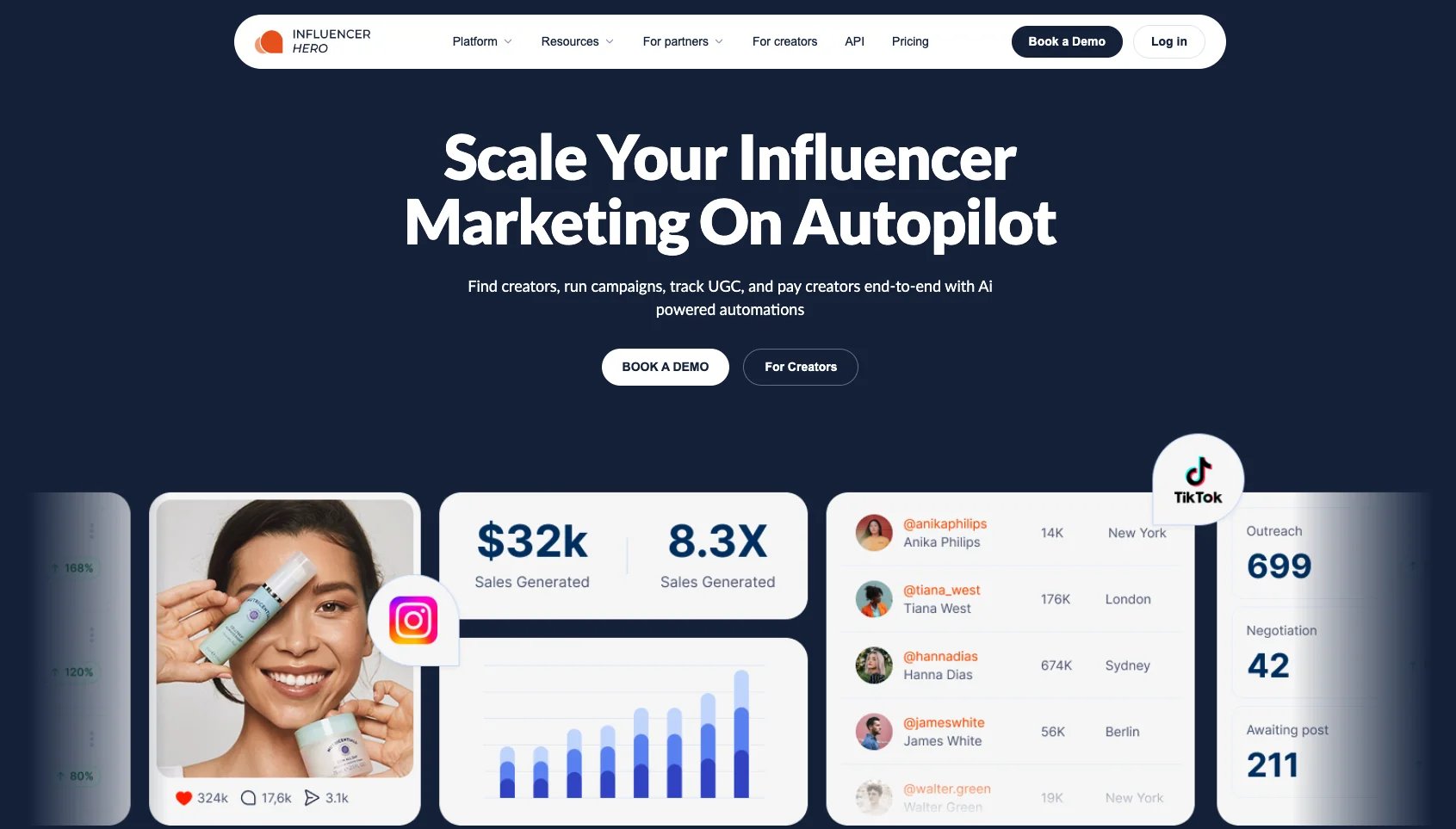
Influencer Hero is an all-in-one influencer marketing platform built for D2C and eCommerce brands, covering 8 social platforms with Instagram, TikTok and YouTube leading. Discovery is the first step rather than the deliverable. The same system sends the influencer outreach, ships the product, collects the content, pays the creator and reports the revenue.
Key Features
- Discovery filters and AI search: Over 20 filters plus natural-language search across eight networks.
- Audience authenticity checks: Fake-follower detection run on any creator before budget commits.
- Creators who already follow you: Your own followers and buyers surfaced as outreach targets.
- Influencer CRM: Campaign boards with stage automations and custom fields for per-creator logic.
- Outreach on three channels: Email, Instagram DM and WhatsApp sequences, with replies in one inbox.
- Seeding from your store: Gifting orders created in Shopify or WooCommerce and followed to the door.
- Commission and payouts: Affiliate codes issued and creators paid at 0.1% to 0.4% with invoices attached.
- Automated campaign reporting: Sales by creator and product cost against return, compiled without a spreadsheet.
Pricing
- Standard: $649 a month, up to 1,000 reachouts a month
- Pro: $1,049 a month, up to 5,000 reachouts a month
- Business: $2,490 a month, up to 10,000 reachouts a month
- Custom & Agency: custom pricing
Quarterly billing saves 20% and yearly saves 30%, with every figure published on the site.
Reviews
5.0/5.0 (Capterra)
Pros
- The program, not just the report: Discovery, outreach, gifting, codes and payouts in one subscription.
- Outreach lives here: Sequences sent over email, Instagram DM and WhatsApp instead of an exported list.
- One allowance, not eight: Reachouts are the only thing metered.
Cons
- No free trial
- Expensive for smaller brands
- Steep learning curve
Integrations
- Shopify: Seeding orders placed from the store and creator sales tracked back.
- WooCommerce: Full WordPress support, plus scripts for Magento and custom builds.
- Klaviyo: Creator and buyer segments handed to your lifecycle email flows.
- DocuSign: Agreements signed and stored on the creator’s deal record.
- Zapier: A route to 8,000-plus other apps when nothing native exists.
InsightIQ vs Influencer Hero
InsightIQ is strong on the questions a marketer asks either side of a campaign. Is this audience real? What did the post cost per engagement? Is the content safe for the brand? Influencer Hero answers all three, with over 20 filters, fake-follower screening and automated revenue reporting. Then it runs the campaign. Sequences go out over email, Instagram DM or WhatsApp. Replies land on a campaign board. Gifting orders are raised inside Shopify or WooCommerce, the post comes back into a content library, an affiliate code goes out and the creator gets paid at 0.1% to 0.4%. InsightIQ covers two ends of a program. Influencer Hero covers the whole middle as well.
Price the stack, not the line item. InsightIQ Growth is $899 a month for 2,500 exports. On top of that you still buy an outreach tool, a gifting process, an affiliate app and a way to pay people. Influencer Hero Standard is $649 a month with 1,000 reachouts included, roughly $454 on yearly billing, and it replaces all four. It is also the only one of the two you can budget for without a sales call, since InsightIQ puts API access and bulk export behind a custom Enterprise quote. For a brand that wants one bill and one workflow, Influencer Hero is the platform to build the program on.
Afluencer
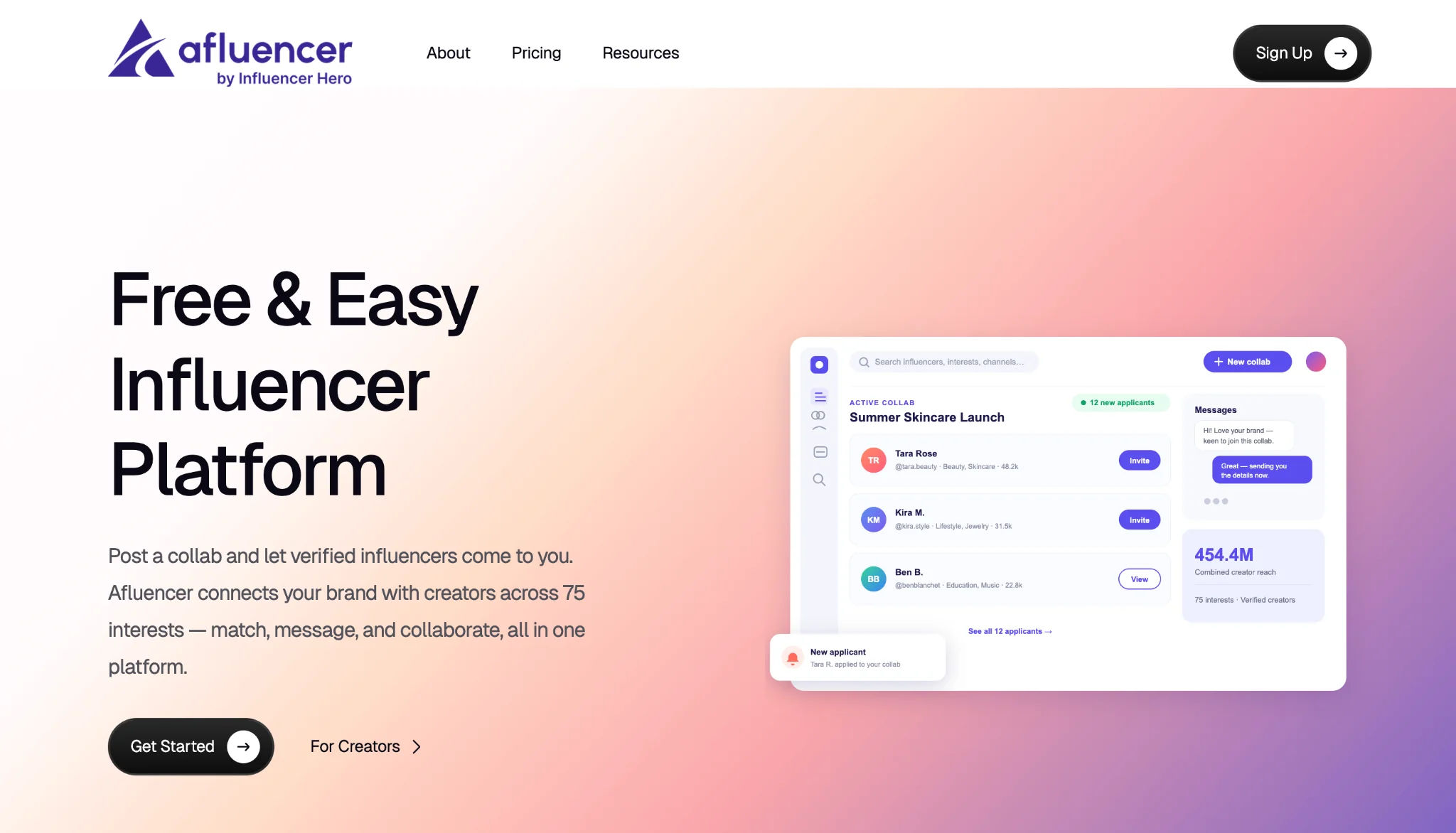
Afluencer is a marketplace where creators come to brands. You publish a collaboration, verified members apply, and AI sorts the queue against your brief before you review it. Pricing starts at $49 a month.
Key Features
- Campaign listings: Publish a collaboration and let creators apply to it directly.
- Vetted creator base: Members registered and checked before they can apply to anything.
- AI applicant ranking: CreatorGPT orders the queue against your brief so review is faster.
- Outbound invites: Invite credits for the months when inbound applications run thin.
- Storefront-linked codes: Creator fees and discount codes run through the store connection.
Pricing
- VIP: $49 a month
- Concierge: $99 a month
No minimum term, with creator-side plans billed separately.
Reviews
4.6/5.0 (G2, 738 reviews) and 4.7/5.0 (Shopify App Store, 34 reviews). The G2 pool leans creator-side, so read it beside the Shopify score.
Pros
- 738 independent reviews: The deepest evidence base on this page, against none.
- $49 with no meter: A quarter of the entry price and nothing counts down.
- Built to find micro-influencers: Smaller creators are the bulk of the applicant pool.
Cons
- You cannot search on demand: No large index to filter when you need a specific profile.
- Applicant quality varies: A weak listing brings weak applications.
- Strongest in North America: Creator supply thins outside its main markets.
Integrations
- Shopify: Referrals, codes and creator orders read straight from the store.
- BigCommerce: The same store-level tracking for BigCommerce merchants.
- Klaviyo: Creator details passed through to your marketing lists.
- DocuSign: Collaboration terms signed without leaving the flow.
- Slack: A ping to the team each time an application lands.
InsightIQ vs Afluencer
One searches, the other waits. InsightIQ gives you 450 million profiles and 50 filters to narrow them down. Afluencer gives you a listing that creators apply to, so you never buy an export or write a cold email.
Cost separates them sharply. $49 a month against $199, with no counters on the Afluencer side and 738 reviews behind it. What you give up is precision. If your brief calls for creators in one city with a specific audience age split, applications will not reliably produce them. Where the job is volume and speed on a small budget, Afluencer makes more sense.
Modash
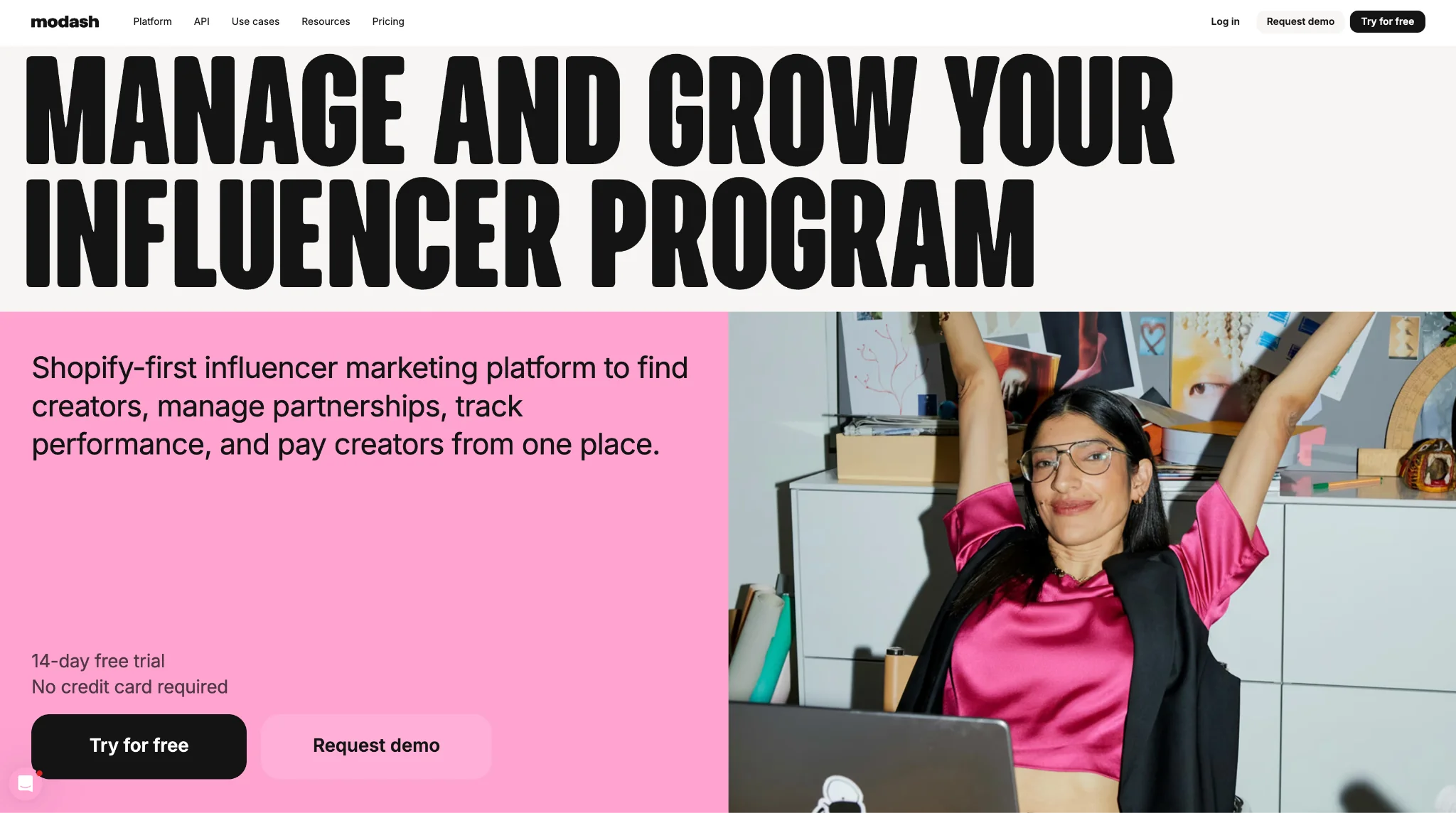
Modash is a discovery platform that publishes every limit on every plan, then adds tracking, affiliate management and creator payments as you move up the tiers.
Key Features
- Search across three networks: Instagram, TikTok and YouTube with audience-level filters.
- Fans who already buy: Your follower and customer lists scanned for creators worth activating.
- Automatic post tracking: Content watched from the point a creator joins a campaign.
- Creator payments: No payment fee on the first $10,000 a year under Performance, or $100,000 under Enterprise.
- Affiliate links: Commission and link management, unlocked at the Performance tier.
Pricing
- Essentials: $199 a month, or $2,388 a year, with 300 profile views, 150 email unlocks and 100 tracked creators
- Performance: $499 a month, or $5,988 a year, with 800 views, 400 unlocks and 250 tracked creators
- Enterprise: from $14,700 a year with custom limits
A 14-day free trial runs without a credit card, and annual billing saves 25% on Essentials.
Reviews
4.9/5.0 (G2, low review volume at 19 reviews). Ease of use, discovery quality and support draw praise; slow loading, thin contracting features and missing exports draw the criticism.
Pros
- Every limit published: Views, unlocks and tracked creators stated per tier.
- A trial with no card: Fourteen days to test the data before paying anything.
- Fee-free payouts to a cap: Creator payments that cost nothing up to a published ceiling.
Cons
- Three networks only: No Twitch, Pinterest or LinkedIn coverage.
- Nineteen reviews: A high score resting on very few opinions.
- Affiliate tools are gated: Links and commission only from $499 a month.
Integrations
- Shopify: The store link that makes affiliate tracking work on paid plans.
- Instagram, TikTok and YouTube: Direct data feeds for profiles and post monitoring.
- Gmail: Sequences sent and tracked from your own mailbox, not a shared sender.
- Payments: Creator payouts issued from inside the tool.
- API access: Programmatic access to creator and campaign records.
InsightIQ vs Modash
Both meter what you use and both publish the numbers, so the comparison is unusually clean. InsightIQ Starter is $199 for 200 exports and 3,000 search results. Modash Essentials is the same $199 for 150 email unlocks and 300 profile views. On raw volume InsightIQ gives you more.
Modash spends its money further down the workflow instead. Outreach goes through your own Gmail. Tracking starts automatically on every creator you add. Affiliate marketing tools arrive at the Performance tier, and creator payments cost nothing up to $10,000 a year. Teams that want to send the emails and pay the creators inside the same tool they search in should put Modash on the shortlist.


NeoReach
NeoReach is a managed service, not software you log into. Its team handles strategy, creator sourcing, contracting, creative approvals, production and licensing. The company reports managing over $350 million in campaigns since it started in 2013.
Key Features
- Campaigns run for you: Strategy, execution and measurement delivered by an external team.
- Sourcing and negotiation: Creators found, approached and contracted on your behalf.
- Production management: Creative direction and content approvals handled inside the engagement.
- Usage rights: Licensing negotiated as part of the deal rather than assumed.
- Reporting and measurement: Performance tracked across creators, platforms and markets.
Pricing
Quote-based, with published minimums. Full-service campaigns start at $50,000 and UGC content programs from $10,000, structured per campaign, per project or on a monthly retainer. A strategy consultation precedes any proposal.
Reviews
4.5/5.0 (G2, very low review volume at 11 reviews). Discovery filters, analytics and ease of use draw praise; cost, a thin micro-influencer pool and weak search filters draw the criticism.
Pros
- The work is done for you: Nothing to staff, learn or operate internally.
- Published floors: Two figures stated openly, which most agencies of this size avoid.
- Rights handled up front: Licensing negotiated rather than left to sort out later.
Cons
- $50,000 entry: Against a $199 monthly subscription.
- Eleven reviews: Barely any independent evidence in either direction.
- Nothing to self-serve: No trial, no login, no way to test it cheaply.
Integrations
- Instagram, TikTok and YouTube: Platform APIs feeding creator and campaign data.
- Developer API: A route to pull influencer data into systems you run.
- Reporting tools: Results delivered into whatever BI stack you use.
- Managed service layer: The NeoReach team itself acting as the connection.
- eCommerce platforms: No store app is published, so attribution arrives in reporting.
InsightIQ vs NeoReach
This is a software-versus-people decision. InsightIQ gives your team better information and expects them to act on it. NeoReach gives you the team, and the information comes back as a report at the end.
The gap between $199 a month and $50,000 a campaign is really the cost of the hours. Data on 450 million creators is worth very little if nobody has time to brief, chase and negotiate with any of them. If your problem is headcount rather than insight, NeoReach might suit you more.
Social Cat
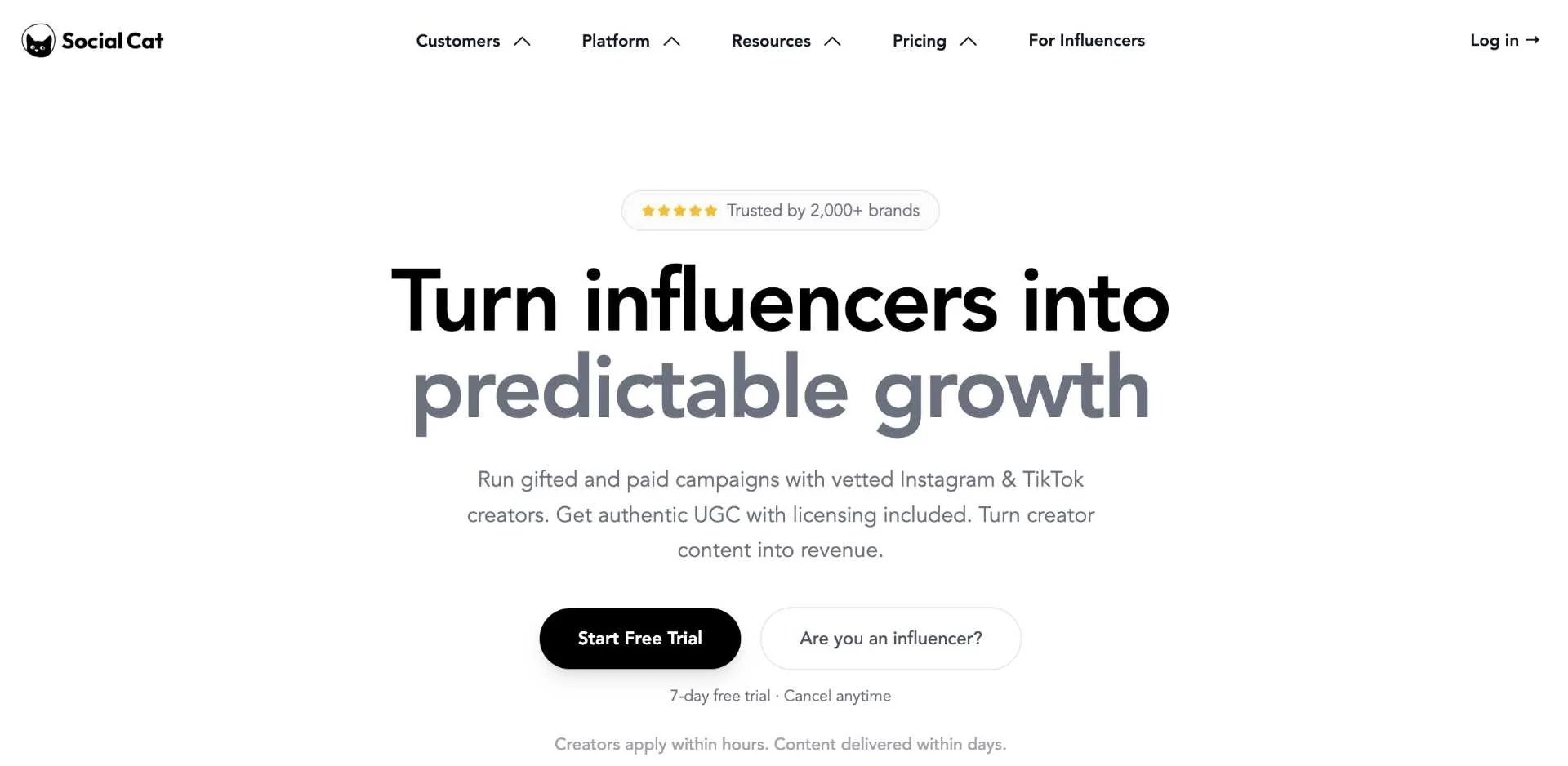
Social Cat is a micro-influencer marketplace built around gifting. Screened creators apply to your campaigns, you send product or pay a fee, and full content usage rights come included on every plan.
Key Features
- Screened micro-creators: Every creator checked by hand before they can apply to a campaign.
- Gifted and paid collabs: Product seeding, flat fees and commission deals run from one place.
- Licensing on every plan: Full usage rights included at the entry tier, not just the top one.
- In-platform messaging: Creator conversations kept inside the tool rather than in DMs.
- Asset library: Finished content stored and organised for reuse.
Pricing
- Essentials: $99 a month, 5 collaborations, 1 campaign, 1 seat, 1,000 invitations
- Performance: $199 a month, 15 collaborations, 3 campaigns, 5 seats, 2,500 invitations
- Pro: $299 a month, 30 collaborations, unlimited campaigns, 10 seats, 5,000 invitations
Yearly billing gives two months free, and every plan starts with a 7-day free trial.
Reviews
4.0/5.0 (Trustpilot). Scores split by user type, with creators rating it well above brands. The recurring brand complaint is creators accepting gifted product and never posting, with limited recourse.
Pros
- You buy posts, not profiles: The unit sold is a finished collaboration.
- Rights on every tier: Content licensed without a separate negotiation.
- Seven days free: A trial and no minimum term.
Cons
- Five collabs on entry: A hard ceiling at $99 a month.
- No store connection: Nothing links a creator to an order automatically.
- Creators who take and do not post: Brands report gifted product going out with no content coming back.
Integrations
- Meta: Instagram and Facebook results read back into the campaign.
- TikTok: Performance on short-form pulled in alongside it.
- Content library: A central store for the assets creators deliver.
- Messaging: Conversations with creators kept inside the product.
- eCommerce platforms: Nothing published, so sales attribution needs a second tool.
InsightIQ vs Social Cat
Compare what a month actually leaves you holding. InsightIQ Starter at $199 gives you 200 exported profiles and a lot of analysis. Social Cat Essentials at $99 gives you five confirmed collaborations with usage rights attached. One is research, the other is finished content.
Neither connects to a store, so sales attribution needs a third tool in both cases. The split is really about stage. If you have creators and want to judge them properly, spend the $199. A small brand that needs a handful of real posts this quarter, with nobody free to source them, might suit Social Cat better.
Influencity
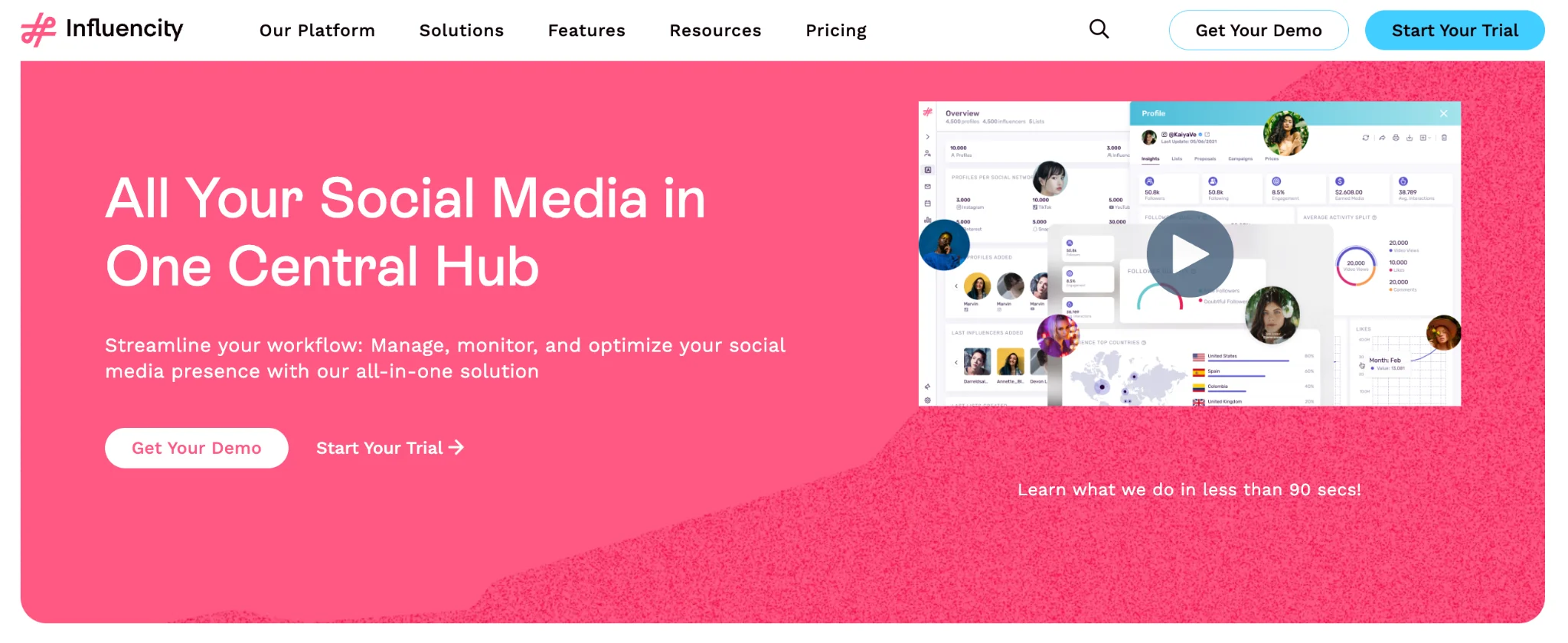
Influencity is a discovery and audience analytics platform sold in published month-to-month tiers. Plans scale on profile analyses, search results and stored creators. Campaign management appears from the middle tier up.
Key Features
- Audience reports: Deep profile analyses, capped per plan and starting at 30 each month.
- Authenticity data: Demographics, follower quality and interest breakdowns on any creator.
- Stored shortlists: As many as 2,000 creators saved inside the tool instead of a file.
- Campaign tracking: Concurrent campaigns managed from Professional upward.
- Modular enterprise tier: Features picked individually with a dedicated success manager.
Pricing
- Basic: $168 a month, or $134 annually at $1,613 a year, with 30 profile analyses and 1 user
- Professional: $348 a month, or $278 annually at $3,348 a year, with unlimited analyses
- Business: $698 a month, or $558 annually at $6,700 a year, with 25,000 search results and 50 campaigns
- Enterprise: custom limits and pricing
All plans are month-to-month with a 7-day free trial.
Reviews
4.6/5.0 (G2, 263 reviews).
Pros
- Uncapped reports above entry: Unlimited profile analyses from Professional at $348.
- 263 reviews: A real independent record on data quality.
- Month-to-month, no lock-in: Every tier cancellable, with a week free to test.
Cons
- Thirty reports on Basic: Tighter than the entry tier it competes with.
- Analysis over execution: The campaign tooling is thin next to a full program platform.
- $168 before you analyse much: The cheap tier runs out quickly on a busy month.
Integrations
- Instagram, TikTok and YouTube: Audience analysis running across all three networks.
- Shopify: A store connection offered once you reach the upper plans.
- Exports: Lists and reports pulled out for clients or internal review.
- API access: Creator records piped into your own tooling.
- Team seats: Extra users included from Professional onwards.
InsightIQ vs Influencity
Both sell research with published prices, and both ration it. The difference is what happens when you outgrow the entry plan. InsightIQ moves you from $199 to $299 to $899, with eight counters rising together. Influencity removes the analysis cap entirely at $348 and lets you run unlimited profile reports from there.
Network coverage runs the other way. InsightIQ indexes eight platforms including Twitch, Pinterest and LinkedIn; Influencity covers the main three. For an agency screening hundreds of Instagram and TikTok creators a month for client recommendations, Influencity is the better buy.
Traackr
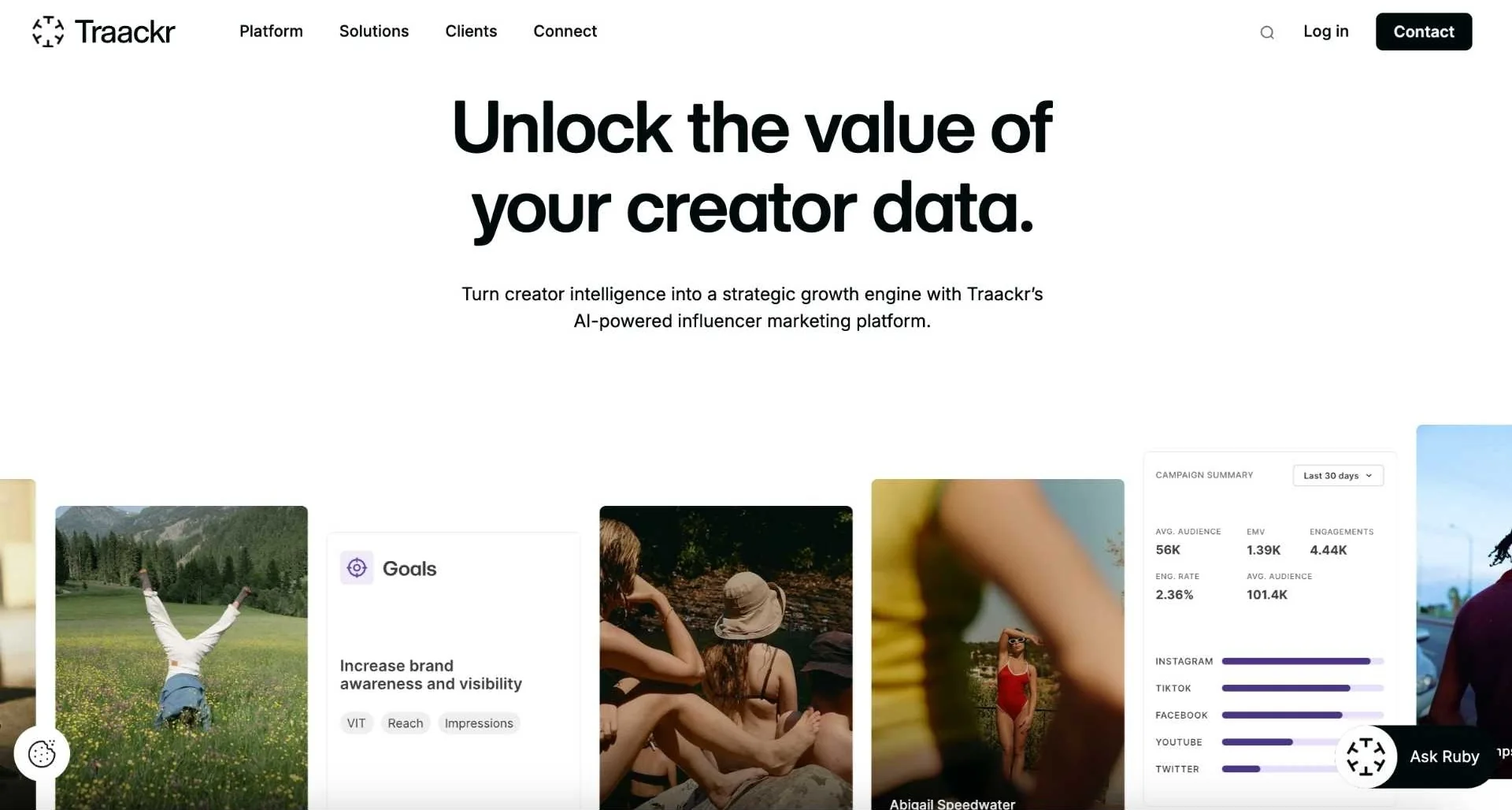
Traackr is enterprise measurement infrastructure. It puts creator and campaign metrics on one standard so global teams can benchmark against competitors, control spend across markets and compare programs on the same scale.
Key Features
- One measurement standard: Consistent metrics applied across creators, campaigns and markets.
- Competitor benchmarking: Your results set against rivals and the wider category.
- Budget tracking: Influencer spend and efficiency monitored centrally across teams.
- Shared creator history: Every touchpoint recorded so nobody works from a private list.
- Vetting and search: Creator discovery backed by the same standardised data.
Pricing
Reported at around $25,000 a year for Growth with a three-user minimum, roughly $32,500 for Standard with five users, and $55,000 and up for Plus with API access and ten or more users. All plans are annual, with no monthly option and no standard free trial.
Reviews
4.3/5.0 (G2, 382 reviews). Audience data depth, benchmarking and support draw praise; slow loading, export glitches, thin data on smaller creators and cost draw the criticism.
Pros
- 382 reviews: Second only to Afluencer for independent evidence here.
- Built for several markets: Designed for teams running programs in parallel countries.
- Nobody double-books a creator: Shared history across every team that touches them.
Cons
- $25,000 a year to start: Roughly ten times what the entry subscription here costs annually.
- No monthly option: Annual contracts only, and no standard trial to test first.
- No self-serve entry: Evaluation runs through sales from the first conversation.
Integrations
- Shopify: Store data wired in so revenue can be attributed.
- Instagram, TikTok and YouTube: Performance normalised to one standard across networks.
- API access: Enterprise reporting fed directly, on the Plus tier.
- Data partners: Outside datasets used to build the benchmarks.
- Exports: Reports pushed into BI tools and stakeholder decks.
InsightIQ vs Traackr
These solve the same problem at different scales. Both measure creator performance and both charge for it. InsightIQ does it for one team on a monthly subscription. Traackr does it for several teams in several countries on an annual contract, and adds competitor benchmarking that nothing else here offers.
The metering is the practical difference. InsightIQ caps how many posts you can track each month, from 25 on Starter to 250 on Growth. That is a real ceiling for a brand running a hundred creators. A company with influencer programs in three or more markets, each with its own team, is where Traackr earns the annual contract.
HypeAuditor
HypeAuditor built its name on fraud detection. It scores audience quality, flags fake followers and inflated engagement, and has added media planning, campaign management and market analytics around that core.
Key Features
- Fraud scoring: Audience quality and authenticity rated on any creator profile.
- Creator search: Discovery across the major networks with audience-level filters.
- Media planning: Campaign plans built and costed before budget is committed.
- Live campaign tracking: Creator deliverables and performance monitored as they publish.
- Category benchmarks: Market and competitor data for context on your own numbers.
Pricing
Nothing published on the vendor’s own pricing page, which routes to a demo or a free tier. A Capterra listing reports a starting figure of around $399 per user a month with a free trial and a free version available, so treat that as indicative rather than a rate card.
Reviews
4.6/5.0 (G2, 264 reviews) and 4.8/5.0 (Capterra, 35 reviews). Audience insight, ease of use and support draw praise; shallow reporting, data accuracy on smaller creators and cost draw the criticism.
Pros
- Fraud detection is its core: The whole product is built around audience authenticity.
- Almost 300 reviews: Independent evidence on the data itself.
- Twitch coverage: Live streaming included alongside the usual networks.
Cons
- No rate card: The only figure available comes from a directory listing.
- Roughly $399 a month indicated: Twice the entry price of the platform it competes with.
- Reporting called shallow: Reviewers say the dashboard is thin for campaign analysis.
Integrations
- Instagram, TikTok and YouTube: Audience and creator data across all three.
- Twitch: Streaming coverage that most rivals on this page skip.
- Exports: Profile reports pulled out for clients and stakeholders.
- API access: Creator and audience records fed into internal systems.
- eCommerce platforms: No store connection is named, so revenue tracking sits elsewhere.
InsightIQ vs HypeAuditor
These are the closest match on this page. Both index creators, both score audience quality and both aim the product at teams that want to check a creator before paying one. InsightIQ adds brand safety scanning and purchase intent analysis; HypeAuditor adds media planning and Twitch.
Transparency splits them. InsightIQ publishes $199, $299 and $899 with the limits attached to each. HypeAuditor publishes nothing, and the roughly $399 a month reported by a directory is the only number available. For a brand whose main worry is buying reach that turns out to be fake, HypeAuditor is worth the demo call.
Final Thoughts on InsightIQ Alternatives
InsightIQ is a strong measurement product sold honestly, and published tiers in a category that mostly hides its pricing count for something. What to check first is your own month: count the exports, analytics reports and tracked posts your team actually gets through, then see which counter runs out on which plan. Then add the outreach tool, the gifting process, the affiliate app and the payment method it does not include. That total is the number worth comparing, and for most growing brands it lands well above the sticker price.

.png)


.jpg)










