

10 Best Influential Alternatives for Influencer Marketing
Influencer marketing software has become a core part of the D2C growth stack, helping teams streamline creator discovery, automate outreach, manage campaigns, and track performance and revenue in one place. Influential is one of the more established enterprise platforms in this space, known for its AI-driven discovery, brand safety capabilities, and large creator network. However, many teams start exploring Influential alternatives due to limited pricing transparency, a steeper learning curve for new users, occasional data accuracy concerns, and operational friction when running complex or high-volume campaigns. For founders and marketing teams evaluating influencer marketing software, choosing the right platform often comes down to balancing ease of use, eCommerce integrations, and cost structure.
In this article, we’ll compare 10 of the best Influential alternatives—including Upfluence, SARAL, GRIN, Influencer Hero, IZEA, Later, Ainfluencer, indaHash, Influencity, and Modash—to help you find the right fit.
Key Criteria for Evaluating Influencer Marketing Platforms
Core Features
Evaluation of essential influencer marketing capabilities, including influencer discovery, outreach, CRM, campaign management, reporting, and content workflows.
Pricing & Flexibility
Comparison of pricing models, subscription plans, and contract terms to match different budgets and growth stages.
Customer Reviews & Satisfaction
Analysis of user feedback from trusted review platforms, focusing on usability, reliability, customer support, and overall performance.
Pros & Cons
Review of each platform’s strengths and limitations to highlight where it performs well and where it may fall short based on different use cases.
Integrations
Review of the most important integrations (e.g., Shopify and other tech tools), highlighting what each integration enables in one sentence.
Influential Overview
Influential is an enterprise-focused influencer marketing platform and agency that helps brands discover creators, run campaigns, approve content, and measure business impact across social and commerce channels. Its current platform positioning is closely tied to Captiv8, which powers creator discovery, campaign execution, affiliate workflows, and reporting; the company also emphasizes deep API partnerships with major social platforms, offline and online sales measurement, and a strong focus on brand safety and inclusive creator discovery.
Key Features
• AI-powered creator discovery: Influential uses machine learning, natural language processing, and computer vision to help brands find creators based on audience fit, content themes, brand alignment, and visual signals inside creator content.
• Large creator network: The platform says it provides access to 15+ million creators through deep API integrations and a large creator network, giving enterprise teams broad discovery coverage.
• Campaign management and collaboration: Brands can manage campaigns in-platform, review deliverables, leave feedback, approve content, and keep campaign communications organized rather than relying on scattered spreadsheets and email threads.
• Advanced audience and account insights: Influential surfaces engagement trends, post-type performance, heat maps, recent media, AI image analysis, brands mentioned/worked with, and personality traits to help marketers vet creators more deeply before activation.
• Affiliate and social commerce tracking: The unified Influential/Captiv8 platform is positioned as handling both influencer and affiliate workflows, with social commerce tracking and campaign measurement in one system.
• Paid media and whitelisting support: The platform supports pulling paid metrics for client-run Meta and TikTok ad campaigns, which is useful for brands amplifying creator content through paid social.
• Online and offline sales measurement: Influential highlights measurement capabilities spanning eCommerce tracking, affiliate tracking, online/offline sales lift, MMM integrations, and conversion tracking through partners like Amazon, LiveRamp, Circana, and Advantage Solutions.
• DEI and inclusive creator discovery: The company emphasizes discovery and compensation of underrepresented creators, and users specifically praise filters that help teams identify more diverse creator candidates.
Pricing
Influential does not publish public pricing on its website. Current public listings indicate custom quote-based pricing, with no self-serve monthly plans or transparent tier grid available online.
Reviews
4.7/5.0 (G2)
Integrations
• Meta: Connect Meta ad accounts so Influential can pull paid campaign metrics and performance data for creator-led amplification on Facebook and Instagram.
• TikTok: Sync TikTok creator and ad campaign data for reporting, creator authentication, ad code workflows, and paid performance measurement.
• Amazon: Use Amazon as a measurement partner to connect influencer activity to trackable commerce outcomes and conversion analysis.
• LiveRamp: Use LiveRamp for cross-channel attribution and online/offline conversion measurement tied to influencer campaigns.
• Circana: Connect retail measurement and sales-lift analysis to better understand in-store and broader commerce impact from creator programs.
Pros
• Unified influencer + affiliate workflow: Influential now positions the platform as a single system for influencer discovery, affiliate integrations, social commerce tracking, and campaign measurement, which is a meaningful differentiator for brands trying to connect creator programs to revenue.
• Strong AI and creator intelligence stack: Its use of computer vision, NLP, AI image analysis, personality traits, and audience modeling makes creator vetting more sophisticated than simple keyword or follower-count filtering.
• Measurement depth for enterprise teams: Influential stands out for linking creator campaigns to online sales, offline sales, brand lift, MMM inputs, and partner-based conversion tracking, which is especially valuable for large brands under pressure to prove ROI.
Common Drawbacks of Influential
No public pricing transparency
Buyers have to book a demo and request a quote, which makes early-stage comparison harder and usually signals a more enterprise-style sales process.
Learning curve for new users
While the platform scores well for usability overall, recurring feedback suggests new team members may need onboarding and extra training to get fully comfortable.
Some search and data fields are not perfectly precise
User feedback points to occasional inaccuracies in inferred creator attributes and search outputs, especially where demographic or identity-based signals are modeled rather than explicitly declared.
Operational friction can show up in complex programs
Review summaries surface issues around payment workflows, search efficiency, and platform complexity in certain use cases, which can matter for teams running high-volume or highly specialized campaigns.
Best Influential Alternatives
| TOOL | REVIEWS | BEST FOR | TRIAL INFO | PRICING | ||
|---|---|---|---|---|---|---|
1 |

|
⭐ | Influencer discovery | Book Demo | Pricing | Website |
2 |

|
⭐ | UGC creator collaborations | Book Demo | Pricing | Website |
3 |

|
⭐ | DTC creator management | Book Demo | Pricing | Website |
4 |

|
⭐ | Influencer CRM & automation | Book Demo | Pricing | Website |
5 |
|
⭐ | Influencer marketplace | Book Demo | Pricing | Website |
6 |

|
⭐ | Social media & influencer campaigns | Book Demo | Pricing | Website |
7 |

|
⭐ | Influencer discovery & outreach | Book Demo | Pricing | Website |
8 |
|
⭐ | Enterprise creator campaigns | Book Demo | Pricing | Website |
9 |

|
⭐ | Campaign management | Book Demo | Pricing | Website |
10 |

|
⭐ | Influencer discovery | Book Demo | Pricing | Website |
Upfluence

Upfluence is an influencer and affiliate marketing platform built primarily for eCommerce brands and agencies. Its positioning is especially strong for teams that want to connect creator discovery, outreach, gifting, affiliate tracking, and payments to online store data instead of running influencer marketing as a separate workflow. Upfluence also leans heavily into AI-assisted campaign setup through Jaice AI and into native commerce integrations for Shopify, WooCommerce, Magento, BigCommerce, and Amazon.
Key Features
• Large creator database and advanced discovery: Upfluence’s pricing page says all plans include unlimited advanced search across a 14M+ creator database, plus lookalikes, audience data, affiliate filtering, and branded recruitment pages.
• Bulk outreach and email automation: The platform supports unlimited mass outreach, custom templates and fields, Gmail and Outlook integration, and automated drip sequences on higher tiers.
• Jaice AI for campaign setup: Upfluence highlights Jaice AI for campaign creation and email assistance, helping teams launch programs faster and reduce manual setup work.
• eCommerce-native workflow: Upfluence’s strongest differentiator is its native commerce layer, including integrations with Shopify, WooCommerce, Magento, BigCommerce, and Amazon for gifting, promo codes, and tracked sales.
• Affiliate and promo-code management: Brands can mass-create custom discount codes and manage affiliate-style creator programs without taking fees from tracked sales.
• Payments and compliance: Upfluence Pay, powered by Stripe, supports automated creator payments, local currencies, and more compliant payout workflows.
• CRM and relationship tracking: Users can centralize creator communication, shipping, campaign stages, and payments rather than managing those steps across spreadsheets and inboxes.
Pricing
• Pricing model: Upfluence uses custom pricing rather than a public fixed plan table.
• All plans are custom made. There’s a minimum full year of service you have to commit to with monthly payments. On average plans start around $1,276 - $2,000/month ($24,000 yearly)
Reviews
4.3/5.0 (Capterra)
Pros
• Deep eCommerce integrations: Upfluence is one of the most commerce-oriented platforms in this group, with native support for Shopify, WooCommerce, Magento, BigCommerce, and Amazon workflows.
• Jaice AI embedded into campaign execution: Its recent positioning around Jaice AI goes beyond discovery and into campaign creation and email assistance, which can reduce operational lift for lean teams.
• No fees on tracked sales: Upfluence explicitly promotes zero fees on tracked sales, which is attractive for brands running creator commerce and affiliate-heavy programs.
Cons
• Pricing is not transparent: Buyers still need a sales conversation to understand full costs and package fit.
• Can feel more complex for small teams: The breadth of CRM, affiliate, payment, and eCommerce tools creates a steeper ramp than lighter-weight influencer tools.
• Some users report workflow rigidity: Feedback points to occasional friction around campaign edits, automation behavior, and navigation when programs get more complex.
Integrations
• Shopify: Connect your store to identify influential customers, send products, generate codes, and track creator-driven sales.
• Amazon: Run Amazon-focused creator and affiliate campaigns with attribution and tracked revenue inside the platform.
• WooCommerce: Sync your WooCommerce store for promo codes, affiliate tracking, and commerce attribution.
• Klaviyo: Enrich email lists with creator data and run more targeted flows for influencer or ambassador programs.
• Stripe: Use Upfluence Pay for faster, automated creator payouts with multi-currency support.
Influential vs Upfluence
Influential is more enterprise-and-agency-led in its positioning, with stronger emphasis on large-brand strategy, brand safety, and cross-channel measurement. Upfluence is more explicitly built around eCommerce execution, especially for brands that want to connect influencer discovery, outreach, gifting, promo codes, affiliate tracking, and payments directly to store data.
Upfluence is usually the better fit for DTC brands that care most about creator commerce and native store integrations, while Influential is better suited to brands prioritizing enterprise reporting depth, broad managed-service support, and high-touch campaign orchestration. Upfluence also exposes more of its product around AI-assisted execution and sales attribution, whereas Influential is better framed as a higher-end enterprise platform with stronger brand-level positioning.
SARAL
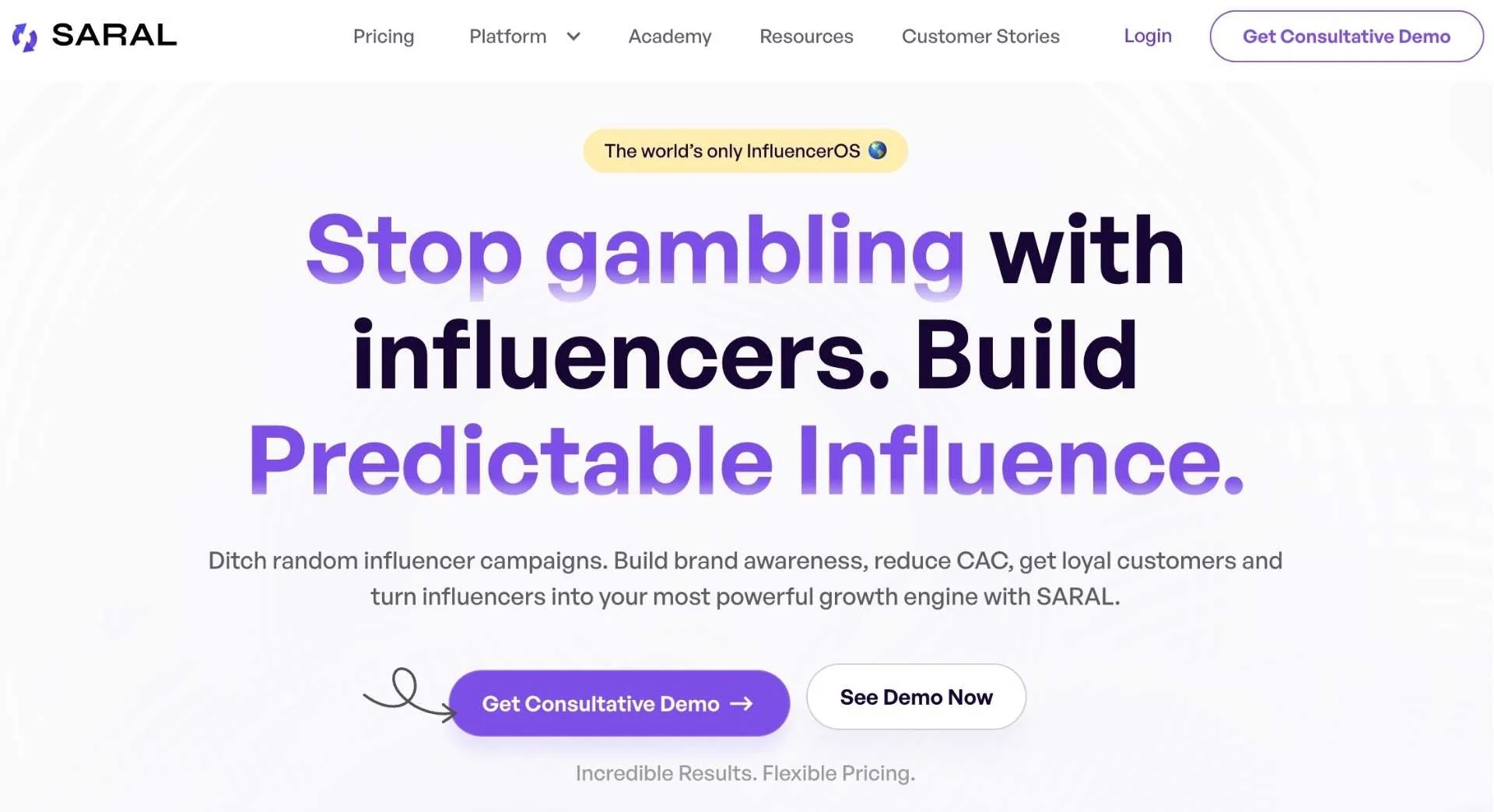
SARAL is an influencer marketing platform designed for consumer and eCommerce brands that want a simpler operating system for finding creators, scaling outreach, managing relationships, tracking posts, and measuring influencer-driven revenue. Its positioning is notably more straightforward than many enterprise tools: fewer layers, more transparent pricing, and a strong focus on helping emerging brands replace spreadsheets and fragmented workflows with one centralized system.
Key Features
• Influencer discovery across major social platforms: SARAL’s discovery tooling can surface creators with public profiles across Instagram, TikTok, YouTube, and other major platforms, with audience insights and contact details built in.
• Personalized outreach at scale: SARAL emphasizes automated outreach, response tracking, and relationship-building instead of just one-off prospecting.
• Creator relationship management: The platform is built around keeping creator data, conversation history, and program operations in one place for repeatable ambassador and affiliate programs.
• Post tracking and social listening: SARAL’s higher tiers add expanded post tracking and, on Professional, unlimited full social listening.
• Affiliate links, discount codes, and ROAS tracking: SARAL is positioned as a profit-oriented system that helps brands track sales, ROAS, and creator performance rather than stopping at awareness metrics.
• Store connectivity for gifting and affiliate workflows: SARAL supports Shopify and WooCommerce for gifting, affiliate tracking, and campaign management, plus custom integrations for other setups.
• Lean, support-heavy onboarding: SARAL’s pricing page emphasizes quick onboarding, responsive support, and ease of use instead of long implementation cycles.
Pricing
SARAL offers tiered pricing primarily billed annually or quarterly:
• Starter Plan – $12,000/year or $3,600/quarter Includes 100 active partnerships, 300 new influencers/month, limited post tracking, and 1 user seat.
• Business Plan – $15,000/year or $4,500/quarter Includes 500 active partnerships, 800 new influencers/month, unlimited tracking, and 3 seats.
• Professional Plan – $25,000/year or $7,500/quarter Includes 1,000 active partnerships, 2,000 new influencers/month, full social listening, and 10 seats.
Reviews
4.7/5.0 (G2)
Pros
• Transparent pricing for a mid-market tool: SARAL is more open about plan structure and limits than many influencer platforms that require a sales process for every quote.
• Built for simpler execution, not enterprise complexity: Its core appeal is replacing spreadsheets and multiple tools with one practical workflow that smaller DTC teams can learn quickly.
• Strong emphasis on revenue tracking: SARAL explicitly frames influencer marketing around incremental revenue, ROAS, affiliate tracking, and predictable performance, which makes it especially useful for commerce-led brands.
Cons
• Less established public review footprint: Compared with bigger platforms, SARAL has much less public review volume, which makes peer benchmarking harder.
• More focused on eCommerce brands than broad enterprise needs: Its positioning is strongest for consumer brands, not large multinational teams needing deep enterprise governance.
• Some advanced workflows rely on partner apps: Parts of the commerce stack, such as store connectivity and affiliate tracking, rely on integrations like GoAffPro rather than a fully native closed-loop system.
Integrations
• Shopify: Connect Shopify through GoAffPro to support gifting, affiliate tracking, and store-linked creator workflows.
• WooCommerce: Connect WooCommerce through GoAffPro for similar product seeding and affiliate tracking workflows.
• Klaviyo: Sync onboarded influencer data into Klaviyo to centralize creator and email marketing operations.
• Slack: Use Slack to keep teams informed and improve coordination around creator programs.
• Outlook/Gmail: Connect inboxes for outreach and communication management from inside SARAL.
Influential vs SARAL
Influential is the more enterprise-oriented option, with a stronger emphasis on managed services, large-brand execution, and higher-end campaign infrastructure. SARAL is much more focused on helping eCommerce brands run creator programs simply, quickly, and with clearer pricing.
SARAL is a better fit for teams that want transparency, faster onboarding, and a practical OS for outreach, relationships, and revenue tracking. Influential is better for brands that need a more premium enterprise partner, broader measurement depth, and a platform built around larger campaign operations rather than simplicity-first execution.
GRIN

GRIN is a creator marketing platform built around helping brands automate creator discovery, gifting, communication, reporting, and payments from one system. Historically known for its eCommerce focus, GRIN has recently pushed harder into AI through Gia, its AI creator marketing agent, while also shifting its pricing toward more transparent self-serve monthly packages and a free trial entry point.
Key Features
• Creator discovery and CRM: Even the free trial includes creator search and CRM, showing that GRIN still centers the product around creator sourcing and relationship management.
• Integrated email and branded briefs: Lite includes integrated email, branded briefs, gifting management, and affiliate management for teams formalizing creator workflows.
• Central content library and payment automation: Essentials adds a central content library, automated creator payments, and 1099 processing.
• Advanced reporting and attribution: Growth adds report builder, deep links, advanced affiliate attribution, and content approvals, while Complete adds API access and advanced reporting.
• Gia AI automation: GRIN launched Gia in May 2025 as an AI solution built specifically for creator marketers; the homepage now positions customers between Gia’s AI-led automation and GRIN Platform’s manual control.
• Commerce and creator shops: GRIN also supports commerce-led creator experiences through integrations such as CreatorCommerce, where shop performance flows back into GRIN reporting.
• Broad app ecosystem: GRIN’s marketplace messaging highlights integrations across eCommerce, contracts, email, storage, and team collaboration.
Pricing
• Official pricing model: GRIN’s current pricing page promotes a 30-day free trial and more flexible packaging than before, including self-serve access.
• Public starting price benchmark: Recent software directories list GRIN from $999/month, though enterprise pricing still appears to scale materially based on features and program size.
• Enterprise benchmark pricing: Recent sales benchmarks and product overviews still place GRIN commonly starts at $25,000/year (approx. $2,050/month), with no discounts for upfront payment. Contracts require a full-year commitment with monthly billing.
Reviews
4.5/5.0 (G2)
Pros
• Gia is a meaningful recent differentiator: GRIN is one of the few platforms in this set clearly repositioning around an AI agent for creator marketing rather than just basic AI suggestions.
• Transparent monthly pricing now exists: Its current pricing is easier to understand than many quote-only competitors, with a free trial and cancel-anytime model.
• Strong creator commerce infrastructure: GRIN’s mix of gifting, affiliate attribution, automated payments, 1099 processing, and creator-shop integrations remains one of its biggest strengths for DTC brands.
Cons
• Discovery is not its strongest-reviewed module: Public review data shows discovery scoring lower than relationship management and service areas.
• Can still become expensive as you scale up tiers: The entry plan is accessible, but costs rise meaningfully with active creator capacity, reporting depth, and API access.
• Some users still report product bugs or performance friction: Review summaries continue to mention occasional glitches and limitations despite strong service ratings.
Integrations
• Shopify: Connect Shopify for product seeding, fulfillment, and commerce-linked creator workflows.
• Klaviyo: Use Klaviyo to improve creator communication with more tailored email templates and flows.
• DocuSign: Send and manage creator contracts with GRIN’s DocuSign integration.
• Slack: Sync team collaboration and notifications into your day-to-day workflow.
• Google Drive: Store and organize files and assets tied to creator campaigns more efficiently.
Influential vs GRIN
Influential is the more enterprise-brand-facing option, while GRIN is more clearly built around creator program operations for brands that want hands-on ownership of discovery, gifting, communication, and commerce. Influential tends to appeal more to large brands seeking enterprise measurement and a premium service layer; GRIN is stronger for in-house teams that want to operationalize creator marketing directly.
GRIN also has a more visible self-serve motion right now, with free trial access and transparent monthly tiers. Influential is still more opaque on pricing and more oriented toward high-touch enterprise buying. For DTC brands that care about automation, payments, product seeding, and affiliate attribution, GRIN often feels more execution-first.
Influencer Hero
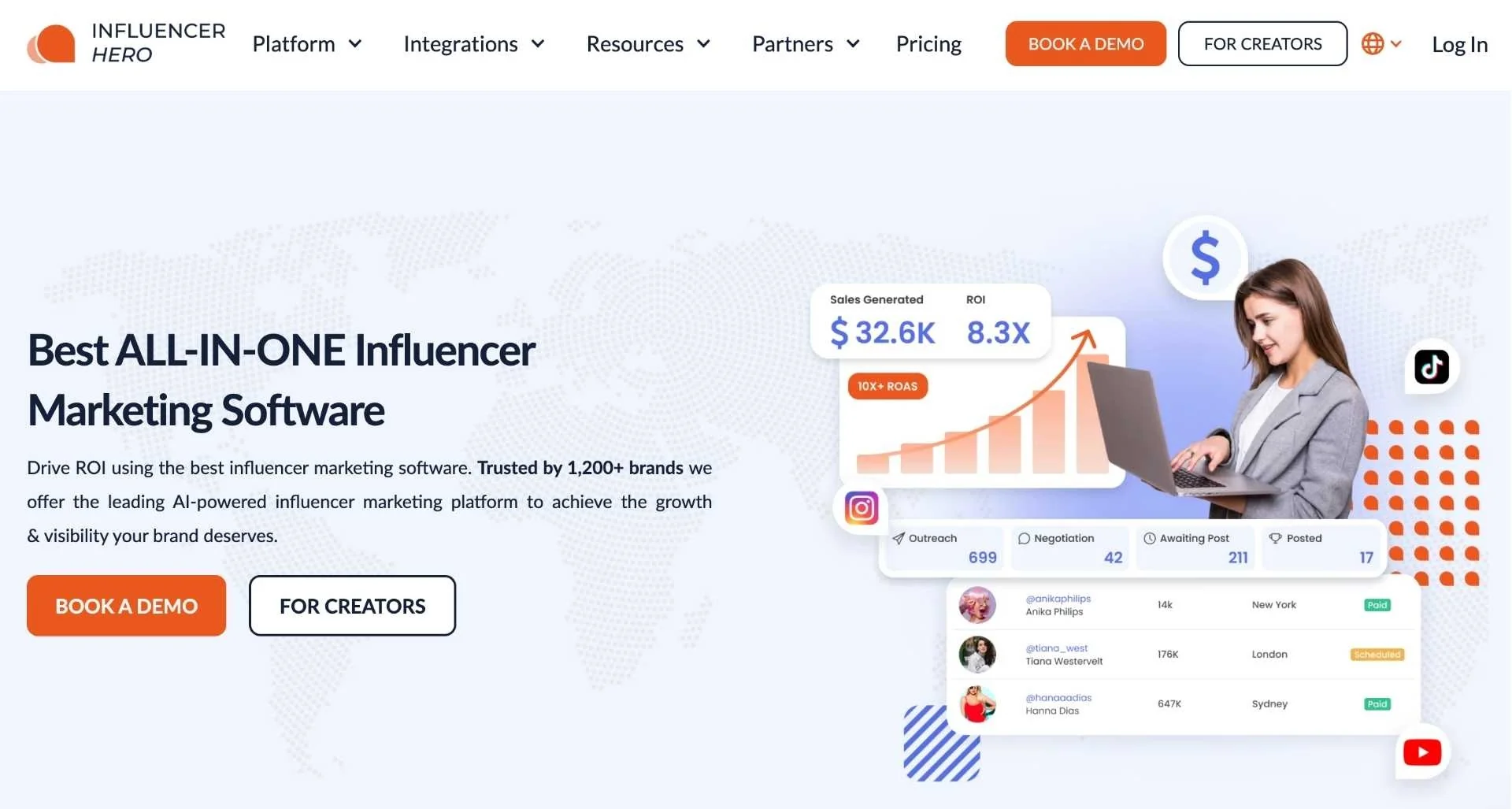
Influencer Hero is an all-in-one influencer marketing platform designed for brands, agencies, and eCommerce teams that want to manage discovery, outreach, gifting, UGC, affiliate tracking, and reporting in one workspace. Its positioning is especially strong for teams that need structured CRM workflows, outreach volume, and store-linked tracking without moving into the highest-priced enterprise tier of the market.
Key Features
• Influencer discovery: Search creators across major platforms with advanced audience, engagement, location, and niche filters, plus fraud detection and lookalike recommendations
• Outreach & automation: Run personalized outreach at scale with AI-assisted messaging, automated follow-ups, and multi-step email sequences
• Influencer CRM: Centralize creator relationships with pipeline management for conversations, campaign stages, and deliverables
• Gifting workflows: Manage product seeding end-to-end with automated order creation, shipment tracking, and delivery monitoring
• Affiliate tracking & payouts: Create trackable links and discount codes, measure performance, and manage commissions and payments in one workflow
• Campaign analytics & ROI tracking: Track engagement, clicks, conversions, and revenue through real-time dashboards tied to campaign performance
• UGC library: Automatically capture and organize creator content for reuse across paid ads, social media, and eCommerce channels
• Application pages & storefronts: Build branded creator application pages and enable influencers to promote products through personalized storefronts
• eCommerce integrations: Connect directly with platforms like Shopify and WooCommerce to link influencer activity to sales and attribution
Pricing
Influencer Hero offers flexible pricing based on outreach volume and you can have unlimited creators in your CRM:
• Standard — $649/month (up to 1,000 outreaches per month)
• Pro — $1,049/month (up to 5,000 outreaches per month)
• Business — $2,490/month (up to 10,000 outreaches per month)
• Custom / Agency — Tailored pricing
Custom pricing is available for agencies and larger teams
Reviews
4.9/5.0 (Capterra)
Pros
• Strong application-page workflow: The branded application-page system is a standout for brands running inbound creator recruitment, ambassador programs, or gifting pipelines.
• Commerce-linked creator CRM: Its Shopify and WooCommerce integrations are specifically framed around tracking creator-driven traffic, sales, links, and discount code performance inside the CRM.
• Stronger creator-brand fit through data: Features like brand follower identification and AI-powered UGC search help teams find creators who already engage with the brand or produce relevant content, improving authenticity and campaign performance.
Cons
• Higher pricing for smaller teams: May be less accessible for early-stage brands or those with limited budgets
• Steep learning curve: Feature depth means onboarding and setup can take time
Integrations
• Shopify: Send products from the dashboard, generate discount codes, and connect creator performance to store outcomes.
• Zapier: Connect Influencer Hero with hundreds of tools to automate workflows such as notifications, reporting, and data syncing.
• Klaviyo: Sync customer and CRM data to identify potential creator partnerships and support retention-led creator programs.
• GoAffPro: Powers parts of the WooCommerce integration and affiliate tracking setup.
• WhatsApp: Sync and manage influencer conversations directly in the CRM, with real-time messaging, automation, and full chat history.
Influential vs Influencer Hero
Influential is better suited to enterprise buyers that want a premium platform-and-service combination, deeper high-level measurement, and a more traditional enterprise sales motion. Influencer Hero is more practical for brands and agencies that want an all-in-one operator’s tool with clearer packaging around outreach volume, UGC tracking, and inbound application flows.
Influencer Hero is also more accessible for teams that care about creator CRM structure and eCommerce-linked campaign management without immediately jumping to enterprise-style spending. Influential has the stronger enterprise aura; Influencer Hero feels more execution-led and more approachable for scaling mid-market programs.
IZEA
IZEA is one of the longest-standing names in influencer marketing software and services, combining a creator marketplace, managed services, and its newer IZEA Flex platform for brands and agencies. Its current positioning spans both self-serve marketplace transactions and higher-touch campaign execution, with an increasing emphasis on AI-enabled workflows, creator offers, campaign reporting, and integrated commerce tracking.
Key Features
• IZEA Flex platform: IZEA Flex is positioned as a comprehensive influencer marketing platform for brands and agencies, focused on tracking, customizing, and exporting creator and campaign data.
• Creator Marketplace: IZEA gives marketers direct access to creators through listings and casting calls, supporting both browse-and-buy and inbound creator pitching workflows.
• AI tools via FormAI: IZEA’s platform stack includes FormAI and AI-assisted creation capabilities built specifically for influencer marketing workflows.
• Tracking links and analytics: Flex includes tracking links, reporting, and campaign measurement tools designed to connect content and business performance.
• Contracts and creator payments: IZEA highlights contract templates, e-signature services, dynamic creator offer management, and flat-fee creator payments within Flex.
• Shopify and Google Analytics integrations: These help connect creator activity to site and order-level outcomes.
• Managed services option: For brands that do not want to run campaigns themselves, IZEA also offers fully managed strategy, execution, and measurement services.
Pricing
• Starter: $130/month on annual billing, or $165/month month to month. Includes core tools like Discover, ContentMine, ShareMonitor, and Tracking Links.
• Power: $500/month on annual billing, or $600/month month to month, for up to three users, with Transactions, unlimited integrations, and expanded usage.
• Free trial: 10 days. Older launch materials also referenced a free tier, but current visible pricing is most clearly centered on Starter and Power.
Reviews
3.9/5.0 (G2)
Pros
• Hybrid model of marketplace + platform + managed services: IZEA is unusual in offering self-serve marketplace access, Flex software, and full-service execution under one umbrella.
• Strong creator offer and casting-call workflow: The Creator Marketplace makes it easier to source inbound interest and transact directly with creators.
• AI woven into the product family: Flex, FormAI, AI storyboarding, and AI credits inside marketplace plans show a more platform-wide AI direction than many older influencer tools.
Cons
• Public pricing is fragmented: Marketplace pricing is clear, but Flex and managed-services pricing are less transparent and can be harder to compare directly.
• Public user-review footprint is currently thin: There is not much recent verified review volume on the largest software directories.
• Product structure can feel broad rather than simple: Marketplace, Flex, FormAI, and managed services give flexibility, but also make the platform family less straightforward than single-product competitors.
Integrations
• Shopify: Connect influencer campaigns to order-level ecommerce tracking and commerce insights.
• Google Analytics: Tie creator campaigns to site behavior, engagement, and revenue metrics.
• Tracking Links: Use built-in short links to measure time on site, products purchased, and revenue generated.
• Contract/e-signature services: Streamline creator agreements within Flex rather than managing contracts externally.
• Creator payments: Use Flex transactions to compensate creators with a flat fee structure tied to campaign reporting.
Influential vs IZEA
Influential and IZEA overlap most at the enterprise end of the market, but they approach it differently. Influential is more tightly framed as an enterprise influencer marketing platform with premium campaign execution and measurement, while IZEA spans a broader product family that includes marketplace transactions, managed services, and Flex software.
For brands that want multiple ways to buy, source, or manage creators, IZEA offers more flexibility. For brands that want a more singular enterprise platform identity and a more direct high-end influencer marketing software pitch, Influential is the clearer fit. IZEA is broader; Influential feels more focused.


Later
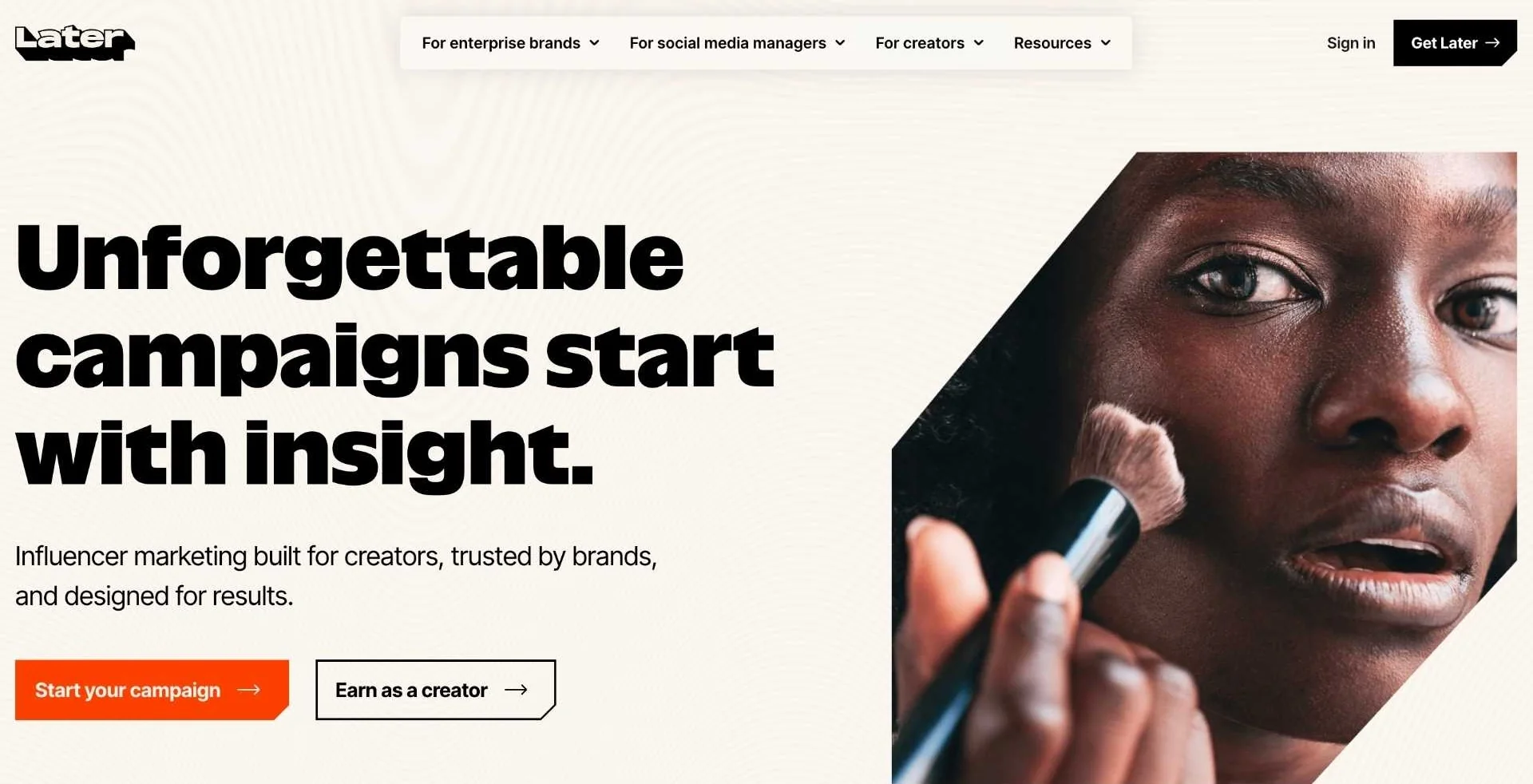
Later is an influencer marketing and social media management platform aimed at brands that want creator discovery, campaign execution, affiliate performance tracking, and social content workflows in one ecosystem. Its current positioning leans heavily into enterprise creator marketing, combining a 10M+ creator database, managed-service options, AI-driven campaign intelligence, and affiliate commerce infrastructure strengthened by its Mavely acquisition.
Key Features
• Creator discovery and vetting: Later says brands can search 10M+ contactable creators and filter by more than 20 criteria, including audience and demographic fit.
• Built-in outreach and relationship management: The platform supports in-platform messaging, bulk outreach, communications tracking, and campaign workflows so brands can manage partnerships without relying on spreadsheets.
• AI-led campaign intelligence: Later now markets its platform around AI and proprietary campaign data, using creator behavior, trend, and purchase data to inform campaign planning and forecasting.
• Affiliate and commerce tracking: Later integrates affiliate deliverables through Mavely and positions creator marketing as a measurable revenue channel rather than only an awareness play.
• Shopify gifting and product incentives: Shopify integration lets teams automate product gifting, send codes, and track creator-driven campaign results.
• Payments and incentives: Later supports creator payouts through Stripe, gift cards through Tango Card, and tracks incentive fulfillment inside the platform.
• Content syndication and ROI reporting: The platform includes content reuse workflows plus ROI, EMV, engagement, and forecasting tools for campaign analysis.
Pricing
Later’s influencer marketing platform (Later Influence) uses custom pricing, and brands need to request a demo for exact costs.
Based on our research, there are different plans:
• Essentials Plan: Starts at $28,500/year. Best for brands starting in influencer marketing.
• Pro Plan: Starts at $42,000/year. Best for data and automation to make your campaigns run faster and achieve better ROI.
• Premier Plan: Starts at $60,000/year. Everything you need for a scaled influencer program.
• All plans come with an additional one-time onboarding fee of $5,000 for all new customers.
Reviews
4.4 / 5.0 (Capterra)
Pros
• Mavely-powered affiliate layer: Later’s Mavely connection is a real differentiator for brands that want influencer campaigns tied to affiliate performance and creator payouts, not just top-of-funnel reporting.
• EdgeAI and campaign intelligence: Later is leaning harder into AI than many legacy platforms, using years of campaign data plus trend and purchase signals to improve creator selection and planning.
• Flexible delivery model: Brands can buy software only, software plus support, or fully managed services, which gives Later broader fit across in-house and service-led teams.
Cons
• No public fixed pricing: Buyers still need to go through sales to understand actual costs.
• Some outreach can feel overly automated: Review feedback suggests influencer responses may drop when outreach feels too system-generated.
• Occasional creator-side friction: Reviews also mention issues around account connections, mobile usability for some tasks, and limited transparency on why creators are or are not selected.
Integrations
• Shopify: Automate gifting, send promo codes, and track creator-driven product performance from your store.
• Mavely: Manage affiliate deliverables, send unique links, and track affiliate performance directly within Later.
• Stripe: Pay creators in cash across 25+ currencies and keep payout tracking inside Later.
• Tango Card: Send and track digital gift cards as creator incentives without leaving the platform.
• Yotpo / Bazaarvoice / PowerReviews: Pull creator content and campaign outputs into broader commerce and review ecosystems through Later’s documented integrations.
Influential vs Later
Influential is positioned more as an enterprise influencer platform centered on premium campaign execution, measurement, and brand-level creator strategy. Later overlaps on enterprise needs, but it is more commerce-forward today, especially through Mavely, Shopify gifting, and affiliate infrastructure.
Later is also more flexible in how it is sold: brands can use software only, add support, or outsource execution entirely. Influential feels more traditionally enterprise and service-led, while Later feels more like a unified creator marketing operating system spanning discovery, affiliate commerce, payments, and social workflows.
Ainfluencer
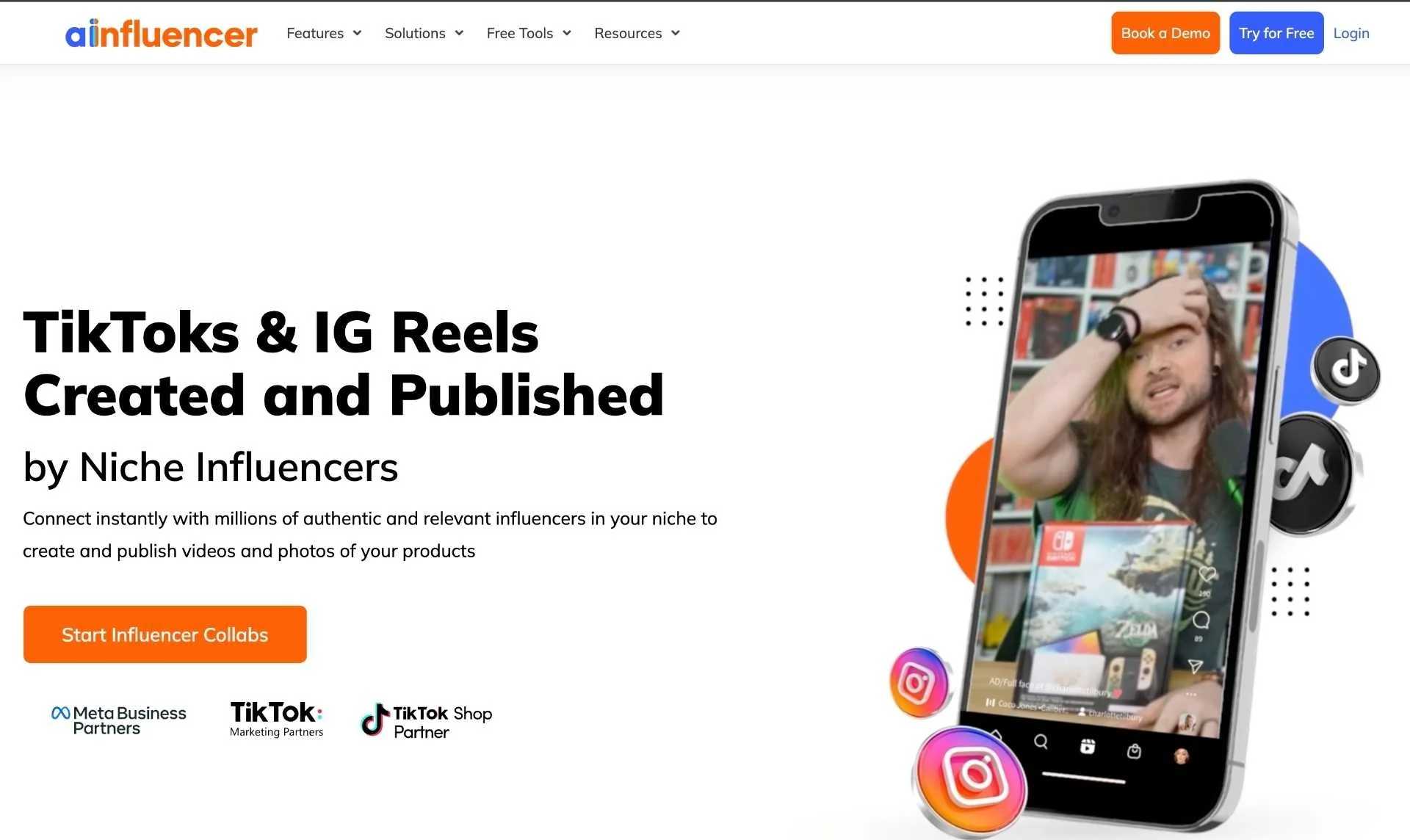
Ainfluencer is a marketplace-style influencer marketing platform built for brands that want a lower-friction, do-it-yourself way to launch creator campaigns. Its core appeal is simple: free entry for self-serve brands, a large opt-in creator marketplace, escrow-based payments, and a campaign workflow designed to reduce the manual negotiation and tracking problems that often slow smaller teams down.
Key Features
• Large opt-in creator marketplace: Ainfluencer promotes access to 5M+ creators, with profile insights, past collaboration signals, reviews, and social metrics visible before outreach.
• Unlimited campaign invitations: Brands can search the database and invite unlimited influencers to collaborate on active campaigns.
• Always-on inbound offers: Once a campaign is live, creators can continue submitting offers, which makes Ainfluencer more marketplace-driven than classic database-only tools.
• Escrow-secured payments: Ainfluencer routes funds through its trust system so payments are only released after deliverables are completed and approved.
• Negotiation and messaging: Brands can negotiate pricing, deliverables, and deadlines inside the platform instead of handling everything through DMs and email.
• Real-time analytics and reviews: After publishing, brands can monitor performance and leave public reviews that help build creator accountability.
• Amazon affiliate layer: Ainfluencer also promotes an Amazon-focused affiliate workflow for sellers that want tracked affiliate-style creator campaigns.
Pricing
• Free Plan (Core Offering): $0/month
• Commission-Based Model: ~20% service fee deducted from influencer payouts
• Managed Campaign Packages (Optional)
• Viral: $7,999 (1 month)
• Scale: $9,999 (2 months)
• Super Scale: $15,000 (3 months)
• Turbo Viral: $29,999 (4 months)
• Custom pricing available depending on campaign scope
Reviews
4.8 / 5.0 (G2)
Pros
• Free self-serve model: Ainfluencer remains unusual in letting brands launch self-managed campaigns without software subscription fees.
• Escrow-based trust system: The payment workflow is a meaningful differentiator for small and mid-sized brands worried about non-delivery or payout disputes.
• Marketplace-driven sourcing: Instead of depending only on outbound prospecting, brands can receive inbound creator offers while campaigns stay active.
Cons
• Less enterprise-ready than larger platforms: Its strengths are affordability and simplicity, not deep enterprise reporting or governance.
• Review footprint is smaller than established enterprise vendors: There is positive feedback, but on a much smaller public review base.
• Managed-services pricing lacks transparency: The free plan is clear, but paid managed options are not as transparent on the public site.
Integrations
• Shopify: The Shopify app lets brands connect store data, discount codes, products, and analytics to influencer campaigns.
• Amazon Affiliate: Ainfluencer’s Amazon-focused workflow helps sellers manage tracked affiliate content and payouts.
• Instagram: Brands can run creator partnerships using Instagram profile data, campaign invites, and post tracking inside the platform.
• TikTok: Ainfluencer supports TikTok creator sourcing and campaign execution alongside Instagram.
• YouTube: Ainfluencer’s broader creator claims now include YouTube in its managed-service messaging and creator network positioning.
Influential vs Ainfluencer
Influential is a much more enterprise-oriented platform, built for brands that want premium execution, brand-safety controls, and high-end measurement. Ainfluencer is almost the opposite in positioning: a low-barrier marketplace for brands that want to run campaigns themselves and avoid software subscription costs.
Ainfluencer is stronger for cost-conscious teams that value inbound creator offers and escrow protection. Influential is stronger for larger brands that need a more mature platform, broader analytics, and a more structured enterprise buying experience.
indaHash
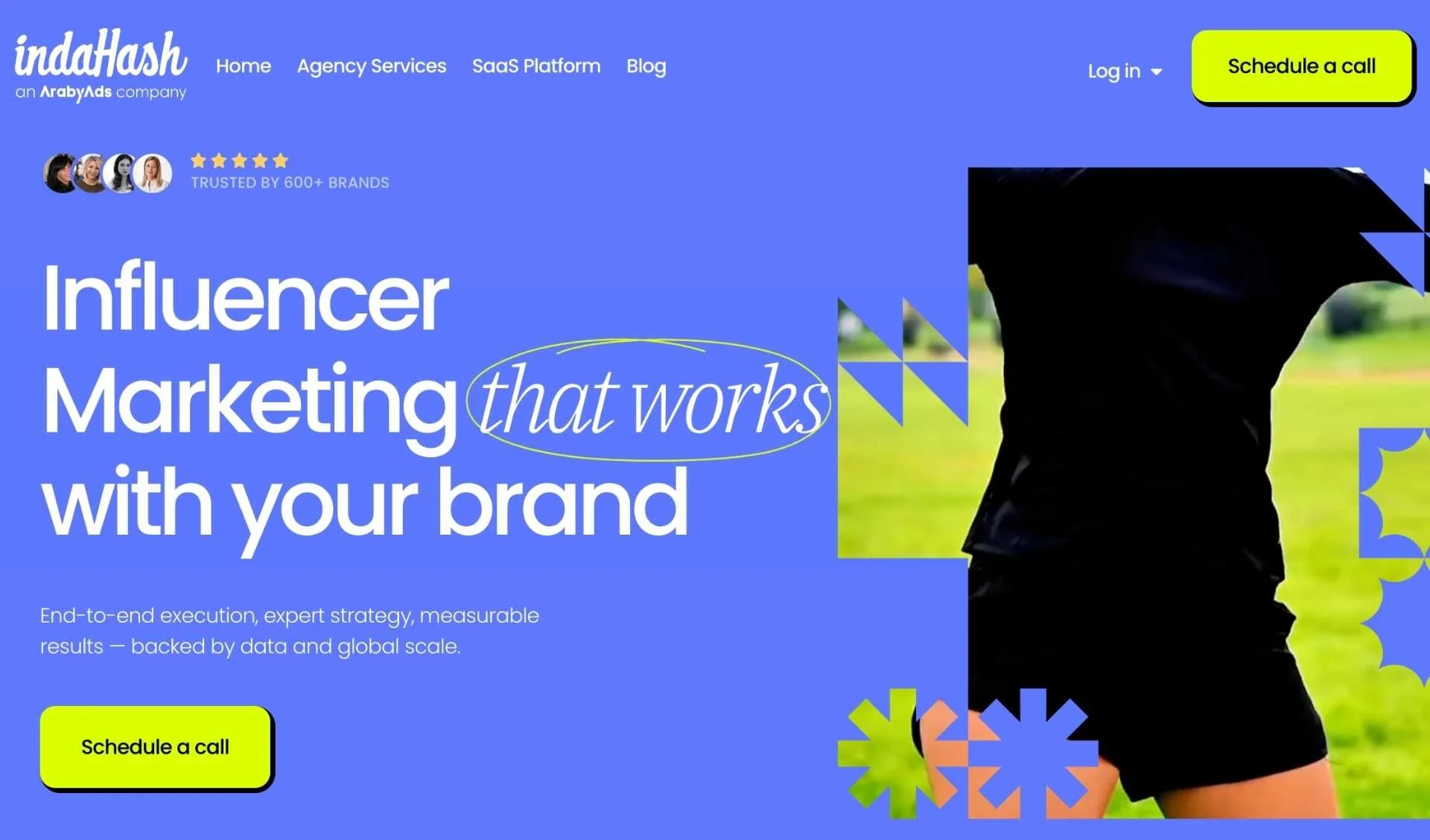
indaHash is an influencer marketing platform and agency that combines SaaS campaign management with managed services for brands that want to run creator programs at scale. Its current positioning emphasizes full-funnel campaign execution, creator discovery, AI image recognition, and eCommerce-oriented promo code tracking rather than just awareness reporting.
Key Features
• Self-serve SaaS plus agency support: indaHash offers both a SaaS platform and managed agency services, giving brands a choice between software and done-for-you help.
• Creator discovery and vetting: The platform highlights creator search, data-driven selection, and AI image recognition for more precise creator matching.
• Campaign management at scale: indaHash positions itself as an all-in-one system to find creators, manage campaigns, track results, and optimize performance.
• Ambassador and application workflows: The software includes submission forms that help brands recruit ambassadors and process creator interest more efficiently.
• Promo code and sales tracking: indaHash’s eCommerce API is designed to sync promo codes and track creator-driven sales activity.
• Global creator operations: The company describes itself as operating globally with support for both regional and multinational campaign needs.
Pricing
indaHash does not publicly disclose full pricing on its website, and most plans are offered on a custom or quote-based model. However, publicly listed pricing tiers include:
• Creator Discovery – $499/year
• Discovery & Campaign Management – $999/month
• White Label (Agencies) – $9,990/year
• Enterprise License – $4,999 (one-time)
• Free Trial: Available
Reviews
4.7 / 5.0 (G2)
Pros
• Hybrid SaaS + agency model: indaHash is useful for brands that want the option to start with software and add execution support when needed.
• AI image recognition: This is one of its more distinctive capabilities, helping teams search creators visually rather than relying only on text filters.
• eCommerce API for promo-code reporting: indaHash puts more weight than many competitors on syncing code-based campaign performance back to store activity.
Cons
• Pricing transparency is limited: The official site leans toward demo-led sales instead of publishing clear plan tiers.
• Public review volume is still small: The available rating is positive, but it is based on very few public reviews.
• Some integration details feel enterprise- or custom-led: The eCommerce layer appears strongest for custom setups or higher-tier buyers rather than simple plug-and-play adoption.
Integrations
• WooCommerce: indaHash offers a WooCommerce plugin for syncing promo codes and campaign performance with store activity.
• Shopify: indaHash has documented a Shopify plugin path for eCommerce integration and promo-code tracking.
• Custom eCommerce API: Enterprise users can connect indaHash to custom commerce stacks for promo-code and activity sync.
• Custom promo-code compatible eCommerce systems: indaHash says Enterprise customers can use indaHash-coded plugins with eCommerce systems that support customizable or mass promo codes.
• Creator mobile app: indaHash also maintains a creator mobile app as part of its broader operating ecosystem.
Influential vs indaHash
Influential and indaHash both serve larger brands, but Influential is more tightly positioned around enterprise creator marketing software and premium measurement. indaHash feels more hybrid, offering both agency support and a SaaS layer with stronger emphasis on creator discovery, image recognition, and promo-code-led eCommerce workflows.
If you want a more polished enterprise software identity, Influential is the cleaner fit. If you want a mix of software, agency support, and custom eCommerce integration options, indaHash is the more flexible option.
Influencity
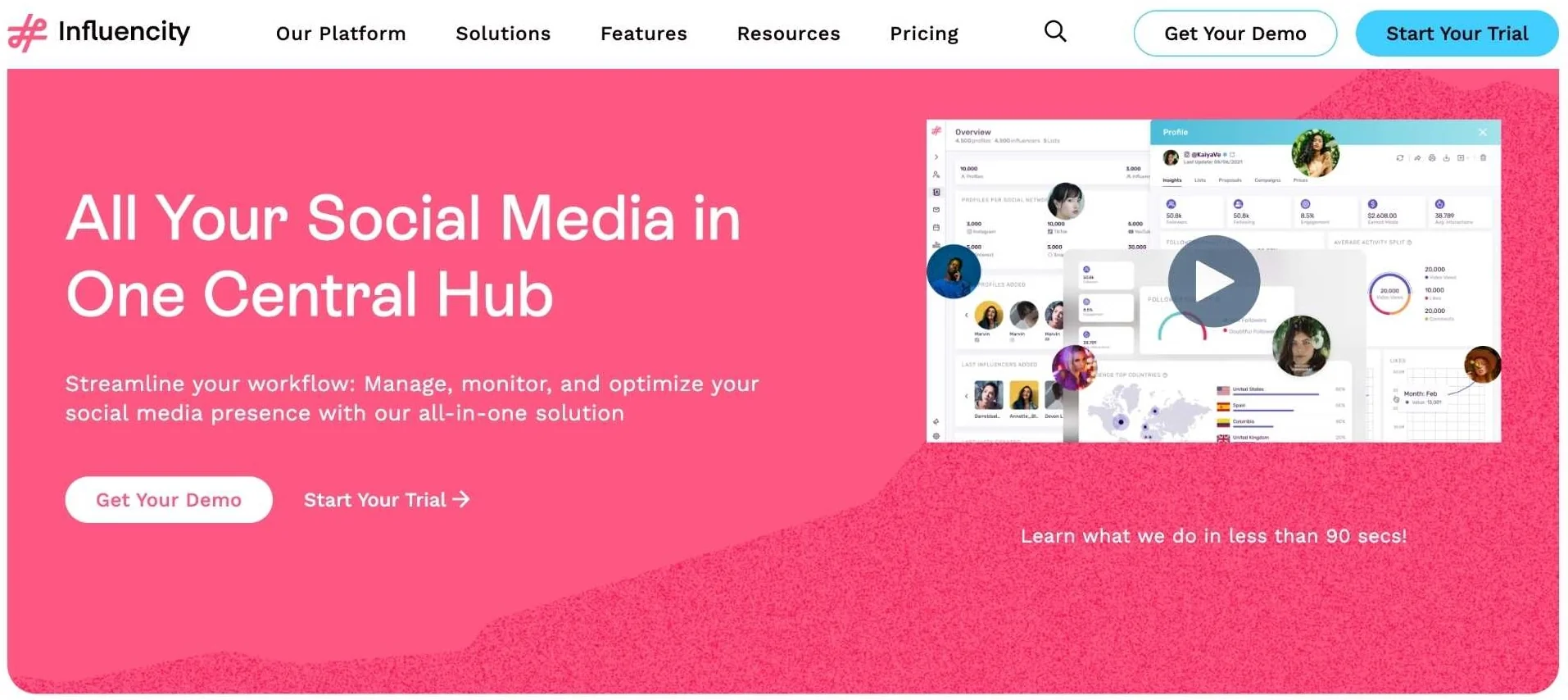
Influencity is an end-to-end influencer marketing platform built for brands and agencies that want creator discovery, influencer relationship management, campaign execution, payments, and social listening in one system. Its latest positioning puts equal weight on influencer marketing, social media management, and listening, which makes it broader than many point solutions focused only on discovery or outreach.
Key Features
• End-to-end influencer workflow: Influencity covers discovery, analysis, recruitment, outreach, campaign management, seeding, payments, and reporting in one platform.
• Structured IRM and CRM tooling: The platform emphasizes a shared influencer database with notes, sorting, tagging, updated profile data, and centralized communication history.
• Campaign and approval workflows: Influencity promotes oversight across approvals, outreach, payments, and campaign tasks rather than stopping at sourcing.
• Payments module: Brands can pay multiple creators through consolidated invoices, across many currencies and countries, from within the platform.
• Social hub and listening: Beyond influencer campaigns, Influencity also includes social analytics, publishing, inbox, ads, and social listening modules.
• Shopify seeding support: Its Shopify integration supports gifting and eCommerce-linked seeding programs.
Pricing
Influencity offers three main pricing tiers, along with add-ons:
• Professional Plan: $318/month or $3,816/year
• Business Plan: $798/month or $9,576/year
• Enterprise Plan: Custom pricing
• Auto-Tracker Add-On: $660/year (for 50 influencers)
Reviews
4.3 / 5.0 (G2)
Pros
• Very broad product scope: Influencity stands out for combining influencer marketing, social management, and listening in one stack rather than forcing teams into separate tools.
• Flexible billing model: Unlike many platforms in this category, it supports both monthly and annual subscriptions and allows cancellations from account billing.
• Strong IRM orientation: Its shared database, notes, custom sorting, and real-time updating make it especially useful for teams running repeat creator relationships.
Cons
• Public pricing is still not very transparent: Plan names are visible, but exact current plan figures are not clearly exposed on the main pricing page.
• Email integration has technical limits: The help center notes restrictions around Gmail, OAuth-only accounts, and two-factor authentication.
• Some feature feedback is mixed: Review feedback highlights occasional friction around filter resets and AI reliability.
Integrations
• Shopify: Sync store data for gifting and seeding programs inside campaign workflows.
• PayPal Pools: Use PayPal-based payment pools as part of creator payout workflows.
• Office 365 / Outlook: Connect supported Outlook-family inboxes for influencer communication inside Influencity.
• Zoho via IMAP: Integrate Zoho mail to send and receive influencer emails from the platform.
• Google Ads / Facebook Ads: Connect ad accounts for analytics and ad management inside Influencity’s social tools.
Influential vs Influencity
Influential is the more enterprise-branded choice, with stronger premium positioning and a narrower focus on high-end influencer marketing execution. Influencity is broader as a software suite, blending influencer CRM, payments, social management, and listening into one platform.
For brands that want one tool to cover creator management plus social and listening workflows, Influencity has the broader feature surface. For brands that prioritize enterprise influencer strategy and premium service-led positioning, Influential remains the more focused option.
Modash
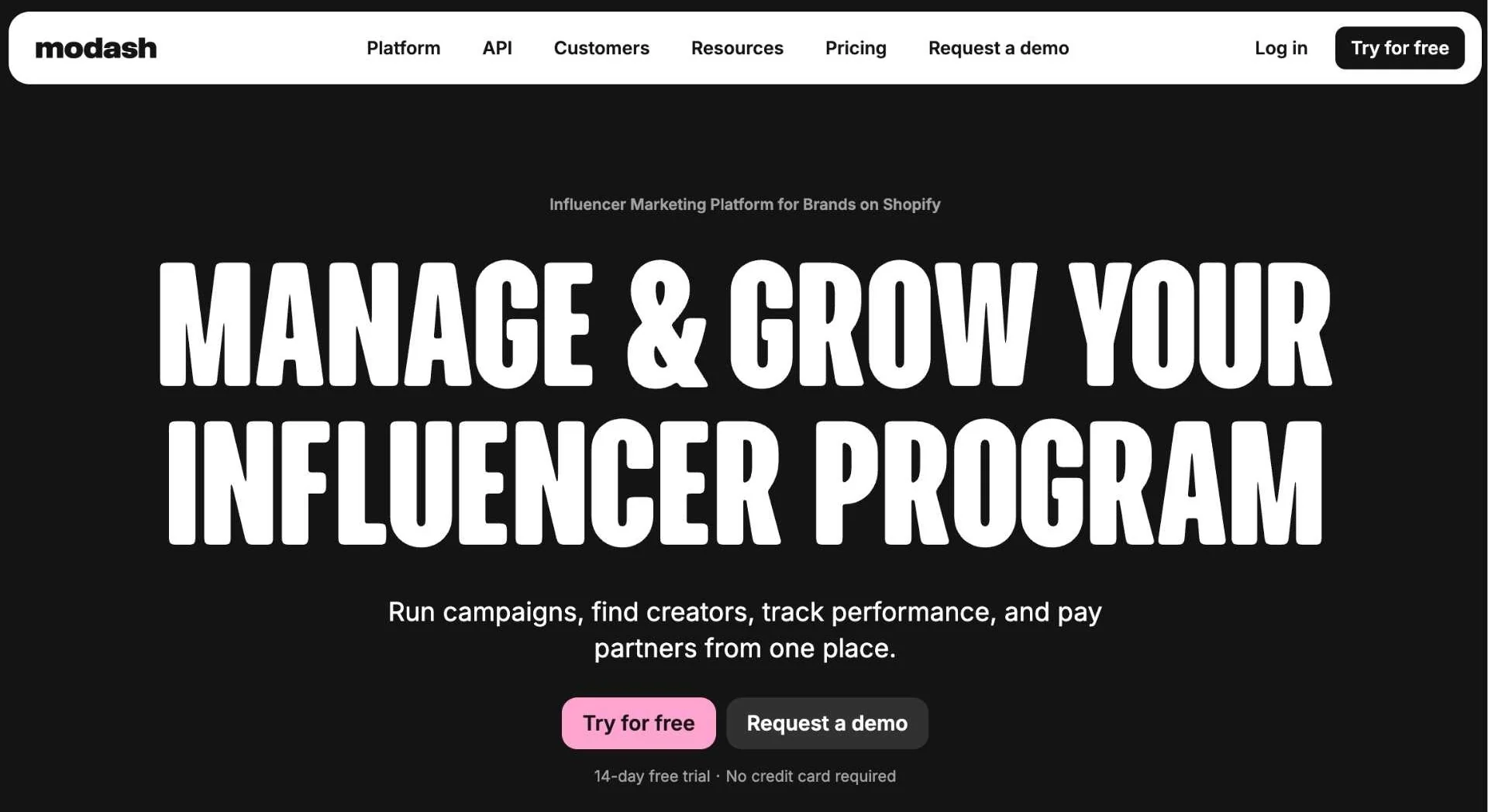
Modash is an influencer marketing platform focused on helping in-house teams run discovery, outreach, gifting, affiliate tracking, content collection, and payments from one workflow. Its strongest market position is with Shopify brands and lean growth teams that want clear pricing, large-scale public creator coverage, and less operational clutter than many enterprise-heavy alternatives.
Key Features
• Massive public creator index: Modash says its discovery engine covers 350M+ creator profiles across Instagram, TikTok, and YouTube.
• AI search and image search: Users can find creators with natural-language prompts or by uploading reference images, which makes discovery more flexible than standard keyword filtering.
• Creator CRM and outreach: Modash includes relationship management, creator email discovery, list management, templates, variables, and Gmail/Outlook-connected inbox workflows.
• Automatic content tracking: The platform automatically collects creator content and metrics across campaigns, reducing manual monitoring.
• Shopify-native gifting and affiliate tools: Shopify integration supports gifting, discount codes, affiliate links, sales tracking, and product data sync.
• Creator payments: Modash supports fixed-fee and affiliate payouts, with creator bank transfers and fee-free limits on certain plans.
• API access: Teams that need programmatic creator data or custom workflows can buy into the Modash API.
Pricing
• Essentials: ~$199/month (paid annually)
• Performance: ~$499/month (paid annually)
• Enterprise: custom pricing
• Typically billed annually, with scaling based on usage and team size.
Reviews
4.9/5.0 (Capterra)
Pros
• Clear, transparent pricing: Modash is one of the clearest platforms in this space on plan structure, usage limits, and billing choices.
• Excellent discovery depth with modern search modes: The combination of 350M+ creators, AI search, image search, lookalikes, and customer/fan matching is a major differentiator.
• Shopify-first execution: Few platforms connect gifting, discount codes, affiliate links, sales tracking, and payouts as tightly for Shopify-led teams.
Cons
• Best fit is still Shopify-centric: Modash openly frames its product around Shopify brands, which can make it less universal for non-Shopify commerce stacks.
• Inbox functionality is still maturing: Review feedback notes that email and inbox features have improved but are not as deep as the strongest dedicated outreach tools yet.
• Some public feedback still mentions occasional bugs: Even strong advocates point to periodic platform glitches.
Integrations
• Shopify: Sync sales, orders, discounts, gifting, and affiliate tracking directly into Modash.
• Gmail: Connect Gmail to Modash Inbox so creator communication lives next to campaign and relationship data.
• Outlook: Connect Outlook for the same shared inbox and communication tracking workflow.
• Modash API: Pull creator discovery, audience analytics, and content data into your own apps or internal tools.
• Bank payout workflows: Modash processes creator payments directly to bank accounts and lets brands manage payout approvals in-platform.
Influential vs Modash
Influential is better aligned with enterprise buyers that want premium platform positioning, deeper service layers, and broad brand-level campaign measurement. Modash is more practical and operator-friendly, with transparent pricing, stronger self-serve appeal, and a tighter focus on discovery, Shopify-linked execution, and lean campaign management.
For DTC brands, especially Shopify-led ones, Modash is usually the more accessible and execution-focused choice. Influential is the better fit for brands that want enterprise software identity and a more traditional high-touch buying motion.
Final Thoughts on Influential Alternatives
Influential stands out as an enterprise-focused platform with strong emphasis on AI-driven discovery, brand safety, and advanced measurement, but many alternatives offer more specialized strengths depending on business needs. Platforms like Upfluence, GRIN, and Modash excel in eCommerce and affiliate-driven workflows, while tools like SARAL and Influencer Hero prioritize simplicity and transparent pricing for growing teams. Meanwhile, Later and Influencity provide broader marketing ecosystems, and marketplaces like Ainfluencer or IZEA lower the barrier to entry for smaller brands. Ultimately, the best alternative depends on whether a brand prioritizes enterprise-scale capabilities, creator commerce integration, ease of use, or cost efficiency.

.png)


.jpg)