

10 Best Influencer Outreach Software for Brands
Running creator collaborations has become a core growth channel for modern eCommerce brands, especially as social commerce and short-form video reshape how consumers discover products. However, successful influencer campaigns depend heavily on efficient outreach—finding relevant creators, personalizing communication, and managing relationships at scale. Influencer outreach software helps brands streamline this process by providing creator discovery databases, automated email outreach, CRM workflows, and campaign tracking in one centralized platform.
In this article, we’ll explore some of the best influencer outreach software for brands, including Influencer Hero, Upfluence, Traackr, Grin, Later, Aspire, Influencity, Later, Afluencer, and Heepsy—tools designed to help D2C teams discover creators, scale partnerships, and manage influencer relationships more effectively.
Best Influencer Outreach Software
| TOOL | REVIEWS | BEST FOR | TRIAL INFO | PRICING | ||
|---|---|---|---|---|---|---|
1 |

|
⭐ | Influencer CRM & automation | Book Demo | Pricing | Website |
2 |
|
⭐ | Influencer discovery | Book Demo | Pricing | Website |
3 |

|
⭐ | Enterprise influencer analytics | Book Demo | Pricing | Website |
4 |

|
⭐ | DTC creator management | Book Demo | Pricing | Website |
5 |

|
⭐ | Social media & influencer campaigns | Book Demo | Pricing | Website |
6 |

|
⭐ | Influencer partnerships | Book Demo | Pricing | Website |
7 |

|
⭐ | Campaign management | Book Demo | Pricing | Website |
8 |

|
⭐ | Influencer discovery | Book Demo | Pricing | Website |
9 |

|
⭐ | Influencer marketplace campaigns | Book Demo | Pricing | Website |
10 |

|
⭐ | Influencer discovery | Book Demo | Pricing | Website |
1. Influencer Hero

Influencer Hero is an end-to-end influencer outreach and campaign platform built for D2C brands that want to find creators, send personalized outreach at scale, manage relationships in a CRM, and tie creator activity back to ROI. Its strongest angle for outreach is the combination of AI-assisted personalization, bulk workflows, and campaign boards that keep discovery, communication, gifting, affiliate tracking, and reporting in one place.
Key features:
- Influencer discovery across multiple platforms: Influencer Hero supports discovery across major social platforms including Instagram, TikTok, YouTube, Facebook, Pinterest, Snapchat, X (Twitter), and Twitch. The platform also includes fake follower detection and lookalike creator recommendations.
- Chrome extension for creator sourcing: The Influencer Hero Chrome extension lets teams review creator metrics while browsing social platforms and import influencer profiles directly into campaigns. This helps teams build creator lists faster while researching influencers on platforms like Instagram, TikTok, and YouTube.
- Campaign CRM and relationship management: Influencer Hero includes a visual CRM designed specifically for influencer campaigns. Teams can manage creators through campaign stages such as prospecting, negotiation, content creation, approvals, and performance tracking using structured boards and workflow automation.
- Bulk workflows for scaling campaigns: Bulk actions allow teams to run large influencer programs more efficiently by automating outreach, follow-ups, campaign updates, product seeding, and creator management tasks.
- Product gifting and product seeding: Through integrations with Shopify and WooCommerce, brands can send products to influencers, manage fulfillment, and track shipping and delivery confirmations directly in the platform.
- Affiliate links, discount codes, and payouts: Brands can generate custom affiliate links and discount codes, track clicks and conversions, monitor influencer-driven revenue, and automate creator commission payouts.
- UGC collection and content management: Influencer Hero automatically gathers influencer-generated content and stores it in a centralized content library. Teams can organize, download, and tag top-performing content for reuse in paid ads, social media, or eCommerce product pages.
- Campaign reporting and ROI tracking: Real-time dashboards track key performance metrics such as clicks, affiliate sales, influencer-driven revenue, content engagement, and overall campaign ROI. Reports can be exported and shared with stakeholders.
- Application pages for inbound creator recruitment: Brands can create branded campaign landing pages where creators can apply to collaborate, helping teams attract inbound influencer applications and scale creator recruitment.
- Influencer marketing API: The platform also offers API access to influencer data across major platforms, allowing companies to integrate creator insights into internal tools, analytics platforms, or custom marketing workflows.
Pros:
- One of the more outreach-centric platforms for growing eCommerce brands, especially if you want automation without stepping up to enterprise pricing.
- Strong balance between CRM structure and campaign execution, which makes it easier for lean teams to scale creator relationships.
- Particularly useful for brands that care about UGC reuse and affiliate performance, not just influencer discovery.
- Market feedback consistently highlights the ease of use and onboarding experience.
Cons:
- Public review volume is still relatively small compared with older category leaders, so buyers have less third-party validation to lean on.
- Because the platform includes many features, teams may need some onboarding time to fully adopt all capabilities.
Integrations:
- Shopify: Run product gifting, generate discount codes and affiliate links, and track influencer-driven revenue directly from Shopify.
- WooCommerce: Support influencer gifting, affiliate tracking, and revenue attribution for WooCommerce stores.
- Custom eCommerce tracking: Embedded scripts allow brands with custom storefronts or platforms such as Magento to track gifting and affiliate performance.
- Klaviyo: Identify influencers within your customer base and sync creator data for lifecycle marketing campaigns.
- Gmail and Outlook: Send influencer outreach directly from your existing email accounts.
- Slack: Receive real-time notifications about influencer replies, posts, sales, shipments, and payouts.
- DocuSign: Automate influencer contract signing and agreement management within campaign workflows.
- Stripe: Support automated commission payouts and financial workflows for influencer partnerships.
Pricing:
Low-to-mid. Influencer Hero pricing based on outreach volume:
- Standard Plan: $649/month for up to 1,000 outreach emails per month
- Pro Plan: $1,049/month for up to 5,000 outreach emails per month
- Business Plan: $2,490/month for up to 10,000 outreach emails per month
- Custom / Agency Plan: Custom pricing for agencies and larger teams
All plans allow brands to manage unlimited creators within the CRM, making it easier to scale influencer programs over time.
Reviews:
5.0/5.0 (Capterra)
2. Upfluence
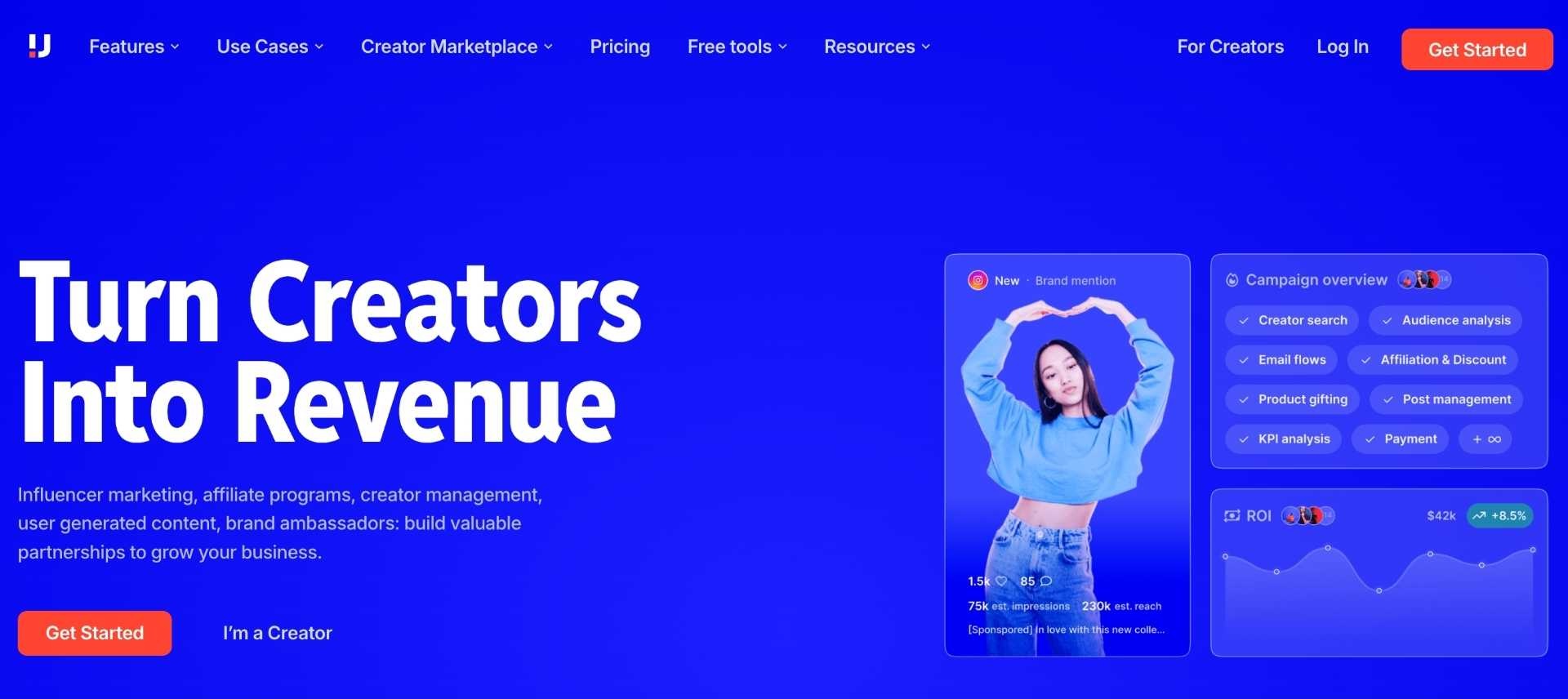
Upfluence is an all-in-one influencer marketing platform that combines creator discovery, outreach, CRM, affiliate management, and sales tracking, with a particularly strong pitch for Shopify and Amazon sellers. For outreach-heavy teams, it centralizes prospecting, email communication, follow-ups, and creator relationship management so brands can move from list building to revenue attribution in one system.
Key features:
- Large creator database: Upfluence offers a broad influencer dataset with filters for niche, location, audience, and engagement to improve outreach targeting.
- Bulk email outreach: Teams can send campaigns at scale with templates and follow-up flows instead of handling every creator conversation manually.
- AI email assistant: Jace AI helps speed up campaign messaging and reduce copywriting time for outreach teams.
- CRM and campaign management: Communication history, campaign progress, affiliate codes, and compensation can all be managed in-platform.
- Customer-to-creator matching: Shopify integration can surface existing customers who are already creators, which is a strong shortcut for warmer outreach.
- Sales attribution: Shopify and Amazon integrations make it easier to tie influencer outreach back to conversions and revenue.
Pros:
- One of the strongest options for D2C brands that want outreach plus commerce attribution in the same stack.
- Native support for Shopify and Amazon is a real differentiator for brands running gifting, affiliate, and creator-led sales campaigns.
- Gmail and Outlook connectivity is useful for brands that want outreach to feel native rather than siloed in a separate inbox.
Cons:
- Pricing and annual commitment make it a harder sell for smaller brands or newer creator programs.
- Multiple user accounts mention a learning curve and a somewhat clunky UI when setting up campaigns.
- Some users report that location and audience data can be inconsistent, so outreach lists still need manual vetting.
- There are repeated complaints about inflexibility once campaigns are built, especially around editing workflows midstream.
Integrations:
- Shopify: Identifies customer-creators, manages gifting, and tracks sales generated from influencer campaigns.
- Amazon: Tracks affiliate links, attributed revenue, and creator performance for Amazon sellers.
- Gmail: Lets teams run outreach from their own email environment while keeping communication centralized in Upfluence.
- Outlook: Supports the same native-email outreach workflow for brands operating on Microsoft’s stack.
- Klaviyo: Connects influencer activity with retention and lifecycle email workflows for stronger eCommerce coordination.
Pricing:
Mid-to-high. On average plans start around $2,000/month ($24,000 yearly) with no free trial and a relatively inflexible annual commitment.
Reviews:
4.3 / 5.0
3. Traackr
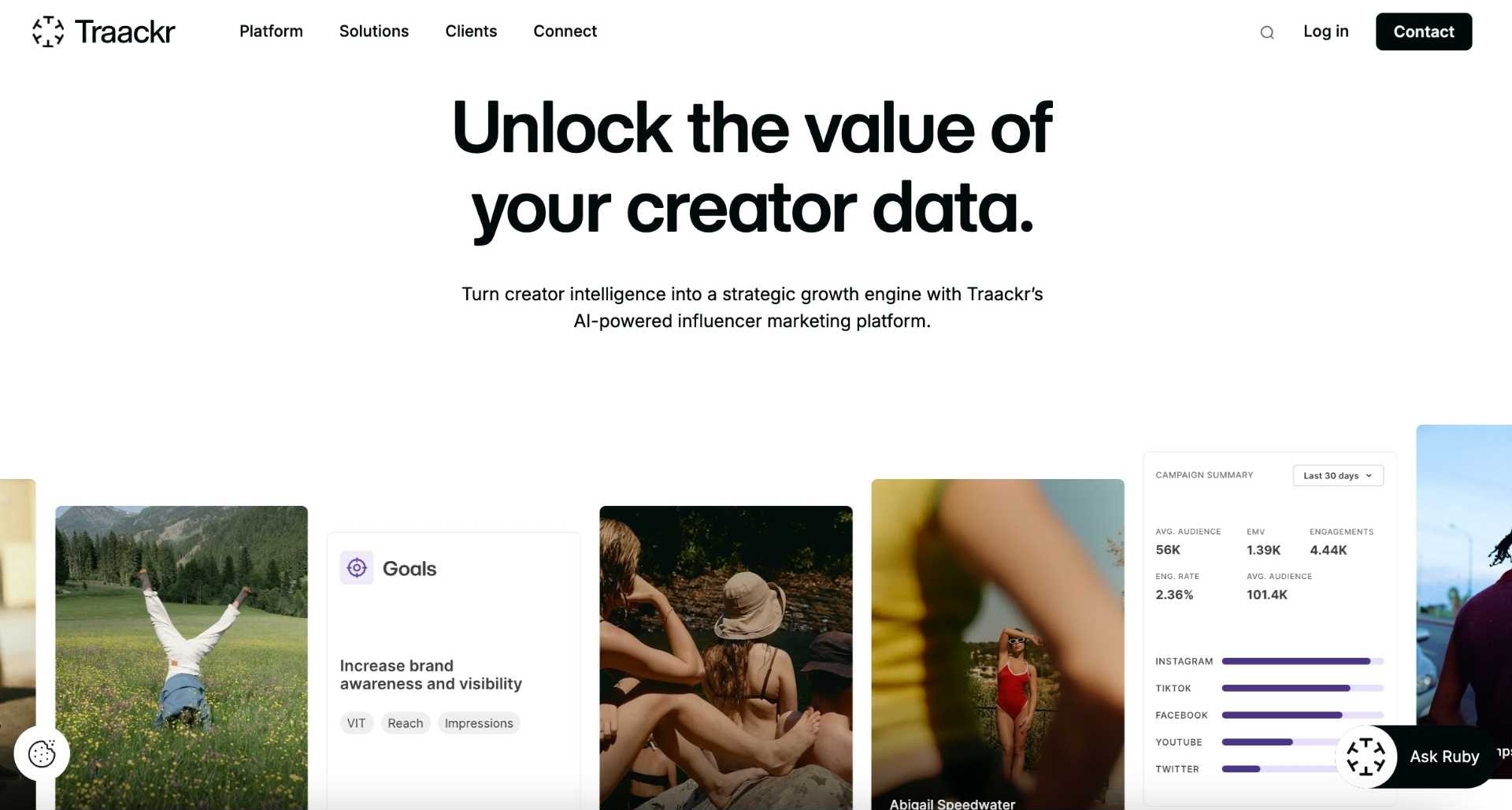
Traackr is a creator marketing platform built for brands that want more rigor in how they find, vet, recruit, and measure creators. For outreach teams, it combines creator discovery, bulk personalized email, recruitment workflows, gifting, affiliate tracking, and performance reporting, with a particularly strong focus on benchmarking and spend efficiency.
Key features:
- AI-powered creator discovery: Search millions of creators with advanced filters, audience insights, content analysis, and brand-safety checks to build better outreach lists.
- Personalized outreach at scale: Send personalized emails and assets in bulk, then organize communications and follow-up activity in one place.
- Influencer CRM: Centralize creator records, tags, notes, statuses, and team collaboration so outreach does not live in scattered spreadsheets.
- Recruitment pages: Use branded application or recruitment flows to bring creators into campaigns without relying only on cold outreach.
- Budget optimization tools: Traackr helps teams estimate what to pay creators and compare cost efficiency across campaigns.
- Advanced reporting: Campaign reports cover creator performance, real-time results, and cost metrics such as CPC, CPE, and CPV.
Pros:
- Particularly strong for brands that want analytics-led outreach instead of just a contact database.
- Budgeting, benchmarking, and brand-safety capabilities are more advanced than many mid-market tools.
- Well suited for global or multi-market programs that need centralized governance, permissions, and reporting.
- User feedback consistently highlights strong onboarding and customer support.
Cons:
- Pricing is enterprise-leaning, which makes it a difficult fit for smaller D2C brands.
- User feedback points to a learning curve, especially when teams are trying to use the platform’s deeper analytics and workflow layers.
- Some buyers flag delays in content tracking, export friction, and occasional performance issues.
- Audience demographic estimates can still require manual validation before making high-stakes outreach decisions.
Integrations:
- Shopify: Connect your store for product seeding so creators can choose products and place orders directly through the workflow.
- Social platform APIs: Access first-party creator and campaign data from supported social platforms for more reliable performance reporting.
- Email: Power personalized creator outreach and centralized communication from within Traackr.
- Payments: Manage creator payouts and affiliate-related workflows in the same system as outreach and reporting.
- SSO: Enterprise teams can use single sign-on and stronger permission controls to manage access securely across regions and teams.
Pricing:
High. Starts at $32,500/year for the Standard plan, with custom modules on top and custom-built packages.
Reviews:
4.3/5.0 (G2).
4. GRIN
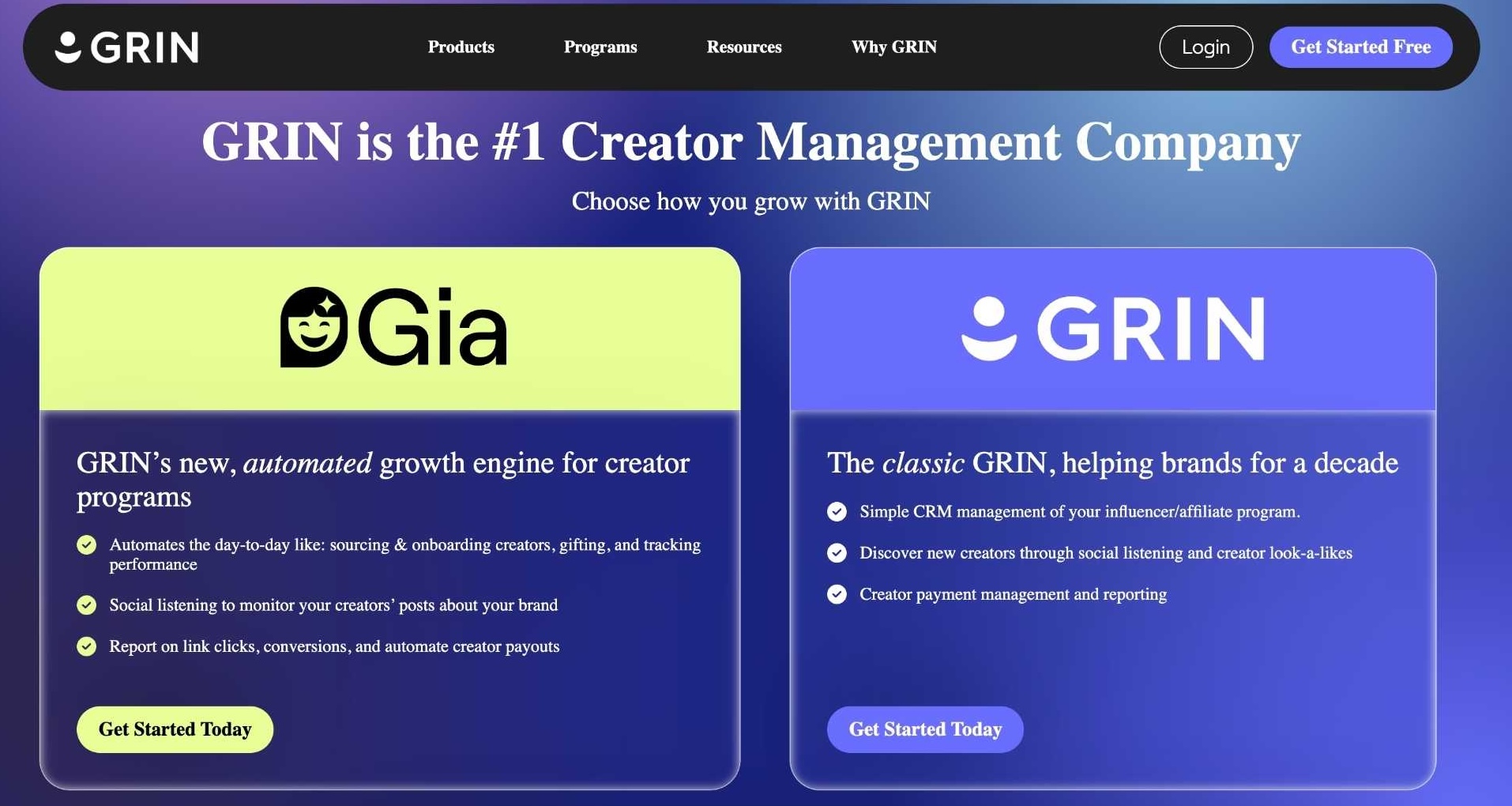
GRIN is a creator management platform built for eCommerce brands that want to own their influencer outreach, relationships, gifting, affiliate workflows, and revenue tracking in one stack. It is especially useful when outreach is tied closely to product seeding, discount codes, commission payouts, and Shopify-led attribution.
Key features:
- Creator discovery: Find creators across platforms and build targeted recruitment lists for outreach campaigns.
- Email outreach and follow-up: Use templates, automated sequences, and centralized inbox workflows to send and manage creator communication.
- Relationship management: Keep tags, notes, statuses, deliverables, and creator history in one CRM instead of spreadsheets.
- Product gifting: Connect your storefront to ship products, manage codes, and track fulfillment as part of outreach and activation.
- ROI and revenue tracking: Measure conversions, creator-driven revenue, and campaign performance in one reporting layer.
- UGC and creator portals: Creators can access campaign info, upload content, submit details, and move through workflows with less manual back-and-forth.
Pros:
- One of the strongest fits for D2C brands that want outreach tied directly to product fulfillment and sales attribution.
- Broad integration coverage makes it easier to plug influencer outreach into the rest of the marketing and eCommerce stack.
- Strong user feedback around ease of learning, campaign organization, and keeping large creator rosters centralized.
- Unlimited creator partnerships and a commerce-first workflow stand out for brands running always-on ambassador or affiliate programs.
Cons:
- Pricing and contract structure can be hard to justify for smaller teams.
- User feedback is mixed on creator search quality, with some buyers calling out duplicates, weaker recommendations, or clunky navigation.
- Some reviews mention bugs or reliability issues during day-to-day campaign management.
Integrations:
- Shopify: Automate gifting, discount codes, order tracking, and revenue attribution from influencer partnerships.
- Gmail: Run creator outreach from your brand email while keeping communication centralized in GRIN.
- Outlook: Supports the same email-led outreach workflow for teams on Microsoft’s stack.
- Klaviyo: Connect creator activity with lifecycle marketing and retention workflows.
- DocuSign: Speed up contracts and approvals without leaving the influencer workflow.
Pricing:
High. GRIN pricing is custom-built, starts from around $2,500/month and going up significantly based on features and scale, typically with a 12-month commitment. There is no clear public free trial, so buyers should expect a sales-led process and enterprise-style pricing.
Reviews:
4.5/5.0 (G2)
5. Later
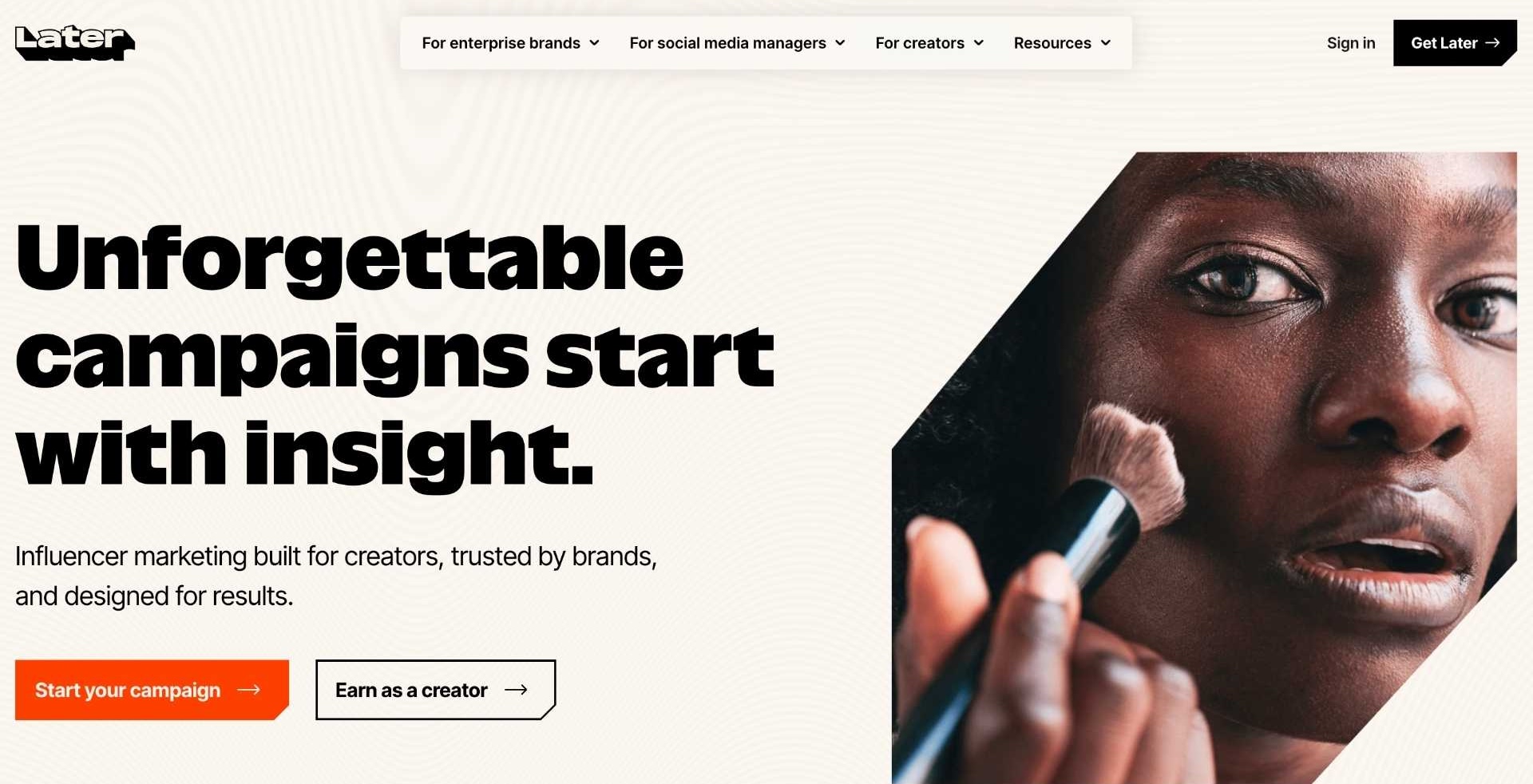
Later’s influencer marketing platform helps brands discover creators, run outreach and recruitment, manage campaign workflows, and measure paid, organic, and sales performance from one system. Its positioning is especially appealing for brands that want influencer outreach software plus access to social listening, ratings-and-reviews programs, and optional managed services.
Key features:
- Creator discovery and vetting: Later uses brand signals, creator data, and AI-driven recommendations to surface best-fit creators and reduce poor outreach matches.
- Campaign workflow automation: Manage creator recruitment, approvals, tracking, and reporting in one end-to-end campaign system.
- Incentive advisor: The platform helps brands benchmark creator compensation and set budgets before outreach starts.
- Performance reporting: View paid, organic, and sales outcomes together so teams can optimize creator mix and spend more confidently.
- Social listening: Monitor brand health, sentiment, and campaign conversation alongside influencer activity.
- Ratings and reviews support: Later also supports sourcing ratings and reviews at scale, which can be useful for D2C brands turning creator relationships into broader social proof.
Pros:
- Strong fit for brands that want influencer outreach software plus broader social and commerce tooling in one ecosystem.
- The platform’s AI and benchmarking features are built around real campaign history, which can help teams make faster outreach and budgeting decisions.
- Optional managed services are a meaningful differentiator for lean teams that want strategic help, not just software seats.
- User feedback frequently highlights intuitive campaign setup and easier coordination across teams and creators.
Cons:
- Pricing is quote-based, so smaller brands may need to go through sales before knowing whether it fits budget.
- The enterprise orientation can feel heavier than necessary if you only need simple cold outreach and CRM.
- Some user feedback mentions navigation and UX friction in certain workflows.
- Sales tracking and integration depth should still be validated in a live demo if attribution is a major buying criterion.
Integrations:
- Shopify: Connect your store to automate product gifting, creator selection, and campaign result tracking.
- Google: Useful for workflow, reporting, and broader campaign operations within Later’s integration ecosystem.
- Dropbox: Helps centralize creative assets and campaign files for creator collaboration.
- Mailchimp: Supports coordination between influencer campaigns and email marketing programs.
- Canva: Makes it easier to support creative production and asset sharing around campaign execution.
Pricing:
Later is best categorized as mid-to-high depending on plan and service level.
- Essentials Plan: Starts at $28,500/year. Best for brands starting in influencer marketing.
- Pro Plan: Starts at $42,000/year. Best for data and automation to make your campaigns run faster and achieve better ROI.
- Premier Plan: Starts at $60,000/year. Everything you need for a scaled influencer program.
All plans come with an additional one-time onboarding fee of $5,000 for all new customers.
Reviews:
4.4 / 5.0 (Capterra)


6. Aspire

Aspire is a creator marketing platform that helps brands discover influencers, manage outreach, negotiate contracts, send products, and track performance in one workflow. It focuses heavily on automating the recruitment and outreach process, while also offering an inbound creator marketplace where influencers can apply to brand campaigns.
Key features:
- Creator discovery: Search influencers by channel, engagement, audience demographics, and keyword filters to build targeted outreach lists.
- Inbound creator marketplace: Brands can post collaboration opportunities and receive applications from creators directly, reducing the need for cold outreach.
- Outreach automation: Send personalized or bulk outreach emails, track conversations, and automate follow-ups when creators do not respond.
- Campaign workflow management: Manage creator invitations, contracts, approvals, and deliverables in a structured campaign pipeline.
- Product gifting: Shopify integration allows creators to select products and receive shipments automatically after approval.
- Performance reporting: Campaign dashboards track engagement, clicks, conversions, and sales tied to influencer partnerships.
Pros:
- One of the few platforms combining both outbound influencer outreach and inbound creator recruitment through its marketplace.
- Strong automation capabilities reduce the amount of manual follow-up required when running large outreach campaigns.
- Highly regarded for onboarding support and implementation guidance.
- Reliable data due to first-party integrations with platforms like Meta and TikTok.
Cons:
- Pricing can be high compared with entry-level influencer outreach tools.
- Limited payment automation compared with some competing platforms.
- Some teams find the platform overly complex for smaller influencer programs.
Integrations:
- Shopify: Automate product gifting, creator storefronts, and campaign sales attribution directly from your store.
- Gmail: Manage outreach emails directly from your inbox while syncing communication with Aspire campaigns.
- Meta: First-party integration provides more accurate creator performance and audience data.
- TikTok: Access creator data and campaign performance through direct platform integrations.
- Pinterest: Enables discovery and performance insights for creators active on Pinterest campaigns.
Pricing:
High. Plans usually start at $2,000/month, with annual agreements.
Reviews:
4.0 /5.0 (Capterra)
7. Influencity

Influencity is a full-suite influencer marketing platform designed to manage the entire creator outreach process—from discovery and list building to email outreach, campaign execution, and performance analytics. It uses public social data to give brands access to millions of creators without requiring influencers to opt into the platform.
Key features:
- Influencer discovery: Access more than 15 million influencer profiles and filter them by audience demographics, location, niche, and engagement rate.
- Email outreach automation: Send and track outreach campaigns, including open rates, clicks, and replies.
- Influencer CRM: Organize creators into lists, segments, and campaigns with tagging and campaign boards.
- Campaign forecasting: Predict campaign performance and estimate budget requirements before launching outreach.
- Campaign tracking: Automatically track influencer posts through hashtags, mentions, or manual links.
- Advanced reporting: Export performance data across impressions, engagement, cost breakdowns, and influencer ROI.
Pros:
- Access to a large influencer database without opt-in limitations.
- Strong CRM structure makes it easier to track relationships with hundreds of creators.
- Detailed analytics and forecasting tools help brands plan influencer outreach more strategically.
- Flexible campaign boards allow teams to manage multiple influencer campaigns simultaneously.
Cons:
- No built-in messaging for negotiation, so follow-up conversations must happen through email.
- Shopify is currently the only eCommerce integration supported.
- Onboarding can take several weeks before teams fully launch campaigns.
Integrations:
- Shopify: Track influencer-driven sales, discount codes, and affiliate performance.
- Instagram: Monitor posts, engagement, and creator activity during influencer campaigns.
- TikTok: Analyze campaign performance and discover creators through public profile data.
- YouTube: Track video performance metrics tied to influencer partnerships.
- Twitter/X: Access analytics for creator profiles and campaign mentions.
Pricing:
Influencity falls into the mid pricing tier for influencer marketing platforms. The Professional plan starts at $3,816 per year, with custom enterprise pricing available for larger campaigns. The platform does not offer a free trial but includes several feature tiers depending on outreach volume and creator lists.
Reviews:
4.3 / 5.0 (G2)
8. Modash
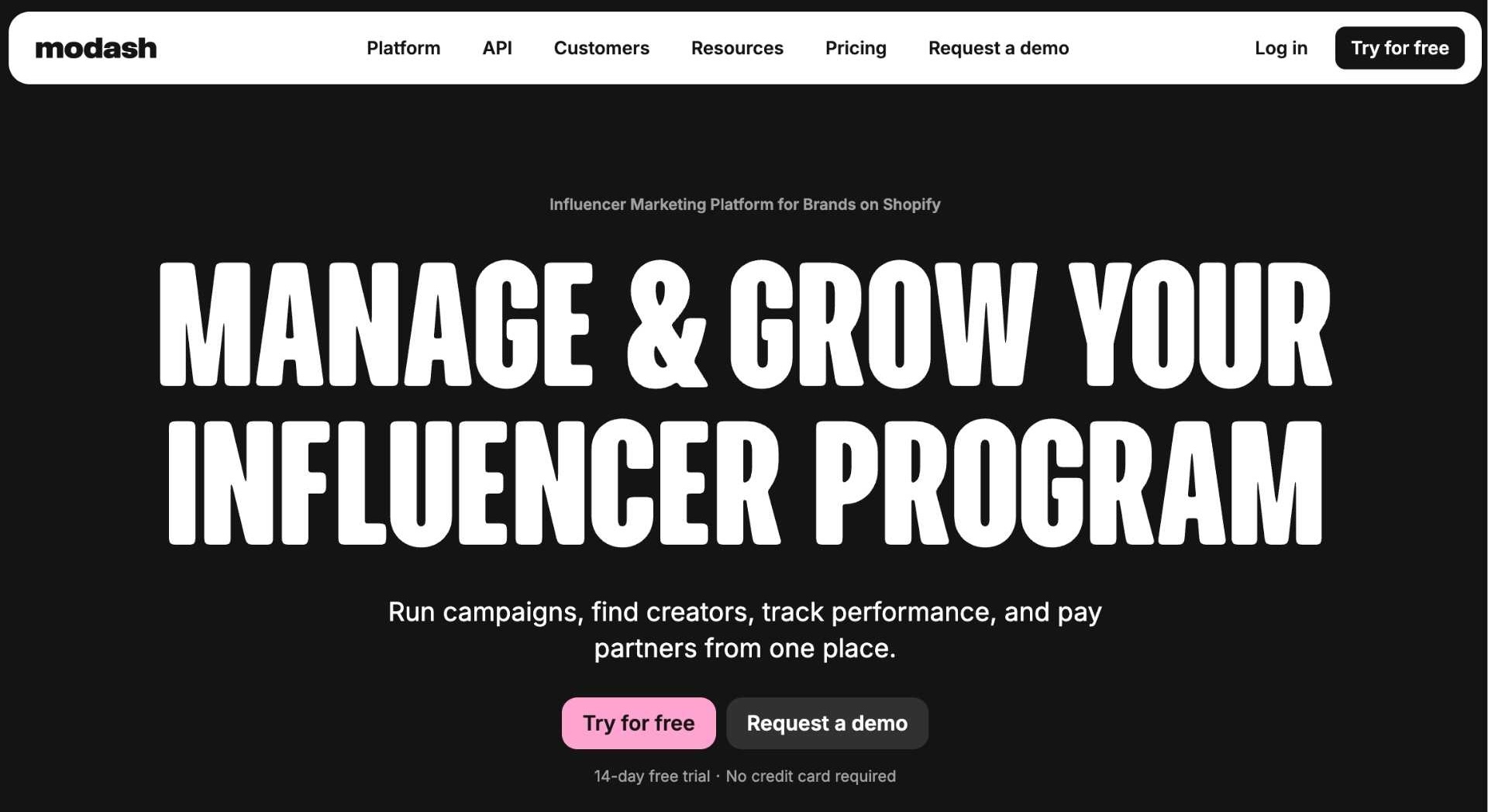
Modash is an influencer outreach and campaign management platform designed to help brands discover creators, contact them at scale, and track campaign performance across social media. It focuses heavily on data-driven influencer discovery and scalable outreach, allowing teams to search hundreds of millions of public creator profiles and send bulk outreach emails directly from the platform.
Key features:
- Influencer discovery database: Access more than 350 million public creator profiles across Instagram, TikTok, and YouTube, making it one of the largest influencer datasets available.
- Advanced search filters: Filter creators by niche keywords, engagement rate, audience demographics, location, and follower size to build targeted outreach lists.
- Bulk outreach emails: Send outreach emails to creators directly from the platform using templates and track conversations in a built-in CRM.
- Lookalike creator search: Identify influencers similar to creators already performing well for your brand.
- AI discovery tools: Use AI to describe a creator profile or upload an image to find influencers with similar content style or aesthetics.
- Campaign tracking: Monitor influencer posts, campaign performance, and engagement metrics in real time.
- Fake follower analysis: Evaluate audience authenticity and engagement quality before contacting creators.
Pros:
- Powerful search filters and AI discovery tools help brands identify relevant creators faster than manual prospecting.
- Strong outreach workflows with built-in CRM tracking simplify communication with large creator lists.
- Particularly popular with eCommerce brands because of its product gifting and affiliate campaign features.
Cons:
- Only offers a native integration with Shopify, which may limit flexibility for brands using other eCommerce platforms.
- Does not include built-in tools for licensing or managing UGC usage rights.
- Limited support for managing paid social ads using influencer content directly in the platform.
- Some teams may find the platform more focused on discovery and outreach than advanced campaign workflows.
Integrations:
- Shopify: Manage influencer product gifting, generate discount codes, and track affiliate revenue directly through Shopify integration.
- Gmail: Send and track influencer outreach emails from your existing Gmail account while keeping communication organized.
- Outlook: Sync outreach emails with Outlook to manage influencer communication from your company email.
- Instagram: Discover and analyze influencer performance metrics directly from Instagram creator profiles.
- TikTok: Track TikTok creator engagement and campaign performance for influencer collaborations.
Pricing:
Modash sits in the mid pricing tier for influencer marketing platforms. Plans start at $199 per month for the Essentials plan (paid annually) and $499 per month for the Performance plan (paid annually), with enterprise pricing available for larger campaigns.
Reviews:
4.9 / 5.0 (Capterra)
9. Afluencer

Afluencer is an influencer marketing platform focused on helping brands connect with nano and micro influencers. Brands create collaboration opportunities ("Collabs"), set targeting criteria, and receive applications from active creators, while built-in messaging and campaign management tools streamline communication and partnership execution.
Key Features:
- Influencer Discovery: Search for creators by niche, audience size, location, interests, and social platform to find relevant partners.
- Collab Marketplace: Brands can publish campaign opportunities and allow influencers to apply directly.
- Influencer Outreach and Messaging: Built-in communication tools enable brands and creators to coordinate partnerships without relying on email chains.
- Audience and Engagement Metrics: Provides visibility into follower counts, engagement rates, demographics, and influencer performance data.
- Instagram, TikTok, and YouTube Support: Campaigns can be executed across the major creator platforms.
- UGC Collaboration: Brands can source user-generated content in addition to sponsored posts.
- Influencer Profile Verification: Creators are active members of the platform rather than scraped database profiles.
- Campaign Management Dashboard: Organizes applications, accepted creators, and communication in one place.
- Filtering by Interest Categories: Allows brands to target niches such as beauty, fashion, wellness, travel, fitness, and food.
- Onboarding and Support: Includes live chat, email support, and strategy sessions for new users.
Pros:
- Designed specifically for nano and micro influencers, making it easier for brands with limited budgets to build authentic partnerships.
- Offers a simple and easy-to-use interface that makes campaign creation and influencer applications straightforward.
- Provides affordable pricing compared to many influencer marketing platforms, making it accessible for startups and Shopify brands.
- Maintains an active creator community, with users frequently praising the availability of collaboration opportunities and responsive support.
Cons:
- Offers more limited creator coverage in certain regions and niches compared to larger influencer databases.
- Restricts many features and application volumes on the free plan.
- Has an interface that some users feel could be improved in terms of navigation and profile organization.
- Delivers varying results depending on the niche and the attractiveness of the campaign offer.
Integrations:
- Shopify: Connect your Shopify store to recruit creators and manage influencer campaigns directly alongside ecommerce operations.
- Instagram: Discover and collaborate with Instagram creators for sponsored posts, reels, and UGC campaigns.
- TikTok: Work with TikTok influencers to create short-form video campaigns.
- YouTube: Partner with YouTube creators for product reviews and long-form content collaborations.
- Facebook: Expand creator relationships and audience reach across Facebook-connected profiles.
Pricing:
- Free Plan – Available for brands that want to test the platform before committing.
- VIP Plan – $49/month – Adds access to premium features and expanded campaign capabilities.
- Concierge Plan – $99/month – Includes additional support and higher-tier functionality.
- Billing Structure – Monthly subscriptions are available, and users can start with a free account before upgrading.
- Pricing Classification – Low-cost compared with most influencer marketing platforms, which frequently start at several hundred dollars per month.
Reviews:
4.6/5.0 (G2)
-
10. Heepsy

Heepsy is an influencer discovery and outreach platform that helps brands search for creators, evaluate influencer authenticity, send outreach campaigns, and track campaign performance. It focuses on helping marketers quickly identify relevant influencers and run outreach campaigns with built-in CRM tools.
Key features:
- Large influencer database: Access roughly 50 million influencer profiles worldwide across social platforms.
- Advanced search filters: Filter creators by niche, audience demographics, engagement rate, and location to improve outreach targeting.
- Bulk outreach emails: Send large volumes of outreach emails with automated follow-up sequences.
- Fake follower detection: Identify potential fraudulent accounts before collaborating with influencers.
- Campaign CRM: Manage influencer pipelines and track campaign stages from outreach to payment.
- Campaign reporting: Measure engagement, content performance, and influencer campaign results.
Pros:
- One of the largest influencer databases available.
- Strong filtering capabilities help brands quickly identify niche influencers.
- Bulk outreach features make it easier to recruit large numbers of creators.
- Flexible plans and pricing options compared with enterprise influencer platforms.
Cons:
- Fake follower detection is not always fully accurate.
- Sales tracking and affiliate features require higher-tier plans.
- Outreach emails do not include AI personalization tools.
- Some campaign reporting features are limited on lower pricing tiers.
Integrations:
- Shopify: Track influencer-driven sales through discount codes and affiliate links.
- Instagram: Discover creators and monitor influencer campaign performance.
- TikTok: Identify TikTok creators and evaluate engagement metrics.
- YouTube: Track video content performance and influencer collaborations.
Pricing:
Heepsy falls into the low-to-mid pricing tier for influencer marketing software. There are different plans:
- Free Plan: You can simply discover creators and see how the discovery feature works.
- Starter Plan: Starts at $89/month. You get up to 15k results, 50 profiles and 50 outreach emails.
- Plus Plan: Starts at $249/month. Offers 40K results, 1,000 advanced profiles, and 1,000 outreach emails. Adds bulk email outreach, contact exports, media gallery, and campaign reporting.
- Advanced Plan: Starts at $369/month. Includes 60K results, 3,000 profiles, and 3,000 outreach emails. Adds advanced filters, automated sales tracking, Shopify/WooCommerce integrations, product catalogs, and promo code tracking.
Reviews:
4.5 / 5.0 (G2)
Final Thoughts on 10 Best Influencer Outreach Software for Brands
Choosing the right influencer outreach software can significantly impact how efficiently brands discover creators, manage relationships, and scale influencer partnerships. As this list shows, platforms like Influencer Hero, Upfluence, Traackr, GRIN, Aspire, Influencity, Later, Afluencer, and Heepsy each offer different strengths—from advanced outreach automation and CRM workflows to deep analytics and eCommerce integrations. For D2C brands, the best solution ultimately depends on campaign scale, outreach volume, and how closely influencer programs are tied to revenue tracking and product seeding. By selecting a platform that aligns with your team’s workflow and growth stage, you can build stronger creator partnerships and turn influencer outreach into a consistent acquisition channel.

.png)


.jpg)