

10 Best Influencer Marketing Platforms for UGC Campaigns
User-generated content (UGC) has become one of the most powerful growth levers for D2C brands—fueling high-performing paid ads, building authentic social proof, and enabling teams to scale content production without massive in-house resources. However, sourcing consistent, high-quality UGC at scale can quickly become operationally complex. This is where influencer marketing platforms play a critical role, helping brands discover creators, manage outreach, run campaigns, and collect content in a structured way. Many of these platforms now go beyond traditional influencer collaborations and actively support UGC-driven campaigns, making them a flexible solution for modern D2C teams. From creator sourcing to content collection and performance tracking, they streamline the entire UGC production pipeline so brands can turn creator content into a repeatable growth engine.
In this article, we’ll explore Collabstr, Creator.co, Taggbox, Influencer Hero, Afluencer, Insense, Aspire, Upfluence, Influentials, and Joinbrands.
Best Influencer Marketing Platforms for UGC Campaigns
| TOOL | REVIEWS | BEST FOR | TRIAL INFO | PRICING | ||
|---|---|---|---|---|---|---|
1 |

|
⭐ | Influencer marketplace & UGC content creation | Book Demo | Pricing | Website |
2 |

|
⭐ | Influencer campaigns & creator marketplace | Book Demo | Pricing | Website |
3 |

|
⭐ | UGC curation & social proof widgets | Book Demo | Pricing | Website |
4 |

|
⭐ | Influencer CRM & automation | Book Demo | Pricing | Website |
5 |

|
⭐ | Influencer marketplace campaigns | Book Demo | Pricing | Website |
6 |

|
⭐ | UGC creators & paid social ads | Book Demo | Pricing | Website |
7 |

|
⭐ | Influencer partnerships | Book Demo | Pricing | Website |
8 |

|
⭐ | Influencer discovery | Book Demo | Pricing | Website |
9 |

|
⭐ | Influencer analytics & discovery | Book Demo | Pricing | Website |
10 |

|
⭐ | UGC creators & product seeding | Book Demo | Pricing | Website |
1. Collabstr
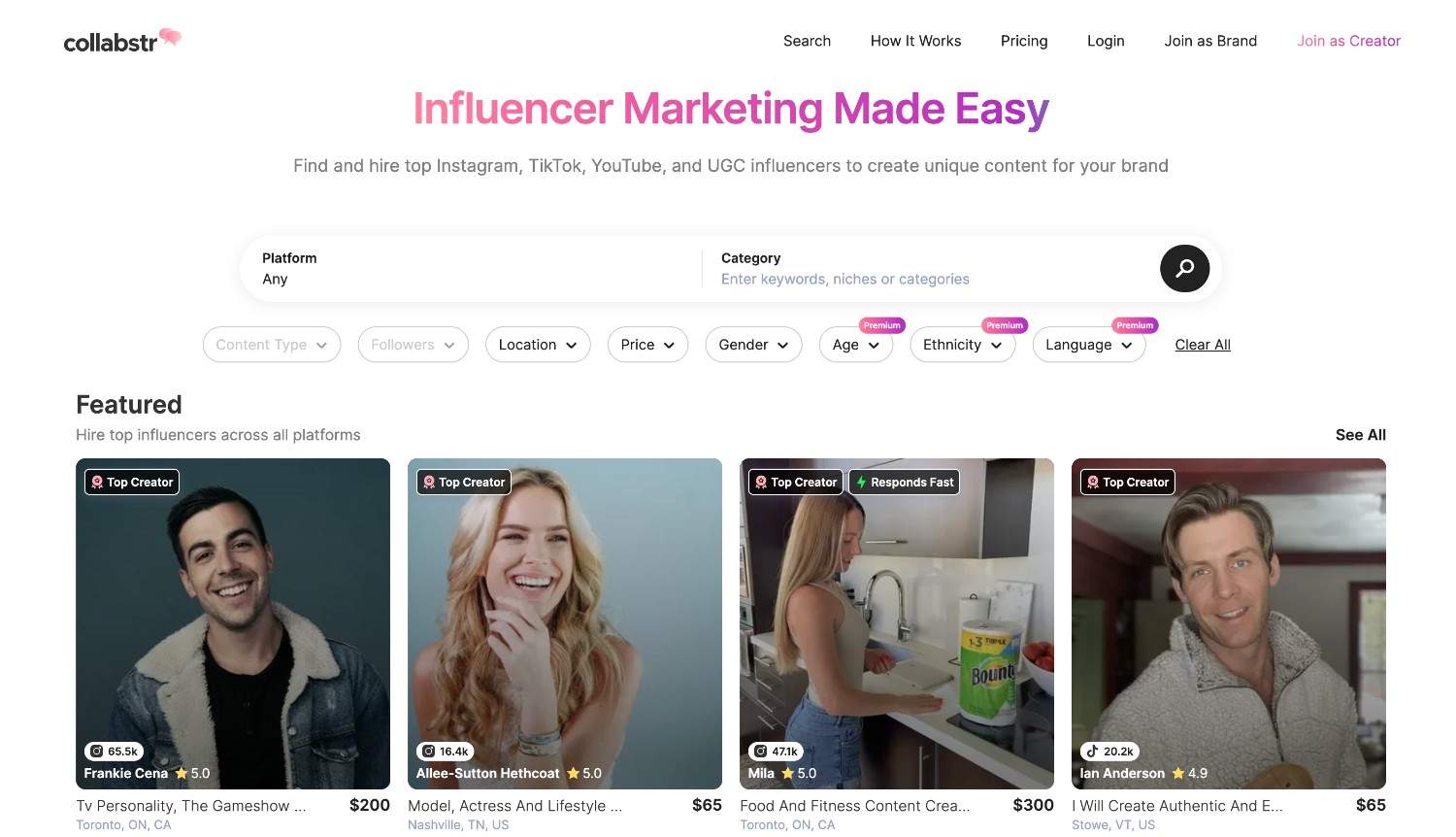
Collabstr works like a self-serve creator marketplace where brands can search vetted influencers and UGC creators, compare pricing up front, book collaborations directly, and manage communication and payment inside the platform. It is especially useful for D2C brands that want fast creator sourcing without committing to a full enterprise stack.
Key features:
- Creator marketplace: Brands can search a large database of Instagram, TikTok, YouTube, and UGC creators and filter by niche, audience, and budget.
- Transparent pricing: Creator rates are visible up front, which makes it easier to shortlist talent without lengthy sales calls or quote requests.
- Secure in-platform payments: Funds are held until the work is completed, which reduces payment friction for both brands and creators.
- Instant chat: Brands can message creators directly inside the platform instead of managing fragmented outreach manually.
- UGC creator discovery: Collabstr is not limited to classic influencer posts; it also supports hiring creators specifically for UGC-style deliverables.
- Vetting layer: The platform emphasizes vetted creators, which helps reduce some of the risk that comes with pure open marketplaces.
Pros:
- Very easy to start with if you want to source creators quickly without onboarding into a more complex platform.
- Transparent pricing makes it more budget-friendly for smaller D2C teams running test campaigns or one-off UGC projects.
- Strong fit for brands that care more about creator sourcing and content generation than enterprise workflow automation.
- User feedback frequently highlights ease of use, smooth communication, and reliable payouts.
Cons:
- It is lighter on CRM, workflow automation, and advanced analytics than full-scale influencer operating systems.
- Best suited to transactional collaborations; brands building large ambassador or affiliate programs may outgrow it.
- Integration depth appears limited compared with more mature enterprise tools.
- Some user feedback points to inconsistent campaign outcomes depending on the creator selected, which is a common marketplace tradeoff.
Integrations:
- Instagram: Lets brands source and book Instagram creators directly through the marketplace.
- TikTok: Helps brands find short-form video creators for paid social-style UGC and sponsored content.
- YouTube: Useful for sourcing longer-form product explainers, reviews, and creator-led content.
- Amazon: Listed as an integration, giving ecommerce sellers a commerce-adjacent workflow connection.
- X / Twitch: Available as lighter platform connections for brands that want broader creator discovery outside the big three channels.
Pricing:
Collabstr does not use a standard software subscription model for brands on its main marketplace; the public pricing page says brands can search creators for free with no subscriptions, contracts, or hidden fees, then pay per collaboration. Relative to most influencer marketing platforms, that puts Collabstr in the low price tier.
Reviews:
4.7/5.0 (Trustpilot)
2. Creator.co
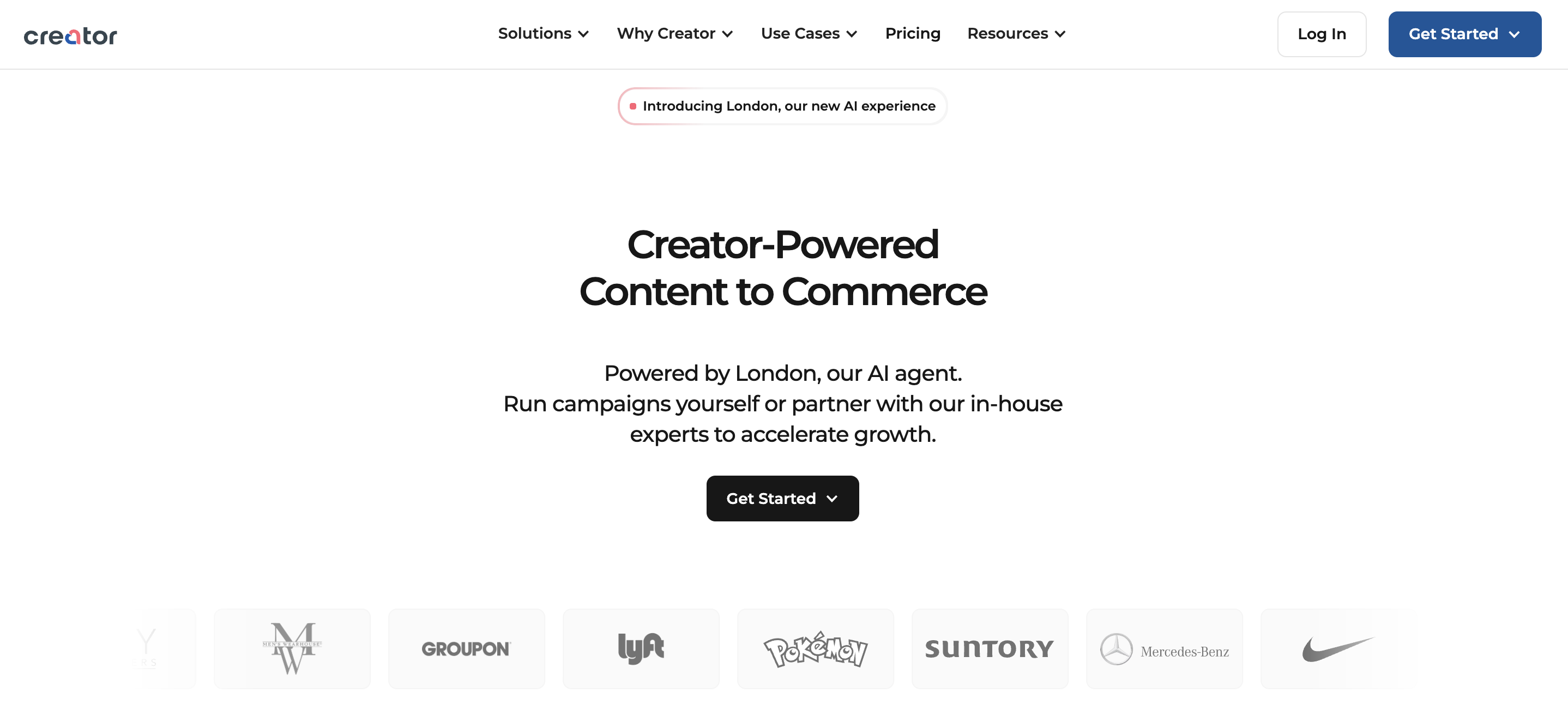
Creator.co combines creator discovery software with an opt-in marketplace, so brands can both search a large creator database and recruit from a built-in network of creators ready to apply to campaigns. It also supports campaign management, payments, reporting, and content usage rights, making it a more flexible option for both influencer and UGC-style programs.
Key features:
- Hybrid discovery model: Brands can search a broad influencer database while also tapping into a marketplace of registered creators who can apply directly to campaigns.
- UGC creator recruitment: The platform explicitly supports recruiting UGC creators, not just traditional influencers.
- End-to-end campaign management: Teams can manage recruiting, messaging, approvals, payments, and reporting from one dashboard.
- Content usage rights: Creator.co says brands get content usage rights by default, which is especially valuable for paid ads and repurposing.
- AI-powered matching and briefs: The self-serve product includes AI-based creator matching, AI-generated campaign briefs, and personalized outreach.
- Cross-channel reporting: Reporting includes engagement and revenue metrics across campaigns, which helps performance-minded D2C teams connect creator content to outcomes.
Pros:
- Good balance between software and service, since brands can choose self-serve, managed, or enterprise support.
- Strong fit for brands that want both influencer relationships and UGC deliverables in the same workflow.
- Content rights by default is a major advantage for brands planning to repurpose creator assets into ads and landing pages.
- Many positive reviews focus on ease of use, helpful account support, and campaign execution support.
Cons:
- Review sentiment is mixed across public review platforms, so buyer experience may depend heavily on plan type and account management quality.
- The managed offering becomes materially more expensive once you want hands-on execution rather than software only.
- There is a minimum commitment on paid plans, so it is not as flexible as pure pay-per-campaign marketplaces.
- Smaller teams that only need creator sourcing may not use the full breadth of the platform.
Integrations:
- Shopify: Supports product seeding, tracking, and ecommerce attribution inside creator campaigns.
- Google Analytics: Connects campaign activity with site traffic and conversion measurement.
- Gmail: Helps centralize creator communication and outreach workflows.
- Outlook: Gives teams using Microsoft email a native communication layer for creator outreach.
- Affiliate networks: Supports affiliate-style tracking and payout workflows without forcing brands into separate tools.
Pricing:
Creator.co currently offers Self-Serve starting at $199/month on annual billing or $299/month on monthly-style pricing, Managed starting at $1,499/month or $2,199/month depending on billing structure, and Enterprise custom pricing with annual commitment. Self-Serve and Managed require a 3-month minimum, and the platform offers a free trial for Self-Serve. Relative to the broader influencer software market, Creator.co sits in the mid tier for software-only use and mid-high once you move into managed service.
Reviews:
4.6 / 5.0 (G2)
3. Taggbox
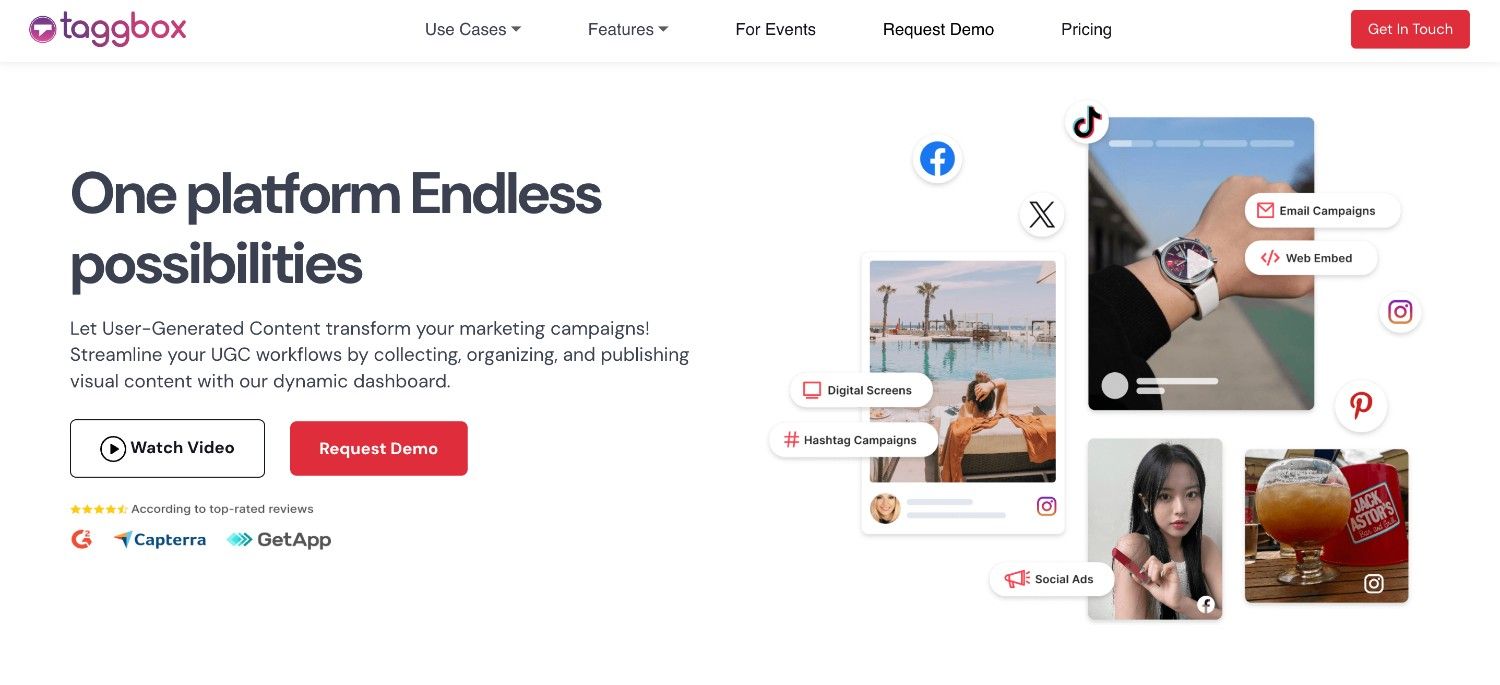
Taggbox is more of a UGC and social proof platform than a traditional influencer CRM. Instead of focusing primarily on discovery and outreach, it helps brands collect, curate, rights-manage, and publish creator or customer content across websites, product pages, emails, social ads, and shoppable galleries.
Key features:
- UGC aggregation: Pulls together social content, reviews, stories, photos, and videos into one content layer.
- Website embeds: Lets brands display UGC feeds and review widgets on ecommerce and marketing pages to increase trust and engagement.
- Social ads usage: Taggbox positions UGC as ad creative, which is valuable for paid social teams that need authentic content at scale.
- Email UGC: Makes it possible to incorporate customer or creator content into email campaigns.
- Rights management: Includes tools for requesting and tracking UGC permissions, which is critical for legal reuse.
- Shoppable galleries: Supports turning visual UGC into shoppable experiences with product tagging and conversion tracking.
- Asset manager: Organizes UGC assets in a central library for reuse across channels.
Pros:
- One of the better options for brands that already have UGC coming in and want to turn it into social proof and conversion assets.
- Especially useful for onsite merchandising, PDP enrichment, and shoppable gallery use cases.
- Rights management is a real differentiator for brands repurposing creator or customer content at scale.
- User feedback consistently highlights ease of implementation and strong visual presentation.
Cons:
- It is not a true end-to-end influencer marketing platform for sourcing, negotiating, and managing creator relationships.
- Some users want more customization options in how widgets and galleries display.
- Feedback on customer service is not uniformly positive.
- Brands still need another system if they want heavy influencer CRM, outreach automation, or payout workflows.
Integrations:
- Shopify: Lets brands embed shoppable UGC galleries and social proof directly into ecommerce storefronts.
- WordPress: Supports website embeds through its widget/plugin workflow for content and reviews.
- Wix: Makes it easy to add UGC widgets to branded pages without custom development.
- Squarespace: Supports code-based embeds for social feeds and review widgets on Squarespace sites.
- Klaviyo: Enables brands to bring UGC into lifecycle email campaigns.
Pricing:
Starts from $19 per month with a free plan available, while Taggbox’s own pricing materials note that plans are recurring and can be billed monthly or annually. Relative to influencer marketing platforms, Taggbox sits in the low tier on entry price, although costs can rise depending on the UGC products you add.
Reviews:
4.8/5.0 (G2)
4. Influencer Hero

Influencer Hero is an all-in-one influencer and UGC management platform built around creator discovery, outreach automation, CRM, gifting, affiliate tracking, and a content library. For D2C brands, its biggest appeal is that it combines high-volume outreach workflows with ecommerce-friendly integrations and content collection for repurposing.
Key features:
- Influencer discovery: Advanced search across Instagram, TikTok, YouTube, and more with filters for audience demographics, engagement rate, location, and niche, plus fake follower detection and lookalike recommendations
- AI-powered outreach & email automation: Send personalized emails at scale using AI-generated messaging, automated follow-ups, and multi-step outreach sequences
- Influencer CRM: Centralized pipeline to manage creators by campaign stage, track conversations, approvals, and deliverables without relying on spreadsheets
- Gifting & product seeding workflows: Automates product sending, order tracking, and delivery confirmation for large-scale seeding campaigns
- Affiliate tracking & payments: Generate trackable links and discount codes, monitor conversions and commissions, and manage influencer payouts in one place
- Campaign reporting & ROI tracking: Real-time dashboards showing engagement, clicks, conversions, and revenue attribution per influencer
- UGC collection & content library: Automatically captures influencer content and stores it in a searchable library for reuse in ads, social media, and eCommerce
- Application pages & creator storefronts: Build branded pages for inbound creator applications and enable influencers to promote products via personalized storefronts
- API & integrations: Flexible API access plus integrations with tools like Klaviyo, Slack, Zapier, and email platforms for custom workflows and automation
Pros:
- True all-in-one platform covering discovery, outreach, CRM, gifting, affiliate tracking, UGC collection, and payments
- Built for scale with automation, AI-powered workflows, and bulk outreach capabilities
- Integrated affiliate and gifting system removes the need for separate tools
- User feedback highlights ease of use, smooth onboarding, and strong value for money
- The pricing structure is more accessible than many enterprise influencer platforms.
Cons:
- Initial setup and onboarding can take time due to the platform’s feature depth
- No free trial
Integrations:
- Shopify: Connects directly to Shopify for gifting and ecommerce-linked workflows.
- WooCommerce: Supports product seeding and performance tracking for WooCommerce brands.
- Klaviyo: Extends creator and customer workflows into email marketing.
- Zapier: Opens up broader automation with other tools in the stack.
- DocuSign: Helps formalize creator agreements and contracting workflows.
Pricing:
Influencer Hero offers flexible pricing based on outreach volume:
- Standard — $649/month (up to 1,000 reachouts/month)
- Pro — $1,049/month (up to 5,000 reachouts/month)
- Business — $2,490/month (up to 10,000 reachouts/month)
- Custom / Agency — Tailored pricing
In the broader market, it sits in the low-to-mid tier compared to enterprise influencer platforms, while offering a wider feature set than many entry-level tools.
Reviews:
5.0/5.0 (Capterra)
5. Afluencer

Afluencer is an influencer marketing platform designed primarily for brands and micro influencers to discover each other and collaborate. Brands can create campaigns, invite creators, or accept applications, while influencers browse opportunities and apply directly through the platform. The software focuses on simplifying influencer discovery and relationship building, particularly for nano and micro influencer campaigns.
Key Features
- Influencer Marketplace: Search and connect with influencers across Instagram, TikTok, YouTube, and other social platforms.
- Campaign Listings: Brands can publish collaboration opportunities and receive applications from creators.
- Advanced Filters: Filter influencers by niche, audience size, location, demographics, and social platform.
- Direct Messaging: Communicate with creators within the platform to streamline negotiations and partnerships.
- Creator Profiles: Access detailed influencer profiles to evaluate audience fit and engagement.
- Invitation System: Brands can proactively invite influencers to participate in campaigns.
- AI-Based Matching: Helps brands identify creators that align with their products and target audience.
- UGC Collaboration: Brands can source user-generated content from creators for use across social media, websites, and paid advertising.
- Brand Profiles: Businesses can showcase their products and company information to attract suitable creators.
- Newsletter Promotion: Higher-tier plans include featured placements in Afluencer's influencer newsletters.
Pros
- Built for micro influencer campaigns, making it easier to discover nano and micro creators that often generate higher engagement and stronger ROI.
- Provides a simple and intuitive interface that makes campaign setup and onboarding easy, even for beginners.
- Works particularly well for startups and DTC brands that do not require enterprise-level software.
- Helps brands build authentic creator relationships, with many users highlighting the quality of partnerships formed through the platform.
Cons
- Campaign availability can be limited at times, with some users reporting fewer collaboration opportunities than expected.
- The platform is primarily focused on the US market, which may result in fewer opportunities for international creators and brands.
- Supports fewer third-party integrations than many enterprise influencer marketing solutions.
Integrations
- Shopify: Connect your ecommerce store to support influencer collaborations and product-based campaigns.
- Instagram for Business: Enable brands and creators to showcase and manage Instagram-focused partnerships directly from the platform.
- TikTok: Run campaigns with TikTok creators and manage influencer relationships around short-form content.
- YouTube: Collaborate with video creators and identify relevant YouTube influencers.
- PayPal: Facilitate payments between brands and creators for sponsored collaborations.
Pricing
Afluencer is positioned as a low-cost influencer marketing platform compared with most competitors. It offers a permanent free plan, making it accessible for startups and small businesses. Paid subscriptions are available on a monthly basis with no long-term commitment, and a free trial is available.
- Free Plan – $0/month.
- VIP Plan – $49/month.
- Concierge Plan – $99/month.
- Boss Plan – $199/month.
Pricing is structured around increasing levels of exposure, support, and outreach capabilities. The platform is particularly attractive for brands running micro influencer campaigns and creators looking for an affordable way to secure collaborations.
Reviews
4.6/5.0 (G2)


6. Insense
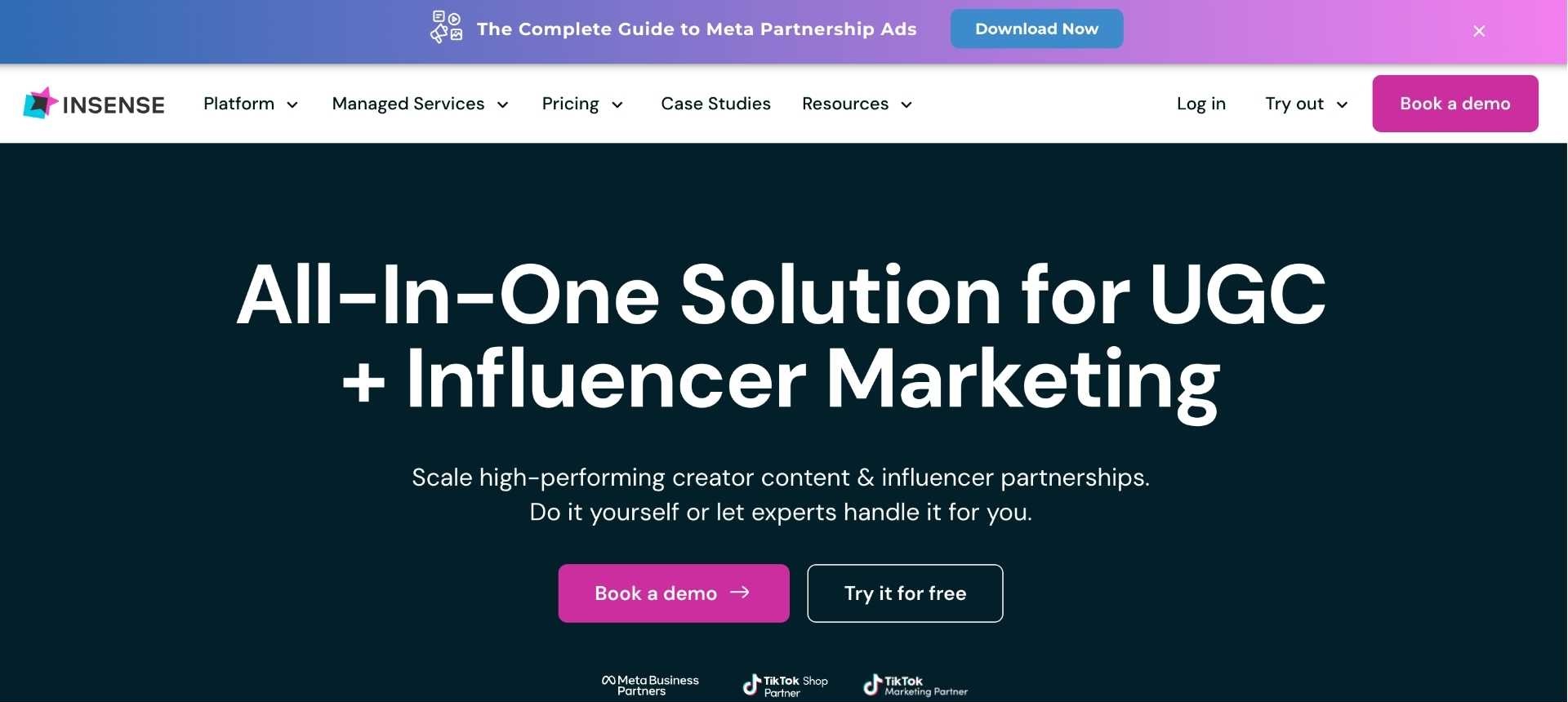
Insense is a creator marketing platform built for brands that want to scale UGC, influencer content, and creator-led paid ads from one workflow. Brands can post briefs, get matched with vetted creators, collect licensed assets, run product seeding or influencer campaigns, and activate content in formats like TikTok Shop, Spark Ads, and Meta Partnership Ads.
Key features:
- Vetted creator marketplace: Gives brands access to a screened creator network for UGC, product seeding, and influencer campaigns.
- Creative brief builder: Lets teams standardize campaign requirements before creators apply or get hired.
- Direct chat and campaign management: Keeps creator communication, approvals, and delivery organized inside the platform.
- Automated contracts and payments: Reduces admin work when running multiple creator campaigns at once.
- Built-in licensing workflow: Includes licensed content handling so brands can repurpose approved assets more easily across channels.
- Paid social support: Supports TikTok Spark Ads, TikTok Shop, and Meta Partnership Ads, which is a major plus for D2C performance teams.
Pros:
- Especially strong for brands that care about UGC production and paid social creative, not just influencer discovery.
- Shopify integration makes product seeding and fulfillment more practical for ecommerce teams.
- Offers both self-serve software and managed-service support, which gives smaller teams more flexibility.
- User feedback often highlights smooth collaboration and responsive support, though feedback is mixed overall.
Cons:
- The platform is more specialized around UGC and creator ads than around enterprise-style influencer CRM depth.
- Some users report app or device-related issues, which may matter if your workflow depends on frequent creator-side mobile usage.
- Creator fees sit on top of platform fees, so costs can rise quickly once campaign volume increases.
Integrations:
- Shopify: Connects your store so you can automate creator gifting, track order status, and speed up product seeding.
- Meta Partnership Ads: Lets brands extend creator content into branded paid social campaigns on Meta.
- TikTok Spark Ads: Helps brands turn creator posts into paid placements without rebuilding the asset workflow elsewhere.
- TikTok Shop: Supports creator collaborations tied to TikTok Shop campaigns and affiliate-style selling.
- Gmail: Listed in Insense’s pricing navigation and workflow stack for campaign communication.
Pricing:
Insense publicly lists a Trial plan at $650/month, a Brand plan at $500/month, and an Agency plan at $800/month, with creator payments charged separately and plans billed quarterly or annually depending on tier. UGC collaborations start around $100 per video, so relative to the broader influencer software market, Insense sits in the mid tier overall.
Reviews:
4.5 / 5.0 (G2)
7. Aspire
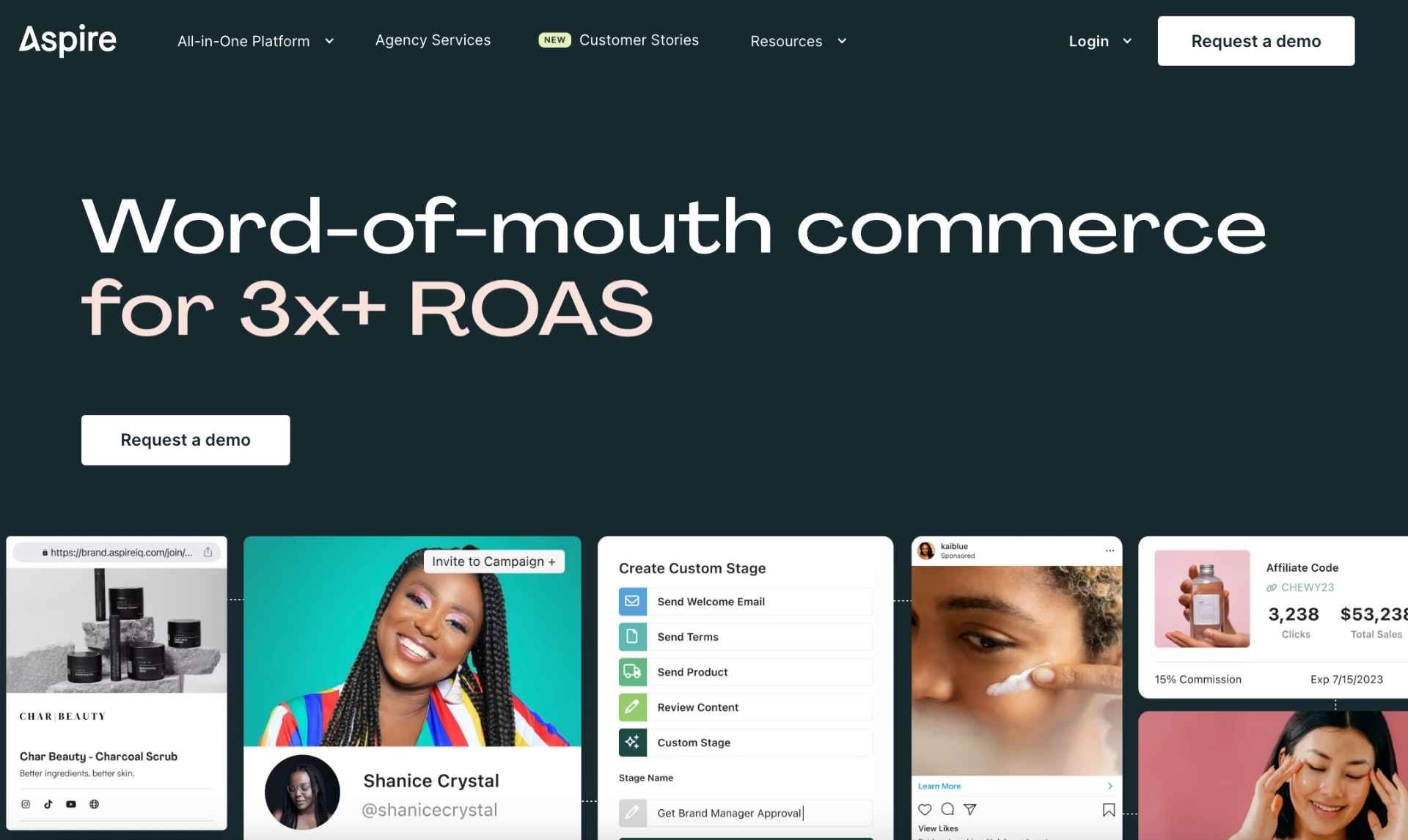
Aspire is an all-in-one influencer marketing platform for ecommerce brands that want to manage discovery, applications, gifting, approvals, tracking, affiliate workflows, and reporting in one place. Its biggest differentiator is its direct partner status with Meta, TikTok, and Pinterest, which gives brands access to first-party data rather than relying only on scraped third-party signals.
Key features:
- Creator discovery: Lets brands search creators by channel, keyword, engagement, and audience filters.
- Inbound creator marketplace: Adds a marketplace and application-page flow so creators can apply directly to campaigns.
- Workflow automation: Supports briefs, contracts, follow-ups, approvals, and status-based campaign workflows.
- Shopify-powered gifting: Connects store data with creator workflows so brands can seed products, track fulfillment, and tie activity back to commerce.
- Affiliate and sales tracking: Tracks promo codes, conversions, and creator-driven revenue inside the platform.
- Content management and reporting: Stores creator content and provides campaign reporting for ROI, performance, and repurposing.
Pros:
- Strong fit for D2C brands that want both relationship management and measurable ecommerce outcomes in one system.
- First-party platform partnerships are a real advantage for more accurate creator and campaign data.
- Shopify integration is deeper than what many lighter creator marketplaces offer.
- Recent user feedback mentions easy influencer sourcing and strong support, though overall review sentiment is mixed.
Cons:
- Pricing is on the higher side for smaller brands, especially if you only need simple UGC sourcing.
- Public review data is mixed, with complaints around cost, reporting, and customer service in some cases.
- Best suited to brands that want a fairly robust operating system; it can be more than needed for one-off creator projects.
Integrations:
- Shopify: Pulls in buyer data, enriches customer profiles with creator signals, and supports shipping and tracking workflows.
- Meta: Gives access to first-party creator and campaign data and supports branded-content style paid workflows.
- TikTok: Helps brands source creators and track short-form performance with direct platform connectivity.
- Pinterest: Supports creator discovery and campaign activation using Aspire’s preferred partner access.
- Facebook Ads Manager: Lets brands extend top-performing creator content into paid campaigns.
Pricing:
Starts from $2,000/month with no free trial, while Aspire positions pricing as custom depending on brand needs. Compared with most influencer marketing platforms, Aspire falls into the high pricing tier.
Reviews:
4.0 /5.0 (Capterra)
8. Upfluence
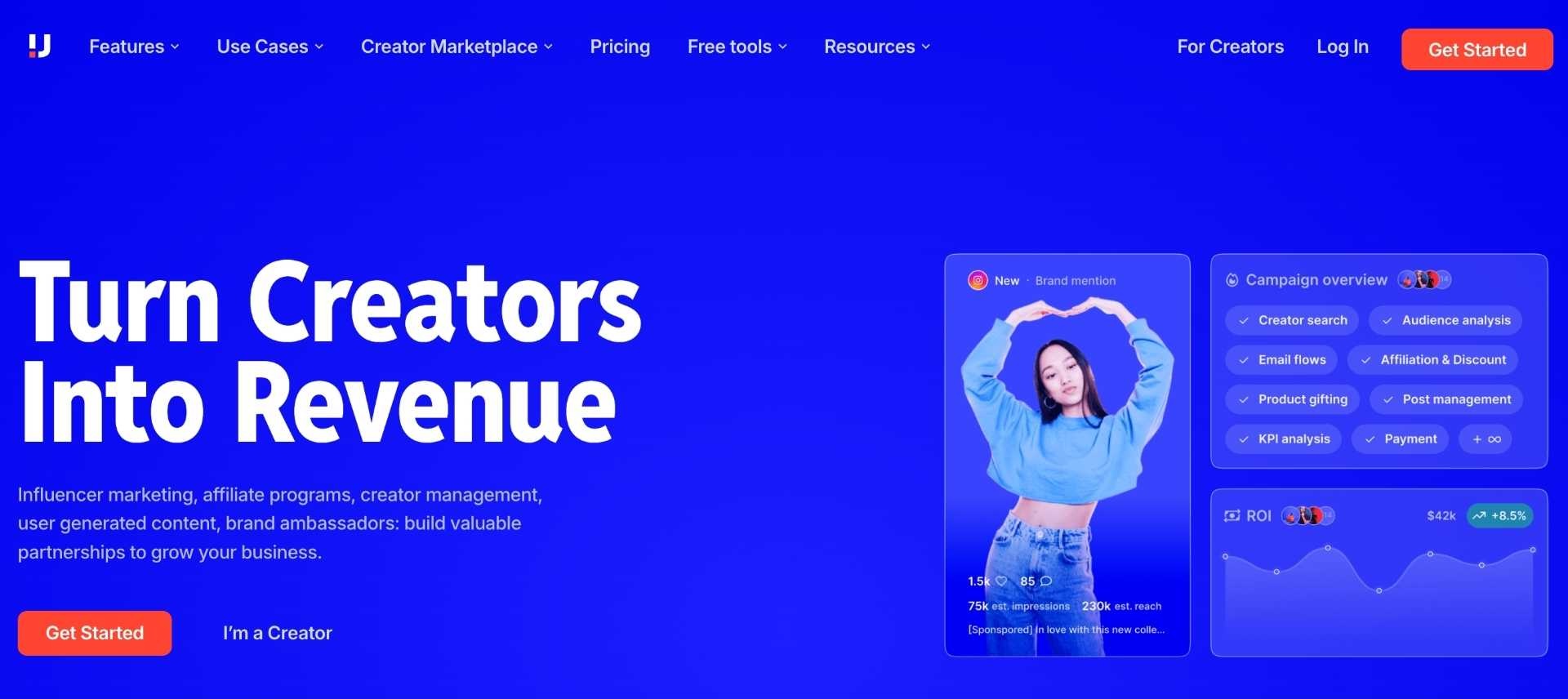
Upfluence is an end-to-end influencer and affiliate marketing platform built with ecommerce brands in mind. It combines creator discovery, outreach, campaign management, affiliate tracking, product gifting, content collection, and payments, with especially strong workflows for brands running on Shopify or Amazon.
Key features:
- Large influencer database: Gives brands access to millions of creators with filters for niche, audience, location, and engagement.
- Customer-to-creator matching: Uses ecommerce integrations to identify existing customers who may already be influencers or affiliates.
- Bulk outreach and templates: Supports creator outreach from one platform with templates and campaign messaging tools.
- Affiliate infrastructure: Generates codes and links tied to creator performance and ecommerce conversion tracking.
- Product seeding: Lets brands ship products to creators directly through ecommerce-connected workflows.
- Content and ROI tracking: Tracks campaign metrics and ties creator activity back to traffic, conversions, and sales.
Pros:
- One of the stronger options for ecommerce-first influencer programs because of its commerce integrations.
- Good fit for brands that want to blend influencer, affiliate, and customer advocacy into one system.
- Recent review data is generally positive, with Capterra showing strong overall satisfaction.
- Especially compelling for Shopify and Amazon sellers that care about trackable ROI rather than only top-of-funnel reach.
Cons:
- Requires a minimum 12-month contract, which reduces flexibility for smaller or more experimental teams.
- Setup and onboarding can take time, especially for teams new to influencer software.
- Some public reviews mention a learning curve and inconsistent support experiences.
Integrations:
- Shopify: Finds influential customers, automates gifting, and tracks creator-driven sales.
- Amazon: Supports affiliate workflows and sales attribution for brands selling on Amazon.
- WooCommerce: Lets brands generate promo codes and track affiliate activity from WooCommerce stores.
- Magento: Connects creator campaigns with ecommerce data and promo-code workflows.
- Klaviyo: Helps identify influential subscribers and connect creator workflows with email marketing lists.
Pricing:
Upfluence uses custom pricing and requires a 12-month minimum term (starts from $2,000/month). Capterra shows contact vendor for pricing and notes a free trial is available, while Upfluence’s own pricing page emphasizes plan-based packaging and dedicated onboarding. Relative to the overall market, Upfluence sits in the high tier.
Reviews:
4.3 / 5.0 (Capterra)
9. Influentials
Influentials is a Europe-focused influencer and UGC platform that helps brands discover verified creators, run campaigns, and manage payouts either on a subscription or pay-per-campaign basis. It is positioned around creator verification, campaign execution, and strong performance insights across channels like Instagram and TikTok.
Key features:
- Verified creator network: Emphasizes a screened creator base rather than a completely open marketplace.
- Influencer search and matching: Helps brands find creators through built-in search and recommendation workflows.
- UGC and influencer campaigns: Supports both classic influencer collaborations and UGC production use cases.
- Performance insights: Provides visibility into audience data, engagement, growth, and follower credibility over time.
- Financial workflow: Handles pay-outs through the platform and ties fees to influencer payments depending on plan.
- Cross-platform campaign support: Public materials highlight multi-channel campaigns across Instagram, TikTok, YouTube, and Facebook.
Pros:
- More transparent pricing than many enterprise influencer platforms.
- Good fit for brands focused on European creator campaigns and verified talent.
- Pay-per-campaign option makes it easier to test before committing to a bigger subscription.
- Strong emphasis on UGC and cross-platform campaign usage is useful for D2C brands building creative pipelines, not just awareness campaigns.
Cons:
- Review coverage is still thin, which makes it harder for buyers to benchmark real-world satisfaction against more established platforms.
- Public app-integration depth is not as clearly documented as with bigger global competitors.
- Best fit appears to be Europe-first campaigns, so global brands may want to validate creator coverage market by market.
Integrations:
- Instagram: Supports creator performance insights and campaign execution on Instagram.
- TikTok: Supports audience and engagement analysis for TikTok creators and cross-platform campaigns.
- YouTube: Included in Influentials’ cross-platform campaign support.
- Facebook: Public materials highlight running campaigns across Facebook alongside creator-first channels.
- Meta ads workflows: The platform also highlights repurposing creator and UGC assets into Meta ad campaigns.
Pricing:
Influentials offers a pay-per-campaign option at €299 per campaign, a Single Brand plan at €349/month, and a Multi Brand plan at €649/month, with a free trial mentioned on its pricing page. Relative to most influencer platforms, that places Influentials in the mid tier.
Reviews:
4.0/5.0 (Capterra)
10. JoinBrands
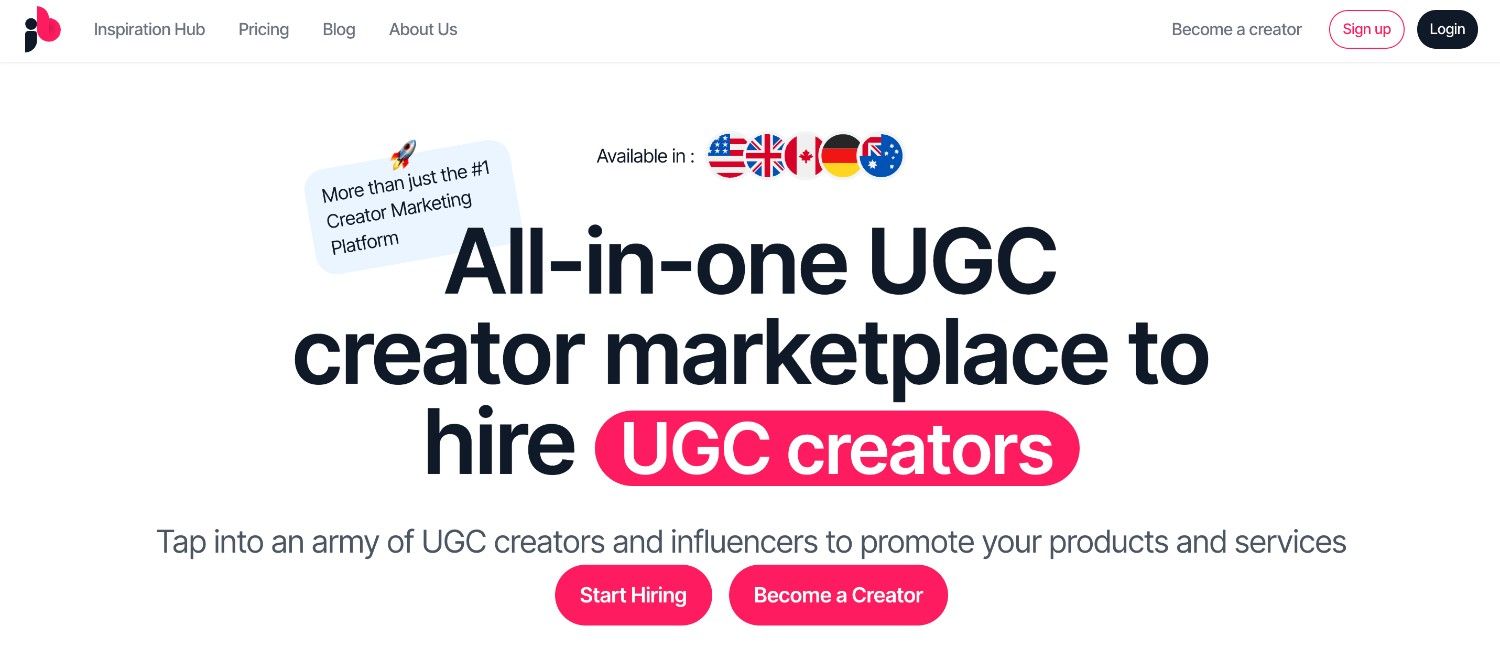
JoinBrands is a UGC creator and influencer marketplace designed to help brands source creators quickly for content production, product launches, affiliate campaigns, and TikTok Shop programs. Brands can post campaigns, approve creators, manage deliveries and content, and use the platform for Shopify, Amazon, TikTok Shop, Instagram, YouTube, and UGC-first use cases.
Key features:
- Large creator marketplace: Public materials highlight millions of creators and affiliates across multiple channels.
- UGC-first workflow: Well suited for brands that need ready-to-use photos, videos, and social creative more than complex CRM automation.
- TikTok Shop affiliate support: Helps brands recruit TikTok Shop affiliates and track campaign performance.
- Campaign approvals and content handling: Lets brands review creators, manage approvals, and receive content within the platform.
- Product seeding support: Works well for sending products and getting creator-made content in return.
- Flexible commercial model: Offers both free entry and subscription plans, which is uncommon compared with higher-commitment influencer software.
Pros:
- Very accessible for D2C brands that want to start with UGC or creator seeding without enterprise pricing.
- Strong fit for ecommerce use cases tied to TikTok Shop, Amazon, Shopify, and social content production.
- Trustpilot sentiment is strong overall, with many users praising support and ease of use.
- The free/pay-as-you-go entry point makes it easy to test before scaling.
Cons:
- It is more marketplace-driven than software-heavy, so brands wanting deep CRM, multi-stage automations, or sophisticated analytics may outgrow it.
- Some users report mismatched creator fit or friction around campaign cancellation and setup.
- Review coverage from software review platforms is still relatively limited.
Integrations:
- Shopify: Imports products directly into campaign creation so brands can seed items more easily.
- TikTok Shop: Connects TikTok Shop data so brands can track creator-driven performance and sales.
- Amazon: JoinBrands positions itself as a fit for Amazon-focused UGC and creator campaigns.
- Instagram: Supports Instagram influencer and content workflows inside the marketplace.
- YouTube: Supports YouTube creator collaborations as part of its marketplace offering.
Pricing:
JoinBrands offers a Free pay-as-you-go plan with a 15% platform fee, a Start-up plan at $99/month with a 12% platform fee, and a Pro plan at $299/month with a 10% platform fee, with annual billing discounted by 10%. Compared with most influencer marketing platforms, JoinBrands sits in the low to mid tier.
Reviews:
4.8 / 5.0 (G2)
Final Thoughts
Choosing the right influencer marketing platform for UGC campaigns ultimately depends on how your brand approaches content production, creator relationships, and scalability. Some tools like Collabstr and JoinBrands excel at quick, marketplace-driven UGC sourcing, while platforms like Aspire, Upfluence, and Influencer Hero provide deeper workflows for managing end-to-end influencer and affiliate programs. Meanwhile, solutions like Taggbox and Insense highlight the growing importance of content distribution, rights management, and paid ad integration in maximizing UGC value. For D2C brands, the key is selecting a platform that not only helps source creators but also turns UGC into a repeatable, performance-driven growth engine.

.png)


.jpg)