

10 Best Influencer Marketing Platforms for E-commerce Brands
Influencer marketing has become one of the most effective growth channels for e-commerce brands, especially as consumers increasingly trust creator recommendations over traditional ads. For e-commerce brands, such as Shopify merchants, WooCommerce stores, and Amazon sellers, influencer marketing platforms make it easier to discover relevant creators, manage collaborations at scale, and track real revenue through affiliate links, discount codes, and product gifting campaigns. Instead of manually managing spreadsheets, D2C teams can centralize influencer discovery, outreach, campaign management, and ROI tracking within one platform.
In this guide, we’ll explore some of the best influencer marketing platforms for e-commerce brands, including CreatorIQ, Upfluence, GRIN, Influencer Hero, Afluencer, Traackr, Sprout Social, Klear, Brandbassador, and SARAL—tools designed to help online stores streamline creator partnerships, automate affiliate tracking, and integrate directly with platforms like Shopify and WooCommerce for measurable influencer-driven sales.
Why E-Commerce Brands Need Influencer Marketing Platforms
Higher ROI compared to traditional advertising
Influencer marketing consistently delivers strong returns for online brands. On average, businesses generate about $5.20 in revenue for every $1 spent on influencer marketing campaigns, making it one of the most profitable digital marketing channels (Influencer Marketing Hub, 2025). Platforms help e-commerce teams track these returns through affiliate links, discount codes, and conversion attribution.
Scale creator discovery and outreach efficiently
With millions of creators across platforms like Instagram, TikTok, and YouTube, manually finding and managing influencers is extremely time-consuming. Influencer marketing platforms centralize creator discovery, audience analytics, and outreach automation, allowing brands to filter creators by niche, audience demographics, engagement rate, and location.
Track sales attribution from influencer campaigns
One of the biggest challenges in influencer marketing is linking creator campaigns directly to revenue. Influencer marketing platforms integrate with e-commerce systems to track sales, conversions, and affiliate commissions generated by influencer posts, giving brands a clearer picture of campaign ROI.
Enable scalable product seeding and affiliate programs
Many e-commerce brands rely on product gifting, affiliate links, and discount codes to collaborate with creators. Platforms automate these workflows—allowing brands to send products, generate personalized codes, and track commission payouts from a single dashboard.
Improve campaign performance with data and analytics
Influencer marketing platforms provide performance metrics like engagement rate, reach, impressions, clicks, and conversions. This data helps brands compare creators, optimize budgets, and focus on influencers who deliver the highest ROI.
Best Influencer Marketing Platforms for E-commerce Brands
| TOOL | REVIEWS | BEST FOR | TRIAL INFO | PRICING | ||
|---|---|---|---|---|---|---|
1 |

|
⭐ | Enterprise influencer marketing | Book Demo | Pricing | Website |
2 |

|
⭐ | Influencer discovery | Book Demo | Pricing | Website |
3 |

|
⭐ | DTC creator management | Book Demo | Pricing | Website |
4 |

|
⭐ | Influencer CRM & automation | Book Demo | Pricing | Website |
5 |

|
⭐ | Influencer marketplace campaigns | Book Demo | Pricing | Website |
6 |

|
⭐ | Enterprise influencer analytics | Book Demo | Pricing | Website |
7 |
|
⭐ | Social media analytics | Book Demo | Pricing | Website |
8 |
|
⭐ | Influencer analytics | Book Demo | Pricing | Website |
9 |

|
⭐ | Brand ambassador programs | Book Demo | Pricing | Website |
10 |

|
⭐ | Influencer outreach | Book Demo | Pricing | Website |
1. CreatorIQ

CreatorIQ is an enterprise influencer marketing platform built for brands that want to centralize creator discovery, campaign management, measurement, payments, and brand safety in one system. It works by combining a large creator database, AI-assisted search, workflow tools, customizable reporting, and direct integrations with social and commerce systems so large teams can run creator programs at scale.
Key features:
- AI-powered creator discovery: Search public creators using filters for audience demographics, engagement, niche, platform, past brand mentions, and semantic keywords, which is especially useful for finding category-fit creators faster.
- Private creator CRM: Store creators, add custom tags and notes, track past campaigns, and keep outreach history in one place for better long-term relationship management.
- Campaign workflows and approvals: Build campaigns from templates, create briefs, manage content approvals, and share one-sheet approval links with internal stakeholders.
- Shopify gifting support: Connect Shopify so creators can select products and brands can streamline product seeding and shipping workflows.
- Creator payments and tax compliance: Run creator payouts in-platform with tax documentation and multi-market payout support, which reduces finance-team overhead.
- Custom reporting and measurement: Use live dashboards with creator-level and campaign-level metrics including reach, impressions, EMV, and top-performing content.
- Brand safety and governance: CreatorIQ now positions SafeIQ and enterprise governance as core differentiators for large brands that need stronger control and compliance.
Pros:
- Strong fit for enterprise e-commerce brands: CreatorIQ is particularly useful for larger D2C brands that need governance, stakeholder approvals, and advanced measurement beyond basic outreach.
- Useful for gifting-heavy programs: Helpful for brands running recurring seeding campaigns.
- Good for complex teams: Approval sheets, CRM tagging, and exportable dashboards make it easier for marketing, legal, and finance to stay aligned.
Cons:
- High-cost enterprise positioning: CreatorIQ is one of the pricier platforms in this category and is usually better suited to bigger budgets than to smaller Shopify brands.
- Discovery is not its strongest user-loved feature: Some reviewers say creator sourcing could be more seamless than the rest of the platform.
- Annual contracts make it less flexible: Internal pricing materials show annual-only packaging, which can be limiting for brands testing the channel.
- Best value comes with scale: For brands only doing a few gifting or affiliate campaigns per month, CreatorIQ can feel heavier than necessary. This is an inference based on its enterprise feature set and pricing.
Integrations:
- Shopify: Lets creators select products and supports gifting workflows directly from your store catalog.
- Meta: CreatorIQ uses API integrations with Meta for real-time reporting and creator performance measurement.
- TikTok: TikTok data feeds into campaign measurement and supports creator commerce reporting.
- YouTube: YouTube API integrations support live campaign analytics and creator-level reporting.
- ExchangeIQ / API stack: ExchangeIQ helps brands connect CreatorIQ data with the rest of their tech stack for reporting and workflow automation.
Pricing:
CreatorIQ is a high-cost platform relative to most influencer marketing platforms.
- Basic at $35,000/year
- Standard at $50,000/year
- Professional at $90,000/year
- Enterprise at $200,000/year
with annual contracts only.
Reviews:
4.4 / 5.0 (Capterra)
2. Upfluence
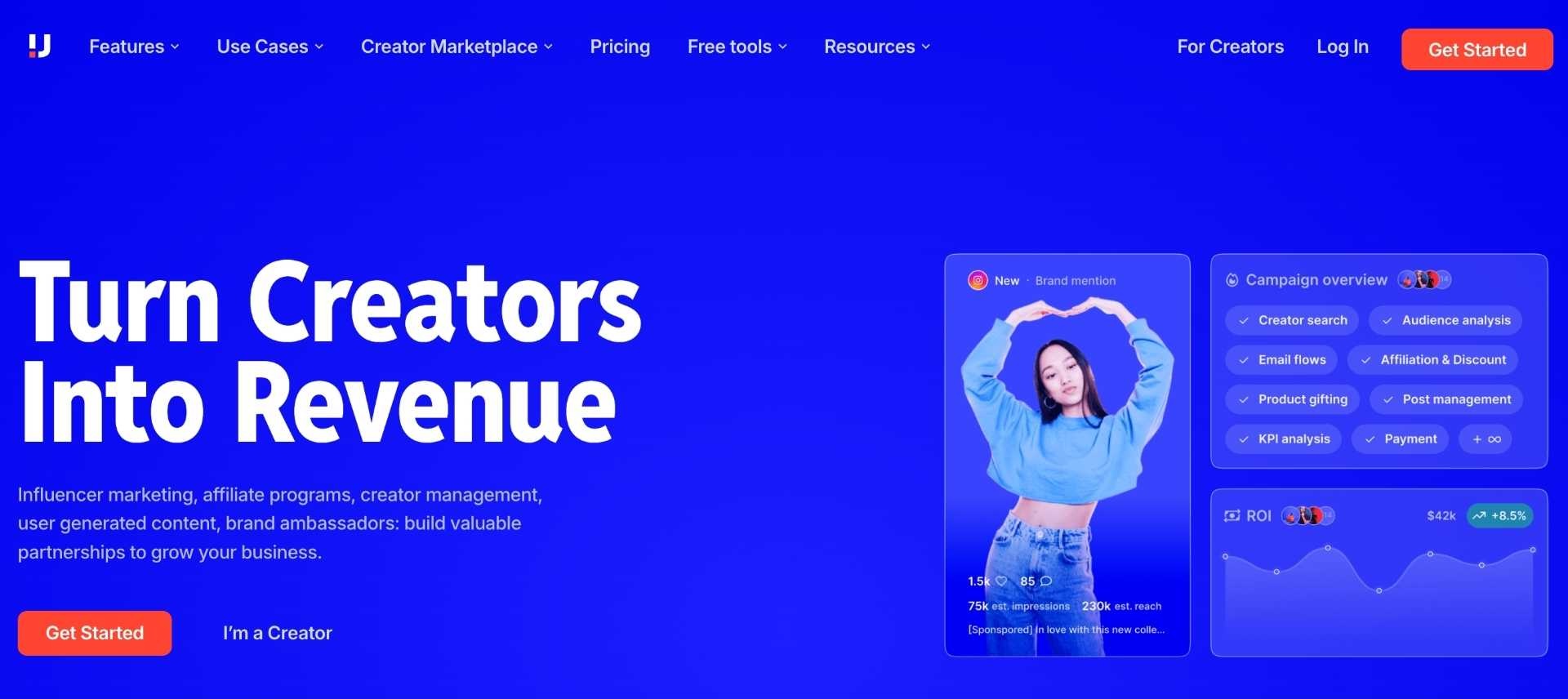
Upfluence is an end-to-end influencer and affiliate marketing platform designed especially for e-commerce brands. It helps brands discover influencers, run outreach, manage campaigns, activate affiliate programs, track sales attribution, and pay creators from one platform, with particular strength in Shopify and Amazon use cases.
Key features:
- Influencer discovery database: Access a large influencer database with filters for location, niche, audience, engagement rate, and interests.
- Bulk outreach and drip emails: Send outreach at scale and automate follow-ups with drip sequences and AI assistance via Jace AI.
- CRM and campaign management: Manage influencer communications, campaign workflows, and creator performance without switching tools.
- Affiliate management: Create affiliate links, discount codes, and custom compensation models to tie creator activity to sales.
- Social listening: Monitor brand and competitor mentions to identify creators and content themes that are already performing well.
- Shopify customer-influencer matching: Identify customers who are already influencers, then convert them into affiliates or gifting partners.
- Amazon attribution: Upfluence is unusually strong for Amazon sellers because it supports sales and affiliate tracking there as well.
- Bulk creator payouts: Handle compliant creator payments at scale from inside the platform.
Pros:
- Excellent for e-commerce attribution: It is one of the strongest options for Shopify and Amazon brands that care about sales tracking, affiliate links, and promo code performance.
- Broad commerce integrations: Upfluence natively supports Shopify, WooCommerce, Magento, BigCommerce, and Amazon, which is a major plus for multichannel merchants.
- All-in-one workflow: Discovery, outreach, tracking, affiliate management, and payments all sit in one platform.
Cons:
- Can be expensive for smaller brands: Cost can be a blocker for leaner teams.
- Learning curve: Upfluence is powerful, but some users say it takes training and a few onboarding sessions to become efficient.
- Workflow limitations: Internal user feedback points to clunky list organization, limited campaign editing, and a UI that can feel rigid.
- Some data quality concerns: Occasional creator location inaccuracies, which can matter for geo-targeted campaigns.
Integrations:
- Shopify: Sync products, generate discount codes, manage gifting, identify customer-influencers, and track sales attribution.
- Amazon: Attribute influencer-driven sales and affiliate performance for Amazon sellers.
- WooCommerce: Generate promo codes and connect creator activity to store performance.
- Magento: Use native commerce integrations to track creator-driven orders and affiliate revenue.
- BigCommerce: Manage creator campaigns and tie promo code or affiliate performance back to sales.
Pricing:
Upfluence is generally mid-to-high cost compared with the broader influencer platform market. Starts from $2,000/month ($24,000 yearly)
Reviews:
4.3 / 5.0 (Capterra)
3. GRIN
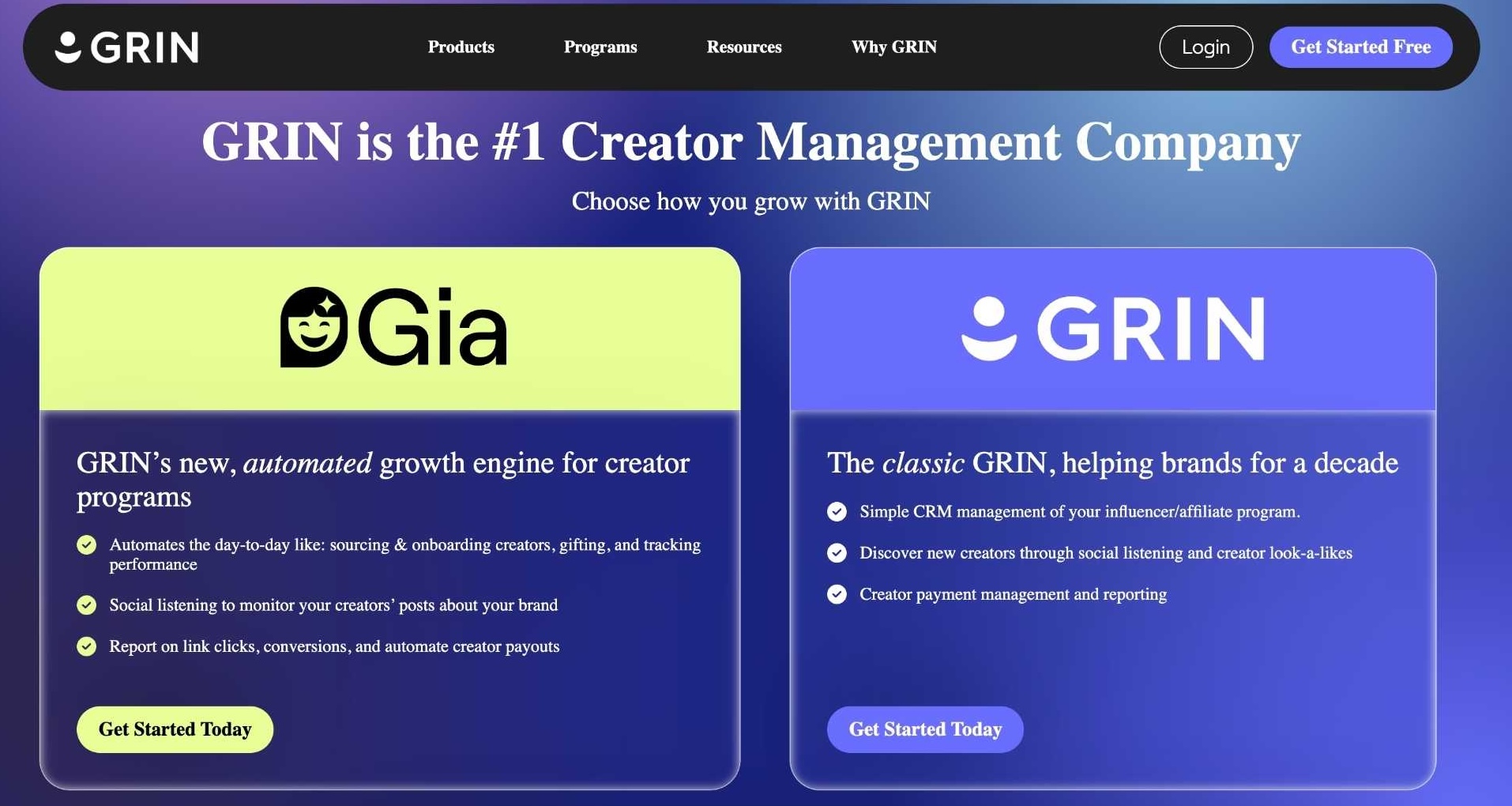
GRIN is an e-commerce-native influencer marketing platform built for DTC brands that want to manage discovery, outreach, gifting, affiliate tracking, payments, content collection, and reporting in one place. It is especially strong when brands want influencer operations tied directly to store workflows like product seeding, discount codes, and commission payouts.
Key features:
- AI-powered creator discovery: Search creators by niche, audience data, engagement, and lookalike signals, with Gia assisting on creator suggestions and prioritization.
- Built-in outreach: Send personalized campaigns through GRIN’s email tools and track opens, clicks, and replies.
- Creator CRM and portals: Manage creators with pipelines, notes, statuses, and personalized creator portals for deliverables, contracts, discount codes, and uploads.
- Automated gifting: Connect directly to store workflows for seeding, discount codes, shipping, and fulfillment.
- Affiliate and payment tracking: Manage commissions, payouts, and affiliate performance in-platform.
- UGC library: Store creator content, including Stories, in a searchable library for reuse.
- Landing pages for creator recruitment: Build branded application pages to bring inbound creators into your CRM.
Pros:
- Very strong for product seeding and store-driven programs: GRIN is one of the better fits for Shopify and WooCommerce merchants running gifting and affiliate campaigns at scale.
- No hard cap on creator partnerships: That makes it useful for larger ambassador and affiliate programs.
- Good communications workflow: Email syncing, creator portals, contracts, and content collection reduce a lot of manual admin.
- Strong commerce stack integrations: Internal materials show integrations with Shopify, WooCommerce, BigCommerce, Magento, PayPal, Gmail, Outlook, Klaviyo, Slack, and DocuSign.
Cons:
- High price and annual contracts: GRIN is one of the more expensive tools in this category and can be overkill for smaller brands.
- Discovery quality gets mixed feedback: Some reviewers mention duplicates, weak matches, and quality issues in the creator database.
- Implementation can feel heavy: Some reviewers say setup, integrations, and creator-side uploads are not always intuitive.
- No native paid social boosting tools: Brands that rely heavily on whitelisting or paid amplification may need adjacent tools.
Integrations:
- Shopify: Sync products, automate gifting, generate discount codes, and track sales from creator campaigns.
- WooCommerce: Run product seeding and affiliate workflows without manual order handling.
- PayPal: Pay creators directly and manage commission payouts inside GRIN.
- Klaviyo: Connect creator outreach and customer marketing workflows more tightly.
- DocuSign: Streamline creator agreements and approval workflows from inside the campaign process.
Pricing:
GRIN is a high-cost platform in this market. Internal research shows pricing typically starts around $2,500/month and can run to $10,000+/month, with a 12-month minimum commitment and custom pricing based on features and volume
Reviews:
4.5/5.0 (G2)
4. Influencer Hero

Influencer Hero is an all-in-one creator management platform aimed at growing D2C brands that want a tighter link between influencer workflows and e-commerce revenue. It combines creator discovery, outreach automation, CRM, gifting, affiliate tracking, payouts, storefronts, and reporting, with particularly strong support for Shopify and WooCommerce brands.
Key features:
- Advanced influencer discovery: Identify relevant creators using filters such as audience demographics, interests, engagement rate, location, and lookalike filters to find high-quality partners faster.
- Chrome extension for creator sourcing: Import creators directly while browsing platforms like Instagram, TikTok, or YouTube using the Influencer Hero Chrome extension, allowing teams to capture creator profiles and campaign data without leaving the platform.
- AI-powered outreach automation: Send personalized one-to-one or bulk emails using AI-generated templates, automated drip sequences, and built-in reply tracking to streamline influencer communication.
- Campaign-focused CRM: Manage influencer relationships through structured pipelines with stages, bulk actions, notes, and automated follow-ups, making it easier to run large campaigns and track creator progress.
- Product gifting and shipping tracking: Integrate store data to manage product seeding, automate gifting workflows, and track delivery status for influencer shipments directly within the platform.
- Affiliate tracking and automated payouts: Generate custom affiliate links and discount codes, track commissions, attribute influencer-driven revenue, and manage payouts through connected eCommerce integrations.
- UGC and content collection: Automatically collect creator posts from campaigns and organize high-performing content so teams can easily reuse it for ads, social media, or other marketing channels.
- Creator application pages and storefronts: Create branded signup pages and influencer storefronts that allow creators to apply for collaborations and promote products through affiliate links.
Pros:
- Very strong e-commerce alignment: It is one of the few platforms in this set that clearly supports both Shopify and WooCommerce, which is valuable for brands outside the Shopify-only ecosystem.
- Good value for mid-market DTC brands: Influencer Hero’s pricing is much more accessible for brands that still need full-funnel features.
- Strong CRM and automation: The structured boards and workflow automation are especially useful for brands handling dozens or hundreds of creators.
- Strong support reputation: Nice onboarding and responsive support.
Cons:
- Learning curve for new teams: Because Influencer Hero includes CRM, outreach automation, affiliate tracking, and campaign management in one platform, new users may need time to fully understand the workflows and automation options
Integrations:
- Shopify: Sync product catalogs, automate gifting, generate discount codes, and attribute revenue to specific creators.
- WooCommerce: Run the same gifting and affiliate workflows for WooCommerce-based stores, which is a notable advantage in this category.
- Klaviyo: Connect creator data with email and retention workflows for stronger lifecycle marketing.
- Zapier: Automate workflows and connect Influencer Hero with hundreds of other marketing and business tools.
- GoAffPro: Integrate existing affiliate programs and commission tracking with influencer campaigns.
- Amazon: Track influencer-driven sales and campaigns linked to Amazon storefronts or affiliate programs.
- DocuSign: Send influencer contracts and partnership agreements for electronic signature directly within campaign workflows.
- Brevo: Support additional email marketing automation and communication workflows.
Pricing:
Influencer Hero is a mid-cost platform compared to the broader influencer marketing platform market. Its pricing depends on outreach volume. The Standard plan starts at $649/month with up to 1,000 outreaches per month, the Pro plan costs $1,049/month with up to 5,000 outreaches per month, and the Business plan costs $2,490/month with up to 10,000 outreaches per month. Custom pricing is also available for agencies and larger teams.
Reviews:
5.0/5.0 (Capterra)
5. Afluencer

Afluencer is an influencer marketplace that connects brands with influhencers through a "Collab" system. Brands create collaboration opportunities, define their targeting criteria (niche, audience demographics, follower count, engagement rate, etc.), and receive applications from influencers who match those requirements. The platform focuses heavily on micro and nano influencers, making it easier for brands to discover creators actively looking for partnerships rather than searching through a large influencer database.
Key Features
- Influencer Marketplace: Brands can post collaboration opportunities and receive applications from relevant influencers interested in the campaign.
- Micro & Nano Influencer Discovery: Access to a large network of smaller creators across Instagram, TikTok, and YouTube.
- Influencer Matching System: Matches brands with influencers based on audience demographics, interests, niche, and engagement metrics.
- Verified Social Metrics: Provides verified follower counts and engagement data to help brands evaluate creators.
- Collab Campaign Management: Manage influencer applications, approvals, and communications within a single platform.
- Direct Messaging: Enables brands and influencers to communicate directly once a collaboration is approved.
- Advanced Influencer Filters: Premium plans include additional filtering options for more targeted influencer searches.
- UGC Creator Recruitment: Brands can source creators specifically for user-generated content campaigns.
- Influencer Profile Database: Detailed creator profiles showcase audience insights, interests, and social media performance.
- Campaign Promotion Tools: Premium plans include featured campaign placements and newsletter promotion opportunities.
- Influencer Recommendations: Premium creator accounts receive increased visibility and recommendations to brands.
- Strategy Support: Higher-tier plans include influencer marketing strategy calls and onboarding assistance.
Pros
- Affordable Entry Point: One of the most budget-friendly influencer platforms, making it accessible for startups and small ecommerce brands.
- Strong for Micro Influencers: The platform is specifically designed around micro and nano influencers, which often deliver higher engagement and more authentic content.
- Application-Based Model: Brands receive applications from interested creators rather than spending significant time on cold outreach.
- Easy to Use: Users frequently praise the intuitive interface and straightforward onboarding process.
- Active Creator Community: Unlike some influencer databases, creators on Afluencer are active platform users looking for partnerships.
Cons
- Limited Enterprise Features: Lacks some of the advanced workflow automation, CRM, and reporting capabilities found in platforms like Aspire, GRIN, or Influencer Hero.
- Smaller Creator Pool: The influencer network is smaller than leading enterprise influencer marketing platforms.
- Dependent on Applications: Brands must wait for creators to apply, which may reduce campaign speed compared to outbound influencer discovery platforms.
- Regional Coverage Gaps: Some users report limited influencer availability in certain regions and markets.
- Basic Analytics: Analytics and campaign reporting are less sophisticated than higher-end influencer marketing software.
Integrations
- Shopify: Connect influencer campaigns with ecommerce operations and product fulfillment workflows.
- Instagram: Analyze creator profiles, audience metrics, and collaboration opportunities directly from Instagram accounts.
- TikTok: Discover TikTok creators and evaluate performance metrics for short-form video campaigns.
- YouTube: Source video creators and review channel performance for influencer partnerships.
- Facebook: Access creator social profiles and audience insights to support campaign planning.
Pricing
Afluencer is positioned as a low-cost influencer marketing platform compared to most competitors, making it particularly attractive for startups, small ecommerce brands, and businesses focused on micro influencer campaigns.
- Free Plan – $0/month
- VIP – $49/month
- Concierge – $99/month
- Boss – $199/month
Paid plans primarily increase campaign invitation credits, influencer discovery capabilities, support access, and promotional opportunities. Pricing is subscription-based and billed monthly. Compared to enterprise platforms that often start at several hundred or thousands of dollars per month, Afluencer falls into the low-price category within the influencer marketing software market.
Reviews
4.6/5.0 (G2)


6. Traackr
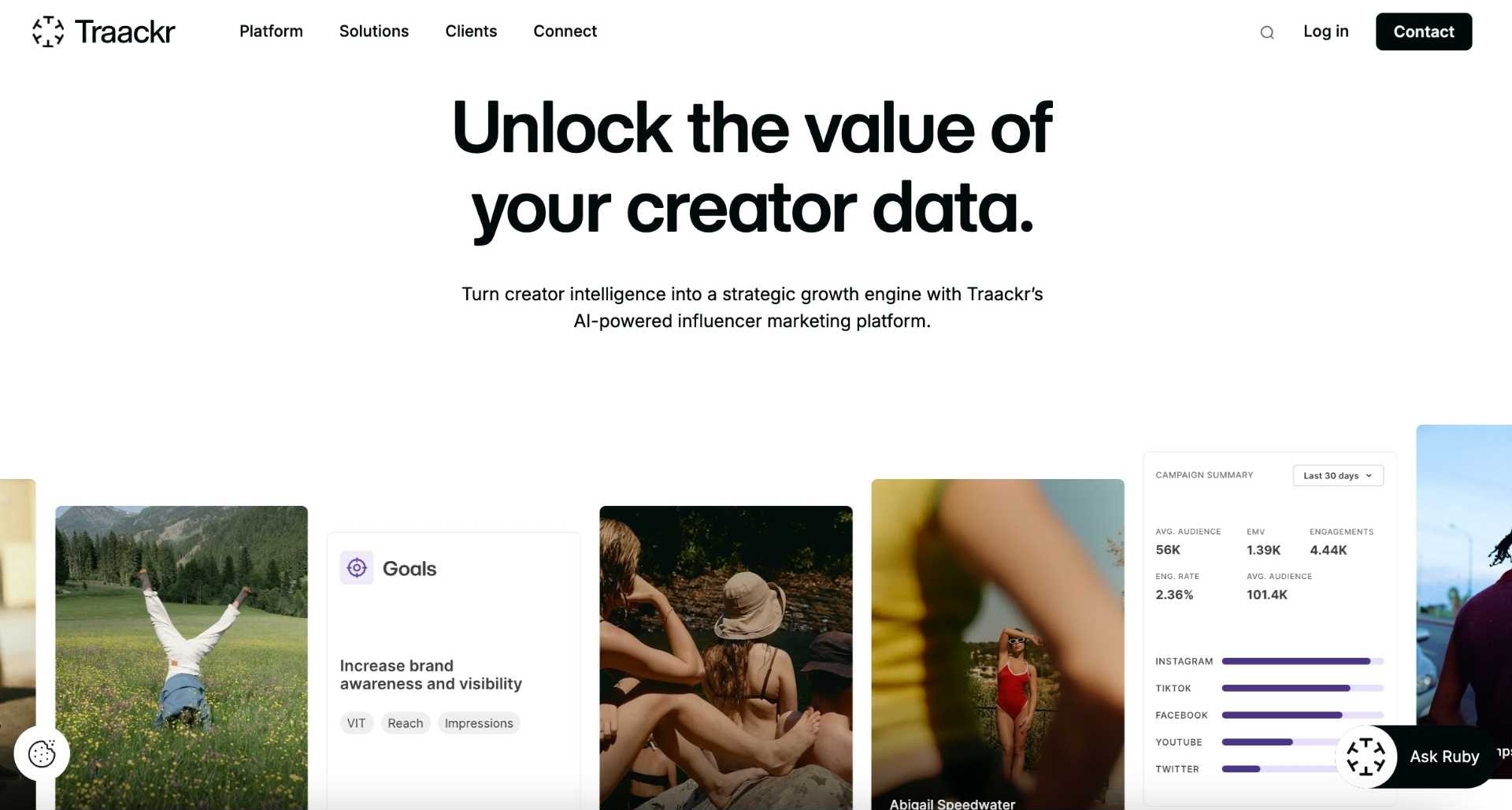
Traackr is an enterprise influencer marketing platform focused on helping brands measure the performance and ROI of creator partnerships. It provides influencer discovery, relationship management, campaign workflows, and deep performance analytics so marketing teams can benchmark creators, track spending efficiency, and optimize influencer budgets across campaigns.
Key features:
- Influencer discovery database: Access over 6 million influencers worldwide and filter by engagement rate, audience demographics, historical performance, and previous brand collaborations.
- Influencer CRM: Manage creator relationships using tags, notes, and collaboration histories so teams can track long-term partnerships.
- Brand Vitality Score (BVS): A proprietary metric that measures brand visibility, influence, and trust compared to competitors across influencer campaigns.
- Campaign management: Organize creators into campaigns, assign deliverables, track content submissions, and monitor campaign performance in real time.
- Product gifting workflows: Manage product seeding campaigns and track delivery status to correlate gifting with creator content performance.
- Affiliate tracking and payouts: Generate affiliate links, monitor commission performance, and manage creator payments directly from the platform.
- Advanced analytics and reporting: Track metrics such as CPE, CPC, reach, engagement, and ROI, with exportable reports for internal teams.
Pros:
- Strong performance benchmarking: Traackr is widely used by global brands that want deeper measurement and influencer ROI benchmarking.
- Excellent analytics and reporting depth: Advanced reporting helps teams compare creators and optimize budget allocation across campaigns.
- Enterprise-grade campaign management: CRM and campaign workflows make it easier to manage large creator programs across markets.
- Useful for global brands: Multi-market campaign tracking makes it easier for international e-commerce brands to scale influencer programs.
Cons:
- High pricing barrier: Traackr’s enterprise pricing can be difficult for smaller Shopify brands or startups to justify.
- Limited pricing transparency: Pricing is often customized during the sales process rather than clearly published.
- Overkill for small campaigns: Brands running small influencer programs may not use the platform’s advanced analytics features.
- Learning curve: Some users report that onboarding and configuration can take time.
Integrations:
- Shopify: Connect influencer campaigns to store sales and track product gifting, discount codes, and affiliate conversions.
- Google Analytics: Measure influencer-driven traffic and conversions alongside other marketing channels.
- Instagram: Track creator performance metrics and campaign engagement directly from Instagram posts.
- TikTok: Monitor campaign performance and creator content metrics across TikTok collaborations.
- YouTube: Track influencer campaign performance and engagement for long-form video collaborations.
Pricing:
Traackr is considered a high-cost influencer marketing platform aimed primarily at enterprise brands. Pricing starts around $32,500 per year for the Standard plan, with additional modules and enterprise packages available through custom pricing.
The platform does not advertise a free trial and typically requires annual contracts.
Reviews:
4.3 / 5.0 (G2)
7. Sprout Social

Sprout Social is primarily a social media management platform that also includes influencer marketing capabilities. Brands can discover creators, manage influencer campaigns, track performance metrics, and run product seeding and affiliate campaigns while combining influencer insights with broader social media analytics.
Key features:
- Creator discovery tools: Find influencers using filters such as demographics, engagement rate, brand safety criteria, and audience attributes.
- Brand Fit Score: AI-powered scoring system that estimates how well a creator aligns with your brand and target audience.
- Campaign workflow dashboard: Manage campaign stages such as creator review, proposals, approvals, and publishing.
- Content approval system: Influencers can submit content drafts for review before posting, ensuring brand compliance.
- Advanced analytics: Track engagement rates, earned media value (EMV), audience growth, and influencer campaign performance.
- Competitive benchmarking: Analyze which creators your competitors are collaborating with and evaluate their performance.
- Shopify gifting and discount codes: Send products to influencers and generate discount codes directly through Shopify integrations.
Pros:
- Strong analytics and reporting capabilities: Sprout Social’s reporting tools are among the most detailed in social media marketing platforms.
- Good brand safety controls: Advanced filters help brands avoid working with creators associated with risky topics.
- Unified social and influencer marketing platform: Teams can manage social media publishing and influencer campaigns from the same dashboard.
- Competitive insights: Brands can track influencer collaborations used by competitors.
Cons:
- Expensive entry price: Sprout Social is priced higher than many influencer-only platforms.
- Annual contracts required: Monthly subscriptions are not available for most plans.
- Limited influencer discovery compared with specialized tools: Platforms focused solely on influencer marketing often offer larger creator databases.
- UGC licensing management is not built-in: Content rights must be handled through contracts outside the platform.
Integrations:
- Shopify: Manage product gifting, discount codes, and influencer-driven sales attribution.
- Instagram: Track influencer campaign performance and engagement metrics.
- TikTok: Monitor campaign performance and influencer engagement across TikTok content.
- Google Analytics: Measure influencer campaign traffic and conversions.
- Salesforce: Integrate social and influencer insights with CRM and customer data.
Pricing:
Sprout Social is considered a high-cost platform for influencer marketing. Pricing starts at approximately $1,599 per user per month with a 12-month minimum contract, and there is no standard monthly subscription option.
Reviews:
4.5 / 5.0 (Capterra)
8. Klear (Meltwater)
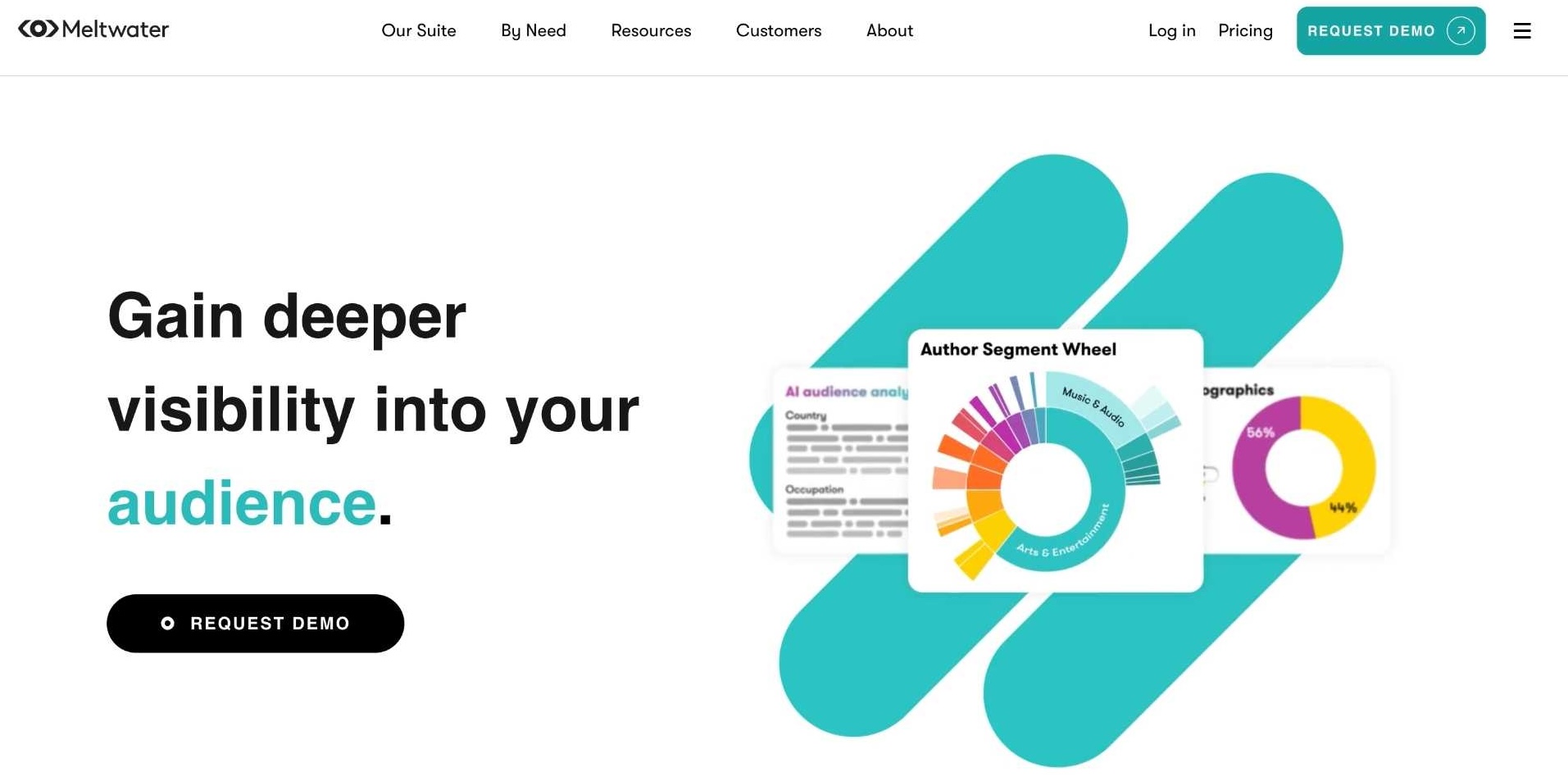
Klear is Meltwater’s influencer marketing platform that helps brands discover creators, run campaigns, communicate with influencers, and measure campaign performance. It combines influencer marketing with social listening and media monitoring tools so brands can track brand mentions, audience sentiment, and campaign impact across channels.
Key features:
- Influencer discovery database: Access over 30 million influencers and filter them by engagement, demographics, audience size, and brand affinity.
- True Reach technology: Estimates the actual audience reach of creators instead of relying solely on follower counts.
- AI creator profiles: Automatically generated summaries provide insights into a creator’s tone, audience demographics, and typical collaboration cost.
- Campaign management dashboard: Manage creator communication, deliverables, and campaign timelines directly within the platform.
- Integrated messaging and collaboration: Communicate with influencers directly through the platform’s chat tools.
- Product gifting and affiliate tracking: Manage coupon codes, affiliate links, and influencer-driven sales from one dashboard.
- Performance analytics and reports: Generate visual reports showing engagement, reach, ROI, and sentiment analysis.
Pros:
- Large influencer database: Access to over 30 million creators helps brands find influencers across niches and regions.
- Strong analytics and sentiment tracking: Meltwater’s broader media monitoring tools provide deeper insights into brand conversations.
- Good campaign management features: Built-in messaging and workflows simplify collaboration with influencers.
- Enterprise-level support: Dedicated onboarding and customer support teams help brands scale influencer programs.
Cons:
- Very expensive: Klear is positioned as an enterprise tool with a high pricing barrier.
- Interface performance complaints: Some users report laggy performance when handling large datasets.
- Limited reporting flexibility: Certain comparative reports require exporting data and analyzing externally.
- More complex than many DTC-focused platforms: Smaller brands may find the tool unnecessarily complex.
Integrations:
- Shopify: Track influencer-driven sales and manage gifting campaigns for e-commerce stores.
- Google Analytics: Measure influencer-driven traffic and conversions.
- Instagram: Track engagement, reach, and campaign metrics from influencer posts.
- TikTok: Monitor influencer campaign performance and audience engagement.
- Slack: Send campaign notifications and updates directly to team collaboration channels.
Pricing:
Klear is a high-cost enterprise platform. Pricing typically starts around $2,300/month. All plans are typically billed annually.
Reviews:
4.3 / 5.0 (G2)
9. Brandbassador

Brandbassador is an influencer and ambassador marketing platform focused on building long-term creator communities rather than one-off collaborations. Instead of searching large influencer databases, brands recruit ambassadors from their existing customers or followers and manage campaigns through gamified “missions” that reward creators for promoting products.
Key features:
- Ambassador recruitment system: Create landing pages and campaigns where creators or customers can apply to join your brand ambassador program.
- Gamified missions: Assign tasks like posting content, creating videos, or sharing links, and reward creators with commissions or free products.
- Creator mobile app: Influencers manage missions, track rewards, and communicate with brands through the platform’s app.
- Content library: All creator-generated content is automatically stored so brands can reuse it across marketing campaigns.
- Sales and affiliate tracking: Track discount codes, affiliate links, and ambassador-generated sales directly in the platform.
- Advanced segmentation: Segment ambassadors into groups such as customers, creators, or top performers for targeted campaigns.
- Automated reward payouts: Pay commissions or rewards automatically when ambassadors complete missions.
Pros:
- Great for ambassador and affiliate programs: Works especially well for brands building long-term creator communities.
- Encourages ongoing engagement: The gamified system motivates creators to consistently promote products.
- Strong UGC generation: Missions help brands produce large volumes of user-generated content.
- Good fit for lifestyle and fashion brands: Ambassador-driven marketing works well in visually driven product categories.
Cons:
- No influencer discovery database: Brands must recruit ambassadors themselves rather than search a marketplace.
- Requires community management: Brands need to actively manage relationships and missions.
- Higher setup effort: Building an ambassador community takes time compared to traditional influencer campaigns.
- Some technical issues reported: Reviews occasionally mention interface complexity or filtering issues.
Integrations:
- Shopify: Automate product gifting, rewards, and ambassador discount codes directly from the store.
- Instagram: Track ambassador content performance and engagement metrics.
- TikTok: Run ambassador campaigns and track performance for TikTok content.
- Slack: Receive updates and notifications on ambassador activity.
- Zapier: Automate workflows between Brandbassador and other marketing tools.
Pricing:
Brandbassador is a mid-to-high priced platform. Pricing starts at approximately $2,000/month for the Growth plan and $3,000/month for the Pro plan, with annual contracts typically required.
Brands can also activate a sales commission model where Brandbassador takes around 5% of sales generated through ambassadors.
Reviews:
4.8 / 5.0 (Trustpilot)
10. SARAL

SARAL is an influencer marketing CRM built primarily for D2C brands and Shopify merchants. The platform focuses on simplifying creator discovery, influencer outreach, relationship management, and sales tracking so smaller e-commerce teams can run influencer programs without complex enterprise software.
Key features:
- Influencer discovery tools: Search creators using filters such as niche, location, engagement rate, and follower count.
- Creator relationship management: Organize influencers into pipelines and track collaboration history across campaigns.
- Email outreach automation: Send personalized outreach emails and manage conversations directly from the platform.
- Affiliate and discount tracking: Generate unique links and discount codes to track influencer-driven revenue.
- Campaign analytics: Monitor engagement, clicks, conversions, and ROI across influencer campaigns.
- Content and collaboration management: Manage campaign deliverables, creator communication, and content approvals.
Pros:
- Simple interface for small teams: SARAL is designed for D2C founders and lean marketing teams.
- Strong Shopify focus: The platform integrates well with Shopify stores for sales tracking and affiliate programs.
- Affordable compared to enterprise platforms: Pricing is accessible for smaller e-commerce brands.
- Easy onboarding: Setup and workflow management are generally easier than larger platforms.
Cons:
- Smaller influencer database: Discovery capabilities are more limited compared with large enterprise tools.
- Fewer advanced analytics features: Reporting is simpler than platforms focused heavily on measurement.
- Limited integrations: Compared with enterprise platforms, SARAL has a smaller integration ecosystem.
- Not ideal for global enterprise campaigns: Best suited for small to mid-sized brands.
Integrations:
- Shopify: Track influencer sales, manage product gifting, and generate affiliate discount codes.
- Gmail: Sync outreach emails and influencer communication.
- Stripe: Manage payments and commissions to creators.
- Slack: Receive campaign updates and influencer activity notifications.
- Zapier: Connect SARAL with other marketing tools and automation workflows.
Pricing:
SARAL is considered a low-to-mid priced influencer platform. Pricing typically starts around $3.6k/quarter with higher tiers available for larger influencer programs and additional automation features.
Reviews:
4.7/5.0 (G2)
Final Thoughts on 10 Best Influencer Marketing Platforms for E-commerce Brands
Influencer marketing has become a powerful growth channel for e-commerce brands looking to build trust, generate authentic content, and drive measurable sales. Platforms like CreatorIQ, Upfluence, GRIN, Influencer Hero, and others help Shopify merchants and D2C teams streamline influencer discovery, outreach, product gifting, affiliate tracking, and campaign analytics from one centralized dashboard.
The right platform ultimately depends on your brand’s size, budget, and campaign goals—from enterprise tools with advanced analytics to simpler solutions built for growing online stores. By choosing the right influencer marketing platform, e-commerce brands can scale creator partnerships more efficiently and turn influencer collaborations into a consistent revenue channel.

.png)


.jpg)