

10 Best Influencer Marketing Platforms for D2C Brands
Influencer marketing has become a critical strategy for direct-to-consumer (D2C) brands aiming to build brand awareness, boost sales, and connect with their target audience. As more brands realize the power of influencer collaborations, the need for robust platforms to manage these partnerships has grown significantly. Selecting the right influencer marketing platform can streamline campaign management, ensure meaningful engagements, and track performance effectively.
With influencer marketing showing an impressive return on investment (ROI) – up to 11x higher than traditional digital marketing channels (Influencer Marketing Hub, 2025) – it is essential for D2C brands to leverage tools that provide data-driven insights, creator discovery, and seamless campaign execution. In this article, we will explore the top influencer marketing platforms that can help D2C brands maximize their impact and achieve their marketing objectives.
Best Influencer Marketing Platforms
| TOOL | REVIEWS | BEST FOR | TRIAL INFO | PRICING | ||
|---|---|---|---|---|---|---|
1 |

|
⭐ | Influencer CRM | Book Demo | Pricing | Website |
2 |

|
⭐ | Creator management | Book Demo | Pricing | Website |
3 |
|
⭐ | Influencer discovery | Book Demo | Pricing | Website |
4 |

|
⭐ | Enterprise influencer marketing | Book Demo | Pricing | Website |
5 |

|
⭐ | Influencer partnerships | Book Demo | Pricing | Website |
6 |
|
⭐ | Creator marketplace | Book Demo | Pricing | Website |
7 |
|
⭐ | Influencer analytics | Book Demo | Pricing | Website |
8 |
|
⭐ | Social media analytics | Book Demo | Pricing | Website |
9 |

|
⭐ | Influencer marketplace campaigns | Book Demo | Pricing | Website |
10 |

|
⭐ | Influencer discovery | Book Demo | Pricing | Website |
1. Influencer Hero

Influencer Hero is a comprehensive, all‑in‑one influencer marketing platform designed for D2C brands and e-commerce teams aiming to scale their influencer campaigns efficiently. It allows brands to discover relevant creators, automate outreach and follow-ups, manage influencer relationships, and track performance in real-time through a user-friendly dashboard. By integrating AI-powered tools, influencer CRM, and 45+ integrations, Influencer Hero helps streamline the influencer marketing process from start to finish.
Key features:
- Multi-platform influencer discovery — Find creators across Instagram, TikTok, YouTube, Pinterest, Snapchat, Facebook, X (Twitter), and Twitch using advanced filters such as location, audience demographics, engagement rate, and niche to pinpoint the best matches.
- Automated outreach & follow-ups — Utilize bulk emails, AI-powered smart templates, and drip sequences to engage influencers at scale, ensuring personalized communication without the manual effort.
- Influencer CRM — Manage creator relationships, track communications, and monitor campaign stages with visual relationship boards and real-time status tracking.
- Content & UGC tracking — Collect, tag, and analyze influencer-generated content (UGC) for repurposing in campaigns, ensuring high-performing content is utilized effectively across platforms.
- Affiliate & gifting management — Integrate with Shopify and WooCommerce to automate gifting and track affiliate links, product seeding, and influencer payments.
Pros:
- Centralized influencer management — Combines discovery, CRM, campaign management, and analytics into a single platform, saving time for marketing teams.
- Strong customer support — Offers proactive onboarding, responsive live chat, and an in-platform help desk with how-to guides and educational resources.
- AI-Driven Search for Similar Influencers — With AI-powered search and “lookalike” features, Influencer Hero makes it easy to find influencers with similar content or audiences, optimizing creator selection and campaign alignment.
Cons:
- Learning curve — Teams new to full‑stack influencer marketing platforms may experience a steeper learning curve.
Integrations:
- Shopify — Seamlessly track product gifting and sales attribution linked to influencer campaigns.
- WooCommerce — Sync influencer activities with orders and campaigns, managing gifts and sales performance.
- Slack — Receive real-time notifications and updates on influencer campaign status directly within team communication channels.
- Stripe— Automate influencer payouts, tracking commissions, and conversions through integrated payment tools.
- AI-driven workflows — Integrate with tools like DocuSign, GoAffPro, Klaviyo, Gorgias, Zapier, and others to automate contracts, affiliate tracking, email flows, internal alerts, and cross-platform data synchronization. These integrations enable smooth, automated operations across your tech stack.
Pricing:
Influencer Hero offers flexible pricing plans depend on outreach volume, starting at $649/month for the Standard plan, which supports up to 1,000 reach outs / month. Plans scale up to $1,049/month for Pro plan with 5,000 reach outs/month and $2,490/month for the Business plan, which includes up to 10,000 reach outs. You can have unlimited creators in your CRM with Influencer Hero. Custom pricing is available for agencies and larger teams. The pricing structure places Influencer Hero in the mid-range compared to other influencer marketing platforms, making it accessible to growing D2C brands while providing advanced features that may not be available with entry-level tools.
Reviews:
- 5.0/5.0 on Capterra — Highly praised for its ease of use, strong automation, and effective CRM features, helping brands scale influencer marketing efforts quickly.
2. Grin
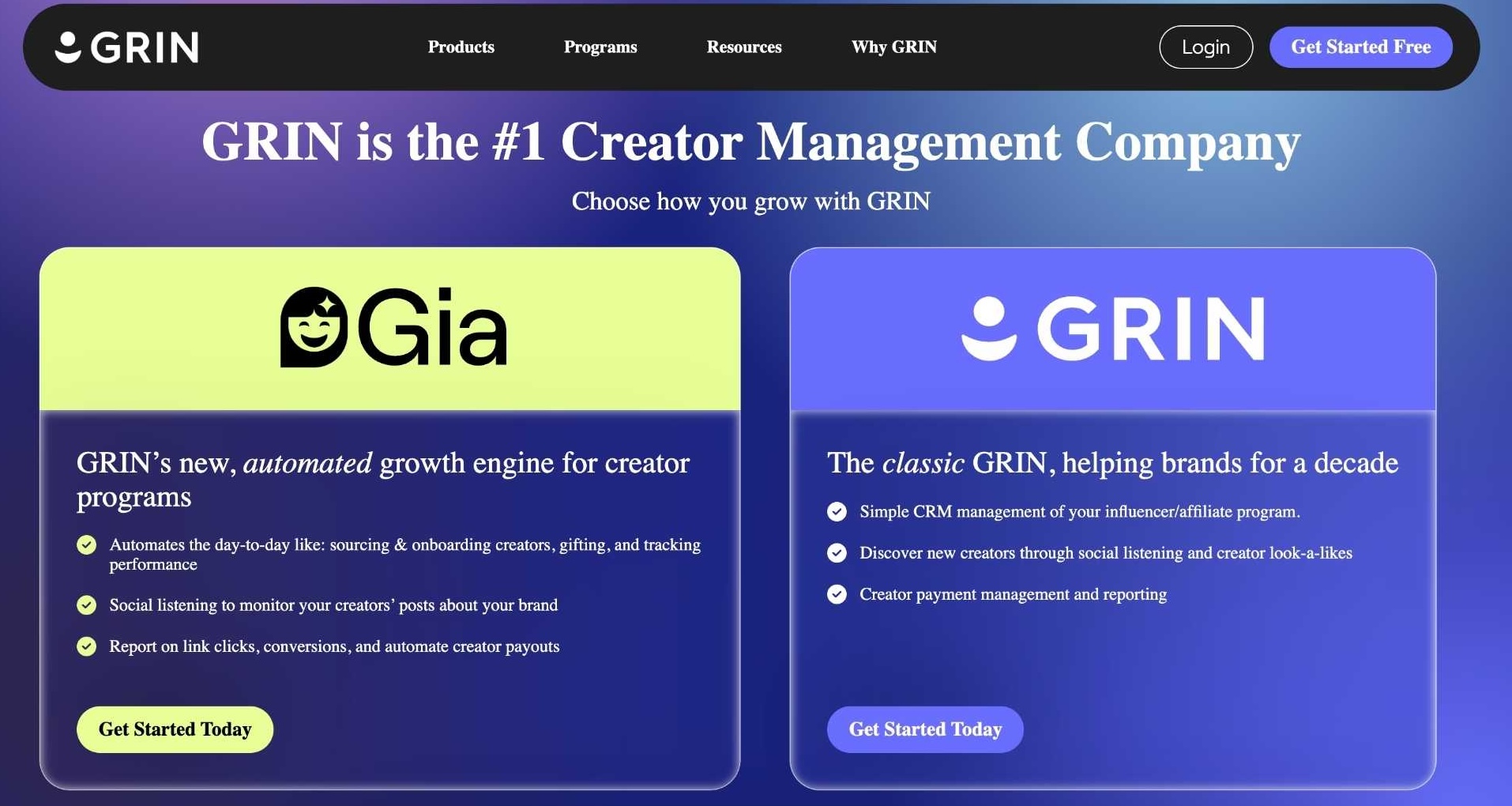
Grin is a creator management platform designed for e‑commerce brands to run and scale creator programs, from discovery and contracting to content collaboration and payout. Grin focuses heavily on CRM for influencers and tying creator performance back to revenue.
Key features:
- Influencer discovery & vetting — Search and segment creators by audience metrics.
- CRM & relationship workflows — Maintain influencer profiles with messaging, deliverables, and contract tracking.
- Campaign execution hub — Manage deliverables, approvals, content deadlines, and campaign status at scale.
- Gifting & product seeding automation — Automate sending products with tracking updates.
- Performance dashboards — Track campaign metrics, engagements, and contributions to revenue.
Pros:
- End-to-End Creator Relationship Management — Grin excels at managing every step of the influencer marketing process, from discovery to campaign execution and performance tracking, making it ideal for long-term creator relationships.
- Robust CRM for Long-Term Programs — With its advanced CRM, Grin enables teams to build and maintain strong, lasting partnerships with influencers, helping them scale over time.
- Strong Shopify Integration — Grin integrates seamlessly with Shopify, making it particularly valuable for D2C brands looking to track influencer-driven sales and streamline product gifting.
Cons:
- High Pricing & Annual Contracts — Grin is more expensive than many alternatives and generally requires long-term annual contracts, which may not be ideal for smaller or budget-conscious teams.
- Technical Issues in Large Campaigns — Some users have reported minor technical issues and usability challenges when managing large-scale influencer campaigns, potentially affecting efficiency.
- Not Ideal for Early-Stage Brands — Due to its higher cost and complex features, Grin may be too advanced and costly for smaller or early-stage brands just starting with influencer marketing.
Integrations:
- Shopify — Sync products and campaign conversions.
- PayPal — Standard payment method for influencer payouts.
- Google Sheets/Excel — Export campaign data for analysis.
- Slack — Alerts and updates for campaigns.
- Zapier — Connect Grin workflows to other apps.
Pricing:
Custom enterprise pricing based on scale and feature needs; tiers typically begin in the mid‑high range for influencer platforms with annual commitments.
Reviews:
- 4.5/5.0 on G2 — Solid platform with excellent support and influencer management workflow.
3. Upfluence
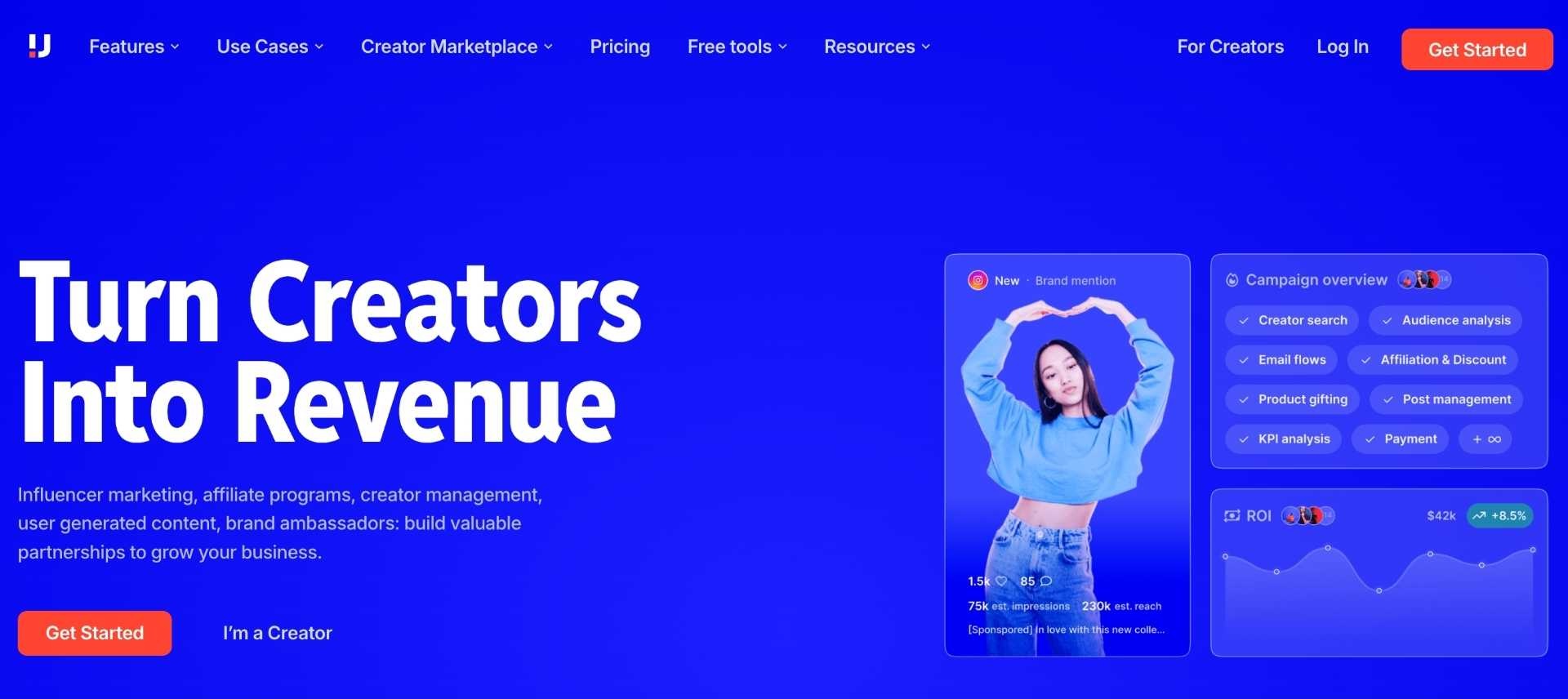
Upfluence is a comprehensive influencer marketing platform that enables brands to discover creators, manage campaigns, handle payments, and analyze performance — with a strong focus on e‑commerce ROI and deep influencer discovery filters.
Key features:
- Advanced influencer discovery — 20+ search filters including platform, audience, and location.
- Live Capture tool — Detect influencers who visit your website.
- Campaign and workflow management — Budgeting, approvals, and outreach tracking.
- Performance analytics — Engagement, clicks, and conversion metrics.
- Modular pricing options — Choose specific tool modules as needed.
Pros:
- Exceptional Discovery Filters & Real-Time Insights — Upfluence offers advanced search filters that allow brands to discover the perfect creators based on audience demographics, engagement, and niche, providing real-time data to optimize influencer selection.
- Chrome Extension for On-the-Fly Research — The Chrome extension allows users to instantly access influencer insights while browsing social platforms, making influencer research quick and seamless.
- Strong E-Commerce Integrations — Upfluence integrates well with major e-commerce platforms, especially Shopify, enabling easy tracking of influencer-driven sales and streamlining product gifting and affiliate programs.
Cons:
- High Pricing & Long Contracts — Upfluence can be pricey, especially for smaller brands, and often requires long-term contracts, making it less accessible for those with limited budgets.
- Less Intuitive UI for Some Users — Some users have noted that the user interface (UI) of Upfluence can be less intuitive compared to other platforms, especially for beginners. (Reddit)
Integrations:
- Shopify — Connect store data to influencer analytics.
- WooCommerce — Sync sales from campaigns.
- Zapier — Automation to linked applications.
- Klaviyo — Email workflow triggers based on influencer KPI data.
- Hootsuite — Social scheduling from influencer content.
Pricing:
Modular pricing starting around $478/month, with total packages often $1,200–$2,000+ per month depending on modules; annual contracts typical.
Reviews:
- 4.6/5.0 on G2 — Strong campaign management and support scores.
4. CreatorIQ

CreatorIQ is an enterprise‑grade influencer marketing solution with AI‑powered creator discovery, deep analytics, and rich performance reporting. Its database indexes millions of creator profiles with audience authenticity scoring to support large global campaigns.
Key features:
- AI‑driven influencer discovery — Deep semantic content search and authentic audience scoring.
- Comprehensive campaign lifecycle tools — From collaboration to performance tracking.
- Creator CRM and history — Manage relationships and past performance in one place.
- Advanced analytics & reporting — Cross‑platform metrics and ROI tracking.
- Competitive intelligence — Identify competitor influencer activity.
Pros:
- Deep Data Analytics & Global Creator Visibility — CreatorIQ offers advanced data analytics and a comprehensive view of global creators, helping brands make data-driven decisions for their campaigns.
- Ideal for Enterprise & Multi-Market Campaigns — CreatorIQ is designed for large teams and global campaigns, providing the tools needed to manage influencer marketing across multiple regions and platforms.
- Strong Customer Support & High G2 Ratings — The platform receives praise for its responsive customer support and has earned high ratings on G2, indicating user satisfaction and reliability.
Cons:
- Enterprise Pricing & Custom Contracts — CreatorIQ's pricing is typically geared towards enterprise-level businesses and often involves custom contracts, making it less suitable for smaller companies.
- Can Be Too Complex for Smaller Teams — The platform's robust features can overwhelm smaller teams or those new to influencer marketing due to its complexity and steep learning curve.
Integrations:
- Meta (Facebook/Instagram) — Direct performance and content sync.
- YouTube API — Detailed creator analytics.
- TikTok API — Real‑time performance metrics.
- Google Analytics — Combine web and influencer data.
- CRM systems (e.g., Salesforce) — Sync influencer data with broader marketing KPIs.
Pricing:
Enterprise pricing with custom contracts, generally in the high tier for large teams.
Reviews:
- 4.6/5.0 on G2 — Excellent influencer management and analytics scores.
5. Aspire

Aspire is a word‑of‑mouth and influencer marketing platform focused on helping brands build lasting creator communities, manage campaigns, and leverage affiliates, ambassadors, and UGC at scale.
Key features:
- Creator marketplace & discovery — Access a broad pool of influencers and ambassadors.
- Campaign & relationship management — Messaging, deliverables, and performance workflows.
- Affiliate & ambassador tracking — Track affiliate campaigns along with influencer activations.
- Content analytics — Measure UGC performance after campaigns.
- Inbound creator sign‑up — Let creators apply to brand programs.
Pros:
- Excellent Usability & Customer Support — Aspire is highly praised for its user-friendly interface and exceptional customer support, as highlighted in verified reviews on G2, making it easy for teams to get started and scale.
- Strong for Community & Long-Term Relationship Marketing — Aspire is well-suited for brands focused on building long-lasting relationships with influencers and ambassadors, ideal for nurturing a dedicated community.
- Ideal for Ambassador Programs & Affiliates — Aspire excels at managing ambassador programs and affiliate campaigns, providing the tools needed to track commissions and drive sales through creator partnerships.
Cons:
- Custom Pricing & Lack of Public Pricing Info — Aspire often requires custom contracts, and its pricing is not publicly listed, which can make it difficult for brands to assess affordability upfront.
- Some UI/Navigation Feedback — Some users have reported minor issues with the platform’s user interface and navigation, which can hinder ease of use for certain tasks.
- No real CRM: white the website claims CRM systems the way you work in Aspire is with lists. They currently don’t support a real intuitive CRM workflow mechanism which can make scaling difficult.
Integrations:
- Instagram & TikTok — Direct platform insights and campaign data.
- Pinterest — Creator discovery and insights.
- Shopify/WooCommerce — Track sales and UGC attribution.
- Slack — Internal team alerts and workflows.
- Google Analytics — Analyze campaign traffic and conversion.
Pricing:
Custom pricing (no public tiers) with annual contracts; generally mid‑to‑high tier due to enterprise‑level features.
Reviews:
- 4.6/5.0 on G2 — High ease of use and influencer management scores.


6. IZEA
IZEA is an influencer marketing platform that connects brands with influencers to manage content creation, distribution, and performance tracking across multiple social platforms. It offers end-to-end tools for discovering influencers, managing campaigns, and processing payments, with a focus on content-driven campaigns.
Key features:
- Influencer search & discovery — Access a large network of influencers across Instagram, YouTube, and more using various filters.
- Campaign management — Organize content creation, track influencer performance, and manage campaigns with comprehensive dashboards.
- Content licensing & rights management — Automatically manage content reuse rights with influencers.
- Affiliate marketing — Enable affiliate campaigns and track ROI for every influencer.
- Real-time performance reporting — Measure impressions, clicks, sales, and campaign effectiveness.
Pros:
- Extensive Influencer Network — IZEA boasts a network of over 2 million influencers, offering brands a vast pool to choose from, ensuring they can find the right creators for their campaigns.
- Content Licensing for Repurposing — With influencer content licensing built in, IZEA allows brands to repurpose high-performing content for ads and other marketing initiatives, providing greater value from influencer collaborations.
- Data-Driven Insights for ROI — IZEA emphasizes a data-driven approach, enabling brands to make informed decisions based on real-time performance metrics and ensure they achieve a solid return on investment (ROI).
Cons:
- Steep Learning Curve for New Users — Some users find IZEA’s platform a bit cumbersome, especially for beginners, as it can take time to navigate and fully leverage all its features.
- Higher Pricing Compared to Competitors — IZEA’s pricing tends to be on the higher side compared to other influencer marketing platforms, making it less ideal for smaller brands with limited budgets.
- Limited Automation Features — While IZEA offers powerful tools, it lacks some of the automation capabilities found in competitor platforms, potentially requiring more manual work for larger campaigns.
- More an agency then specialising on software - as a public company IZEA shows the majority of their revenues from business services indicating that their tech might be less developed compared to the other vendors which focus primarily on software.
Integrations:
- Shopify — Sync products, track sales, and manage influencer orders.
- PayPal — Facilitate payments and manage influencer payouts.
- Google Analytics — Monitor traffic generated by influencer campaigns.
- Zapier — Automate workflows by integrating with other apps.
- Slack — Receive notifications and updates on influencer campaign performance.
Pricing:
Pricing for IZEA is mid‑to‑high, starting at $3,000+ per month depending on features and scale. It operates on a subscription-based model, offering both monthly and annual contracts.
Reviews:
- 4.3/5.0 on G2 — Strong reporting capabilities but noted for its higher price point.
7. Klear (Meltwater)
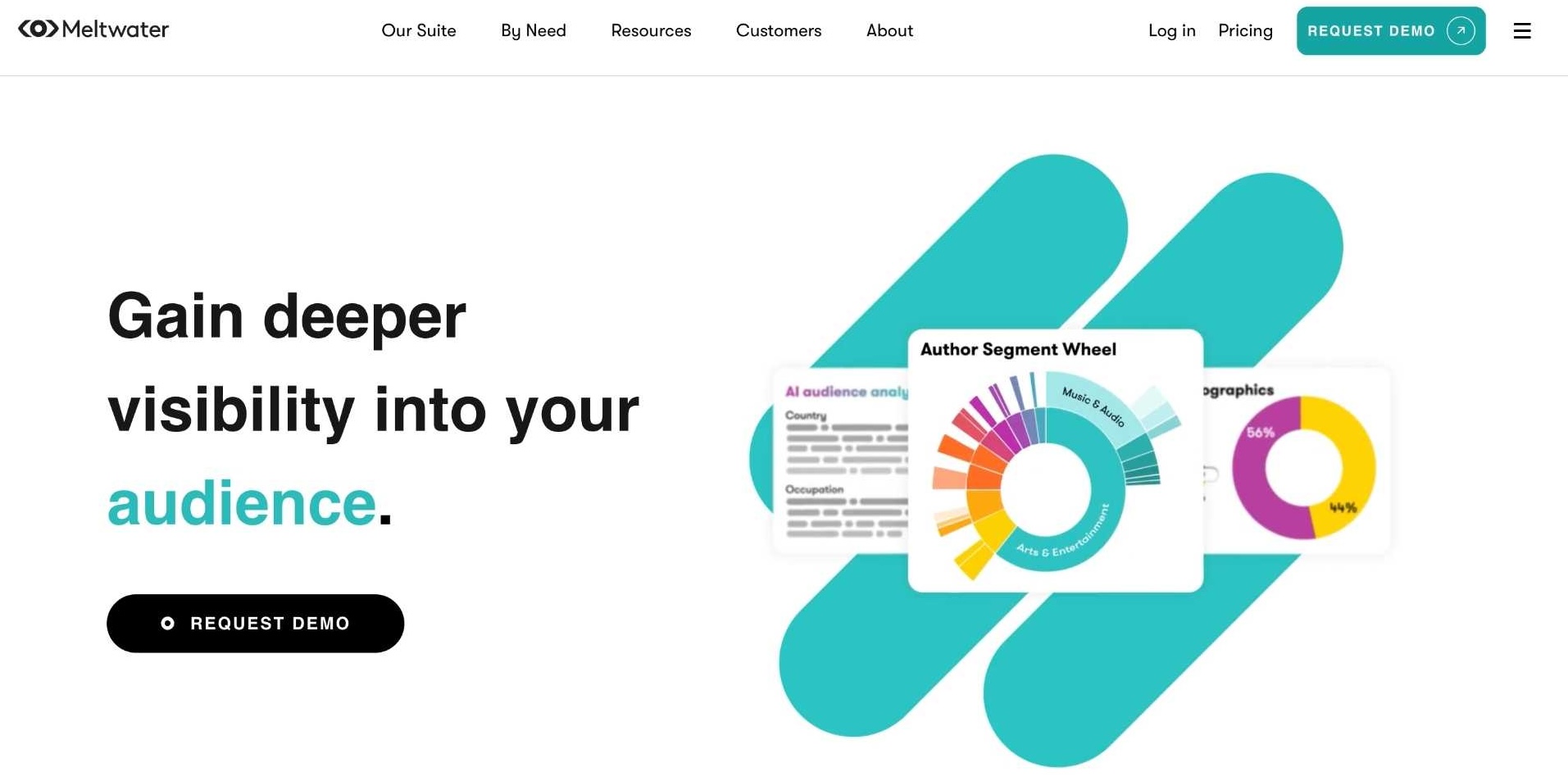
Klear is an influencer marketing and social listening platform that helps brands discover influencers, manage campaigns, and measure performance. It is known for its robust social listening and audience analysis tools, helping brands find the most suitable influencers for their target audience.
Key features:
- Influencer discovery — Access a vast database of influencers across various social media platforms with advanced filtering options.
- Social listening — Track mentions of your brand and competitors across social media to discover new influencers.
- Audience analysis — Deep dive into influencer audiences to ensure they match your target demographic.
- Campaign management — Manage campaigns, monitor content performance, and track key metrics.
- Real-time reporting — Get live performance metrics and insights on influencer campaigns.
Pros:
- Advanced Social Listening & Audience Insights — Klear excels in social listening, allowing brands to track mentions, analyze sentiment, and gain valuable audience insights to optimize influencer selection.
- Effective Influencer Segmentation & Filtering — With powerful segmentation tools, Klear enables brands to filter influencers by various criteria, ensuring that only the most relevant creators are selected for campaigns.
- Comprehensive Reporting for Campaign Tracking — Klear offers robust reporting features, providing detailed analytics on influencer performance, engagement, and campaign success to help brands make data-driven decisions.
Cons:
- Steep Learning Curve for New Users — Some users report that certain features of Klear require time and effort to fully understand, especially for those new to influencer marketing platforms.
- Higher Pricing for Smaller Brands — Klear’s pricing is on the higher side, making it less accessible for small to mid-sized businesses with limited budgets, especially when compared to more affordable platforms.
- Limited E-Commerce Integrations — Klear offers fewer integrations with e-commerce platforms compared to competitors, which may be a drawback for brands that rely heavily on Shopify or WooCommerce.
Integrations:
- Instagram & TikTok — Monitor and analyze influencer performance on both platforms.
- Google Analytics — Track the traffic and sales driven by influencer campaigns.
- Shopify — Integrate e-commerce insights with campaign data.
- Zapier — Set up custom workflows by connecting Klear to other tools.
- Slack — Receive updates on influencer activity and campaign performance in real time.
Pricing:
Klear's pricing is mid‑to‑high with custom pricing depending on your business size and the number of influencers managed. They offer flexible plans suited for both small and large enterprises.
Reviews:
4.5/5.0 on G2 — Users praise its influencer discovery and audience analysis, but highlight its pricing as a limitation for smaller brands.
8. Sprout Social

Sprout Social is a social media management tool with built-in influencer marketing features that allow brands to manage campaigns, engage with influencers, and measure social media performance. It’s a comprehensive solution for managing all social media activities, not just influencer marketing.
Key features:
- Social media management — Schedule and publish posts, track engagement, and manage campaigns across platforms.
- Influencer identification & tracking — Find relevant influencers and track campaign performance.
- Brand monitoring & social listening — Monitor your brand’s mentions, hashtags, and competitor activity.
- Engagement reporting — Analyze engagement trends and how influencer campaigns impact overall performance.
- Collaboration tools — Team-based communication for handling influencer campaigns.
Pros:
- Comprehensive Social Media Management — Sprout Social excels in managing omnichannel campaigns, allowing brands to handle their social media presence across multiple platforms from a single, unified interface.
- Advanced Analytics & Performance Tracking — The platform offers detailed analytics, enabling brands to track performance, engagement, and ROI across all social media channels, helping optimize influencer-driven campaigns.
- Robust Collaboration Tools for Teams — Sprout Social provides excellent collaboration features, making it ideal for larger teams working together to manage influencer campaigns, content approval, and reporting.
Cons:
- Higher Pricing Compared to Influencer-Specific Platforms — Sprout Social is more expensive than many platforms focused exclusively on influencer marketing, which may make it less suitable for smaller brands with budget constraints.
- Steep Learning Curve for New Users — Due to its wide range of features, Sprout Social can be challenging for beginners to navigate, requiring a bit of time to fully grasp its capabilities.
- Limited Influencer Discovery Tools — While Sprout Social offers great campaign management and analytics, its influencer discovery features are not as robust as those of platforms dedicated solely to influencer marketing.
Integrations:
- Facebook & Instagram — Post, engage, and track influencer activities on social platforms.
- Google Analytics — Combine influencer data with website performance metrics.
- HubSpot — Integrate campaign insights into CRM for lead management.
- Salesforce — Sync influencer campaign data with your sales pipeline.
- Slack — Real-time team communication and updates on influencer campaigns.
Pricing:
Sprout Social pricing is on the high end, starting at $99/month for basic plans and can go up depending on features needed. It offers both monthly and annual subscriptions.
Reviews:
4.5/5.0 on G2 — Widely praised for its ease of use and reporting capabilities, but noted for being pricey.
9. Afluencer

Afluencer is an influencer marketplace designed primarily for brands and micro influencers looking to collaborate on Instagram, TikTok, and YouTube. Brands create collaboration opportunities ("Collabs"), set targeting criteria, and receive applications from creators, while influencers apply to campaigns that match their niche and audience.
Key Features
- Influencer Marketplace – Connects brands with active influencers instead of relying on a static database.
- Campaign ("Collab") Creation – Brands can create collaboration opportunities and define campaign requirements.
- Advanced Filtering – Search creators by category, location, audience size, platform, and interests.
- Micro-Influencer Targeting – Designed to help brands find nano and micro influencers with highly engaged audiences.
- Influencer Applications – Creators can apply directly to campaigns rather than requiring manual outreach.
- Built-In Messaging – Provides a communication channel between brands and creators after a match is accepted.
- Engagement Metrics and Audience Insights – Shows engagement data to help brands evaluate applicants.
- Product Gifting Campaigns – Supports barter and gifting campaigns, making it suitable for DTC brands with limited budgets.
- Multi-Platform Support – Supports Instagram, TikTok, and YouTube creators.
- Free Entry Option – Brands can create an account and start posting collaborations without requiring a sales call or contract.
Pros
- Strong for Micro Influencers — Afluencer specializes in nano and micro creators, making it easier for brands to run campaigns focused on engagement rather than follower count.
- Affordable Pricing — The platform is significantly less expensive than most enterprise influencer marketing platforms, making it accessible for startups and small DTC brands.
- Application-Based Marketplace — Influencers apply directly to campaigns, reducing the need for cold outreach and helping brands connect with creators who are actively interested in collaborating.
- Ideal for Gifting Campaigns — The platform works well for product seeding and barter collaborations, which are common strategies for micro influencer campaigns.
Cons
- Limited Automation Capabilities — Afluencer lacks the advanced CRM, workflow automation, and reporting features available in larger influencer marketing platforms.
- Basic Analytics — Performance reporting and campaign measurement tools are less comprehensive than those offered by premium competitors.
- UI Could Be Improved — Some users mention that the platform interface could be more intuitive and polished.
Integrations
- Shopify – Enables ecommerce brands to connect their stores and simplify product gifting and influencer campaign management.
- Instagram – Allows brands and creators to connect Instagram profiles and evaluate engagement metrics.
- TikTok – Supports discovery and collaboration with TikTok creators.
- YouTube – Helps brands source YouTube creators for sponsored videos and content partnerships.
- Facebook – Allows creators to connect their Facebook presence and expand campaign opportunities.
Pricing
- Free Plan – $0/month: Allows brands to create an account and explore the platform before committing to a paid subscription.
- VIP Plan – $49/month: Designed for brands looking to access more campaign and collaboration capabilities without a large investment.
- Concierge Plan – $99/month: Includes additional support and features for brands managing more active influencer campaigns.
Pricing Structure: Afluencer offers monthly subscriptions with no mandatory annual contracts and provides a free plan for brands getting started. Compared with most influencer marketing platforms, its pricing falls into the low-cost category, making it particularly attractive for startups and small ecommerce brands.
Reviews
- 4.6/5.0 (G2) — Known for its ease of use, affordability, and effectiveness in connecting brands with smaller creators.
10. Modash
Modash is a robust influencer marketing platform designed for brands looking to discover influencers at scale, manage campaigns, and track real-time performance data. It’s particularly focused on high-quality influencer discovery and efficient campaign management.
Key features:
- Massive creator database — Access 350 million+ creators with advanced filters and AI-powered discovery tools.
- Affiliate marketing — Set up affiliate campaigns, track conversions, and automate influencer payouts.
- Campaign performance tracking — Measure influencer content performance in real-time.
- Custom outreach tools — Send bulk emails or personal messages to influencers.
- E-commerce integration — Sync product gifting, sales tracking, and affiliate links through Shopify.
Pros:
- Largest Database of Public Influencer Profiles — Modash offers access to one of the largest databases of public influencer profiles, providing unparalleled discovery capabilities and helping brands find the perfect influencers at scale.
- Comprehensive Campaign Performance Tracking — Modash offers real-time tracking of influencer content, performance metrics, and affiliate sales, allowing brands to measure campaign success and make data-driven decisions for continuous optimization.
- Strong Shopify Integration for E-Commerce Brands — Modash integrates seamlessly with Shopify, enabling brands to track influencer-driven sales and product gifting efficiently within their e-commerce operations.
Cons:
- Limited Integrations Beyond Shopify — Modash has fewer integrations with e-commerce platforms beyond Shopify, which may be a limitation for brands using other systems like WooCommerce or Magento.
- No Native Content Licensing/UGC Management — Modash does not include native content licensing or UGC management features, requiring brands to handle these aspects manually outside the platform.
- Bulk Outreach Limited to the Performance Plan — The bulk outreach feature, which is crucial for scaling influencer campaigns, is only available on Modash’s higher-tier Performance Plan, which may not be suitable for all budgets.
- No intuitive CRM: While Modash does offer certain workflow automations they lack a good CRM which makes scaling difficult.
Integrations:
- Shopify — Integrate product gifting, discount links, and sales tracking with your Shopify store.
- Google Analytics — Monitor and measure campaign performance on your website.
- Zapier — Automate workflows and integrate with other apps.
- Slack — Get updates on campaign performance and influencer outreach.
- Mailchimp — Sync email campaigns and influencer engagement data.
Pricing:
Modash starts at $199/month for basic features with higher-tier plans at $499/month for full capabilities. It's positioned in the mid-tier pricing range.
Reviews:
- 4.7/5.0 on G2 — Known for excellent influencer discovery and analytics.
Final Thoughts on 10 Best Influencer Marketing Platforms for D2C Brands
Choosing the right influencer marketing platform is crucial for D2C brands looking to scale their campaigns and drive meaningful engagement. Whether you're looking for robust creator discovery with platforms like Grin and Upfluence, or prefer automation and CRM integration with tools like Influencer Hero and Aspire, each platform offers unique features to meet diverse brand needs. Ultimately, the best platform for your brand will depend on your specific goals, budget, and the level of customization required to drive successful influencer partnerships.
.png)


.jpg)