

10 Best Influencer Hero Alternatives for Influencer Marketing
Scaling influencer marketing for a D2C brand gets complicated fast—what starts as a few manual collaborations quickly turns into a need for structured creator discovery, outreach, campaign management, and performance tracking. Influencer marketing software solves this by centralizing everything from finding the right creators to measuring ROI, making it easier for teams to run influencer campaigns as a predictable growth channel rather than a one-off effort.
Influencer Hero is a well-known all-in-one platform built for eCommerce brands, with strong CRM, automation, and campaign management features that support high-volume creator programs. That said, common feedback across review platforms and marketing communities highlights a few drawbacks—namely a steep learning curve, no free trial, and pricing that can feel high for smaller or early-stage brands. As a result, many teams start exploring Influencer Hero alternatives that better match their budget, ease of use, or specific workflow needs.
In this article, we’ll break down the 10 best Influencer Hero alternatives, including GRIN, Upfluence, CreatorIQ, Statusphere, NeoReach, Lefty, Insense, Kolsquare, Skeepers, and Storyclash, to help you choose the right influencer marketing software for your brand.
Key Criteria for Evaluating Influencer Marketing Platforms
Core Features
Evaluation of essential influencer marketing capabilities, including influencer discovery, outreach, CRM, campaign management, reporting, and content workflows.
Pricing & Flexibility
Comparison of pricing models, subscription plans, and contract terms to match different budgets and growth stages.
Customer Reviews & Satisfaction
Analysis of user feedback from trusted review platforms, focusing on usability, reliability, customer support, and overall performance.
Pros & Cons
Review of each platform’s strengths and limitations to highlight where it performs well and where it may fall short based on different use cases.
Integrations
Review of the most important integrations (e.g., Shopify and other tech tools), highlighting what each integration enables in one sentence.
Influencer Hero Overview
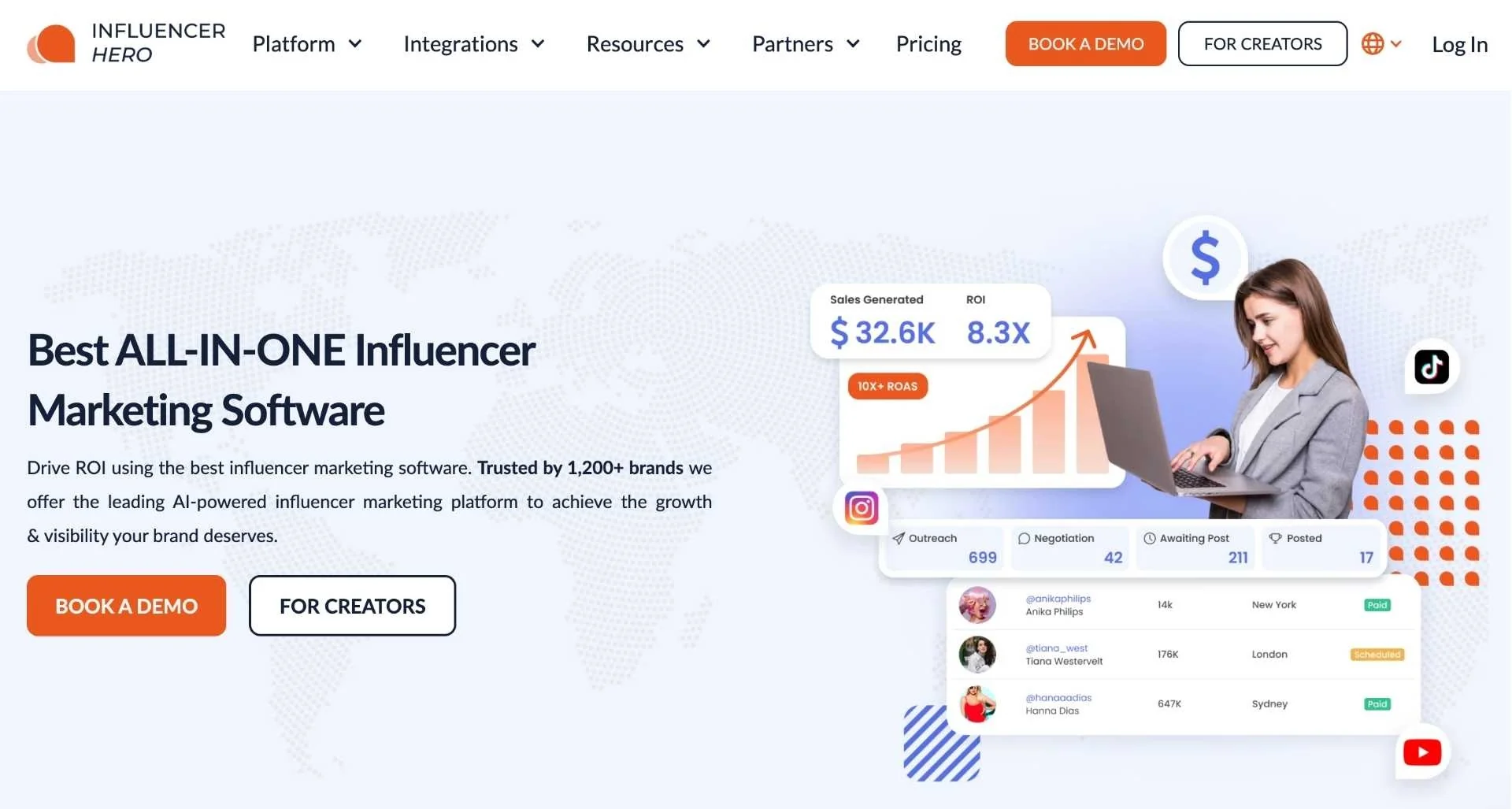
Influencer Hero is an all-in-one influencer marketing platform built for brands, eCommerce teams, and agencies that want to run creator discovery, outreach, gifting, affiliate tracking, payments, and reporting from one system. On its official site, the company positions the product as an AI-powered platform for scaling influencer programs, with workflows designed to connect creator activity to sales, UGC, and ROI. It is especially geared toward D2C brands that want to replace spreadsheets and fragmented tools with a more structured CRM-style setup.
Key Features
• Influencer discovery and filtering: Influencer Hero lets brands search creators across major social platforms using filters such as location, audience demographics, interests, engagement, fake follower checks, and lookalike matching, which helps narrow down creators that are closer to the brand’s ICP.
• Bulk outreach and email automation: The platform supports one-to-one and bulk outreach, AI-assisted messaging, reply tracking, and multi-step drip flows, making it easier to run high-volume campaigns without managing outreach manually in separate inboxes.
• Influencer CRM and campaign boards: Influencer Hero’s core workflow is built around structured campaign boards where teams can track outreach, negotiations, gifting, deliverables, follow-ups, and post status in one place.
• Product gifting and affiliate tracking: Through eCommerce integrations, brands can send products, generate discount codes and affiliate links, attribute clicks and sales, and monitor commissions from within the platform.
• Content collection and UGC library: The platform automatically saves creator content into a content library so teams can review, download, and repurpose assets for organic or paid use.
• Reporting and ROI tracking: Influencer Hero includes campaign and creator-level reporting for clicks, sales, commissions, and content performance, with exportable reports for internal review.
• Application forms and inbound creator capture: Brands can publish application forms to collect creator signups from their website, newsletter, or social channels, which helps combine outbound outreach with inbound creator recruitment.
• Chrome extension and web-based sourcing: The platform also offers a Chrome extension that helps teams pull creator insights and add influencers directly into campaigns while browsing platforms.
• Influencer marketing API: For brands with more custom needs, Influencer Hero offers API access for influencer discovery, analytics, partnership data, and AI search workflows.
Pricing
Influencer Hero offers flexible pricing based on outreach volume and you can have unlimited creators in your CRM:
• Standard — $649/month (up to 1,000 outreaches per month)
• Pro — $1,049/month (up to 5,000 outreaches per month)
• Business — $2,490/month (up to 10,000 outreaches per month)
• Custom / Agency — Tailored pricing
Custom pricing is available for agencies and larger teams
Reviews
4.9/5.0 (Capterra)
Integrations
• Shopify: Connects your store so you can send products to creators, generate discount codes and affiliate links, and track influencer-driven sales and ROI.
• WooCommerce: Lets brands track affiliate sales and create discount codes directly for WooCommerce-based influencer campaigns.
• Klaviyo: Helps identify influencers inside your contact database and export influencer profiles into Klaviyo for email and lifecycle marketing workflows.
• Gmail: Allows teams to send outreach directly from their Gmail address while keeping communication tied to creator workflows in Influencer Hero.
• Zapier: Connects Influencer Hero with thousands of other tools so brands can automate reporting, CRM updates, notifications, and campaign operations.
• Slack: Send campaign updates, approvals, and internal alerts to team channels to keep workflows aligned and moving faster.
• DocuSign: Streamline contracts and agreements with influencers through automated document workflows.
• GoAffPro: Manage affiliate programs, track commissions, and handle payouts tied to influencer performance.
Pros
• Strong campaign-centric CRM: Influencer Hero stands out for its structured dealflow-style campaign boards, automated follow-ups, and centralized creator communication, which is especially useful for brands running large gifting or affiliate programs.
• Useful first-party eCommerce workflows: The Shopify and WooCommerce integrations are a real differentiator because they connect outreach, product seeding, affiliate links, discount codes, commissions, and sales attribution in one workflow rather than splitting them across multiple tools.
• AI-powered workflows built for scale: Influencer Hero streamlines the full campaign lifecycle—from discovery to outreach—with automation, predictive scoring, and smart campaign suggestions, helping teams reduce manual work without losing control.
• Highly personalized outreach at volume: AI-enhanced email flows and automated follow-ups generate messages that feel tailored and relevant, improving reply rates, conversions, and long-term creator relationships.
Common Drawbacks of Influencer Hero
No free trial available
Brands need to commit before fully testing the platform, which can make initial evaluation more difficult compared to other tools.
Steep learning curve
The platform’s depth and range of features can take time to fully understand, especially for teams new to influencer marketing software.
Can be expensive for smaller brands
Pricing may be a barrier for early-stage D2C brands or teams running smaller-scale influencer programs.
Best Influencer Hero Alternatives
| TOOL | REVIEWS | BEST FOR | TRIAL INFO | PRICING | ||
|---|---|---|---|---|---|---|
1 |

|
⭐ | DTC creator management | Book Demo | Pricing | Website |
2 |

|
⭐ | Influencer discovery | Book Demo | Pricing | Website |
3 |

|
⭐ | Enterprise influencer marketing | Book Demo | Pricing | Website |
4 |

|
⭐ | Micro-Influencer Scale | Book Demo | Pricing | Website |
5 |

|
⭐ | Influencer campaigns & data analytics | Book Demo | Pricing | Website |
6 |

|
⭐ | Influencer analytics & discovery | Book Demo | Pricing | Website |
7 |

|
⭐ | UGC creators & paid social ads | Book Demo | Pricing | Website |
8 |

|
⭐ | Data-driven influencer discovery & campaign analytics | Book Demo | Pricing | Website |
9 |

|
⭐ | Influencer gifting & UGC campaigns with micro-influencers | Book Demo | Pricing | Website |
10 |

|
⭐ | AI creator discovery | Book Demo | Pricing | Website |
GRIN

GRIN is a creator management platform built primarily for DTC and eCommerce brands that want to manage discovery, outreach, gifting, affiliate programs, content collection, and reporting in one place. The platform has historically been known for enterprise-style workflows and deep commerce integrations, and more recently it has expanded into self-serve, month-to-month plans that make it more accessible to smaller teams. GRIN positions itself as an AI-native platform focused on turning creator relationships into a scalable growth channel rather than just a discovery database.
Key Features
• Creator discovery and CRM: GRIN combines creator search, relationship management, tagging, notes, and campaign stages in one system so teams can manage long-term creator pipelines instead of one-off lists.
• Integrated outreach and email tracking: Brands can run outreach from GRIN using ready-made templates, automated sequences, and tracked opens, clicks, and replies.
• Product seeding and gifting: GRIN supports gifting workflows that let brands send products, manage requests, and connect creator activity to commerce outcomes.
• Affiliate and revenue tracking: The platform supports creator links, commission workflows, and ROI measurement so teams can connect creator activity to attributable sales.
• Social listening and content tracking: GRIN includes built-in social listening for brand mentions, hashtags, conversations, and creator content performance.
• Content library and approvals: Teams can collect UGC, manage drafts and approvals, and organize creator content for reuse across paid and organic channels.
• Payments and creator operations: GRIN supports creator payments, tax document workflows, and contract handling inside the platform.
Pricing
• Official pricing model: GRIN’s current pricing page promotes a 30-day free trial and more flexible packaging than before, including self-serve access.
• Public starting price benchmark: Recent software directories list GRIN from $999/month, though enterprise pricing still appears to scale materially based on features and program size.
• Enterprise benchmark pricing: Recent sales benchmarks and product overviews still place GRIN commonly starts at $25,000/year (approx. $2,050/month), with no discounts for upfront payment. Contracts require a full-year commitment with monthly billing.
Reviews
4.5/5.0 (G2)
Pros
• New self-serve pricing model: GRIN recently introduced instant self-serve access, month-to-month pricing, and a free trial, which is a meaningful shift from its older enterprise-first positioning.
• Strong eCommerce workflow depth: GRIN stands out for tying creator discovery, gifting, affiliate tracking, payments, and revenue reporting together in one commerce-friendly workflow.
• Built-in social listening: Unlike many creator platforms that keep listening as a separate add-on, GRIN now emphasizes native social listening directly inside the core platform.
Cons
• Can still get expensive as programs scale: Even with self-serve plans, GRIN can become costly for brands that need larger creator capacity, more users, and advanced reporting.
• Discovery quality is not always consistent: Some users report duplicates, weaker curated lists, or irrelevant creator matches when using discovery tools at scale.
• Workflow complexity remains a factor: GRIN is easier to access than before, but teams still mention that setup and day-to-day management can feel more involved than lighter-weight tools.
Integrations
• Shopify: Syncs catalog, gifting, discount codes, and creator-attributed sales into one workflow.
• Klaviyo: Helps brands use creator data alongside email marketing workflows and templates.
• DocuSign: Lets teams send and manage creator contracts without leaving GRIN.
• Slack: Sends creator activity notifications to internal teams for faster coordination.
• Gmail / Outlook: Centralizes creator communication and email tracking from existing inboxes.
Influencer Hero vs GRIN
GRIN is now more flexible on entry pricing, with a free trial and month-to-month plans, while Influencer Hero starts at $649/month but still uses fixed subscription tiers. GRIN leans harder into commerce infrastructure, especially gifting, payments, and broader app integrations, whereas Influencer Hero’s edge is its campaign-centric CRM and AI-driven outreach automation. GRIN also now emphasizes built-in social listening, while Influencer Hero is more focused on structured creator management and outbound workflows.
For larger DTC brands running gifting-heavy or affiliate-heavy programs, GRIN can feel more operationally deep; for brands prioritizing bulk outreach, automated follow-ups, and campaign orchestration, Influencer Hero is usually the more outreach-first option. GRIN’s recent self-serve shift also makes it more accessible than it used to be, but Influencer Hero still offers clearer packaged pricing from the start.
Upfluence

Upfluence is an all-in-one influencer and affiliate marketing platform built for eCommerce brands that want to connect creator discovery, outreach, product seeding, affiliate tracking, and payments to store performance. The company puts a strong emphasis on commerce data, especially for brands selling through Shopify and Amazon, and it has recently leaned further into AI with Jaice, its campaign co-pilot for creator discovery and campaign building. For DTC teams that care most about finding creators from their existing customer base and tying influencer activity to revenue, Upfluence remains one of the more commerce-oriented options in the market.
Key Features
• Influencer discovery and filtering: Upfluence offers a large creator database with filters for niche, geography, audience demographics, engagement, and past collaborations.
• AI-assisted campaign building: Jaice AI helps teams create briefs, search for creators, and build campaigns faster with a more guided workflow.
• Bulk outreach and follow-ups: Brands can run bulk email outreach, automated follow-ups, and creator communication from within the platform.
• Influencer CRM and campaign tracking: Upfluence centralizes communication, tracking, campaign management, and creator history in one workflow.
• Customer-to-creator identification: The Shopify integration can identify customers and subscribers who are also creators, which is one of Upfluence’s best-known differentiators for eCommerce brands.
• Affiliate and sales attribution: Brands can generate links, discount codes, and track conversions and revenue through eCommerce integrations.
• Bulk creator payments: Upfluence supports creator payouts and payment operations inside the platform.
• Social listening: The platform also includes social listening for market research and creator content discovery.
Pricing
• Pricing model: Upfluence uses custom pricing rather than a public fixed plan table.
• All plans are custom made. There’s a minimum full year of service you have to commit to with monthly payments. On average plans start around $1,276 - $2,000/month ($24,000 yearly)
Reviews
4.3/5.0 (Capterra)
Pros
• Jaice AI is a meaningful recent upgrade: Upfluence has recently pushed Jaice AI as a campaign co-pilot that helps brands build campaigns, find creators, and draft outreach faster.
• Excellent fit for Shopify and Amazon sellers: Upfluence’s strongest differentiator is how deeply it connects creator workflows with Shopify and Amazon sales attribution.
• Customer-led influencer discovery: The ability to identify influencers among existing customers, subscribers, and store visitors is still one of the most practical advantages for DTC brands.
Cons
• Annual commitment is a barrier: Upfluence is still relatively rigid on contracts compared with newer monthly options in the market.
• Campaign editing can feel restrictive: Some users run into friction when trying to change campaign setup details after launch.
• UI and automation are not always as smooth as expected: While discovery is strong, campaign organization and email sequencing can still feel clunky for some teams.
Integrations
• Shopify: Finds creators in your customer base, sends products, and tracks influencer-driven sales.
• Amazon: Tracks affiliate performance and attributed sales for brands selling on Amazon.
• Klaviyo: Enriches email data with creator insights and helps activate creators from subscriber lists.
• Gmail / Outlook: Lets brands send outreach from connected inboxes while keeping communication tied to campaigns.
• Stripe: Powers creator payments through Upfluence Pay.
Influencer Hero vs Upfluence
Upfluence and Influencer Hero are both all-in-one platforms, but they prioritize different workflows. Upfluence is more commerce-led, with especially strong Shopify and Amazon integrations and a clear focus on identifying creators from your customer base. Influencer Hero is more campaign-CRM-led, with packaged pricing, structured campaign boards, and stronger emphasis on AI-driven outreach automation. Upfluence now has Jaice AI, but it still generally feels more sales-attribution-first than workflow-first. Influencer Hero is usually the cleaner fit for brands that want transparent entry pricing and high-volume personalized outreach, while Upfluence stands out more for DTC teams that care most about affiliate, gifting, and store-linked ROI. Upfluence also tends to require more commitment upfront due to annual contracts.
CreatorIQ
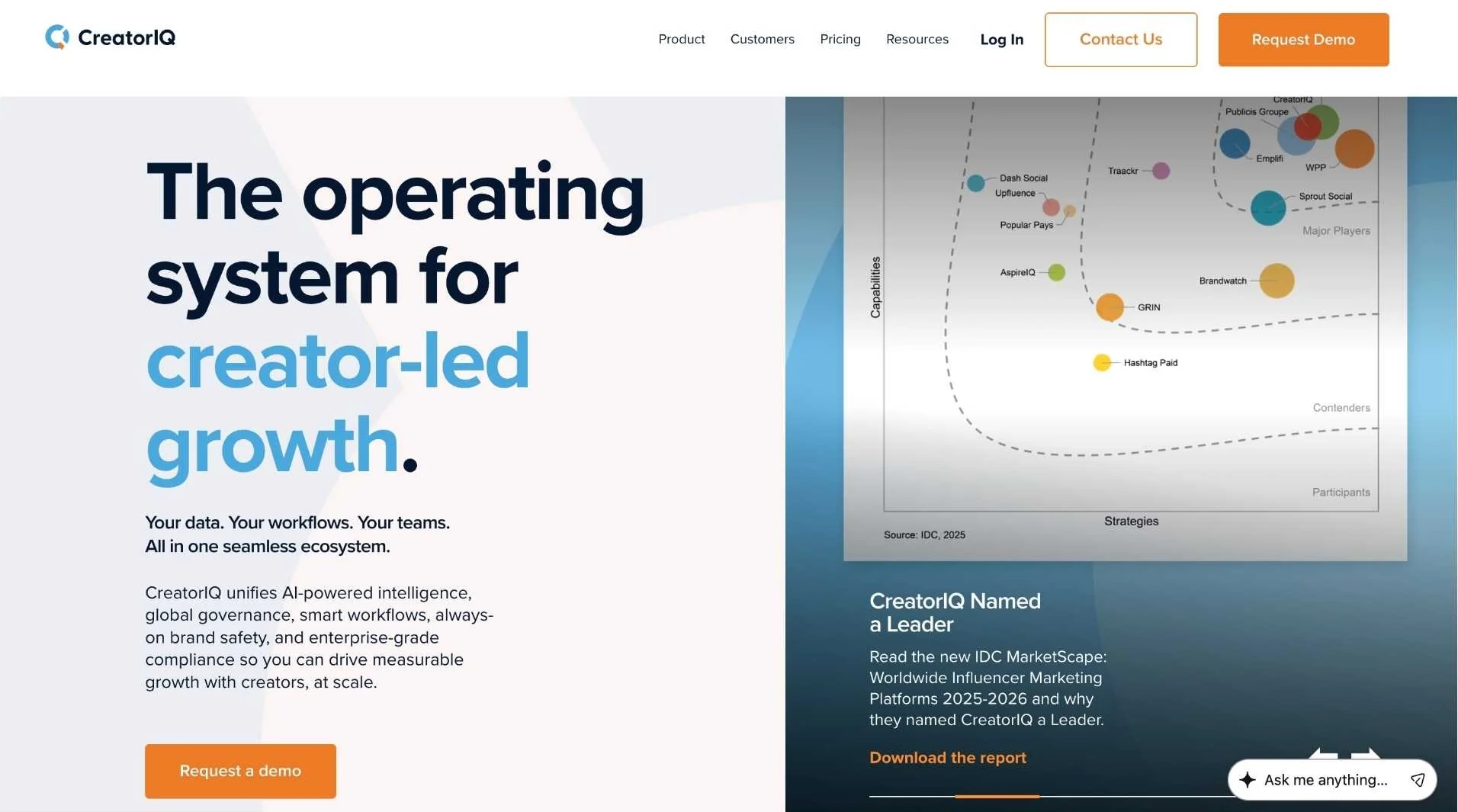
CreatorIQ is an enterprise creator marketing platform built for large brands and global teams that need reliable data, multi-market workflows, and advanced reporting. The platform is particularly well known for its direct social platform relationships, strong analytics, and support infrastructure, and it has recently expanded BenchmarkIQ and CreatorIQ Pay to improve global benchmarking and creator payments. For brands managing complex approval flows, executive reporting, and multinational programs, CreatorIQ is one of the most enterprise-focused alternatives to Influencer Hero.
Key Features
• Advanced creator discovery: CreatorIQ supports discovery across major social platforms using filters for demographics, audience attributes, content topics, brand mentions, and semantic AI search.
• Private creator CRM: Teams can store creators, add tags and notes, track past campaigns, and manage outreach from a centralized CRM.
• Campaign setup and approval workflows: The platform supports campaign templates, creator-specific deliverables, briefs, and shareable one-sheet approvals for stakeholders.
• Custom reporting and live dashboards: CreatorIQ offers customizable dashboards, live reporting links, creator-level insights, and executive-friendly views.
• Creator payments and compliance: CreatorIQ Pay streamlines payments, tax handling, and compliance for creator programs at enterprise scale.
• Competitive benchmarking: BenchmarkIQ gives brands market and competitor benchmarking across multiple geographies.
• API and data exchange: ExchangeIQ and the CreatorIQ API help teams sync creator data into internal systems, BI tools, and custom workflows.
Pricing
There are different plans:
• Basic Plan: Starts at $35,000/year. Includes 1,000 contact creators per month
• Standard Plan: Starts at $50,000/year. Includes 2,500 contact creators per month
• Professional Plan: Starts at $90,000/year. Includes 5,000 contact creators per month
• Enterprise Plan: Starts at $200,000/year. Includes 7,500 contact creators per month
Reviews
4.4/5.0 (Capterra)
Pros
• BenchmarkIQ is a notable recent addition: CreatorIQ has recently expanded BenchmarkIQ to give global brands deeper competitive measurement across more markets.
• Standardized metrics are a strong differentiator: CreatorIQ introduced a standardized metrics suite to make creator performance more comparable and reporting more consistent.
• CreatorIQ Pay is built for global operations: The platform now supports broader global payment coverage, local currencies, and finance-ready controls for large international teams.
Cons
• Expensive for most DTC teams: CreatorIQ’s pricing is clearly enterprise-oriented and often well above the range smaller brands want to spend.
• Annual-only contracts reduce flexibility: There is no lightweight monthly entry point for brands still testing workflow fit.
• Some reporting and discovery workflows still frustrate users: Common friction points include occasional data freshness issues, search limitations, and heavier reporting processes than teams expect.
Integrations
• Shopify: Tracks product gifting, shipping details, and creator-linked commerce activity.
• Meta: Pulls real-time platform data into campaign and creator reporting.
• TikTok: Supports real-time creator reporting and is part of CreatorIQ’s direct platform data relationships.
• YouTube: Feeds campaign analytics and creator insights through direct API integrations.
• Custom CRM / BI stack via ExchangeIQ API: Lets enterprise teams sync CreatorIQ data with internal tools, data warehouses, and business intelligence systems.
Influencer Hero vs CreatorIQ
CreatorIQ and Influencer Hero serve very different buyer profiles. CreatorIQ is built for enterprise teams that need governance, global payment operations, custom reporting, and direct social platform data relationships. Influencer Hero is more practical for growing DTC teams that want transparent pricing, faster onboarding, and campaign automation without enterprise overhead. CreatorIQ is much stronger on benchmarking, executive reporting, and international program infrastructure, while Influencer Hero is stronger on accessibility, packaged pricing, and outreach-led execution.
Brands that need multi-market approvals and finance-grade operations will usually lean CreatorIQ; brands that want to move quickly with creator discovery, outreach, CRM, and affiliate workflows at a lower starting price are more likely to prefer Influencer Hero.
Statusphere
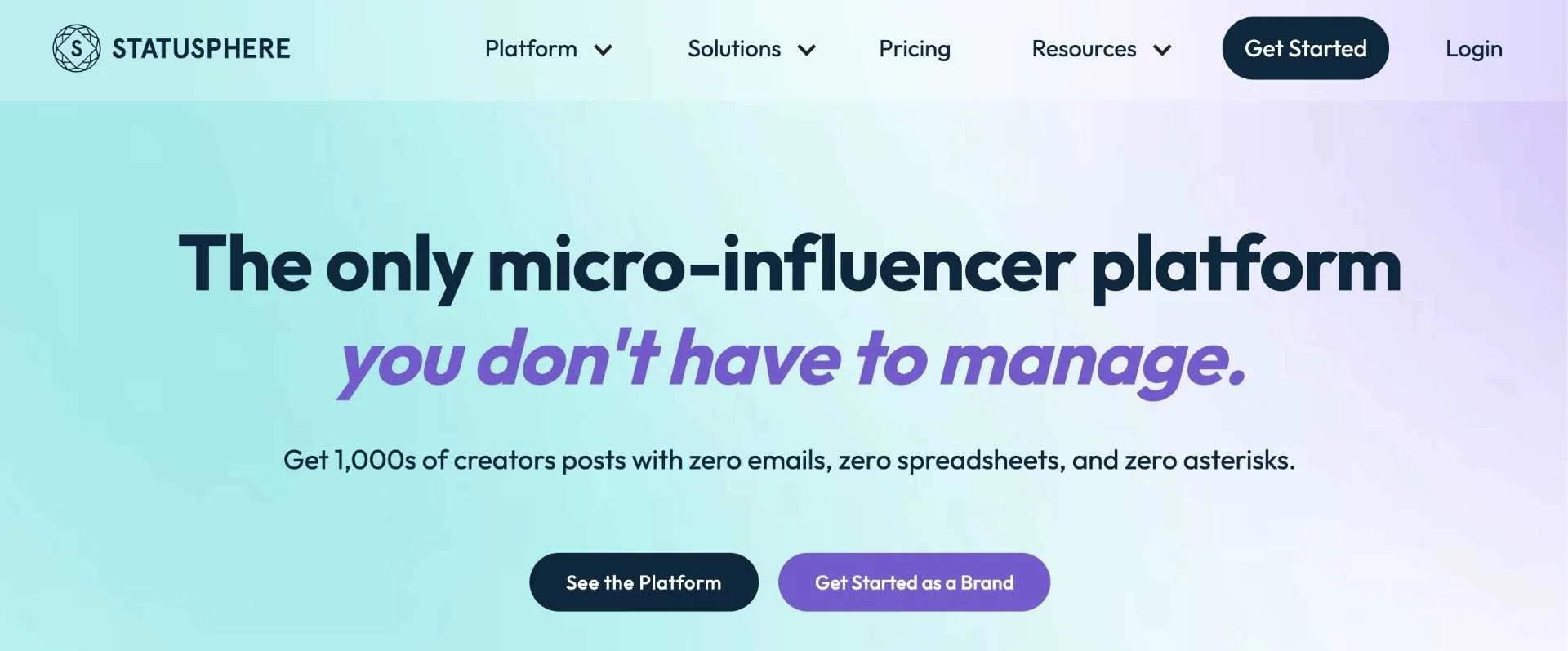
Statusphere is a micro-influencer platform designed for brands that want a much more hands-off way to generate creator content at scale. Instead of operating like a traditional influencer database and outreach CRM, Statusphere emphasizes automated matchmaking, logistics, product fulfillment, guaranteed posts, and built-in content rights. The platform is especially appealing to brands that want thousands of UGC-style creator posts without building a large in-house influencer operations function.
Key Features
• Automated creator matching: Statusphere uses first-party creator data and AI-driven matching to connect brands with vetted nano and micro creators.
• Hands-off campaign execution: The platform handles recruiting, contracting, briefing, content review, creator payments, and much of the campaign logistics automatically.
• Guaranteed posts and built-in content rights: Statusphere’s core promise is predictable content output with repurposing rights included.
• Shipping and fulfillment support: The company operates fulfillment workflows for product seeding, creator checkout, custom kitting, and fast shipments.
• Campaign dashboard and reporting: Teams can monitor pending posts, aggregate reach and engagement, trending content, and download reports from the dashboard.
• Paid media readiness: Statusphere supports rights-ready content and one-click ad code workflows for TikTok Spark Ads.
• Social SEO and scale: The platform also increasingly positions creator campaigns as a way to improve discoverability across TikTok and Instagram search.
Pricing
• Custom pricing: Statusphere does not publish fixed plan tiers.
• Starting point: Initial investments start at $10,000 and pricing is customized based on creator volume, niche, product type, and campaign requirements.
• Scaling model: Statusphere uses a credits system that can be applied to creator actions such as TikTok posts, product seeding, or YouTube Shorts.
Reviews
4.7/5.0 (G2)
Pros
• StevieOps is a clear differentiator: Statusphere is leaning hard into its AI campaign operator, which automates much of the execution work that brands usually handle manually.
• Built-in rights and guaranteed posts reduce friction: For brands prioritizing content output over relationship-heavy influencer management, guaranteed deliverables and built-in usage rights are a major advantage.
• Fast TikTok ad amplification workflows: Its newer Spark Ad code workflows make it easier to turn creator content into paid media faster.
Cons
• Less control over creator selection: Brands looking to hand-pick every creator may find the model too managed and matchmaking-driven.
• Campaign timing is less flexible than DIY platforms: Reviews note structured start dates and a more process-driven rollout model.
• Public integrations are less extensive: Statusphere focuses more on owning execution end to end than on offering a broad native integrations marketplace.
Integrations
• TikTok: Supports instant Spark Ad codes so brands can amplify creator content without long back-and-forth.
• Instagram: Supports large-scale creator campaigns and Social SEO-style discoverability across Instagram content.
• YouTube Shorts: Statusphere’s credits system can be used for YouTube Shorts creator actions.
• Amazon creator programs: The platform publicly promotes Amazon-focused creator campaign use cases.
• Shopify-oriented product seeding workflows: Statusphere publicly highlights support for campaigns that drive traffic and sales for Shopify brands, though it does not market a broad app marketplace the way other platforms do.
Influencer Hero vs Statusphere
Statusphere is very different from Influencer Hero. Influencer Hero is a classic all-in-one platform where your team controls discovery, outreach, CRM, gifting, and campaign execution directly. Statusphere is much more managed and automation-led, with the platform handling recruiting, logistics, fulfillment, and a large share of execution. That makes Statusphere stronger for brands that want hands-off UGC volume at scale, while Influencer Hero is better for teams that want direct control over creator selection, outreach sequences, and campaign workflows. Statusphere also emphasizes guaranteed posts and built-in content rights, whereas Influencer Hero is more flexible for broader influencer, affiliate, and CRM use cases.
If your goal is scale with less internal bandwidth, Statusphere has a strong case; if your goal is precision, outreach control, and structured relationship management, Influencer Hero is the better fit.
NeoReach
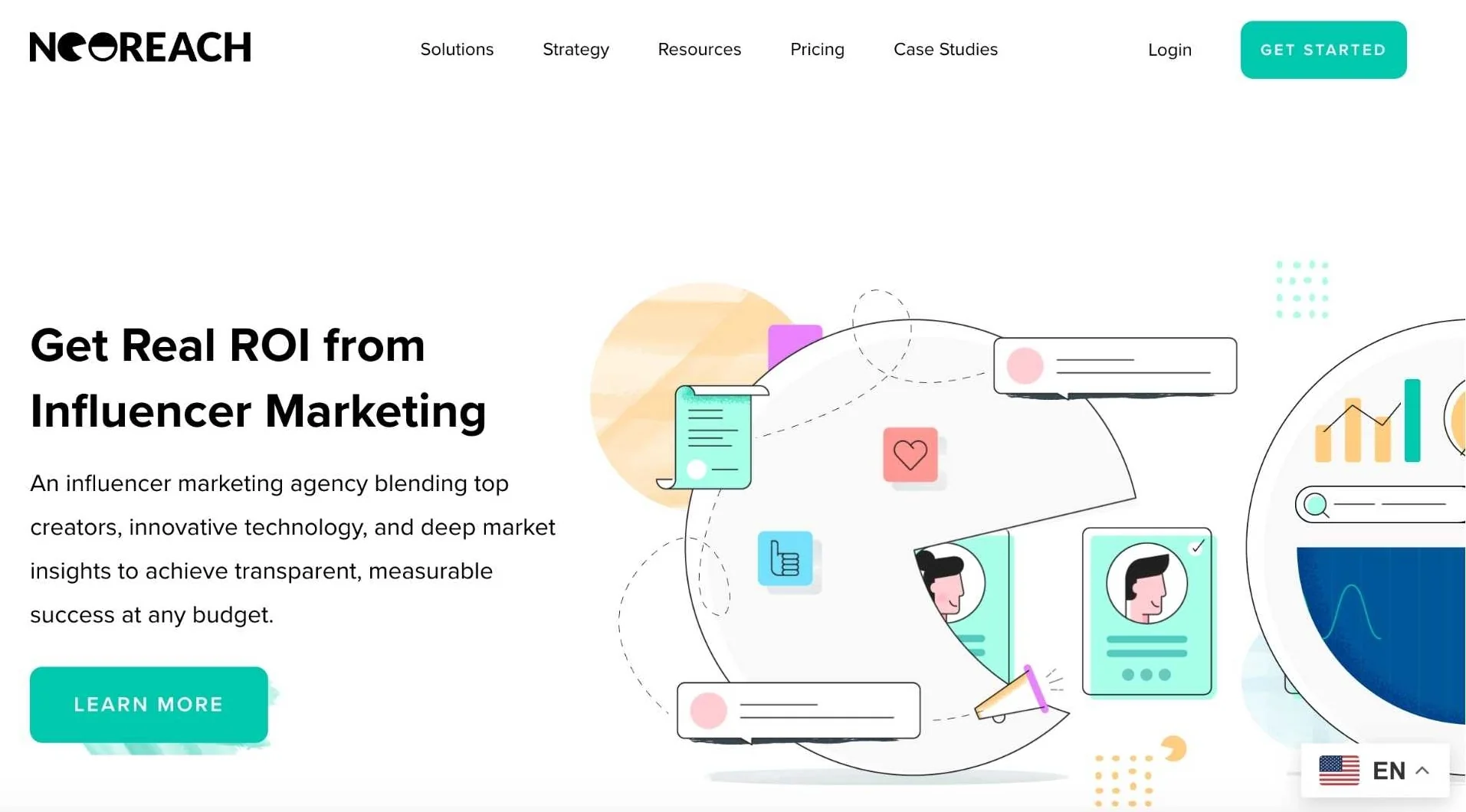
NeoReach combines influencer marketing software, API infrastructure, fraud detection, and managed services for brands that want both technology and hands-on campaign support. The company positions itself as a tech-enabled influencer marketing partner for large-scale programs, with software for campaign management and additional services for paid media, logistics, and strategy. For brands that want more than just a SaaS dashboard and may also need agency-style execution, NeoReach sits in a slightly different category from many self-serve tools.
Key Features
• Influencer discovery and analytics: NeoReach provides access to data and analytics on more than 5 million influencers for search, management, and campaign tracking.
• Campaign management software: The platform supports campaign tracking, lists, unlimited campaigns, exportable influencers, and detailed audience demographics.
• Managed services option: Brands can also use NeoReach for full-service strategy, recruitment, activation, and reporting.
• Fraud detection: NeoReach offers a dedicated fraud detection API to help assess audience authenticity and detect suspicious engagement patterns.
• API access and custom data delivery: Enterprise teams can plug NeoReach data into internal workflows and dashboards through its API and 400+ endpoints.
• Paid media amplification: NeoReach also supports paid social amplification and performance-driven influencer ads across major social platforms.
• Logistics and creator payments: Managed-service packages include shipping, contracts, licensing, compliance, and influencer payments.
Pricing
• Pricing model: NeoReach uses custom pricing and its official pricing page routes prospects to sales for both managed campaigns and platform/API access.
• Official public packaging: NeoReach publicly distinguishes Influencer Campaigns (managed service) and Platform & API offerings.
• Starting price (third-party listing): Capterra lists a starting price of $399/user/month, though NeoReach’s own site does not show a public rate card.
Reviews
4.5/5.0 (G2)
Pros
• Strong API and data infrastructure: NeoReach’s API and 400+ endpoints make it especially interesting for teams that want creator data inside their own internal tools or analytics environments.
• Fraud detection is a real differentiator: The dedicated fraud detection API is more explicit and productized than what many influencer platforms offer.
• Tech plus managed services flexibility: Brands can use NeoReach as software, as a managed service, or as an API layer, which gives it broader deployment flexibility than many pure SaaS alternatives.
Cons
• Pricing transparency is limited: NeoReach requires a sales conversation for most serious evaluations, which makes early comparison harder.
• The interface can feel clunky: Some reviewers call out slower loading times and room for improvement in the search experience.
• Less suited to tight budgets: Review feedback also points to pricing being harder to justify for smaller teams.
Integrations
• NeoReach API: Feeds creator, audience, sponsorship, hashtag, and trend data into internal dashboards and workflows.
• Fraud Detection API: Adds audience-authenticity analysis to influencer vetting workflows.
• Facebook / Instagram / TikTok / Snapchat paid media: Supports influencer-driven paid social amplification across major ad channels.
• Client Portal: Gives brands a dedicated interface to manage influencer programs.
• Creator Portal: Gives creators a dedicated environment tied to payments and collaboration workflows.
Influencer Hero vs NeoReach
NeoReach and Influencer Hero overlap on core campaign management, but they are built around different operating models. Influencer Hero is more of a packaged all-in-one SaaS platform for growing brands that want discovery, outreach, CRM, affiliate tracking, and reporting under one roof with transparent starting plans. NeoReach is more enterprise and infrastructure-oriented, with custom pricing, API depth, fraud detection, and a stronger bridge between software and managed services. NeoReach is the better fit when internal data systems, custom analytics, or agency-style support matter most. Influencer Hero is usually the better fit for DTC teams that want to get up and running faster with structured outreach and CRM workflows.
If you want a creator operations platform, Influencer Hero is simpler; if you want software plus enterprise data plumbing, NeoReach has the edge.


Lefty
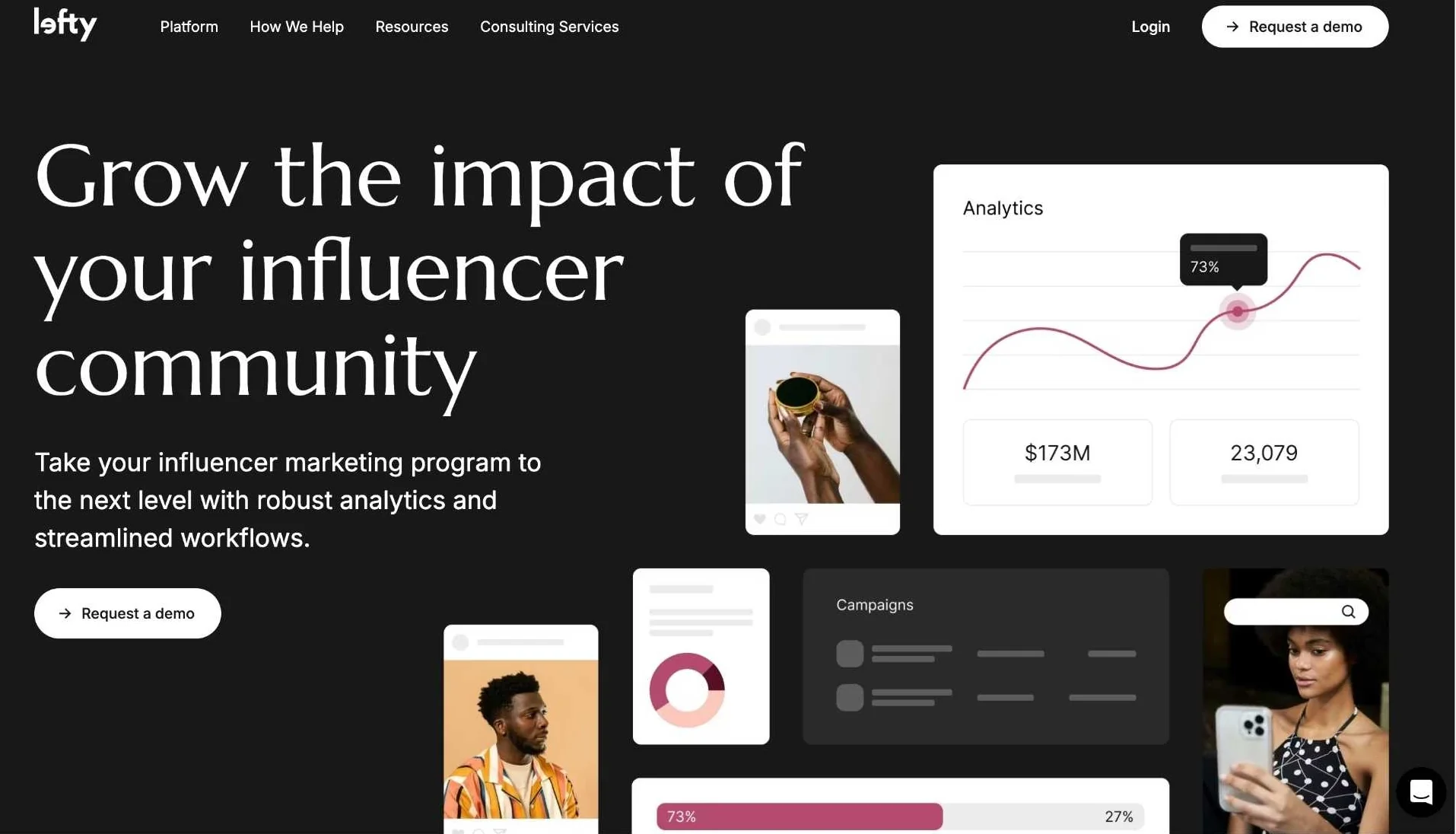
Lefty is an influencer marketing platform built for brands that want to centralize creator discovery, campaign execution, reporting, and relationship management in one system. Its positioning is especially strong with fashion, beauty, and lifestyle brands, and recent product updates show a clear push toward deeper eCommerce workflows, AI-powered analysis, and more practical outreach tools.
Key Features
• Influencer discovery and qualification: Lefty helps teams find creators from a large database of qualified profiles and evaluate them with audience, performance, and campaign-fit data before outreach.
• Campaign management and forecasting: The platform brings discovery, planning, gifting, reporting, and performance evaluation into one workflow, with forecasting tools that help teams estimate likely campaign results before launch.
• Direct emailing inside the platform: Lefty now supports direct emailing through connected inboxes, so brands can run bulk or one-to-one outreach, send attachments, and keep conversation history centralized.
• One-click gifting and product sync: Brands can connect their commerce stack, sync product catalogs, and send gifts directly from their store with live inventory visibility instead of managing seeding in spreadsheets.
• Payments workflow: Lefty supports creator payments through a native Stripe integration, helping teams track transactions and manage spend more cleanly.
• AI-driven analysis: Lefty has added AI capabilities built on computer vision and large language models to improve visual analysis, prediction, and data interpretation across creator programs.
Pricing
• Starting Price: ~€590 per month.
• Pro Plan: ~€990/month, including 2 users, 5 campaigns, and unlimited reports.
• Premium Plan: ~€1,690/month, which adds a dedicated manager.
• Premium+ Plan: ~€3,490/month for 10 users and 25 campaigns.
Reviews
4.7/5.0 (G2)
Pros
• New direct emailing workflow: Lefty’s newer email feature is a meaningful upgrade because it replaces fragmented outreach with Gmail and Outlook-connected communication inside the platform.
• Stronger eCommerce operations: Recent updates added native product sync and gifting across Shopify, Salesforce Commerce Cloud, and Magento, making Lefty more compelling for product-seeding-heavy brands.
• Expanded AI capabilities: Lefty is actively adding AI features for image analysis, prediction, and deeper creator evaluation, which gives it a more data-forward angle than many legacy influencer tools.
Cons
• Email coverage is still improving: Outreach is stronger than before, but some teams still want broader email availability across creator profiles.
• Pricing is not especially transparent: Most buyers still need a demo or sales conversation to understand full costs, which makes early comparisons harder.
• Best fit leans toward established lifestyle brands: Lefty is polished and capable, but its positioning and workflow depth make it a stronger fit for brands running more structured programs than for very small teams doing occasional campaigns. This is an inference based on its enterprise-style feature set, review mix, and client positioning.
Integrations
• Shopify: Syncs your product catalog, inventory, and gifting workflows so you can seed products directly from your store.
• Salesforce Commerce Cloud: Connects storefront data to Lefty for product gifting and multi-store creator operations.
• Magento: Lets brands connect Magento stores for catalog sync and product seeding inside influencer campaigns.
• Gmail: Powers direct creator outreach from your connected inbox while keeping communication tracked in Lefty.
• Outlook: Supports the same integrated outreach workflow for teams using Microsoft email.
Influencer Hero vs Lefty
Influencer Hero and Lefty both cover discovery, outreach, campaign tracking, and CRM, but they lean in different directions. Influencer Hero is more D2C-generalist, with stronger emphasis on AI-powered outreach automation, affiliate tracking, and transparent packaged pricing. Lefty feels more tailored to lifestyle and fashion-led brands, with particularly strong reporting, forecasting, and newer eCommerce gifting workflows.
Influencer Hero is usually the better fit for brands that want structured CRM automation and personalized outreach at scale, while Lefty stands out more for brand teams that prioritize campaign visibility, forecasting, and store-connected gifting. Lefty now has stronger built-in emailing than before, but Influencer Hero still feels more outreach-first overall.
Insense
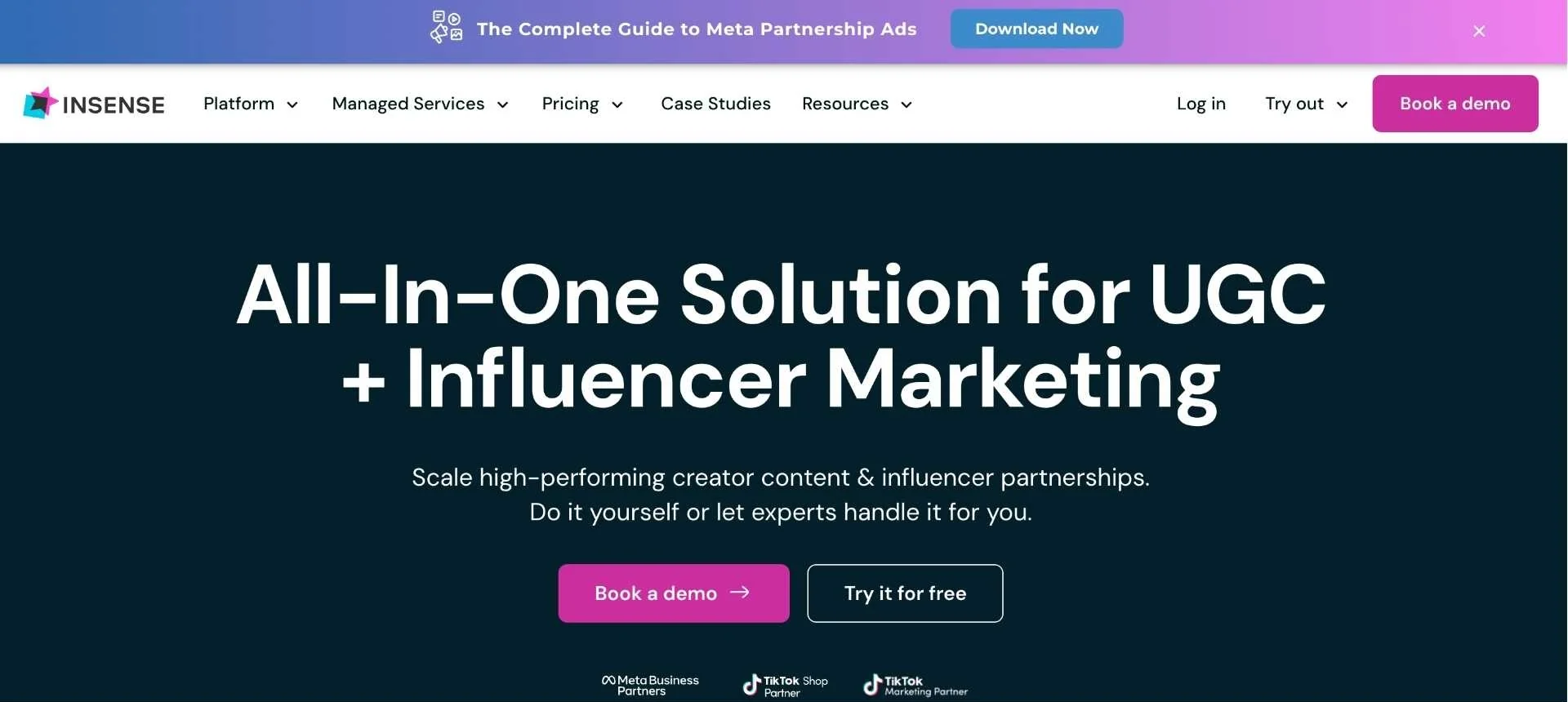
Insense is an all-in-one creator marketing platform focused on UGC production, influencer collaborations, creator ads, and paid social workflows. It is especially relevant for D2C brands that want to source creators quickly, run product seeding or influencer-post campaigns, and turn creator content into Meta Partnership Ads, TikTok Spark Ads, and TikTok Shop campaigns. The platform also offers both self-serve software and managed services, which gives brands more flexibility depending on internal bandwidth.
Key Features
• Vetted creator marketplace: Insense gives brands access to a vetted creator marketplace for UGC, influencer posts, and product seeding campaigns.
• Influencer outreach tool: The platform includes AI-personalized outreach to build creator lists, run outreach campaigns at scale, and track replies from one dashboard.
• Direct chat and campaign management: Brands can manage briefs, messaging, campaign progress, creator approvals, and deliverables without leaving the platform.
• Automated contracts, payments, and usage rights: Insense automates legal agreements, payment workflows, and content rights handling, including perpetual digital rights once content is approved.
• Paid social activation: Insense supports Meta Partnership Ads, TikTok Spark Ads, TikTok Shop campaigns, and affiliate workflows, which makes it stronger than many discovery-first tools for creator ad execution.
• Managed services option: Brands can use the self-serve platform, a managed services team, or a mix of both depending on how hands-on they want to be.
Pricing
• Trial: from $650/month, for one month, then upgrades to a quarterly plan unless you opt out. Includes up to 1 campaign and up to 10 creators to hire.
• Brand: from $500/month billed quarterly ($1,500 quarterly), or $400/month billed annually ($4,800/year). Includes unlimited campaigns and unlimited creators to hire.
• Agency: from $800/month billed quarterly ($2,400 quarterly), or $640/month billed annually ($7,680/year). Includes unlimited campaigns, unlimited creators, and support for multiple brands.
• Managed services: custom pricing.
• Additional costs: creator payments are separate, and marketplace fees range from 20% on Trial, 10% on Brand, and 7% on Agency.
Reviews
4.5/5.0 (G2)
Pros
• Very strong creator ads workflow: Insense is one of the better options for brands that care as much about paid social creative as they do about influencer collaboration, thanks to built-in support for Meta Partnership Ads, TikTok Spark Ads, and TikTok Shop.
• Flexible self-serve plus managed services model: Brands can keep control in-house or lean on Insense’s team for strategy and execution, which is useful for lean D2C teams.
• Integrated rights and creator ops: Automated agreements, payments, and perpetual digital rights reduce a lot of the manual friction that usually slows down UGC and ad-creative workflows.
Cons
• Creator costs are not included in platform pricing: Brands need to budget separately for creator payments, plus marketplace fees, which can make total costs higher than the base subscription suggests.
• Paid plans renew on multi-month terms: Even though entry pricing is accessible, the main self-serve plans are built around quarterly or annual billing rather than flexible month-to-month software.
• Best fit is narrower than a full enterprise CRM platform: Insense is excellent for UGC, creator ads, and seeding, but brands looking for deeper long-term influencer CRM, multi-region governance, or broader channel coverage may outgrow it. This is an inference from its product positioning and public feature mix.
Integrations
• Shopify: Connects product seeding, creator gifting, and commerce workflows to your store.
• TikTok Shop: Supports affiliate and creator campaigns built around TikTok Shop sales.
• Meta: Powers Meta Partnership Ads connections directly inside creator campaigns.
• TikTok: Supports Spark Ads, creator discovery, and campaign activation on TikTok.
• Gmail: Connects email workflows to the platform for creator communication and outreach.
Influencer Hero vs Insense
Influencer Hero is broader as an all-in-one influencer CRM for discovery, outreach, affiliate tracking, and campaign operations, while Insense is more specialized around UGC production, creator ads, and product seeding. If your brand mainly wants to scale paid social creative through creators, Insense has a clearer advantage with Meta Partnership Ads, TikTok Spark Ads, and TikTok Shop workflows. Influencer Hero is stronger for relationship management, structured campaign boards, and personalized outreach automation across larger creator programs. Insense is also more flexible if you want a managed-services option, while Influencer Hero is more software-led.
For D2C brands prioritizing creator content for ads, Insense can be the sharper fit; for brands prioritizing CRM depth and end-to-end influencer operations, Influencer Hero is usually stronger.
Kolsquare
Kolsquare is a data-driven influencer marketing platform with especially strong traction in Europe. It is designed to help brands and agencies discover creators, manage campaigns, benchmark competitors, and measure ROI from first contact through final reporting. The platform also leans heavily into responsible influence, official Meta data, and AI-powered search, which makes it appealing to teams that care about measurement quality and compliance as much as creator discovery.
Key Features
• Creator discovery across major networks: Kolsquare supports discovery across Instagram, TikTok, YouTube, Facebook, X, and Snapchat with AI-powered search, semantic queries, and 100+ filters.
• Audience and credibility insights: Brands can evaluate creator demographics, engagement, credibility, overlap, and performance before activation.
• Influencer CRM and campaign management: Kolsquare includes IRM tools, custom fields, messaging integration, tracking links, and validation workflows for casting and content approvals.
• Competitive benchmarking: The platform includes listening and benchmark dashboards that let teams compare share of voice, EMV, engagement, content volume, and top-performing creators across brands.
• Automated reporting: Kolsquare offers customizable exports and dashboards, including PowerPoint, Excel, and online formats for stakeholder reporting.
• Official Instagram data connection: Its Instagram Connection module, powered by Meta’s official API, adds more reliable performance data for activation tracking.
Pricing
• Discovery: starts at €500/month.
• Listening: custom pricing.
• Enterprise: custom pricing.
• Kolsquare’s pricing is described as flexible and tailor-made, with special pricing for some nonprofits, B Corps, and early-stage companies.
Reviews
4.5/5.0 (G2)
Pros
• Official Meta-powered Instagram Connection: This newer module is one of Kolsquare’s strongest differentiators because it gives teams direct campaign data through Meta’s API rather than relying only on modeled estimates.
• Strong competitive intelligence: Kolsquare stands out for benchmarking and listening, making it especially useful for brands that want to track their market and not just run campaigns.
• Responsible influence positioning: Kolsquare’s focus on transparency, credibility, and ethical collaboration is more explicit than many alternatives and will matter to brands operating in regulated or reputation-sensitive categories.
Cons
• Deeper plans require a sales conversation: The entry point is public, but brands usually need custom scoping for broader listening or enterprise needs.
• Niche creator search can still be hit or miss: Some users report limitations when searching for very specific or less mainstream creator profiles.
• Better for data-led teams than lightweight outreach use cases: Kolsquare is strong on analytics and benchmarking, but brands mainly looking for simple outreach automation may find it heavier than necessary. This is an inference from its positioning and feature mix.
Integrations
• Shopify: Lets brands generate promo codes, track orders, and connect influencer activity to store revenue.
• Gmail: Supports creator communication and contact tracking directly inside the platform.
• Meta / Instagram Connection: Pulls official Instagram campaign data into Kolsquare for more accurate activation tracking.
• API / internal data stack: Enterprise plans include API access to sync Kolsquare with other tools and data systems.
• Chrome extension: The free extension helps teams analyze creators while browsing and supports faster discovery workflows.
Influencer Hero vs Kolsquare
Influencer Hero is more outreach- and automation-centric, while Kolsquare is more measurement- and benchmarking-centric. Influencer Hero is the better fit for brands that want packaged pricing, structured campaign boards, and AI-enhanced outreach flows; Kolsquare stands out for official Meta data, competitive intelligence, and data-rich reporting. Kolsquare also has a stronger European identity and a clearer emphasis on responsible influence.
If your team needs to justify spend with better benchmark data and reporting, Kolsquare has an edge. If your team cares more about scaling outreach, managing creator pipelines, and tying campaigns to gifting and affiliate workflows in a practical D2C setup, Influencer Hero is usually the more direct option.
Skeepers

Skeepers Influencer Marketing is a creator gifting and UGC-focused platform built around micro and nano influencers. It is part of the broader Skeepers ecosystem for reviews, UGC, and community-driven commerce, and its influencer product is designed to help brands automate gifting campaigns, collect licensed content, and generate product reviews and social posts that can be reused across marketing channels. It is particularly relevant for brands that want volume, authenticity, and reusable content rather than a heavy enterprise influencer CRM.
Key Features
• Micro and nano creator community: Skeepers gives brands access to a large creator community focused on micro and nano influencers. Public pages reference both 400k+ creators and 100,000+ micro/nano creators depending on market context and product page.
• AI-powered matching: The platform uses AI-enhanced profile matching to connect brands with creators likely to fit the brief and target audience.
• Automated gifting workflows: Skeepers is built to automate gifting campaigns so brands can send products in exchange for content, reviews, and social visibility at scale.
• Royalty-free / reusable content: Brands receive authentic creator content and product reviews that can be reused across channels, which is a core part of the value proposition.
• Real-time analytics: Skeepers includes campaign tracking and performance analytics for ongoing optimization.
• Connection to broader UGC and community stack: The influencer product sits alongside Skeepers’ reviews, communities, and UGC ecosystem, which can be attractive for brands consolidating social proof and creator content.
Pricing
• Skeepers does not publicly list a detailed pricing table for Influencer Marketing on its main site.
• Capterra lists a starting price of €1,250/month and says no free trial is available.
Reviews
4.3/5.0 (Capterra)
Pros
• Strong gifting-first workflow: Skeepers is purpose-built for automated gifting at scale, which makes it especially attractive for product-led D2C campaigns.
• Reusable licensed content: The platform is designed to generate content and reviews that brands can repurpose across marketing channels, not just social feeds.
• Connected UGC ecosystem: Because Skeepers also spans reviews, communities, and broader UGC tools, it can support more than just influencer activation.
Cons
• No free trial and a higher starting point: The public entry price is not low, and there is no free trial for teams wanting a lighter evaluation path.
• Creator quality still requires filtering: Reviews point to recurring issues with irrelevant or lower-quality profiles and the need for better filtering in some campaigns.
• Reporting and workflow polish can improve: Users mention bugs, slowdowns, and a desire for stronger automated reporting and easier monitoring of some content formats.
Integrations
• Instagram: Creators can connect Instagram for campaign participation and content distribution.
• TikTok: Supports TikTok-based creator campaigns and campaign visibility across the platform.
• YouTube: Included among the main channels supported for influencer campaigns.
• Shopify: Skeepers offers Shopify connectivity in its ecosystem for syncing products and deploying content widgets.
• CRM / loyalty tools via Brand Communities: Skeepers says its community platform can connect with D2C tools, CRM systems, loyalty programs, and social networks.
Influencer Hero vs Skeepers
Influencer Hero is the more classic all-in-one influencer operations platform, while Skeepers is more specialized around gifting, micro/nano creators, and reusable UGC. If your goal is running broader influencer programs with discovery, outreach automation, affiliate tracking, and CRM depth, Influencer Hero is the stronger fit. If your goal is to automate gifting campaigns and collect licensed content and reviews at scale, Skeepers has a clearer advantage. Skeepers also fits naturally into a wider UGC and social-proof stack, whereas Influencer Hero is more focused on influencer program execution itself.
For D2C brands that mainly want scalable product seeding and content generation, Skeepers can work well; for brands that want more control over outreach and relationship management, Influencer Hero is the better match.
Storyclash

Storyclash is an AI-powered influencer marketing platform focused on creator discovery, campaign tracking, brand intelligence, and ROI measurement. It is particularly well known for content-based discovery, competitive analysis, and its ability to save and analyze Instagram Stories long after they expire. The platform is aimed at brands and agencies that want to scale influencer marketing without scaling headcount, and it also offers a modern integrations layer for eCommerce and BI workflows.
Key Features
• AI-powered influencer discovery: Storyclash helps brands find creators by keyword, visual appearance, similarity, and performance data rather than relying only on broad categories or follower counts.
• Brand intelligence and competitor research: The platform lets teams reverse-engineer brand creator strategies, analyze past collaborations, and see which creators competitors are working with.
• Campaign tracking and reporting: Storyclash tracks campaigns, creator content, KPIs, and ROI across platforms and makes reports easy to share.
• Instagram Stories monitoring: One of Storyclash’s signature capabilities is saving and analyzing Instagram Stories for up to a year, which is unusually useful for campaign reporting and competitor research.
• Creator CRM and outreach: The platform includes creator management and outreach tools, including direct email automation through connected providers. (G2)
• Revenue attribution and API access: Storyclash supports Shopify-linked revenue tracking and offers API access for BI dashboards, webhooks, and internal analytics.
Pricing
• Starter: starts at €499/month; built for growing brands; includes AI-powered creator discovery, brand collaboration timeline, Instagram audience data connect, integrated email workflow, creator CRM, and support for major platforms.
• Growth: starts at €999/month; adds ecommerce revenue tracking, discount codes, UTM tracking links, competitor brand insights, campaign management and reporting, budget tracking, and a dedicated account/onboarding manager.
• Scale: starts at €1,899/month; adds advanced competitor and market analytics, extended creator and revenue tracking, brand management workspaces, white-label reports, custom dashboards, data exports, and priority support.
• Enterprise: custom pricing; adds full API access, custom data integrations, SSO, advanced user rights management, custom KPI frameworks, dedicated implementation, and strategic consulting.
• Contract terms: Storyclash states that its plans are based on 12-month subscriptions.
Reviews
4.4 / 5.0 (G2)
Pros
• Content-first AI discovery: Storyclash’s visual and content-based search is one of its clearest differentiators, especially for brands that care about aesthetics and brand fit more than surface-level metrics.
• Exceptional Stories tracking: Saving Instagram Stories for up to a year is a standout capability that few competitors match as well.
• Strong BI and eCommerce connectivity: Storyclash’s newer integrations layer makes it easier to connect creator performance with Shopify revenue and external BI tools like Power BI and Tableau.
Cons
• Pricing is still not very transparent: Buyers generally need a demo to understand full costs, and public pricing detail is limited.
• Some features may involve extra charges: Reviews suggest frustration with certain add-on style costs for advanced functionality.
• Search workflow can still be quirky at times: Some users mention friction when the discovery interface shifts between search modes during creator research.
Integrations
• Shopify: Syncs order and revenue data into Storyclash so brands can track creator-driven sales and ROI.
• Gmail: Supports influencer outreach directly from Storyclash campaigns through connected email providers.
• Outlook: Enables the same email automation workflow for Microsoft-based teams.
• Power BI: Connects Storyclash creator and campaign data to BI dashboards for real-time reporting.
• Tableau: Lets teams visualize creator, campaign, and revenue data inside Tableau.
Influencer Hero vs Storyclash
Storyclash and Influencer Hero overlap on discovery, outreach, CRM, and reporting, but Storyclash has a sharper edge in content-based discovery, competitor intelligence, and Stories tracking. Influencer Hero is stronger on packaged pricing, CRM automation, and outreach workflows built for operational scale. Storyclash is often the better choice for teams that want to understand the creator landscape, analyze competitors, and find brand-fit creators through visual or content cues. Influencer Hero is usually the better choice for D2C teams that care more about running structured campaigns, managing outreach at volume, and tying programs to gifting and affiliate operations.
If strategy and intelligence matter most, Storyclash stands out; if execution and CRM matter most, Influencer Hero has the advantage.
Final Thoughts on Influencer Hero Alternatives
Influencer Hero offers a strong all-in-one solution for managing creator discovery, outreach, and campaign workflows, but it may not fit every team depending on budget, complexity, or specific use cases. Alternatives like GRIN and Upfluence lean more into eCommerce integrations and affiliate tracking, while platforms such as CreatorIQ and NeoReach cater to enterprise teams with advanced data and global operations. Others like Insense, Skeepers, and Statusphere focus more on UGC, gifting, or hands-off execution, and tools like Kolsquare and Storyclash stand out for analytics and competitive intelligence. The right choice ultimately depends on whether your priority is scaling outreach, improving content production, tracking revenue, or simplifying campaign management.

.png)


.jpg)