

10 Best Influencer Affiliate Software for D2C Brands
Affiliate marketing has become one of the most effective growth channels for direct-to-consumer (D2C) brands looking to scale revenue while maintaining performance-based marketing costs. Global affiliate marketing spending is projected to exceed $15.7 billion in 2026, highlighting how performance partnerships with creators, publishers, and ambassadors are becoming a core acquisition channel for modern eCommerce companies (Statista, 2024). For D2C founders and marketing teams, managing hundreds of creator partnerships, affiliate links, discount codes, and revenue attribution quickly becomes impossible without the right infrastructure. Influencer affiliate software solves this by combining creator discovery, affiliate tracking, commission management, and campaign analytics into one centralized platform that helps brands scale partnerships while maintaining clear ROI visibility.
In this article, we’ll explore some of the best influencer affiliate software platforms for D2C brands, including Impact, Refersion, Upfluence, Influencer Hero, Aspire, Grin, Everflow, SARAL, Tapfiliate, and Afluencer. Each tool offers different capabilities for managing creator partnerships, tracking affiliate revenue, and scaling influencer-driven sales, making them valuable solutions for brands looking to turn creators into measurable performance marketing channels.
Best Influencer Affiliate Software
| TOOL | REVIEWS | BEST FOR | TRIAL INFO | PRICING | ||
|---|---|---|---|---|---|---|
1 |

|
⭐ | Enterprise affiliate partnerships | Book Demo | Pricing | Website |
2 |

|
⭐ | Ecommerce affiliate tracking | Book Demo | Pricing | Website |
3 |

|
⭐ | Influencer discovery | Book Demo | Pricing | Website |
4 |

|
⭐ | Influencer CRM & automation | Book Demo | Pricing | Website |
5 |

|
⭐ | Influencer partnerships | Book Demo | Pricing | Website |
6 |

|
⭐ | DTC creator management | Book Demo | Pricing | Website |
7 |

|
⭐ | Partner & affiliate tracking | Book Demo | Pricing | Website |
8 |

|
⭐ | UGC creator collaborations | Book Demo | Pricing | Website |
9 |

|
⭐ | Affiliate program management | Book Demo | Pricing | Website |
10 |

|
⭐ | Influencer marketplace campaigns | Book Demo | Pricing | Website |
1. Impact
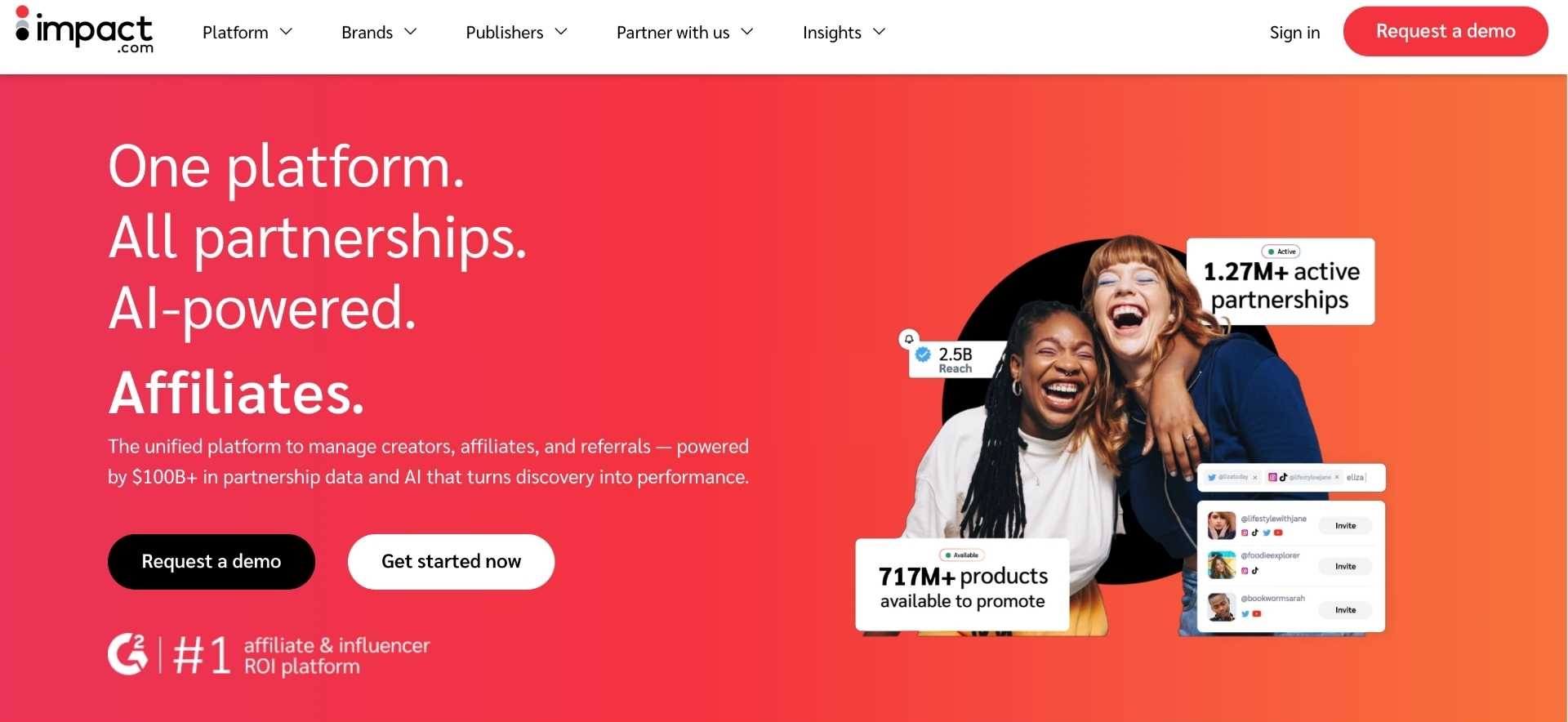
Impact is a partnership management platform that lets D2C brands run affiliate, influencer, and creator programs from one system. For affiliate-focused workflows, it handles partner onboarding, contract terms, link and promo-code tracking, attribution, payouts, and performance reporting across eCommerce stores like Shopify, BigCommerce, WooCommerce, Adobe Commerce, and Squarespace.
Key features:
- Affiliate and creator program management: Run affiliate, influencer, referral, and creator partnerships inside one platform instead of splitting workflows across multiple tools.
- Partner marketplace access: Higher plans include access to Impact’s marketplace, which the company says includes 90,000 partners.
- Promo code and link tracking: Track performance through both affiliate links and codes, which is useful for creator-led D2C campaigns.
- Automated workflows: Pro and above include campaign workflow automation to reduce manual affiliate operations.
- Advanced reporting and attribution: Impact offers 40+ reports on lower tiers, then adds Data Lab, anomaly detection, fraud scoring, and deeper contribution analysis on higher tiers.
- Cross-device and API tracking: Brands with more complex buying journeys can use API-based and cross-device tracking on higher plans.
Pros:
- Strong fit for brands that want affiliate, influencer, and broader partnership tracking in one place.
- Reporting depth is one of its biggest strengths; consistently highlight tracking and reporting as standout benefits.
- Scales well for large D2C programs that need contract flexibility, multi-domain support, and more advanced governance.
Cons:
- It is not a lightweight tool; multiple reviewers describe it as complex and heavier to learn than simpler affiliate apps.
- Cost can be a barrier for smaller brands because pricing starts at $500/month and can scale much higher depending on plan and fees.
- There is also a one-time setup fee, plus partner-driven transaction fees, which can materially change total cost.
Integrations:
- Shopify: Connect a Shopify store to track sales, manage creator programs, and support product gifting and subscription tracking.
- BigCommerce: Use the BigCommerce plugin for online sale tracking inside Impact.
- WooCommerce: Impact’s WooCommerce app is a plug-and-play integration for recruiting, tracking, and managing publishers and creators.
- Adobe Commerce (Magento): Track conversions through API-based integration and manage payouts and reporting for affiliate partners.
- Squarespace: Use a no-code plugin to connect conversion tracking and reporting to a Squarespace store.
Pricing:
Impact’s public pricing starts at $500/month for Essentials, $2,500/month for Pro, and custom pricing for Enterprise. The platform also charges a one-time setup fee, allows annual billing, and applies a 2.5% transaction fee on partner-driven transactions; it does not advertise a standard free trial for brands. Benchmarking-wise, Impact sits in the high price tier relative to most influencer marketing and affiliate platforms, especially once setup and transaction costs are included.
Reviews
4.6/5.0 (G2)
2. Refersion
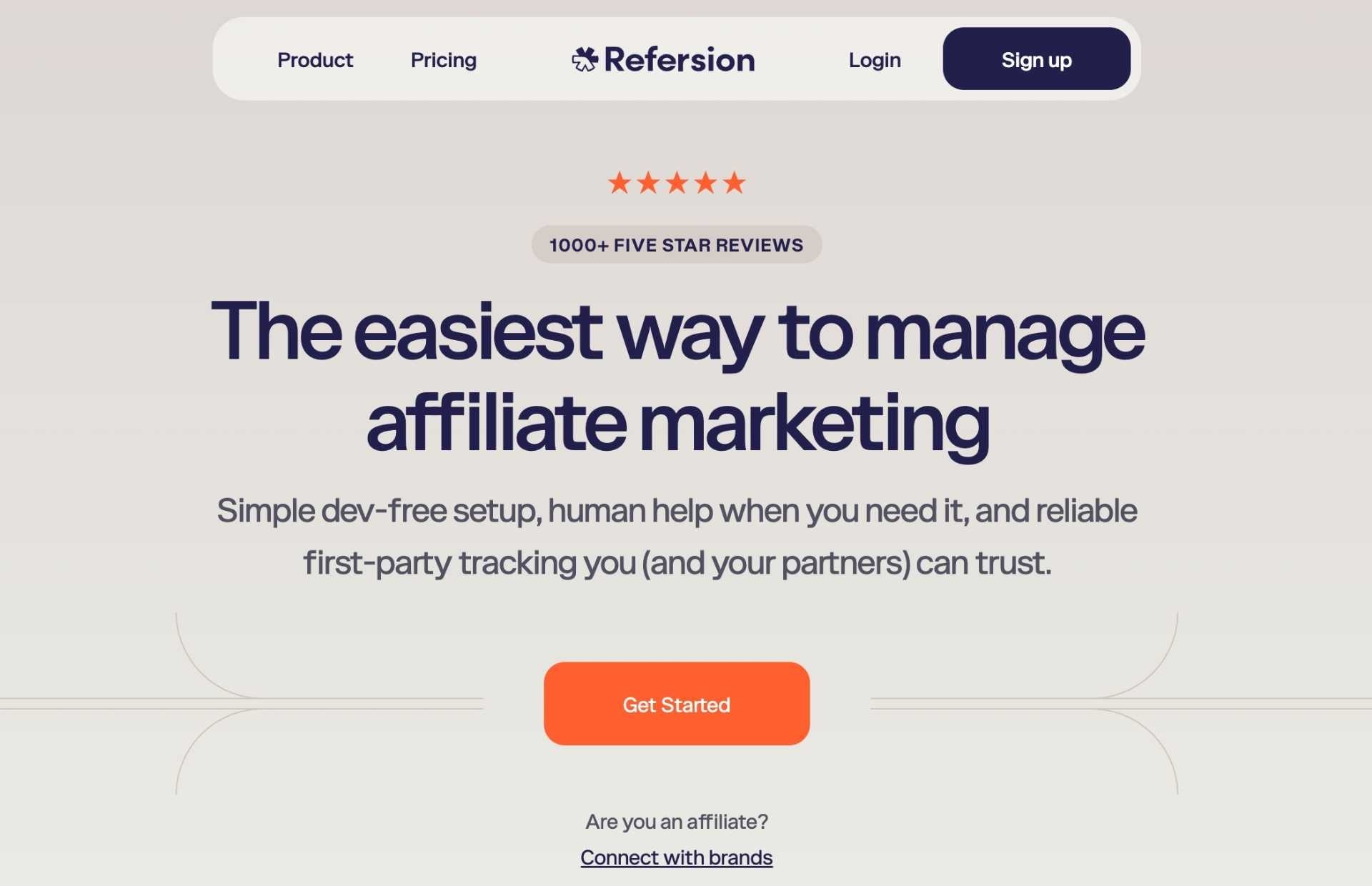
Refersion is an affiliate marketing platform built to help brands manage affiliate, influencer, and ambassador programs with first-party tracking. It focuses on core affiliate operations such as link attribution, commission rules, partner onboarding, and payouts, and is especially visible in the Shopify ecosystem.
Key features:
- First-party affiliate tracking: Refersion tracks affiliate sales using first-party data, which is important for attribution in eCommerce environments.
- Affiliate, influencer, and ambassador management: Brands can manage different partner types in one program structure.
- Commission automation: The platform supports automated payouts and tax form workflows.
- Creator discovery marketplace: Refersion includes marketplace access so creators can apply to programs directly.
- Unlimited affiliates and clicks: Its public positioning emphasizes unlimited affiliates and clicks on plans as brands scale.
- Creative asset support: Help documentation and community discussions show it can host creative assets such as banners for affiliates.
Pros:
- Easier to understand than more enterprise-heavy systems, which makes it attractive for D2C brands launching their first affiliate program.
- Stronger fit for Shopify-centric brands that mainly want affiliate management rather than a full influencer CRM.
- Public pricing is much more accessible than enterprise-first competitors, including a 14-day free trial and lower starting price.
Cons:
- Feature depth is lighter than platforms like Impact if you need advanced attribution, broader partnership management, or enterprise-level analytics.
- Ease of setup is not always best-in-class when compared with newer Shopify affiliate apps, according to G2 comparisons.
- It is primarily an affiliate tool first, so brands wanting stronger influencer discovery, outreach, and relationship workflows may outgrow it.
Integrations:
- Shopify: Connect Refersion to Shopify or Shopify Plus to track conversions, commissions, and affiliate recruitment from your store.
- BigCommerce: Use Refersion to connect affiliate tracking to BigCommerce sales data.
- WooCommerce: Sync affiliate tracking with WooCommerce order activity.
- Magento: Connect Magento stores for affiliate attribution and program management.
- Stripe: Integrate with Stripe as part of Refersion’s broader commerce and payment stack.
Pricing:
Refersion publicly states that plans start at $39/month + 3% of affiliate-generated sales, with lower percentage rates on higher tiers. Refersion’s own content also cites higher Shopify app tiers such as Professional at $69.99/month and Enterprise at $139.99/month, along with a 14-day free trial; in market terms, that places Refersion in the low-to-mid price range relative to most influencer marketing platforms.
Reviews
4.4/5.0 (G2)
3. Upfluence
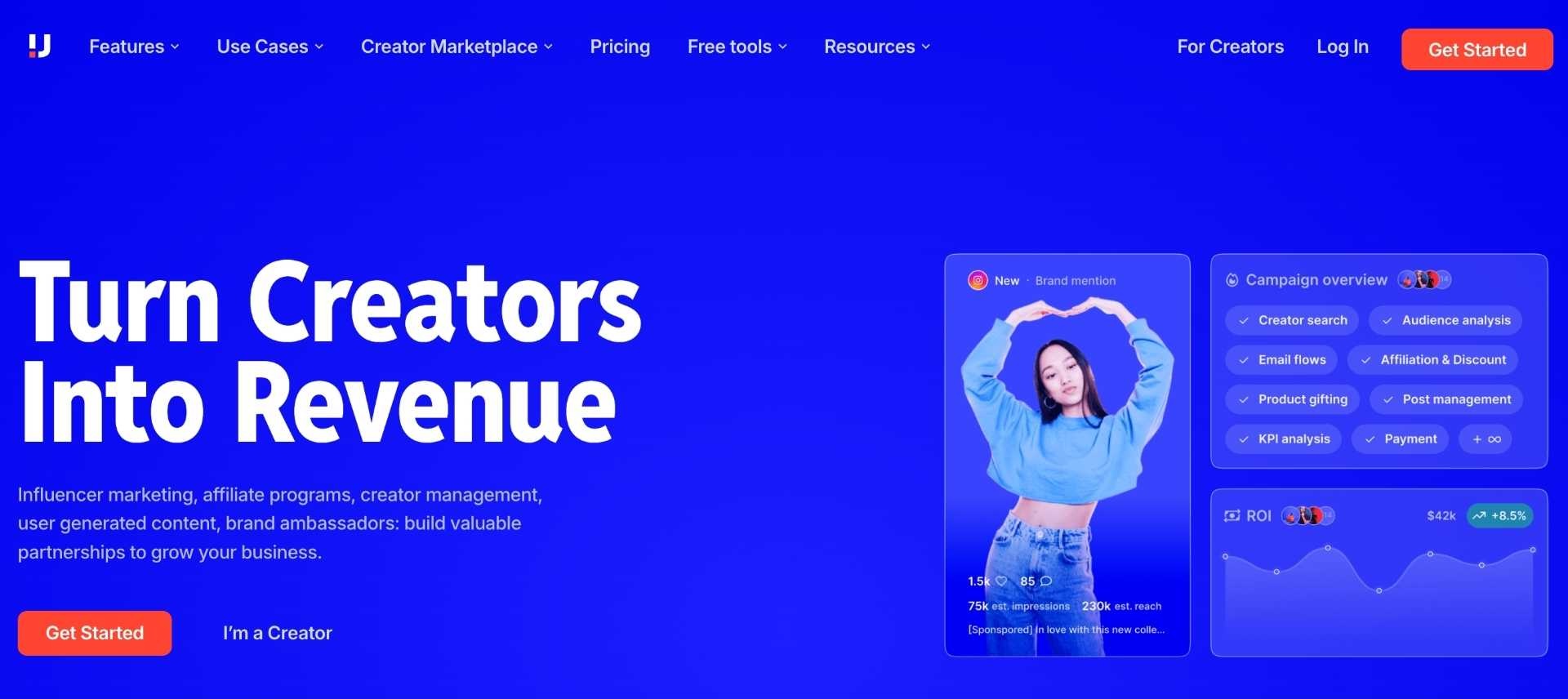
Upfluence combines influencer marketing and affiliate marketing in one platform, with a strong emphasis on eCommerce-native workflows. It helps brands find creators, generate affiliate links and promo codes, ship products, track attributed revenue, and pay creators from one system.
Key features:
- Influencer and affiliate discovery: Upfluence provides a large creator database with advanced filtering for niche, audience, and platform targeting.
- Automated promo code generation: The platform can create custom promotion codes that work with major eCommerce platforms.
- Customer-to-creator identification: Upfluence integrates with CRM and commerce tools to identify influencers inside existing customer or mailing lists.
- Campaign and affiliate management: Brands can manage ambassador programs, gifting, tracking, and creator communication from one tool.
- Payment workflows: Upfluence supports payment integrations, including PayPal and Stripe-powered payment flows.
- API and Chrome extension: It also offers an API and extension for prospecting and workflow support.
Pros:
- Strong fit for eCommerce brands that want influencer discovery and affiliate revenue tracking in the same platform.
- G2 reviews consistently praise the platform’s database depth, filtering, and general efficiency for managing campaigns.
- Upfluence’s eCommerce integrations are a real advantage for Shopify-, WooCommerce-, Magento-, BigCommerce-, and Amazon-heavy brands.
Cons:
- Pricing is not transparent publicly, which makes it harder for buyers to benchmark without booking a sales call.
- Multiple Reddit and forum comments describe it as expensive or mention concerns around contract renewals and overcharging.
- As campaigns scale, some users report clunkier workflows and manual double-checking on reporting or influencer verification.
Integrations:
- Shopify: Track influencer-driven Shopify sales and connect affiliate workflows directly to store data.
- WooCommerce: Identify influencers already purchasing from your WooCommerce store and measure campaign revenue.
- Magento: Create promo-code and affiliate workflows for Magento stores.
- Klaviyo: Enrich CRM records and identify influencers in your mailing lists for dedicated flows.
- PayPal / Upfluence Pay: Handle creator payments through PayPal and Upfluence Pay, which is powered by Stripe.
Pricing:
Mid-to-high. On average plans start around $2,000/month ($24,000 yearly) with no free trial and a relatively inflexible annual commitment.
Reviews:
4.3 / 5.0 (Capterra)
4. Influencer Hero

Influencer Hero is an all-in-one influencer marketing platform designed for D2C and ecommerce brands that want to manage creator campaigns and affiliate marketing programs in one system. The platform combines influencer discovery, outreach automation, gifting, affiliate link and discount code management, sales attribution, and CRM workflows.
This allows brands to run influencer campaigns from discovery to revenue tracking without relying on multiple tools.
Key features:
- Affiliate links and discount code management: Brands can generate affiliate links and discount codes for creators while tracking clicks, conversions, and revenue generated from influencer campaigns.
- Influencer CRM and campaign management: Influencer Hero includes a built-in CRM to manage creator relationships, outreach conversations, follow-ups, campaign stages, and deliverables in one centralized dashboard.
- Influencer discovery across multiple platforms: Discover creators across Instagram, TikTok, YouTube, Facebook, Pinterest, Snapchat, X (Twitter), and Twitch using filters such as location, audience demographics, engagement rate, and follower quality. The platform also includes fake follower detection and lookalike creator suggestions.
- Outreach automation: Brands can send bulk or personalized influencer outreach directly through Gmail or Outlook with automated email sequences, reply tracking, and AI-assisted personalization.
- Gifting and product seeding: Through integrations with Shopify and WooCommerce, brands can send products to influencers and track shipments, delivery confirmations, and campaign participation.
- Affiliate sales tracking and reporting: Real-time dashboards track campaign performance including clicks, affiliate sales, ROI, and influencer-generated content performance.
- Workflow automation and integrations: Integrations with tools like Zapier, Slack, Klaviyo, DocuSign, and GoAffPro allow teams to automate workflows, trigger notifications, and sync influencer data across marketing systems.
Pros:
- Strong all-in-one fit for D2C brands that do not want separate tools for influencer CRM, outreach, gifting, and affiliate tracking.
- Pricing is more transparent than most influencer platforms, which is useful for teams benchmarking vendors.
- Ease of use, responsive support, and efficient campaign management as standout strengths.
- The integrations page shows a practical D2C focus, especially around Shopify, WooCommerce, Klaviyo, Gmail, Outlook, Slack, GoAffPro workflows, and many more.
Cons:
- Compared with larger enterprise platforms, customization depth may still be more limited for highly bespoke multinational workflows.
Integrations:
- Shopify: Send products to influencers, create discount codes and affiliate links, and track affiliate sales from your Shopify store.
- WooCommerce: Track affiliate sales and generate discount codes for WooCommerce.
- Klaviyo: Identify influencers inside your contact list and export their profiles into Klaviyo.
- Gmail: Send creator outreach directly from your own Gmail account inside the platform.
- GoAffPro: Create affiliate links and discount codes and automatically track influencer clicks and sales.
- Slack and Zapier: Automate workflows and send real-time campaign notifications.
Pricing:
Influencer Hero offers scalable pricing based on outreach volume:
- Standard Plan: $649/month for up to 1,000 outreaches per month
- Pro Plan: $1,049/month for up to 5,000 outreaches per month
- Business Plan: $2,490/month for up to 10,000 outreaches per month
- Custom / Agency Plan: Custom pricing for larger teams and agencies
All plans allow brands to manage unlimited creators within the CRM, making it easier to scale influencer programs over time.
Reviews:
5.0/5.0 (Capterra)
5. Aspire

Aspire positions itself as a social commerce and word-of-mouth platform for brands running influencer, ambassador, affiliate, and UGC programs. On the affiliate side, it combines creator discovery, inbound applications, campaign workflows, content management, and attributable ROI tracking so brands can connect affiliate content activity to revenue outcomes.
Key features:
- Affiliate tracking: Affiliate tracking is a core platform module rather than a bolt-on feature.
- Inbound and outbound discovery: Aspire supports both searching for creators and letting creators, ambassadors, or affiliates apply to the brand.
- Campaign workflow automation: The platform automates workflows for seeding, sponsorships, contracting, and other creator operations.
- UGC and content management: Aspire emphasizes turning creator content into paid social assets and measurable commerce performance.
- Reporting and analytics: Reporting is built in, with Aspire positioning ROI measurement as one of its core differentiators.
- Ambassador and customer referral support: The platform also supports ambassadors, customers, affiliates, and broader word-of-mouth commerce programs.
Pros:
- Very strong fit for brands that want influencer marketing, affiliate sales, UGC, and ambassador programs in one polished system.
- The platform has a particularly strong reputation for helping teams operationalize inbound creator applications and content-heavy workflows.
- Aspire’s own positioning is tightly aligned with social commerce and attributed affiliate sales, which makes it relevant for modern D2C brands.
Cons:
- Pricing is custom and not publicly transparent, which makes vendor comparison harder early in the buying cycle.
- Some users note the interface can feel clunky in places despite strong overall support and usability scores.
- For affiliate-heavy teams focused narrowly on performance marketing, Aspire can feel more like a broader influencer operating system than a simple affiliate tool.
Integrations:
- Shopify: Aspire highlights Shopify as a core commerce integration for affiliate and creator program execution.
- WooCommerce: WooCommerce is also listed as a key commerce integration.
- Meta: Aspire is a Meta Business Partner, which supports paid social and creator-content workflows.
- TikTok: Aspire is listed as a TikTok Marketing Partner, supporting social commerce and creator campaign workflows.
- Slack: Slack appears among Aspire’s marketing integrations and social partners, helping teams stay aligned operationally.
Pricing:
High. Plans usually start at $2,000/month, with annual agreements.
Reviews:
4.0 /5.0 (Capterra)


6. GRIN
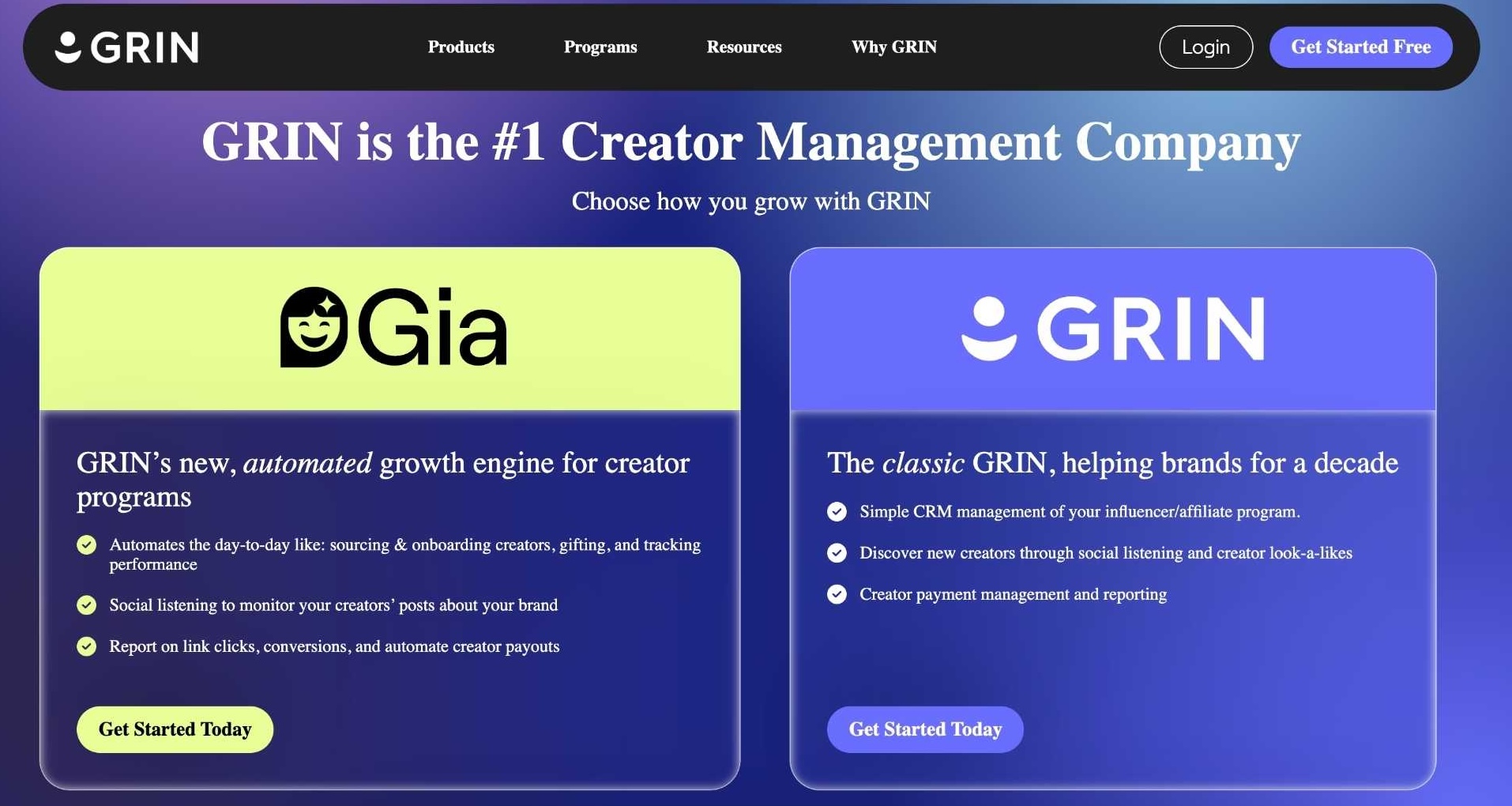
GRIN is a creator management platform built for eCommerce brands that want to run influencer and affiliate programs from one system. On the affiliate side, it helps brands generate affiliate links and discount codes, attribute sales back to creators, manage gifting, and track creator-driven revenue alongside campaign workflows.
Key features:
- Affiliate links and discount codes: GRIN lets brands create trackable links and creator-specific codes so affiliate sales can be tied back to individual partners.
- Creator relationship management: Brands can manage outreach, communication, gifting, approvals, and ongoing creator relationships in one workflow.
- Product seeding and gifting: The platform is built for product-heavy D2C programs that need to send items to creators and monitor fulfillment.
- Reporting and ROI tracking: GRIN positions reporting and revenue visibility as core functionality, helping brands connect creator activity to business results.
- Social listening: The platform now includes social listening so teams can monitor mentions, sentiment, and creator-driven brand conversations in real time.
- Creator payments: Brands can manage payouts and operational creator workflows inside the platform rather than stitching together separate tools.
Pros:
- Strong fit for D2C brands that want influencer management and affiliate tracking in the same platform.
- User feedback consistently highlights strong support and a well-rounded feature set for running creator programs end to end.
- Useful for brands with large product catalogs and ongoing gifting or ambassador workflows, not just one-off campaigns.
Cons:
- Some buyers still find the platform feature-heavy, which can feel overwhelming at first.
- Discovery quality is not always seen as perfect, with some users saying they still need to do extra filtering to find the best-fit creators.
- GRIN is broader than a simple affiliate tool, so it may be more platform than an early-stage brand actually needs.
Integrations:
- Shopify: Sync products, gifting, creator codes, and affiliate revenue directly with your Shopify store.
- WooCommerce: Connect store activity so creator campaigns and affiliate conversions can be tracked against actual orders.
- BigCommerce: Use GRIN with BigCommerce to support product seeding, sales attribution, and creator campaign operations.
- Salesforce Commerce Cloud: Useful for enterprise commerce teams that want creator program data tied back to broader eCommerce operations.
- Gmail / Outlook: GRIN supports integrated communication workflows so teams can manage creator outreach without jumping across tools.
Pricing:
High. GRIN pricing is custom-built, but internal research places most plans starting around $2,500/month and going up significantly based on features and scale, typically with a 12-month commitment. There is no clear public free trial, so buyers should expect a sales-led process and enterprise-style pricing.
Reviews:
4.5/5.0 (G2)
7. Everflow
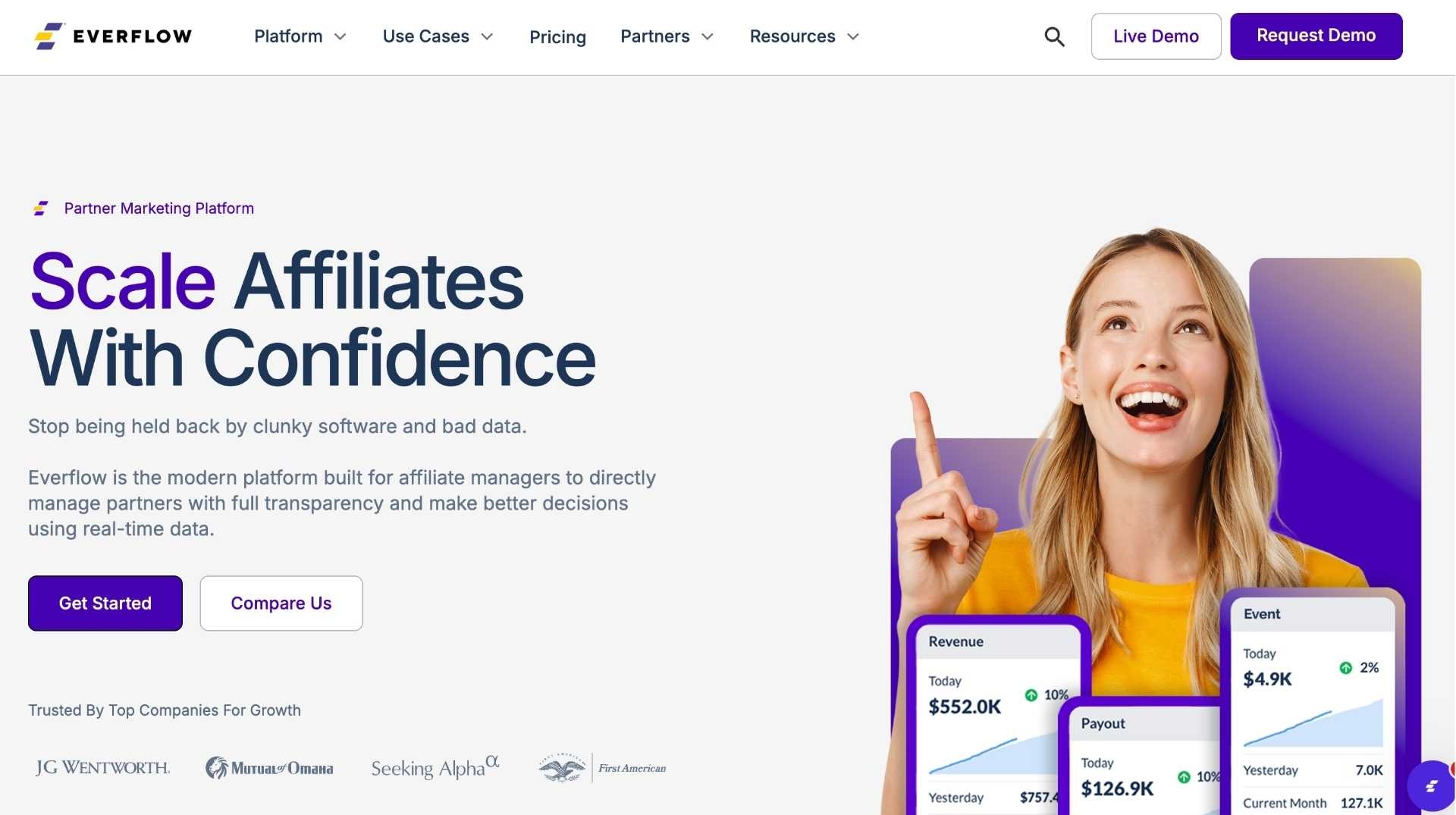
Everflow is a partner and affiliate tracking platform designed to manage affiliates, influencers, referrals, and other performance partnerships from one dashboard. For affiliate-led D2C use cases, it focuses on tracking conversions, managing commissions and payouts, and giving teams deeper performance reporting across channels.
Key features:
- Affiliate and influencer tracking: Everflow helps brands manage both affiliates and influencers inside the same performance tracking environment.
- Deep reporting and analytics: Reporting is one of the platform’s clearest strengths, especially for teams that need more than basic affiliate dashboards.
- Custom commission rules: The platform supports automated rules, custom commissions, and tiered partner benefits.
- Partner portals and branded dashboards: Brands can give partners their own branded experience with custom dashboards and assets.
- Payout infrastructure: Everflow supports ACH, bank transfers, PayPal, tax forms, multi-currency workflows, and bulk payouts.
- Full API access: Strong API access makes it attractive for teams that want more customization or need to connect Everflow into a broader internal stack.
Pros:
- Strong choice for brands that care deeply about partner attribution and performance reporting.
- User feedback often highlights the platform as powerful, intuitive, and well-supported once set up correctly.
- Useful beyond basic affiliate programs because it can also support influencer, referral, and media-buying style partnerships.
- Good fit for teams that want a more technical, scalable partner platform rather than a creator marketplace.
Cons:
- It is not built as an influencer CRM first, so brands wanting stronger creator discovery or relationship workflows may need additional tooling.
- Pricing starts at a meaningfully higher level than lightweight affiliate tools.
- There is a one-time onboarding fee and a minimum commitment, which can make it harder for smaller brands to test casually.
Integrations:
- Shopify: Instantly connect a Shopify store to track affiliate and influencer partnerships that drive revenue.
- BigCommerce: Everflow supports direct store integration so partner-driven conversions can be measured on BigCommerce.
- WooCommerce: Connect WooCommerce order activity for affiliate attribution and performance reporting.
- HubSpot: Use HubSpot alongside Everflow for broader customer, partner, and lifecycle visibility.
- Recharge: Helpful for subscription brands that need affiliate tracking connected to recurring commerce workflows.
Pricing:
Everflow’s Shopify listing shows pricing starting at $1,495/month, plus a $500 setup fee and usage-based / payout-tier pricing. The company also states that plans require a 6-month commitment, and there is no clearly advertised standard free trial for brands, putting Everflow in the high pricing tier relative to most influencer and affiliate platforms.
Reviews
4.7/5.0 (G2)
8. SARAL

SARAL is an influencer operating system built for eCommerce and D2C brands that want to systemize creator discovery, outreach, relationship management, and affiliate tracking. On the affiliate side, it helps brands create links and codes, manage ambassadors, and connect creator activity to revenue through commerce integrations.
Key features:
- Creator discovery: SARAL helps brands find creators across Instagram, TikTok, and YouTube with metrics, audience insights, and contact data.
- Automated outreach: It is built around email-based outreach automation, helping teams scale personalized creator recruitment.
- Influencer CRM: Brands can manage influencers, affiliates, and ambassadors in one centralized workflow.
- Affiliate tracking: SARAL supports affiliate links, discount codes, and performance tracking for creator-led revenue programs.
- Email marketing connectivity: The platform connects with retention tools so brands can move influencer and affiliate data into broader lifecycle systems.
- Slack notifications and payment workflows: Teams can stay updated on campaign activity and manage operational pieces like payouts more cleanly.
Pros:
- Strong fit for lean D2C teams that want a simpler system than enterprise creator suites.
- User feedback consistently points to ease of use and strong customer support as major strengths.
- It is especially attractive for brands that want outreach automation and affiliate tracking without building a heavy internal process first.
- The platform avoids the heavy annual-contract feel some competing tools are known for, which is a plus for growing brands.
Cons:
- Some users mention technical bugs from time to time.
- Pricing is still substantial for early-stage brands compared with simpler affiliate apps.
- SARAL is more creator-operations focused than pure affiliate-network software, so teams wanting a massive partner marketplace may find it narrower.
Integrations:
- Shopify: Connect your store for product, affiliate, and creator program workflows.
- WooCommerce: Track creator performance and affiliate activity against WooCommerce order data.
- GoAffPro: Use GoAffPro to power store-to-affiliate tracking inside SARAL.
- Klaviyo: Sync influencer and creator data into retention marketing flows and segments.
- Slack: Get real-time campaign and influencer activity updates for faster internal coordination.
Pricing:
SARAL’s published comparison content says plans start at $12,000 per year, with higher tiers at $15,000 and $25,000 per year, and that pricing is structured with flexible quarterly plans. It also states that a free trial is available after an initial call, which places SARAL in the mid-to-high price tier versus the wider influencer marketing software market.
Reviews
4.7/5.0 (G2)
9. Tapfiliate
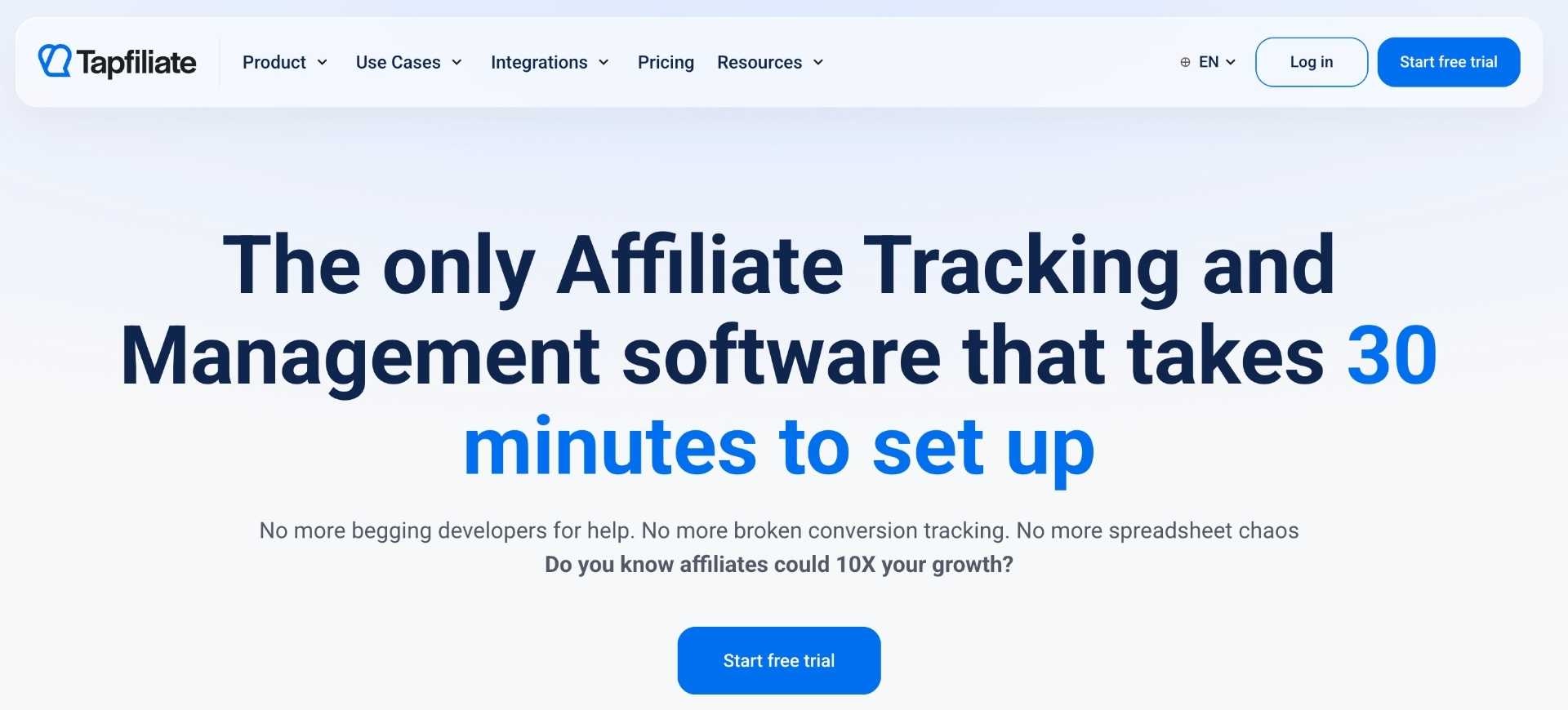
Tapfiliate is affiliate software for eCommerce, SaaS, and subscription brands that want to run their own affiliate, referral, or influencer program without using a network. It focuses on core affiliate infrastructure like tracking, portals, links, commissions, automations, and integrations with commerce tools.
Key features:
- Affiliate and influencer tracking: Tapfiliate supports affiliate, referral, and influencer use cases from the same platform.
- Custom-branded affiliate portals: Brands can customize affiliate pages, links, and emails to create a more polished partner experience.
- Multi-language and multi-currency support: Helpful for international D2C brands running programs across markets.
- Automation via Zapier and webhooks: Teams can automate common partner workflows and reduce manual admin work.
- Coupon and link tracking: Tapfiliate supports common attribution methods used in affiliate and ambassador programs.
- No transaction fees: The company emphasizes predictable SaaS pricing without taking a cut of sales.
Pros:
- Lower entry price than many partnership and influencer platforms.
- Strong fit for brands that want simple, direct ownership of their affiliate program rather than joining a large network.
- Broad integration coverage makes it practical for Shopify, WooCommerce, Stripe, and automation-heavy stacks.
- Review data generally points to good usability and strong overall satisfaction for brands that want a dedicated affiliate tool.
Cons:
- It is more affiliate-first than influencer-CRM-first, so creator relationship workflows are lighter than full influencer marketing suites.
- Some user feedback mentions onboarding, support consistency, and interface complexity as drawbacks.
- Brands wanting built-in discovery, gifting, or creator content workflows may need additional tools around it.
- As programs grow more complex, some teams may outgrow it and want deeper partnership analytics or more workflow layers.
Integrations:
- Shopify: Track affiliate-driven Shopify sales and manage partner activity inside a direct store integration.
- WooCommerce: Connect affiliate tracking to WooCommerce orders and conversions.
- Zapier: Automate partner onboarding, notifications, and operational tasks without custom development.
- Stripe: Support payments and commerce workflows for brands using Stripe in their affiliate stack.
- Squarespace: Useful for brands or creators running commerce or lead-gen flows through Squarespace properties.
Pricing:
Tapfiliate publicly states pricing starts at $89/month, offers a free trial with different trial lengths by plan, and supports monthly subscription billing. The company also highlights that it charges 0% transaction fees, which makes it one of the more accessible options in this category; overall, it falls into the low-to-mid price tier relative to influencer and affiliate software platforms.
Reviews
4.4/5.0 (G2)
10. Afluencer

Afluencer is a creator collaboration platform that helps brands find influencers, post collaboration opportunities, receive applications, and communicate directly with creators. For affiliate-style programs, it is better suited to sourcing and coordinating creator partnerships than to acting as a deep affiliate operating system, which makes it appealing for brands that want a simpler starting point.
Key features:
- Creator marketplace access: Brands can post collaboration opportunities and receive creator applications directly inside the platform.
- Direct messaging: Afluencer supports brand-creator communication in-app, which reduces email back-and-forth.
- Influencer filtering: Paid plans unlock stronger creator filters to help brands narrow down better-fit partners.
- Multiple compensation styles: The platform supports different collaboration structures, including commission-style and product-based deals.
- Free entry plan: Brands can get started without paying immediately, which lowers the barrier to testing creator outreach.
- Newsletter and promotion features: Premium brand plans include promotional placement inside Afluencer’s ecosystem to help attract creators.
Pros:
- Very accessible for smaller D2C brands because it offers a real free entry point.
- User feedback often highlights ease of use and how quickly brands can start getting creator applications.
- Lower-cost paid plans make it far easier to test than most influencer platforms.
- Good for brands that mainly need creator discovery and collaboration setup rather than advanced multi-touch affiliate analytics.
Cons:
- It is not as deep as full influencer CRM or affiliate-tracking platforms when it comes to revenue attribution and operations.
- Integration footprint appears much lighter than more mature affiliate software tools.
- As a program scales, many brands will likely need stronger tracking, payout, and reporting infrastructure around it.
Integrations:
- Shopify: Install the Shopify app to connect your store and associate one or more stores with your brand account.
- BigCommerce: Afluencer also offers a BigCommerce app for brands running on that commerce stack.
- Shopify sales channel connection: Brands can install Afluencer as a sales-channel-style app and tie it to store collaboration workflows.
- In-app messaging system: While not a third-party integration, this is a core operational workflow for brand-creator coordination inside the platform.
- Multi-store Shopify support: Brands with more than one Shopify store can connect multiple stores to the same brand setup.
Pricing:
Afluencer offers a free plan for brands, with paid plans publicly listed at $49/month, $99/month, and $199/month for increasing invitation limits and premium features. Because it has a true free plan and relatively low paid tiers, Afluencer clearly fits into the low price category compared with most influencer marketing platforms.
Reviews
4.5/5.0 (G2)
Final Thoughts on 10 Best Influencer Affiliate Software for D2C Brands
Influencer affiliate software has become essential for D2C brands that want to turn creator partnerships into measurable revenue channels rather than just brand awareness campaigns. Platforms like Impact, GRIN, and Aspire provide powerful partnership infrastructure for larger programs, while tools such as Refersion, Tapfiliate, and Afluencer offer simpler ways for growing brands to launch affiliate initiatives quickly. Meanwhile, platforms like Influencer Hero, Upfluence, and SARAL bridge the gap by combining influencer relationship management with affiliate tracking and revenue attribution. Ultimately, the best choice depends on your brand’s stage, campaign complexity, and whether your priority is influencer discovery, affiliate tracking, or managing long-term creator partnerships at scale.

.png)


.jpg)