

10 Best inBeat Alternatives for Influencer Marketing
For D2C brands, influencer marketing software has become a core part of growth—helping teams streamline creator discovery, manage outreach at scale, run campaigns efficiently, and track real ROI from partnerships. inBeat is a well-known option, particularly for brands looking for a hands-on, performance-driven approach to UGC and paid social, but it comes with trade-offs. It’s no longer a true self-serve platform, lacks deep analytics compared to more advanced tools, offers limited pricing transparency, and focuses mainly on Instagram and TikTok, which can push growing teams to look for more scalable solutions. As brands mature, many start exploring inBeat alternatives that provide stronger automation, broader integrations, and more control over influencer operations.
In this article, we compare the 10 best inBeat alternatives to help you find the right fit for your team, including Upfluence, SARAL, GRIN, Influencer Hero, IZEA, Later, Ainfluencer, indaHash, Influencity, and Modash.
Key Criteria for Evaluating Influencer Marketing Platforms
Core Features
Evaluation of essential influencer marketing capabilities, including influencer discovery, outreach, CRM, campaign management, reporting, and content workflows.
Pricing & Flexibility
Comparison of pricing models, subscription plans, and contract terms to match different budgets and growth stages.
Customer Reviews & Satisfaction
Analysis of user feedback from trusted review platforms, focusing on usability, reliability, customer support, and overall performance.
Pros & Cons
Review of each platform’s strengths and limitations to highlight where it performs well and where it may fall short based on different use cases.
Integrations
Review of the most important integrations (e.g., Shopify and other tech tools), highlighting what each integration enables in one sentence.
inBeat Overview
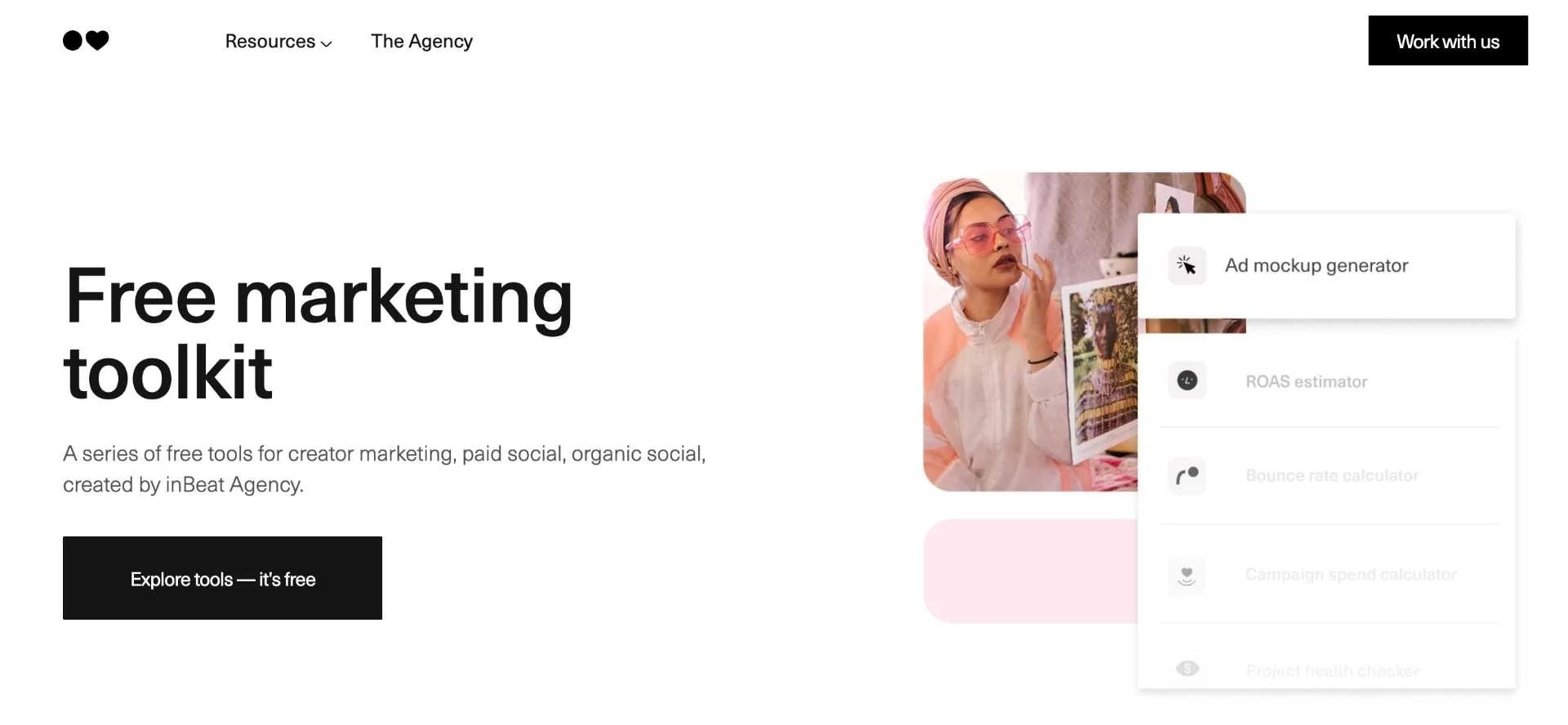
inBeat is a creator-led growth platform and agency that helps brands scale influencer marketing and user-generated content (UGC) campaigns, particularly across Instagram and TikTok. Originally known for its self-serve influencer discovery tool, inBeat has shifted toward a hybrid model that combines a free creator-marketing toolkit with managed services for influencer campaigns, UGC production, and paid media. Today, it is best suited for brands that want hands-on support in executing creator-led growth strategies rather than relying solely on SaaS software.
Key Features
• Free Creator Marketing Toolkit Offers a suite of free tools including ROI, CPM, CPA, and engagement calculators, along with ad mockup generators—useful for campaign planning without requiring a subscription.
• Influencer Discovery & Sourcing (Agency-led) Helps brands identify relevant creators (especially micro and nano influencers) using internal vetting processes based on engagement, audience quality, and niche fit.
• UGC Production & Creator Network Connects brands with vetted creators to produce high-performing ad creatives, with workflows focused on content testing, iteration, and performance optimization.
• Performance Creative & Paid Media Integration Goes beyond influencer campaigns by combining UGC with paid media strategies across Meta, TikTok, Snapchat, and Google Ads—enabling brands to scale creator content into performance campaigns.
• Campaign Management Support Handles end-to-end execution including creator sourcing, outreach, negotiation, contracts, and payments—ideal for teams that want a done-for-you approach.
• Micro-Influencer Specialization Strong focus on micro and nano influencers, making it particularly relevant for brands prioritizing engagement and authenticity over reach.
• Automated Similar Profile Search (Legacy Tooling) Previously allowed users to find creators similar to existing profiles, which is still reflected in some of their workflows and offerings.
Pricing
• Free Tools: Completely free to use (no login required).
• Managed Services / Agency: Custom pricing based on campaign scope, deliverables, and scale. Requires booking a call with their team.
Reviews
4.9 / 5.0 (G2)
Integrations
• Shopify — Enables product seeding, landing pages, and tracking creator-driven ecommerce performance.
• Meta (Facebook & Instagram Ads) — Syncs audiences and scales influencer content into paid campaigns.
• TikTok — Supports influencer collaborations and paid amplification of creator content.
• Klaviyo — Connects influencer campaigns with email marketing and retention workflows.
• Mailchimp — Enables integration with email campaigns and customer lifecycle marketing.
Pros
• Strong performance-driven UGC + paid media approach: Unlike traditional influencer tools, inBeat focuses heavily on turning creator content into high-performing ads through testing, iteration, and paid amplification.
• Free toolkit with no barrier to entry: The availability of free calculators and campaign planning tools makes it easy for small teams to experiment before committing to a platform.
• Fully managed influencer campaigns: Brands can outsource the entire influencer workflow—from sourcing to execution—reducing operational complexity and internal workload.
Common Drawbacks of inBeat
No longer a true self-serve influencer platform
The removal of its influencer database and outreach system means brands looking for a SaaS-style platform may need alternatives.
Limited pricing transparency
Most services require a custom quote, making it harder to benchmark costs against competitors upfront.
Basic analytics compared to enterprise tools
Reporting capabilities are not as advanced as dedicated platforms focused on deep performance tracking and attribution.
Limited platform coverage
Primarily focused on Instagram and TikTok, with less support for channels like YouTube, blogs, or LinkedIn.
Inconsistent campaign alignment and outcomes
Some users report mismatches between campaign opportunities and their niche, along with variability in collaboration quality and responsiveness.
Best inBeat Alternatives
| TOOL | REVIEWS | BEST FOR | TRIAL INFO | PRICING | ||
|---|---|---|---|---|---|---|
1 |
|
⭐ | Influencer discovery | Book Demo | Pricing | Website |
2 |

|
⭐ | UGC creator collaborations | Book Demo | Pricing | Website |
3 |

|
⭐ | DTC creator management | Book Demo | Pricing | Website |
4 |

|
⭐ | Influencer CRM & automation | Book Demo | Pricing | Website |
5 |
|
⭐ | Influencer marketplace | Book Demo | Pricing | Website |
6 |

|
⭐ | Social media & influencer campaigns | Book Demo | Pricing | Website |
7 |
|
⭐ | Influencer discovery & outreach | Book Demo | Pricing | Website |
8 |
|
⭐ | Enterprise creator campaigns | Book Demo | Pricing | Website |
9 |

|
⭐ | Campaign management | Book Demo | Pricing | Website |
10 |

|
⭐ | Influencer discovery | Book Demo | Pricing | Website |
Upfluence

Upfluence is an influencer and affiliate marketing platform built mainly for ecommerce brands that want to discover creators, automate outreach, manage campaigns, send products, track sales, and pay partners from one system. Its positioning is especially strong for DTC teams because it combines creator discovery with ecommerce integrations and affiliate infrastructure rather than treating influencer marketing as a separate workflow.
Key Features
• Influencer discovery across a large creator database — Upfluence’s pricing and product pages highlight a 14M+ creator database, AI-powered branded searches, creator lookalikes, and recruitment pages to help brands find and activate relevant creators faster.
• Jaice AI campaign copilot — Jaice AI is built into campaign setup, creator discovery, briefs, and outreach, helping teams build campaigns faster and personalize communication at scale.
• Affiliate and promo code automation — Upfluence can generate unique promo codes and run affiliate programs tied to ecommerce stores, which is a major advantage for brands that care about attributable revenue instead of just reach.
• Product seeding and gifting workflows — With ecommerce integrations, brands can identify influencers in their customer base, send products, and keep product gifting tied to campaign management and revenue tracking.
• Creator CRM and outreach — The platform supports bulk outreach, email workflows, creator recruitment pages, and marketplace applications, so teams can run higher-volume creator programs without relying on spreadsheets.
• Payments and transaction tracking — Upfluence Pay, powered by Stripe, gives brands a native way to pay creators and track transactions in multiple currencies.
Pricing
• Pricing model: Upfluence uses custom pricing rather than a public fixed plan table.
• All plans are custom made. There’s a minimum full year of service you have to commit to with monthly payments. On average plans start around $1,276 - $2,000/month ($24,000 yearly)
Reviews
4.3/5.0 (Capterra)
Pros
• Deep ecommerce integrations — Upfluence’s strongest differentiator is how tightly it connects influencer programs to Shopify, Amazon, WooCommerce, Magento, BigCommerce, Klaviyo, and payments, which makes it much more commerce-oriented than creator tools focused mostly on discovery.
• Jaice AI is now central to the workflow — Jaice is not just a writing assistant; Upfluence positions it as a built-in campaign copilot that supports search, setup, briefs, and outreach. That is a stronger AI implementation than the light automation layer many older platforms offer.
• Combines influencer and affiliate management in one stack — Upfluence is especially appealing for DTC teams that want creators, ambassadors, affiliates, coupon codes, gifting, and sales attribution handled in the same platform.
Cons
• Pricing is not transparent — brands need to talk to sales to understand real costs, which makes side-by-side budgeting harder early in the evaluation process.
• It can feel more complex than lightweight tools — because Upfluence combines discovery, outreach, ecommerce, affiliate tracking, and payments, it tends to suit structured programs more than very small teams that just want simple creator search.
• Public sentiment is more mixed outside software directories — software reviews are strong, but broader public reviews are notably lower, which suggests support and implementation experience can vary.
Integrations
• Shopify — lets brands identify influential customers, send products, generate promo codes, and track influencer-driven sales from their store.
• Amazon — supports Amazon-focused affiliate and attribution workflows for brands selling on the marketplace.
• WooCommerce — connects creator campaigns to WooCommerce stores for product seeding, promo codes, and sales tracking.
• Klaviyo — helps brands identify influential subscribers and plug creator programs into email and retention workflows.
• Stripe — powers Upfluence Pay so brands can automate creator payouts and track transactions securely.
inBeat vs Upfluence
inBeat is now much more agency-and-toolkit-led, with its free calculators and managed creator services at the center, while Upfluence remains a true software platform built for running creator and affiliate programs in-house. Upfluence is stronger for brands that need creator discovery, CRM, outreach, gifting, affiliate links, revenue attribution, and payouts in one connected system; inBeat is better suited to teams that want a hands-on partner for UGC, paid social, and creator-led growth rather than a self-serve operating system.
A second big difference is ecommerce depth. Upfluence is heavily integration-led and built to connect directly to commerce platforms and affiliate workflows, whereas inBeat’s current public offer is centered on a free toolkit plus managed agency services. For DTC brands that want tighter internal control and measurable creator-attributed sales, Upfluence is the more software-heavy choice; for teams that want performance creative and creator execution done with them or for them, inBeat is the lighter-lift option.
SARAL
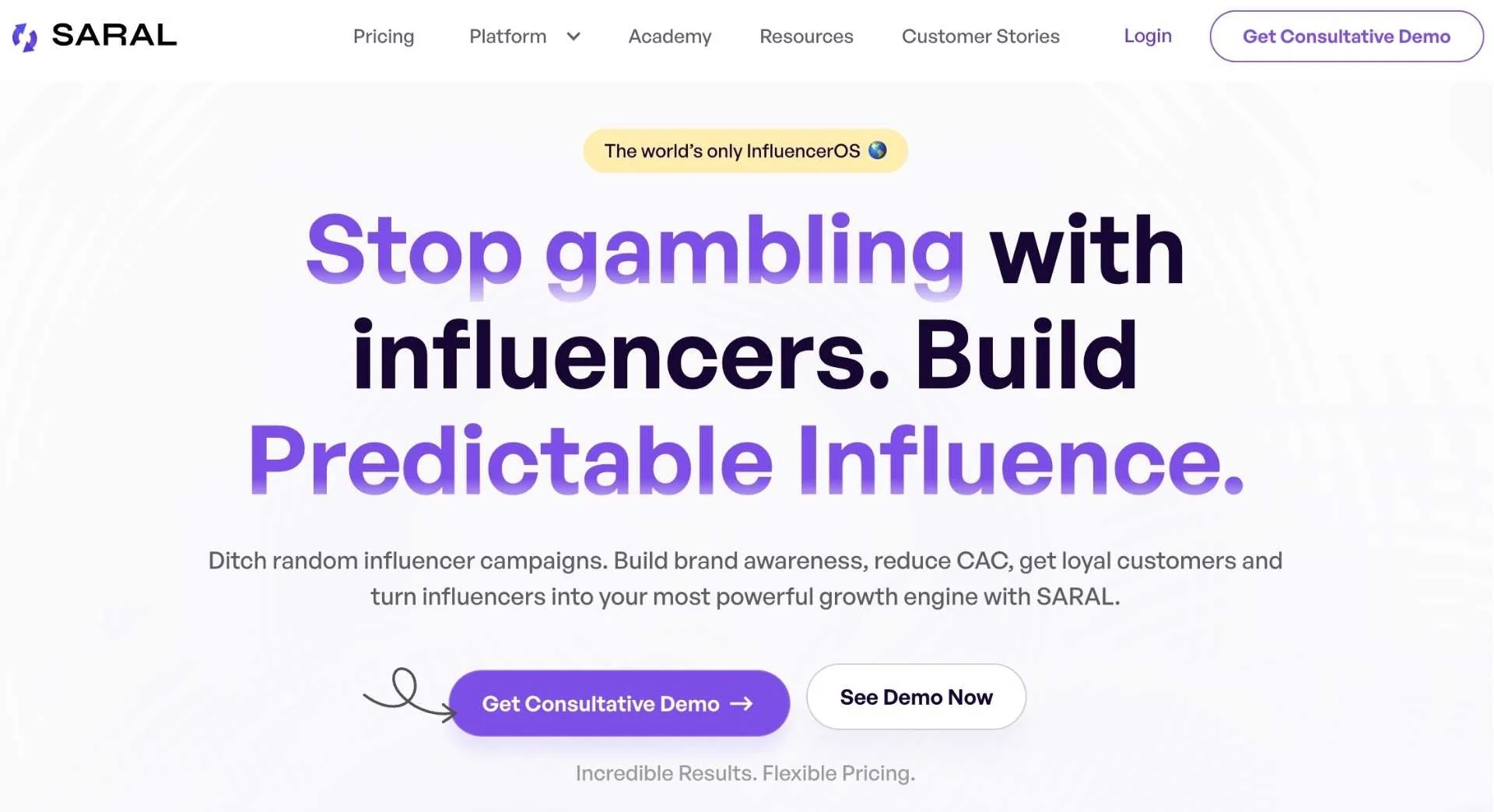
SARAL is an influencer marketing platform built for ecommerce and consumer brands that want a simpler way to discover creators, automate outreach, manage relationships, track content, generate affiliate links, and monitor sales without stitching together multiple point solutions. Its positioning is clearly aimed at brands that want an “influencer OS” feel, but with less enterprise complexity than some larger platforms.
Key Features
• Influencer discovery and list building — SARAL lets brands search for creators globally, view engagement and audience metrics, and save creators into lists for outreach and segmentation.
• Automated outreach and built-in inbox — the platform supports personalized email campaigns, follow-ups, and response management inside a unified workflow.
• Creator relationship management — SARAL emphasizes relationship tracking with tags, custom stages, reminders, and a centralized dashboard for managing every creator touchpoint.
• Social listening and post tracking — it can auto-track influencer content, monitor how posts perform, and help brands request or manage UGC reuse.
• Affiliate tracking and code generation — SARAL supports affiliate-style workflows through store integrations so brands can generate tracking links and discount codes and measure sales and ROAS.
• Ambassador program workflows — the platform also supports turning customers or website visitors into ambassadors through forms, approvals, and integrated shipping workflows.
Pricing
SARAL offers tiered pricing primarily billed annually or quarterly:
• Starter Plan – $12,000/year or $3,600/quarter Includes 100 active partnerships, 300 new influencers/month, limited post tracking, and 1 user seat.
• Business Plan – $15,000/year or $4,500/quarter Includes 500 active partnerships, 800 new influencers/month, unlimited tracking, and 3 seats.
• Professional Plan – $25,000/year or $7,500/quarter Includes 1,000 active partnerships, 2,000 new influencers/month, full social listening, and 10 seats.
Reviews
4.7/5.0 (G2)
Pros
• Transparent pricing is a real differentiator — unlike many influencer tools that require a demo just to get budget clarity, SARAL publishes clear quarterly and annual package pricing.
• Built for ecommerce workflows, not just creator search — SARAL combines discovery, outreach, CRM, social listening, affiliate tracking, ambassador programs, and reporting in one system aimed directly at commerce teams.
• New Creator Commerce integration expands monetization — SARAL recently added Creator Commerce integration so brands can connect creator-specific landing pages and push recruited talent into commerce funnels more easily.
Cons
• Public review depth is still limited — compared with larger competitors, SARAL has much thinner verified review coverage on major software directories, which gives buyers less third-party validation to work with.
• Feature depth depends heavily on ecommerce fit — SARAL is strongest when brands want affiliate tracking, product seeding, and ambassador workflows; it is less obviously positioned for very large enterprise orgs with broad custom governance needs.
• Store integrations rely partly on partner apps — for example, its Shopify and WooCommerce connectivity works through GoAffPro, which adds another dependency for some workflows.
Integrations
• Shopify — connects SARAL to product shipping, affiliate tracking, and sales attribution for creator campaigns.
• WooCommerce — supports affiliate links, discount codes, and creator-commerce tracking for WooCommerce stores.
• Klaviyo — syncs influencer data into Klaviyo so brands can run automated nurture and campaign emails beyond cold outreach.
• Slack — helps teams route alerts and collaboration around influencer workflows into their internal communication stack.
• Sendlane — gives ecommerce teams another ESP option for influencer lifecycle messaging and retention-style campaigns.
inBeat vs SARAL
The biggest difference is delivery model. inBeat today is mostly a free toolkit plus managed creator-growth services, while SARAL is a self-serve software platform designed to help brands run influencer, affiliate, and ambassador programs internally. If a team wants calculators, UGC help, and agency support, inBeat is easier to adopt; if it wants an operating system for outreach, relationship management, post tracking, and ecommerce-linked attribution, SARAL is the more structured choice.
SARAL also goes deeper into creator operations than inBeat’s current public toolkit model. It includes relationship stages, inbox management, affiliate tracking, and ambassador workflows in a way that looks much closer to a CRM. inBeat, by contrast, is stronger on agency-led performance creative and managed UGC execution.
GRIN

GRIN is a creator management platform focused on DTC and ecommerce brands that want to automate influencer discovery, gifting, campaign management, content collection, and ROI tracking from a single system. It has historically skewed upmarket, but GRIN now also offers instant self-serve access and month-to-month pricing, which makes it more accessible than it used to be.
Key Features
• Creator discovery and CRM — GRIN is built around creator search, relationship management, and centralized campaign workflows that help brands manage creators at scale.
• Integrated gifting management — GRIN’s ecommerce integrations make product seeding and fulfillment part of the platform instead of a manual side process.
• Affiliate management and reporting — even the Lite plan includes affiliate management, and higher plans add more advanced reporting and platform depth.
• Landing pages and recruitment — GRIN supports branded pages and creator recruitment workflows so brands can blend outbound discovery with inbound creator acquisition.
• Content and ROI tracking — the product pages emphasize performance tracking, content management, and creator program optimization tied to revenue and engagement.
• API and advanced team controls on higher tiers — the Complete plan includes API access plus advanced permissions and reporting, making it better suited to larger teams with more operational complexity.
Pricing
• Official pricing model: GRIN’s current pricing page promotes a 30-day free trial and more flexible packaging than before, including self-serve access.
• Public starting price benchmark: Recent software directories list GRIN from $999/month, though enterprise pricing still appears to scale materially based on features and program size.
• Enterprise benchmark pricing: Recent sales benchmarks and product overviews still place GRIN commonly starts at $25,000/year (approx. $2,050/month), with no discounts for upfront payment. Contracts require a full-year commitment with monthly billing.
Reviews
4.5/5.0 (G2)
Pros
• Major 2026 shift to self-serve access — GRIN’s January 2026 launch of instant self-serve access and flexible month-to-month pricing is a meaningful update, especially for brands that previously saw it as too enterprise and contract-heavy.
• Strong ecommerce-native workflow — GRIN’s gifting, store integrations, affiliate tooling, and creator CRM are still some of its clearest strengths for DTC brands.
• Better fit for internal creator operations than agency-style tools — GRIN is designed to be an internal operating layer for creator programs, with workflow depth, permissions, API access, and centralized campaign control.
Cons
• Pricing still climbs quickly at higher tiers — while entry access is now easier, the top end of GRIN remains meaningfully more expensive than lightweight SMB-focused tools.
• Can be more process-heavy than simpler platforms — its CRM depth is helpful for scale, but it is not the lightest option for teams that only need basic discovery and outreach.
• Some creators and teams still find coordination manual — public reviews mention workflow complexity around sorting interactions and getting creators to upload deliverables correctly.
Integrations
• Shopify — supports gifting, fulfillment, and ecommerce-linked creator workflows.
• WooCommerce — connects product seeding and creator commerce to WooCommerce stores.
• Klaviyo — helps brands personalize creator communication and align CRM workflows with email operations.
• Outlook — lets teams manage creator conversations and internal coordination from GRIN using their existing inbox.
• DocuSign — streamlines contracts and approvals inside creator workflows.
inBeat vs GRIN
GRIN and inBeat are built for very different buyers. GRIN is an internal creator-management platform with CRM depth, gifting, affiliate workflows, reporting, and recruitment features for brands that want to own the whole process. inBeat is now much more of a creator-growth agency plus free toolkit, which makes it lighter to adopt but less capable as a true in-house operating system.
GRIN is also the stronger choice for brands that want repeatable workflows, creator records, API access, and store-connected campaign operations at scale. inBeat stands out more on managed UGC, performance creative, and paid social support. For hands-on DTC teams building creator infrastructure internally, GRIN is usually the more robust alternative.
Influencer Hero
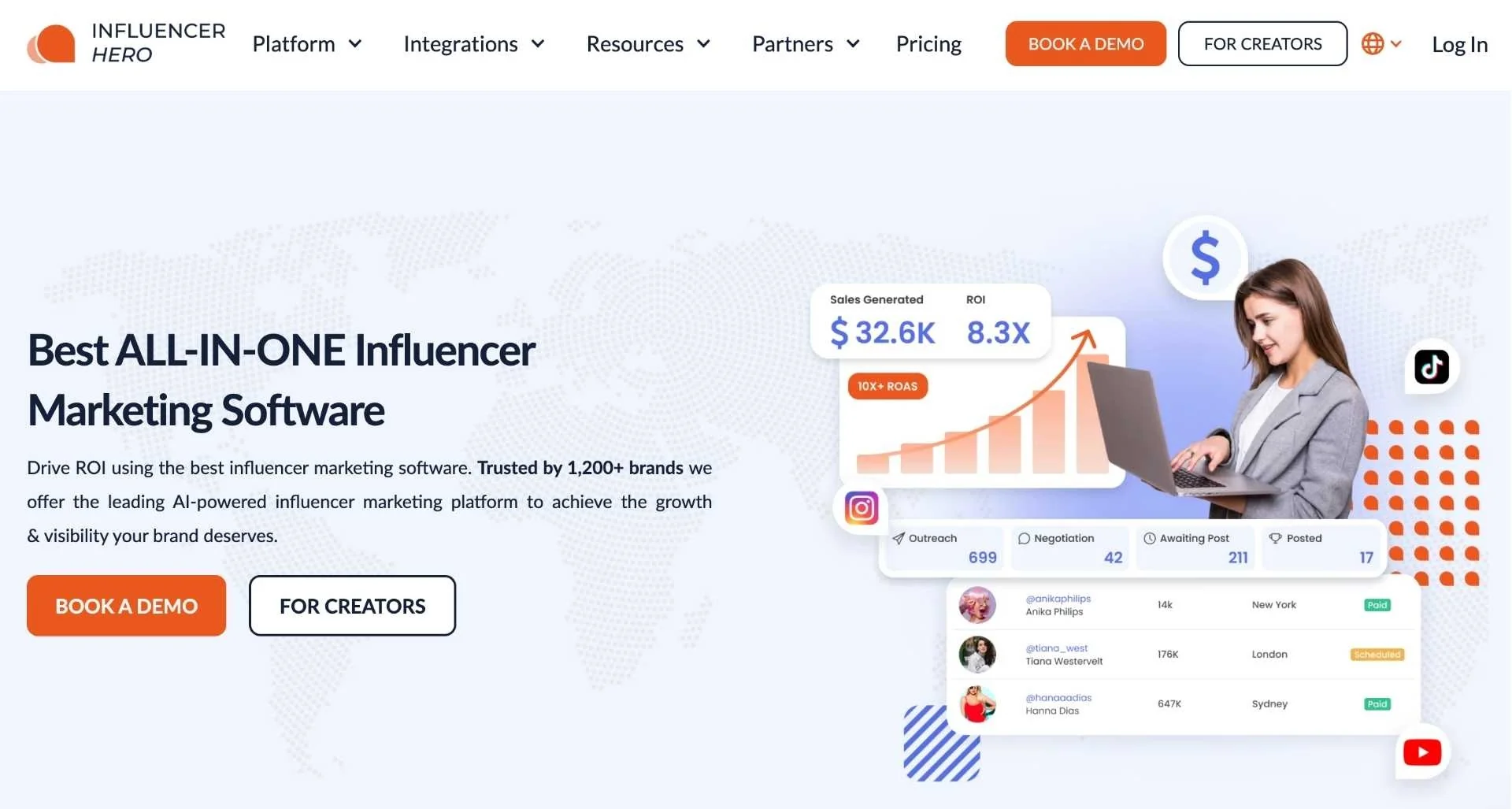
Influencer Hero is an all-in-one influencer marketing platform aimed at ecommerce teams and agencies that want discovery, outreach, CRM, gifting, affiliate tracking, UGC management, and reporting in one dashboard. It is positioned as a more flexible, ecommerce-friendly alternative to larger enterprise tools, with a growing integrations layer and more transparent pricing than many competitors in the category.
Key Features
• Influencer discovery — Find creators across major platforms using advanced filters for audience, engagement, location, and niche, with built-in fraud detection and lookalike suggestions
• Outreach & automation — Scale personalized email outreach with AI-generated messages, automated follow-ups, and multi-step sequences
• Creator CRM — Manage influencer relationships in a centralized pipeline, tracking conversations, campaign stages, and deliverables
• Gifting workflows — Streamline product seeding with automated order creation, shipping, and delivery tracking
• Affiliate tracking & payouts — Generate unique links and discount codes, track performance, and handle commissions and payments in one system
• Campaign analytics & ROI tracking — Monitor performance across engagement, clicks, conversions, and revenue with real-time reporting dashboards
• UGC library — Automatically collect and organize influencer content for reuse across ads, social media, and product pages
• Application pages & storefronts — Capture inbound creators through branded application pages and enable influencers to promote products via custom storefronts
Pricing
Influencer Hero offers flexible pricing based on outreach volume and you can have unlimited creators in your CRM:
• Standard — $649/month (up to 1,000 outreaches per month)
• Pro — $1,049/month (up to 5,000 outreaches per month)
• Business — $2,490/month (up to 10,000 outreaches per month)
• Custom / Agency — Tailored pricing
Custom pricing is available for agencies and larger teams
Reviews
4.9/5.0 (Capterra)
Pros
• Highly personalized outreach at volume — AI-enhanced email flows and automated follow-ups generate messages that feel tailored and relevant, improving reply rates, conversions, and long-term creator relationships.
• Broad ecommerce integration footprint — Shopify, WooCommerce, Magento, Amazon, Klaviyo, and many other integrations make it especially practical for DTC teams running gifting and affiliate programs.
• Stronger creator-brand fit through data — Features like brand follower identification and AI-powered UGC search help teams find creators who already engage with the brand or produce relevant content, improving authenticity and campaign performance.
Cons
• Higher pricing for smaller teams — May be less accessible for early-stage brands or those with limited budgets
• Steep learning curve — Feature depth means onboarding and setup can take time
Integrations
• Shopify — supports gifting, order syncing, sales attribution, affiliate links, and influencer-specific discount codes.
• WooCommerce — lets brands sync clicks and sales back into Influencer Hero for affiliate reporting and creator payouts.
• Klaviyo — connects influencer data and campaign workflows to ecommerce email and SMS marketing.
• Amazon — helps centralize marketplace-linked product, order, and revenue data inside the platform.
• Slack — supports internal team coordination around creator workflows and campaign execution.
inBeat vs Influencer Hero
Influencer Hero is much closer to a traditional all-in-one influencer marketing SaaS than inBeat is today. Where inBeat now emphasizes a free toolkit and managed creator-growth services, Influencer Hero is designed for teams that want to run discovery, outreach, CRM, gifting, affiliate tracking, and reporting themselves inside software.
The other major difference is ecommerce operations. Influencer Hero goes deeper into store integrations, gifting logistics, affiliate attribution, and workflow automation, while inBeat is stronger on agency-led UGC and performance creative. For brands that want software-first execution with room to scale internal operations, Influencer Hero is the more direct alternative.
IZEA
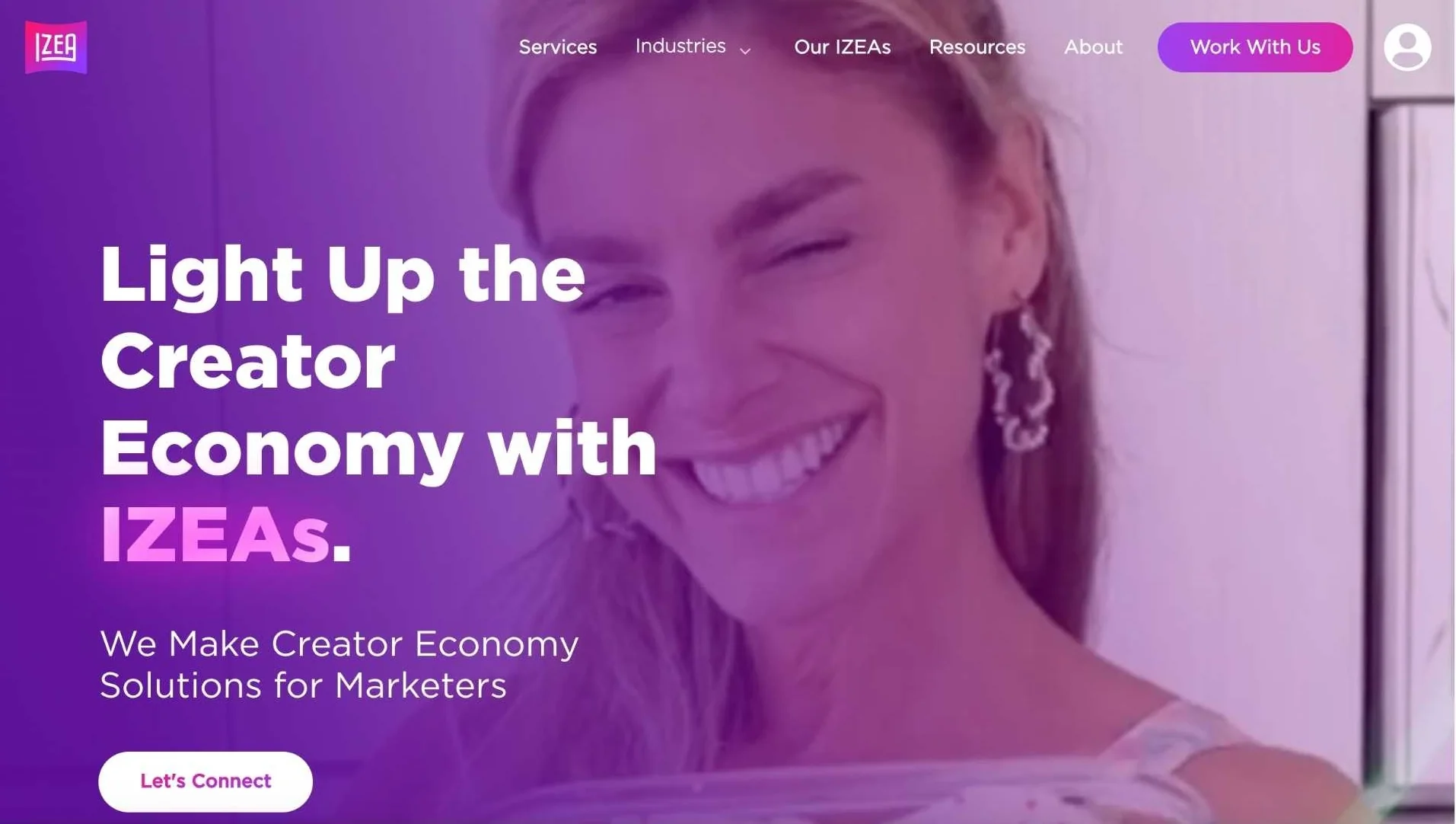
IZEA is one of the longest-running names in influencer marketing, now positioned as a tech-powered creator economy company that offers managed services, a creator marketplace, AI tools, and the IZEA Flex platform for running influencer campaigns. Its ecosystem is broader than many point solutions because it spans self-serve creator discovery, managed execution, AI-assisted content generation, and campaign operations.
Key Features
• IZEA Flex campaign platform — IZEA describes Flex as a comprehensive influencer marketing platform for finding influencers, managing contracts, negotiating, paying creators, and tracking campaign performance.
• Creator Marketplace — brands can access a marketplace where marketers and creators find each other, with free access and optional paid upgrades.
• Managed Services — IZEA also offers fully managed campaign strategy, execution, and measurement for brands that want a service-led approach.
• AI tooling through FormAI and IZZY — FormAI is positioned as AI built for influencer marketing and content creation, while IZZY is IZEA’s AI assistant for influencer campaign efficiency and precision.
• BrandGraph intelligence — BrandGraph is being brought into Flex to strengthen discovery, trend analysis, and creator intelligence.
• Draft review and portal workflows — Flex Portal supports content approvals, comments, revisions, and stakeholder access around campaign execution.
Pricing
• Starter: $130/month on annual billing, or $165/month month to month. Includes core tools like Discover, ContentMine, ShareMonitor, and Tracking Links.
• Power: $500/month on annual billing, or $600/month month to month, for up to three users, with Transactions, unlimited integrations, and expanded usage.
• Free trial: 10 days. Older launch materials also referenced a free tier, but current visible pricing is most clearly centered on Starter and Power.
Reviews
3.9/5.0 (G2)
Pros
• Breadth of offering is unusually wide — IZEA gives buyers multiple routes in: managed services, marketplace access, Flex software, BrandGraph, FormAI, and IZZY. That makes it more of an ecosystem than a single influencer tool.
• AI investment is more substantial than average — IZZY and FormAI show that IZEA is putting real product weight behind AI for influencer discovery, content generation, and campaign support.
• Good fit for brands that want service plus software — many platforms force a choice between SaaS and agency support; IZEA supports both.
Cons
• Pricing can be harder to interpret than simpler platforms — because IZEA spans multiple products and service lines, public pricing is fragmented across managed services, marketplace access, and different software entry points.
• Public review visibility is limited in the main software directories — that makes side-by-side validation harder than with tools that have hundreds of recent software reviews.
• The product family can feel broad rather than simple — buyers wanting a single, straightforward influencer OS may find IZEA’s ecosystem less immediately intuitive than a narrower platform.
Integrations
• Shopify — IZEA says Flex integrates with Shopify for commerce-linked campaign workflows.
• Google Analytics — used to connect campaign activity with site analytics and performance measurement.
• TikTok authentication / invite links — Flex supports authenticated TikTok workflows for linking campaign deliverables to live content.
• Portal-based stakeholder approvals — Flex Portal gives internal or external stakeholders controlled access to draft review and approvals.
• BrandGraph — BrandGraph is being folded into Flex to enrich creator intelligence and search.
inBeat vs IZEA
IZEA and inBeat now sit at opposite ends of the market in some ways. inBeat’s current public offer is a free creator-marketing toolkit plus managed agency services, while IZEA provides a broader creator economy stack that includes managed services, marketplace access, AI products, and campaign software. Brands that want a simpler partner-led setup may find inBeat easier to understand, while brands that want optionality across software and services may prefer IZEA.
IZEA also has more visible investment in a multi-product ecosystem, including FormAI, IZZY, Flex, and BrandGraph. inBeat’s edge is still its tighter focus on creator-led growth, UGC, and performance creative. If the goal is broad platform capability with optional managed support, IZEA is stronger; if the goal is faster agency-led execution tied to paid social and content testing, inBeat is the more specialized option.


Later
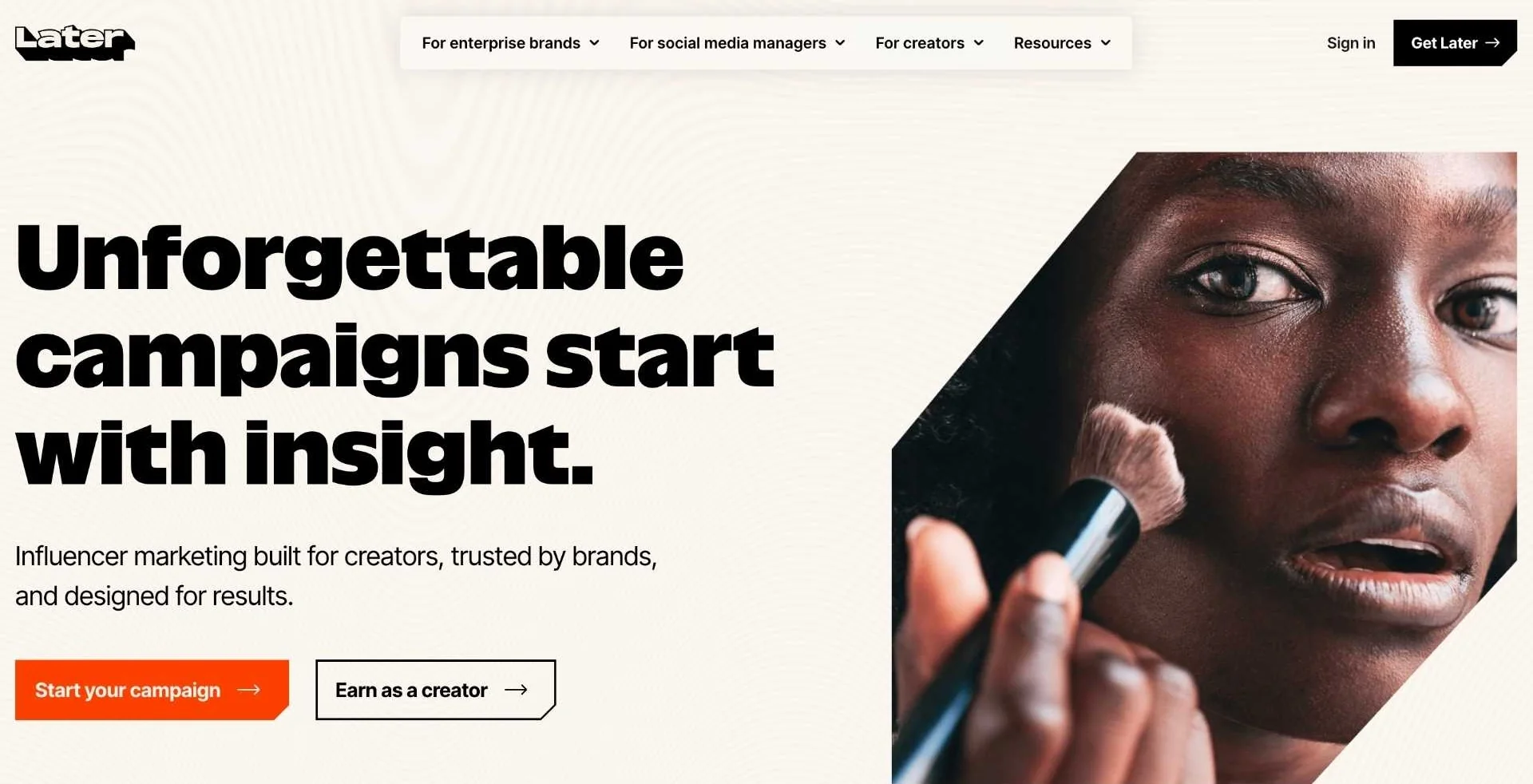
Later is a social media management platform that has expanded into influencer marketing through its acquisition of Mavrck. It combines influencer discovery, campaign management, and social scheduling in one platform, making it particularly appealing for brands that want to unify organic social and creator marketing workflows.
Key Features
• Influencer discovery and recruitment — Later (Mavrck) enables brands to discover influencers through a combination of database search, customer data, and social audience insights, allowing brands to recruit both new creators and existing customers.
• End-to-end campaign management — Supports full campaign lifecycle including outreach, contracts, content approvals, and performance tracking within one dashboard.
• Social media scheduling integration — Unlike most influencer platforms, Later combines influencer marketing with post scheduling and content calendar tools for Instagram, TikTok, Pinterest, and more.
• First-party data activation — Allows brands to identify influencers from their own customers, email lists, and website visitors for more authentic partnerships.
• Affiliate and loyalty program support — Includes referral links, discount codes, and ambassador workflows tied to influencer campaigns.
• Advanced reporting and ROI tracking — Provides campaign-level insights, engagement metrics, and conversion tracking tied to influencer performance.
Pricing
Later’s influencer marketing platform (Later Influence) uses custom pricing, and brands need to request a demo for exact costs.
Based on our research, there are different plans:
• Essentials Plan: Starts at $28,500/year. Best for brands starting in influencer marketing.
• Pro Plan: Starts at $42,000/year. Best for data and automation to make your campaigns run faster and achieve better ROI.
• Premier Plan: Starts at $60,000/year. Everything you need for a scaled influencer program.
• All plans come with an additional one-time onboarding fee of $5,000 for all new customers.
Reviews
4.4 / 5.0 (Capterra)
Pros
• Unified social + influencer marketing platform — Later’s biggest differentiator is combining influencer campaigns with social scheduling and content planning in one system.
• Strong first-party data activation — Ability to turn customers and followers into influencers gives brands a more authentic creator strategy.
• Enterprise-grade campaign workflows — Mavrck integration brings advanced campaign management, approvals, and reporting capabilities.
Cons
• Influencer features are not available in lower-tier plans — most influencer functionality requires enterprise-level contracts.
• Can feel like two platforms combined — social scheduling and influencer tools are powerful but not always fully unified in UX.
• Pricing is less transparent for influencer features — requires demos and sales conversations.
Integrations
• Shopify — Enables syncing customer data to identify influencers and track purchases.
• Salesforce — Connects influencer data with CRM for enterprise-level customer insights.
• Klaviyo — Syncs influencer campaigns with email marketing workflows.
• Google Analytics — Tracks website traffic and conversions from influencer campaigns.
• Meta (Facebook/Instagram) — Supports content scheduling and campaign performance tracking.
inBeat vs Later
Later is a more comprehensive platform combining social media management with influencer marketing, whereas inBeat focuses on creator-led growth through managed services and UGC. Later is better suited for enterprise teams wanting integrated social and influencer workflows, while inBeat is more focused on performance creative and hands-on campaign execution.
Ainfluencer
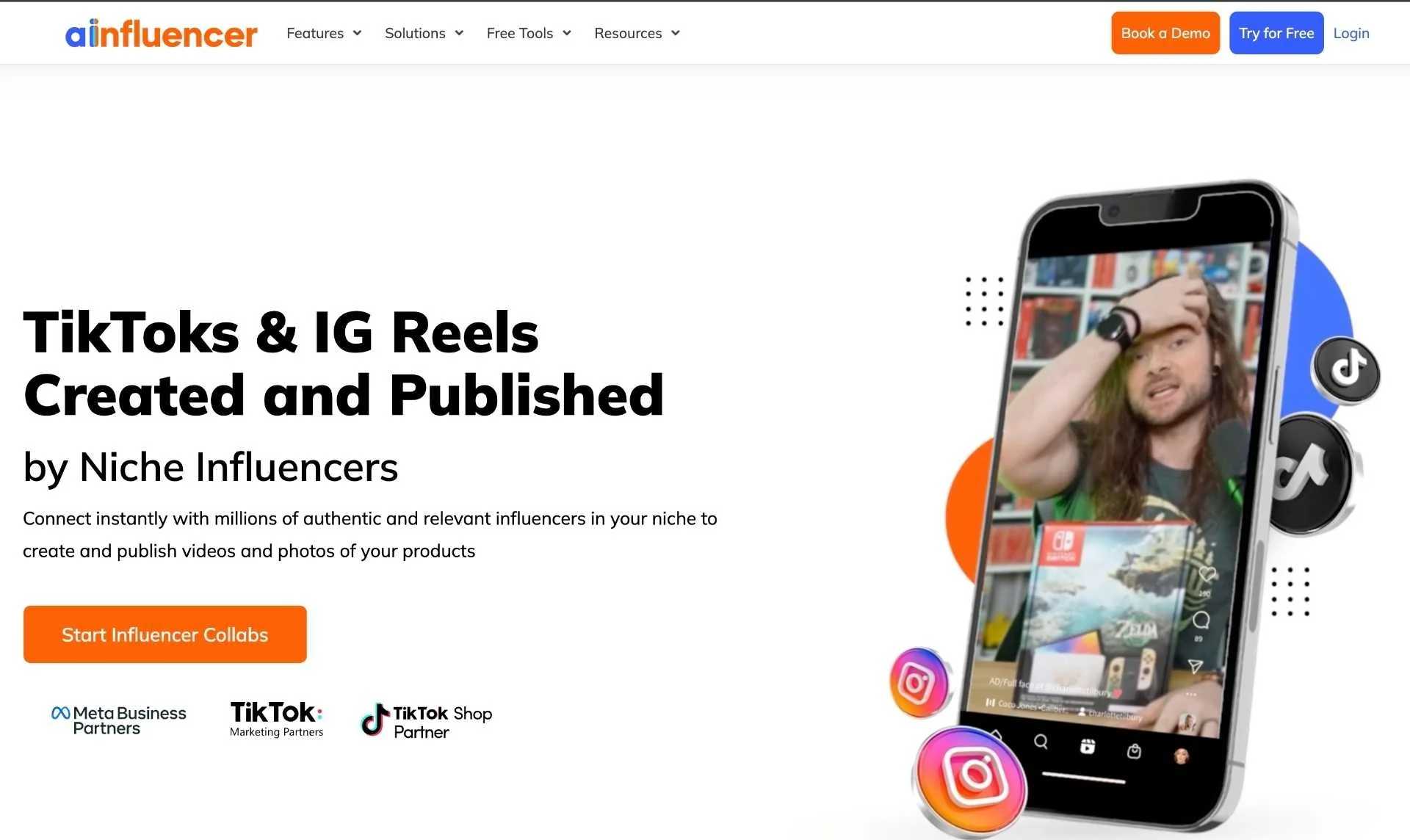
Ainfluencer is a free influencer marketing marketplace that connects brands with creators on Instagram and TikTok. It operates as a self-serve platform with built-in campaign management, escrow payments, and a large creator network, making it attractive for brands with limited budgets.
Key Features
• Marketplace with 5M+ influencers — Brands can search, filter, and invite influencers based on niche, audience, and performance metrics.
• Campaign creation and applications — Brands can create campaigns that influencers can apply to directly, reducing manual outreach.
• Escrow-based payment system — Payments are held until deliverables are completed, reducing risk for brands.
• In-app messaging and negotiation — Built-in communication tools allow brands and creators to negotiate without leaving the platform.
• AI-assisted campaign messaging — Helps generate outreach messages and campaign descriptions.
• Content library and approvals — Brands can review, approve, and store influencer content in one place.
Pricing
• Free Plan (Core Offering): $0/month
• Commission-Based Model: ~20% service fee deducted from influencer payouts
• Managed Campaign Packages (Optional)
• Viral: $7,999 (1 month)
• Scale: $9,999 (2 months)
• Super Scale: $15,000 (3 months)
• Turbo Viral: $29,999 (4 months)
• Custom pricing available depending on campaign scope
Reviews
4.8 / 5.0 (G2)
Pros
• Completely free self-serve platform — no subscription fees make it highly accessible for small brands.
• Escrow payment protection — ensures brands only pay for completed work, reducing risk.
• Large influencer marketplace with inbound applications — reduces reliance on cold outreach.
Cons
• Limited analytics and reporting depth — mostly basic engagement metrics without advanced attribution.
• Quality of influencers can vary — marketplace model means not all creators are equally professional.
• Limited integrations and automation — fewer integrations compared to more mature platforms.
Integrations
• Shopify (upcoming) — planned for product gifting and fulfillment automation.
• Instagram — core platform for influencer discovery and campaign execution.
• TikTok — supports creator campaigns and content collaboration.
• Chrome Extension — allows campaign invites directly from influencer profiles.
• Email/SMS/WhatsApp — used for outreach and communication workflows.
inBeat vs Ainfluencer
Ainfluencer is a free marketplace platform focused on self-serve influencer campaigns, while inBeat is a premium service-led solution focused on performance marketing and UGC. Ainfluencer is better for budget-conscious brands running basic campaigns, whereas inBeat is more suited for brands seeking high-quality creative and managed execution.
indaHash
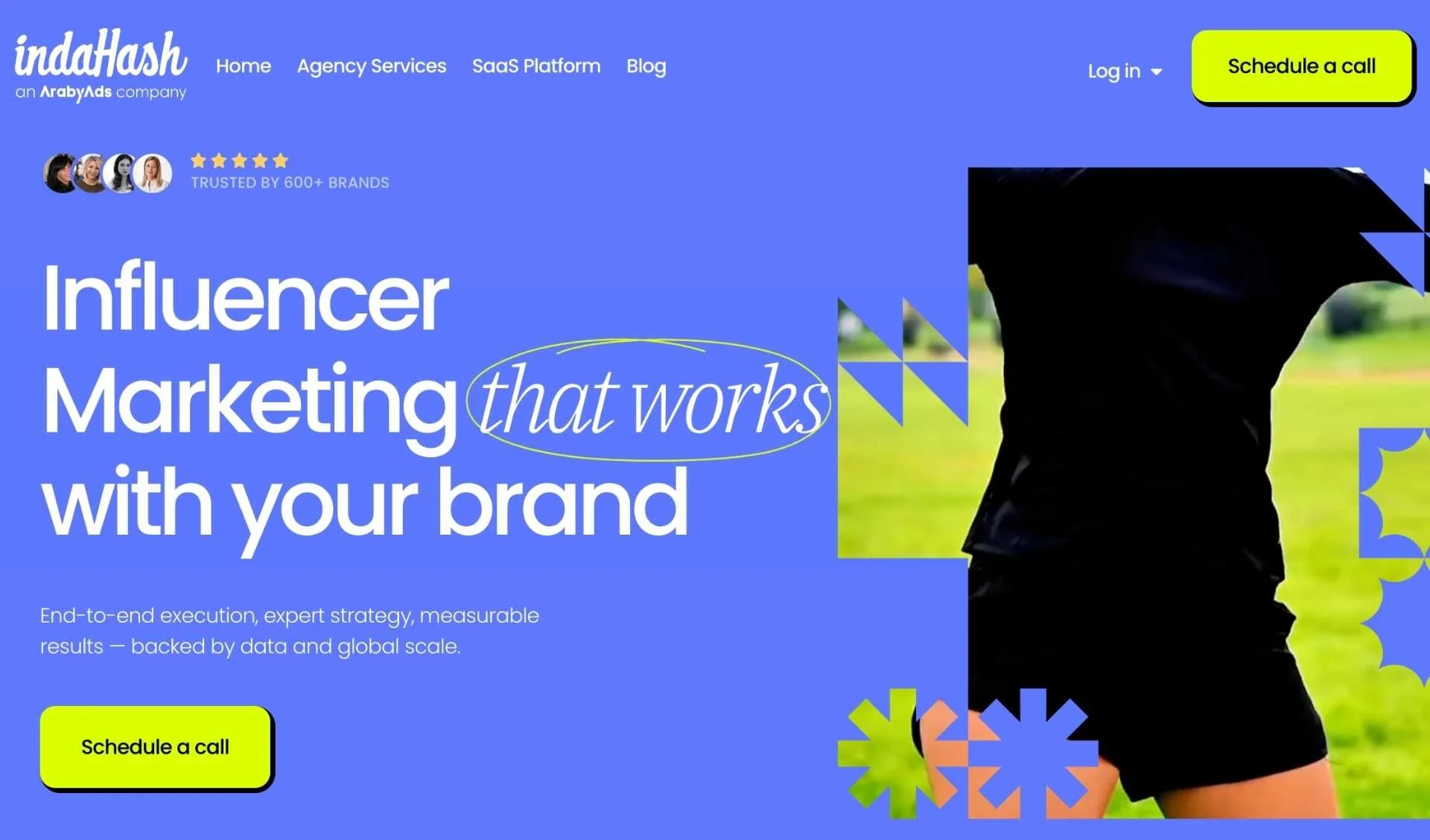
indaHash is a global influencer marketing platform that combines AI-powered campaign management with a large creator network. It focuses on running scalable campaigns across multiple markets, often for enterprise brands.
Key Features
• Global influencer network — indaHash provides access to millions of influencers across multiple regions and industries.
• AI-powered campaign automation — automates influencer selection, content distribution, and campaign optimization.
• Content distribution at scale — enables brands to launch campaigns simultaneously across multiple markets.
• Performance tracking and analytics — tracks engagement, reach, and campaign KPIs in real time.
• Mobile app for creators — influencers can apply for campaigns and submit content directly via the app.
• Managed campaign services — offers full-service support for brands running large campaigns.
Pricing
indaHash does not publicly disclose full pricing on its website, and most plans are offered on a custom or quote-based model. However, publicly listed pricing tiers include:
• Creator Discovery – $499/year
• Discovery & Campaign Management – $999/month
• White Label (Agencies) – $9,990/year
• Enterprise License – $4,999 (one-time)
• Free Trial: Available
Reviews
4.7 / 5.0 (G2)
Pros
• Strong global campaign capabilities — ideal for brands running multi-country influencer campaigns.
• AI-driven campaign automation — reduces manual effort in large-scale influencer programs.
• Mobile-first creator experience — simplifies participation and content submission for influencers.
Cons
• Less suited for small brands — enterprise focus can make it less accessible.
• Limited transparency in pricing — requires sales engagement.
• Less focus on ecommerce integrations — compared to DTC-focused tools.
Integrations
• Instagram — core platform for campaign execution.
• TikTok — supports global creator campaigns.
• YouTube — enables video-based influencer collaborations.
• Facebook — campaign amplification and tracking.
• Internal API tools — supports campaign data tracking and reporting.
inBeat vs indaHash
indaHash is built for large-scale global campaigns, while inBeat focuses more on performance-driven UGC and micro-influencer strategies. indaHash is better for enterprise campaigns across multiple markets, whereas inBeat is more tailored to DTC brands optimizing creative performance.
Influencity
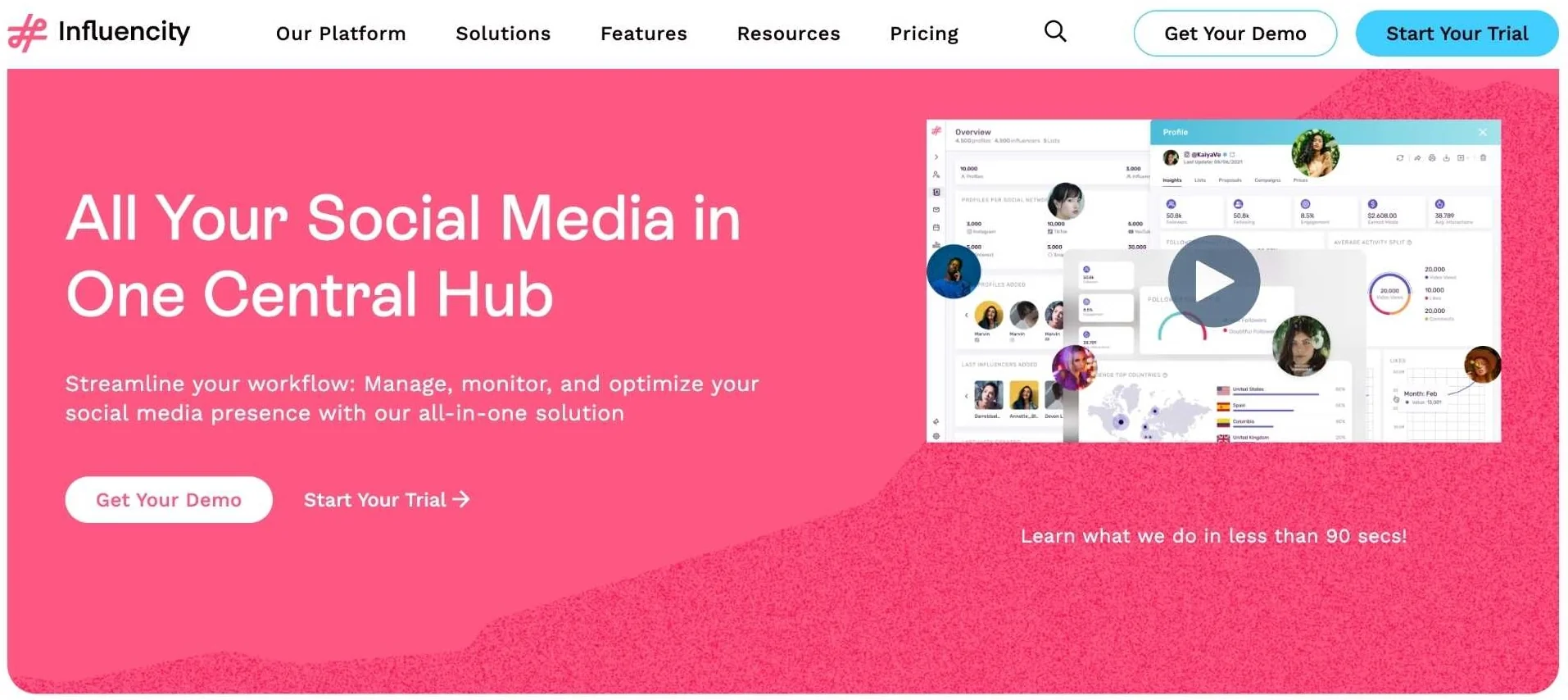
Influencity is a data-driven influencer marketing platform that offers advanced analytics, influencer discovery, and campaign management tools. It is known for its strong data capabilities and flexible pricing structure.
Key Features
• Influencer discovery with advanced filters — search creators by audience demographics, engagement, and content performance.
• Campaign management tools — manage outreach, collaborations, and content approvals in one dashboard.
• Audience analytics — provides detailed breakdowns of audience demographics and authenticity.
• Influencer CRM — track relationships, communication, and campaign history.
• Performance tracking and reporting — offers customizable reports with detailed metrics.
• Fraud detection tools — helps identify fake followers and suspicious engagement.
Pricing
Influencity offers three main pricing tiers, along with add-ons:
• Professional Plan: $318/month or $3,816/year
• Business Plan: $798/month or $9,576/year
• Enterprise Plan: Custom pricing
• Auto-Tracker Add-On: $660/year (for 50 influencers)
Reviews
4.3 / 5.0 (G2)
Pros
• Strong analytics and data accuracy — one of the most data-focused platforms in the market.
• Flexible pricing structure — more accessible than enterprise-only tools.
• Advanced audience insights — helps brands make more informed influencer decisions.
Cons
• UI can feel complex for beginners
• Limited built-in outreach automation compared to some competitors
• Less emphasis on ecommerce integrations
Integrations
• Instagram — influencer data and campaign tracking.
• TikTok — creator analytics and discovery.
• YouTube — video influencer tracking.
• Google Data Studio — export campaign data for advanced reporting.
• CSV exports — allows integration with external tools.
inBeat vs Influencity
Influencity is a data-heavy SaaS platform focused on analytics and discovery, while inBeat is more service-driven with a focus on creative execution. Influencity is ideal for teams that want deep insights and control, whereas inBeat is better for teams that want hands-on campaign support.
Modash
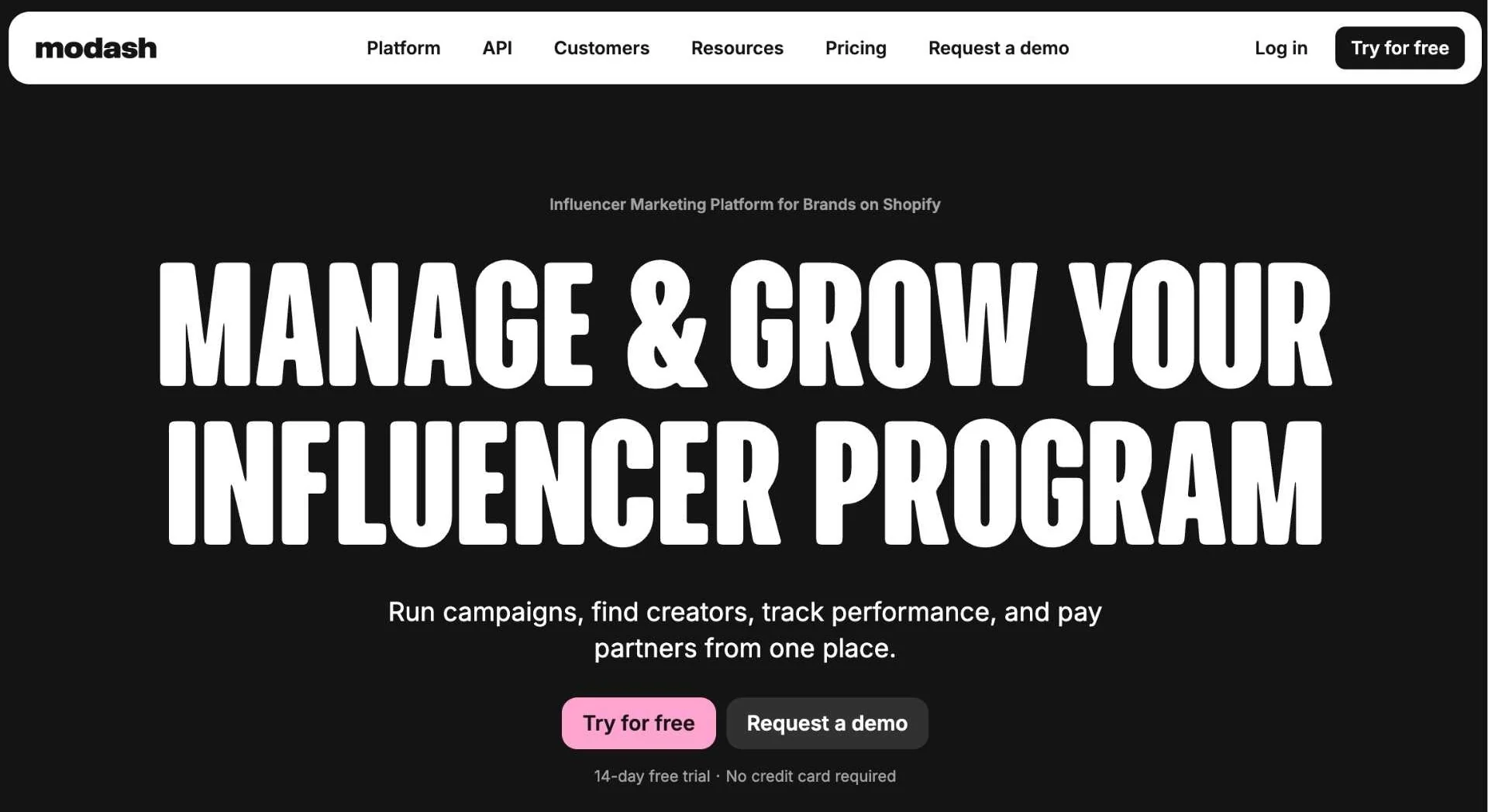
Modash is an influencer marketing platform focused on discovery, analytics, and campaign tracking, with a strong emphasis on transparency and data accuracy. It is particularly popular among ecommerce brands and agencies.
Key Features
• Large influencer database — access to 250M+ influencer profiles across Instagram, TikTok, and YouTube.
• Advanced search filters — filter by audience demographics, engagement, location, and more.
• Fake follower detection — identifies suspicious accounts and engagement patterns.
• Campaign tracking — monitor influencer posts, performance, and ROI in real time.
• Bulk outreach support — export influencer data and manage outreach externally.
• Ecommerce-friendly workflows — designed for DTC brands running influencer campaigns.
Pricing
• Essentials: ~$199/month (paid annually)
• Performance: ~$499/month (paid annually)
• Enterprise: custom pricing
• Typically billed annually, with scaling based on usage and team size.
Reviews
4.9/5.0 (Capterra)
Pros
• Highly accurate influencer data — strong reputation for transparency and data quality.
• Large global database — one of the biggest influencer datasets available.
• Simple and intuitive UI — easier to use compared to complex enterprise tools.
Cons
• Limited built-in outreach tools — relies on external tools for communication.
• No native payments or affiliate tracking
• Less full-stack than all-in-one platforms
Integrations
• Shopify — connects influencer campaigns with ecommerce tracking.
• Google Sheets — export influencer data for analysis.
• Slack — team collaboration on influencer campaigns.
• Zapier — automate workflows with other tools.
• Stripe (via integrations) — supports payment workflows externally.
inBeat vs Modash
Modash is a pure-play influencer discovery and analytics platform, while inBeat is a creator-led growth agency with tools. Modash is better for teams that want full control over influencer sourcing and data, whereas inBeat is better for brands that want execution, UGC, and performance marketing handled for them.
Final Thoughts on inBeat Alternatives
Choosing the right inBeat alternative ultimately depends on whether you need a hands-on service or a full-featured software platform. Tools like Upfluence, GRIN, and Influencer Hero offer end-to-end influencer marketing systems with strong ecommerce integrations and campaign management capabilities, while platforms like Modash and Influencity excel in data, discovery, and analytics. On the other hand, solutions like Ainfluencer and SARAL provide more accessible or cost-effective entry points for smaller teams. inBeat stands out for its performance-driven, service-led approach, but brands seeking deeper automation, scalability, or in-house control may find these alternatives better aligned with their needs.

.png)


.jpg)