

.jpg)
10 Best GRIN Alternatives • Key Criteria • GRIN Overview • Best GRIN Alternatives • Aspire • Influencer Hero • SARAL • Influencity • Captiv8 • IZEA • Modash • Klear • Traackr • IMAI • Final Thoughts • FAQs
10 Best GRIN Alternatives for Influencer Marketing
Managing influencer campaigns today goes far beyond finding a few creators on Instagram—D2C brands need robust influencer marketing software to handle discovery, outreach, gifting, affiliate tracking, and ROI measurement in one place. Platforms like GRIN have become a go-to for eCommerce teams because of their strong Shopify integrations, built-in CRM, and end-to-end workflow capabilities. However, common feedback from users highlights a few challenges: high pricing with annual commitments, occasional bugs and performance issues, and limitations in creator discovery accuracy and flexibility. These gaps have led many brands to actively explore GRIN alternatives that offer better pricing, more flexible workflows, or stronger analytics depending on their growth stage.
In this article, we’ll break down the 10 best GRIN alternatives for influencer marketing, including Aspire, Influencer Hero, SARAL, Influencity, Captiv8, IZEA, Modash, Klear, Traackr, and IMAI (InfluencerMarketing.AI), to help you find the right fit for your D2C team.
Key Criteria for Evaluating Influencer Marketing Platforms
Core Features
Evaluation of essential influencer marketing capabilities, including influencer discovery, outreach, CRM, campaign management, reporting, and content workflows.
Pricing & Flexibility
Comparison of pricing models, subscription plans, and contract terms to match different budgets and growth stages.
Customer Reviews & Satisfaction
Analysis of user feedback from trusted review platforms, focusing on usability, reliability, customer support, and overall performance.
Pros & Cons
Review of each platform’s strengths and limitations to highlight where it performs well and where it may fall short based on different use cases.
Integrations
Review of the most important integrations (e.g., Shopify and other tech tools), highlighting what each integration enables in one sentence.
GRIN Overview
GRIN is an influencer marketing and creator management platform built primarily for eCommerce brands that want to run discovery, outreach, gifting, affiliate management, payments, and reporting in one system. Its positioning is strongest with D2C teams that need tighter connections between creator campaigns and commerce data, especially around product seeding, discount codes, and revenue attribution. In recent updates, GRIN has also expanded beyond traditional campaign workflows with self-serve access, built-in social listening, a dedicated affiliate workspace, and its AI assistant, Gia.
Key Features
- Creator discovery suite: GRIN combines creator search, a web extension, inbound landing pages, social listening, and curated lists to help brands find creators through both active search and always-on recruitment.
- Influencer CRM and relationship management: The platform is built to manage the full creator journey in one workspace, from first contact to repeat partnerships, with campaign organization, collaboration tracking, and centralized communication.
- AI assistant (Gia): Gia is embedded across the platform to help with creator sourcing, outreach automation, rate guidance, onboarding, and performance management, with the goal of reducing manual work for creator marketing teams.
- Product gifting and seeding workflows: GRIN connects gifting to commerce operations so brands can let creators select products, automate fulfillment, and track seeding activity alongside campaign performance.
- Affiliate management: The newer Affiliate Hub gives brands a dedicated place to manage affiliate creators, monitor commissions, track conversions and revenue, and scale affiliate workflows without burying them inside campaign dashboards.
- Content management and UGC organization: GRIN stores, tags, and helps teams repurpose creator content so it can be reused across paid social, email, and other channels more efficiently.
- Payments and tax handling: GRIN includes creator payment workflows and says it can handle 1099 processing, which is useful for brands paying a high volume of creators.
- Reporting and analytics: GRIN’s reporting stack is designed to connect creator activity to business outcomes, including conversions, revenue, and affiliate performance, with newer data-sharing capabilities aimed at improving data flow across systems.
- Deep eCommerce and workflow integrations: GRIN is built to work with email, ecommerce, contracts, payments, and internal workflow tools so teams can reduce spreadsheet-heavy processes.
- Co-branded creator shops: Through its CreatorCommerce integration, brands can now launch personalized creator landing pages or storefronts that make affiliate and creator-led selling more commerce-ready.
Pricing
GRIN’s pricing has become more flexible recently. The company now officially offers a 30-day free trial and states that it has introduced self-serve, month-to-month pricing, rather than requiring every customer to go through a traditional sales process. Its public pricing page also indicates that the product range now spans from a Free Trial to a Complete package. That said, GRIN’s pricing is still not fully transparent across all tiers. Some sources mention that annual pricing starts at around $25,000 per year (approximately $2,050 per month).
Reviews
4.5/5.0 (G2)
Integrations
- Shopify: Connects product gifting, order fulfillment, discount codes, commissions, and sales tracking so creator campaigns tie back to ecommerce performance.
- Gmail: Lets teams manage creator outreach inside GRIN, using templates, sequences, and engagement tracking for opens, clicks, and replies.
- Klaviyo: Supports email-connected creator communication workflows so teams can centralize outreach and performance signals in the same system.
- PayPal: Enables creator payments directly through the workflow stack, helping brands handle payouts without moving work into separate finance tools.
- DocuSign: Helps brands manage contracts and approvals as part of the creator workflow instead of handling agreements manually outside the platform.
Pros
- Gia is one of the more ambitious AI additions in the category
Rather than acting as a simple writing assistant, it is positioned to help with creator discovery, outreach, rate guidance, onboarding, and ongoing performance optimization across the workflow. - Affiliate Hub adds a dedicated affiliate layer instead of forcing affiliate activity into standard campaign views
That matters for D2C brands that increasingly treat creator affiliates as an always-on revenue channel, not just a campaign add-on. - GRIN’s newer commerce features go beyond standard influencer tracking
The CreatorCommerce integration enables co-branded creator shops and landing pages, which gives brands another way to turn creator trust into direct sales.
Common Drawbacks of GRIN
Pricing transparency has historically been a friction point
Even with the newer self-serve model, public pricing is still not consistently clear across sources, and older feedback frequently points to expensive commitments and confusion around what is included.
Creator discovery quality is not always as strong as the sales pitch suggests
A recurring complaint is that discovery outputs can include irrelevant matches, duplicates, or limited filtering logic, which means teams still spend extra time vetting creators manually.
The platform can feel cumbersome in day-to-day use
Users regularly mention slow loading, technical glitches, duplicate-profile issues, and a workflow that can become harder to manage as creator volume increases.
Support and payouts are a concern for some teams and creators
While many customers have positive experiences, negative feedback consistently points to slow issue resolution, unresolved billing or contract disputes, and occasional payment-handling problems serious enough to push brands toward alternatives.
Best GRIN Alternatives
| TOOL | REVIEWS | BEST FOR | TRIAL INFO | PRICING | ||
|---|---|---|---|---|---|---|
1 |

|
⭐ | Influencer partnerships | Book Demo | Pricing | Website |
2 |

|
⭐ | Influencer CRM & automation | Book Demo | Pricing | Website |
3 |

|
⭐ | Influencer outreach | Book Demo | Pricing | Website |
4 |

|
⭐ | Campaign management | Book Demo | Pricing | Website |
5 |
|
⭐ | Enterprise influencer campaigns | Book Demo | Pricing | Website |
6 |
|
⭐ | Influencer marketplace | Book Demo | Pricing | Website |
7 |

|
⭐ | Influencer discovery | Book Demo | Pricing | Website |
8 |
|
⭐ | Influencer analytics | Book Demo | Pricing | Website |
9 |

|
⭐ | Enterprise influencer analytics | Book Demo | Pricing | Website |
10 |

|
⭐ | AI influencer discovery & analytics | Book Demo | Pricing | Website |
1. Aspire
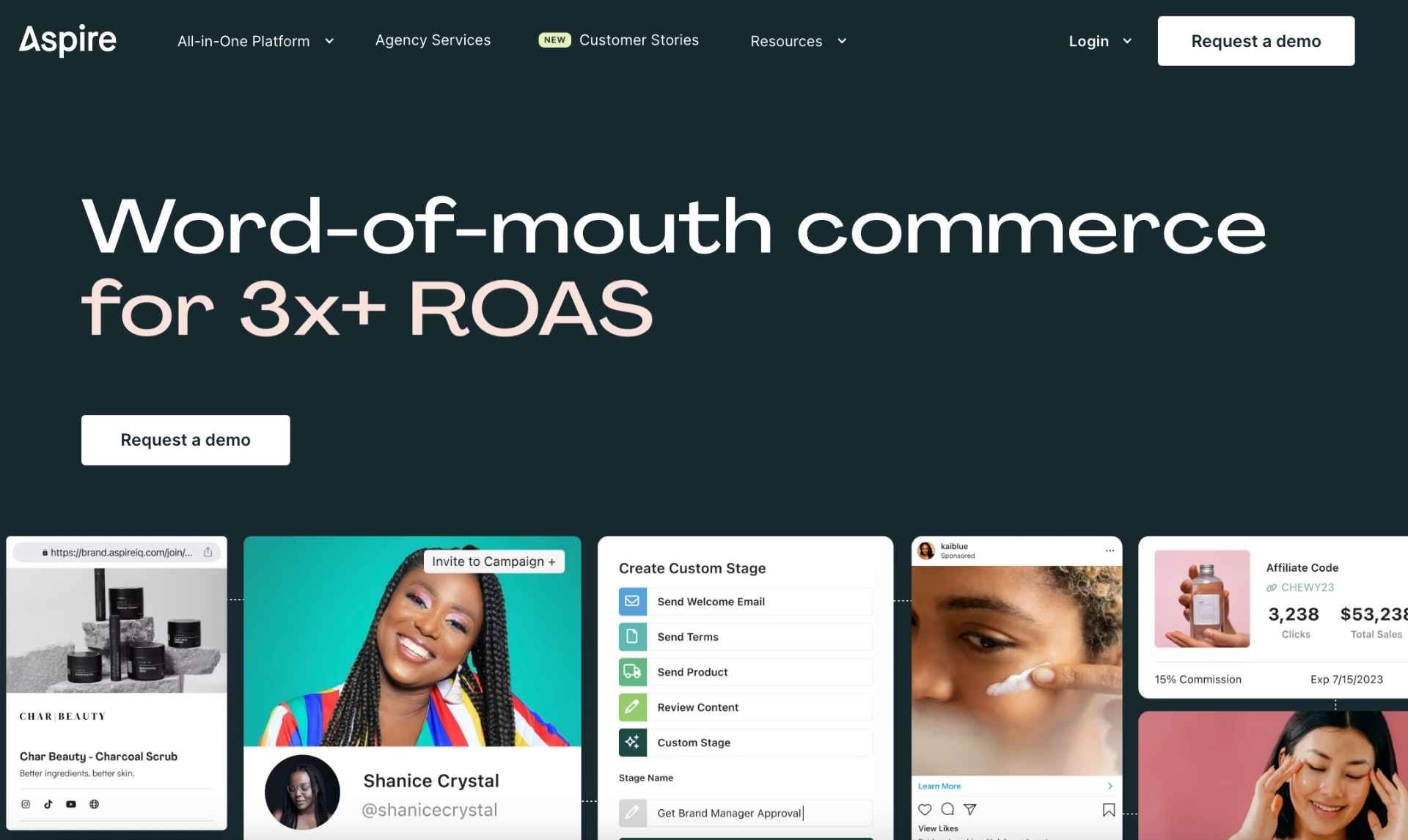
Aspire is an influencer marketing platform built for eCommerce brands that want to manage discovery, inbound creator applications, outreach, gifting, affiliate tracking, and campaign reporting in one system. It is especially strong for brands that care about first-party platform data, Shopify-connected workflows, and filling campaigns through an active creator marketplace rather than relying only on cold outreach. Recent product updates have leaned further into AI-powered Instagram discovery and a larger creator marketplace, which reinforces Aspire’s positioning as a more commerce-focused alternative to GRIN for brands that want both workflow automation and creator demand generation.
Key Features
- First-party creator discovery: Aspire uses direct partnerships and first-party integrations with platforms like Meta and TikTok to power creator discovery with more trusted audience and performance data.
- Creator Marketplace: Brands can post opportunities and receive inbound applications from a marketplace of 1M+ creators, which helps reduce manual prospecting.
- Campaign workflow management: Aspire covers the full campaign flow, including recruiting, briefs, contracts, approvals, post tracking, and reporting, with automations built into the workflow.
- Shopify-powered gifting and affiliate tracking: Brands can ship products, generate promo codes and links, and connect creator activity back to sales.
- Shared email outreach: Gmail and Outlook integrations let teams send outreach from their own inboxes while keeping conversations centralized for the team.
- Payments and commissions: Aspire supports tiered commissions and creator payouts through PayPal, making it easier to run affiliate-style programs inside the same workflow.
- Automations and templates: Aspire promotes automated campaign execution and repeatable workflows to cut down on manual follow-up work.
Pricing
A mid-tier plan for a brand targeting roughly 20 to 40 creators per month was quoted at about $2,300/month, including unlimited user seats and up to 500 creators in the CRM.
Reviews
4.0 /5.0 (Capterra)
Pros
- First-party social data is a real differentiator
Aspire’s direct partnerships with Meta and TikTok support more trustworthy discovery and reporting than platforms that rely heavily on scraped third-party data. - The Creator Marketplace is one of the strongest inbound creator channels in this category. That matters for D2C teams that want creators applying to them instead of depending entirely on outbound prospecting.
- Aspire has continued shipping practical workflow improvements
Recent additions around AI Instagram Discovery and creator marketplace expansion make the platform more useful for brands that need faster sourcing and less manual campaign setup.
Cons
- Pricing is not transparent
Brands typically have to go through a sales process to understand cost, which can slow evaluation and make budgeting harder. - Some users report friction in day-to-day use
Common complaints include navigation complexity, account connection issues, and inconsistent reporting depth. - It is strongest on core creator channels, not every edge platform
Aspire’s public materials emphasize Instagram, TikTok, YouTube, and commerce workflows more than a broad long-tail network strategy.
Integrations
- Shopify: Syncs commerce data, automates product seeding, and connects creator activity to sales and customer records.
- Gmail: Lets teams send outreach from their brand email and manage a shared creator inbox.
- Microsoft Outlook: Gives teams the same shared-inbox workflow for outreach and response management in Outlook.
- PayPal: Supports creator payouts and commission payments inside the campaign workflow.
- WooCommerce: Connects campaign execution with store operations for product seeding and sales tracking.
GRIN vs Aspire
GRIN and Aspire both target eCommerce brands, but they lean in different directions. GRIN is stronger around creator CRM, UGC organization, and its broader all-in-one creator management stack, while Aspire stands out for first-party platform data, a much stronger inbound marketplace motion, and recent AI discovery updates. For D2C brands that want creators to apply directly and want less reliance on scraped data, Aspire is usually the more compelling option; for brands prioritizing creator relationship infrastructure and embedded commerce workflows, GRIN may still feel more mature.
2. Influencer Hero

Influencer Hero is an all-in-one influencer marketing platform aimed at growing eCommerce and D2C brands that want discovery, influencer outreach, CRM, gifting, affiliate tracking, content management, and reporting under one roof. Its positioning is especially strong for teams that want a campaign-centric workflow, AI-assisted outreach, and broader eCommerce compatibility beyond Shopify alone. Compared with GRIN, it is often more appealing to smaller and mid-sized brands that want more pricing flexibility and less enterprise-heavy packaging.
Key Features
- Influencer discovery: Find creators across major platforms using advanced filters for audience, engagement, location, and niche, with built-in fraud detection and lookalike suggestions
- Outreach & automation: Scale personalized email outreach with AI-generated messages, automated follow-ups, and multi-step sequences
- Creator CRM: Manage influencer relationships in a centralized pipeline, tracking conversations, campaign stages, and deliverables
- Gifting workflows: Streamline product seeding with automated order creation, shipping, and delivery tracking
- Affiliate tracking & payouts: Generate unique links and discount codes, track performance, and handle commissions and payments in one system
- Campaign analytics & ROI tracking: Monitor performance across engagement, clicks, conversions, and revenue with real-time reporting dashboards
- UGC library: Automatically collect and organize influencer content for reuse across ads, social media, and product pages
- Application pages & storefronts: Capture inbound creators through branded application pages and enable influencers to promote products via custom storefronts
- eCommerce integrations: Sync with platforms like Shopify and WooCommerce to connect influencer activity directly to sales
- API & integrations: Extend workflows with API access and integrations like Klaviyo, Slack, Zapier, and email providers
Pricing
Influencer Hero pricing based on outreach volume and you can have unlimited creators in your CRM:
- Standard — $649/month (up to 1,000 outreach messages per month)
- Pro — $1,049/month (up to 5,000 outreach messages per month)
- Business — $2,490/month (up to 10,000 outreach messages per month)
- Custom / Agency — Tailored pricing
Custom pricing is available for agencies and larger teams
Reviews
5.0/5.0 (Capterra)
Pros
- Campaign-centric CRM is the core differentiator. Influencer Hero is built around high-volume campaign orchestration, with boards, bulk actions, and automated progress management rather than a lighter contact database approach.
- It supports a broader eCommerce stack than many tools in this category. Influencer Hero highlights integrations for Shopify, WooCommerce, Magento, email providers, and custom builds, which is helpful for brands that are not Shopify-only.
- The AI layer is practical, not just cosmetic. Its pitch focuses on personalized outreach, workflow automation, predictive recommendations, and scalable campaign execution.
Cons
- Steep learning curve: Feature depth means onboarding and setup can take time
- Higher pricing for smaller teams: May be less accessible for early-stage brands or those with limited budgets
Integrations
- Shopify: Supports gifting, affiliate tracking, and commerce attribution for influencer campaigns.
- WooCommerce: Extends the same gifting and sales tracking workflows to WooCommerce stores.
- Magento: Helps enterprise and non-Shopify brands connect store data to creator campaigns.
- Slack: Sends campaign updates, approvals, and internal alerts to team channels to keep workflows aligned and moving faster.
- Zapier: Connects Influencer Hero with hundreds of tools to automate workflows such as notifications, reporting, and data syncing.
- DocuSign: Streamlines contracts and agreements with influencers through automated document workflows.
GRIN vs Influencer Hero
GRIN is still the more recognized enterprise-style platform, but Influencer Hero is often the more flexible option for brands that want campaign automation, broader eCommerce integrations, and lower entry pricing. GRIN has the stronger brand, deeper eCommerce positioning, and larger installed base, while Influencer Hero feels more attractive for teams that want AI-assisted outreach and a more operations-first CRM without GRIN-level cost and commitment.
3. SARAL

SARAL positions itself as a simple but full-stack influencer marketing platform for ecommerce brands that want to run discovery, outreach, seeding, affiliate tracking, ambassador programs, reporting, and payments without stitching together multiple tools. Its messaging is especially tailored to DTC operators who want a cleaner, lower-friction system than enterprise-heavy platforms. That makes it one of the more relevant GRIN alternatives for smaller and mid-sized eCommerce brands that care about operational simplicity and predictable ROI rather than enterprise bells and whistles.
Key Features
- Influencer discovery and outreach: SARAL helps brands find creators in bulk, automate personalized outreach, and manage replies in one place.
- Seeding and gifting workflows: The platform is designed to support product seeding campaigns rather than leaving brands to manage shipments manually.
- Affiliate tracking and codes: Brands can generate discount codes, affiliate links, and track affiliate performance from inside SARAL.
- Relationship management: SARAL is built to centralize creator relationships and reduce spreadsheet-driven workflows.
- Social listening and post tracking: Higher plans include stronger post tracking and social listening features.
- Payments: SARAL includes influencer payment support as part of its end-to-end workflow.
- Ambassador workflows: The platform also supports turning customers and inbound creators into ambassador-style programs.
Pricing
SARAL has relatively transparent public pricing. Its official pricing page shows Starter at $12k/year or $3.6k/quarter, Business at $15k/year or $4.5k/quarter, and Professional at $25k/year or $7.5k/quarter, with discounts available on annual plans. The plans scale primarily by active partnerships, new influencers saved monthly, post tracking, social listening, and seat count.
Reviews
4.7/5.0 (G2)
Pros
- SARAL is one of the cleaner “all-in-one without enterprise bloat” options. Its core pitch is that brands can stop juggling several tools just to run influencer seeding and affiliate workflows.
- Its pricing is much more transparent than many competitors. For D2C operators comparing tools quickly, that alone is a meaningful advantage.
- It is especially strong for seeding-plus-affiliate programs. The product positioning consistently emphasizes shipping products, tracking sales, and turning creators or customers into ambassadors.
Cons
- It is not the deepest enterprise platform. Brands with highly complex procurement, global governance, or broader enterprise data needs may outgrow it faster than they would GRIN or similar enterprise tools.
- Public third-party review coverage is still lighter than some larger competitors. That gives buyers fewer independent data points than they get with older category leaders.
- The product is optimized for ecommerce workflows first. That is a strength for DTC brands, but less ideal for organizations looking for a wider multi-channel enterprise creator stack.
Integrations
- Shopify: Connects store data so brands can send products, generate discount codes, create affiliate links, and track campaign performance.
- WooCommerce: Extends SARAL’s seeding and affiliate workflows to WooCommerce stores.
- Gmail: Supports email connectivity for creator outreach and communication.
- Klaviyo: Helps connect influencer workflows with owned retention and lifecycle marketing systems.
- Slack: Gives teams a way to keep campaign communication and workflow updates tied into internal collaboration.
GRIN vs SARAL
GRIN is the more established enterprise-grade platform, while SARAL is the more straightforward choice for ecommerce brands that want a simpler operating system for seeding, affiliate tracking, and creator outreach. If your team values transparent pricing, lower complexity, and a practical DTC workflow, SARAL is usually the easier option; if you need a broader creator management stack, deeper enterprise polish, or more mature large-program infrastructure, GRIN still has the edge.
4. Influencity

Influencity is a long-running influencer marketing platform that covers discovery, relationship management, outreach, campaign execution, seeding, payments, and reporting in one modular system. It positions itself as a flexible platform for brands and agencies that want strong analytics, public-data-based discovery, and a broader suite that extends into social media management and social listening. For brands comparing it with GRIN, the biggest difference is that Influencity leans more heavily into data breadth, modularity, and public-profile discovery rather than GRIN’s stronger eCommerce-native brand identity.
Key Features
- Influencer discovery and analysis: Influencity lets users find, filter, and analyze creators based on campaign fit and audience data.
- IRM and outreach: The platform supports influencer relationship management, inbox integration, and email sequences for structured outreach.
- Campaign management: Users can plan and run campaigns from one platform instead of spreading work across separate tools.
- Seeding and Shopify-connected gifting: Influencity supports seeding programs through Shopify integration.
- Payments: The platform now promotes influencer payments, including automated payouts and payment tracking.
- Social listening and competitor analysis: Beyond campaign execution, Influencity also includes broader social listening and brand intelligence tools.
- Analytics and reporting: Reporting spans campaign measurement and social analytics, with trial and lower-cost entry points available on some plans.
Pricing
Influencity currently lists pricing publicly:
- Professional Plan: $318/month or $3,816/year
- Business Plan: $798/month or $9,576/year
- Enterprise Plan: Custom pricing
Reviews
4.3 / 5.0 (G2)
Pros
- Influencity’s biggest strength is data flexibility. It combines creator discovery, analytics, social listening, and campaign execution in a way that appeals to teams that want more than just a creator CRM.
- It has become more complete operationally. Email integration, payment tooling, seeding workflows, and reporting now make it feel more end-to-end than many people assume.
- Pricing is more accessible than some enterprise competitors. The public entry point is much lower than tools that start with large annual commitments.
Cons
- The interface can still feel a bit fiddly for some users. Common complaints include filters resetting and some workflow friction during discovery.
- It is a tool, not a managed marketplace. Teams still need to do the work of hiring and managing creators rather than expecting an agency-like service layer.
- Modularity can make pricing and packaging less straightforward. Buyers need to understand which bundles and add-ons they actually need.
Integrations
- Shopify: Powers product seeding, discount codes, and sales attribution inside creator programs.
- Gmail / Office 365 / Outlook: Connects inboxes so outreach can be managed from within Influencity.
- PayPal: Supports PayPal-based influencer payment workflows.
- Email sequences: Built-in sequence tooling helps automate follow-up across creator outreach.
- Social Ads / broader social suite: Influencity extends beyond influencer workflows into social ads and social media tools for teams that want a wider marketing stack.
GRIN vs Influencity
GRIN is more clearly eCommerce-native and creator-program-centric, while Influencity offers a broader mix of creator discovery, social listening, and modular campaign tooling at a lower public entry price. If your team mainly wants a DTC-focused creator operating system tied tightly to gifting and commerce, GRIN may feel more purpose-built; if you want a more flexible data platform with social intelligence and a lower-cost starting point, Influencity is often the better fit.
5. Captiv8
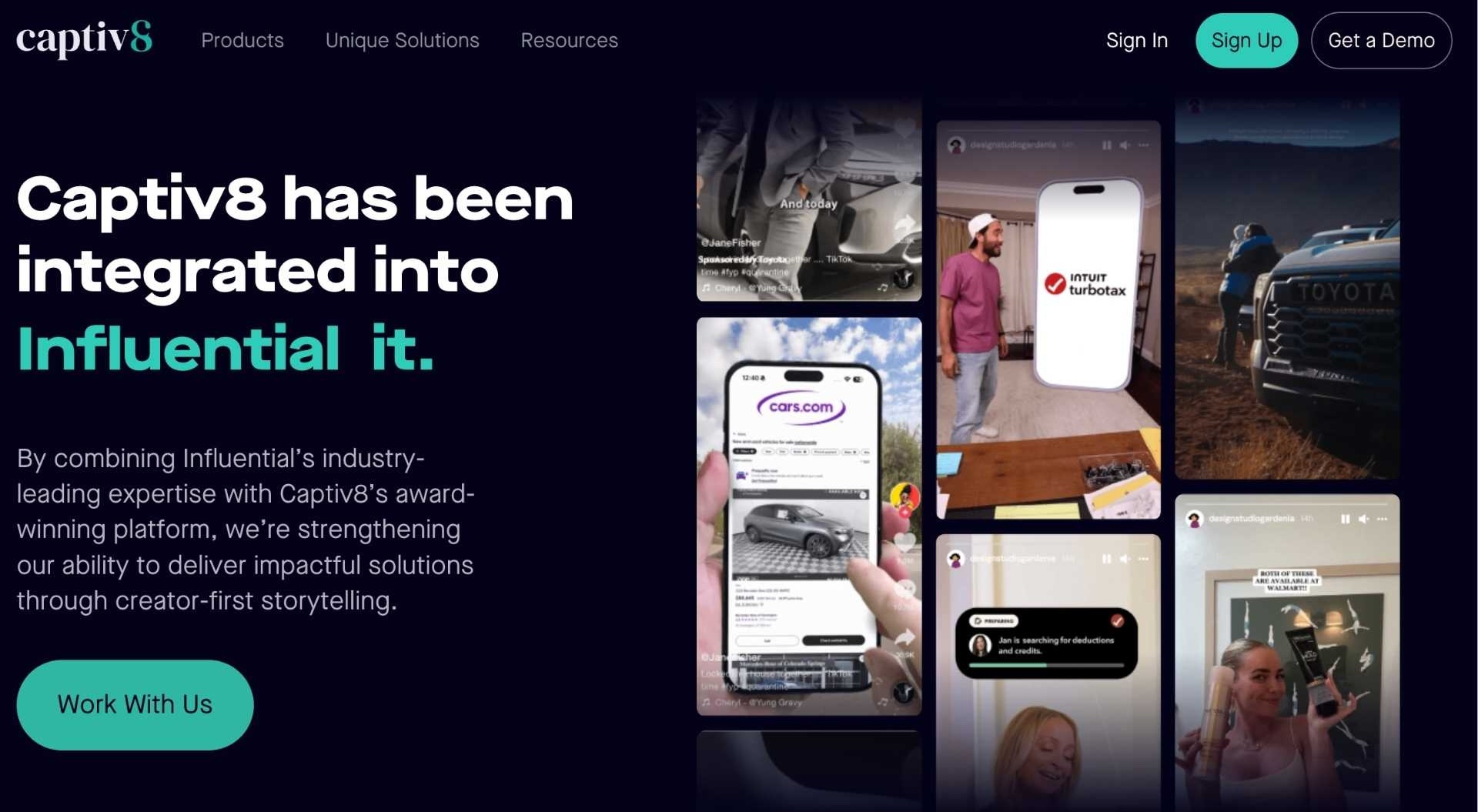
Captiv8 is an enterprise-oriented influencer marketing platform designed to help brands discover creators, run campaigns, manage payments, track ROI, and amplify creator content through paid media and commerce features. It is best suited to larger organizations that want advanced reporting, competitive intelligence, and deeper paid-media and affiliate capabilities rather than a lightweight DTC workflow tool. Compared with GRIN, Captiv8 is more enterprise and media-centric, while GRIN remains more directly associated with eCommerce-native creator operations.
Key Features
- Unified campaign management: Captiv8 is built to plan, discover, manage, and measure creator partnerships in one platform.
- Affiliate commerce suite: The platform includes a creator affiliate marketing suite designed for attribution and commerce at scale.
- Paid media amplification: Captiv8 supports boosting creator content through direct paid media integrations, including Facebook Marketing API and TikTok Ads API.
- Payments: Captiv8 promotes global creator payment workflows with real-time tracking and budget management.
- Analytics API and BI integrations: Its public API includes pre-built integrations with tools like Looker, Tableau, and Google Analytics.
- Shopify-connected commerce: Captiv8 has expanded its Shopify integration to support social commerce use cases.
- Competitive intelligence and reporting customization: Provided materials highlight competitor brand tracking, safety filtering, customized KPI reporting, and reusable saved filters.
Pricing
Starts from around $2,000/month or $25,000/year with an annual commitment, plus a $3,000 one-time onboarding fee.
Reviews
4.7 / 5.0 (G2)
Pros
- Captiv8 is one of the stronger options for creator paid media. The direct integration with Facebook Marketing API and TikTok Ads API is a meaningful differentiator for brands that want to boost creator content at scale.
- Its BI integration story is stronger than most. Pre-built connections to Looker, Tableau, and Google Analytics make it attractive to performance teams that want creator data inside wider reporting environments.
- It goes deeper on commerce-oriented creator programs than many people realize. The affiliate commerce suite gives enterprise brands more room to connect creators to attributable sales.
Cons
- It is expensive and clearly aimed at bigger brands. Public sources hide pricing, and recent quoted pricing places it well above what most emerging DTC teams want to spend.
- Customer support and payment handling come up repeatedly in negative feedback. That is one of the biggest reasons teams start looking elsewhere.
- The platform can be more than smaller teams actually need. Its enterprise orientation is a strength for some buyers and a drawback for others.
Integrations
- Shopify: Supports social commerce and creator-driven selling through Shopify-connected workflows.
- Google Analytics: Lets teams push campaign data into broader marketing measurement and reporting.
- Looker: Gives analytics teams a pre-built route for BI dashboards.
- Tableau: Supports more customized analytics and enterprise reporting environments.
- TikTok Ads API / Facebook Marketing API: Enables paid amplification of creator content directly through major ad ecosystems.
GRIN vs Captiv8
GRIN is generally the better fit for D2C brands that want creator CRM, gifting, affiliate tracking, and eCommerce-native workflows without a heavy enterprise media layer. Captiv8 is the stronger option for larger organizations that care about paid amplification, BI integrations, and more enterprise-style commerce and reporting infrastructure. For most mid-market DTC teams, GRIN will usually feel more focused; for large brands running creator plus paid media together, Captiv8 can be the more strategic platform.


6. IZEA
IZEA is one of the older names in the creator economy software space and offers both managed services and its self-serve platform, IZEA Flex. For brands evaluating alternatives to GRIN, IZEA Flex is the relevant product: it combines creator discovery, relationship management, contracts, tracking, payments, and social monitoring at a much lower public starting price than most enterprise platforms. It is often more attractive to teams that want broad functionality without jumping straight into a high annual commitment.
Key Features
- Creator discovery: IZEA Flex includes discovery across millions of social profiles with channel, demographic, and location filters.
- Relationship management: Brands can manage contacts, lists, and creator records, with contact data updated from creator social handles.
- Campaign tracking and social monitoring: Flex includes Tracking Links, ContentMine, and ShareMonitor for campaign, content, and mention tracking.
- Contracts and creator offers: IZEA highlights contract templates, e-signature services, and offer management inside the platform.
- Creator payments: Power plans include transactions and Direct Pay-style tools for compensating creators.
- Generative AI tools: IZEA includes AI tools inside Flex, including IZZY and other AI-assisted campaign capabilities.
Pricing
Not publicly disclosed
Reviews
3.9/ 5.0 (G2)
Pros
- IZEA’s public pricing is far more accessible than most enterprise tools. That makes it one of the easier platforms to test if you want software rather than a high-ticket annual contract.
- The product has added practical workflow upgrades without pushing pricing up sharply. Gmail integration and the Flex Budget Suite are good examples of operational improvements for campaign teams.
- It combines discovery, contracts, tracking, and payments in one dashboard. For many teams, that is enough functionality without needing a more expensive enterprise stack.
Cons
- Usability can still be uneven. Feedback mentions search issues, timeouts, unread-message quirks, and buried information in the interface.
- The platform is not as polished for high-end D2C commerce workflows as GRIN. IZEA is broader and more affordable, but less tightly associated with gifting and affiliate infrastructure for product-led brands.
- B2B and niche creator discovery can feel thinner in some use cases. That comes up in user feedback for teams looking outside mainstream influencer categories.
Integrations
- Shopify: Starter includes one integration option and official materials highlight Shopify as a core Flex integration for commerce-linked creator programs.
- Google Analytics: available as a core integration option for tracking and performance analysis.
- Gmail: automatically associates creator emails with records, campaigns, payments, and content inside Flex.
- Direct Pay / Transactions: Power plans support creator payment workflows inside the platform.
- ContentMine / ShareMonitor: tie content storage and social monitoring directly to creator campaigns.
GRIN vs IZEA
GRIN is more purpose-built for eCommerce brands that want deep creator CRM, gifting, and affiliate workflows around D2C operations. IZEA is the more budget-accessible option, with broader all-in-one functionality and lighter entry pricing, but it is less specialized around commerce-first creator programs.
7. Modash
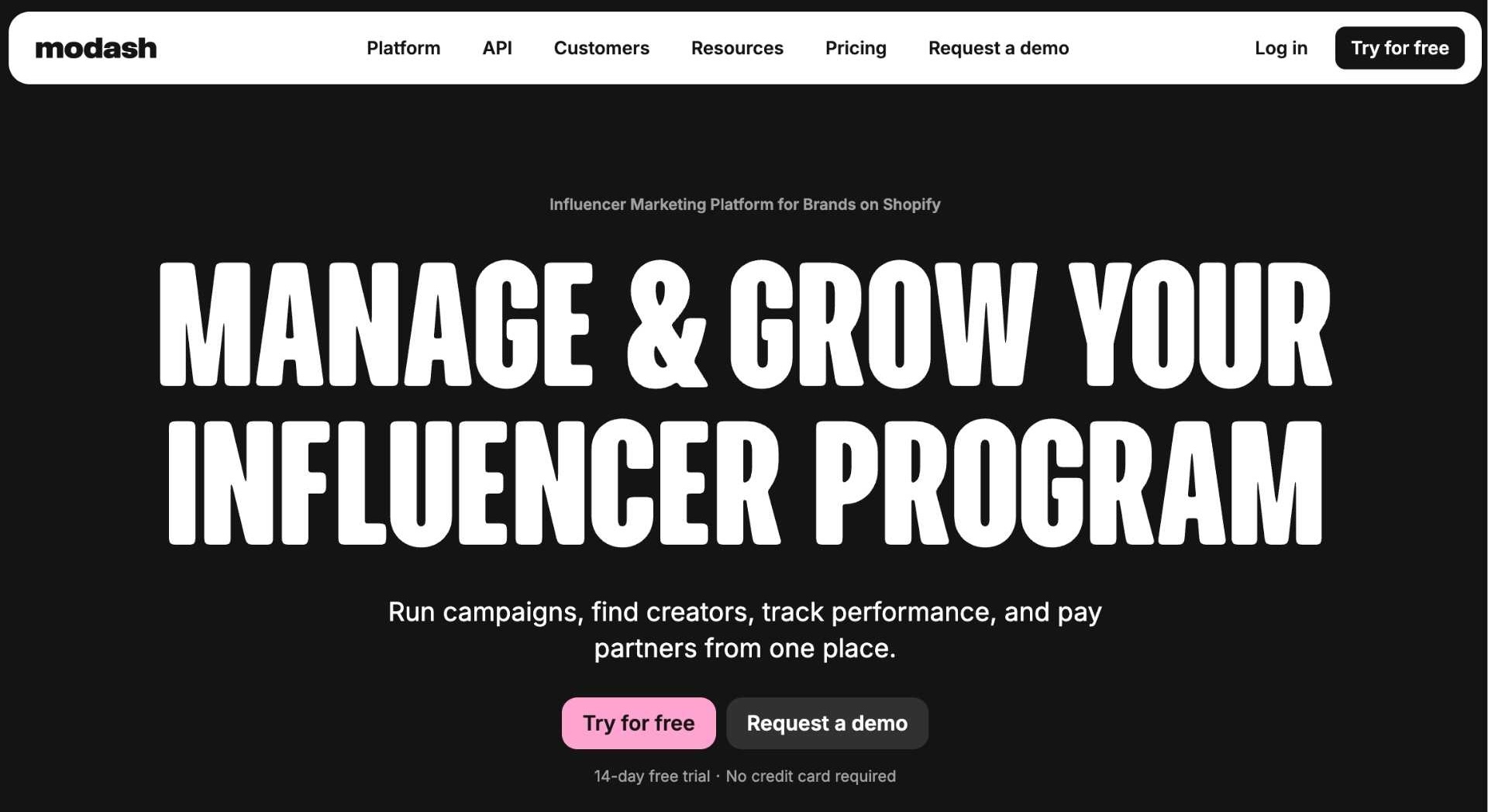
Modash is an influencer marketing platform built primarily for Shopify brands that want discovery, outreach, gifting, affiliate tracking, payments, and campaign measurement in one workflow. Its positioning is more focused than GRIN’s: instead of trying to be a broad enterprise platform, Modash leans into fast execution for D2C teams, especially those running gifting and affiliate-heavy programs across Instagram, TikTok, and YouTube. It also stands out for its public creator database, transparent pricing, and self-serve trial model.
Key Features
- Large public creator database: Modash lets brands search a very large pool of public creator profiles rather than relying only on opt-in talent, which gives teams more room to find niche creators.
- Advanced discovery and vetting: Brands can filter creators by niche, audience demographics, engagement, fake followers, overlap, and other fit signals before outreach.
- CRM and outreach workflows: The platform includes creator lists, relationship tracking, email outreach, and status management so teams can move from sourcing to negotiation in one place.
- Shopify gifting and affiliate tracking: Modash’s Shopify connection supports product orders, discount codes, affiliate links, and redemption tracking inside the platform.
- Performance tracking and payments: Brands can monitor campaign content, clicks, sales, and creator performance, then pay creators from the same workflow.
- Email integration: Modash includes email workflows as a core product area for recruiting and managing creator communication.
Pricing
- Essentials: starts at $199/month billed yearly or $299 month-to-month, for campaigns with up to 100 creators.
- Enterprise: starts at $14,700/year, with custom usage for larger programs above 250 creators.
- Free trial: Modash offers a 14-day free trial with no credit card required.
Reviews
4.9/5.0 (Capterra)
Pros
- Transparent self-serve pricing is a real advantage. Unlike many competitors, Modash clearly publishes entry pricing and gives brands a free trial, which makes evaluation easier for lean D2C teams.
- Its Shopify-first workflow is one of the clearest in the category. Product gifting, promo codes, affiliate links, and sales attribution are built directly around Shopify operations.
- The platform has kept shipping workflow improvements. Modash has continued expanding its product around discover, manage, track, pay, API, and email integration, while also rolling out newer workflow tooling over time.
Cons
- It is still heavily Shopify-centered. That is great for Shopify brands, but less appealing if your stack is built around WooCommerce, Magento, or a broader enterprise commerce setup.
- Some users still report bugs or lighter workflow depth in certain areas. Feedback points to occasional platform issues and some limitations versus more enterprise-heavy tools. (G2)
- UGC rights management and paid amplification are less robust than some enterprise platforms. Teams may still need to handle licensing and certain paid media workflows outside the platform.
Integrations
- Shopify: connect product gifting, discount codes, affiliate links, order flows, and sales tracking directly to creator campaigns.
- Email integration: manage recruiting and creator communication from inside Modash rather than switching between tools.
- API: access creator and workflow data programmatically for custom reporting or internal systems.
- Creator payments: pay creators from inside the same workflow used to manage discovery and campaigns.
- Campaign tracking stack: connect performance monitoring, content tracking, and creator relationship management in one system.
GRIN vs Modash
GRIN is broader and more enterprise-leaning, while Modash is more focused, easier to trial, and generally simpler for Shopify brands that want to move fast. Modash is especially strong for discovery, gifting, affiliate tracking, and transparent pricing, while GRIN offers a deeper creator CRM and a wider all-in-one stack for brands that want more infrastructure around long-term creator program management.
8. Klear
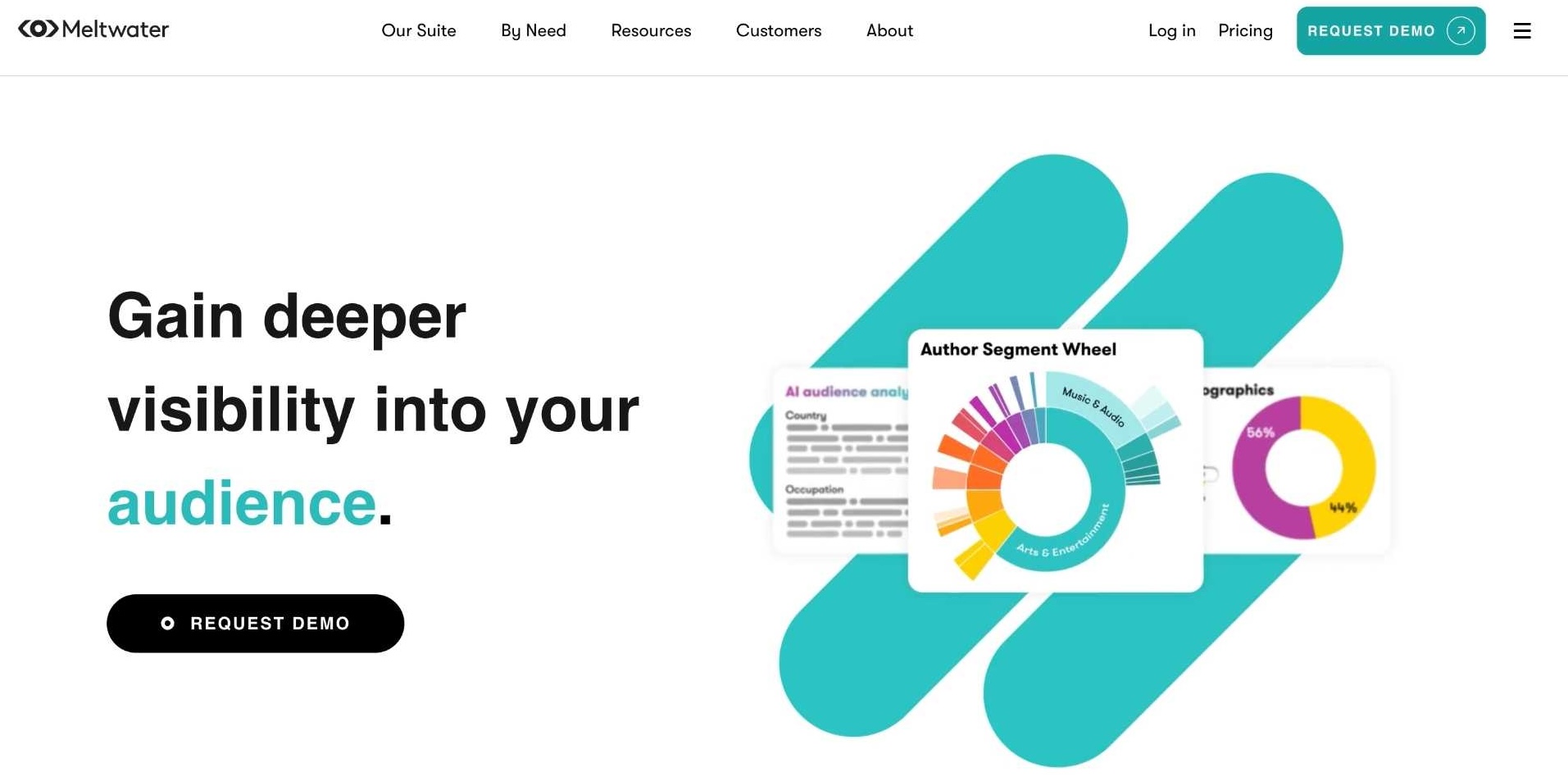
Klear, now part of Meltwater’s influencer marketing suite, is built for brands that want creator discovery, campaign workflows, competitive benchmarking, and reporting inside a broader media intelligence ecosystem. Compared with GRIN, Klear is less eCommerce-native and more attractive to teams that want influencer marketing tied closely to social listening, consumer insights, and cross-channel brand monitoring. It is especially relevant for larger brands running multi-market programs and internal reporting-heavy campaigns.
Key Features
- AI-powered influencer search: Klear supports topic, text, and image-based search with advanced filters to help teams find relevant creators faster.
- Campaign workflows: The platform includes briefs, contracts, content collaboration, payments, and in-app workflows for running campaigns end to end.
- Centralized communication: Teams can send personalized emails, messages, and assets from one inbox.
- Competitive benchmarking: Klear emphasizes benchmarking and performance comparison against competitors, which is a major differentiator versus more commerce-first tools.
- Team workspaces: It is built to support campaigns across brands, markets, and products in one environment.
- Real-time analytics and exportable reports: Meltwater highlights live campaign analytics plus ready-to-export reporting for engagements, awareness, sales, and conversions.
Pricing
Starts from $2,300/month
Reviews
4.3 / 5.0 (G2)
Pros
- Klear is stronger than GRIN for teams that want influencer marketing tied into a larger insights suite. Because it sits inside Meltwater, it can connect creator work with media monitoring, social listening, and broader brand intelligence.
- Its AI-powered discovery is more flexible than many legacy tools. Topic, text, and image search make it easier to source creators from different angles.
- Competitive benchmarking is a real differentiator. For larger brands, that makes Klear more useful for strategy and stakeholder reporting than tools built mainly around seeding and affiliate ops.
Cons
- Pricing is high and contract-led. That alone pushes many smaller D2C brands toward alternatives with lower entry points and self-serve onboarding.
- Some users mention lag and reporting limits. Feedback points to a slower interface and constraints around certain exports and comparisons.
- It is less commerce-native than GRIN. Klear is better aligned with intelligence and reporting-heavy teams than with product-seeding-first D2C brands.
Integrations
- Meltwater suite: connect influencer marketing with media monitoring, social listening, social analytics, and consumer insights in one ecosystem.
- Email: use centralized communication to manage outreach and creator messaging inside the platform.
- Payments: run creator payments as part of campaign execution workflows.
- Shopify: Meltwater lists Shopify among its partner and integration areas for influencer workflows.
- Data and API integrations: Meltwater highlights data lake and broader integration options for connected reporting and enterprise workflows.
GRIN vs Klear
GRIN is the better fit for eCommerce-heavy creator programs built around gifting, affiliate tracking, and creator CRM. Klear is the better fit for brands that care more about creator discovery tied to consumer intelligence, competitive benchmarking, and cross-channel reporting inside a larger marketing intelligence stack.
9. Traackr
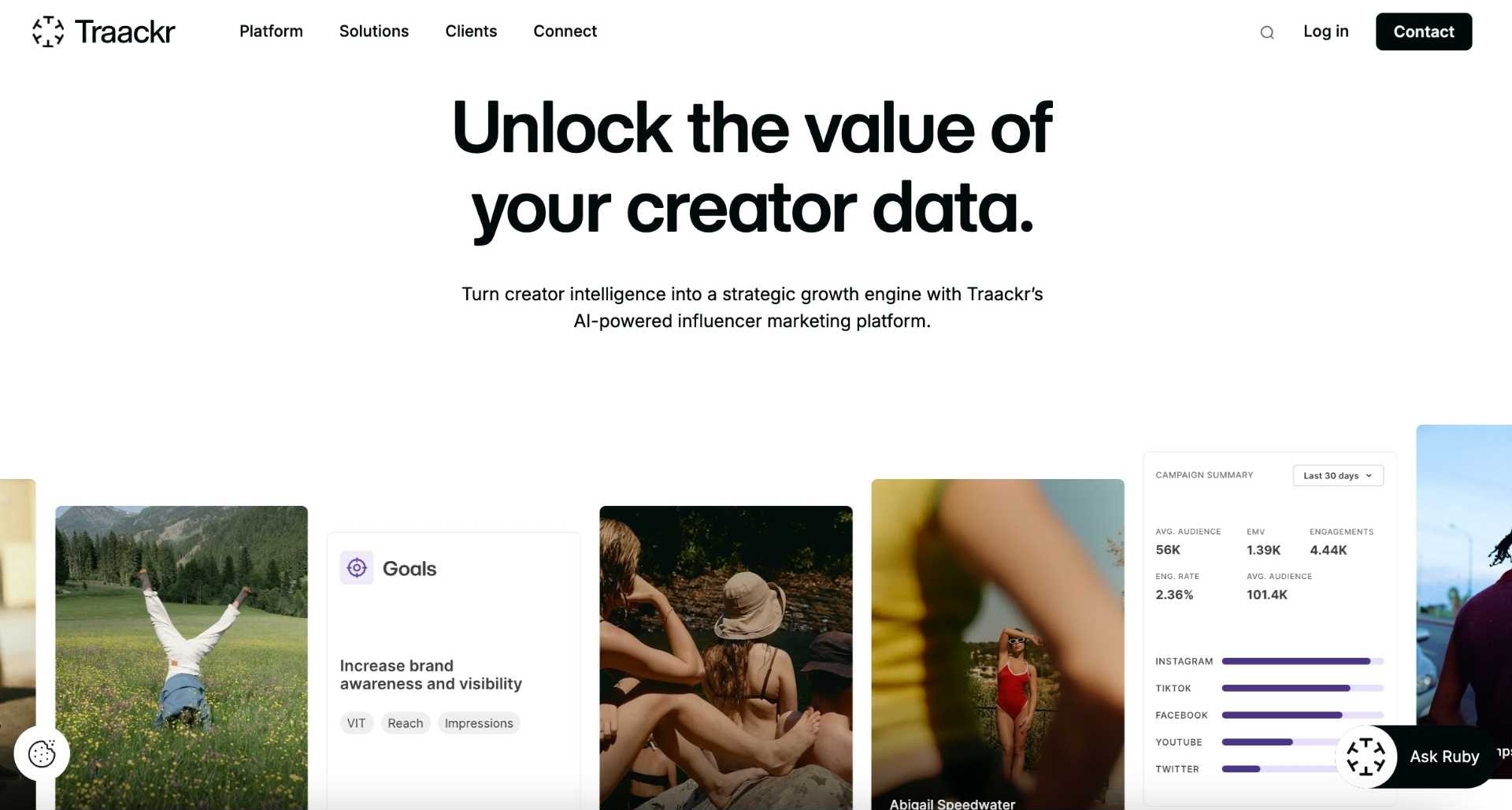
Traackr is an influencer marketing platform built for brands that want creator discovery, relationship management, benchmarking, and ROI reporting with a strong focus on measurement quality. It is typically a better fit for global brands and performance-minded teams than for early-stage D2C operators. Compared with GRIN, Traackr is less centered on eCommerce operations and more centered on budget optimization, standardized KPIs, and strategic benchmarking.
Key Features
- Influencer discovery and vetting: Traackr helps teams find creators, assess fit, and organize relationships in one platform.
- Campaign organization: The platform supports campaign setup, creator management, and standardized workflows for scaling influencer operations.
- Performance tracking: Traackr emphasizes real-time tracking, automated ROI insights, and standardized KPIs.
- Benchmarking and market performance data: Traackr is known for benchmarking tools and market performance visibility that help brands compare results against competitors and categories.
- AI-assisted workflows: Official positioning now highlights AI-powered discovery and scalable AI-assisted workflows for global teams.
- Global-team infrastructure: Traackr is built to support multi-market, enterprise-style collaboration and reporting.
Pricing
Pricing started at $32,500/year for a standard package, with custom-built plans and annual billing.
Reviews
4.3 / 5.0 (G2)
Pros
- Traackr’s benchmarking capability is one of the clearest differentiators in the category. It gives brands a stronger view of market performance and competitive context than most creator CRM-style tools.
- Its reporting is built for standardized KPI management. That makes it especially attractive to global teams that need to compare creator performance across markets and product lines.
- The platform’s current positioning is clearly enterprise-focused. AI-assisted workflows, global-team controls, and partner integrations reinforce that Traackr is built for scale rather than for lightweight D2C execution.
Cons
- Pricing is high and usually requires a sales process. That can make it hard for smaller brands to justify.
- Some users still flag lag, sync delays, and workflow complexity. These issues show up most often in feedback around advanced campaign usage and reporting.
- It is less naturally aligned with gifting-first D2C teams than GRIN. Traackr’s strength is strategy, benchmarking, and measurement more than eCommerce-native ops.
Integrations
- Shopify: Traackr lists Shopify within its ecommerce and partner ecosystem for connected influencer workflows.
- Email: the partner stack includes email integrations to support creator communication.
- Payments: payments are a defined integration area in Traackr’s partner ecosystem.
- SSO: supports enterprise authentication workflows for larger teams.
- Data lake / data integrations: Traackr supports broader data connectivity for enterprise reporting and workflow integration.
GRIN vs Traackr
GRIN is more practical for D2C brands that want creator CRM, gifting, affiliate tracking, and product-seeding workflows connected to commerce. Traackr is better for larger teams that prioritize benchmarking, standardized KPI reporting, and strategic budget optimization over day-to-day eCommerce-native creator operations.
10. IMAI (InfluencerMarketing.ai)

IMAI, short for InfluencerMarketing.ai, is an AI-heavy influencer marketing platform that now positions itself as a broader operating system for creator programs, social intelligence, PR, UGC, and even AI agent workflows. For brands comparing it with GRIN, the key difference is that IMAI is pushing beyond standard influencer software into a multi-workspace platform with a very large creator database, broader integrations, and newer enterprise-style features. It is a more aggressive fit for teams that want AI-led workflows and a wider data stack rather than a pure creator CRM.
Key Features
- AI-powered creator discovery: IMAI says it offers AI-powered search across 400M+ creators with deep filters and analytics.
- Relationship management: The platform includes creator lists, outreach, briefs, contracts, and campaign management in one workflow.
- Content approvals and reporting: Teams can collect content, approve drafts, track performance, and export reports from the same workspace.
- Creator payouts: IMAI includes creator payout tooling and Stripe-powered payment workflows.
- Competitive analysis and insights: The platform includes social listening and competitive analysis capabilities beyond basic campaign tracking.
- eCommerce integrations: Official materials highlight integration support for Amazon, Shopify, WooCommerce, BigCommerce, and other systems.
Pricing
Starting price at $99/month and notes that a free trial is available.
Reviews
4.5 / 5.0 (G2)
Pros
- IMAI’s current product scope is much broader than most GRIN alternatives. It now packages influencer marketing alongside PR, UGC, AI visibility tracking, and AI agent workflows in one login.
- The platform keeps shipping visible product updates. Recent highlights include an all-new Influencer CRM, smarter conversion tracking, an Insights Hub, and API-focused improvements.
- Its integration story is broader than many creator tools. Salesforce, HubSpot, Slack, Stripe, Shopify, WooCommerce, BigCommerce, Amazon, and custom API workflows all show up in the current positioning.
Cons
- Its positioning has become more enterprise and multi-product, which can feel like overkill for simpler D2C teams. Brands that just want creator CRM and gifting may not need the wider stack.
- User feedback still mentions occasional bugs and usability friction. That is one of the recurring issues in third-party reviews.
- Public pricing clarity is weaker on the official site than the low starting-price references suggest. Buyers may need a demo or trial to understand the right package.
Integrations
- Shopify: connect creator campaigns to store workflows and eCommerce attribution.
- WooCommerce: supported as part of IMAI’s eCommerce integration stack.
- BigCommerce: supported for brands running creator programs on other commerce systems.
- Salesforce and HubSpot: official FAQs highlight CRM connectivity with both platforms.
- Stripe: powers creator payouts through InfluencerMarketing.ai Pay.
GRIN vs IMAI
GRIN is more focused on classic D2C creator operations like gifting, affiliate tracking, and creator CRM. IMAI is more expansive and AI-forward, with a broader product vision that stretches into PR, social intelligence, UGC, and automation. For brands that want a sharper eCommerce creator stack, GRIN is still the simpler fit; for teams that want a bigger AI-led platform and wider integrations, IMAI can be the more ambitious alternative.
Final Thoughts on GRIN Alternatives
Choosing the right influencer marketing software ultimately depends on your brand’s stage, workflow complexity, and how tightly you want influencer efforts connected to revenue. GRIN remains a strong option for D2C brands that prioritize eCommerce integrations, creator CRM, and end-to-end campaign management. However, many alternatives offer more flexibility in pricing, better discovery capabilities, stronger analytics, or more specialized workflows—whether that’s inbound creator marketplaces , simpler D2C execution (SARAL, Modash), or enterprise-level reporting and benchmarking (Traackr, Klear).
The platforms covered in this list highlight that there is no one-size-fits-all solution. Some tools are better suited for scaling affiliate-driven creator programs, while others focus on data, automation, or cross-channel insights. For most D2C teams, the decision comes down to balancing usability, cost, and the depth of features you actually need—rather than defaulting to the most well-known platform.

.png)


.jpg)