


10 Best Entribe Alternatives for Influencer Marketing
Collecting customer content is the easy part. Proving eighteen months later that you were allowed to run it in a paid campaign is not, and that second problem is the one Entribe is built around.
It does that job for Google, Riot Games and Hershey’s, so the capability is real. What it does not do is find creators, issue discount codes, track revenue or pay anyone, and it publishes no price and offers no trial, so the whole evaluation happens inside a sales process.
Ten alternatives follow that cover more of the program: Influencer Hero, NeoReach, Insense, Afluencer, Aspire, Influencity, IMAI, HypeAuditor, Julius and Brandbassador.
Key Criteria for Evaluating Influencer Marketing Platforms
Core Features
Evaluation of essential influencer marketing capabilities, including influencer discovery, outreach, CRM, campaign management, reporting, and content workflows.
Pricing & Flexibility
Comparison of pricing models, subscription plans, and contract terms to match different budgets and growth stages.
Customer Reviews & Satisfaction
Analysis of user feedback from trusted review platforms, focusing on usability, reliability, customer support, and overall performance.
Pros & Cons
Review of each platform’s strengths and limitations to highlight where it performs well and where it may fall short based on different use cases.
Integrations
Review of the most important integrations (e.g., Shopify and other tech tools), highlighting what each integration enables in one sentence.
Entribe Overview
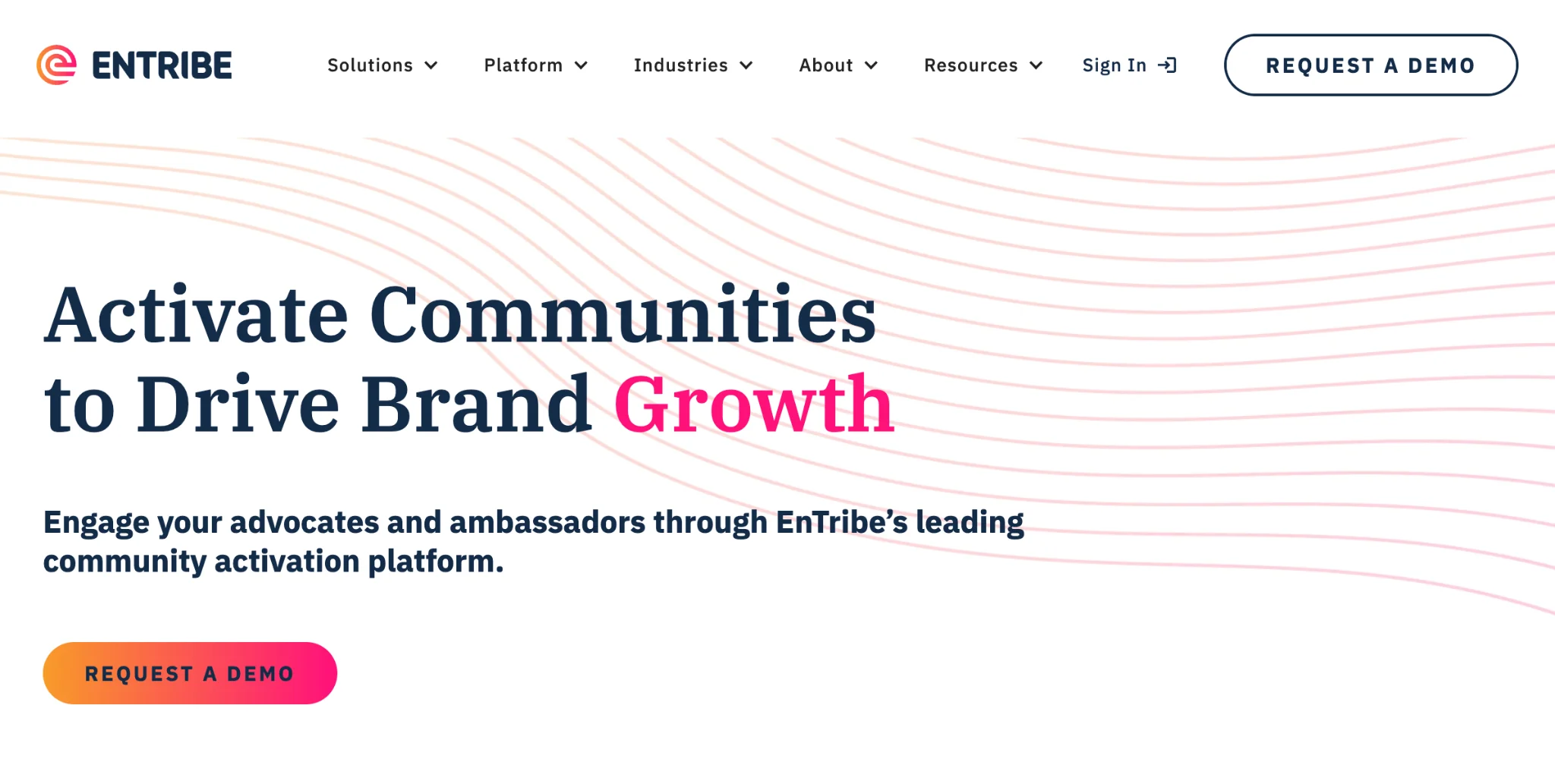
Entribe is a UGC and creator community platform built around rights clearance rather than discovery. Content arrives from a brand’s existing community, permission is requested and stored against each asset, and AI tagging with smart albums keeps a growing UGC content library findable months later. Its customer list runs unusually wide, covering CPG, retail, technology, entertainment, agencies and universities, and it is also sold for employee-generated content, which is an HR use case rather than a marketing one.
Key Features
- Rights clearance workflow: Permission requested, captured and stored so every asset carries its own provenance.
- UGC collection at volume: Brand-safe content gathered automatically rather than screenshotted one post at a time.
- AI tagging and smart albums: Assets classified and grouped so the right one can be found on the day a campaign needs it.
- Creator CRM: Profiles and communications for people already engaged with the brand.
- Ambassador and event capture: Programme management plus content collection around live activations.
Pricing
Nothing published. No tiers, no starting figure and no rate card, and there is no free trial either, so the product cannot be tested before a commitment. Onboarding is a structured phase, which usually means a setup cost worth asking about.
Reviews
4.6/5.0 (Capterra, low review volume at 8 reviews). Five five-star and three four-star entries, praising ease of use, permission verification and onboarding, and criticising loading speed and limited integrations.
Integrations
- Social platforms: No named list published, and reviewers describe account integration as limited.
- eCommerce platforms: None published, so no Shopify, WooCommerce or BigCommerce connection.
- Affiliate and payment tools: None named, and no commission tracking or payouts exist in the product.
- Marketing and workflow tools: Reviewers specifically asked for more connections to modern marketing stacks.
- API and automation: No public API or Zapier connector documented.
Pros
- Rights treated as infrastructure: Permission capture built into collection rather than bolted on afterwards.
- References that survive scrutiny: Google, Riot Games and Hershey’s do not adopt content platforms without legal review.
- Onboarding and support are praised: The most repeated positive across the review base.
Common Drawbacks of Entribe
No price and no trial
Both gates shut at once. You cannot estimate cost from anything public and cannot test the product first, so the first real number arrives after the vendor knows your budget.
Integrations are thin and users say so
No named eCommerce platform, no published API, no automation connector, and social account integration that reviewers call limited. For a product whose input is social content, that is a pointed gap.
Speed is the most repeated complaint
Loading and filtering come up across multiple reviews of a platform whose promise is finding the right asset quickly. The vendor points to a later release as the fix, which confirms the problem.
No commerce layer at all
No discovery database, no discount codes, no affiliate tracking, no revenue attribution and no payouts. It tells you what you hold and that you may use it, never which creator drove a sale.
Best Entribe Alternatives
| TOOL | REVIEWS | BEST FOR | TRIAL INFO | PRICING | ||
|---|---|---|---|---|---|---|
1 |

|
⭐ | Influencer CRM & automation | Book Demo | Pricing | Website |
2 |

|
⭐ | Influencer campaigns & data analytics | Book Demo | Pricing | Website |
3 |

|
⭐ | UGC creators & paid social ads | Book Demo | Pricing | Website |
4 |

|
⭐ | Influencer marketplace campaigns | Book Demo | Pricing | Website |
5 |

|
⭐ | Influencer partnerships | Book Demo | Pricing | Website |
6 |

|
⭐ | Campaign management | Book Demo | Pricing | Website |
7 |

|
⭐ | AI influencer discovery & analytics | Book Demo | Pricing | Website |
8 |

|
⭐ | Influencer analytics | Book Demo | Pricing | Website |
9 |
-1.webp)
|
⭐ | Discovery and campaign platform | Book Demo | Pricing | Website |
10 |

|
⭐ | Ambassador Marketing | Book Demo | Pricing | Website |
Influencer Hero

Influencer Hero is an all-in-one influencer marketing platform for D2C and eCommerce brands, spanning 8 social platforms with Instagram, YouTube and TikTok at the core. Content collection and approvals sit inside a wider system that also finds creators, contacts them, ships product, tracks sales and pays out. Pricing is published and set by outreach volume.
Key Features
- Automatic content capture: Creator posts collected as they publish, with likes and performance attached.
- AI-powered UGC search: Find past content by keyword, media type, visual quality score or whether the product is visible.
- Content review workflows: Request content from the deal page, then approve or request an edit with a reason recorded.
- Creator application pages: Branded inbound forms with auto-accept rules and product selection built in.
- Discovery with authenticity screening: Over 20 filters plus fake-follower checks before budget moves.
- Affiliate codes and commission: Codes and links per creator, with commission worked out in the platform.
- Creator payouts and invoicing: Bulk and scheduled bank-debit payments at 0.1% to 0.4%.
- Multi-platform eCommerce: Shopify and WooCommerce natively, Magento and custom builds through a script.
Pricing
- Standard: $649 a month, up to 1,000 reachouts a month
- Pro: $1,049 a month, up to 5,000 reachouts a month
- Business: $2,490 a month, up to 10,000 reachouts a month
- Custom & Agency: custom pricing
Quarterly billing saves 20% and yearly saves 30%, and all of it is on the public pricing page.
Reviews
5.0/5.0 (Capterra)
Pros
- A number before the call: Three published tiers against no rate card at all.
- Content plus the program around it: Collection and approvals alongside discovery, codes and payouts.
- Named eCommerce integrations: Shopify and WooCommerce documented rather than absent.
Cons
- No free trial
- Expensive for smaller brands
- Steep learning curve
Integrations
- Shopify: Raises gifting orders and attributes creator revenue automatically.
- WooCommerce: The same for WordPress stores, with scripts for Magento and custom builds.
- Klaviyo: Creator and customer segments into lifecycle email.
- DocuSign: Creator agreements signed and stored on the deal record.
- Zapier: 8,000-plus further apps, covering the marketing tools reviewers wanted connected.
Entribe vs Influencer Hero
Entribe is better at one specific thing, which is rights clearance treated as a legal workflow with an audit trail behind it. If your problem is a library of customer content nobody can prove permission for, that focus is the reason to buy it. Influencer Hero handles content differently: posts are captured automatically, searchable by keyword, media type and visual quality, and routed through approve or request-edit with the reason recorded. Around that sit the parts Entribe has none of, namely influencer discovery across eight networks with fake-follower screening, influencer outreach automation, campaign boards, gifting through your store, affiliate codes with commission, and creator payouts at 0.1% to 0.4%.
The pricing comparison only runs one way, because Entribe publishes nothing and offers no trial. Influencer Hero publishes $649, $1,049 and $2,490 a month, with 20% off quarterly and 30% off yearly, putting the entry tier at $5,452 a year prepaid. A brand buying Entribe is also buying a second platform for discovery and attribution, since neither exists in the product, so the honest comparison is one subscription against two. On that basis the all-in-one tier usually comes out lower, and it names the eCommerce integrations rather than leaving them to a demo question.
NeoReach

NeoReach combines influencer software with a managed-service arm, and much of its work is delivered as run-for-you campaign management. Audience analysis and segmentation are what reviewers rate highest. Larger brands and agencies with big activation budgets and no in-house creator team are its usual customers.
Key Features
- Managed campaign delivery: A team that plans and runs activations end to end.
- Audience segmentation: Creator audiences analysed in enough depth to plan media against.
- Creator discovery: Cross-network search with industry-specific filtering.
- Campaign measurement: Live tracking of creator results in one dashboard.
- Stakeholder reporting: Output built for people outside the marketing team.
Pricing
Not published, and quoted per engagement, since the managed element rather than a seat count sets the figure.
Reviews
4.5/5.0 (G2, low review volume at 11 reviews).
Pros
- People included: Useful when nobody in-house can run creator campaigns.
- Analytics depth: Audience analysis among the strongest in the category.
- Creators are found, not just filed: Discovery exists here, which a content platform lacks.
Cons
- Quote-only: The same evaluation problem, with no published figure.
- Eleven reviews: A thinner public record even than eight.
- No rights management: Content licensing is not what it does.
Integrations
- Instagram and TikTok: Creator performance pulled into campaign reporting.
- YouTube: Long-form creator data alongside short-form.
- Shopify: Store connection for creator-driven sales.
- Google Analytics: Campaign traffic linked to site behaviour.
- Reporting exports: Campaign data out for internal analysis.
Entribe vs NeoReach
These sit on opposite sides of the same campaign. NeoReach finds creators and runs the activation; Entribe organises and clears what comes out of it. Neither replaces the other, which is worth saying plainly before a shortlist treats them as competitors.
What they share is opacity. Both quote privately, neither offers a trial, and between them they have nineteen public reviews. For a brand that wants to compare cost before committing, this pairing is the hardest in the list to evaluate.
Insense
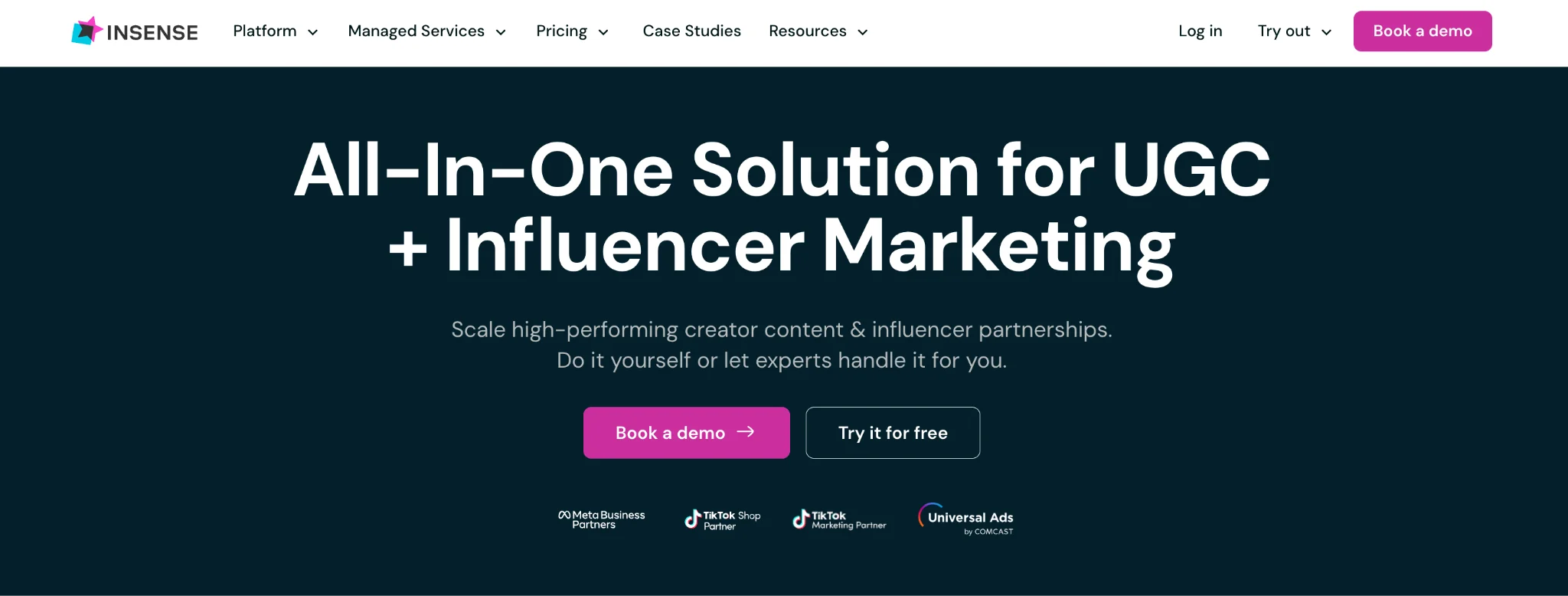
Insense is a creator marketplace built for brands that need a steady supply of video for paid social. Briefs go out, vetted UGC creators apply, content comes back within roughly ten business days, and contracts and payment run in the platform. Usage rights are included rather than negotiated case by case.
Key Features
- Vetted UGC creator pool: Filtered by gender, location, category, follower count and hashtags.
- Guaranteed applicants: At least five matching creators per brief, or the subscription is refunded.
- Up to three revision rounds: Content refined before you accept it.
- Meta Partnership Ads: Creator handles connected for whitelisting creator content in paid social.
- Full digital usage rights: Rights to run the content granted on delivery.
Pricing
- Trial: $650 for one month, 1 campaign and 10 creators, 20% marketplace fee
- Brand: $500 a month billed quarterly, or $400 a month annually, 10% fee
- Agency: $800 a month billed quarterly, or $640 a month annually, 7% fee
Campaigns and creators are unlimited on both paid plans.
Reviews
4.5/5.0 (G2, 373 reviews).
Pros
- Content is commissioned, not waited for: Briefs produce assets on a schedule.
- Rights arrive with the file: No clearance chase after the fact.
- Published prices and 373 reviews: Both of which the comparison lacks.
Cons
- A fee on creator payments: 7% to 20% on top of the subscription.
- No community capture: It does not collect what customers post unprompted.
- No rights audit trail: Usage is granted, but not managed as a legal record over time.
Integrations
- Meta: Powers Partnership Ads and whitelisted creator content.
- TikTok: Creator content routed into TikTok ad formats.
- Shopify: Named store connection for seeding and creator orders.
- Stripe: Creator payment processing.
- Content library: Approved assets exported into ad accounts.
Entribe vs Insense
Both end with a library of usable content, and they fill it from opposite directions. Entribe captures what your community already posted and clears the rights afterwards. Insense commissions new content from creators who agree the rights upfront.
Which fits depends on whether content is already arriving. A brand with an active customer base gets volume free and needs clearance; a brand without one needs someone to make the content in the first place, and no amount of rights tooling solves that.
Afluencer
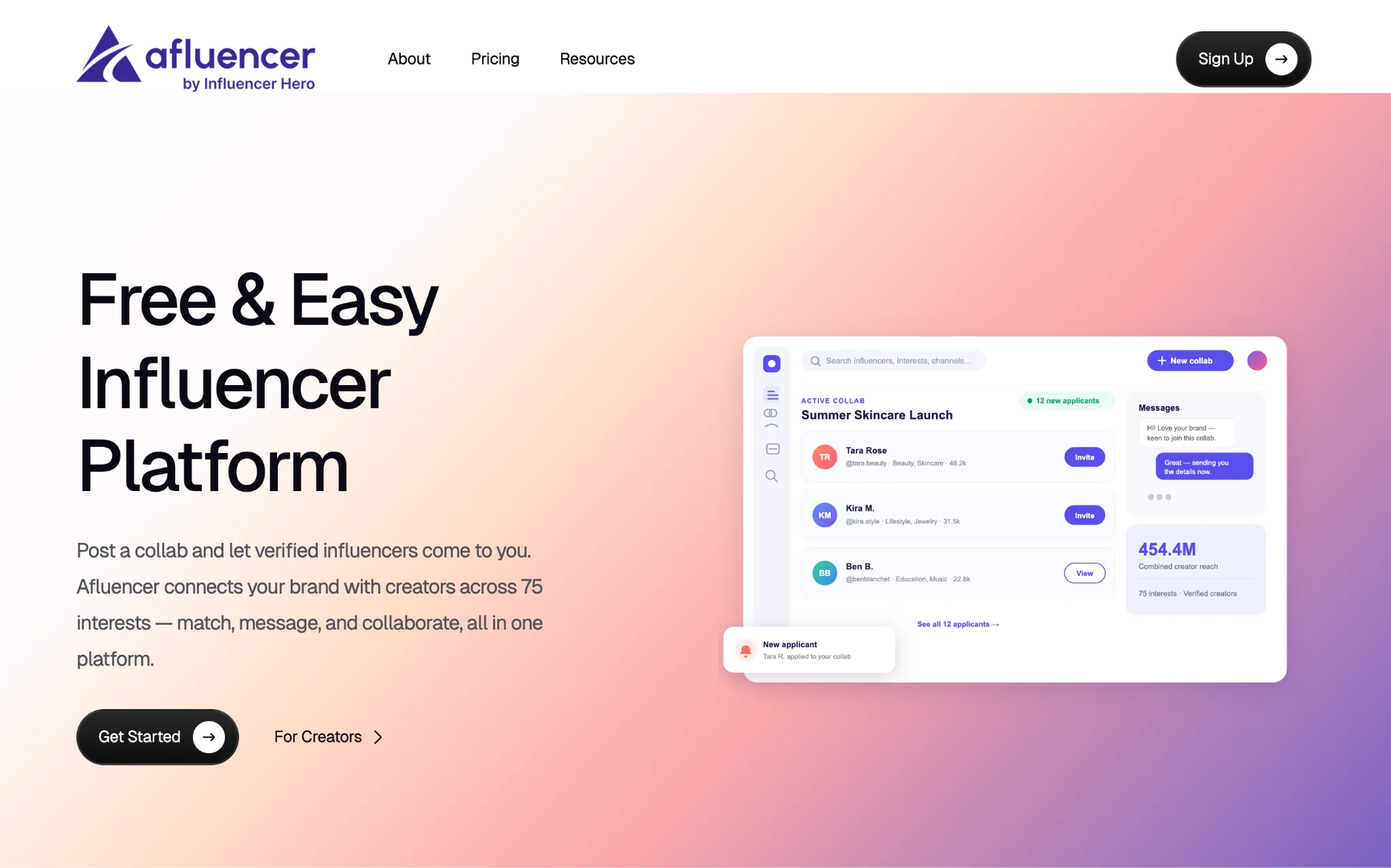
Afluencer is a marketplace where brands publish collaboration listings and verified creators across Instagram, TikTok, YouTube, Facebook and X apply to them. It suits Shopify merchants and small D2C teams whose constraint is finding creators at all. Pricing is a published flat monthly fee.
Key Features
- Inbound listings: Creators apply to your brief, so no database search is needed.
- Verified members: Applicants registered and checked rather than scraped.
- CreatorGPT matching: AI ranks applicants against the brief before review.
- Invite credits: Direct outreach to creators who have not applied.
- Gifting and codes: Product send-outs and discount codes through the store connection.
Pricing
From $49 a month on the Marketplace plan, with higher tiers for more outbound invites. Creator-side plans are billed separately.
Reviews
4.6/5.0 (G2, 738 reviews) and 4.7/5.0 (Shopify App Store, 34 reviews). The G2 pool leans creator-side, so read it beside the Shopify score.
Pros
- Cheapest entry here: $49 a month, published, with no trial gate to negotiate.
- Solves supply first: One of the simpler routes among influencer marketing software when you have no creators yet.
- 738 reviews: Nearly a hundred times the evidence base.
Cons
- No rights management: Permissions are agreed per collaboration, not tracked as records.
- Applicant-dependent: A weak listing draws weak interest.
- No content library: Assets are not organised or searchable afterwards.
Integrations
- Shopify: Named connection for codes, referrals and creator orders.
- BigCommerce: The same for BigCommerce merchants.
- Klaviyo: Creator contacts into email campaigns.
- DocuSign: Collaboration terms signed inside the flow.
- Slack: Application alerts to the team.
Entribe vs Afluencer
These answer consecutive questions rather than the same one. Afluencer answers where creators come from; Entribe answers what happens to the content once it exists and whether you can legally run it.
Cost frames the sequence sensibly. At $49 a month a brand can find out whether creator content arrives at all before paying for a platform to organise and clear it. Buying the clearance layer first, at an unpublished price, is the wrong order for most brands.
Aspire
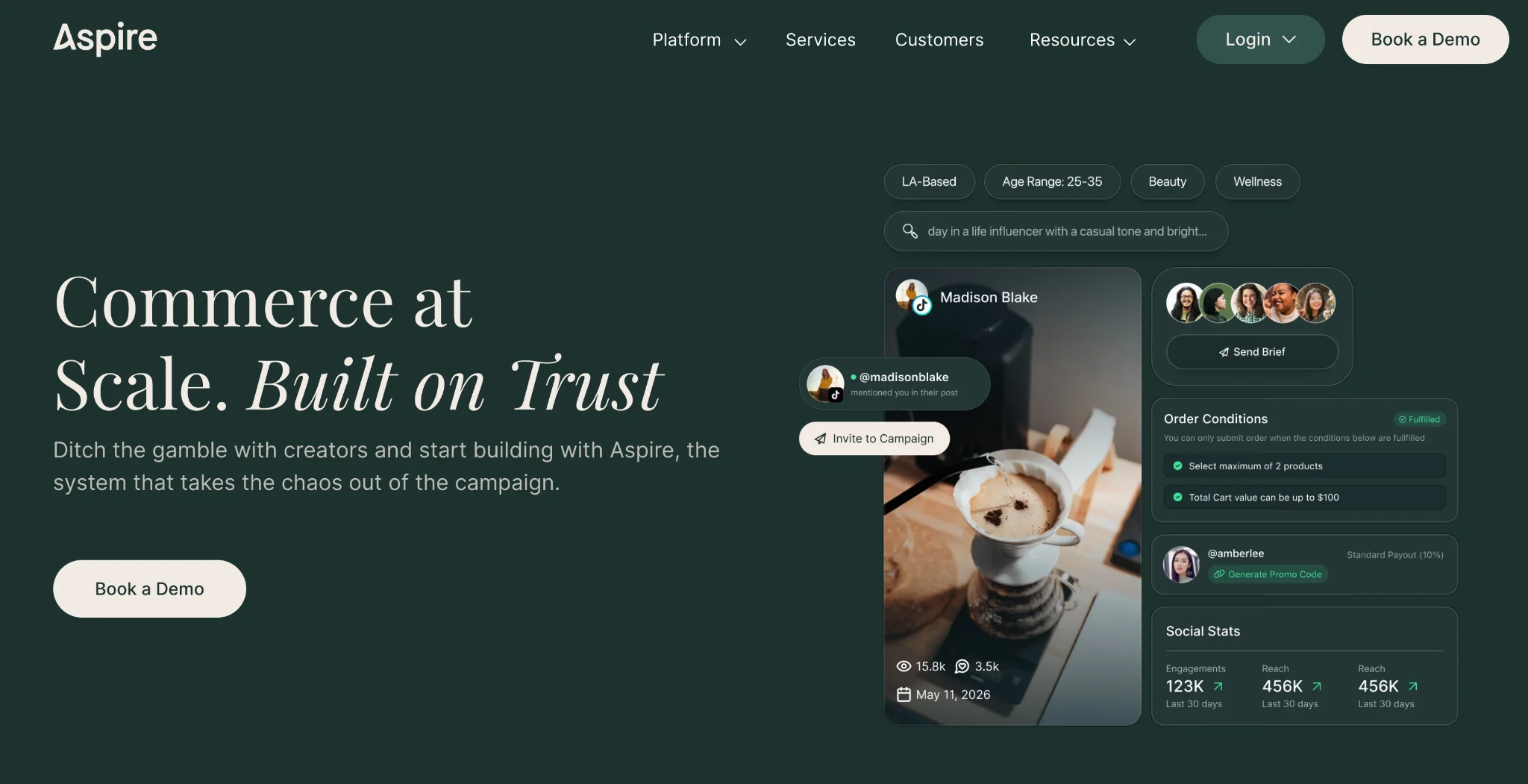
Aspire serves mid-market and enterprise eCommerce brands running ongoing creator programs, combining discovery, campaign workflow, seeding and affiliate tracking. Content and rights sit inside that wider system rather than as the product itself. Ease of use and influencer management are its most cited strengths.
Key Features
- Content library with rights: Approved assets stored with usage terms attached for paid reuse.
- Creator discovery and lookalikes: Search across networks with similar-creator suggestions.
- Seeding at volume: Product send-outs run as a managed workflow.
- Briefs and approvals: Content requested and signed off against the agreement.
- Affiliate tracking: Codes and links attributing creator-driven revenue.
Pricing
Not published. Third-party sources report an annual commitment from around $2,000 a month, with other estimates near $2,499, and they disagree enough that a quote is the only reliable figure. No free trial.
Reviews
4.6/5.0 (G2, 146 reviews).
Pros
- Rights inside a full platform: Usage terms managed alongside discovery and attribution.
- 146 reviews at 4.6: A far more reliable score than eight entries.
- Revenue is measurable: Affiliate tracking that a content platform has no equivalent for.
Cons
- The most expensive here: Reported figures start near $2,000 a month.
- Quote-only, no trial: The same closed evaluation.
- Rights are lighter: Managed as a library feature rather than a legal audit workflow.
Integrations
- Shopify: Seeding orders and creator revenue attribution.
- WooCommerce: The same for WordPress storefronts.
- Klaviyo: Creator contacts into email programs.
- Slack: Campaign alerts to the team.
- Zapier: Wider stack coverage where no native option exists.
Entribe vs Aspire
Aspire is the closest thing here to a superset. It holds content with usage terms, and it also finds creators, runs seeding, tracks affiliate revenue and connects to named eCommerce platforms, none of which Entribe attempts.
Where Entribe stays ahead is depth of clearance. Permission capture as an auditable workflow, built for legal review at companies the size of Google, is a different standard from a library field recording usage terms. If your rights exposure is genuinely the risk, that difference is what you are paying for.


Influencity

Influencity is a discovery and audience-analysis platform across Instagram, TikTok, YouTube and Twitch, sold on published tiers with a trial in front. Its strengths are the interface and support quality, and its plans meter usage rather than seats. Teams doing their own creator research are the core users.
Key Features
- Four-network search: Instagram, TikTok, YouTube and Twitch in one query.
- Audience composition data: Demographics and authenticity assessed before contact.
- Creator profile linking: Multiple accounts for one creator joined into a single record.
- Campaign tracking: Briefs and performance monitoring alongside discovery.
- Metered usage: Analyses and tracked creators limited per plan rather than by user.
Pricing
Published from around $318 a month, with annual billing reducing the effective rate and a 7-day free trial on all plans.
Reviews
4.5/5.0 (G2, 282 reviews).
Pros
- Try it for a week: A trial exists, which the comparison platform does not offer.
- Published entry price: Around $318, stated openly.
- 282 reviews: A sample large enough to trust.
Cons
- No content collection: It analyses creators rather than gathering what they post.
- No rights workflow: Permissions are not part of the product.
- Usage limits: Heavy research runs into plan caps.
Integrations
- Instagram and TikTok: Creator data and campaign performance.
- YouTube: Channel analytics alongside short-form.
- Twitch: Streaming creator coverage.
- Shopify: Store connection for creator sales tracking.
- Exports: Campaign and creator data for internal reporting.
Entribe vs Influencity
Neither does the other’s job, and the useful thing is what each tells you before spending. Influencity tells you whether a creator’s audience is real and relevant. Entribe tells you whether the content you already hold is safe to publish.
On evaluation terms the gap is stark. One publishes a price and gives you a week to test it; the other requires a demo before either question can be answered. For a brand comparing options rather than renewing, that difference decides which gets shortlisted.
IMAI

IMAI, also sold as InfluencerMarketing.ai, is a discovery platform built on a very large creator index, with campaign management and white-label reporting on higher tiers. Agencies running several clients make up much of its customer base. Prices are published and a free trial is offered.
Key Features
- Large-scale creator index: Discovery across a database the vendor puts in the hundreds of millions.
- Fake-follower detection: Authenticity screening built into results.
- Client-separated campaigns: Multiple accounts managed side by side.
- White-label reporting: Agency-branded outputs on higher plans.
- Social listening: Brand and category monitoring above entry level.
Pricing
Published tiers reported from roughly $175 a month, through about $349 and $499, up to $1,200 and beyond for enterprise and white-label, with report volumes varying by tier and a free trial available.
Reviews
4.1/5.0 (GetApp, low review volume at 16 reviews). Sourcing speed and fraud detection are praised; support and account access are the criticisms.
Pros
- Lowest database entry price: Around $175 a month for real discovery volume.
- Trial available: Testable before commitment.
- Built for agencies: Client separation and branded reporting included.
Cons
- Support complaints: Slow help and, in one report, lost access.
- No content or rights tooling: Discovery rather than asset management.
- Sixteen reviews: Twice the sample, still small.
Integrations
- Shopify: Named store connection for creator-driven orders.
- WooCommerce: Coverage for WordPress storefronts.
- Instagram and TikTok: Creator data and campaign performance.
- YouTube: Channel-level analytics.
- Exports: Creator and campaign data out for client reporting.
Entribe vs IMAI
This pairing exposes the split cleanly. IMAI is upstream, finding people; Entribe is downstream, handling what they produce. A brand doing creator marketing properly usually needs both functions, whether or not they come from one vendor.
What separates them commercially is that IMAI publishes tiers from around $175 a month and lets you trial the product. Even if the two are complementary rather than competing, only one of them can be priced into a budget this week.
HypeAuditor
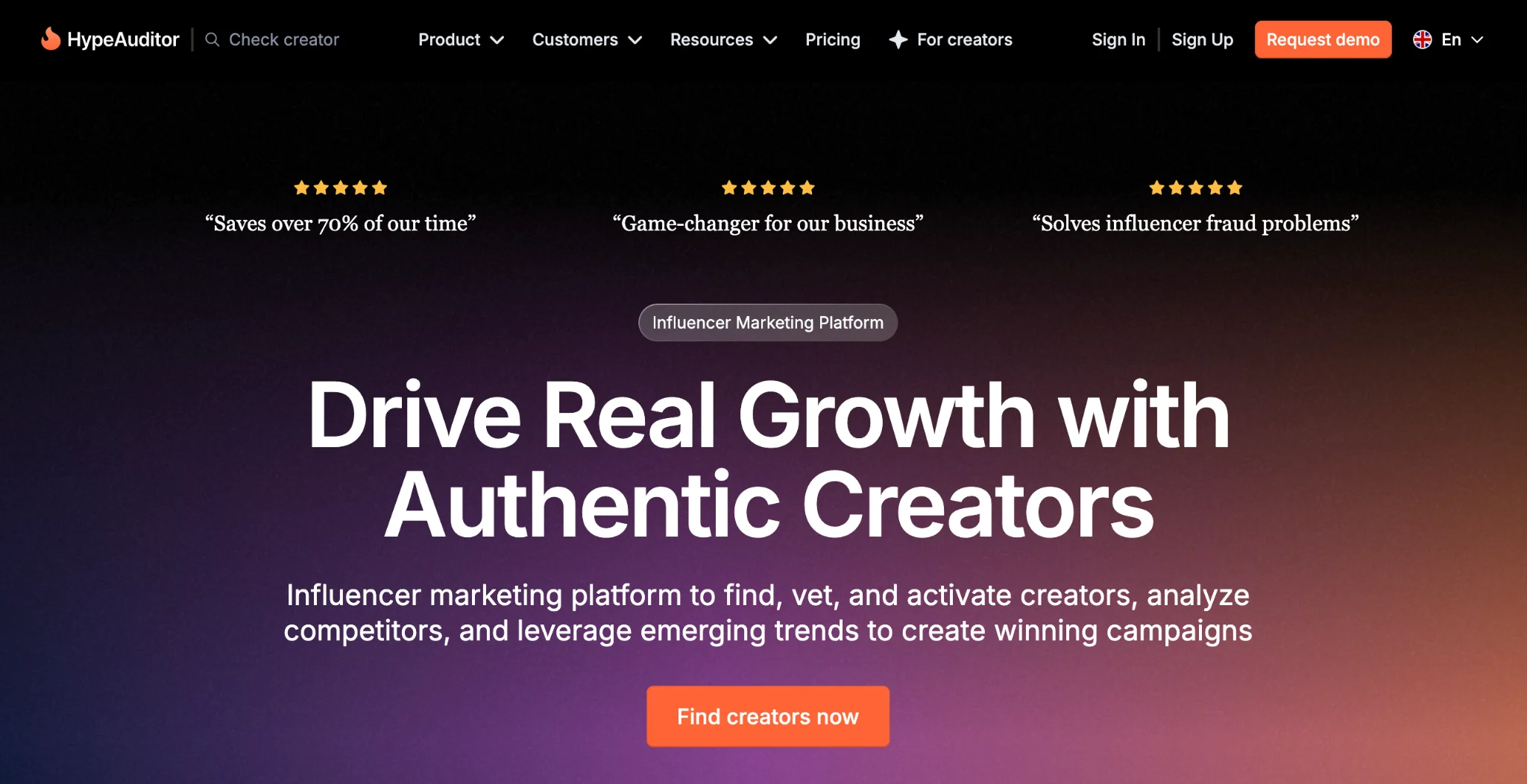
HypeAuditor is known first for fraud detection, with audience quality analysis at the centre of everything it sells. Discovery, campaign tracking, competitor visibility and market analytics sit around it across the main consumer networks. Teams that vet hard before spending are its natural buyers.
Key Features
- Audience authenticity reports: The deepest fraud analysis in this comparison, using the same data as its creator discovery tools.
- Demographic discovery filters: Search backed by verified audience composition.
- Campaign tracking: Posts and results monitored against stated goals.
- Competitor creator visibility: Which creators rival brands are working with.
- Free public audit tools: Account checks available without an account.
Pricing
Not published. Quotes come through a demo, with a free entry point covering media plans and limited versions of the paid features.
Reviews
4.6/5.0 (G2, 262 reviews).
Pros
- Test before you talk: Free public tools let you check the data yourself.
- 262 reviews: A robust evidence base.
- Vetting depth: Nothing here matches it on audience quality.
Cons
- Quote-only pricing: The free tier does not remove the sales call.
- No content management: No library, no rights, no approvals.
- No payouts or codes: Analysis rather than execution.
Integrations
- Instagram and TikTok: Creator data and audience analysis.
- YouTube: Channel analytics and audience breakdowns.
- Twitch: Limited streaming coverage.
- API access: Creator data programmatically on higher plans.
- Report exports: Audits shared as files with stakeholders.
Entribe vs HypeAuditor
Both are risk tools, aimed at different risks. HypeAuditor stops you paying for an audience that is not real. Entribe stops you publishing content you cannot prove you own. Neither is optional at scale, and neither substitutes for the other.
The difference in how they let you judge them is instructive. HypeAuditor hands you free tools to test its core claim before any conversation. Entribe asks you to take the clearance workflow on trust until after a demo.
Julius
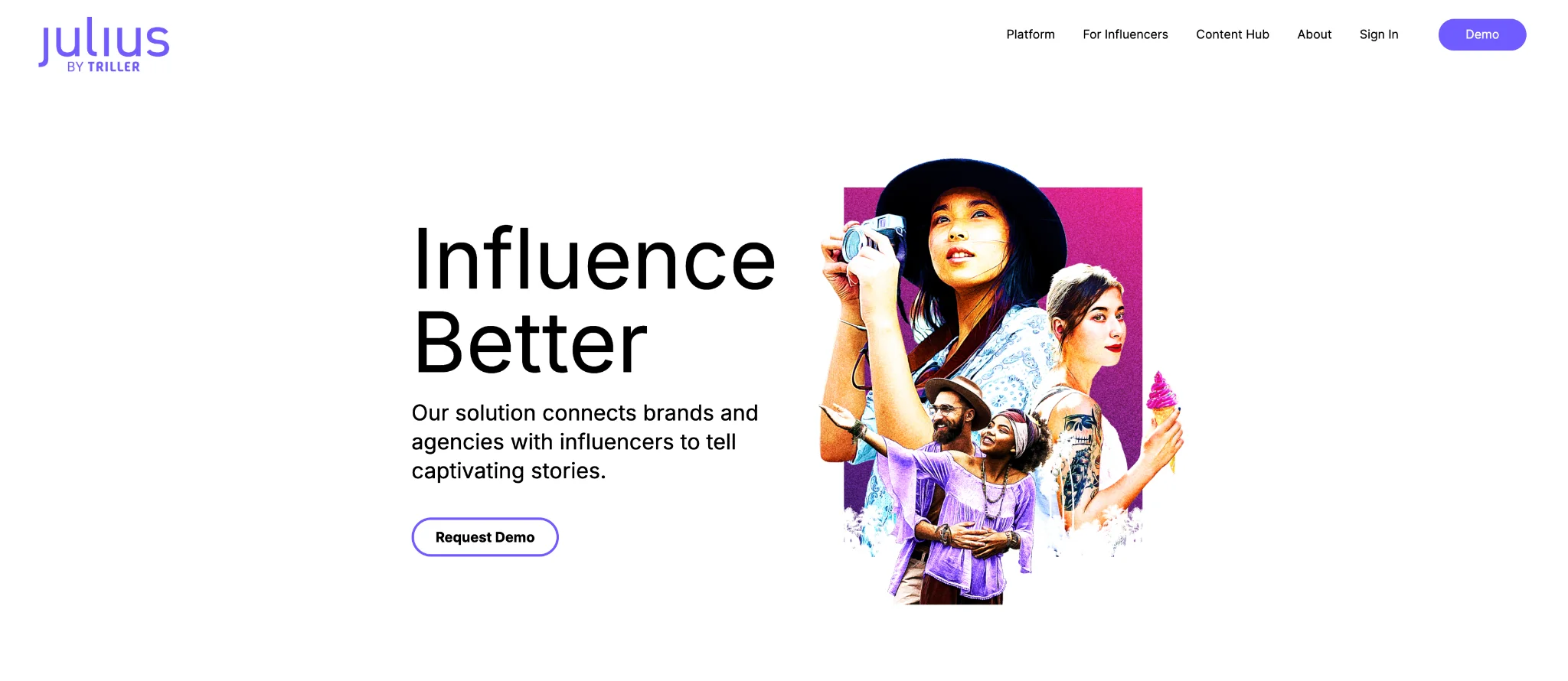
Julius builds its creator profiles by hand rather than by scraping, covering interests, brand affinities and past partnerships in more detail than most indexes hold. Smaller teams and agencies are its main users, and ease of setup is its most cited strength. Search depth is the argument for it.
Key Features
- Researcher-built profiles: Creator data compiled manually, including previous brand work.
- Detailed search filters: Attributes well beyond follower count.
- Audience analytics: Demographic breakdowns reviewers rate highly.
- Campaign management: Briefs, tracking and reporting in one place.
- Free trial: Hands-on access before any contract.
Pricing
Not published and quoted per account, though a free trial is available, which is more than the comparison platform offers.
Reviews
4.5/5.0 (G2, 96 reviews).
Pros
- Curated data: Profiles surface creators an algorithm would miss.
- Trial despite quote-only pricing: You can judge it before negotiating.
- 96 reviews: Twelve times the sample size.
Cons
- No published price: Budgeting still waits for sales.
- No content library or rights: Discovery-focused throughout.
- Curation limits scale: A smaller index than scraped databases.
Integrations
- Instagram and TikTok: Creator data and campaign performance.
- YouTube: Channel analytics.
- Twitter/X: Additional creator coverage.
- Email tools: Outreach run from the creator record.
- Exports: Creator lists and reports for client work.
Entribe vs Julius
Both invest in human effort where competitors use automation, Julius in compiling creator profiles and Entribe in clearing rights properly. That is a shared philosophy applied to different stages.
Julius is the easier one to buy. Neither publishes a price, but Julius offers a trial and carries 96 reviews against eight, so a brand can form its own view before a quote arrives rather than after.
Brandbassador (Club)

Brandbassador, now also sold as Club, turns customers and micro-influencers into an ongoing ambassador community activated by gamified missions with rewards attached. It assumes a brand with people who already like it, which makes it closer to loyalty software than to campaign tooling. Community management is the core job.
Key Features
- Mission-based activation: Tasks published to the community, completed for rewards.
- Gamification and tiers: Points and leaderboards that keep participation going.
- Ambassador recruitment: Customers converted into a managed roster at scale.
- Reward and commission tracking: Payments and incentives handled per ambassador.
- Content output measurement: Posts produced through missions tracked centrally.
Pricing
Not published, and third-party listings report no free trial. Quotes come through the vendor.
Reviews
4.7/5.0 (G2, 107 reviews), the highest here. Ease of use and support draw praise; ambassador search and filtering draw the criticism.
Pros
- Content with a reason attached: Missions generate posts rather than waiting for them.
- Four named eCommerce integrations: Published, against none.
- 4.7 across 107 reviews: The strongest combination of score and sample here.
Cons
- Quote-only and no trial: The same closed evaluation.
- Search is the weak point: Finding the right ambassadors is the recurring complaint.
- No formal rights workflow: Content usage is not managed as an audit trail.
Integrations
- Shopify: Discount codes and ambassador sales tracked from the store.
- WooCommerce: The same for WordPress storefronts.
- Adobe Commerce: Enterprise commerce coverage.
- BigCommerce: Additional storefront support.
- Instagram and TikTok: Ambassador content tracked against missions.
Entribe vs Brandbassador
These are the closest pairing in the list, because both build on a community the brand already has rather than on creators bought in. Both manage ongoing relationships rather than campaigns, and both produce content as a by-product of participation.
The split is what happens to that content. Entribe clears and organises it to a standard that survives legal review. Brandbassador activates the people and tracks what they sell, with four named eCommerce integrations against none. A brand that needs both is usually choosing which risk it can least afford to leave unmanaged.
Final Thoughts on Entribe Alternatives
Entribe solves a problem most brands underrate right up until it costs them a campaign, and the enterprise references suggest it solves it properly. The catch is everything around it. There is no discovery, no attribution and no payouts, so it handles one stage of a creator program rather than the program, and with no published price and no trial you cannot size that stage before entering a sales process. So the question is whether content is already arriving faster than your team can clear it. If it is, this is a legitimate purchase and worth the demo. If it is not, you are buying a filing system for a library you do not have yet, and the money belongs further upstream.

.png)


.jpg)










