


10 Best Embold Alternatives for Influencer Marketing
Two things about Embold decide whether it fits, and neither is a feature. The creator network is Canadian and nothing else. And the software takes 5% of everything you pay creators, so the bill grows as the program does.
Inside Canada, at modest spend, that is a fair deal for a vetted local roster you could not assemble yourself. Outside Canada, or above roughly $6,000 a month in creator payments, both facts start working against you.
Ten alternatives follow in this order: Influencer Hero, CreatorIQ, Upfluence, Aspire, Afluencer, SARAL, IMAI, Brandbassador, Lefty and Insense.
Key Criteria for Evaluating Influencer Marketing Platforms
Core Features
Evaluation of essential influencer marketing capabilities, including influencer discovery, outreach, CRM, campaign management, reporting, and content workflows.
Pricing & Flexibility
Comparison of pricing models, subscription plans, and contract terms to match different budgets and growth stages.
Customer Reviews & Satisfaction
Analysis of user feedback from trusted review platforms, focusing on usability, reliability, customer support, and overall performance.
Pros & Cons
Review of each platform’s strengths and limitations to highlight where it performs well and where it may fall short based on different use cases.
Integrations
Review of the most important integrations (e.g., Shopify and other tech tools), highlighting what each integration enables in one sentence.
Embold Overview
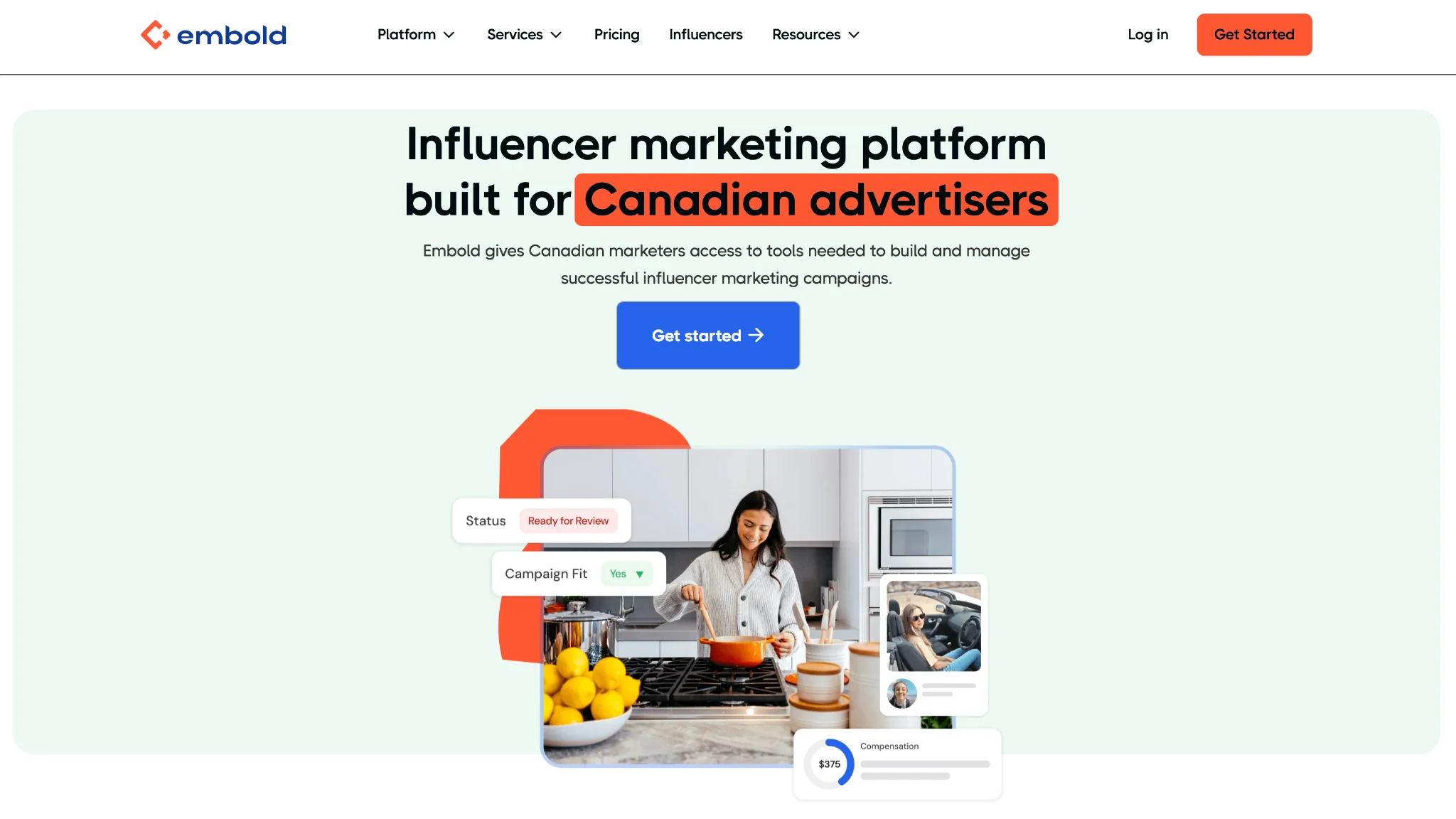
Embold is a Canadian influencer marketing platform and agency in one business, built on a roster of more than 9,000 pre-vetted Canadian micro-influencers across Instagram, TikTok and YouTube. The self-serve product covers discovery, campaign building, creator messaging, content approval, reporting and payments, and the same company will run the whole program for you on a managed contract. It reports working with over 500 brands and agencies.
Five campaign types run natively: paid collaborations, gifted campaigns, UGC-only deals, ambassador programs and whitelisting for paid amplification. Recruitment is application-based, so creators come to your brief from a pool Embold supplies rather than from a global creator database you search yourself.
Key Features
- Vetted Canadian roster: Over 9,000 micro-influencers screened before they reach your shortlist.
- Five native campaign types: Paid, gifted, UGC-only, ambassador and whitelisting, all first-class rather than workarounds.
- Application-based recruitment: Creators apply to your campaign and you approve or decline.
- Compensation control: You set what a campaign pays instead of negotiating creator by creator.
- Content approval flow: Creators submit through the platform, with revisions and a content library in one place.
Pricing
Starter is $299 a month, or $239 billed annually. Pro is $599 a month, or $479 annually, and adds a success manager, recruitment help, onboarding and invoicing rather than new capabilities. Managed services are quoted per engagement. There is no minimum term on any of it.
Both self-serve plans add 5% of creator payments on top, plus card processing fees. At $2,000 a month in creator spend that is $100; at $10,000 it is $500, which pushes the real Starter cost to $799 a month.
Reviews
5.0/5.0 (Capterra Canada, low review volume at 11 reviews). Reviewers praise the interface and the payment process; the recurring complaint, from the creator side, is wanting more campaigns to choose from.
Integrations
- Instagram, TikTok and YouTube: Creators connect their accounts, so analytics come from verified data rather than estimates.
- Bank transfer: Direct creator payouts processed through the platform.
- PayPal: An alternative payout rail for creators who prefer it.
- Credit card processing: How brands fund campaigns, with standard fees on top of the 5%.
- eCommerce platforms: None published, so creator activity and store orders never reconcile automatically.
Pros
- Local supply you cannot replicate: 9,000 vetted Canadian creators, ready to work.
- Platform and agency together: Move from self-serve to managed without changing vendor.
- No minimum term anywhere: Run a quarter and stop, which enterprise tools rarely allow.
Common Drawbacks of Embold
The 5% grows with your success
The fee sits on creator payments, so scaling from $2,000 to $20,000 a month takes the software cost from $100 to $1,000 while the platform does nothing extra.
Canada and nowhere else
This is not a platform with a smaller international roster. It has none, so any market beyond Canada needs a second vendor entirely.
Pro doubles the price and keeps the fee
An extra $300 a month buys a success manager, recruitment help and invoicing. The capabilities and the 5% transaction cost are identical on both tiers.
Eleven reviews and no store attribution
A perfect score on a thin sample tells you little, and with no Shopify or affiliate connection, tying creator activity to revenue is a manual job.
Best Embold Alternatives
| TOOL | REVIEWS | BEST FOR | TRIAL INFO | PRICING | ||
|---|---|---|---|---|---|---|
1 |

|
⭐ | Influencer CRM & automation | Book Demo | Pricing | Website |
2 |

|
⭐ | Enterprise influencer marketing | Book Demo | Pricing | Website |
3 |

|
⭐ | Influencer discovery | Book Demo | Pricing | Website |
4 |

|
⭐ | Influencer partnerships | Book Demo | Pricing | Website |
5 |

|
⭐ | Influencer marketplace campaigns | Book Demo | Pricing | Website |
6 |

|
⭐ | Influencer outreach | Book Demo | Pricing | Website |
7 |

|
⭐ | AI influencer discovery & analytics | Book Demo | Pricing | Website |
8 |

|
⭐ | Ambassador Marketing | Book Demo | Pricing | Website |
9 |

|
⭐ | Influencer analytics & discovery | Book Demo | Pricing | Website |
10 |

|
⭐ | UGC creators & paid social ads | Book Demo | Pricing | Website |
Influencer Hero
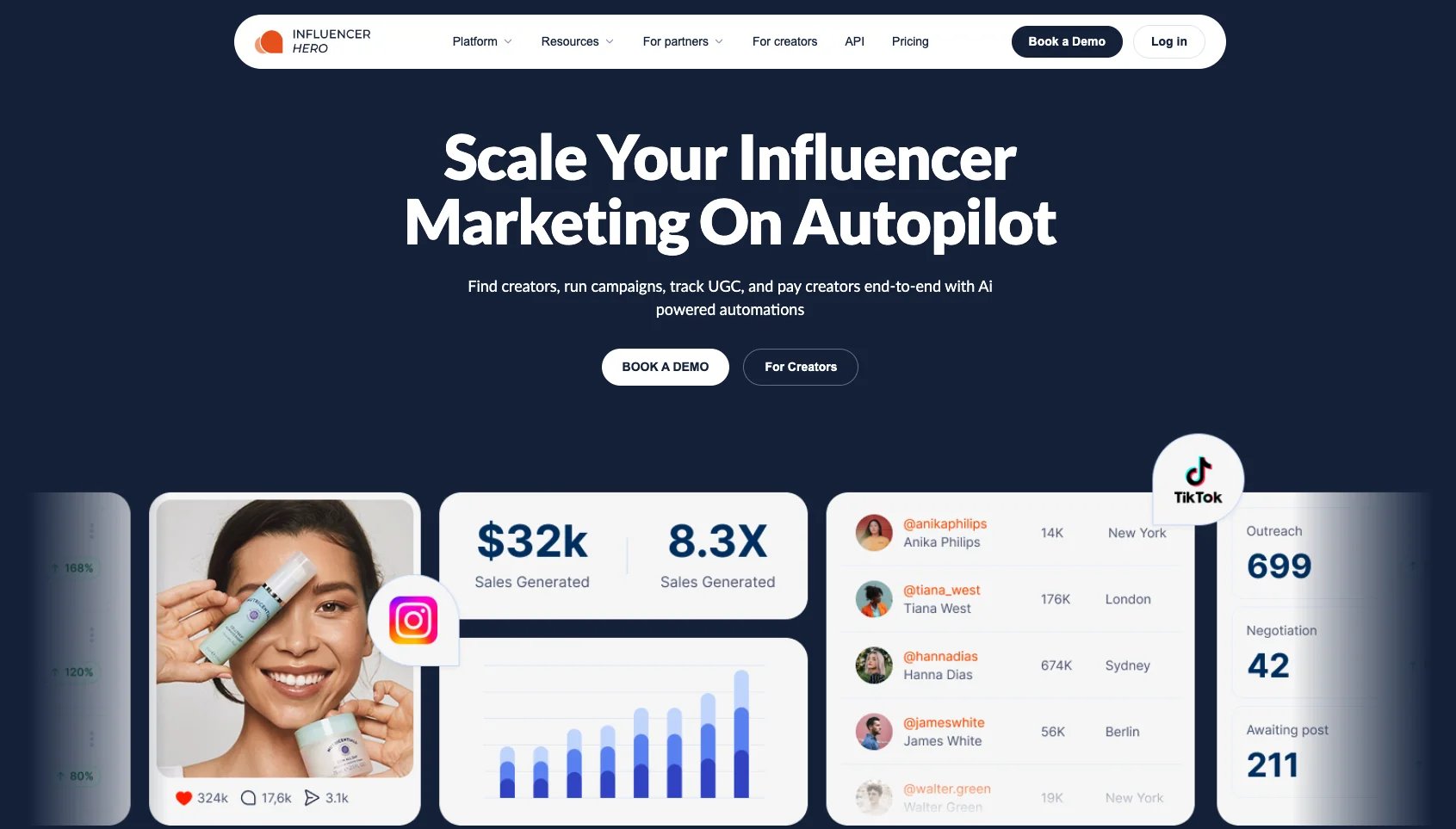
Influencer Hero is an all-in-one influencer marketing platform for D2C and eCommerce brands, spanning 8 social platforms with Instagram, YouTube and TikTok emphasised. Discovery, outreach, campaign boards, gifting, UGC, affiliate tracking and creator payouts run in one system. Plans are published and sized by outreach volume rather than by campaign spend.
Key Features
- Worldwide discovery: Over 20 filters and AI search across eight networks, with no single-market ceiling.
- Fake-follower screening: Audience authenticity checked in-platform rather than relying on a pre-vetted list.
- Lookalike creator search: Turn one creator who performed into a shortlist of similar profiles.
- Multichannel outreach: Email, Instagram DM and WhatsApp sequences with replies in one inbox.
- Gifting through your store: Product orders raised in Shopify or WooCommerce and tracked to delivery.
- Content review workflows: Request, approve or return content with a reason, tracked across campaigns.
- Affiliate codes and payouts: Commission worked out in-platform and paid by bank debit at 0.1% to 0.4%.
- Automated campaign reporting: ROI and sales by creator compiled without a manual export.
Pricing
- Standard: $649 a month, up to 1,000 reachouts a month
- Pro: $1,049 a month, up to 5,000 reachouts a month
- Business: $2,490 a month, up to 10,000 reachouts a month
- Custom & Agency: custom pricing
Quarterly billing saves 20% and yearly saves 30%. No percentage of creator spend is taken at any tier.
Reviews
5.0/5.0 (Capterra)
Pros
- The fee does not scale: A flat monthly price whatever you pay creators.
- No market ceiling: Eight networks worldwide rather than one country.
- Revenue reaches the report: Codes and store integration attribute orders to creators.
Cons
- No free trial
- Expensive for smaller brands
- Steep learning curve
Integrations
- Shopify: Gifting orders raised and creator revenue booked automatically.
- WooCommerce: The same for WordPress, with scripts covering Magento and custom builds.
- Klaviyo: Creator and customer segments pushed into lifecycle email.
- DocuSign: Creator agreements signed and filed on the deal record.
- Zapier: Over 8,000 further apps for anything not handled natively.
Embold vs Influencer Hero
Embold’s vetting process is one of its main advantages. It screens 9,000 Canadian creators before you see them, which saves brands time on filtering. Its application-based recruitment also means brands can rely more on inbound applications instead of sending cold emails. Influencer Hero offers the same core tools without the geographic limitation. You can discover creators across eight social networks using 20+ filters and fake-follower screening. You can contact creators by email, Instagram DM, or WhatsApp, manage campaigns through dedicated boards, send gifts directly from Shopify or WooCommerce, and store and approve content in a central content library. Affiliate codes and payouts are also built in. Influencer Hero also supports application pages, so brands can attract inbound creator applications without being limited to Embold’s creator network.
The pricing models are quite different, especially as creator spending increases. Embold charges $299 or $599 per month, plus 5% of creator payments. For example, a brand that pays creators $20,000 per month would pay another $1,000 in fees. Influencer Hero charges $649, $1,049, or $2,490 per month with no additional percentage of creator payments. It also offers 20% off for quarterly billing and 30% off for annual billing. At around $7,000 in monthly creator payments, Embold Starter and Influencer Hero Standard cost roughly the same. After that point, Embold’s 5% fee continues to increase with creator spending, while Influencer Hero’s cost stays based on the subscription plan.
CreatorIQ
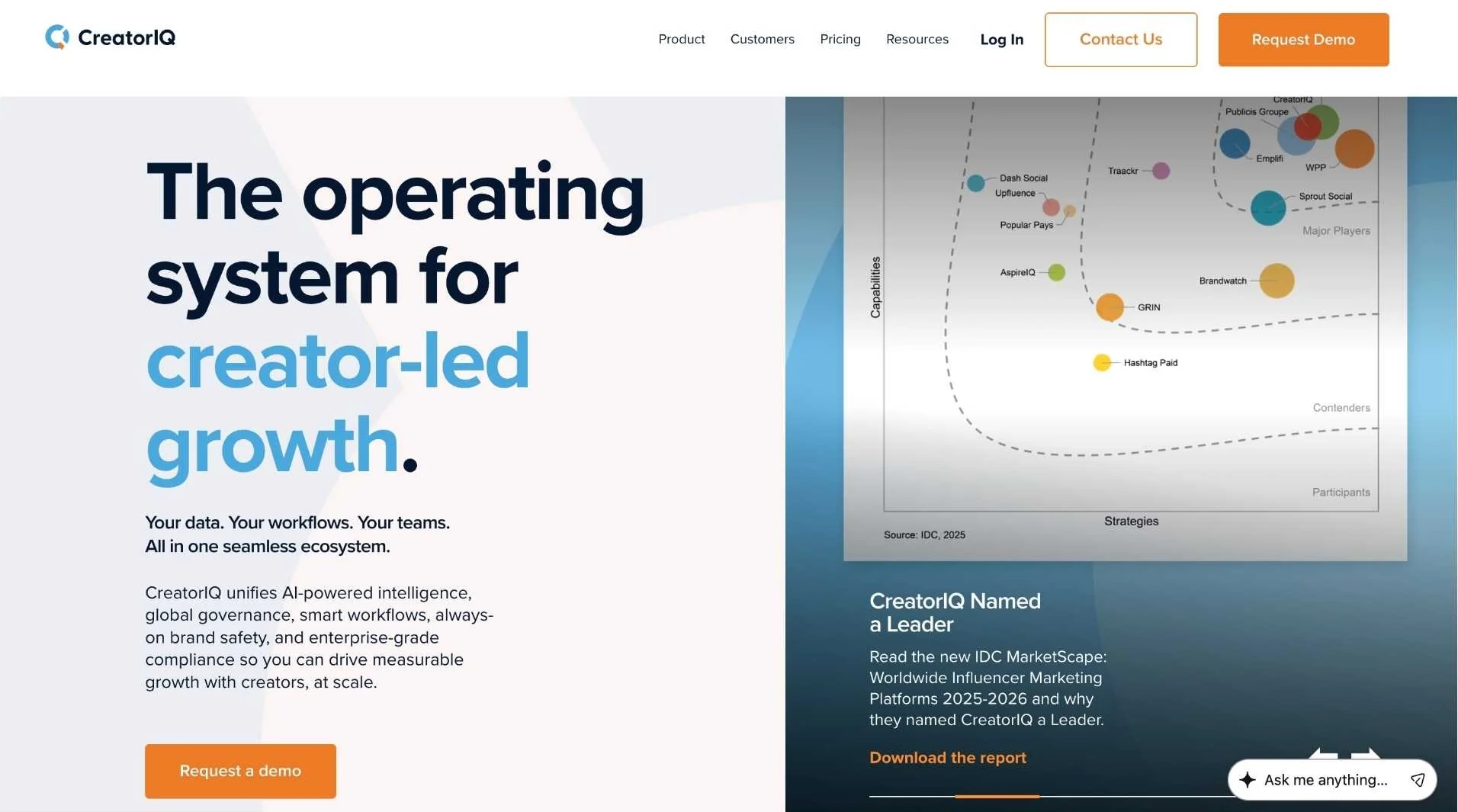
CreatorIQ is enterprise creator marketing software bought by large brands and agencies running programs across many markets simultaneously. Reporting and analytics are what its reviewers single out, and it holds the largest review base in this comparison. Cost is quoted rather than published.
Key Features
- Multi-market programs: Campaigns run across regions at once rather than one country at a time.
- Creator vetting: Audience and performance data beyond what the native platforms expose.
- Payment processing: Creator payments handled without routing through finance.
- Client one-sheets: Stakeholder summaries generated straight from campaign data.
- Performance analytics: Per-creator reporting detailed enough for an enterprise review.
Pricing
Nothing published. CreatorIQ quotes per engagement on annual enterprise contracts, so there is no figure to budget against without a sales conversation.
Reviews
4.6/5.0 (G2, 581 reviews).
Pros
- 581 reviews: Fifty times Embold’s evidence base.
- No geographic limit: Built for programs spanning many markets.
- Flat contract, no spend fee: Cost does not rise with creator payments.
Cons
- No published price: Every number arrives through sales, on an annual contract.
- Discovery gaps reported: Reviewers say relevant creators sometimes fail to surface.
- Too much platform: Overbuilt for a brand running Canadian micro-influencer campaigns.
Integrations
- Shopify: Store connection tying creator activity to orders.
- Instagram and TikTok: Creator data and campaign performance pulled in directly.
- YouTube: Long-form results measured alongside short-form.
- Salesforce: Campaign data into enterprise reporting stacks.
- API access: Creator and campaign data available programmatically.
Embold vs CreatorIQ
These are barely in the same market. Embold is a $299 self-serve tool with one country’s creators. CreatorIQ is an enterprise contract for brands running twenty markets and reporting to a board.
The useful comparison is what each does to your budget as the program grows. CreatorIQ costs a fixed annual amount whatever you spend on creators. Embold costs less up front and then takes a nickel from every dollar you pay a creator, forever.
Upfluence

Upfluence is a creator platform built around eCommerce data, best known for identifying the creators already sitting in your customer and site-visitor records. It is sold in modules rather than tiers and charges a flat platform fee instead of a share of creator sales. Established Shopify brands are its natural buyers.
Key Features
- Customer-creator matching: Your own buyers checked against creator profiles and activated.
- Modular purchase: Find, Scale or Autopilot bought separately rather than as a ladder.
- Discovery with demographics: Filters and audience data reviewers rate well for targeting.
- Affiliate commission tracking: Creator revenue attributed through the store connection.
- Workflow to payment: Discovery through to paying the creator in one platform.
Pricing
Not published. Quoted per engagement based on modules, team size and program volume, on twelve-month annual plans including a dedicated account manager. A free trial follows a consultation call, and the company states it never takes a percentage of creator sales.
Reviews
4.6/5.0 (G2, 140 reviews).
Pros
- Explicitly no revenue share: The company states it takes no percentage of creator sales.
- Starts with your customers: Warmer supply than any roster you have not bought from.
- International by default: Creators wherever your customers are, not one market.
Cons
- Twelve-month commitment: A year signed, against no minimum term at all.
- Needs a dedicated owner: Reviewers describe the interface as demanding.
- No published figure: You commit before you see a price.
Integrations
- Shopify: Customer data mined for creators, with affiliate revenue tracked back.
- WooCommerce: The same coverage for WordPress storefronts.
- Klaviyo: Creator segments moved into email flows.
- PayPal: Creator payments processed inside the workflow.
- API access: Campaign and creator data into your own reporting.
Embold vs Upfluence
Both find creators for you, from opposite ends. Embold hands you a vetted Canadian pool. Upfluence looks inside your Shopify data for customers who already create, which produces a smaller and warmer list in whatever market you actually sell in.
On cost the structures invert. Upfluence wants a year signed but never touches creator spend. Embold lets you leave any month but takes 5% of every payment while you stay. Which is cheaper depends entirely on how much you plan to pay creators.
Aspire
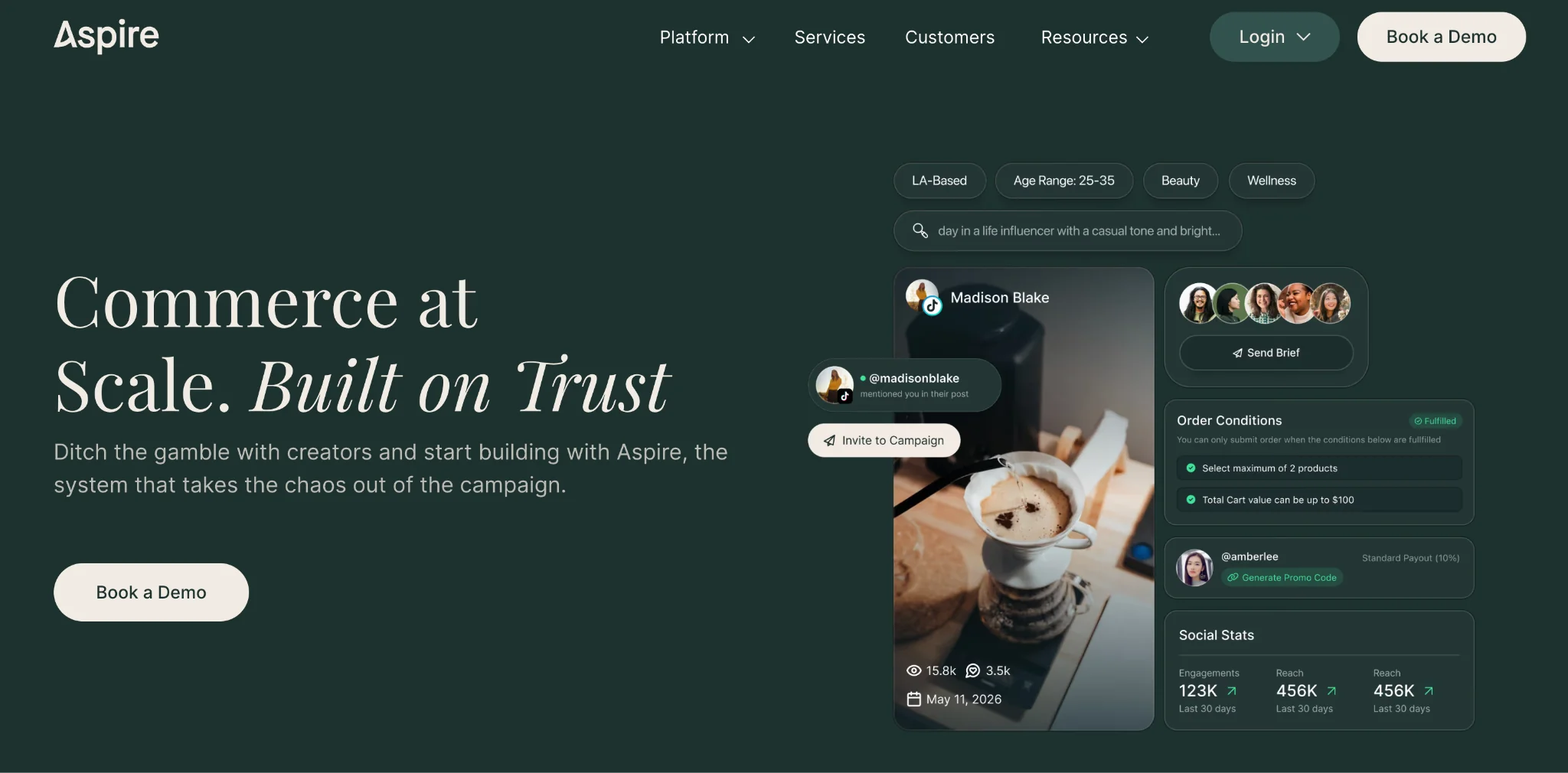
Aspire is an established platform for mid-market and enterprise eCommerce brands, pairing creator discovery with campaign workflow, seeding and affiliate tracking. It suits always-on programs where the roster compounds over time. Reviewers most often name ease of use and influencer management.
Key Features
- Lookalike discovery: One creator who performed becomes a shortlist of similar profiles.
- Seeding at volume: Product send-outs run as a workflow rather than tracked by hand.
- Briefs and approvals: Content requested, reviewed and signed off in the platform.
- Affiliate attribution: Codes and links tying creator activity to real orders.
- Rights-managed library: Approved assets held with usage terms for paid reuse.
Pricing
Not published. Third-party sources report an annual commitment starting around $2,000 a month, with other estimates near $2,499, and they disagree enough that only a quote settles it. There is no free trial.
Reviews
4.6/5.0 (G2, 146 reviews).
Pros
- 146 reviews: A far deeper record than eleven.
- Flat cost at any spend: No percentage taken on creator payments.
- Store attribution built in: Named eCommerce connections with revenue tracking.
Cons
- No trial and no rate card: A closed evaluation at a reported $2,000-plus a month.
- Annual commitment: A year signed against a month-to-month alternative.
- Enterprise-shaped: Heavier than a micro-influencer program in one country needs.
Integrations
- Shopify: Seeding orders raised and creator revenue attributed.
- WooCommerce: Equivalent coverage for WordPress stores.
- Klaviyo: Creator contacts into email programs.
- Slack: Campaign alerts into team channels.
- Zapier: Wider stack connections where no native option exists.
Embold vs Aspire
Aspire is where an Embold program goes once it needs store attribution. Seeding at volume, content rights and affiliate codes reconciled against real orders are the pieces Embold leaves for a spreadsheet.
Cost is the counterweight. Aspire is reported around $2,000 a month on an annual commitment, roughly seven times Embold Starter, and it will not let you try it first. Embold at $299 with no term is far easier to start and far harder to scale.
Afluencer
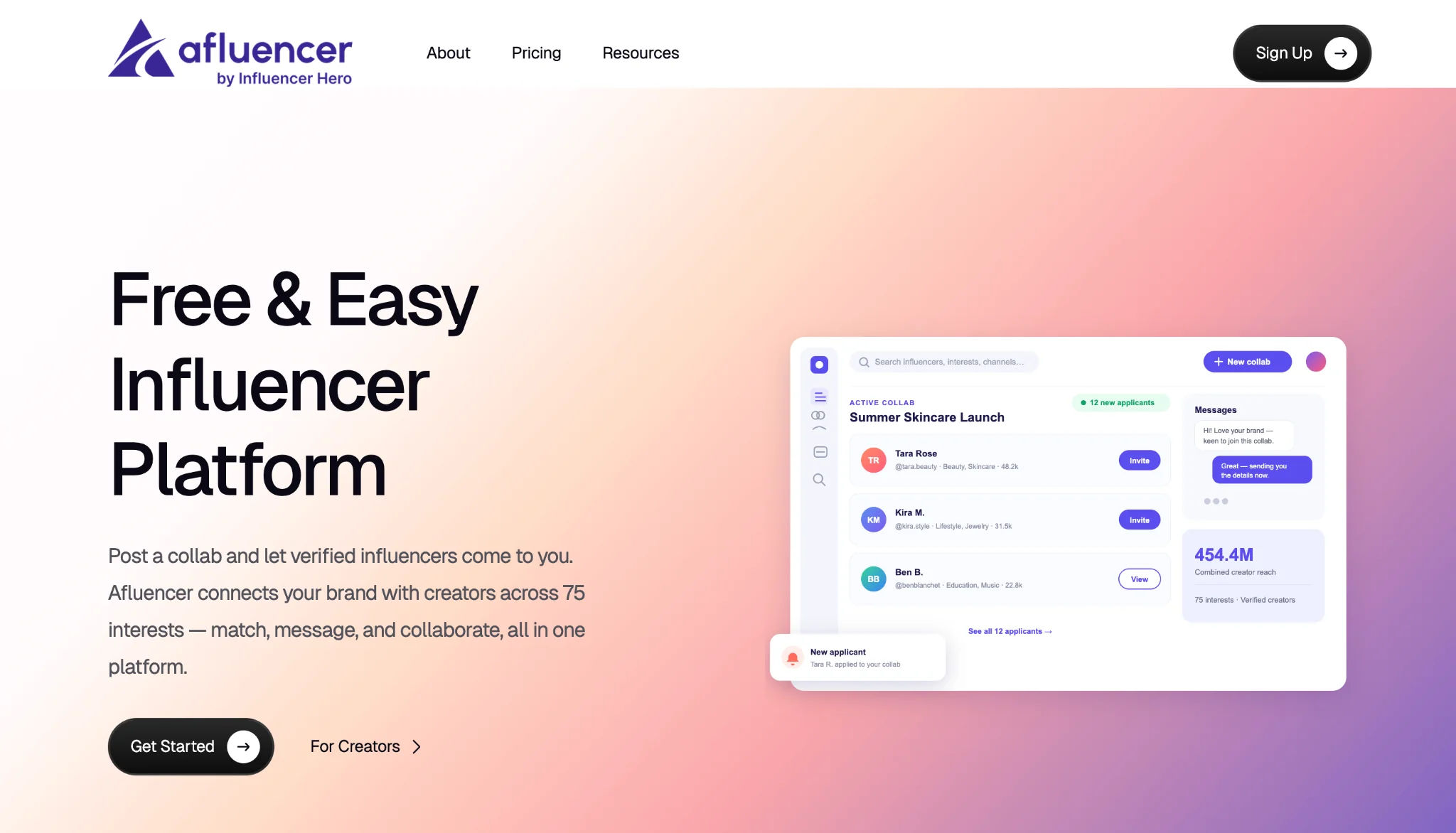
Afluencer is a marketplace where brands publish collaboration listings and verified creators apply. Members span Instagram, TikTok, YouTube, Facebook and X, and its customers are mostly Shopify merchants and small D2C teams. Pricing is a published flat fee with no contract.
Key Features
- Listing-led recruitment: The same inbound mechanic, without a single-country roster behind it.
- Verified members: Accounts registered and checked before anyone can apply.
- CreatorGPT ranking: AI sorts the applicant queue against your brief before review.
- Invite credits: Outbound approaches for the months when applications run thin.
- Store-linked codes: Discount codes and creator fees handled through the storefront connection.
Pricing
- VIP: $49 a month
- Concierge: $99 a month
No minimum term, and no percentage taken on creator payments.
Reviews
4.6/5.0 (G2, 738 reviews) and 4.7/5.0 (Shopify App Store, 34 reviews). The G2 pool leans creator-side, so read it beside the Shopify score.
Pros
- A sixth of the price: $49 a month against $299, with no fee on creator spend.
- Applications without borders: A platform for a small business in any market, not just Canada.
- 738 reviews: The deepest evidence base on this page.
Cons
- No vetting service: Members are verified, but nobody screens them for your brief.
- North America weighted: Broad coverage, but thinner in some markets.
- Inbound quality varies: A weak listing brings weak applicants.
Integrations
- Shopify: Codes, referrals and creator orders tracked from the store.
- BigCommerce: The same connection for BigCommerce merchants.
- Klaviyo: Creator contacts pushed into your email lists.
- DocuSign: Collaboration terms signed inside the flow.
- Slack: Application alerts sent to the team as they arrive.
Embold vs Afluencer
These run the same play at very different prices. Both have creators apply to your listing rather than making you cold-email strangers. Afluencer charges $49 a month with no cut of creator payments; Embold charges $299 plus 5%.
What Embold adds for the difference is vetting and a Canadian guarantee. Every creator has been screened and every one of them is local, which for a brand shipping only within Canada removes a real filtering problem. For anyone else, the premium buys a restriction.


SARAL
SARAL is an influencer marketing CRM tool for D2C brands running seeding, affiliate and ambassador programs from one place. Reviewers describe it as the tool that finally replaced their spreadsheets. It publishes annual and quarterly pricing, offers a free trial and carries the highest satisfaction score in this comparison.
Key Features
- Partnership-based plans: Sized by active partnerships rather than by what you pay creators.
- Email drip sequences: Automated outreach run from your own Gmail.
- One-click Shopify: Store connection set up without development work.
- Unlimited post tracking: Creator content monitored without a cap from Business up.
- Dedicated success manager: Former influencer strategists included in the plan.
Pricing
- Starter: $12,000 a year or $3,600 a quarter, 100 active partnerships, 1 seat
- Business: $15,000 a year or $4,500 a quarter, 500 partnerships, 3 seats
- Professional: $25,000 a year or $7,500 a quarter, 1,000 partnerships, 10 seats
No contracts, cancellation any time, and a free trial before you pay.
Reviews
4.8/5.0 (G2, 56 reviews).
Pros
- Cost is capped: A published fee that does not move when creator spend does.
- 4.8 across 56 reviews: Five times the sample and a stronger signal.
- Cancel any time: No contract despite the annual framing.
Cons
- $3,600 a quarter minimum: Four times Embold Starter before any creator is paid.
- Bugs are reported: Gmail sync delays and glitches recur in reviews.
- No vetted roster supplied: You find and screen the creators yourself.
Integrations
- Shopify: One-click connection for seeding, codes and creator revenue.
- Gmail: Sequences sent and tracked from your own mailbox.
- Klaviyo: Creator contacts moved into lifecycle email.
- Slack: Support and campaign alerts routed to the team.
- Zapier: Wider stack connections without engineering time.
Embold vs SARAL
The pricing philosophies are opposites and worth comparing directly. SARAL charges a large fixed sum and never touches creator payments. Embold charges a small one and takes 5% of everything.
Work out where they cross. SARAL Starter at $3,600 a quarter is $1,200 a month; Embold Starter reaches that at about $18,000 a month in creator spend. Below that Embold is cheaper, above it SARAL is, and only one of the two connects creator activity to your store.
IMAI
IMAI, also sold as InfluencerMarketing.ai, is a discovery platform built on an index in the hundreds of millions, adding campaign management and white-label reporting on higher tiers. Agencies running several clients make up a large share of its base. Prices are published and a free trial is offered.
Key Features
- Hundreds of millions of profiles: Global scale against a 9,000-creator roster.
- Fraud screening in search: Fake-follower detection surfaced with the results.
- Client account separation: Multiple programs run side by side without collision.
- White-label reporting: Agency-branded outputs on the higher plans.
- Social listening: Brand and category monitoring above the entry tiers.
Pricing
Published tiers reported from about $175 a month, through roughly $349 and $499, to $1,200 and up for enterprise and white-label, with report volumes varying by tier. A free trial is offered.
Reviews
4.1/5.0 (GetApp, low review volume at 16 reviews). Sourcing speed and fraud detection draw praise; support and account access draw the criticism.
Pros
- Cheaper and global: From around $175 a month with no market restriction.
- No fee on creator spend: The subscription is the whole software cost.
- A trial included: Testable before paying, which Embold does not offer.
Cons
- Support is the complaint: Slow responses and, in one report, lost account access.
- Nothing is vetted for you: A vast index means the filtering is yours to do.
- No payments or contracts: Discovery and reporting rather than the full workflow.
Integrations
- Shopify: Named store connection for creator-driven orders.
- WooCommerce: Coverage for WordPress storefronts.
- Instagram and TikTok: Creator data and campaign performance.
- YouTube: Channel-level analytics alongside short-form.
- Exports: Creator and campaign data out for client reporting.
Embold vs IMAI
Scale against curation, at a lower price on the scale side. IMAI indexes hundreds of millions of creators worldwide from around $175 a month; Embold offers 9,000 vetted Canadians from $299 plus 5%.
The work moves with the choice. IMAI hands you an enormous index and no help narrowing it, which suits a team with time and a filtering process. Embold hands you a small pre-approved pool, which suits a team without either.
Brandbassador (Club)

Brandbassador, now also sold as Club, builds a standing ambassador community from customers and micro-influencers, run on gamified missions and rewards. It assumes people who already like the brand, which places it closer to loyalty software than campaign tooling. Keeping a community active is the job it does.
Key Features
- Reward missions: Tasks published to the community and completed for points, product or commission.
- Gamified retention: Leaderboards and tiers keeping ambassadors posting between campaigns.
- Community recruitment: Customers converted into a managed roster at scale.
- Commission tracking: Rewards and payments handled per ambassador.
- Programme analytics: Participation and output measured across the community.
Pricing
Not published, with third-party listings reporting no free trial. Quotes come through the vendor.
Reviews
4.7/5.0 (G2, 107 reviews). Ease of use and support are praised; ambassador search and filtering draw the criticism.
Pros
- Your customers, any country: The roster comes from your own base rather than a national network.
- 107 reviews at 4.7: A far deeper record than eleven.
- Four named store integrations: Against no eCommerce connection at all.
Cons
- Quote-only and no trial: Less open than a published $299 plan.
- Weak ambassador search: Finding the right people is the recurring complaint.
- Needs an existing base: No use for a brand entering a market cold.
Integrations
- Shopify: Discount codes and ambassador sales tracked from the store.
- WooCommerce: The same for WordPress storefronts.
- Adobe Commerce: Enterprise commerce coverage.
- BigCommerce: Additional storefront support.
- Instagram and TikTok: Ambassador content tracked against missions.
Embold vs Brandbassador
Both give you creators without cold outreach, sourced from different places. Embold supplies a vetted Canadian pool. Brandbassador converts your existing customers into ambassadors, wherever they happen to live.
For a Canadian brand with a customer base, Brandbassador removes the geographic ceiling and the 5% fee at once. For one with no customers yet, it has nothing to activate, and Embold’s supplied roster is the more practical starting point.
Lefty
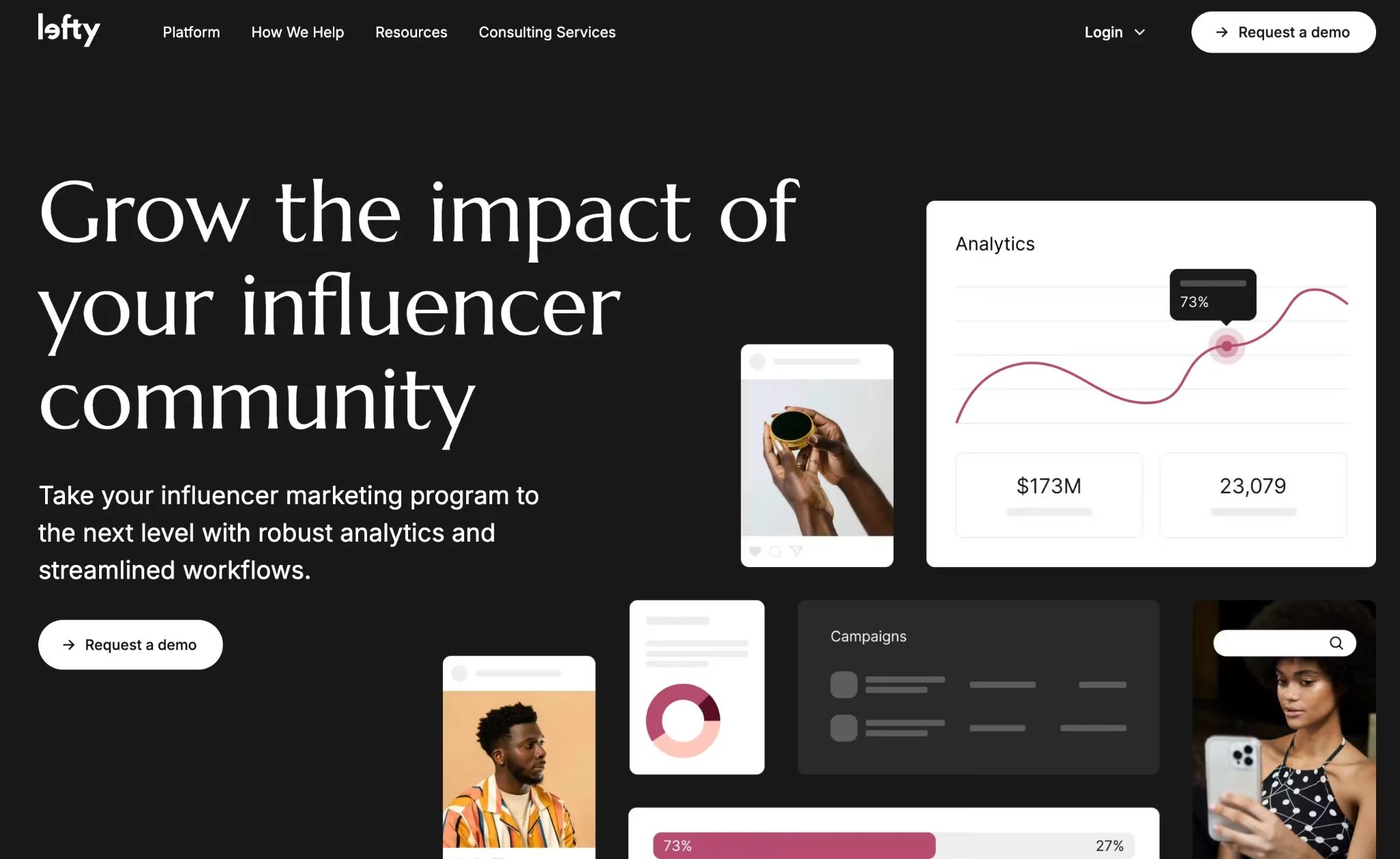
Lefty is an influencer platform weighted toward Instagram, with a profile index in the millions and a following among beauty, fashion and luxury brands. Discovery, campaign management, ROI tracking and social monitoring sit together, with web, Android and iOS apps. Support runs 24/7 on chat and phone.
Key Features
- Faceted discovery: Layered filters across a multi-million profile index.
- Campaign management: Briefs, deliverables and creator relationships in one place.
- ROI reporting: Campaign returns measured rather than reach alone.
- Social monitoring: Brand mentions tracked alongside campaigns.
- Mobile apps: Android and iOS access, which almost nothing here offers.
Pricing
Nothing published on the company’s own site. Its Capterra listing shows a starting figure of around €590 a month with a free trial available, so treat that as indicative rather than a rate card.
Reviews
5.0/5.0 (Capterra, very low review volume at 2 reviews). Ease of use scores 5.0, features and value 4.5, and customer service 4.0.
Pros
- A trial exists: Testable before committing, per its listing.
- No spend-based fee: An indicative subscription rather than a cut of creator payments.
- 24/7 support: Chat and phone cover most vendors do not provide.
Cons
- Two reviews: Even thinner evidence than Embold’s eleven.
- No rate card on its own site: The only figure comes from a directory listing.
- No Canadian specialism: Strongest in European fashion and beauty.
Integrations
- Instagram: The deepest connection, powering discovery and reporting.
- TikTok: Creator data and campaign tracking on short-form.
- YouTube: Channel performance alongside the social networks.
- Exports: Campaign and creator data out for reporting.
- Mobile apps: Campaign access from Android and iOS as well as the browser.
Embold vs Lefty
Both are regional specialists that happen to specialise in different regions. Embold owns Canadian micro-influencers; Lefty is strongest in European beauty, fashion and luxury, with ROI reporting and social monitoring on top.
Neither has much of a review record, and both are hard to price from outside. What separates them is the model: Lefty charges a subscription, while Embold adds a share of what you pay creators. Brands weighing influencer analytics platforms should price both against expected creator spend, not against the sticker.
Insense
Insense produces UGC video for paid social on a repeatable schedule. Vetted creators apply to a brief, deliver in roughly ten business days, and content arrives with usage rights cleared. Performance teams buying ad creative are its core market.
Key Features
- Applicant guarantee: Five matching creators respond or the subscription is refunded.
- Structured revisions: Up to three feedback rounds built into the brief.
- Whitelisted advertising: Meta Partnership Ads run from the creator’s own handle.
- Seeding included: Product shipped to creators as part of the campaign.
- Rights-cleared assets: A content library with paid usage licensed in the deal.
Pricing
- Trial: $650 for one month, 1 campaign and 10 creators, 20% marketplace fee
- Brand: $500 a month billed quarterly, or $400 a month annually, 10% fee
- Agency: $800 a month billed quarterly, or $640 a month annually, 7% fee
Campaigns and creators are unlimited on both paid plans, and both numbers are published.
Reviews
4.5/5.0 (G2, 374 reviews).
Pros
- 374 reviews: Thirty times the evidence base.
- The fee falls as you grow: 20% down to 7% by tier, rather than a flat 5% forever.
- Delivery is guaranteed: Five applicants and content in about two weeks.
Cons
- Still a percentage: The marketplace fee is higher than Embold’s at every tier.
- Creative, not campaigns: Built for ad assets rather than a creator’s own audience.
- No Canadian focus: A general Western creator pool.
Integrations
- Meta: Partnership Ads and whitelisted creator content run directly.
- TikTok: Assets routed into ad formats without re-uploading.
- Shopify: Seeding orders raised from your product catalogue.
- Stripe: Creator payments processed inside the workflow.
- Ad account export: Approved content pushed into live campaigns.
Embold vs Insense
Both take a percentage of creator payments, which makes this the fairest comparison on the page. Insense charges 7% to 20% depending on plan; Embold charges a flat 5%. On fee alone Embold wins, and it is worth saying so plainly.
What Insense buys with the higher rate is certainty. Five guaranteed applicants, delivery inside about ten business days and rights cleared in the deal, backed by 374 reviews. Embold gives you a roster and no promise about who applies or when.
Final Thoughts on Embold Alternatives
Embold fits one buyer very precisely: a Canadian brand running micro-influencer campaigns at modest spend, with nobody in-house to filter creators. Vetted local supply, five campaign types, payments handled and no minimum term is a clean package at $299 a month.
It fits a growing brand less well, for two reasons that both get worse with time. The 5% fee climbs with every campaign that works, and the roster stops at the border. Model your creator spend a year out, and check whether your market is still only Canada by then.

.png)


.jpg)










