

10 Best Email Marketing Tools for D2C Brands
Email marketing continues to be one of the highest-ROI growth channels for D2C ecommerce brands, especially as acquisition costs rise and brands focus more on retention and first-party data.
According to an Klaviyo email marketing agency interview conducted by Influencer Hero, most D2C brands generate between 25 - 35% of their total top line revenue from email marketing, highlighting the importance of choosing the right platform for segmentation, automation, and customer lifetime value.
Best Email Marketing Tools for D2C Brands
| TOOL | REVIEWS | BEST FOR | TRIAL INFO | PRICING | ||
|---|---|---|---|---|---|---|
1 |

|
⭐ | Ecommerce lifecycle marketing | Book Demo | Pricing | Website |
2 |

|
⭐ | Ecommerce email & SMS | Book Demo | Pricing | Website |
3 |

|
⭐ | Beginner email marketing | Book Demo | Pricing | Website |
4 |

|
⭐ | Ecommerce marketing automation | Book Demo | Pricing | Website |
5 |

|
⭐ | Advanced automation workflows | Book Demo | Pricing | Website |
6 |

|
⭐ | Ecommerce retention marketing | Book Demo | Pricing | Website |
7 |

|
⭐ | SMS-first marketing | Book Demo | Pricing | Website |
8 |

|
⭐ | Enterprise customer engagement | Book Demo | Pricing | Website |
9 |

|
⭐ | Budget email marketing | Book Demo | Pricing | Website |
10 |

|
⭐ | All-in-one marketing platform | Book Demo | Pricing | Website |
1. Klaviyo
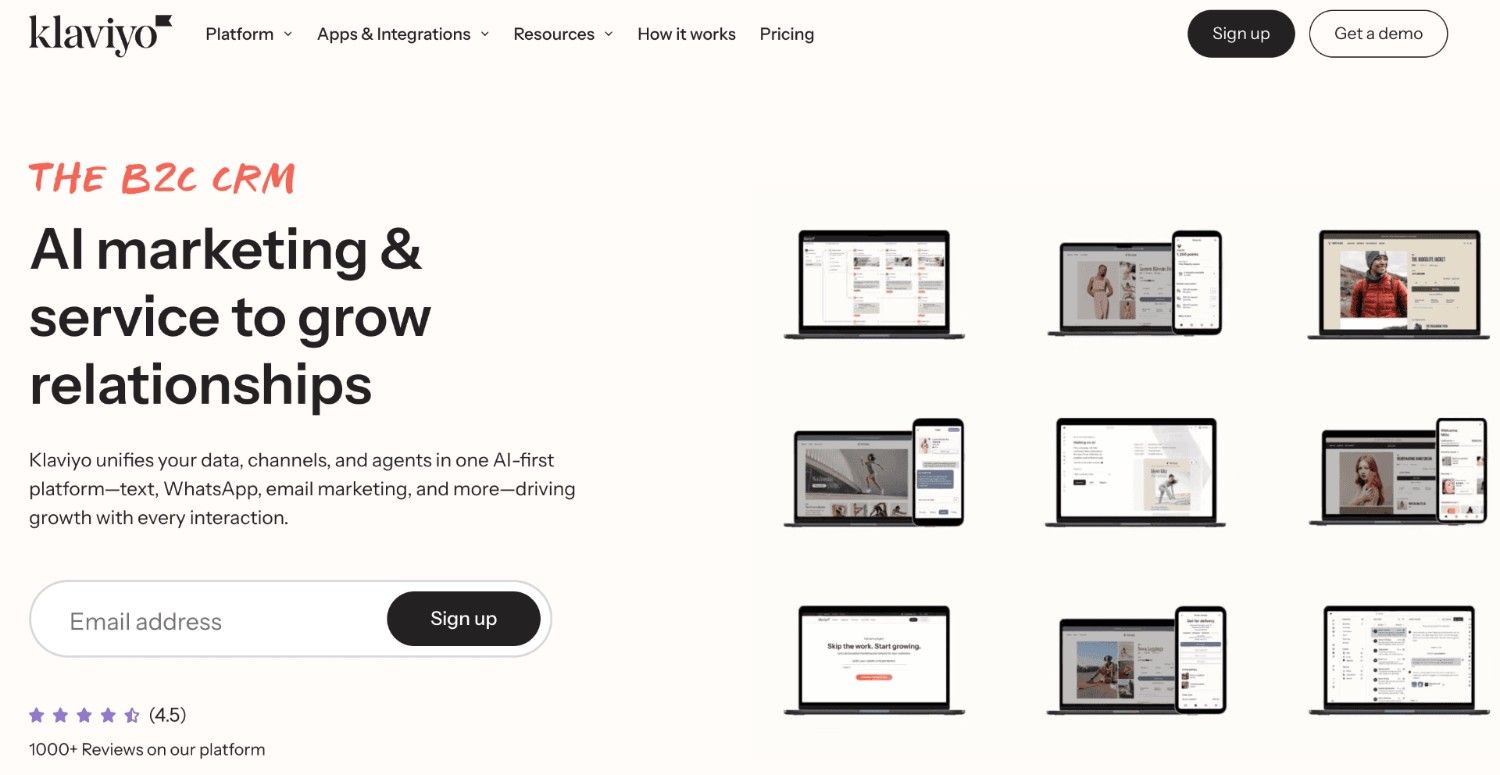
Klaviyo is an ecommerce-first email + SMS platform that syncs your store/customer data (e.g., Shopify events) and lets you build targeted campaigns and automated flows (welcome, abandoned cart, post-purchase) based on real-time behavior. It’s widely adopted by Shopify brands and is known for deep segmentation and lifecycle automation.
Key features:
- Flows (automation): Build event-triggered journeys like browse/cart abandonment, winback, replenishment, and post-purchase sequences.
- Segmentation: Create highly granular segments using behavioral + purchase data for personalized messaging.
- Email + SMS in one platform: Run coordinated email and text campaigns from the same customer profile.
- Forms & list growth: Popups/embedded forms for email + SMS capture tied to onsite behavior.
- Reporting & attribution: Track campaign/flow performance and revenue impact; widely praised for actionable insights.
Pros:
- Best-in-class ecommerce data model (events + catalog + customer properties) for targeting and automation.
- Strong Shopify ecosystem and integrations that D2C teams rely on.
- Powerful segmentation and automation that reviewers consistently highlight.
Cons:
- Costs can climb fast as your list grows (a recurring theme in reviews/forums).
- Can feel “grindy”/complex for teams new to lifecycle marketing (learning curve).
Integrations
- Shopify: Sync customers, orders, products, and onsite events to trigger flows and personalize campaigns.
- Meta Ads (Facebook/Instagram): Build audiences and run retargeting/suppression using Klaviyo segments and lifecycle signals.
- Google Ads: Use lifecycle segments to refine targeting (e.g., lapsed customers, high-LTV buyers).
- Influencer Hero: analyse influencers in your email lists & push influencers from the Influencer Hero CRM into Klaviyo lists.
- Gorgias: Sync support/ticket context and use it to personalize retention and service-driven messaging.
Pricing:
Free plan available; paid tiers scale primarily with your active profiles / sending needs, with options for email and email+SMS. Benchmark: Mid → High for D2C once lists scale.
Reviews:
4.6/5.0 on G2
2. Omnisend
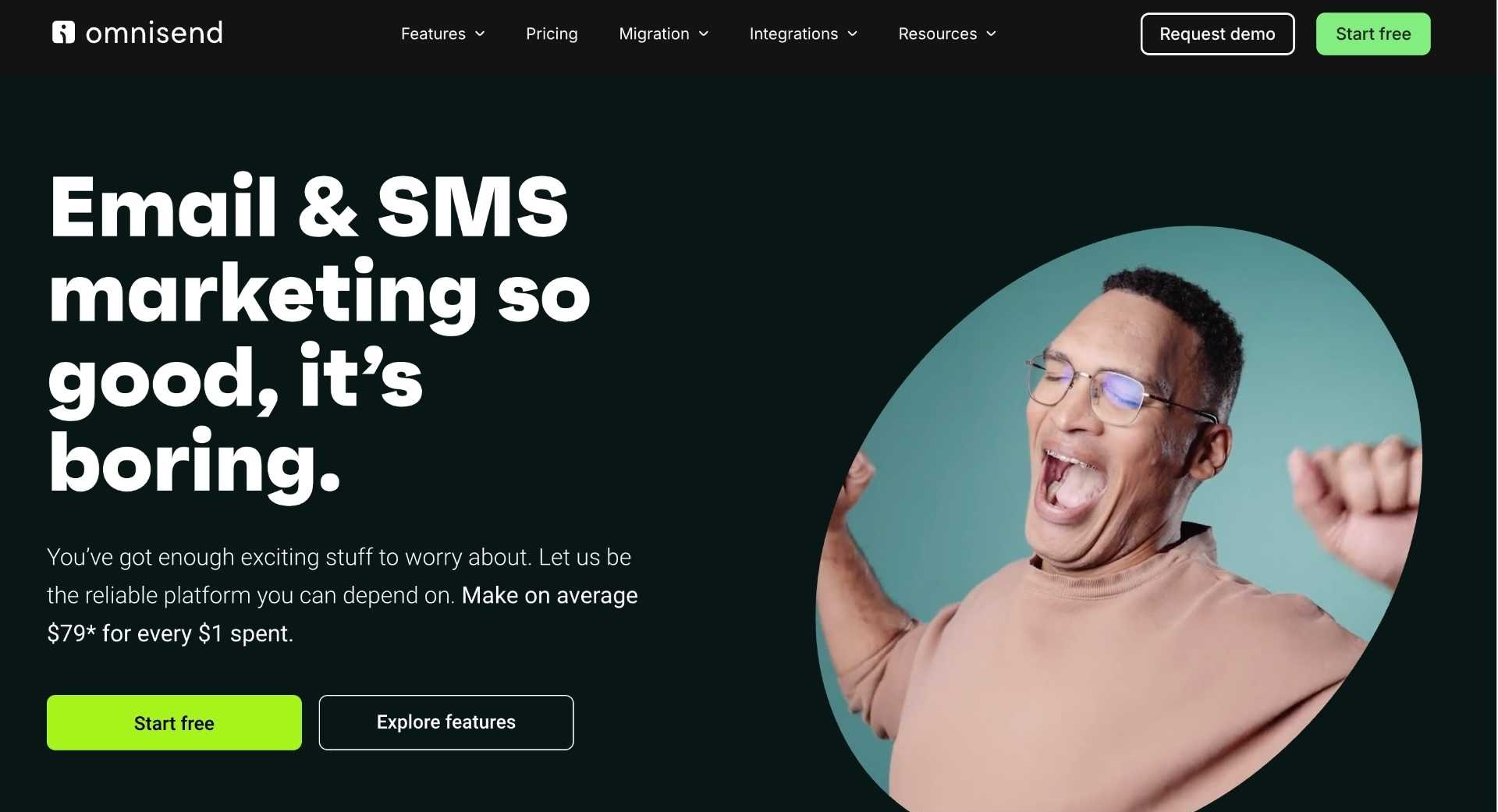
Omnisend is an ecommerce-focused email + SMS + web push platform that centralizes campaigns and automations for store-driven retention (cart recovery, lifecycle flows, promos). It’s often chosen as a simpler, more cost-predictable alternative for Shopify brands.
Key features:
- Email + SMS + web push in one place: Run multi-channel retention without stitching multiple tools together.
- Prebuilt automations: Ready-made workflows for cart/browse abandonment, welcome, winback, etc.
- Segmentation: Behavioral segmentation tied to ecommerce activity for personalized targeting.
- Templates & editor: Large template library and drag-and-drop building for fast execution.
- AI helpers: AI writing and segmentation features highlighted in recent reviews.
Pros:
- Strong “all-in-one” value for ecommerce retention (email/SMS/push).
- Frequently praised for usability and Shopify alignment.
Cons:
- Some users want more flexibility in templates/customization.
- Pricing can still rise with list size (common complaint as brands scale).
Integrations:
- Shopify: Sync store data to drive lifecycle automations and personalization.
- WooCommerce: Bring ecommerce events into segmentation and flows.
- Influencer Hero: analyse influencers in your email lists & push influencers from the Influencer Hero CRM into Omnisend lists.
- Zapier: Connect Omnisend to broader ops stack (CRM, sheets, support) via automations.
- SMS: Built-in SMS channel (paired with email lifecycle).
Pricing:
Free plan available; paid plans start at $16/month and scale by contacts. Benchmark: Mid (often cheaper than premium ecommerce platforms at scale).
Reviews:
4.6/5.0 on G2
3. Mailchimp
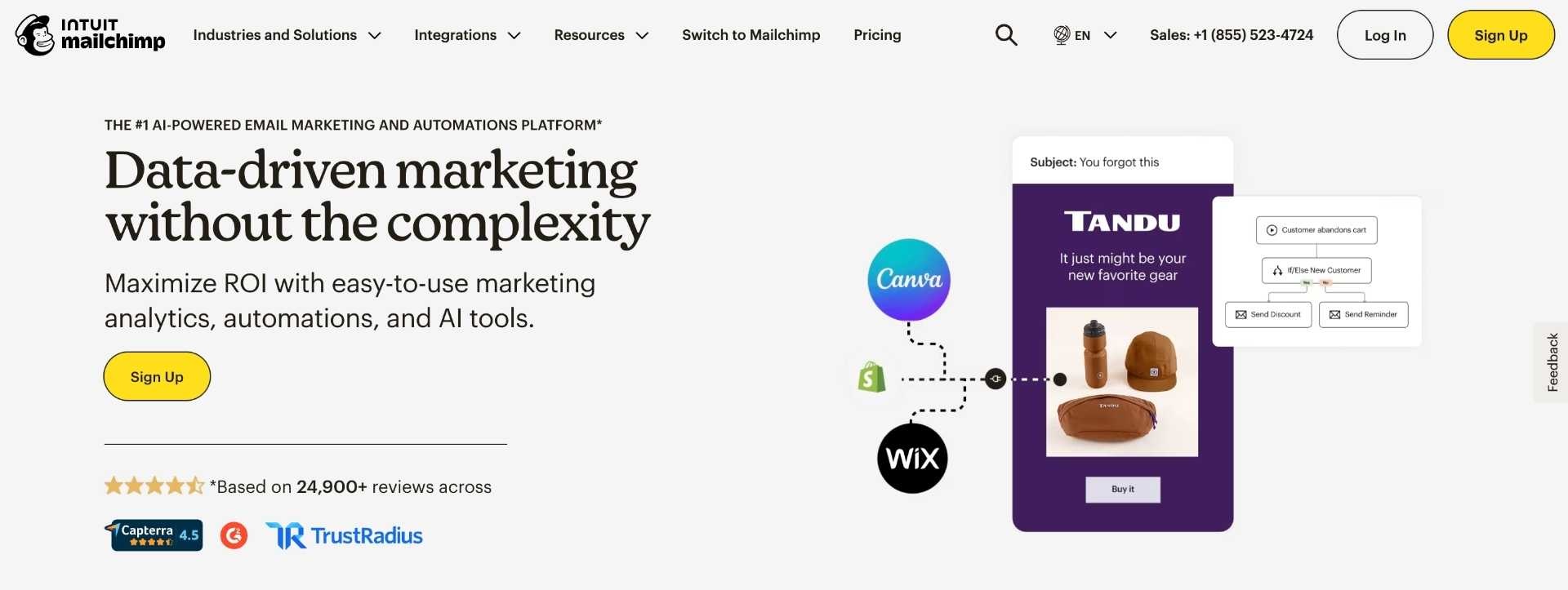
Mailchimp is an all-in-one marketing platform (email at its core) with templates, automations, segmentation, and add-ons; many D2C brands start here and outgrow it as lifecycle complexity increases.
Key features:
- Campaign builder + templates: Fast newsletter/promo creation with drag-and-drop.
- Customer journeys/automation: Basic-to-advanced flows depending on plan tier.
- A/B testing: Available on higher tiers for subject lines/content optimization.
- Segmentation & analytics: Reporting and audience tools for optimizing sends.
- Large integration ecosystem: “300+ integrations” is a core selling point.
Pros:
- Easy to onboard; strong for newsletters and simpler automations.
- Broad ecosystem of integrations.
Cons:
- Advanced features are pushed into higher tiers; can become pricey at scale.
- Criticisms include contact-billing quirks (e.g., charging for duplicate/“cleaned” contacts) and weaker support unless on higher plans.
Integrations:
- Shopify: Connect store and customer data for ecommerce campaigns (commonly used by D2C teams).
- WooCommerce: Ecommerce sync for targeting and reporting.
- Meta (Facebook/Instagram): Extend campaigns and audiences across social channels.
- Google Analytics: Measure traffic and conversion impact of campaigns.
- Zapier: Automate connections with other tools.
Pricing:
Free tier exists; paid plans commonly shown as Essentials (~$13/mo), Standard (~$20/mo), Premium (~$350/mo) depending on contacts/features, with trials on some plans. Benchmark: Low → Mid (can become High on Premium).
Reviews:
4.3/5.0 on G2
4. Drip
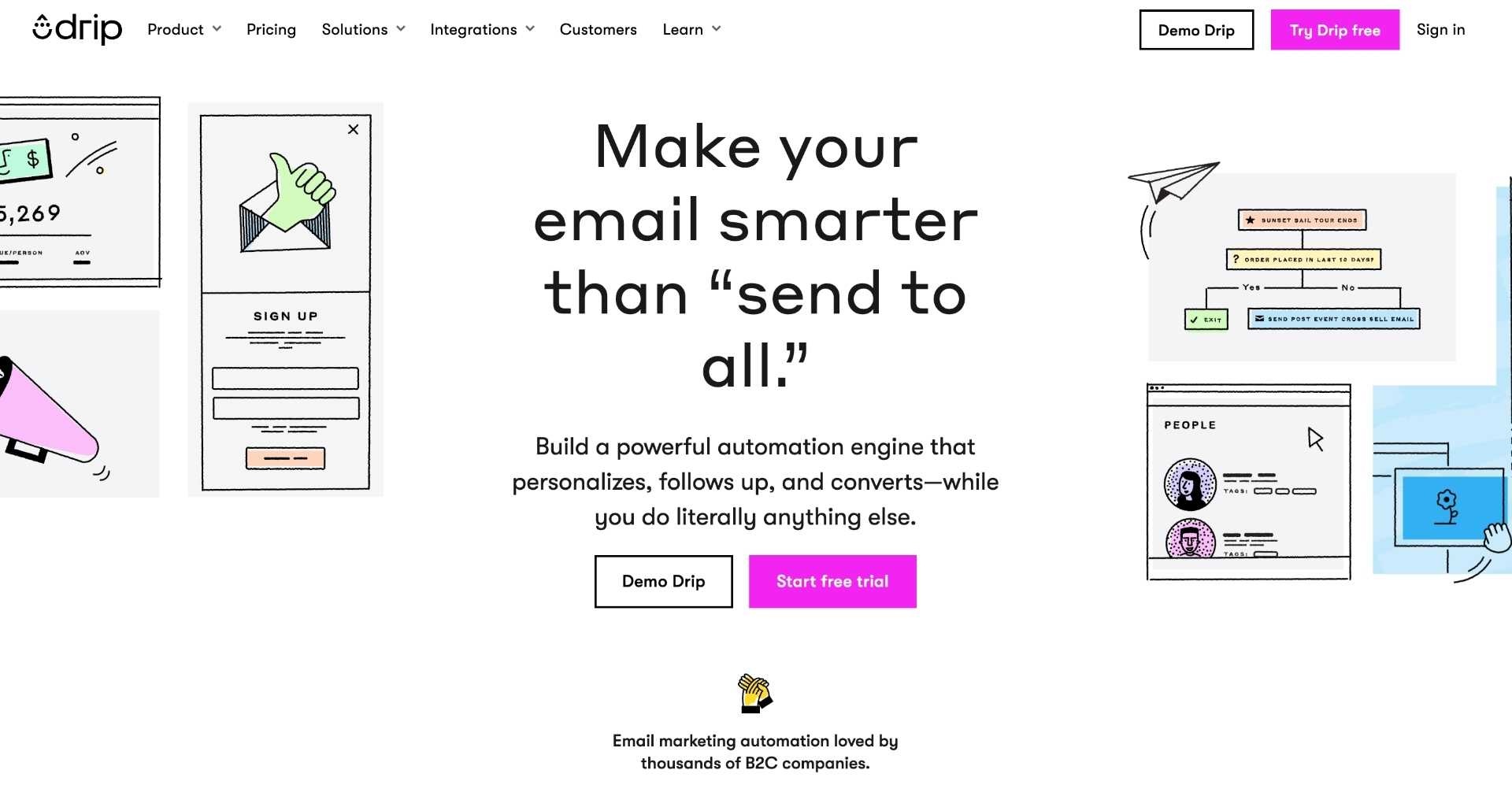
Drip positions itself as an ecommerce CRM + email automation platform, focused on behavior-based targeting and lifecycle workflows for D2C stores (especially Shopify/WooCommerce).
Key features:
- Visual workflow automation: Build multi-step journeys for lifecycle retention.
- Dynamic segments: Segment users based on behavior and purchase history.
- Onsite campaigns: Trigger onsite experiences tied to segments/events.
- Ecommerce focus: Often highlighted for ecommerce logic and conversions.
- Open API & sub-accounts: Useful for multi-store or agency setups.
Pros:
- Strong automation depth for ecommerce lifecycle.
- G2 reviewers frequently highlight ecommerce-first workflows and segmentation.
Cons:
- No permanent free plan; only a trial.
- Learning curve for beginners is a common critique.
Integrations:
- Shopify: Sync store events to drive flows and personalization.
- Influencer Hero: analyse influencers in your email lists & push influencer from the Influencer Hero CRM into Mailchimp lists.
- Facebook/Instagram (Meta): Commonly used for audience sync + retargeting with lifecycle segments.
- Zapier: Connect Drip to broader ops stack via no-code automations.
- Open API: Build custom connections for warehouse, loyalty, or analytics tools.
Pricing:
14-day free trial; starts around $39/month (scales with list size). Benchmark: Mid.
Reviews:
4.4/5.0 on G2
5. ActiveCampaign
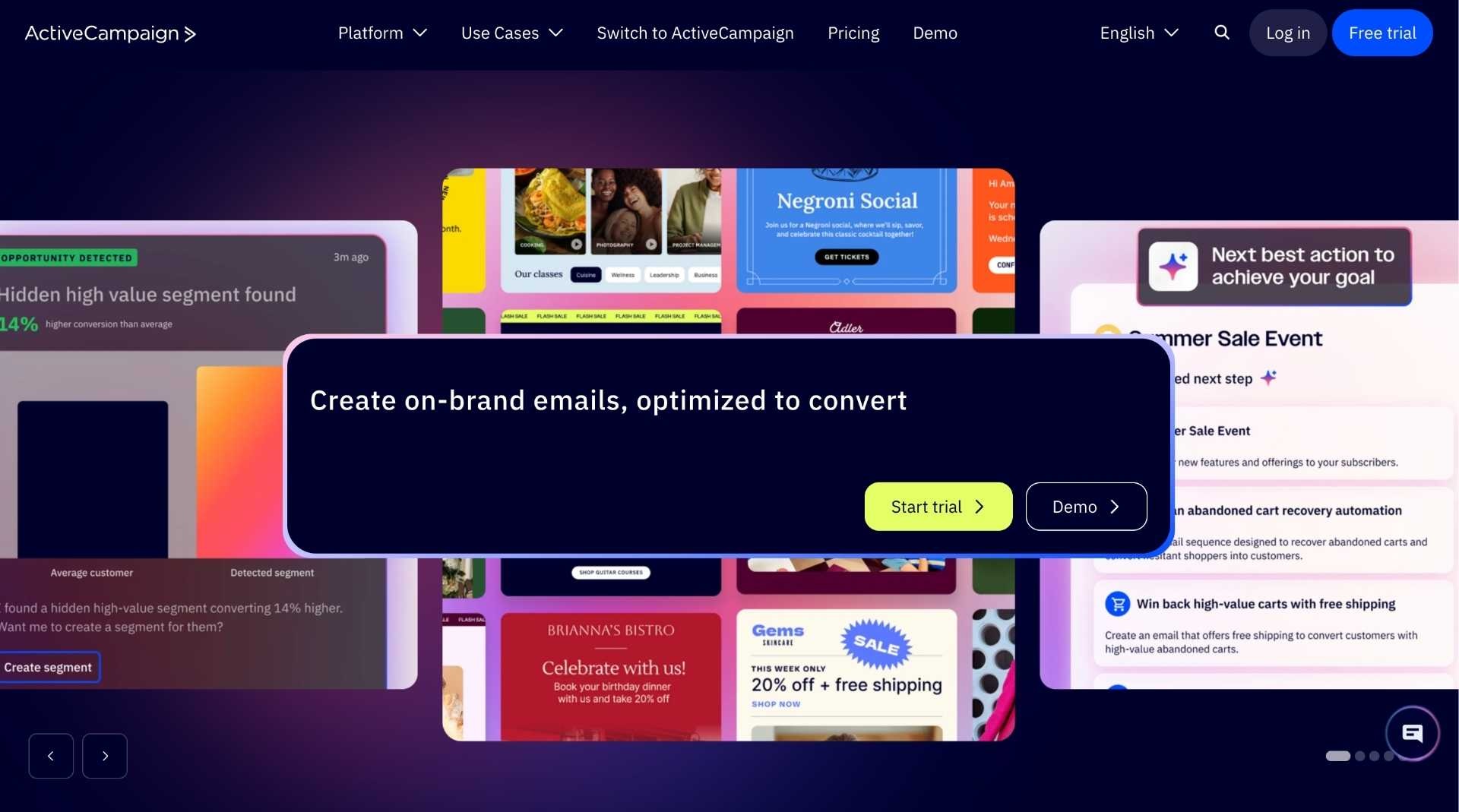
ActiveCampaign combines email marketing + marketing automation (and CRM capabilities) to create advanced journeys across segments and events—often used by D2C brands who want deeper automation logic than “newsletter-first” tools.
Key features:
- Automation builder: Widely praised for building complex customer journeys.
- Segmentation: Strong segmentation for targeted lifecycle messaging.
- Email marketing: Campaigns plus behavior-triggered sequences.
- Landing pages: Included in pricing/features for many tiers.
- AI (“Active Intelligence”): AI features included with limits depending on plan.
Pros:
- Very flexible automation for advanced lifecycle logic.
- Strong G2 satisfaction and broad adoption.
Cons:
- No free plan (trial only).
- UI changes/AI-heavy direction can be polarizing for some users.
Integrations:
- Shopify: Sync customers/orders to trigger automations like welcome, abandoned cart, upsell, and review requests.
- Facebook & Instagram (Meta): Connect ad channels to activate audiences and align automations with social acquisition/retargeting.
- Google Ads: Use contact + behavior data to build/refresh audiences and improve targeting with lifecycle signals.
- Google Sheets: Push contact data into Sheets from automations to eliminate manual exports and build custom reporting.
- Zapier: Connect ActiveCampaign to thousands of apps to automate cross-tool workflows (lead capture, ops handoffs, data sync).
Pricing:
Starts around $49/mo billed annually (varies by configuration); 14-day free trial, no free plan. Benchmark: Mid.
Reviews:
4.5/5.0 on G2


6. Sendlane
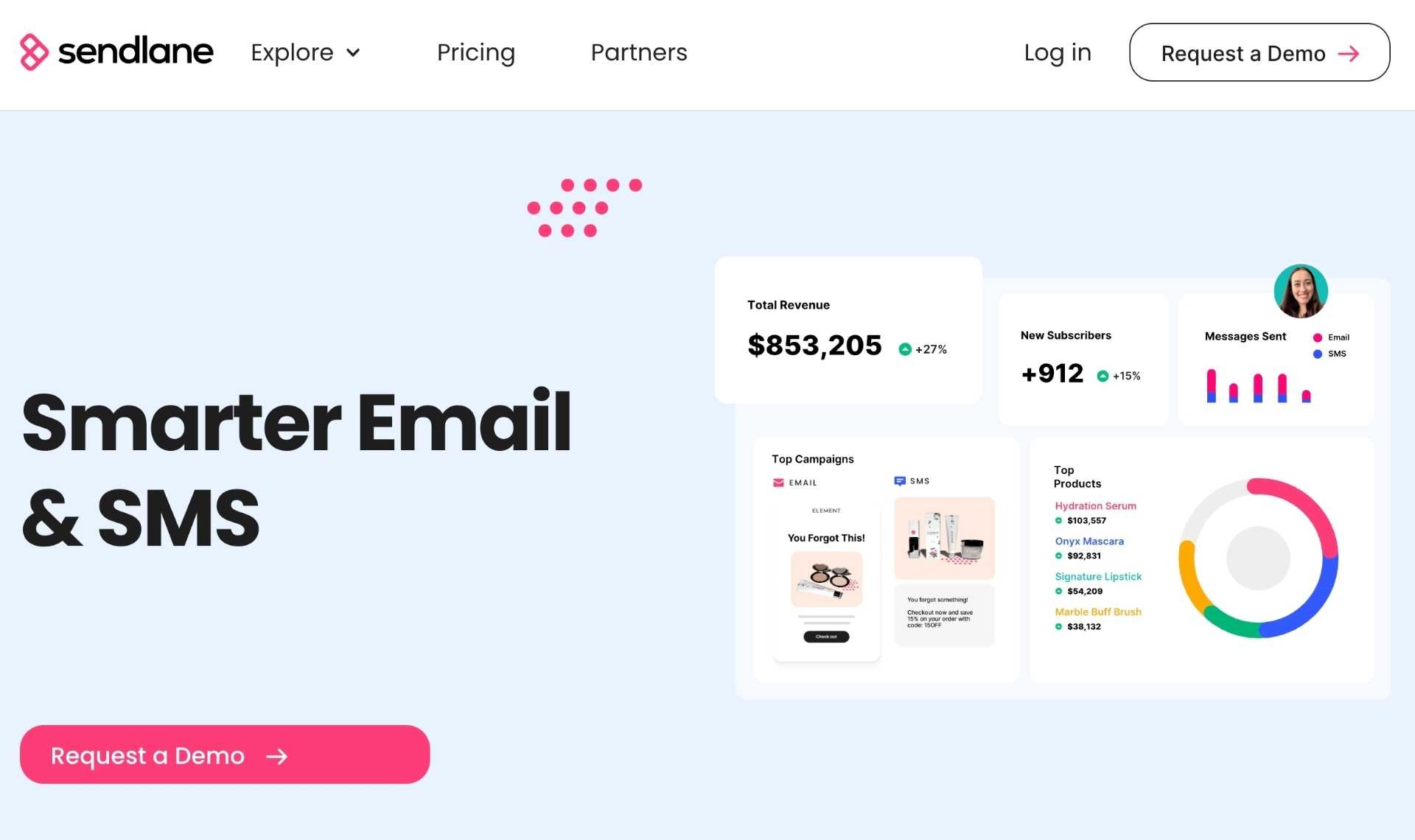
Sendlane is a D2C-oriented retention platform combining email + SMS with segmentation and automation, positioning itself as a unified retention hub (cart recovery, back-in-stock, promos).
Key features:
- Email + SMS marketing: Unified messaging for retention.
- Automation & segmentation: Behavior-based targeting for lifecycle campaigns.
- Deliverability focus: Reviewers often highlight deliverability + support.
- Campaign management dashboard: Built for ecommerce workflows (promos, recovery).
- Support: Often praised in D2C contexts.
Pros:
- Strong support and D2C lifecycle positioning.
- Many users mention better cost/support tradeoffs vs some competitors.
Cons:
- Some users flag “expensive” pricing and reporting improvements needed.
- Smaller ecosystem vs the biggest players (can matter for very complex stacks).
Integrations:
- Shopify: Pull “deep data” (customer + purchase behavior) to power segmentation and hyper-targeted email/SMS automations.
- Gorgias: Route/reply to customer SMS conversations inside Gorgias by automatically opening tickets from Sendlane SMS replies.
- Recharge: Use subscription data to segment subscribers and trigger retention flows (e.g., churn prevention, subscriber lifecycle messaging).
- Zapier: Automate list growth and data movement between Sendlane and 8,000+ apps (no-code workflows).
- Postscript: Automatically create/update Sendlane subscribers when someone opts into Postscript SMS (email + SMS list alignment).
Pricing:
60-day trial (limited), then paid plans; pricing is based on sends (not contacts), with “unlimited contacts” positioning. Benchmark: Mid.
Reviews:
4.7/5.0 on G2
7. Attentive
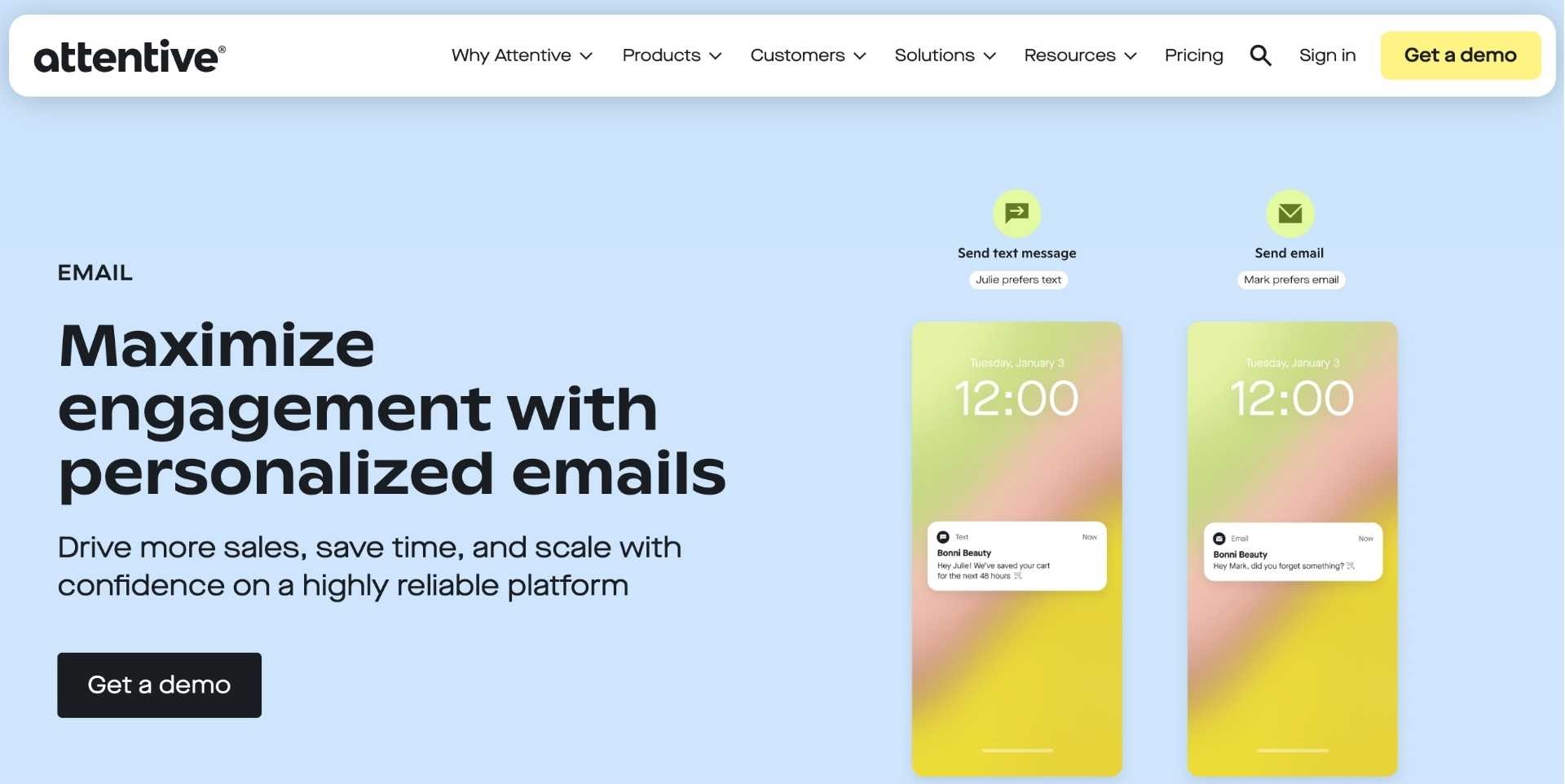
Attentive is an ecommerce-focused messaging platform known for SMS (and increasingly email), helping D2C brands run personalized campaigns and automated journeys across channels.
Key features:
- SMS (and RCS) messaging: Core channel for D2C promos, drops, and lifecycle messaging.
- Email + SMS orchestration: Run cross-channel messaging with shared customer context.
- Automation: Trigger messages from behavioral signals and customer actions.
- AI assistance: AI copy suggestions and optimizations are frequently mentioned.
- Support & enablement: Often praised by reviewers.
Pros:
- Best-in-class reputation in SMS-led retention and execution.
- Strong user satisfaction for usability and support.
Cons:
- Pricing is often described as high, especially as lists grow.
- Typically a stronger fit for brands already serious about SMS as a revenue channel.
Integrations:
- Shopify: Use Shopify customer + purchase data for abandonment reminders, recommendations, order updates, and bidirectional subscriber syncing.
- Gorgias: Forward inbound customer SMS messages into Gorgias so support can respond from the helpdesk.
- Zendesk: Forward SMS replies into Zendesk tickets so your support team can answer texts from Zendesk.
- Klaviyo: Sync email lists and share selected data (e.g., coupon/offer values + properties) between Attentive and Klaviyo.
- Recharge: Trigger subscription lifecycle/transactional journeys using Recharge subscription data (renewals, payment updates, etc.).
Pricing:
Generally custom/quote-based for many brands; some offers include a 30-day trial for qualifying companies. Benchmark: High.
Reviews:
4.5/5.0 on G2
8. Braze
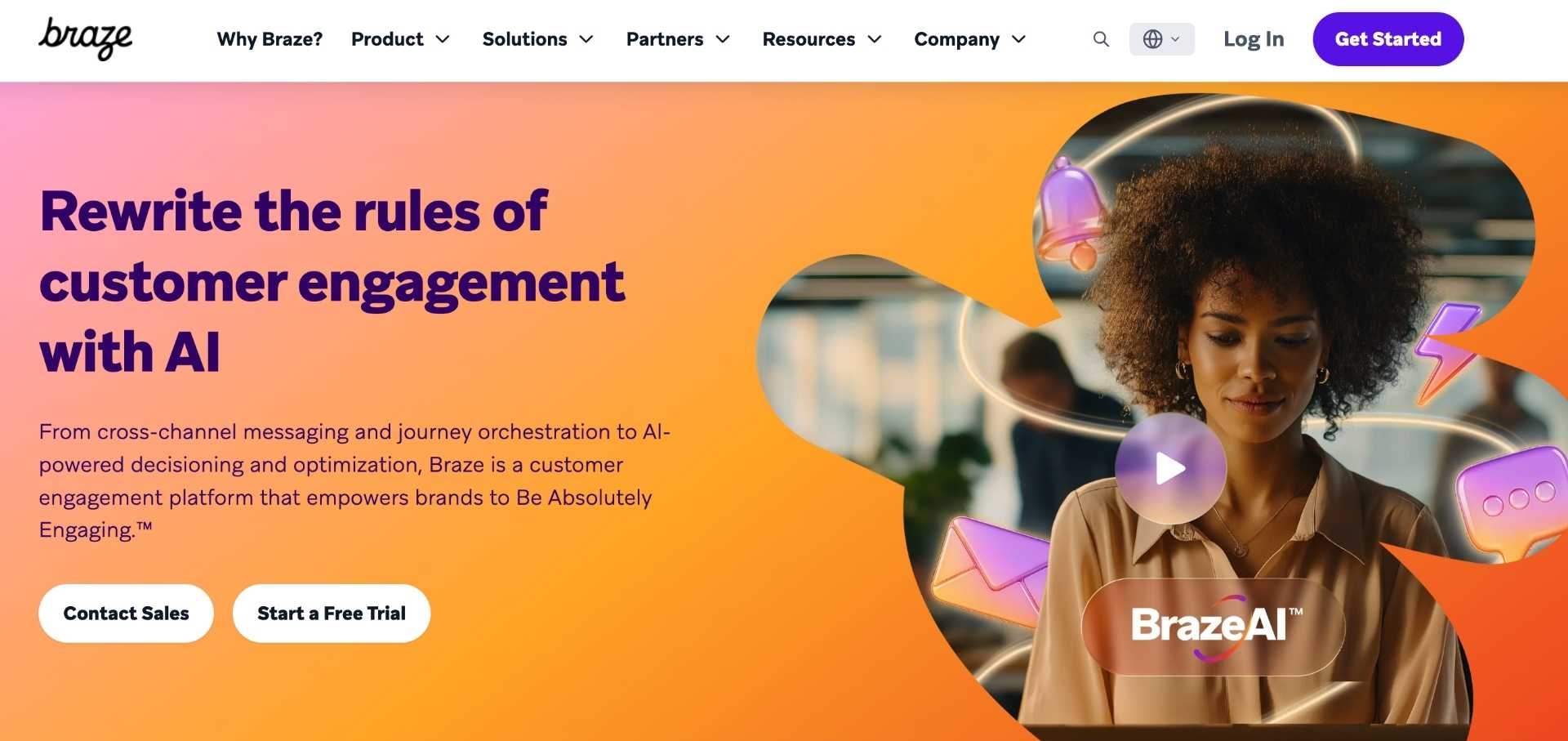
Braze is an enterprise customer engagement platform for cross-channel lifecycle messaging (email, SMS, push, in-app), typically used by larger D2C brands with more complex data and multi-channel requirements.
Key features:
- Journey orchestration: Build sophisticated cross-channel customer journeys.
- Multi-channel messaging: Email + SMS + mobile channels (push/in-app).
- Segmentation: Strong segmentation for personalization at scale.
- Optimization tooling: Supports testing/optimization for lifecycle programs.
- Enterprise infrastructure: Built for high volume and complex implementations.
Pros:
- Excellent for complex, multi-channel retention beyond just Shopify email.
- Strong G2 satisfaction for enterprise engagement use cases.
Cons:
- Steeper learning curve for advanced features (common in reviews).
- Pricing is typically custom and higher than SMB ecommerce tools.
Integrations:
- Shopify: Send Shopify store events/data into Braze to power lifecycle campaigns and personalization.
- Segment: Set Braze as a Segment destination to stream customer/event data (including historical replays) into Braze.
- Amplitude: Import Amplitude cohorts/traits/events into Braze and optionally export Braze events back to Amplitude for deeper analysis.
- Snowflake: Connect Braze with Snowflake as a data warehouse integration for broader analytics/activation workflows.
- Amazon S3: Use S3 as a cloud storage integration approach for data flows with Braze (e.g., storage-based pipelines).
Pricing:
Typically quote-based (enterprise). Benchmark: High.
Reviews:
4.5/5.0 on G2
9. Brevo

Brevo (formerly Sendinblue) is an email-centric marketing platform with automation plus multi-channel options (including SMS/WhatsApp on higher tiers), often chosen for cost-efficiency and a broad feature set.
Key features:
- Email campaigns + automation: Core email marketing with workflow automation.
- Multi-channel messaging: SMS and WhatsApp availability on higher plans.
- Templates/editor: Drag-and-drop email builder and templates.
- Analytics: Real-time analytics and reporting.
- AI tools: AI features like an AI builder and optimization tools mentioned in recent reviews.
Pros:
- Strong value for money and flexible pricing approach.
- Often praised for ease of use and multi-channel capabilities.
Cons:
- Can slow down with large lists / heavier usage (noted in reviews).
- More advanced AI/segmentation features may require higher tiers.
Integrations:
- Shopify: Sync customer + order data to run Shopify-specific automations like abandoned cart and post-purchase flows.
- Influencer Hero: analyse influencers in your email lists & push influencers from the Influencer Hero CRM into Omnisend lists.
- WordPress: Add forms, sync contacts, and track site activity directly from WordPress via the Brevo plugin/integration.
- Zapier: Connect Brevo to thousands of apps to automate lead capture, data sync, and operational workflows.
- Make (Integromat): Build no-code “scenarios” to trigger actions and sync data between Brevo and other tools.
Pricing:
Free plan (e.g., daily send cap) and paid plans typically starting around $9/mo (Starter) and $18/mo (Standard), scaling by email volume; annual discounts available. Benchmark: Low → Mid.
Reviews:
4.5/5.0 on G2
10. GetResponse
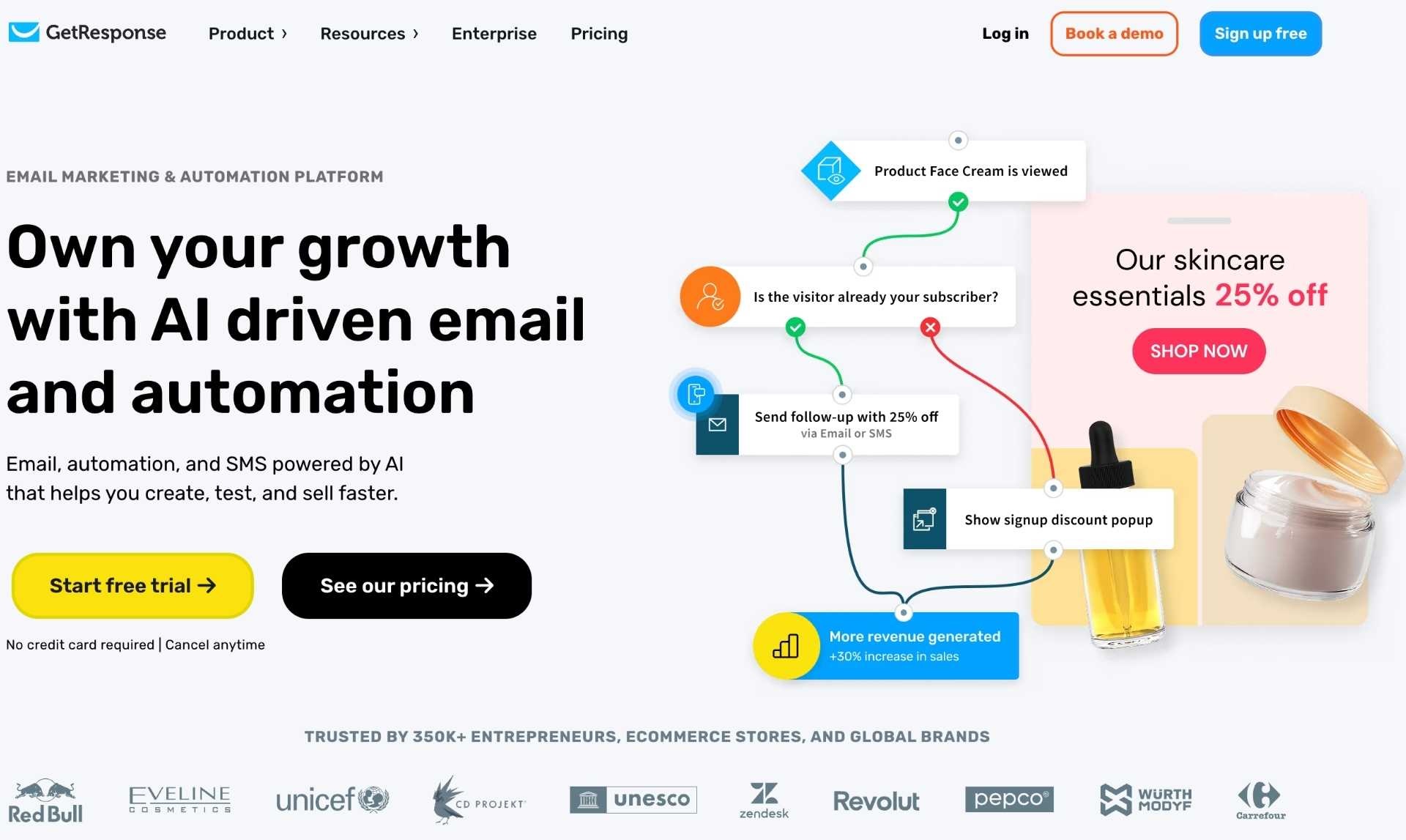
GetResponse is an all-in-one marketing platform (email + automation + landing pages, plus extras like webinars) with ecommerce integrations and lifecycle workflows—often used by D2C teams who want more than just email.
Key features:
- Email marketing + automation: Visual workflows for lifecycle and behavior-based messaging.
- Landing pages & funnels: Capture leads and feed them into automations.
- Webinars (plan-dependent): Built-in webinar functionality (not common among peers)
- Ecommerce integrations: Integrate with platforms like Shopify/WooCommerce (plan-dependent features).
- AI tools: AI email generation and other AI helpers depending on tier.
Pros:
- Broad “all-in-one” set reduces the need for multiple tools.
- Strong value for teams that want email + landing pages + webinars in one stack.
Cons:
- Some advanced ecommerce features require higher-tier plans.
- Not a full CRM replacement for teams that need deep sales pipelines.
Integrations:
- Shopify: Connect Shopify to sync ecommerce data and use it in email marketing/automation workflows.
- Magento: Supported ecommerce integration for store-driven marketing workflows.
- Influencer Hero: analyse influencers in your email lists & push influencers from the Influencer Hero CRM into Omnisend lists.
- Stripe: Add Stripe products and take payments through GetResponse order forms (Stripe processes payments).
- Facebook Lead Ads: Pipe lead form signups into GetResponse via integration platforms (e.g., Zapier/Make/LeadsBridge).
Pricing:
Free plan exists; paid plans scale by features + contacts. Recent published benchmarks include Starter around $19/mo for 1,000 contacts and a 14-day free trial of premium features; annual discounts offered. Benchmark: Low → Mid.
Reviews:
4.3/5.0 on G2
Final thoughts on the best email marketing software for D2C brands
The best email marketing tools for D2C brands share a common goal: helping teams turn customer data into automated lifecycle campaigns that drive retention, repeat purchases, and long-term customer value. While platforms differ in complexity, pricing, and channels (email, SMS, push), the right choice ultimately depends on your growth stage, internal resources, and how deeply you want to personalize the customer journey across your ecommerce stack.
In practice, the strongest results come from combining a solid retention platform with a consistent acquisition engine — whether that comes from paid media, partnerships, or influencer-led growth strategies supported by platforms like Influencer Hero. For founders, CMOs, and growth teams, the key takeaway is that email marketing software isn’t just a sending tool anymore; it’s a core part of the modern D2C revenue infrastructure.

.png)


.jpg)