


.jpg)
10 Best E-Commerce CMS Tools for D2C Brands
Choosing the right e-commerce CMS is a strategic decision for D2C founders and operators, as it directly impacts conversion rates, site speed, scalability, and total cost of ownership. With global retail e-commerce sales projected to surpass $6.3 trillion in 2024 (Statista, 2024), and platforms like Shopify powering over 4 million live websites worldwide (BuiltWith, 2024), selecting a CMS that aligns with your growth stage, tech stack, and omnichannel ambitions is more critical than ever.
In this guide, we break down the 10 best e-commerce CMS tools D2C brands rely on to manage content, commerce, integrations, and performance at scale.
Best E-Commerce CMS Tools for D2C Brands
| TOOL | REVIEWS | BEST FOR | TRIAL INFO | PRICING | ||
|---|---|---|---|---|---|---|
1 |

|
⭐ | Fast Scaling | Book Demo | Pricing | Website |
2 |

|
⭐ | WordPress Integration | Book Demo | Pricing | Website |
3 |
|
⭐ | Enterprise Brands | Book Demo | Pricing | Website |
4 |
|
⭐ | Growing Businesses | Book Demo | Pricing | Website |
5 |

|
⭐ | Small Businesses | Book Demo | Pricing | Website |
6 |

|
⭐ | Design-Focused Stores | Book Demo | Pricing | Website |
7 |

|
⭐ | Global Expansion | Book Demo | Pricing | Website |
8 |

|
⭐ | Budget-Friendly Stores | Book Demo | Pricing | Website |
9 |

|
⭐ | Content-Driven Commerce | Book Demo | Pricing | Website |
10 |

|
⭐ | Flexible Websites | Book Demo | Pricing | Website |
1. Shopify
Shopify is a hosted (SaaS) e-commerce CMS that allows D2C brands to build, manage, and scale their online store without managing infrastructure. Merchants customize themes, manage products, configure checkout and payments, and extend functionality through Shopify’s app ecosystem.
Key features:
- Hosted infrastructure: Fully managed hosting, security, and updates handled by Shopify.
- Shopify Checkout: High-converting checkout; Shopify claims up to 15% higher conversion on average compared to competitors (Shopify, 2026)
- App ecosystem: 8,000+ apps for subscriptions, CRO, loyalty, UGC, and more (Shopify App Store, 2026)
- Shopify Markets: Multi-currency and international selling from one backend.
- Omnichannel selling: Sell via Meta, Google, TikTok, Amazon, and POS from one admin.
- Built-in analytics: Real-time dashboards and advanced reporting on higher plans.
Pros:
- Extremely fast time-to-launch.
- Best ecosystem for D2C tech stack integrations.
- Clear scaling path from SMB to enterprise (Shopify Plus).
- Strong community and partner network.
Cons:
- App costs can significantly increase monthly expenses.
- Limited backend customization compared to open-source platforms.
- Checkout extensibility restricted on non-Plus plans.
- Transaction fees if not using Shopify Payments.
Integrations:
- Klaviyo: Sync customer and order data for advanced email/SMS lifecycle automation.
- Meta (Facebook & Instagram): Product catalog sync and native social commerce integration.
- Google Merchant Center: Automated product feed sync for Shopping campaigns.
- TikTok: Product sync and ad tracking integration for TikTok Shop and ads.
- Influencer Hero: create affiliate links, detect customer influencers & send products to influencers.
- Gorgias: Pull order/customer data into customer support tickets for faster CX workflows.
Pricing:
Mid-range for most D2C brands; high at enterprise tier. Plans start at $24/month (Basic), $69/month (Grow), $299/month (Advanced), and $2,300/month (Plus) when billed yearly (Shopify, 2026). 3-day free trial available.
Reviews:
4.4/5.0 on G2
2. WooCommerce
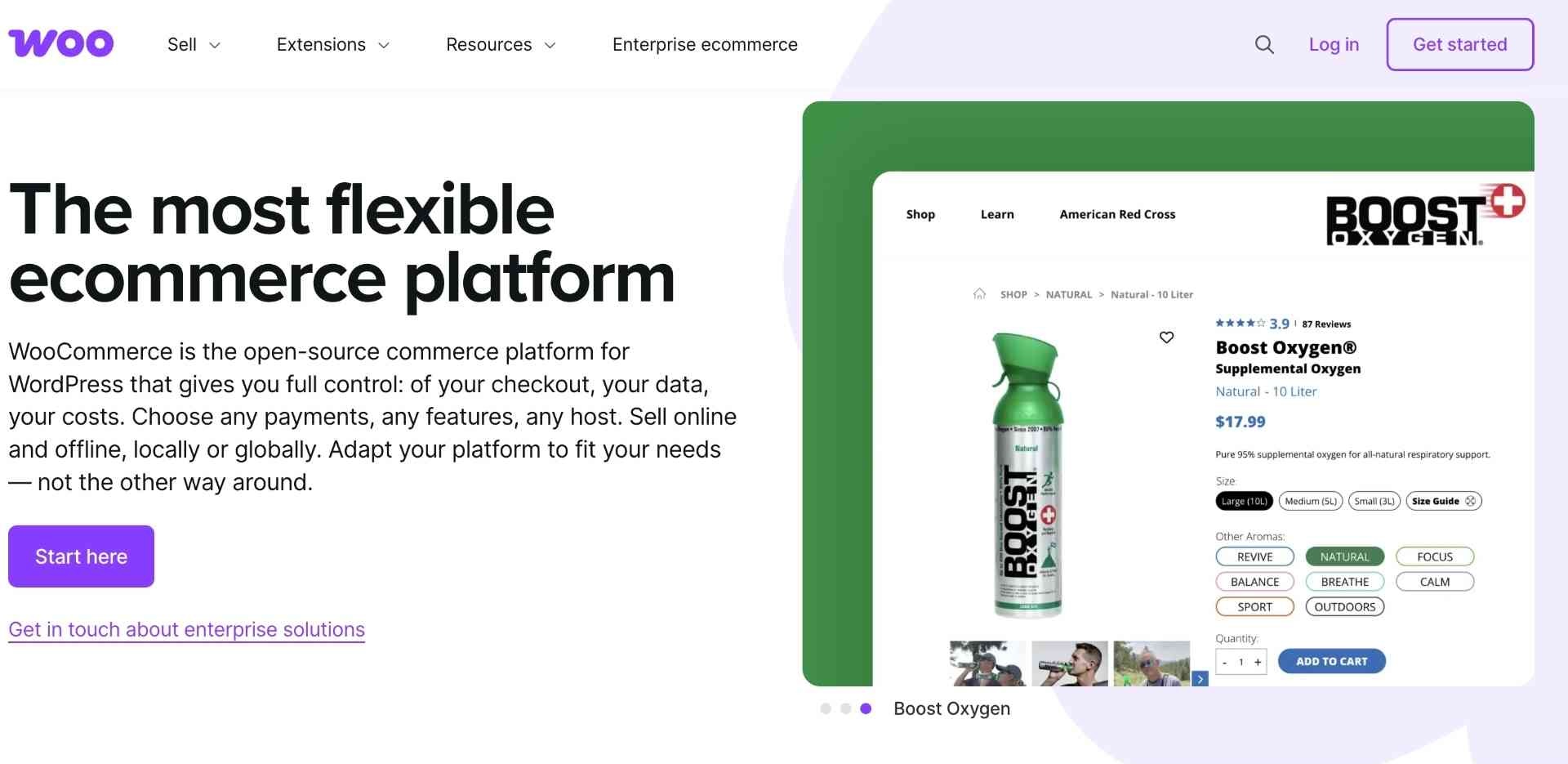
WooCommerce is an open-source e-commerce plugin built on WordPress. Brands host their own website, install WooCommerce, and customize via themes, plugins, and developer support.
Key features:
- Open-source flexibility: Full code-level control over storefront and backend.
- WordPress CMS integration: Best-in-class blogging and SEO capabilities.
- Plugin marketplace: Extensive plugin ecosystem for payments, subscriptions, memberships.
- No platform transaction fees: Only payment processor fees apply.
- Custom checkout & extensions: Highly customizable cart and checkout logic.
Pros:
- Full ownership and customization control.
- Strong SEO and content marketing capabilities.
- No mandatory monthly SaaS fees.
- Ideal for brands with technical resources.
Cons:
- Requires hosting, security, and maintenance management.
- Performance depends on hosting setup.
- Plugin conflicts can occur.
- Scaling can require dev resources.
Integrations:
- Klaviyo: WooCommerce event sync for email/SMS automation.
- Stripe: Flexible global payment processing.
- Influencer Hero: create affiliate links, detect customer influencers & send products to influencers.
- Meta: Facebook catalog and pixel integration.
- Google Analytics / GA4: Deep ecommerce tracking capabilities.
- ShipStation: Shipping and fulfillment automation.
Pricing:
Free core plugin (open-source). Costs include hosting ($10–$50+/month), premium plugins, and developer resources. Generally low to mid-range, depending on setup. No official free trial needed.
Reviews:
4.4/5.0 on G2
3. Adobe Commerce (Magento)
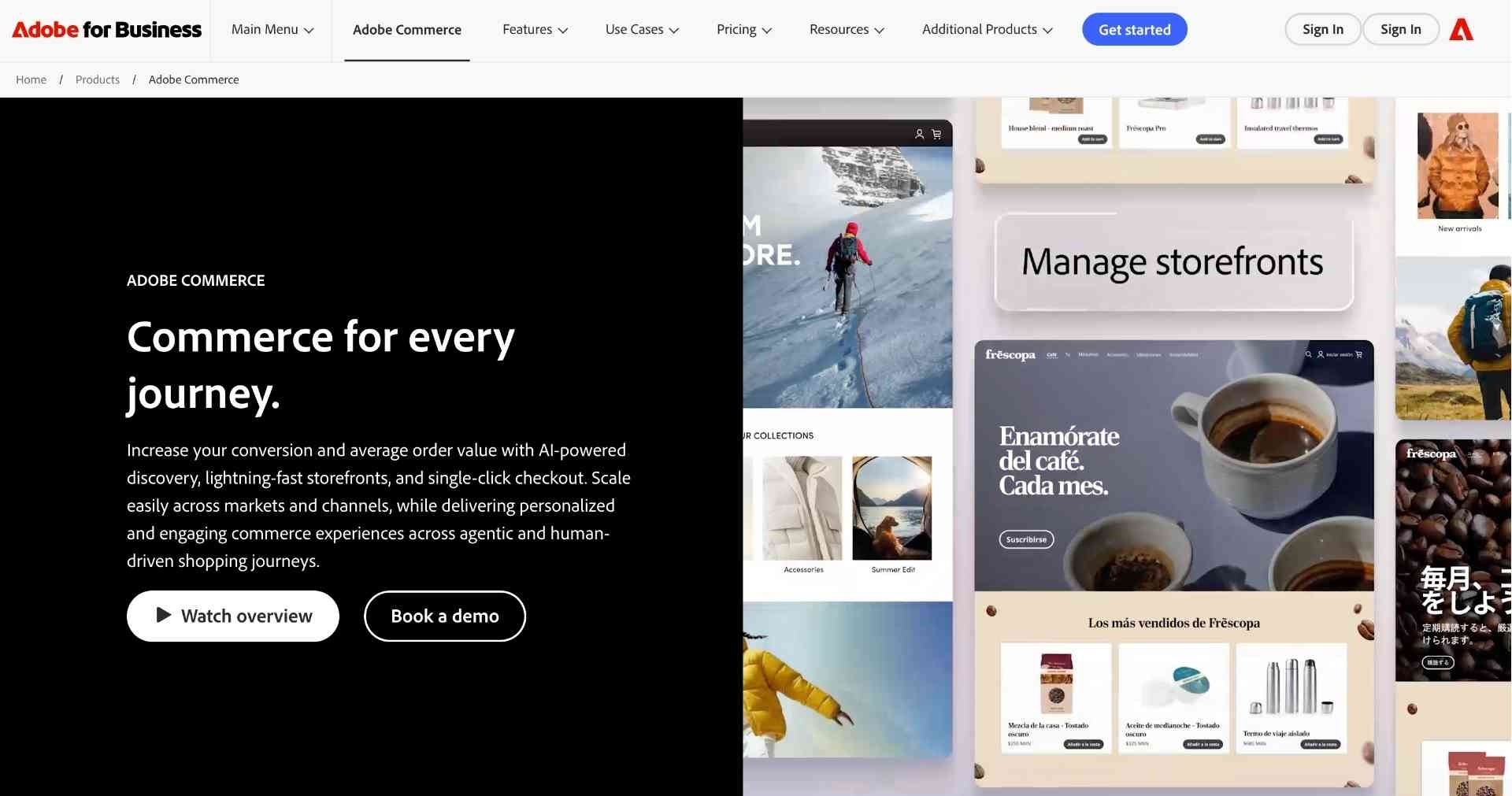
Adobe Commerce (formerly Magento) is an enterprise-grade, highly customizable ecommerce CMS. It is available as self-hosted or cloud-hosted and is designed for large, complex D2C and B2B operations.
Key features:
- Advanced catalog management: Handles large SKU counts and complex product configurations.
- Headless commerce support: API-first architecture.
- B2B capabilities: Custom pricing, company accounts, workflows.
- AI-powered personalization: Adobe Sensei-driven recommendations.
- Multi-store management: Operate multiple brands or regions from one backend.
Pros:
- Extremely flexible and customizable.
- Ideal for high-SKU and global brands.
- Strong enterprise integrations with Adobe ecosystem.
- Robust B2B functionality.
Cons:
- High implementation and development costs.
- Requires technical team or agency.
- Longer time to launch.
- Hosting and maintenance complexity.
Integrations:
- Adobe Experience Manager: Advanced content personalization.
- Salesforce: CRM and enterprise customer data integration.
- Klaviyo: Lifecycle email automation.
- Stripe: Payment processing integration.
- Influencer Hero: create affiliate links, detect customer influencers & send products to influencers.
- Algolia: Advanced search and merchandising.
Pricing:
High-end enterprise pricing. Adobe Commerce pricing is custom-quoted and often starts in the tens of thousands annually. Generally classified as high/enterprise. Free trial not standard.
Reviews:
4.0/5.0 on G2
4. BigCommerce
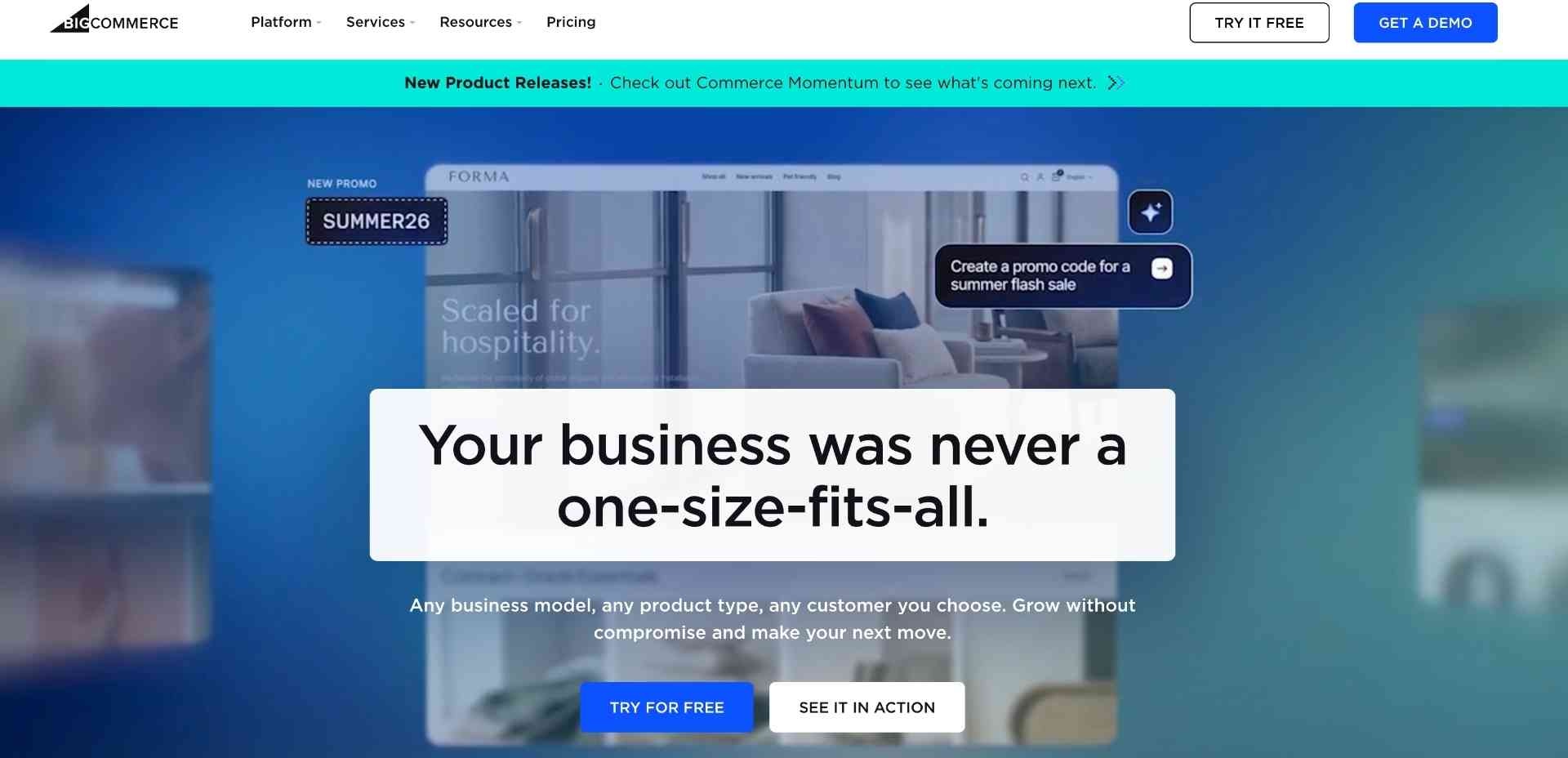
BigCommerce is a SaaS ecommerce platform similar to Shopify but often favored by mid-market and enterprise brands needing more built-in features without heavy app reliance.
Key features:
- No transaction fees: Does not charge additional platform transaction fees.
- Multi-storefront functionality: Manage multiple storefronts from one backend.
- Open SaaS architecture: Strong API flexibility.
- B2B edition: Native B2B features.
- Headless-ready: Integrates easily with headless frontends.
Pros:
- More built-in features compared to Shopify.
- Strong B2B functionality.
- Good scalability for mid-market brands.
- Flexible API integrations.
Cons:
- Revenue-based pricing tiers.
- Smaller app ecosystem than Shopify.
- Less intuitive theme ecosystem.
Integrations:
- Klaviyo: Sync customer and purchase data.
- Meta: Social commerce and catalog sync.
- Google Merchant Center: Product feed automation.
- ShipperHQ: Advanced shipping logic.
- Avalara: Automated tax compliance.
Pricing:
Mid to high-range. Plans start around $39/month (Standard), scaling based on annual revenue. 15-day free trial available. Classified as mid-market SaaS.
Reviews:
4.2/5.0 on G2
5. Wix eCommerce
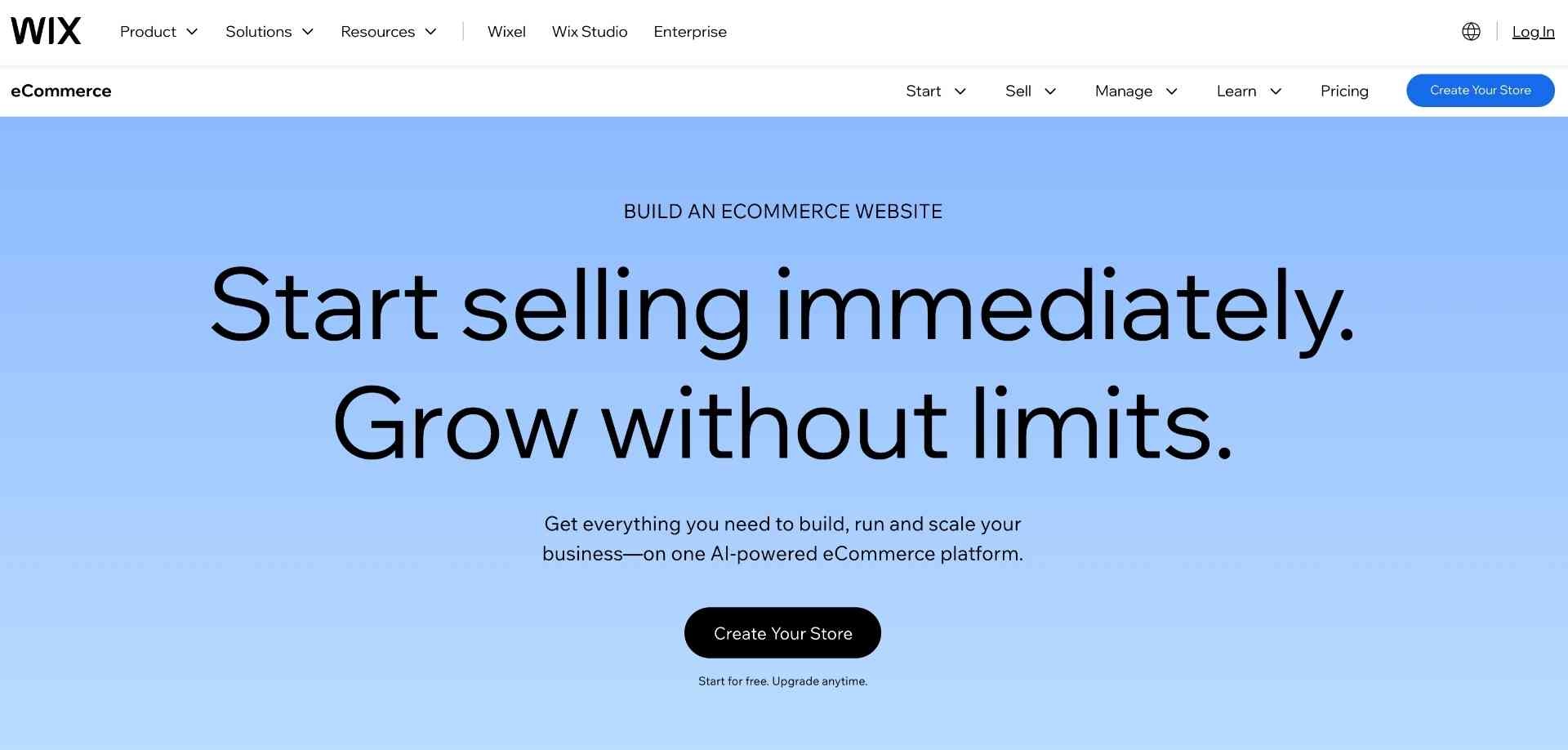
Wix eCommerce is a website builder with integrated ecommerce functionality. It is designed for small to mid-sized brands prioritizing design flexibility and ease of use.
Key features:
- Drag-and-drop builder: Visual editor for fast storefront creation.
- Built-in hosting & security: Fully managed infrastructure.
- App Market: Extensions for marketing, bookings, subscriptions.
- Multi-channel selling: Sell via social platforms and marketplaces.
- Built-in marketing tools: Email marketing and automation features.
Pros:
- Very beginner-friendly.
- Strong design flexibility.
- Lower barrier to entry.
- Affordable pricing tiers.
Cons:
- Limited scalability for larger D2C brands.
- Less robust backend for complex catalogs.
- Smaller ecosystem compared to Shopify.
- Limited advanced customization.
Integrations:
- Klaviyo: Email automation integration.
- Meta: Social shop sync.
- Influencer Hero: create affiliate links, detect customer influencers & send products to influencers.
- Google Merchant Center: Product feed integration.
- Shippo: Shipping label automation.
- Stripe: Payment processing.
Pricing:
Plans start around $27/month (Core plan) depending on region. Mid-to-low pricing tier. 14-day free trial available. Generally classified as low to mid-range.
Reviews:
4.2/5.0 on G2


6. Squarespace

Squarespace is an all-in-one website builder with integrated e-commerce functionality, primarily designed for content-driven brands that want strong design control without technical complexity. Merchants use pre-built templates, manage products, and handle checkout and payments within a hosted environment.
Key features:
- Design-first templates: Professionally designed themes optimized for visual storytelling and branding.
- Built-in hosting & security: Fully managed infrastructure with SSL included.
- Commerce analytics: Sales reporting and performance insights within the dashboard.
- Content + commerce integration: Strong blogging and content capabilities tied directly to product pages.
- Marketing tools: Built-in email campaigns, SEO settings, and promotional pop-ups.
Pros:
- Very strong visual branding capabilities.
- Easy to launch without developers.
- Good for content-led D2C brands (beauty, lifestyle, fashion).
- Transparent pricing with fewer add-ons needed.
Cons:
- Limited scalability for high-growth D2C brands.
- Fewer advanced commerce features compared to Shopify or BigCommerce.
- Smaller third-party app ecosystem.
- Less flexibility for complex product catalogs.
Integrations:
- Stripe: Integrated payment processing for global transactions.
- PayPal: Alternative checkout option for improved conversion.
- ShipStation: Shipping and fulfillment automation.
- Google Merchant Center: Product listing sync for Google Shopping.
- Meta (Facebook & Instagram): Social commerce catalog integration.
Pricing:
Commerce plans start at approximately $27/month (Business) and scale to $49/month (Advanced Commerce) when billed annually. 14-day free trial available. Classified as low to mid-range among CMS platforms.
Reviews:
4.4/5.0 on G2
7. PrestaShop

PrestaShop is an open-source e-commerce CMS designed specifically for online stores. Merchants self-host the platform and customize through modules, themes, and developer resources.
Key features:
- Open-source core: Full access to codebase for customization.
- Modular architecture: Extend functionality via add-ons marketplace.
- Multi-language & multi-currency support: Strong international selling capabilities.
- Advanced product management: Detailed product combinations and attributes.
- Built-in analytics dashboard: Monitor store performance from the backend.
Pros:
- High customization flexibility.
- No mandatory SaaS subscription fees.
- Strong European market presence.
- Good for mid-sized catalogs.
Cons:
- Requires hosting and maintenance management.
- Add-ons can increase total cost significantly.
- Smaller ecosystem compared to Shopify.
- Performance depends heavily on hosting setup.
Integrations:
- Stripe: Payment gateway integration.
- PayPal: Alternative payment method.
- Mailchimp: Email marketing automation.
- Google Analytics: Advanced ecommerce tracking.
- ShipStation: Shipping automation integration.
Pricing:
Core software is free (open-source). Costs include hosting, premium modules, and development resources. Classified as low to mid-range, depending on setup. No official free trial required.
Reviews:
4.3/5.0 on G2
8. OpenCart
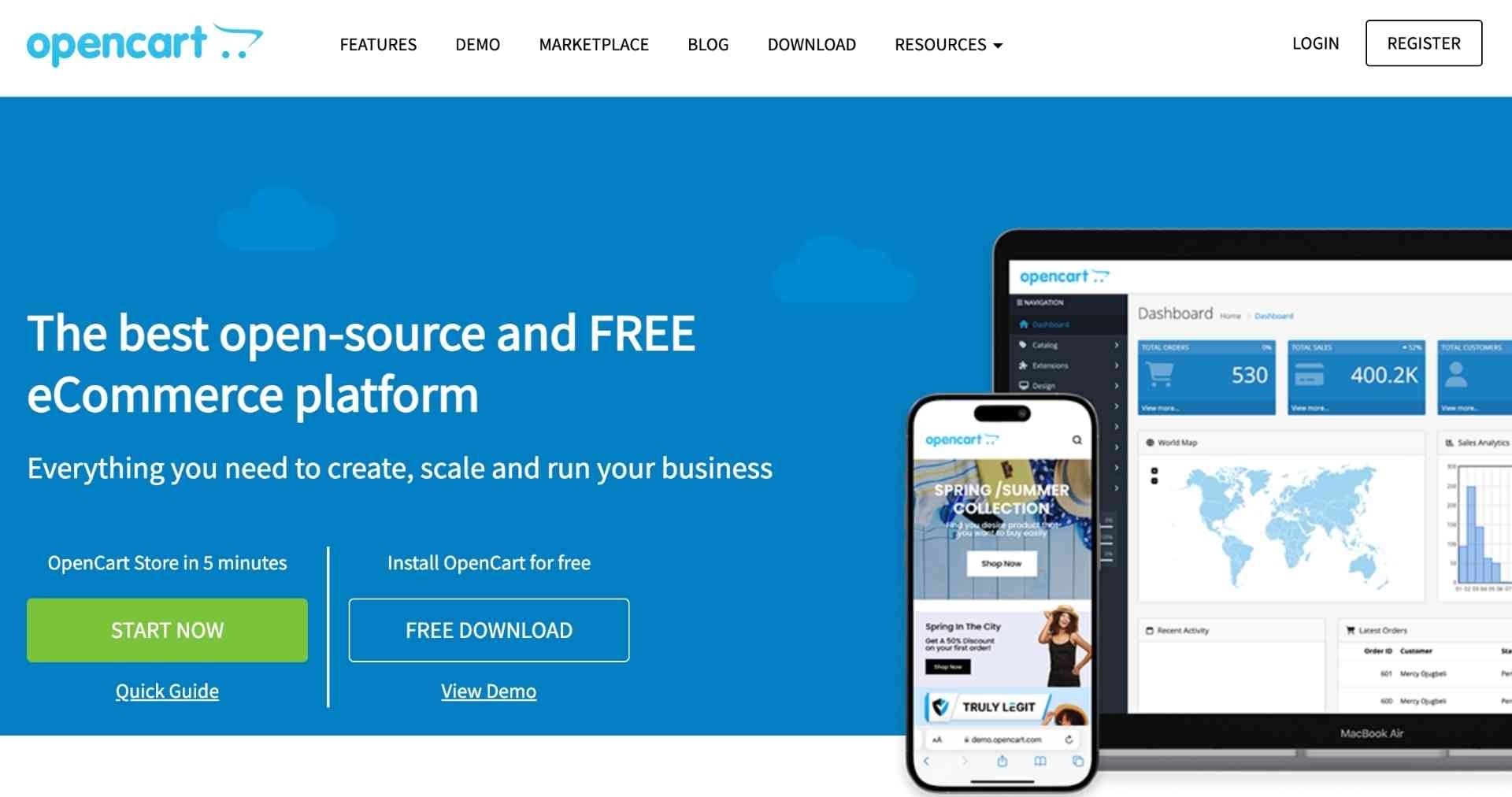
OpenCart is a lightweight open-source ecommerce CMS that allows merchants to build and manage online stores with a modular extension marketplace. It requires self-hosting and technical setup.
Key features:
- Free open-source platform: No license fees.
- Extension marketplace: Thousands of extensions for payments, shipping, marketing.
- Multi-store capability: Manage multiple storefronts from one admin.
- Product & order management: Core ecommerce management tools built-in.
- Role-based user management: Control backend access for teams.
Pros:
- Low entry cost.
- Simple and lightweight system.
- Flexible with developer support.
- Suitable for small-to-mid size stores.
Cons:
- Requires technical management.
- Limited built-in marketing tools.
- Smaller ecosystem compared to leading SaaS platforms.
- Scaling may require custom development.
Integrations:
- Stripe: Payment processing.
- Influencer Hero: create affiliate links, detect customer influencers & send products to influencers.
- PayPal: Alternative checkout option.
- Mailchimp: Email marketing automation.
- Google Analytics: Ecommerce tracking integration.
- ShipStation: Shipping and fulfillment management.
Pricing:
Free core platform. Costs depend on hosting and paid extensions. Generally classified as low-cost, but development and maintenance can increase total cost of ownership.
Reviews:
4.3/5.0 on G2
9. Drupal Commerce
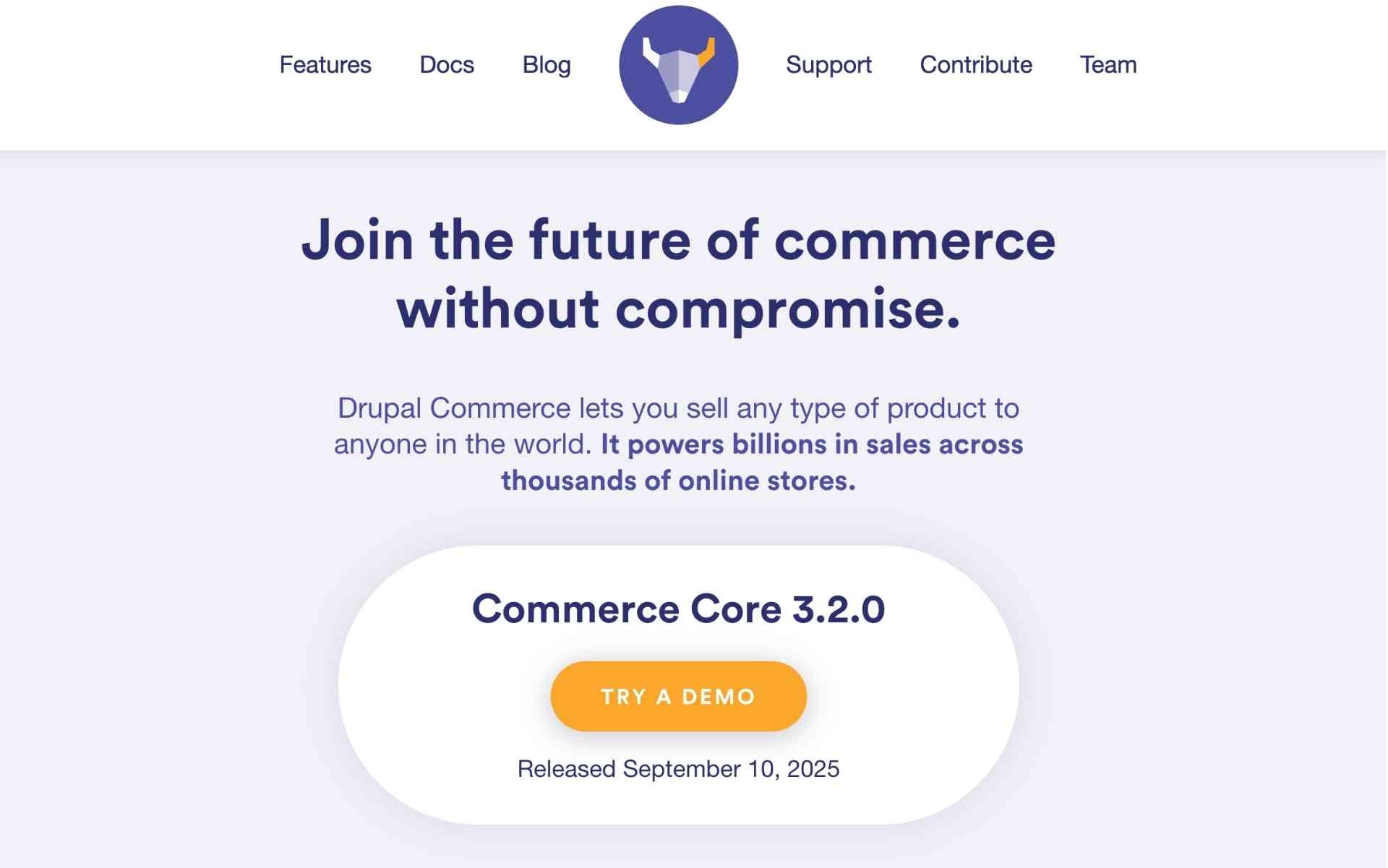
Drupal Commerce is an ecommerce framework built on the Drupal CMS. It is designed for content-heavy and complex ecommerce experiences and requires development expertise.
Key features:
- Highly customizable architecture: API-first and modular framework.
- Enterprise-level content management: Advanced content modeling and workflows.
- Headless-ready: Strong API support for decoupled frontends.
- Multi-site capability: Manage multiple brands from one installation.
- Granular user permissions: Advanced backend access controls.
Pros:
- Ideal for content-driven or enterprise brands.
- Strong security reputation.
- Highly flexible and scalable.
- Excellent for complex integrations.
Cons:
- Requires experienced developers.
- Longer implementation timeline.
- Higher development costs.
- Not beginner-friendly.
Integrations:
- Stripe: Payment integration.
- Salesforce: CRM integration.
- Klaviyo: Email automation sync.
- Google Analytics: Advanced ecommerce tracking.
- Algolia: Advanced search functionality.
Pricing:
Open-source core (free). Costs primarily come from development, hosting, and maintenance. Typically classified as mid to high-range due to implementation complexity.
Reviews:
4.4/5.0 on G2
10. Joomla (with VirtueMart)
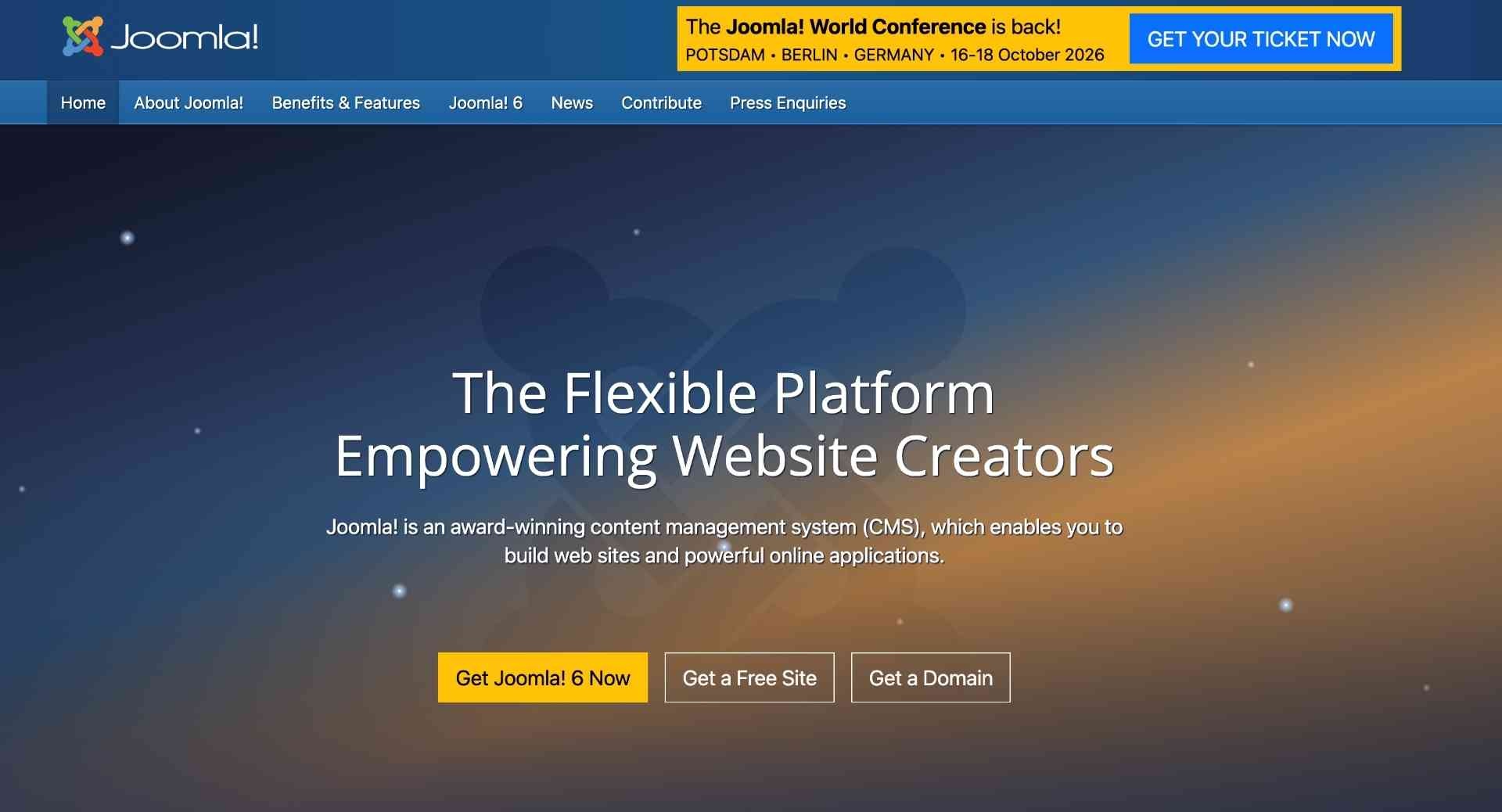
Joomla is a CMS that becomes ecommerce-capable through the VirtueMart extension. It is self-hosted and suited for merchants who want flexibility beyond website builders but without enterprise-level complexity.
Key features:
- Open-source CMS: Full customization access.
- VirtueMart extension: Adds product catalog, cart, and checkout functionality.
- Multi-language support: Built-in multilingual capabilities.
- User management system: Strong access controls.
- Template system: Customizable themes and layouts.
Pros:
- No SaaS licensing fees.
- Flexible for developers.
- Good multilingual capabilities.
- Suitable for niche or regional ecommerce projects.
Cons:
- Smaller ecommerce-focused ecosystem.
- Requires technical maintenance.
- Fewer modern D2C-specific integrations.
- Limited scalability compared to Shopify or BigCommerce.
Integrations:
- Stripe: Payment processing.
- PayPal: Checkout integration.
- Mailchimp: Email marketing automation.
- Google Analytics: Ecommerce tracking.
- ShipStation: Shipping management integration.
Pricing:
Core CMS and VirtueMart are free (open-source). Costs include hosting, premium templates, and extensions. Classified as low-cost, but technical resources may increase overall expenses.
Reviews:
4.0/5.0 on G2
Final Thoughts
Choosing the right e-commerce CMS ultimately depends on your brand’s growth stage, technical resources, and long-term scalability ambitions. Hosted platforms like Shopify, BigCommerce, Wix, and Squarespace offer speed, ease of use, and strong ecosystems, while open-source solutions such as WooCommerce, PrestaShop, OpenCart, Drupal Commerce, and Joomla provide deeper customization and ownership at the cost of higher technical complexity.
For D2C founders and operators, the key decision isn’t just features—it’s total cost of ownership, integration flexibility, and how well the platform supports your marketing, retention, and international expansion strategy. The best CMS is the one that aligns with your growth roadmap and enables your team to move fast without creating operational bottlenecks.

.png)


.jpg)