

10 Best Creator.co Alternatives • Key Criteria • Creator.co Overview • Best Creator.co Alternatives • Aspire • Influencer Hero • SARAL • Influencity • Captiv8 • IZEA • Modash • Klear • Traackr • IMAI • Final Thoughts • FAQs
10 Best Creator.co Alternatives for Influencer Marketing
Running influencer campaigns today goes far beyond simply finding creators—it requires managing relationships, scaling outreach, and tying performance back to revenue. For D2C brands, influencer marketing software has become essential to streamline discovery, automate outreach, manage campaigns, and track results across channels. Creator.co is a well-known platform in this space, particularly for brands getting started, with its opt-in creator marketplace and managed campaign support.
That said, user feedback and marketing communities often point to a few recurring limitations. Brands in niche categories can find the creator pool less targeted than expected, while those looking for full control may find certain campaign actions—like activating or pausing campaigns—less self-serve and dependent on support. Additionally, search filters can feel too broad when sourcing hyper-local or highly specific creators, leading to more manual vetting.
As a result, many brands begin exploring Creator.co alternatives to gain more precise discovery, stronger CRM-style workflows, deeper Shopify integrations, and more scalable campaign management. In this article, we’ll compare 10 of the best alternatives—Aspire, Influencer Hero, SARAL, Influencity, Captiv8, IZEA, Modash, Klear, Traackr, and IMAI—to help you find the right fit for your growth stage and marketing goals.
Key Criteria for Evaluating Influencer Marketing Platforms
Core Features
Evaluation of essential influencer marketing capabilities, including influencer discovery, outreach, CRM, campaign management, reporting, and content workflows.
Pricing & Flexibility
Comparison of pricing models, subscription plans, and contract terms to match different budgets and growth stages.
Customer Reviews & Satisfaction
Analysis of user feedback from trusted review platforms, focusing on usability, reliability, customer support, and overall performance.
Pros & Cons
Review of each platform’s strengths and limitations to highlight where it performs well and where it may fall short based on different use cases.
Integrations
Review of the most important integrations (e.g., Shopify and other tech tools), highlighting what each integration enables in one sentence.
Creator.co Overview
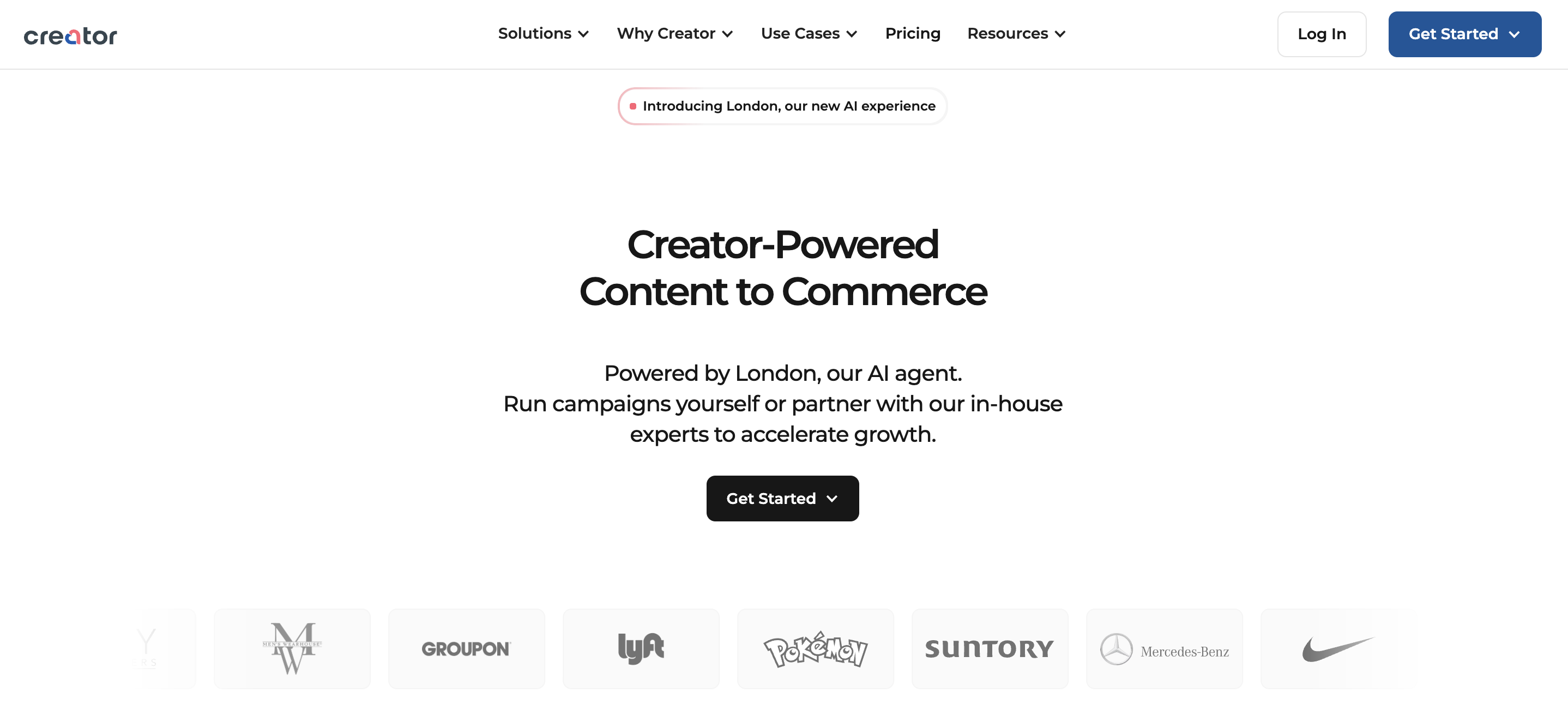
Creator.co is an influencer marketing platform built to help brands discover creators, recruit them, manage campaigns, approve content, process payments, and measure performance in one place. The company positions itself as a hybrid between software and service: brands can either run campaigns themselves through its self-serve platform or use managed services for more hands-on execution. Its current product direction leans heavily into AI, especially through “London,” an in-platform assistant designed to speed up creator matching, campaign brief creation, and outreach. Creator.co also puts a strong emphasis on affiliate and commerce tracking, which makes it particularly relevant for D2C brands trying to connect creator activity to sales.
Key Features
- Creator discovery across a very large database: Creator.co says brands can search across 400M+ creators and also tap into a built-in marketplace of 270K+ registered creators already ready to apply to campaigns, giving teams both outbound discovery and inbound applications in one workflow.
- AI-powered creator matching: Its AI assistant, London, helps identify creators that fit a brand’s audience, campaign goals, and content style, which can reduce manual sourcing time for lean teams.
- AI-generated campaign briefs: The platform can turn campaign goals into creator-ready briefs with deliverables, messaging, timelines, and usage rights already structured.
- Personalized outreach at scale: Creator.co supports automated and personalized outreach flows, with Gmail and Outlook connectivity so brands can manage replies and follow-ups from one inbox.
- End-to-end campaign management: Brands can manage recruiting, messaging, content approvals, payments, and reporting inside the platform rather than stitching together multiple tools.
- Affiliate and revenue tracking: Creator.co supports affiliate links, discount codes, purchases, and revenue reporting, and it can pull in data from major affiliate networks.
- Real-time performance reporting: All plans include campaign tracking and dashboards for engagement, reach, impressions, shares, saves, affiliate sales, and total revenue.
- Built-in creator payments: The platform includes payout management, which helps teams keep creator communication, compensation, and reporting in one workflow.
- Default content usage rights: Creator.co states that content created through campaigns grants brands full usage rights by default, which is a notable plus for brands that want to repurpose UGC across paid and organic channels.
Pricing
- Self-Serve: $299/month on monthly billing, with a 3-month minimum commitment. Includes unlimited creator collaborations, access to 400M+ creators, AI creator matching, AI campaign briefs, personalized AI outreach, and real-time tracking.
- Managed: $2,199/month on monthly billing, with a 3-month minimum commitment. Includes everything in Self-Serve plus a dedicated account manager, up to 5 creator collaborations per month, end-to-end campaign management, creator recruitment and communication, reporting, and strategic guidance.
- Annual billing discount: Creator.co advertises annual pricing at about 30% off, which brings Self-Serve to $199/month and Managed to $1,499/month when billed annually.
- Enterprise: Custom pricing with an annual commitment. Includes a dedicated strategic team, unlimited creator collaborations, weekly optimization, custom dashboards, workflow integrations, and advanced reporting.
- Contract terms: Self-Serve and Managed require a 3-month minimum commitment; after that, monthly plans move to month-to-month billing, while annual plans renew yearly at a discounted rate.
Reviews
4.6 / 5.0 (G2)
Integrations
- Shopify: Connect Shopify to handle product seeding, track campaign-driven sales, and connect creator activity to commerce outcomes.
- Google Analytics: Use Google Analytics to attribute website traffic and conversions back to creator campaigns.
- Gmail: Sync Gmail to send outreach, manage replies, and keep creator communication inside the platform.
- Outlook: Connect Outlook to centralize email outreach and follow-up workflows without switching between tools.
- Affiliate networks (Awin, Rakuten, CJ, Impact): Pull affiliate data into Creator.co to track creator-specific links, codes, purchases, and revenue from one dashboard.
Pros
- Recently launched AI assistant that goes beyond basic search: London is one of Creator.co’s more meaningful recent product updates, helping brands generate briefs, identify high-fit creators, and personalize outreach from a single AI workflow rather than using separate tools.
- Strong content rights position for D2C brands: Creator.co gives brands full usage rights to campaign content by default, which is a real advantage for teams that want to reuse creator assets in paid social, landing pages, email, and organic channels without extra licensing friction.
- Expanded focus on performance and social commerce: The company has been pushing further into affiliate-led growth through its Performance Partnerships Program and affiliate network connectivity, making the platform more relevant for brands that care about revenue, not just awareness.
Common Drawbacks of Creator.co
The creator pool can feel limiting in niche categories
While Creator.co has a large overall database, brands in narrower verticals can still run into friction when trying to source very specific creators efficiently.
Some campaign controls appear less self-serve than expected
A recurring friction point is that certain campaign changes, like activating or pausing campaigns, may require help from an account rep rather than being fully editable in-platform.
Search filters may not be precise enough for hyper-local or highly specific sourcing
Users looking for local creators or very narrow audience criteria have noted that filtering can feel broad and require extra manual review.
Best Creator.co Alternatives
| TOOL | REVIEWS | BEST FOR | TRIAL INFO | PRICING | ||
|---|---|---|---|---|---|---|
1 |

|
⭐ | Influencer partnerships | Book Demo | Pricing | Website |
2 |

|
⭐ | Influencer CRM & automation | Book Demo | Pricing | Website |
3 |

|
⭐ | Influencer outreach | Book Demo | Pricing | Website |
4 |

|
⭐ | Campaign management | Book Demo | Pricing | Website |
5 |
|
⭐ | Enterprise influencer campaigns | Book Demo | Pricing | Website |
6 |
|
⭐ | Influencer marketplace | Book Demo | Pricing | Website |
7 |

|
⭐ | Influencer discovery | Book Demo | Pricing | Website |
8 |
|
⭐ | Influencer analytics | Book Demo | Pricing | Website |
9 |

|
⭐ | Enterprise influencer analytics | Book Demo | Pricing | Website |
10 |

|
⭐ | AI influencer discovery & analytics | Book Demo | Pricing | Website |
1. Aspire
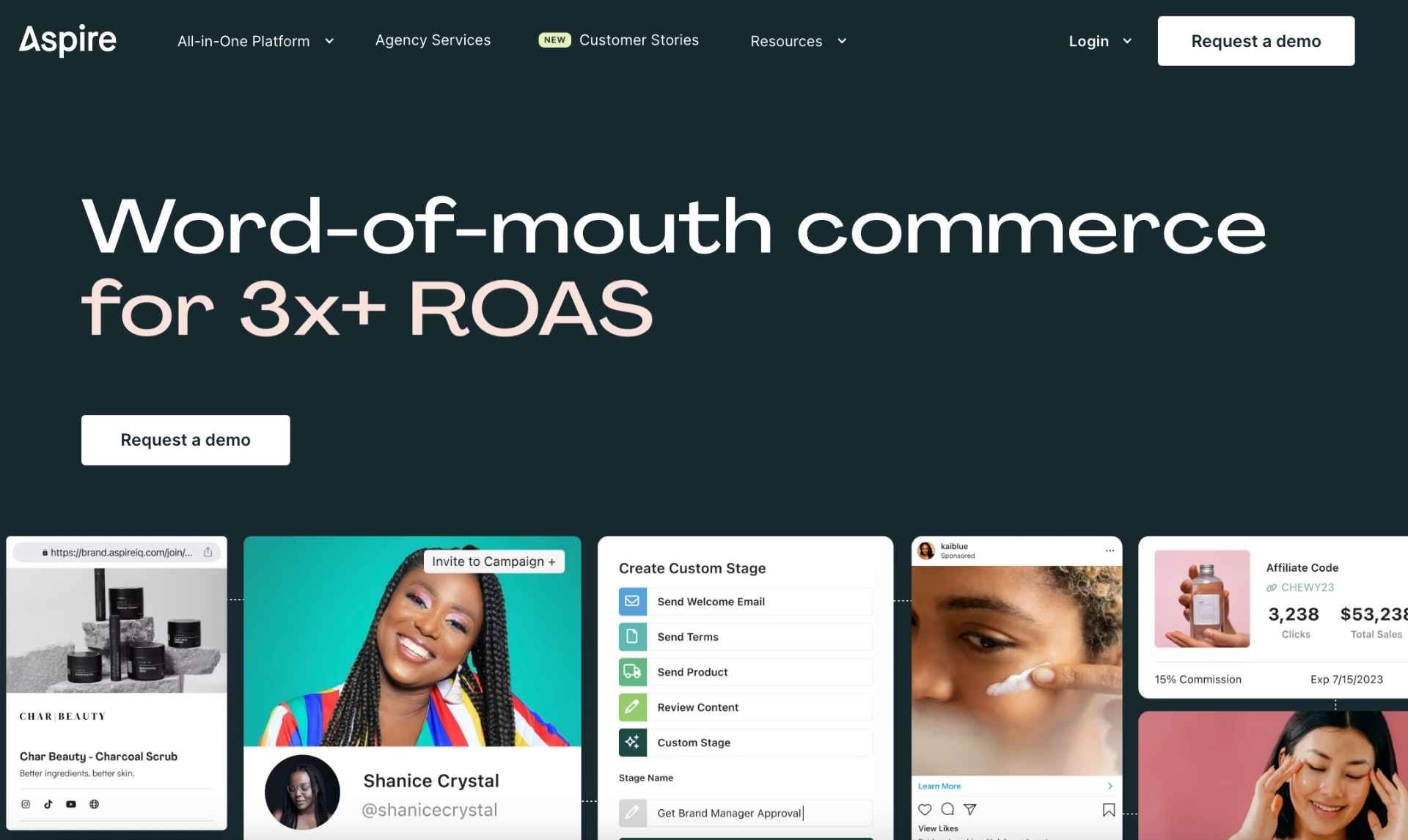
Aspire is an influencer marketing platform built for eCommerce and D2C brands that want to run creator, affiliate, ambassador, and UGC programs in one system. The platform is especially strong in workflow automation, inbound creator applications, and commerce attribution, and it positions itself around “word-of-mouth commerce” rather than just influencer discovery. Aspire also stands out for its direct platform partnerships and its large creator marketplace, which makes it a strong fit for brands that want both outbound sourcing and inbound creator applications.
Key Features
- Inbound + outbound creator discovery: Aspire lets brands source creators directly and also post opportunities to its creator marketplace, which the company describes as having 1M+ creators.
- First-party social data partnerships: Aspire says it has direct partnerships with Meta, TikTok, and Pinterest, which helps brands access stronger creator and campaign data than platforms relying only on scraping.
- Application pages and creator recruitment: Brands can collect inbound applications, review creators, and manage approvals without leaving the platform.
- Affiliate tracking and sales attribution: Aspire supports custom links, commission rates, and conversion tracking so teams can tie creator activity to revenue.
- Shopify-powered gifting and customer matching: The Shopify integration can sync customer and order data, support product seeding, and help identify creator opportunities from a brand’s own customer base.
- Content approvals and campaign workflows: Aspire supports briefs, approvals, communication, and performance tracking in one system, which is useful for brands managing multiple creators at once.
- Social analytics and ROI measurement: Aspire emphasizes attributable ROI, campaign analytics, and performance reporting across influencer and affiliate programs.
Pricing
- Custom pricing: Aspire does not publicly list plan tiers or contracts on its website; pricing is quote-based.
- Indicative starting price: Capterra lists Aspire starting at $2,300 per user/month, though actual pricing may vary by scope and contract.
Reviews
4.0 /5.0 (Capterra)
Pros
- Dual discovery model: Aspire stands out because it supports both inbound and outbound discovery, which gives brands more flexibility than platforms that rely mostly on one sourcing motion.
- AI reverse image search: This is one of Aspire’s more differentiated capabilities for DTC teams that care about visual fit, not just audience filters and keywords.
- Strong commerce workflow integrations: Aspire directly highlights integrations with Shopify, WooCommerce, Gmail, Outlook, and PayPal, which makes it easier to run gifting, communication, and payout workflows from one place.
Cons
- Pricing is not transparent: Brands need to go through sales to get a quote, which makes it harder to compare quickly against more transparent alternatives.
- UI can feel clunky at times: Review feedback points to occasional navigation friction, slowdowns, and a less polished interface in some workflows.
- Some teams want deeper competitive insights: At least some users specifically call out a lack of competitor intelligence inside reporting and discovery.
Integrations
- Shopify: Sync customer and order data, automate product seeding, track shipments, and connect creator activity to direct sales.
- WooCommerce: Centralize ecommerce workflows for creator campaigns alongside other campaign data.
- Gmail: Send creator outreach from your own inbox while keeping campaign communication synced in Aspire.
- Outlook: Manage creator email communication through Outlook without leaving the platform.
- PayPal: Consolidate creator payment workflows with campaign management and reporting.
Creator.co vs Aspire
Creator.co is more accessible for brands that want a lower-cost entry point, a large creator marketplace, and AI-assisted campaign setup, while Aspire is built more like an operational system for scaling creator, affiliate, ambassador, and customer-led programs. Creator.co leans more heavily on its marketplace and London AI assistant, whereas Aspire differentiates with inbound plus outbound discovery, AI reverse image search, and stronger ecommerce workflow depth. Aspire also appears better suited for brands that need more structured automations and deeper gifting and affiliate operations, while Creator.co is generally easier to approach for teams that want a lighter setup. Pricing is another major difference: Creator.co publishes self-serve pricing, while Aspire is quote-based. For DTC teams prioritizing workflow sophistication over affordability, Aspire is usually the more advanced option.
2. Influencer Hero

Influencer Hero is an all-in-one influencer marketing platform designed for brands and agencies that want to centralize discovery, outreach, CRM, gifting, affiliate tracking, payments, and reporting. Its positioning is especially appealing to ecommerce brands because it focuses heavily on measurable ROI, bulk outreach, and integrating influencer workflows with the broader growth stack. Compared with more enterprise-heavy platforms, Influencer Hero presents itself as a more flexible and modern system for teams that need performance tracking without enterprise-level complexity.
Key Features
- Influencer discovery and filtering: The platform helps brands find micro, macro, and nano creators with filters built for campaign targeting and affiliate recruitment.
- Outreach & automation: Scale personalized email outreach with AI-generated messages, automated follow-ups, and multi-step sequences
- Influencer CRM: Manage influencer relationships in a centralized pipeline, tracking conversations, campaign stages, and deliverables
- Gifting and creator order management: For supported ecommerce platforms, brands can create product send-outs and manage creator fulfillment inside the platform.
- Affiliate tracking & payouts: Generate unique links and discount codes, track performance, and handle commissions and payments in one system
- Campaign analytics & ROI tracking: Monitor performance across engagement, clicks, conversions, and revenue with real-time reporting dashboards
- UGC library: Automatically collect and organize influencer content for reuse across ads, social media, and product pages
- Application pages & storefronts: Capture inbound creators through branded application forms and enable influencers to promote products via custom storefronts
Pricing
Influencer Hero offers flexible pricing based on outreach volume and you can have unlimited creators in your CRM:
- Standard: $649/month. Includes 1,000 reach-outs per month, product send-outs, influencer analytics, consultation and training, and 1 seat.
- Pro: $1,049/month. Includes everything in Standard plus 5,000 reach-outs per month, unlimited templates, and enhanced conversion filters.
- Business: $2,490/month with 10,000 reach-outs per month
- Custom / Agency: Custom pricing.
- Billing options: The pricing page shows monthly, quarterly, and yearly billing views.
Reviews
5.0/5.0 (Capterra)
Pros
- Strong all-in-one ecommerce focus: Influencer Hero ties product seeding, affiliate links, discount codes, revenue tracking, and payouts together more tightly than many mid-market alternatives.
- Flexible integration stack: Its official integrations page positions the platform as a hub across ecommerce, email, automation, and support tools, which is useful for DTC brands running influencer as a real revenue channel.
- Designed for scale in outreach: Review content consistently highlights centralized outreach, campaign management, and the ability to handle a high volume of influencers efficiently.
Cons
- No public self-serve free trial mentioned on pricing page: Buyers are generally pushed toward demo-led evaluation rather than a straightforward freemium entry point.
- Steep learning curve: Feature depth means onboarding and setup can take time
Integrations
- Shopify: Sync product data, run product seeding, generate links and codes, and track creator-attributed revenue.
- WooCommerce: Create affiliate links and discount codes, then sync clicks and sales back into the CRM.
- Magento: Centralize product, order, and revenue data for influencer campaigns.
- Amazon: Connect marketplace data into a broader creator and ecommerce workflow.
- Slack: Receive alerts when creators reply, post, or generate sales without logging into the platform.
Creator.co vs Influencer Hero
Creator.co is better known for its creator marketplace and AI-led match-and-recruit flow, while Influencer Hero is more focused on giving brands a full operational layer for outreach, gifting, affiliate tracking, and revenue attribution. Creator.co offers a lower entry price and managed-service options, but Influencer Hero goes deeper on ecommerce integrations and creator sales tracking. Creator.co is often the simpler choice for teams starting out, while Influencer Hero is better suited to brands that want influencer to sit closer to affiliate and retention workflows. Influencer Hero also offers more explicit influencer CRM and bulk-outreach depth, whereas Creator.co still feels more marketplace-centered. For DTC brands that care most about tying creators to orders, codes, and commissions, Influencer Hero usually has the stronger fit.
3. SARAL

SARAL is an influencer marketing platform built for ecommerce brands that want a simpler system for seeding, outreach, affiliate tracking, creator relationship management, and payments. Its positioning is more DTC-native than many broader influencer suites: the product is designed around helping lean teams find creators in bulk, automate outreach, ship products, track sales, and pay creators without juggling multiple tools. That makes SARAL especially relevant for brands that want performance-focused influencer operations without stepping into enterprise software.
Key Features
- Bulk influencer discovery: SARAL helps brands find untapped influencers and save new creators each month based on the plan they choose.
- Automated outreach: The platform is designed to automate personalized outreach and centralize communications so teams are not stuck in spreadsheets and inboxes.
- Product seeding and gift selection: Brands can create application forms with optional gift selection, so approved creators can choose from preselected items and trigger shipment automatically.
- Affiliate and performance tracking: SARAL tracks sales, helps automate ambassadors, and is positioned as a lower-CAC creator growth channel for ecommerce brands.
- Influencer payout automation: The platform supports automated creator payouts through PayPal, and help-center content also references Venmo support.
- Social listening: Higher plans include full social listening, which extends SARAL beyond just sourcing and outreach.
Pricing
- Starter: $12k/year or $3.6k/quarter. Includes 100 active partnerships, 300 new influencers monthly, post tracking, and 1 seat.
- Business: $15k/year or $4.5k/quarter. Includes 500 active partnerships, 800 new saved influencers monthly, unlimited post tracking, and 3 seats.
- Professional: $25k/year. Includes 1,000 active partnerships, 2,000 new saved influencers monthly, unlimited full social listening, and 10 seats.
- Billing structure: SARAL publicly shows annual and quarterly pricing, with annual plans discounted by up to 20%.
Reviews
4.7/5.0 (G2)
Pros
- Built specifically for ecommerce seeding and affiliate workflows: SARAL’s positioning around discovery, outreach, gifting, sales tracking, and creator payouts feels more purpose-built for DTC operator teams than general influencer suites.
- Application forms with gift selection: The ability to let creators apply, choose gifts, and trigger shipping automatically is a useful workflow advantage for product-seeding programs.
- Transparent packaging: Unlike many alternatives, SARAL publicly lists annual and quarterly plans with clear partnership and seat limits.
Cons
- Higher real entry point than it first appears: SARAL is not a low-cost monthly tool; its public pricing starts at $12k per year.
- Occasional technical bugs: Reviews mention intermittent bugs, even if support is generally seen as responsive.
- Some setup complexity remains: Review summaries reference a learning curve or initial complexity for certain users.
Integrations
- Shopify: Connect your store for gifting, affiliate workflows, and creator commerce operations.
- Gmail: Send influencer outreach through Gmail with SARAL’s workflow automation.
- Outlook: Manage outreach through Outlook instead of relying only on Gmail.
- Klaviyo: Sync creator and customer-related email workflows with Klaviyo.
- Slack: Push campaign updates and alerts into Slack for team visibility.
Creator.co vs SARAL
Creator.co is the more marketplace-driven platform, while SARAL is more explicitly built around ecommerce seeding, creator relationships, affiliate tracking, and payouts. Creator.co has a much lower self-serve entry price and a broader creator marketplace motion, but SARAL feels more operational for DTC brands that want to turn influencer into a repeatable growth channel. Creator.co emphasizes AI-led matching and managed services, whereas SARAL emphasizes simple workflows for outreach, gifting, applications, and sales tracking. SARAL is also more transparent on enterprise-lite packaging than many platforms in this category, though its annual pricing is much higher than Creator.co’s self-serve plan. For teams that already know influencer is working and want tighter ecommerce execution, SARAL is often the stronger alternative.
4. Influencity

Influencity is an end-to-end influencer marketing platform for brands and agencies that want broad creator discovery, influencer relationship management, campaign reporting, content tracking, and social monitoring inside one product. It leans heavily on data breadth and operational flexibility, with public-facing messaging focused on helping teams find creators, manage relationships, and measure campaigns without needing multiple tools. Compared with lighter platforms, Influencity is better suited to teams that want more structured analysis and modular capabilities.
Key Features
- Large creator database: Influencity says brands can search across 200M+ influencers, with AI-powered filtering for Instagram, TikTok, YouTube, and Twitch.
- Influencer relationship management: The platform includes a central hub for lists, profile analysis, email outreach, and segmentation.
- Campaign manager and reporting: Teams can launch campaigns, track content, and compile shareable reports from one place.
- Monitoring and social listening: Higher tiers include monitoring for mentions, hashtags, and broader social content.
- Website and ecommerce tracking: Influencity provides a website tracking code and Shopify integration for campaign attribution and program setup.
Pricing
- Professional: $318/month, billed annually as $3,816/year.
- Enterprise: Custom pricing.
- Public pricing structure: The pricing page describes three pricing options overall, while the visible public comparison highlights Professional and Enterprise tiers; annual plans are marketed with a 20% discount.
Reviews
4.3 / 5.0 (G2)
Pros
- Very broad database and filtering depth: Influencity’s 200M+ creator discovery and data-heavy filtering are a major advantage for brands that want more analysis depth than marketplace-first tools.
- Modular platform breadth: It combines discovery, relationship management, campaign reporting, monitoring, and social management in one platform, which is broader than many alternatives in its price band.
- Relatively accessible starting price: Compared with many advanced tools in this category, the public Professional tier is more approachable for growing brands and agencies.
Cons
- Search filters can reset during use: Review feedback points to friction inside the search workflow.
- Some AI functionality still appears inconsistent: At least some recent review feedback notes issues getting AI features to work reliably.
- Certain filters are still missing: Review comments suggest users want more flexible social-network selection and additional profession-type filtering.
Integrations
- Shopify: Connect Shopify to set up programs and attribute campaign performance to ecommerce activity.
- IMAP / personal email: Connect your inbox for one-to-one and bulk outreach from within the platform.
- Website tracking code: Add Influencity’s tracking code to monitor site visits and campaign-driven behavior.
- API: Custom API access is available for brands that need deeper integration and reporting flexibility.
- Social and paid channels: The pricing page references connections across multiple social profiles and ad accounts as part of the wider platform stack.
Creator.co vs Influencity
Creator.co is easier to understand at a glance, with a clear marketplace, AI assistant, and self-serve pricing, while Influencity is more of a data and operations platform for teams that want deeper discovery, relationship management, and reporting. Creator.co is generally the simpler choice for brands that want to launch faster, but Influencity offers broader platform functionality and a much larger public database footprint. Influencity also appears stronger for teams that want more detailed analysis, campaign reporting, and monitoring under one roof. Pricing-wise, Influencity’s Professional tier is still accessible, but the product feels more tool-heavy than Creator.co. For brands that value control, data depth, and a more modular workflow, Influencity is the more advanced alternative.
5. Captiv8
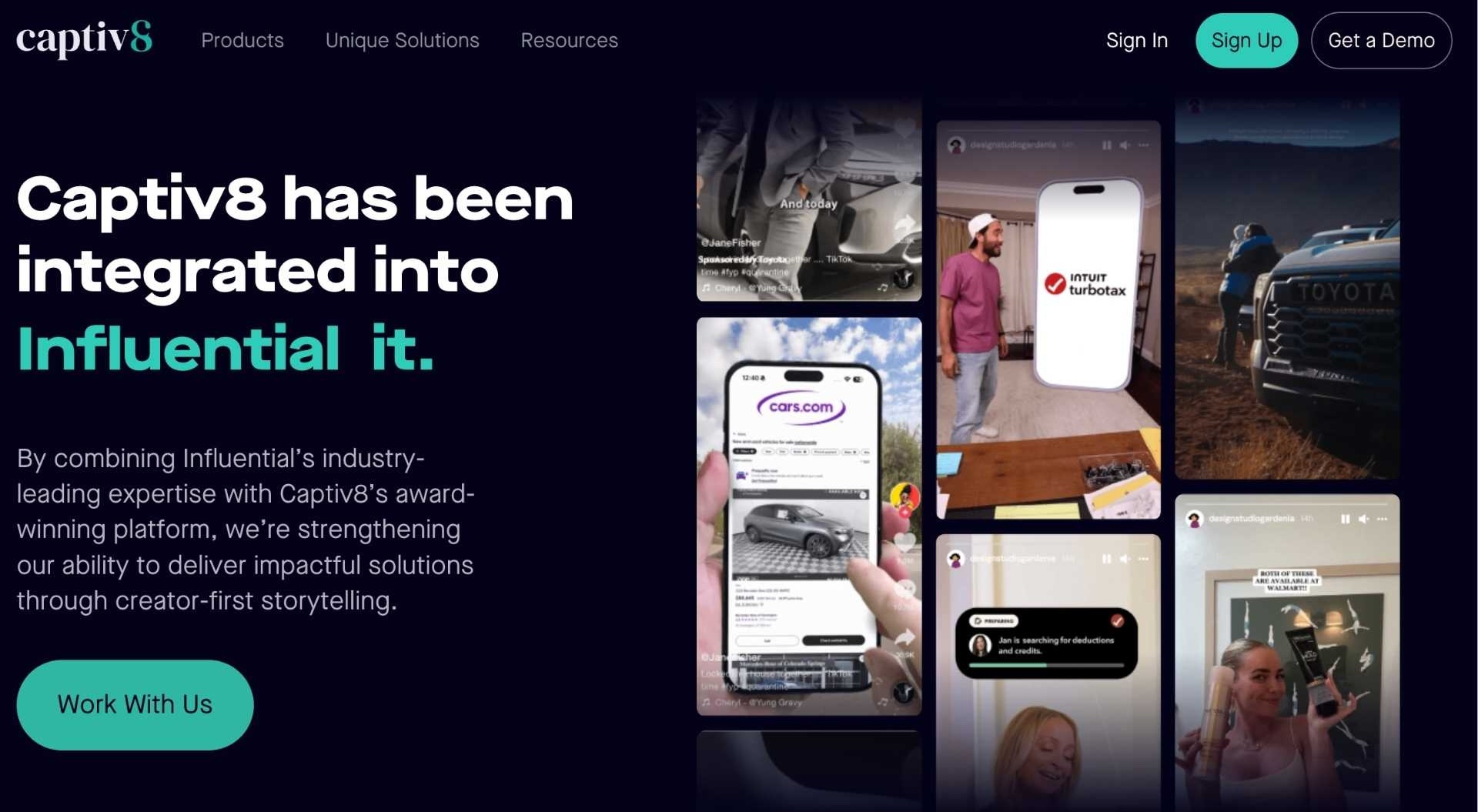
Captiv8 is an enterprise-grade influencer marketing platform that now sits within Influential’s broader creator marketing offering. It is designed for brands that need discovery, campaign management, commerce integrations, reporting, paid amplification, and global creator payments in a more enterprise-focused environment. Captiv8’s positioning is strongest for larger programs that want influencer marketing tied closely to commerce, paid media, and business-intelligence reporting rather than just creator sourcing and outreach.
Key Features
- Enterprise creator discovery: Captiv8 is built around large-scale influencer search and audience insights, with filters and social listening capabilities highlighted in user feedback and platform materials.
- Shoppable commerce integrations: The platform supports Shopify, Refersion, and WooCommerce for gifting, inventory management, trackable links, and discount codes.
- Paid media amplification: Captiv8 supports boosting creator content across Facebook, Instagram, and TikTok with multiple ad objectives.
- Global creator payments: The platform highlights creator payments, commissions, budget approvals, and multi-currency support as part of its enterprise workflow.
- Public API and BI integrations: Captiv8 offers a public API with pre-built integrations for Looker, Tableau, and Google Analytics so brands can bring creator performance into their own reporting stack.
- TikTok Shop support: Captiv8’s official materials also lean into TikTok Shop and shoppable content operations.
Pricing
- Core platform example reviewed for this comparison: $25,000 annually with annual commitment only.
- Onboarding fee: $3,000 one time.
- Storefront + affiliate program add-on: roughly $20,000–$30,000/month for creator commerce functionality in the reviewed package.
- Public pricing: not transparently listed on the main site; pricing is sales-led and enterprise-oriented.
Reviews
4.7 / 5.0 (G2)
Pros
- Strong commerce layer: Captiv8 goes further than many alternatives on shoppable content, referral tracking, discount codes, commissions, and ecommerce integrations.
- Business-intelligence readiness: Its public API with Looker, Tableau, and Google Analytics integrations is a notable differentiator for enterprise teams that want custom reporting.
- Paid media plus creator workflow in one platform: Captiv8 is one of the clearer options for brands that want creator activation and paid amplification connected inside the same system.
Cons
- Pricing is opaque: There is no public plan breakdown, so evaluating fit requires a sales process.
- Getting non-platform creators onboarded can be cumbersome: Review feedback points to a multi-stage onboarding process for creators who are not already in the system.
- Data hygiene and discovery can require extra review: Users have noted duplicate data, unusable profiles, and over-narrow search results when filters get too specific.
Integrations
- Shopify: Manage gifting, inventory, shoppable content, and attribution for social commerce campaigns.
- Refersion: Build referral tracking and creator commerce workflows around affiliate-style campaigns.
- WooCommerce: Extend gifting and inventory management into WooCommerce-based commerce stacks.
- Google Analytics: Pull creator and campaign performance into broader marketing reporting through Captiv8’s API framework.
- Looker: Feed creator campaign data into BI dashboards for customized internal reporting.
Creator.co vs Captiv8
Creator.co is the more approachable platform for small to mid-sized brands that want a marketplace, AI support, and lower starting costs, while Captiv8 is built for enterprise teams that need more advanced commerce, BI, and paid-media infrastructure. Creator.co is easier to buy and easier to understand, but Captiv8 offers deeper reporting flexibility, stronger shoppable commerce integrations, and more enterprise-grade payment and amplification workflows. Creator.co is better for brands that want a lighter self-serve or managed-service path, whereas Captiv8 is better for organizations with larger teams, more complex reporting needs, and bigger global creator programs. The tradeoff is that Captiv8 is less transparent on pricing and likely heavier to implement. For brands treating creator marketing like a serious cross-functional commerce channel, Captiv8 is the stronger enterprise alternative.


6. IZEA
IZEA is one of the earliest influencer marketing platforms in the market, evolving from sponsored content marketplaces into a full creator economy platform. Today, IZEA offers a suite of tools for influencer discovery, campaign management, content collaboration, and payments, along with its proprietary creator marketplace. It is widely used by brands that want both software and optional managed services for influencer campaigns.
Key Features
- Creator marketplace (IZEA Exchange): Brands can post campaigns and receive applications from influencers, making it easier to source creators without cold outreach.
- Influencer discovery and search: Access a large database of creators with filters for audience demographics, engagement, and niche targeting.
- Campaign management workflows: Manage briefs, approvals, deliverables, and timelines across influencer campaigns in one dashboard.
- Content collaboration tools: Review, approve, and manage sponsored content before it goes live.
- Payments and contracting: IZEA supports creator payments, contracts, and invoicing directly within the platform.
- Social listening and trend tracking: Monitor brand mentions and trending content to inform campaign strategy.
- Managed services option: Brands can choose to have IZEA run campaigns end-to-end as an agency layer on top of the software.
Pricing
- IZEA Flex: Custom pricing depending on features and usage.
- IZEA Exchange: Pay-per-post marketplace pricing (no fixed subscription required).
- Managed Services: Custom enterprise pricing.
- Contract terms: Typically flexible depending on plan (subscription or campaign-based).
Reviews
3.9/ 5.0 (G2)
Pros
- Strong marketplace model: IZEA’s marketplace remains one of its biggest differentiators, allowing brands to receive inbound proposals rather than relying only on outbound outreach.
- Content licensing focus: Few platforms emphasize content ownership as much as IZEA, making it valuable for brands investing heavily in UGC for ads.
- Flexible service + software hybrid: Brands can choose between self-serve, managed campaigns, or a mix of both depending on internal resources.
Cons
- UI and navigation can feel dated: Some workflows are not as intuitive compared to newer platforms.
- Pricing lacks transparency: Requires sales conversations, making quick comparisons difficult.
- Reporting depth can feel limited for advanced users: Some teams want more granular analytics and customization.
Integrations
- Shopify: Track influencer-driven sales and manage product gifting workflows.
- Google Analytics: Measure campaign-driven traffic and conversions.
- PayPal: Handle creator payments directly within campaigns.
- Social platforms (Instagram, TikTok, YouTube): Pull campaign performance and engagement data.
- API integrations: Export campaign data into internal reporting systems.
Creator.co vs IZEA
Creator.co is more modern in its AI-driven workflows and easier to adopt for smaller DTC teams, while IZEA offers a more mature marketplace and stronger focus on content licensing. Creator.co leans toward automation and affordability, whereas IZEA provides a more flexible mix of managed services and creator bidding. IZEA’s marketplace gives brands more inbound deal flow, while Creator.co focuses more on AI-assisted matching and outreach. For brands prioritizing UGC reuse and inbound creator proposals, IZEA stands out; for those prioritizing ease of use and AI workflows, Creator.co is typically a better fit.
7. Modash
Modash is an influencer marketing platform focused on discovery, outreach, and performance tracking, with a strong emphasis on data accuracy and scale. It stands out for offering access to one of the largest influencer databases built from public data rather than opt-in creators, making it particularly useful for brands that want full control over sourcing rather than relying on a marketplace. Modash is widely used by DTC brands that prioritize performance marketing, affiliate tracking, and scalable outreach workflows.
Key Features
- Massive creator database: Access to 350M+ public creator profiles across Instagram, TikTok, and YouTube.
- Advanced search filters: Filter creators by audience demographics, engagement, location, content themes, and more.
- AI-powered discovery tools: Includes lookalike search and “describe a creator” functionality for faster sourcing.
- Bulk outreach and CRM: Send templated emails at scale and track conversations within a built-in CRM.
- Affiliate and sales tracking: Integrates with Shopify to track discount codes, affiliate links, and revenue attribution.
- Fake follower detection: Analyze audience quality and authenticity before partnering with creators
Pricing
- Essentials: starts at $199/month billed yearly or $299 month-to-month, for campaigns with up to 100 creators.
- Enterprise: starts at $14,700/year, with custom usage for larger programs above 250 creators.
- Free trial: Modash offers a 14-day free trial with no credit card required.
Reviews
4.9/5.0 (Capterra)
Pros
- Largest public influencer database: Unlike opt-in marketplaces, Modash gives access to virtually any creator with a public profile.
- Best-in-class discovery filters: Extremely granular filtering and lookalike tools make it easy to find niche creators.
- Strong Shopify integration for DTC: Seamlessly connects influencer campaigns to sales and affiliate performance.
Cons
- Limited ecommerce integrations beyond Shopify: Not ideal for brands on other platforms.
- No built-in content licensing tools: UGC rights must be handled manually.
- No paid ads/whitelisting support: Requires external tools for amplification.
Integrations
- Shopify: Track affiliate revenue, automate gifting, and manage discount codes.
- Gmail/Outlook: Sync outreach communication and track replies.
- Stripe (payments): Handle payouts and financial workflows.
- Zapier: Connect Modash with other tools in your stack.
- Google Sheets/Exports: Export influencer and campaign data for analysis.
Creator.co vs Modash
Creator.co focuses more on marketplace-driven campaigns and AI assistance, while Modash is a data-first platform built for brands that want full control over sourcing and outreach. Creator.co is easier for beginners, whereas Modash is more powerful for teams running performance-driven influencer programs. Modash excels in discovery and data transparency, while Creator.co offers a more guided experience with managed services. For brands that want to scale outreach and own their influencer pipeline, Modash is the stronger alternative.
8. Klear
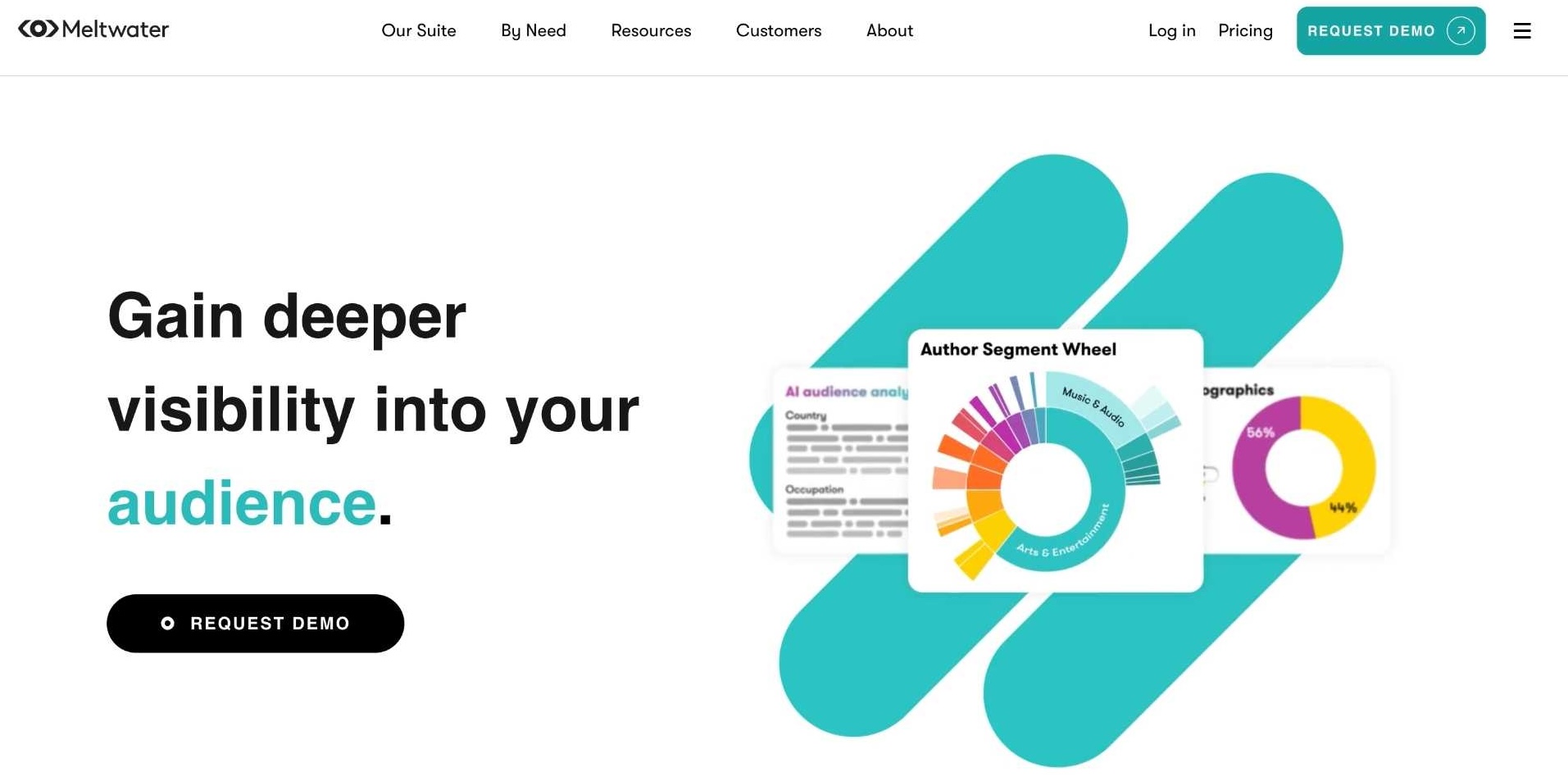
Klear, part of Meltwater, is an enterprise influencer marketing platform that combines influencer discovery, campaign management, and social listening into one ecosystem. It is particularly strong for brands that want to combine influencer marketing with broader PR, social listening, and media monitoring strategies. Klear is often used by larger teams that need global reach, deep analytics, and integrated reporting across marketing channels.
Key Features
- 30M+ influencer database with advanced filters: Includes demographics, engagement, and brand affinity data.
- AI-powered “True Reach” metric: Estimates real audience reach beyond follower counts.
- Campaign management and communication tools: Manage creators, deliverables, and messaging in-platform.
- Social listening integration: Monitor brand mentions, competitors, and industry trends.
- Performance and ROI reporting: Track engagement, conversions, and campaign outcomes with visual reports.
Pricing
- Starts around $33,000–$50,000/year depending on package and discounts.
- Custom enterprise pricing for larger teams.
- Billing structure: Annual contracts only.
Reviews
4.3 / 5.0 (G2)
Pros
- Integrated with Meltwater ecosystem: Combines influencer marketing with PR, social listening, and media monitoring.
- Strong analytics and reporting depth: Includes sentiment analysis, ROI tracking, and audience insights.
- True Reach metric: Helps brands avoid inflated influencer metrics.
Cons
- High pricing barrier: Not accessible for small or mid-sized DTC brands.
- UI performance issues reported: Some users experience lag and slower workflows.
- Limited reporting flexibility in some cases: Requires exporting data for deeper comparisons.
Integrations
- Shopify: Track influencer-driven sales and ecommerce performance.
- Meltwater suite: Combine influencer data with PR and media monitoring.
- Google Analytics: Measure campaign-driven website performance.
- Social platforms: Pull data from Instagram, TikTok, and other networks.
- API integrations: Export data into BI tools.
Creator.co vs Klear
Creator.co is designed for accessibility and ease of use, while Klear is built for enterprise teams needing deeper analytics and cross-channel insights. Creator.co is more affordable and faster to implement, whereas Klear offers more advanced reporting and social listening capabilities. Klear is better suited for large organizations managing global campaigns, while Creator.co is ideal for DTC brands looking to scale influencer programs without enterprise complexity.
9. Traackr
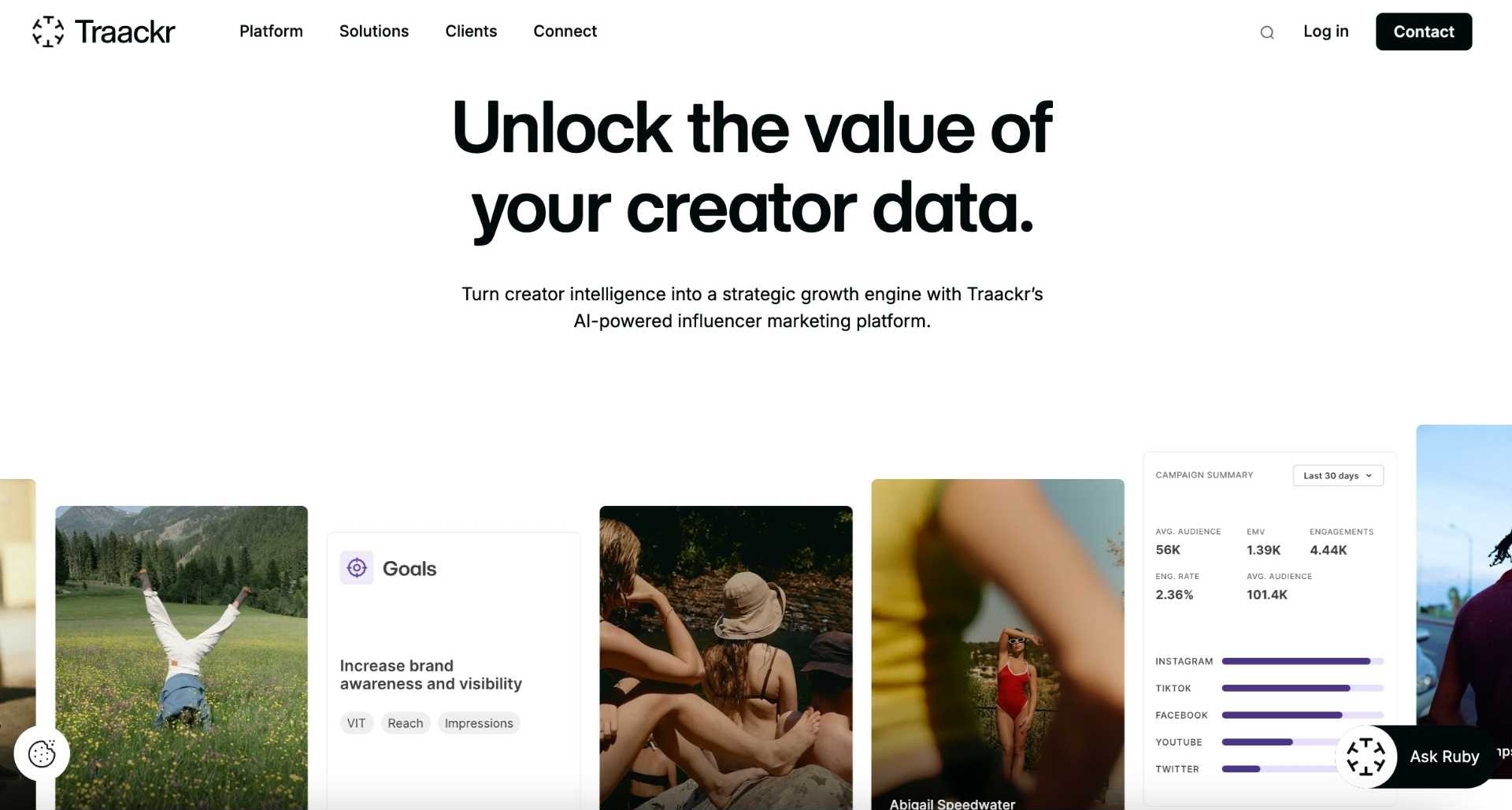
Traackr is an enterprise influencer marketing platform focused heavily on performance measurement, benchmarking, and ROI optimization. It is designed for brands that treat influencer marketing as a measurable media channel rather than just a creator collaboration tool. Traackr stands out for its analytics capabilities, including cost-per metrics, benchmarking, and budget optimization tools.
Key Features
- 6M+ influencer database with advanced filters: Includes performance history and audience insights.
- Brand Vitality Score (BVS): A proprietary metric that measures brand influence and visibility.
- Budget optimization tools: Helps allocate spend across creators based on expected ROI.
- Detailed cost-per metrics: Tracks CPC, CPE, CPV, and more for campaign efficiency.
- Real-time campaign tracking: Monitor performance during campaigns and adjust strategy.
Pricing
- Starts around $32,500/year.
- Custom pricing based on features and scale.
- Billing structure: Annual contracts only.
Reviews
4.3/5.0 (G2)
Pros
- Best-in-class analytics and benchmarking: Strong focus on ROI and performance optimization.
- Unique Brand Vitality Score: Helps measure brand impact beyond campaign metrics.
- Budget optimization tools: Useful for scaling campaigns efficiently.
Cons
- Very high pricing: Not suitable for smaller teams.
- Platform performance issues reported: Some users mention lag and bugs.
- Limited flexibility in contracts: Annual commitments required.
Integrations
- Shopify: Track sales and ecommerce attribution.
- CRM systems: Sync influencer data with internal workflows.
- Social platforms: Pull campaign performance data.
- Analytics tools: Export campaign metrics for reporting.
- API integrations: Custom reporting and dashboards.
Creator.co vs Traackr
Creator.co is a more accessible and execution-focused platform, while Traackr is built for brands that prioritize analytics, benchmarking, and ROI optimization. Creator.co is better for launching and managing campaigns, whereas Traackr is stronger for measuring and optimizing performance at scale. Traackr is more suitable for enterprise teams with large budgets, while Creator.co fits smaller DTC brands looking for simplicity and affordability.
10. IMAI (InfluencerMarketing.ai)

IMAI is an AI-driven influencer marketing platform designed to help brands discover creators, manage campaigns, and analyze performance using advanced data and automation. It focuses on combining influencer discovery with AI insights, fraud detection, and campaign tracking, making it suitable for brands that want data-driven decision-making without stepping into enterprise pricing tiers.
Key Features
- AI-powered influencer discovery: Search creators using advanced filters, audience insights, and AI recommendations.
- Fraud detection and audience analysis: Identify fake followers and assess influencer authenticity.
- Campaign management tools: Manage outreach, collaboration, and performance tracking in one platform.
- Content and competitor analysis: Analyze influencer content and competitor campaigns for insights.
- Reporting dashboards: Track engagement, reach, and ROI across campaigns.
Pricing
Starting price at $99/month and notes that a free trial is available.
Reviews
4.5 / 5.0 (G2)
Pros
- Strong AI-driven discovery and analysis: Helps brands find high-quality creators faster.
- Built-in fraud detection: Adds confidence when selecting influencers.
- Competitive pricing for feature set: Offers advanced features without enterprise-level cost.
Cons
- UI can feel complex for new users: Some workflows require onboarding.
- Limited integrations compared to larger platforms: May require external tools.
- Less established than legacy platforms: Smaller ecosystem and fewer enterprise features.
Integrations
- Instagram/TikTok/YouTube: Pull influencer and campaign performance data.
- Google Analytics: Track website traffic and conversions.
- Shopify: Attribute sales to influencer campaigns.
- API integrations: Export data for custom workflows.
- CRM tools: Sync influencer data with marketing systems.
Creator.co vs IMAI
Creator.co focuses more on simplicity and marketplace-driven campaigns, while IMAI leans into AI-driven discovery and analytics. Creator.co is easier for teams that want a guided experience, whereas IMAI is better for brands that want deeper data insights and fraud detection. Creator.co offers stronger managed services and onboarding, while IMAI provides more analytical depth at a comparable or lower price point. For brands prioritizing data accuracy and AI insights, IMAI is a strong alternative.
Final Thoughts
Choosing the right influencer marketing software ultimately depends on how your team approaches creator marketing—whether as a lightweight channel for awareness or a core revenue driver tied to ecommerce performance. Creator.co offers a strong entry point with its marketplace model, AI-assisted workflows, and accessible pricing, but many alternatives provide deeper capabilities in areas like discovery, CRM workflows, affiliate tracking, and analytics. Platforms like Aspire, Influencer Hero, and SARAL stand out for DTC-focused operations, while Modash and Influencity offer stronger data and discovery capabilities. At the enterprise level, tools like Captiv8, Klear, and Traackr bring advanced reporting, social listening, and global campaign management.
For most D2C brands, the decision comes down to balancing ease of use, scalability, and how closely influencer marketing needs to connect with revenue. If your priority is simplicity and faster campaign launches, Creator.co can be a solid fit. However, if you’re looking to build a more structured, performance-driven influencer program with tighter integrations into your ecommerce stack, exploring these Creator.co alternatives can help you find a platform better aligned with your long-term growth goals.

.png)


.jpg)