

10 Best Captiv8 Alternatives • Key Criteria • Captiv8 Overview • Best Captiv8 Alternatives • GRIN • Upfluence • CreatorIQ • Influencer Hero • NeoReach • Lefty • Insense • Kolsquare • Skeepers • Creator.co • Final Thoughts • FAQs
10 Best Captiv8 Alternatives for Influencer Marketing
Managing influencer partnerships has become a core growth lever for D2C brands, making influencer marketing software essential for handling creator discovery, outreach, campaign workflows, and performance tracking at scale. Captiv8 is one of the more established platforms in this space, known for its strong reporting, brand safety features, and growing focus on creator commerce. However, common feedback points to its high cost, annual contracts, and complexity as key limitations—especially for teams looking for more flexibility or ecommerce-native workflows. This has led many founders and marketing teams to actively explore Captiv8 alternatives that better align with their budget, tech stack, and growth stage.
In this guide, we break down the 10 best alternatives—GRIN, Upfluence, CreatorIQ, Influencer Hero, NeoReach, Lefty, Insense, Kolsquare, Skeepers, and Creator.co—to help you find the right influencer marketing software for your needs.
Key Criteria for Evaluating Influencer Marketing Platforms
Core Features
Evaluation of essential influencer marketing capabilities, including influencer discovery, outreach, CRM, campaign management, reporting, and content workflows.
Pricing & Flexibility
Comparison of pricing models, subscription plans, and contract terms to match different budgets and growth stages.
Customer Reviews & Satisfaction
Analysis of user feedback from trusted review platforms, focusing on usability, reliability, customer support, and overall performance.
Pros & Cons
Review of each platform’s strengths and limitations to highlight where it performs well and where it may fall short based on different use cases.
Integrations
Review of the most important integrations (e.g., Shopify and other tech tools), highlighting what each integration enables in one sentence.
Captiv8 Overview
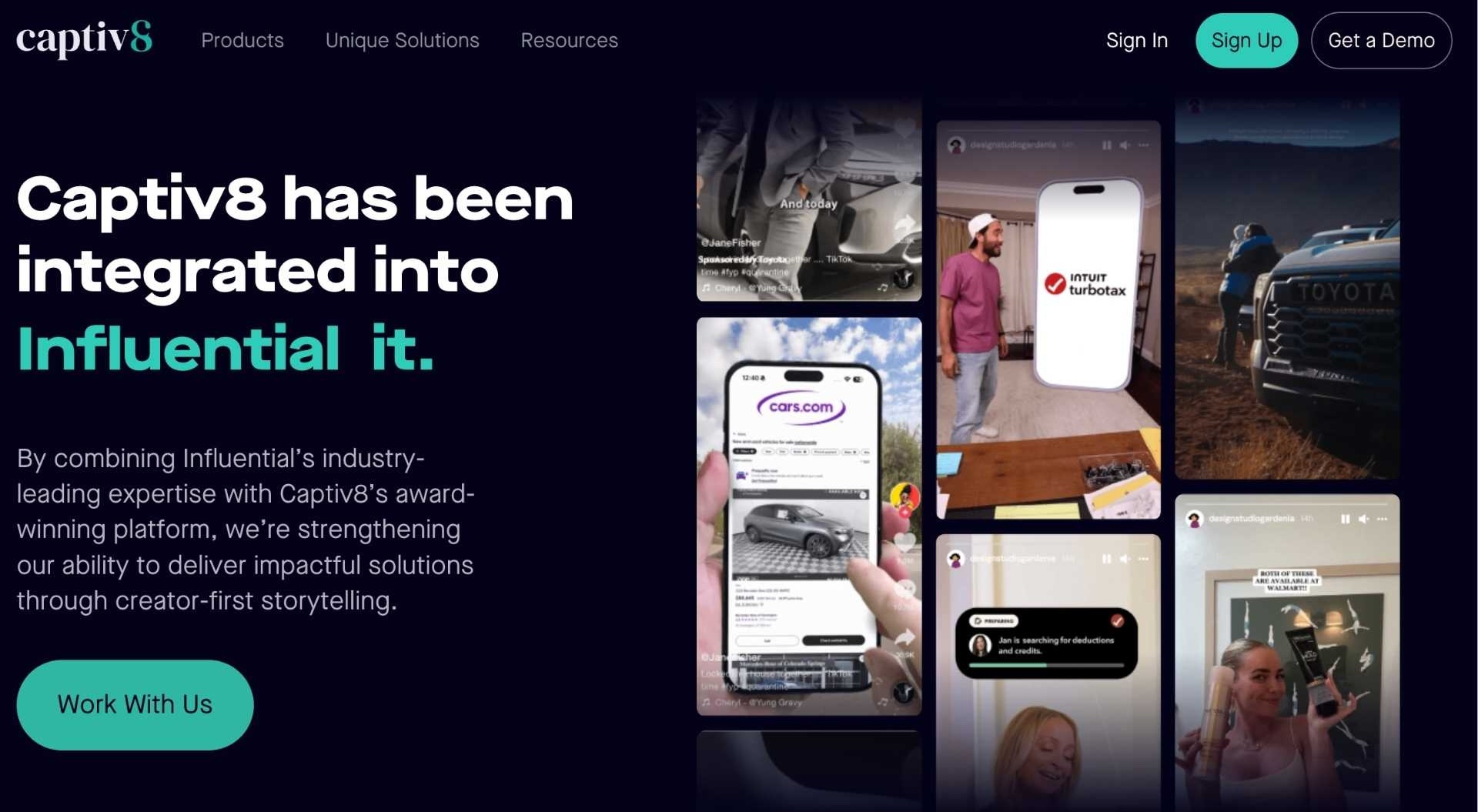
Captiv8 (now part of Influential) is an enterprise-focused influencer marketing platform built to help brands run creator programs end to end, from discovery and campaign execution to payments, reporting, amplification, and creator commerce. On its official site, Captiv8 positions itself as a unified platform for creator partnerships, ROI tracking, payments, paid amplification, measurement, and commerce workflows, and notes that the platform has been integrated into Influential.
Key Features
- AI-powered creator discovery and audience analysis: Captiv8’s discovery tools are built around a large creator database and rich filtering. Official materials highlight creator search across social platforms with audience ethnicity, brand affinity, and other advanced criteria, while G2’s feature pages point to audience analysis, influencer segmentation, and authority scoring as core strengths.
- Brand and media safety controls: Captiv8’s newer Brand & Media Safety layer helps brands screen creators for risk before activation. The company says it combines content scanning, media monitoring across more than 300 million sources, and a proprietary Brand Safety Score built on IAB standards, with adjustable risk settings and alert-based monitoring.
- Campaign workflow and creator collaboration: Captiv8 is designed to keep briefs, contracts, communication, approvals, scheduling, and campaign management inside one system. Its official workflow pages describe in-platform collaboration with creators, content feedback, scheduling, and campaign control across teams.
- Reporting, dashboards, and custom measurement: Reporting is one of Captiv8’s biggest strengths. Official measurement pages emphasize custom metrics, automated reporting, API-based data access, and integrations into BI environments so teams can track campaign performance in real time and align influencer data with broader marketing reporting.
- Affiliate marketing and creator commerce: Captiv8’s commerce suite goes beyond awareness campaigns. It supports affiliate activation, attribution, referral tracking, discount codes, and storefront-style shopping experiences designed to turn creator activity into measurable revenue.
- Storefronts and shoppable social commerce: Captiv8 launched Branded Storefronts in 2024 and followed that with Captiv8 Storefronts in 2025. The newer version is positioned as a faster, lower-friction way to launch creator-led storefronts with attribution tracking and social-native shopping flows.
- Payments and creator operations: Captiv8 also includes creator payment infrastructure, with real-time budget tracking, payment approvals, invoicing support, and flexible payout options. Official pages highlight support for global creator payments and creator-side tools for tracking payments and whitelisting access.
Pricing
- Plan structure: Custom enterprise pricing only; no public monthly self-serve tiers.
- Contract term: Typically annual.
- Free trial: Not publicly listed.
- Directional market estimate: About $25,000/year for platform access, with higher costs for creator commerce/storefront functionality.
Reviews
4.7 / 5.0 (G2)
Integrations
- Shopify: Captiv8 connects with Shopify to support gifting, inventory-aware commerce workflows, shoppable content, and tracked creator-driven sales.
- Refersion: Refersion is used for affiliate-style tracking, referral links, and discount-code-based commerce attribution inside Captiv8’s creator commerce workflows.
- WooCommerce: Captiv8’s commerce stack also supports WooCommerce for gifting and inventory management in shoppable creator campaigns.
- Google Analytics: Teams can pipe Captiv8 campaign data into Google Analytics for broader cross-channel measurement and unified performance reporting.
- Looker: Captiv8’s API includes pre-built Looker connectivity so brands can bring influencer performance into custom BI dashboards and stakeholder reports.
Pros
- Brand and media safety is now a much stronger differentiator: The 2025 Brand & Media Safety launch adds real-time social scanning, broad web monitoring, creator risk scoring, customizable thresholds, and alerting, which is especially valuable for enterprise brands with strict governance needs.
- Its storefront push makes Captiv8 more commerce-ready than many influencer platforms: Since launching Branded Storefronts in 2024 and the next-gen Storefronts product in 2025, Captiv8 has expanded from campaign management into creator-led shopping, attribution, and faster time-to-sale.
- Strong measurement and BI connectivity stand out for large teams: Captiv8’s reporting stack is built for brands that care about custom KPIs, automated reporting, and feeding influencer data into tools like Looker, Tableau, and Google Analytics rather than treating influencer marketing as a silo.
Common Drawbacks of Captiv8
The pricing model is hard to justify for many brands
Captiv8 is positioned for enterprise use, and review data plus public pricing directories suggest it can feel expensive for smaller teams or agencies that do not need a heavyweight platform.
There is a noticeable learning curve
Because the platform covers discovery, workflows, payments, reporting, and commerce, it can take time for new users to get fully comfortable, especially without strong onboarding.
Certain data points and niche filters are not always perfectly accurate
Reviews point to occasional issues with creator categorization, DEI-related filtering, and profile matching, which can matter when teams rely heavily on granular audience attributes.
Search and day-to-day usability can feel clunky in places
Some reviewers call out friction when comparing creators, inconsistent search behavior, and workflows that are not always as smooth as the platform’s enterprise positioning suggests.
Payment and support issues remain a concern for some buyers
Although many users praise support, recurring review themes also include slow support response in certain cases and frustration around creator payment delays, which can damage campaign momentum and partner trust.
Best Captiv8 Alternatives
| TOOL | REVIEWS | BEST FOR | TRIAL INFO | PRICING | ||
|---|---|---|---|---|---|---|
1 |

|
⭐ | DTC creator management | Book Demo | Pricing | Website |
2 |
|
⭐ | Influencer discovery | Book Demo | Pricing | Website |
3 |

|
⭐ | Enterprise influencer marketing | Book Demo | Pricing | Website |
4 |

|
⭐ | Influencer CRM & automation | Book Demo | Pricing | Website |
5 |
|
⭐ | Influencer campaigns & data analytics | Book Demo | Pricing | Website |
6 |

|
⭐ | Influencer analytics & discovery | Book Demo | Pricing | Website |
7 |

|
⭐ | UGC creators & paid social ads | Book Demo | Pricing | Website |
8 |

|
⭐ | Data-driven influencer discovery & campaign analytics | Book Demo | Pricing | Website |
9 |

|
⭐ | Influencer gifting & UGC campaigns with micro-influencers | Book Demo | Pricing | Website |
10 |

|
⭐ | Influencer campaigns & creator marketplace | Book Demo | Pricing | Website |
1. GRIN
GRIN is an influencer marketing platform built primarily for ecommerce and DTC brands that want to manage creator discovery, outreach, gifting, affiliate tracking, payments, and content collection in one system. It is especially focused on turning creator relationships into repeatable revenue workflows rather than just running one-off campaigns.
Key Features
- Creator discovery and CRM: GRIN’s free trial and core platform include creator search, CRM, campaign management, and social listening, giving brands a central workspace for sourcing and organizing creators.
- Integrated email outreach: The platform includes integrated email so teams can manage creator communication without switching between multiple systems.
- Product gifting workflows: GRIN includes gifting management, making it easier to seed products and keep fulfillment tied to campaign execution.
- Affiliate management and attribution: Higher tiers add advanced affiliate attribution and deep links, which is useful for brands measuring creator-driven sales instead of just engagement.
- Content library and approvals: GRIN’s mid and upper tiers include a central content library and content approval workflows, helping brands manage UGC and repurpose assets across channels.
- Creator payments and tax workflows: Essentials includes automated creator payments and 1099 processing, which is a major operational benefit for US-based brands running larger programs.
- Advanced reporting and API access: Growth and Complete unlock report building, advanced reporting, and API access for brands that need deeper measurement and system connectivity.
Pricing
- Free trial: GRIN publicly advertises a 30-day free trial.
- Annual pricing starts at $25,000/year (approx. $2,050/month), with no discounts for upfront payment. Contracts require a full-year commitment with monthly billing.
Reviews
4.5/5.0 (G2)
Pros
- Gia is one of the more differentiated AI releases in this category: GRIN launched Gia as an agentic AI built specifically for creator marketers, with support for discovery, vetting, recruiting, and forecasting rather than just lightweight copy assistance.
- Strong creator commerce expansion: GRIN’s CreatorCommerce integration adds co-branded landing pages and creator shops, which is valuable for brands that want creators to drive measurable storefront revenue instead of just awareness.
- More accessible buying motion than before: The move to instant self-serve access and month-to-month pricing makes GRIN more approachable than older enterprise-only positioning.
Cons
- Performance and usability complaints still show up: Review summaries regularly mention bugs, slow performance, and UI friction, especially when teams need quick access to campaign data.
- Creator discovery is not flawless for every team: Some users still report quality issues with the creator database, duplicates, or weak matches, which can limit the value of discovery-heavy workflows.
- Reporting depth can be uneven: Review summaries also flag limitations around reporting accuracy and metric depth for some use cases.
Integrations
- Shopify: Connect Shopify to automate product seeding, creator fulfillment, and ecommerce-linked creator workflows.
- PayPal: Pay creators directly through PayPal from inside GRIN’s workflow.
- DocuSign: Use DocuSign to streamline contract signatures and agreement management with creators.
- Klaviyo: Pair creator activity with more branded email workflows and communication templates.
- Google Drive: Sync creator assets from GRIN into Drive for easier storage, sharing, and reuse across teams.
Captiv8 vs GRIN
GRIN and Captiv8 overlap as end-to-end influencer platforms, but they are built for somewhat different operating styles. Captiv8 skews more enterprise and brand-governance heavy, with strong custom reporting, BI connections, and creator commerce layers. GRIN is more commerce-native for DTC brands, with deeper emphasis on gifting, affiliate operations, creator CRM, and direct ecommerce workflows.
GRIN is also moving toward more flexible, self-serve adoption, while Captiv8 remains more clearly enterprise- and quote-led. On the AI side, GRIN’s recent Gia launch gives it a fresher “AI-native workflow” angle, while Captiv8’s differentiators still lean more toward measurement, safety, and commerce infrastructure.
2. Upfluence
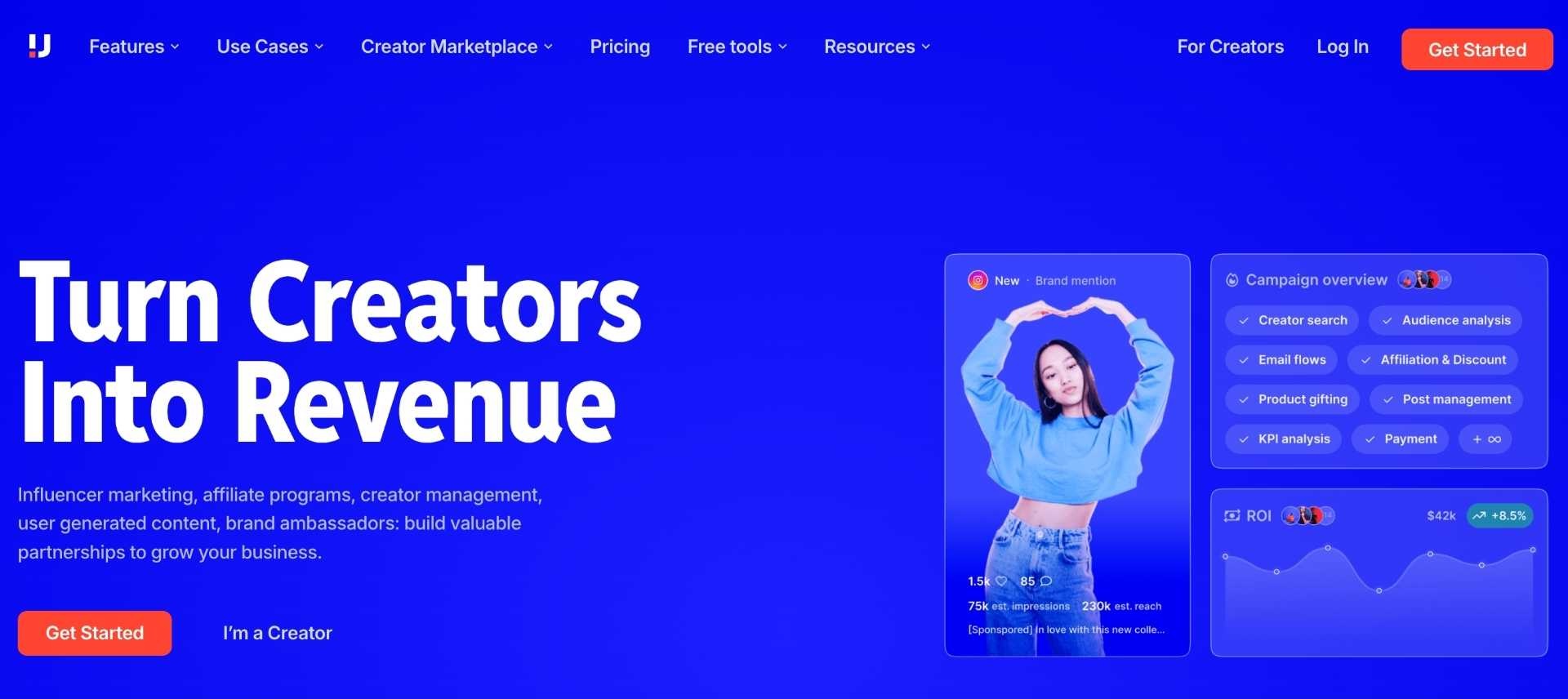
Upfluence is an influencer and affiliate marketing platform built for ecommerce brands that want to connect creator discovery and campaign management directly to store data. Its positioning is especially strong for brands that want to identify influencers from their own customers, run gifting and affiliate workflows, and measure sales impact across channels like Shopify and Amazon.
Key Features
- Creator discovery and relationship management: Upfluence includes creator discovery, lookalikes, relationship management, and mass outreach in its base Search & Contact layer.
- AI mailing support: The platform includes an AI mailing assistant to help teams scale outreach faster.
- Customer-to-creator matching: One of Upfluence’s standout differentiators is its ability to integrate customer data and surface influential customers already buying from the brand.
- Campaign automation: Campaign Manager adds Jaice AI campaign creation, affiliation management, one-click product shipment, creator marketplace access, drip email sequences, and analytics.
- Payments infrastructure: Upfluence offers a payments layer powered by Stripe, including affiliate commission management and creator payment workflows.
- Multi-channel database coverage: Upfluence states that its influencer database covers YouTube, Instagram, TikTok, Twitch, X/Twitter, Pinterest, and blogs.
- Broad eCommerce stack integrations: The integrations page highlights direct connections to Shopify, Amazon Attribution, Adobe Commerce, BigCommerce, WooCommerce, Klaviyo, Stripe, Hootsuite, and Zapier.
Pricing
- Pricing model: Upfluence uses custom pricing rather than a public fixed plan table.
- All plans are custom made. There’s a minimum full year of service you have to commit to with monthly payments. On average plans start around $2,000/month ($24,000 yearly)
Reviews
4.3/5.0 (Capterra)
Pros
- Jaice AI is now central to the product story: Upfluence has clearly upgraded its AI layer, positioning Jaice as an agent that helps brands plan, launch, and optimize creator campaigns faster.
- Amazon integration is a real differentiator: Upfluence has gone further than many competitors in native Amazon affiliate tracking and attribution, which is a strong advantage for marketplace sellers.
- Excellent ecommerce connectivity: Shopify, WooCommerce, BigCommerce, Adobe Commerce, Gmail, Outlook, Klaviyo, and payment integrations make Upfluence especially strong for brands that already run on an ecommerce-heavy stack.
Cons
- Still not a lightweight platform for beginners: Reviews regularly mention a learning curve during setup and early adoption.
- Workflow rigidity can be frustrating: Some users specifically call out campaign-editing limitations and setup friction once campaigns are already configured.
- Annual commitment reduces flexibility: Upfluence requires a 12-month minimum, which can be a drawback for brands that want to test tools month to month.
Integrations
- Shopify: Identify influential customers, send products, and track creator-driven sales from your Shopify store.
- Amazon Attribution: Run and optimize Amazon affiliate campaigns with native attribution and sales tracking.
- Klaviyo: Identify influential subscribers in your email lists and run creator-specific CRM flows.
- Gmail: Sync outreach through Gmail so creator communication stays tied to your normal inbox workflow.
- Outlook: Use Outlook inside Upfluence for synchronized creator outreach and inbox management.
Captiv8 vs Upfluence
Captiv8 is broader on enterprise measurement, brand safety, and custom reporting, while Upfluence is more explicitly optimized for ecommerce-led creator programs. Upfluence stands out more for Shopify workflows, influential-customer identification, affiliate campaigns, and Amazon Attribution, making it the more obvious fit for brands focused on attributable commerce rather than brand-led enterprise orchestration.
Captiv8 is likely the better fit when large teams want deeper governance, BI-style reporting, and high-end campaign oversight. Upfluence is the stronger option when the priority is turning creators into measurable sales channels inside an ecommerce stack.
3. CreatorIQ

CreatorIQ is an enterprise creator marketing platform built for large global brands that need structured governance, brand safety, compliance, and advanced reporting at scale. The company positions itself as an operating system for creator-led growth, combining AI-powered intelligence, enterprise workflows, and integration depth for complex organizations.
Key Features
- Enterprise-grade creator intelligence: CreatorIQ emphasizes AI-powered intelligence and unified workflows to help brands scale creator programs across teams and markets.
- Brand safety and governance: Its newer SafeIQ product adds AI-powered, multimodal brand safety infrastructure designed to help brands move from reactive to proactive protection.
- Enterprise integrations and data exchange: ExchangeIQ connects CreatorIQ data to internal systems, BI tools, CRMs, and custom APIs so creator data can live inside broader enterprise workflows.
- Global compliance focus: CreatorIQ’s positioning repeatedly highlights global governance, enterprise-grade compliance, and structured workflows, making it attractive for regulated or multinational brands.
- Multi-source reporting: Its integrations ecosystem includes analytics, commerce, contract, and affiliate partners, supporting more connected campaign measurement.
- Scale for large teams: CreatorIQ says it is trusted by 1,300+ brands and agencies, reinforcing its large-enterprise focus.
Pricing
There are different plans:
- Basic Plan: Starts at $35,000/year. Includes 1,000 contact creators per month
- Standard Plan: Starts at $50,000/year. Includes 2,500 contact creators per month
- Professional Plan: Starts at $90,000/year. Includes 5,000 contact creators per month
- Enterprise Plan: Starts at $200,000/year. Includes 7,500 contact creators per month
Reviews
4.4/5.0 (Capterra)
Pros
- SafeIQ is one of the strongest recent launches in the category: It gives CreatorIQ an enterprise-grade brand-safety layer that uses multimodal AI to assess creator risk across text, audio, and visuals.
- Recent YouTube integration deepens first-party data access: CreatorIQ’s March 2026 YouTube Creator Partnership API integration gives brands sharper viewership and audience data directly inside discovery workflows.
- BenchmarkIQ and payments have expanded globally: CreatorIQ has recently expanded BenchmarkIQ to 37 countries and CreatorIQ Pay to broader global coverage, which strengthens its enterprise measurement and operations story.
Cons
- High cost limits accessibility: CreatorIQ is clearly aimed at enterprise buyers, and public pricing references place it well above most SMB-friendly tools.
- Some users still want fresher analytics: Review summaries mention that certain analytics can feel delayed or incomplete for specific creators.
- Implementation is not lightweight: G2 notes a time-to-implement of about two months, which may be too slow for teams that need fast deployment.
Integrations
- YouTube Creator Partnership API: Pull first-party YouTube audience and viewership data directly into discovery and campaign workflows.
- TikTok: CreatorIQ is TikTok’s first official SaaS-only influencer marketing platform partner, giving users access to TikTok-native creator and content metrics.
- Meta: CreatorIQ works closely with Meta on branded content ad workflows and creator-led paid media measurement.
- Sprinklr: The new CreatorIQ-Sprinklr partnership unifies creator, paid, and owned social reporting in one environment.
- ExchangeIQ / API integrations: ExchangeIQ connects CreatorIQ data into the rest of the enterprise stack for reporting and workflow synchronization.
Captiv8 vs CreatorIQ
CreatorIQ and Captiv8 both play in the enterprise tier, but CreatorIQ is more explicitly built as a system of record for large creator programs with stronger first-party platform partnerships and a heavier emphasis on enterprise governance. Captiv8 is strong on campaign management, measurement, storefronts, and commerce, while CreatorIQ increasingly differentiates on platform-native data, benchmarking, and safety infrastructure.
If the priority is creator-led commerce plus customizable reporting, Captiv8 stays compelling. If the priority is enterprise intelligence, global benchmarking, brand safety, and official platform integrations across TikTok, YouTube, and broader social workflows, CreatorIQ often has the edge.
4. Influencer Hero

Influencer Hero is an all-in-one influencer marketing platform aimed at DTC brands, eCommerce teams, and agencies that want discovery, outreach, CRM, gifting, affiliate tracking, UGC management, and ROI reporting in one place. Its public positioning leans heavily on AI-powered automation and flexible pricing for brands that want to scale creator programs without buying enterprise software first.
Key Features
- Influencer discovery and outreach automation: Influencer Hero combines creator search with bulk outreach, drip campaigns, and CRM workflows in one system.
- Campaign-centric CRM: The platform is built around structured campaign boards, automated follow-ups, and relationship tracking to keep high-volume programs organized.
- Affiliate and revenue tracking: Its Shopify-connected workflows allow brands to create tracking links, discount codes, attribution rules, and commission reporting around creator performance.
- Product seeding and gifting: Influencer Hero connects store inventory to gifting and tracks which products were sent, to whom, and how those campaigns performed.
- UGC and content library: The platform promotes UGC tracking and centralized content management for repurposing creator assets.
- Broad integrations: Its integrations hub shows a wide range of live integrations across commerce, email, customer support, automation, contracts, and creator storefront tooling.
Pricing
Influencer Hero offers flexible pricing based on outreach volume and you can have unlimited creators in your CRM:
- Standard — $649/month (up to 1,000 outreach messages per month)
- Pro — $1,049/month (up to 5,000 outreach messages per month)
- Business — $2,490/month (up to 10,000 outreach messages per month)
- Custom / Agency — Tailored pricing
Custom pricing is available for agencies and larger teams
Reviews
4.9/5.0 (Capterra)
Pros
- Built for efficient, high-volume execution: Bulk actions, batching tools, and a Chrome extension enable teams to manage outreach, creator sourcing, and campaign updates quickly, while keeping workflows organized.
- AI-powered outreach and workflow automation are core differentiators: The platform emphasizes automated outreach, AI integration, A/B-tested templates, and workflow-driven CRM boards rather than just discovery.
- Useful ecommerce flexibility: Shopify, WooCommerce, and API access make it attractive for DTC brands that want to connect creator programs to actual store operations and revenue tracking.
Cons
- No free trial: Makes it harder for teams to evaluate the platform before committing
- Higher pricing for smaller teams: May be less accessible for early-stage brands or those with limited budgets
- Steep learning curve: Feature depth means onboarding and setup can take time
Integrations
- Shopify: Connect store data for gifting, discount codes, affiliate tracking, and creator-driven revenue visibility.
- WooCommerce: Sync WooCommerce to track clicks, sales, and creator performance in one workflow.
- Slack: Send campaign updates, approvals, and internal alerts to team channels to keep workflows aligned and moving faster.
- Zapier: Connect Influencer Hero with hundreds of tools to automate workflows such as notifications, reporting, and data syncing.
- DocuSign: Streamline contracts and agreements with influencers through automated document workflows.
- GoAffPro: Manage affiliate programs, track commissions, and handle payouts tied to influencer performance.
Captiv8 vs Influencer Hero
Captiv8 is the more enterprise-oriented platform, with stronger brand-governance posture, higher-end reporting customization, and broader large-brand positioning. Influencer Hero is the more budget-accessible option, giving brands a surprisingly full workflow stack at a much lower starting price.
For DTC brands that care about outreach automation, CRM structure, affiliate tracking, and ecommerce workflows without spending enterprise-level budgets, Influencer Hero is easier to justify. Captiv8 makes more sense when advanced governance, custom analytics, and enterprise-grade campaign oversight matter more than cost efficiency.
5. NeoReach
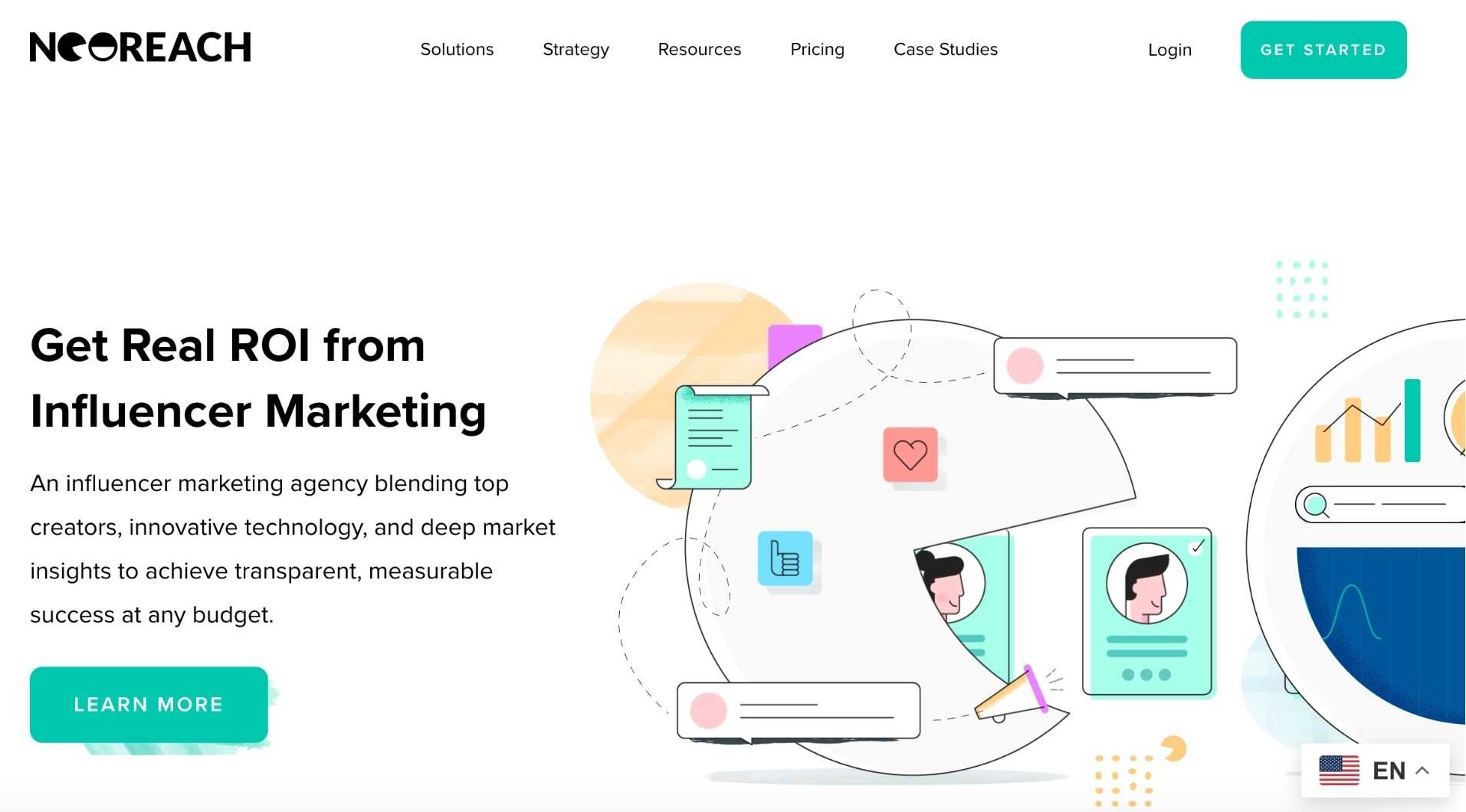
NeoReach is an influencer marketing platform and managed-services company aimed at brands and agencies running campaigns at scale. Its positioning combines enterprise software, API access, fraud detection, creator payments, and optional managed campaign execution, making it one of the more enterprise-oriented alternatives in this category.
Key Features
- Search and analysis at scale: NeoReach says its software lets brands search, manage, and track influencer campaigns, using over 40 filters including demographics, language, income, brand affinity, and performance data.
- Workflow automation: The platform supports campaign planning, influencer coordination, contracts, deadlines, post review, and payment history within one shared system.
- Campaign reporting and ROI tracking: NeoReach highlights campaign-level and influencer-level ROI, CPM, CPE, impressions, engagement, and exportable CSV reporting.
- Fraud detection: The platform includes fraud detection for fake likes, follows, and engagement, which is important for brands vetting larger creator pools.
- API access and data portability: NeoReach offers API access and says brands can integrate 400+ custom data points into internal tools and dashboards.
- Managed services option: In addition to software, NeoReach offers full-service influencer campaigns including strategy, creative briefs, sourcing, negotiation, licensing, payments, logistics, paid social, and experiential activations.
Pricing
- NeoReach’s official pricing page is custom pricing only.
- Because NeoReach does not publish plan prices, buyers should expect enterprise-style quoting rather than self-serve monthly checkout.
Reviews
4.5/5.0 (G2)
Pros
- API depth is a real differentiator: NeoReach’s platform and API access are built for brands that want social and creator data inside internal systems, dashboards, and custom workflows.
- Fraud detection is one of the clearest strengths in its positioning: The company repeatedly highlights bot/fake-engagement detection as a core enterprise safeguard.
- Broader paid-media support than many influencer platforms: NeoReach combines creator campaign software with paid ad amplification, which is useful for brands that want creator assets to work beyond organic reach.
Cons
- Pricing transparency is weak: NeoReach’s official site keeps pricing largely custom, which makes it harder for mid-market buyers to evaluate quickly.
- Less SMB-friendly than newer self-serve tools: The product is clearly geared toward bigger brands and agencies with more complex needs.
- Review coverage is thinner than top rivals: It has a respectable G2 score, but far fewer public reviews than platforms like CreatorIQ, Upfluence, or GRIN.
Integrations
- REST API: Use NeoReach’s API to pipe creator and campaign data into internal dashboards and workflow systems.
- Internal enterprise dashboards: NeoReach explicitly supports integrating data into internal workflows and dashboards for custom reporting.
- Creator payments infrastructure: NeoReach supports global automated influencer payments as part of its platform layer.
- Paid social channels: NeoReach extends campaign content into paid amplification across Facebook, Instagram, TikTok, Snapchat, and more.
- Custom enterprise data environments: NeoReach markets integration of 400+ custom data points into in-house tools and analysis environments.
Captiv8 vs NeoReach
Captiv8 and NeoReach both target larger brands, but they emphasize different strengths. Captiv8 leans more toward creator commerce, storefronts, reporting customization, and enterprise campaign collaboration. NeoReach feels more like a hybrid of software, API infrastructure, fraud detection, and managed services, with a particularly strong angle around custom enterprise data flows and paid amplification.
If a brand wants a creator platform that plugs deeply into internal systems and supports service-heavy execution, NeoReach is compelling. If the priority is a more polished creator-marketing workspace with stronger commerce productization and brand-side campaign tooling, Captiv8 is usually the closer fit.


6. Lefty
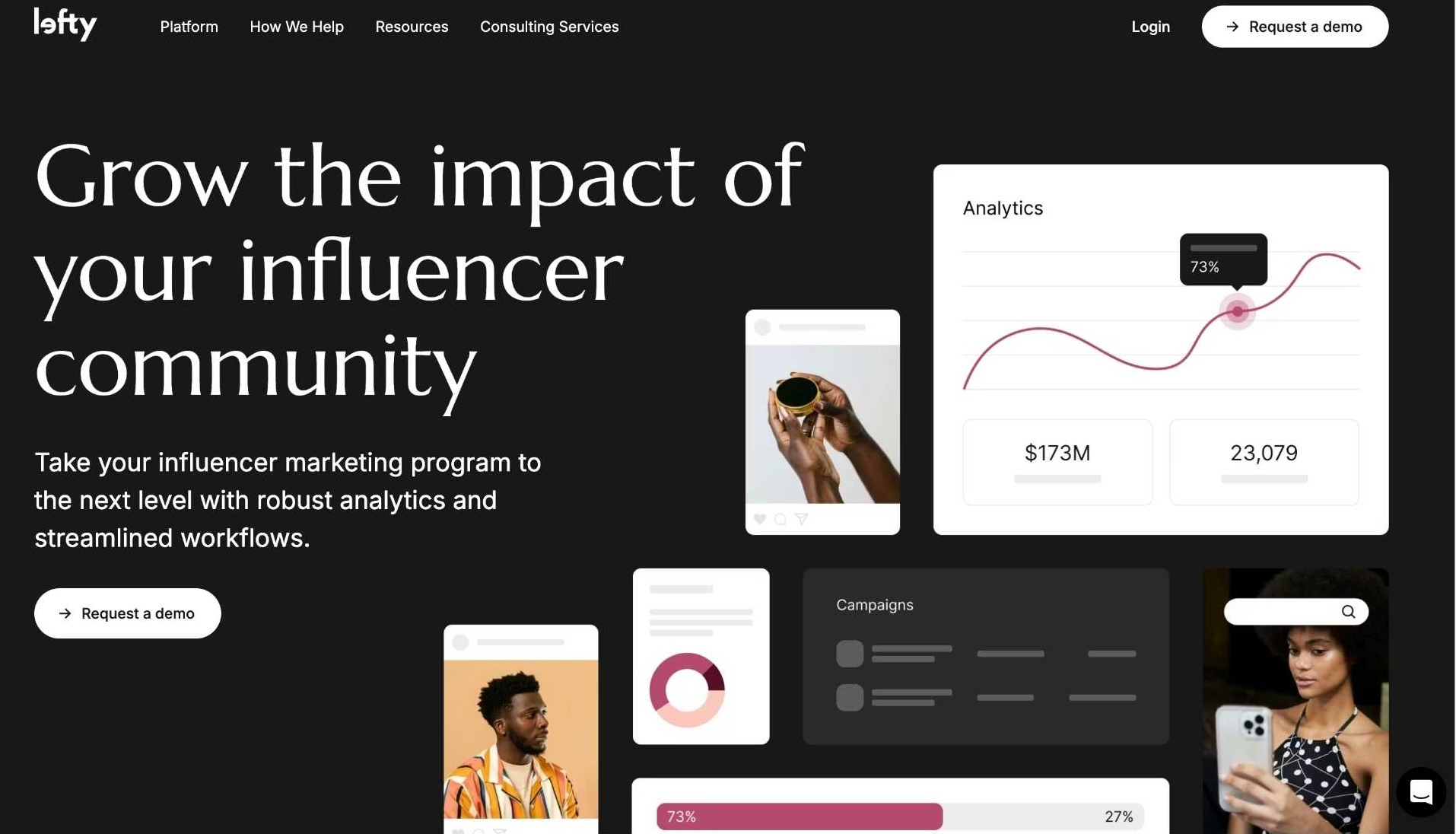
Lefty is an end-to-end influencer marketing platform built for brands and agencies, with especially strong traction among lifestyle, fashion, beauty, and luxury teams that want discovery, campaign tracking, CRM, and commerce-linked reporting in one system. Its current positioning leans heavily on analytics, streamlined workflows, and sales-oriented influencer operations rather than just creator search alone.
Key Features
- Large creator database and discovery tools – Lefty says brands can search a database of 30M+ profiles across social platforms, then narrow results using qualification and performance criteria.
- Influencer CRM and data centralization – The platform includes a centralized CRM that stores relationship history, campaign performance, and collaboration notes in one place for team use.
- Campaign management and automated reporting – Lefty positions campaign tracking and reporting as a core strength, including automated monitoring of published content and campaign performance.
- Competitive benchmarking and industry analytics – The platform also highlights benchmarking and industry-insights tools, which are especially useful for fashion and lifestyle teams that want to compare brand visibility and EMV trends.
- Email outreach – Lefty launched a direct emailing feature in October 2025 to make creator communication and outreach more efficient inside the platform.
- eCommerce-linked gifting and affiliate tracking – Lefty’s eCommerce solution supports gifting, lending, promo codes, affiliate links, inventory tracking, delivery tracking, and revenue reporting tied to influencer posts.
Pricing
- Starting Price: ~€590 per month.
- Pro Plan: ~€990/month, including 2 users, 5 campaigns, and unlimited reports.
- Premium Plan: ~€1,690/month, which adds a dedicated manager.
- Premium+ Plan: ~€3,490/month for 10 users and 25 campaigns.
Reviews
4.7/5.0 (G2)
Pros
- Strong brand safety capabilities: Lefty places significant emphasis on influencer vetting and fraud detection, making it attractive for risk-averse brands.
- Clean and intuitive UI: Compared to heavier enterprise tools, Lefty is often noted for being easier to navigate and quicker to adopt.
- Solid competitor benchmarking tools: Helps brands understand influencer landscapes within their niche.
Cons
- Limited ecommerce integrations: Not as strong for affiliate or revenue-driven campaigns compared to Shopify-focused tools.
- Custom pricing lacks transparency: Makes it harder for smaller brands to evaluate upfront.
- Less advanced automation: Compared to AI-heavy platforms, automation capabilities are more limited.
Integrations
- Instagram: Analyze creator performance and audience insights directly from Instagram data.
- TikTok: Track influencer content performance and campaign metrics on TikTok.
- YouTube: Evaluate long-form content creators and engagement metrics.
- Google Analytics: Connect campaign performance with website traffic and conversions.
- CRM tools: Sync influencer data into internal CRM systems for relationship tracking.
Captiv8 vs Lefty
Captiv8 is more feature-rich in terms of creator commerce, storefronts, and advanced reporting, while Lefty focuses more on clean workflows and brand safety. Captiv8 offers deeper integrations and enterprise-level analytics, whereas Lefty is easier to use and quicker to onboard. Brands focused on structured influencer campaigns with less complexity may prefer Lefty, while those needing commerce and advanced measurement will lean toward Captiv8.
7. Insense
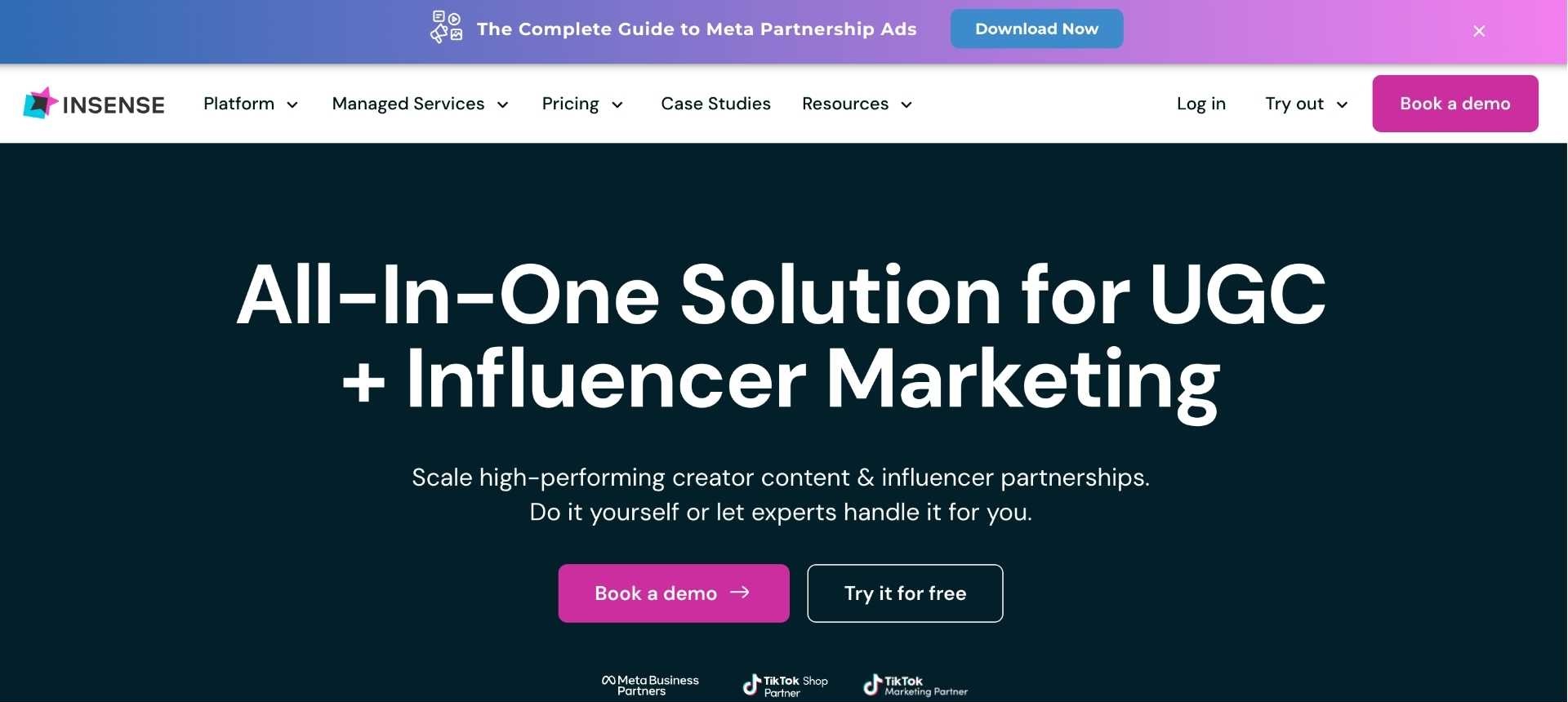
Insense is a creator marketing platform focused on UGC production, influencer collaborations, product seeding, and creator-led paid social campaigns. It is especially well suited to DTC brands, mobile apps, and agencies that want to produce ad-ready content quickly while also managing influencer posts, whitelisted ads, and creator outreach in the same workflow.
Key Features
- UGC and influencer campaign management – Insense combines UGC video production and influencer-post campaigns in one platform, so brands can source creators for both content creation and organic reach.
- Vetted creator marketplace – G2’s product page describes a creator network of 75,500+ creators across 35+ countries, which supports faster sourcing for brands that do not want to build lists manually.
- AI-powered outreach – Insense offers an outreach tool with AI personalization to build creator lists, run outreach at scale, and track replies in one dashboard.
- Product seeding campaigns – The knowledge base shows dedicated workflows for product seeding campaigns, helping brands send products and manage creator partnerships tied to gifting.
- Meta Partnership Ads and TikTok Spark Ads – Insense supports whitelisted ad formats, letting brands run paid social through creator handles rather than only posting organically.
- TikTok Shop campaigns – Insense’s help center includes TikTok Shop campaign resources, signaling stronger social commerce functionality than many traditional influencer discovery tools.
Pricing
- Brand plan: from $500/month, billed quarterly at $1,500, with up to 1 campaign and up to 10 creators to hire; creator payments are not included and creator cost carries a 20% marketplace fee.
- Agency plan: from $800/month, billed quarterly at $2,400; includes unlimited campaigns, unlimited creators to hire, and dedicated support, with a 10% marketplace fee.
- Managed service pricing: Insense also advertises dedicated platform management from $2,500/month for teams that want more hands-on support.
- Billing model: Official pricing pages state these subscriptions automatically renew every 3 months.
Reviews
4.5/5.0 (G2)
Pros
- UGC-first approach is highly differentiated: Insense is built specifically for content creation and paid ads, not just influencer relationships.
- Strong Meta and TikTok ad integrations: Enables direct ad execution using creator content.
- Fast creator sourcing: Marketplace model allows quick turnaround for campaigns.
Cons
- Limited influencer relationship management: Not ideal for long-term ambassador programs.
- Less robust CRM functionality: Compared to full-suite platforms.
- Not built for enterprise workflows: Lacks deeper analytics and governance features.
Integrations
- Meta Ads Manager: Run creator-generated content directly as paid ads.
- TikTok Ads: Launch and optimize TikTok ad campaigns with UGC.
- Shopify: Track conversions and product performance from creator campaigns.
- Google Analytics: Measure traffic and conversions from campaigns.
- Slack: Manage team collaboration and campaign updates.
Captiv8 vs Insense
Captiv8 is a full-scale influencer marketing platform, while Insense is primarily a UGC and paid social tool. Captiv8 excels in campaign management, analytics, and creator commerce, whereas Insense is better for brands focused on generating ad creatives quickly. If your goal is scalable influencer programs, Captiv8 wins; if your focus is performance-driven UGC ads, Insense is the stronger choice.
8. Kolsquare

Kolsquare is a European influencer marketing platform built for brands and agencies that want AI-powered discovery, campaign management, ROI measurement, and increasingly, first-party verified Instagram performance data. Its current positioning emphasizes responsible, data-driven influencer marketing and a simple UX for scaling creator programs across Europe and beyond.
Key Features
- AI-powered influencer discovery – Kolsquare gives brands access to 5M+ qualified creators across Instagram, TikTok, YouTube, Facebook, X, and Snapchat, with semantic search, AI prompts, image recognition, speech-to-text, and 100+ filters.
- Official Meta data and Instagram Connection – As an official Meta Business Partner, Kolsquare can collect verified Instagram data directly, improving accuracy for campaign activation and reporting.
- Campaign management and IRM – The platform includes campaign workflows, integrated influencer relationship management, custom IRM fields, content validation, and casting validation tools.
- Listening and competitor benchmarking – Kolsquare’s Listening product helps teams benchmark competitors across up to 11 brands, track share of voice, EMV, engagement, reach, and creator strategy over time.
- Influencer payments and API access – The Enterprise tier adds a payment module for compliant payouts plus API access for connecting Kolsquare to the rest of the marketing stack.
- Sentiment analysis – Kolsquare recently launched sentiment analysis to help marketers understand audience reaction and move campaign evaluation beyond surface-level engagement.
Pricing
- Official pricing model: Kolsquare currently advertises Discovery, Listening, and Enterprise plans, but does not publish fixed public dollar pricing; plans are tailor-made and demo-led.
- Third-party starting price: Capterra lists a starting price of €500 usage-based per month and says a free trial is available.
Reviews
4.5/5.0 (G2)
Pros
- Strong data accuracy and compliance: Particularly valuable for European brands.
- Detailed audience analytics: Helps brands make data-driven decisions.
- Clean reporting dashboards: Easy to interpret campaign results.
Cons
- Limited ecommerce integrations: Not ideal for affiliate-heavy campaigns.
- Less focus on automation: Compared to newer AI-driven tools.
- Smaller ecosystem: Fewer integrations than global competitors.
Integrations
- Instagram: Track creator performance and engagement.
- TikTok: Monitor campaign performance across short-form video content.
- YouTube: Analyze long-form influencer campaigns.
- Google Analytics: Connect influencer campaigns to website traffic.
- CSV/API exports: Export campaign data into internal systems.
Captiv8 vs Kolsquare
Captiv8 offers broader functionality with commerce, storefronts, and enterprise integrations, while Kolsquare focuses more on data accuracy and compliance. Captiv8 is better suited for global campaigns with ecommerce components, whereas Kolsquare is ideal for brands prioritizing data transparency and audience insights, especially in Europe.
9. Skeepers
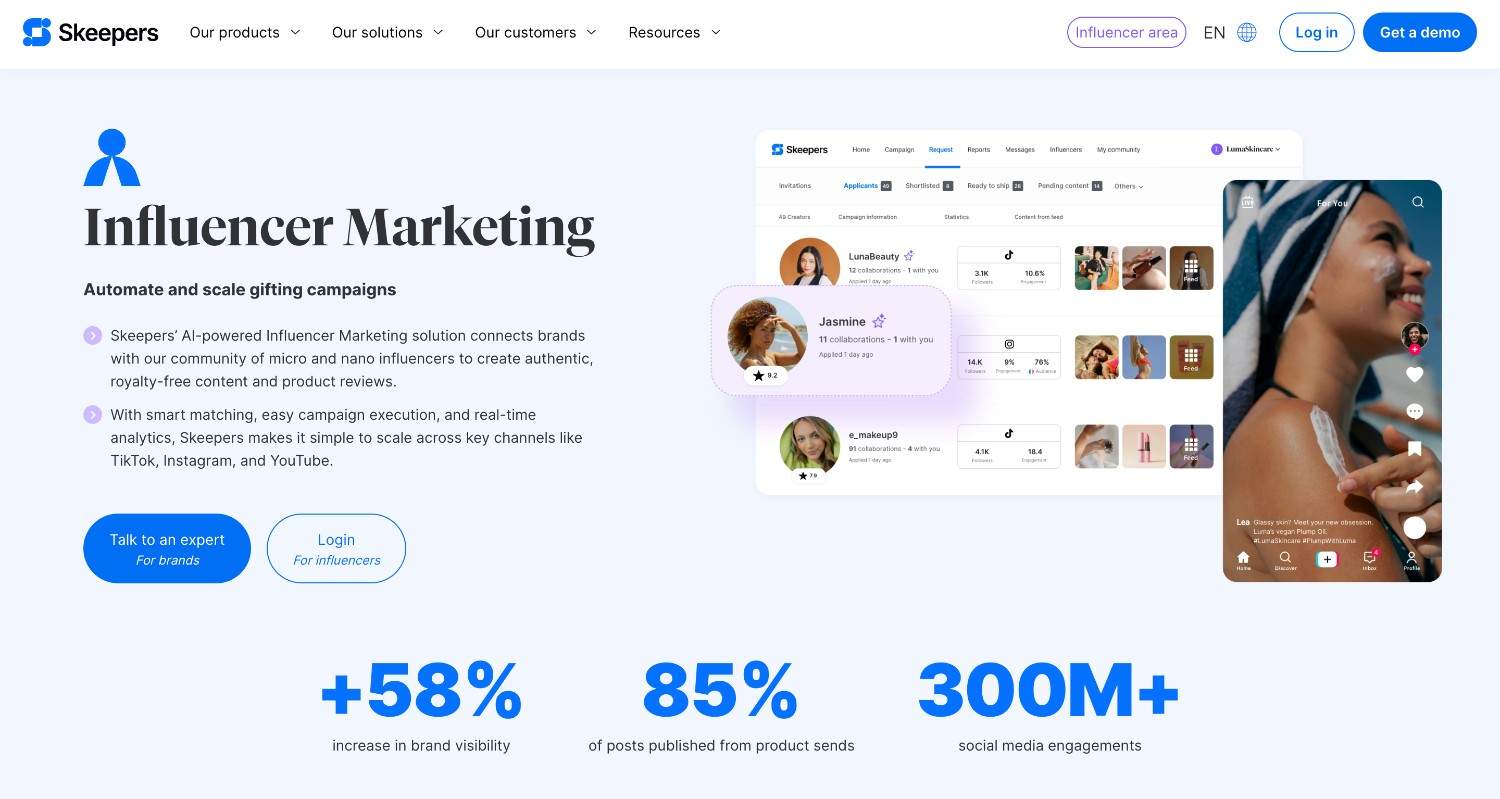
Skeepers is an influencer and UGC platform built around micro- and nano-influencer campaigns, automated gifting, licensed content collection, and social proof. Its current influencer marketing positioning centers on helping brands generate authentic, reusable content at scale through a vetted creator community rather than focusing primarily on celebrity-style influencer discovery.
Key Features
- Micro- and nano-influencer community – Skeepers promotes access to a creator community ranging from 100,000+ to 400,000+ creators across its public pages, with emphasis on micro and nano profiles.
- Automated gifting campaigns – The platform is built to automate gifting and turn seeded products into social posts, reviews, and reusable content assets.
- Licensed content and royalty-free reuse – Skeepers emphasizes the ability to generate licensed content that can be reused across marketing channels.
- AI-powered matching – The platform uses smart matching to connect brands with relevant creators based on campaign fit.
- Campaign tracking and analytics – Public pages highlight real-time analytics, creator opt-ins, licensing, and campaign tracking across feeds and stories.
- Broader UGC ecosystem – Skeepers is part of a larger UGC suite that includes reviews, videos, communities, and live/shoppable content, which can be useful for brands trying to consolidate social proof and creator content.
Pricing
- Official pricing: Skeepers does not publicly publish a full official plan grid for Influencer Marketing and instead routes buyers to request a demo.
- Third-party starting price: Capterra lists a starting price of €1,250 per month and says no free trial is available.
Reviews
4.3/5.0 (Capterra)
Pros
- UGC + reviews ecosystem is unique: Combines influencer marketing with social proof and customer feedback.
- Strong ecommerce use case: Helps brands connect content with conversion.
- Multi-channel content distribution: Useful for omnichannel strategies.
Cons
- Not a pure influencer platform: Some features may feel secondary compared to dedicated tools.
- Complex product suite: Can be overwhelming for smaller teams.
- Limited advanced influencer discovery: Compared to top-tier platforms.
Integrations
- Shopify: Sync UGC and reviews with product pages.
- Magento: Integrate content into ecommerce storefronts.
- Salesforce: Connect influencer data with CRM workflows.
- Google Analytics: Track campaign performance and conversions.
- Social platforms: Distribute content across Instagram, TikTok, and more.
Captiv8 vs Skeepers
Captiv8 is a dedicated influencer marketing platform, while Skeepers is broader, combining UGC, reviews, and engagement tools. Captiv8 is stronger for influencer discovery and campaign execution, whereas Skeepers is better for brands focused on leveraging UGC and social proof across ecommerce channels.
10. Creator.co
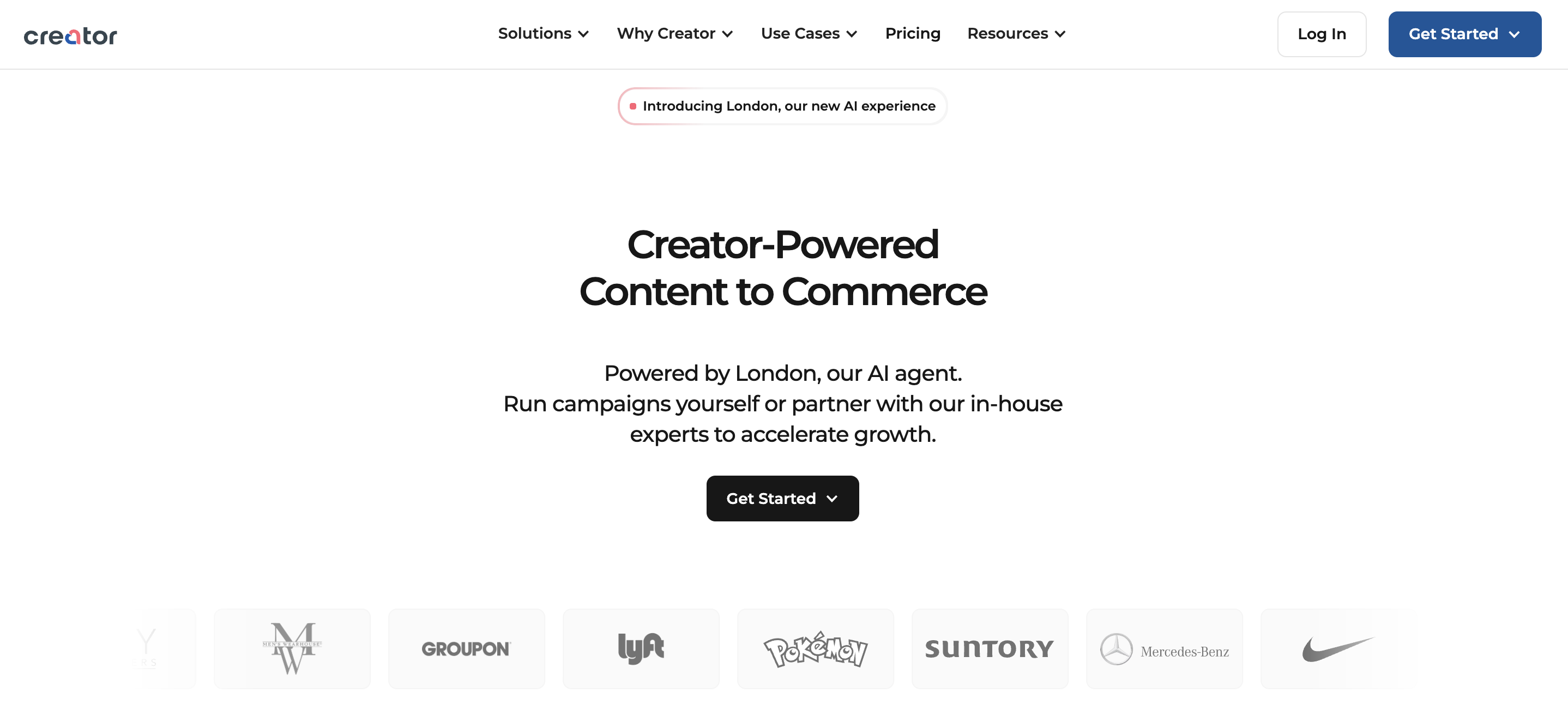
Creator.co is an influencer and affiliate marketing platform that combines creator discovery, campaign management, payments, and managed services for brands that want either a self-serve workflow or more hands-on support. The company’s latest positioning highlights AI-powered matching, a 400M influencer database, and a rebuilt workflow designed to help brands discover, launch, and scale creator campaigns faster.
Key Features
- AI-powered creator matching and recruitment – Creator.co’s homepage highlights “London,” its AI-powered match-and-recruit workflow, which helps brands define an ideal creator profile and streamline sourcing.
- Large creator database – Creator.co publicly claims access to 400M influencers, while some third-party listings still describe a 250M database, signaling an expanded current positioning.
- Campaign management – The platform supports briefs, outreach, approvals, content workflows, budgeting, and payouts in one dashboard.
- Self-serve and managed service options – Creator.co is designed for brands that want to run campaigns in-house or hand execution to the platform’s managed-services team.
- Affiliate and sales tracking – Its FAQ states integrations with Shopify, Google Analytics, Gmail, Outlook, and major affiliate networks to support seeding, payments, tracking, and sales attribution.
- Enterprise workflows – Creator.co also highlights enterprise approvals, integrations, reporting, and more custom workflows for larger teams.
Pricing
- Self-Serve: $299/month, with a 3-month minimum commitment.
- Managed: $2,199/month, with a 3-month minimum commitment.
- Enterprise: Custom pricing, with an annual commitment.
- The pricing page also notes that after the initial term, monthly subscriptions move to month-to-month billing, while annual plans renew yearly at a discounted rate.
- Creator.co offers a free trial for Self-Serve.
Reviews
4.6 / 5.0 (G2)
Pros
- Marketplace model simplifies sourcing: Easy to find creators quickly through applications.
- Flexible pricing options: More accessible than enterprise tools.
- Good balance of self-serve and managed services: Suitable for growing brands.
Cons
- Limited advanced analytics: Not as deep as enterprise platforms.
- Less robust CRM: Not ideal for long-term influencer relationship management.
- Quality can vary: Marketplace model means varying creator quality.
Integrations
- Shopify: Track sales and manage product seeding.
- Stripe: Handle payments for creator collaborations.
- Google Analytics: Monitor traffic and campaign performance.
- Social platforms: Execute campaigns across Instagram, TikTok, and YouTube.
- Email tools: Manage outreach and communication workflows.
Captiv8 vs Creator.co
Captiv8 is a high-end enterprise platform with advanced analytics and commerce features, while Creator.co is more accessible and marketplace-driven. Creator.co is better for smaller brands or those just starting with influencer marketing, whereas Captiv8 is designed for large-scale, data-driven campaigns with deeper customization and reporting capabilities.
Final Thoughts
Captiv8 remains a strong enterprise-grade platform, particularly for brands prioritizing advanced reporting, brand safety, and creator commerce. However, the alternatives covered offer a wide range of strengths—from ecommerce-focused solutions like GRIN and Upfluence, to enterprise intelligence platforms like CreatorIQ and NeoReach, and more accessible, UGC-driven or marketplace tools like Insense and Creator.co. The right choice ultimately depends on a brand’s priorities, whether that’s scalability, cost efficiency, content production, or deep data and integrations.

.png)


.jpg)