

10 Best Brandbassador Alternatives for Influencer Marketing
Influencer marketing software has become essential for D2C brands looking to scale creator partnerships, streamline outreach, and accurately track ROI across campaigns. Tools today go beyond simple influencer discovery—they help manage everything from product gifting and affiliate tracking to UGC collection and performance reporting. Brandbassador stands out for its community-driven approach and gamified ambassador programs, making it a strong option for brands focused on turning customers into advocates. However, its lack of traditional influencer discovery, reliance on community building, and limited workflow flexibility often lead brands to explore more scalable or data-driven alternatives.
In this guide, we compare the 10 best Brandbassador alternatives—including Influencer Hero, Upfluence, Aspire, CreatorIQ, Later, IZEA, Traackr, Influencity, Heepsy, and Lefty—to help you find the right influencer marketing software for your growth strategy.
Key Criteria for Evaluating Influencer Marketing Platforms
Core Features
Evaluation of essential influencer marketing capabilities, including influencer discovery, outreach, CRM, campaign management, reporting, and content workflows.
Pricing & Flexibility
Comparison of pricing models, subscription plans, and contract terms to match different budgets and growth stages.
Customer Reviews & Satisfaction
Analysis of user feedback from trusted review platforms, focusing on usability, reliability, customer support, and overall performance.
Pros & Cons
Review of each platform’s strengths and limitations to highlight where it performs well and where it may fall short based on different use cases.
Integrations
Review of the most important integrations (e.g., Shopify and other tech tools), highlighting what each integration enables in one sentence.
Brandbassador Overview
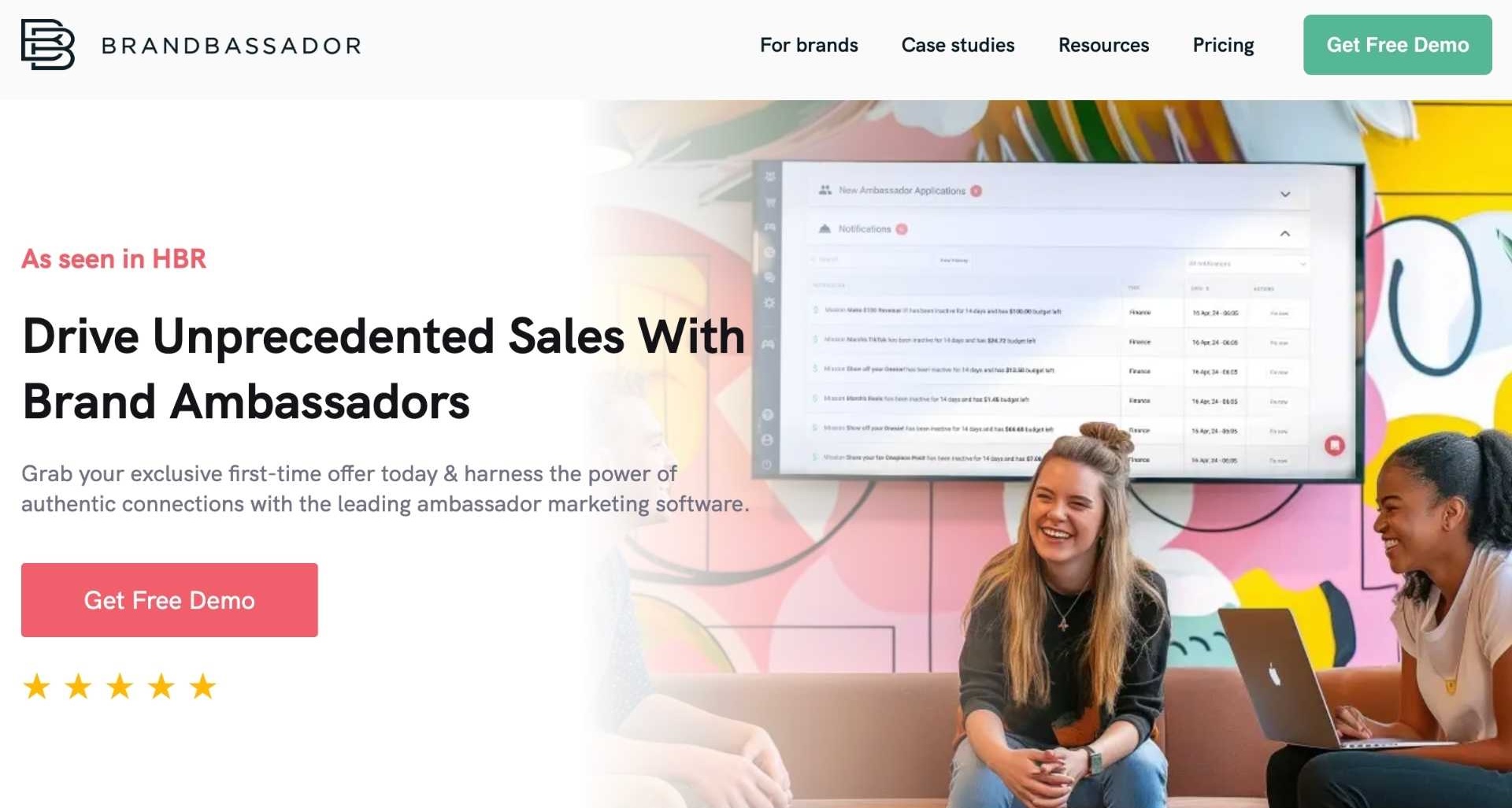
Brandbassador is an influencer and ambassador marketing platform designed to help eCommerce brands turn their existing customers and followers into long-term brand advocates. Unlike traditional influencer tools that focus on discovery, Brandbassador centers its approach on building and activating a community of ambassadors through structured campaigns.
The platform is best known for its gamified “Mission” system, where brands assign tasks such as posting content, writing reviews, or driving sales. In return, ambassadors earn rewards like cash, products, or commissions. This makes Brandbassador particularly effective for brands looking to scale user-generated content (UGC), referrals, and affiliate-driven revenue through an engaged community rather than one-off influencer collaborations.
Key Features
• Gamified Mission Campaigns Brands can create “Missions” for ambassadors (e.g., post on TikTok, share a review), incentivizing consistent participation through rewards like cash, discounts, or free products.
• Community-Driven Recruitment Instead of relying on a database, Brandbassador helps brands recruit ambassadors directly from their own audience via landing pages, social media, and email campaigns.
• Centralized Ambassador Management Manage applications, communications, campaign progress, and performance tracking in one platform, reducing the need for external tools.
• Mobile App for Creators Ambassadors use a dedicated mobile app to view Missions, track rewards, and engage with campaigns—improving participation and retention.
• UGC Collection & Content Management Automatically collects and organizes all creator-generated content, making it easy for brands to reuse assets across marketing channels.
• Affiliate & Sales Tracking Generate unique discount codes and tracking links to attribute revenue directly to ambassadors and measure ROI.
• Advanced Segmentation Group ambassadors based on performance, demographics, or activity level, and assign targeted Missions for better campaign efficiency.
• Multi-Platform Campaign Support Supports campaigns across Instagram, TikTok, YouTube, and more, with performance tracking for key engagement metrics.
• Managed Services (Higher Plans) Offers strategic support, onboarding, and campaign optimization through higher-tier plans like Pro, Co-Pilot, and Auto-Pilot.
Pricing
Brandbassador uses a custom pricing model, and exact costs are not publicly disclosed. Pricing depends on company size, campaign volume, and required features.
Some legacy pricing references suggest ~$2,000–$3,000/month tiers, but current pricing is fully customized
Reviews
4.8 / 5.0 (Trustpilot)
Integrations
• Shopify – Sync your store to track ambassador-driven sales, automate discount codes, and manage product seeding.
• WooCommerce – Track affiliate performance and revenue attribution directly from ambassador campaigns.
• Instagram – Vet creators, assign platform-specific Missions, and track engagement metrics.
• TikTok – Run short-form video campaigns and monitor performance from ambassador content.
• Recharge (Shopify) – Track subscription-based purchases and reward ambassadors for recurring revenue.
Pros
• Highly engaging gamified campaign model The Mission-based system drives continuous engagement, making it easier to generate ongoing UGC and repeat promotions instead of one-off influencer posts.
• Strong focus on community-led growth Ideal for D2C brands that want to activate existing customers and turn them into long-term advocates, rather than constantly sourcing new influencers.
• Built-in commerce and affiliate tracking Native integrations with eCommerce platforms allow brands to directly connect ambassador activity to revenue, making ROI tracking more actionable.
Common Drawbacks of Brandbassador
No influencer discovery database
Brands cannot search or filter a large pool of influencers, which limits use cases for teams focused on outreach at scale.
Time-intensive community building
Success depends heavily on building and nurturing an ambassador community, which requires ongoing effort and strategy.
Limited flexibility for complex workflows
Compared to full influencer CRMs, customization in workflows, filtering, and automation can feel restrictive at scale.
Opaque pricing and higher entry barrier
Custom pricing and annual commitments make it harder for smaller brands to evaluate and adopt the platform quickly.
Best Brandbassador Alternatives
| TOOL | REVIEWS | BEST FOR | TRIAL INFO | PRICING | ||
|---|---|---|---|---|---|---|
1 |

|
⭐ | Influencer CRM & automation | Book Demo | Pricing | Website |
2 |

|
⭐ | Influencer discovery | Book Demo | Pricing | Website |
3 |

|
⭐ | Influencer partnerships | Book Demo | Pricing | Website |
4 |

|
⭐ | Enterprise influencer marketing | Book Demo | Pricing | Website |
5 |

|
⭐ | Social media & influencer campaigns | Book Demo | Pricing | Website |
6 |
|
⭐ | Influencer marketplace | Book Demo | Pricing | Website |
7 |

|
⭐ | Enterprise influencer analytics | Book Demo | Pricing | Website |
8 |

|
⭐ | Campaign management | Book Demo | Pricing | Website |
9 |

|
⭐ | Influencer discovery | Book Demo | Pricing | Website |
10 |

|
⭐ | Influencer analytics & discovery | Book Demo | Pricing | Website |

Influencer Hero
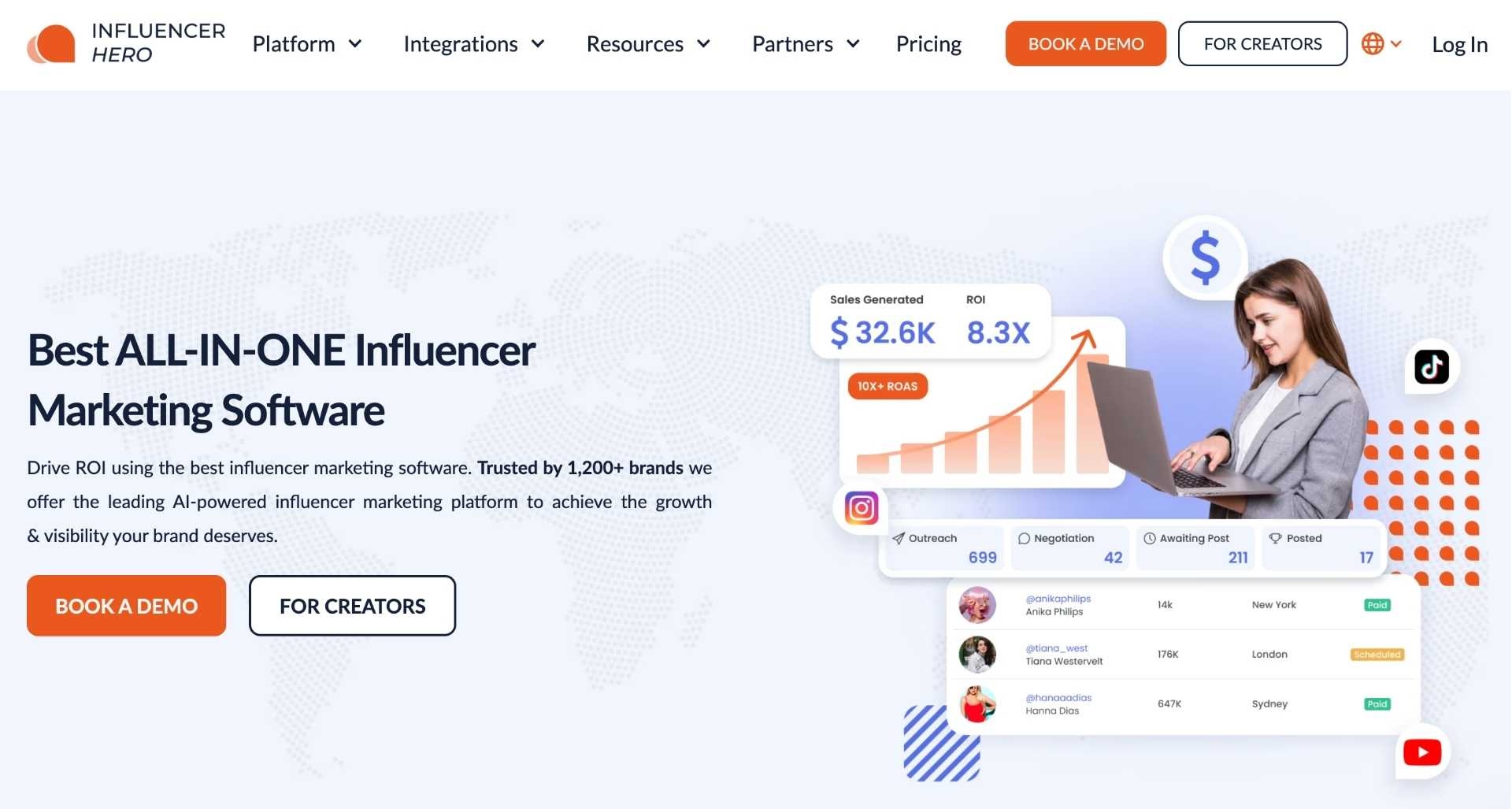
Influencer Hero is an all-in-one influencer marketing platform built for D2C and eCommerce brands that want discovery, outreach, CRM, gifting, affiliate tracking, UGC collection, and ROI reporting in one system. Its positioning is especially strong for brands that want a more commerce-connected workflow than ambassador-only platforms, with recent emphasis on automation, creator storefronts, application pages, and broader integrations.
Key Features
• Influencer discovery and vetting: Search creators across major platforms with filters for niche, audience, geography, and performance signals, plus lookalike discovery and fake-follower checks.
• AI-assisted outreach: Send personalized bulk outreach with templates, drip flows, and automation designed to scale creator recruitment without fully manual follow-up.
• CRM and campaign workflow management: Organize creators by stage, automate next steps, and manage approvals, deliverables, and reporting from one dashboard.
• Gifting and affiliate tracking: Connect products, discount codes, affiliate links, and sales attribution so campaigns can be tied back to revenue rather than just engagement.
• Creator application pages: Build branded inbound creator pages so interested influencers can apply directly instead of relying only on outbound prospecting.
• Creator storefronts: Let creators feature products in storefronts that support recurring affiliate promotion and retention over time.
• Growing integrations ecosystem: The platform recently expanded with 30+ integrations to connect influencer workflows with eCommerce, contracts, support, and automation tools.
Pricing
Influencer Hero offers flexible pricing based on outreach volume and you can have unlimited creators in your CRM:
• Standard — $649/month (up to 1,000 outreach messages per month)
• Pro — $1,049/month (up to 5,000 outreach messages per month)
• Business — $2,490/month (up to 10,000 outreach messages per month)
• Custom / Agency — Tailored pricing
Custom pricing is available for agencies and larger teams
Reviews
4.9/5.0 (Capterra)
Pros
• Strong all-in-one commerce workflow: Influencer Hero is unusually strong at connecting discovery, gifting, affiliate tracking, and ROI reporting into one eCommerce-focused workflow instead of splitting those jobs across multiple tools.
• Application Pages and Storefronts add inbound + recurring revenue motion: These are more differentiated than standard outreach-only platforms because they help brands attract creators directly and keep top partners promoting products over time.
• Built for efficient, high-volume execution: Bulk actions, batching tools, and a Chrome extension enable teams to manage outreach, creator sourcing, and campaign updates quickly, while keeping workflows organized.
Cons
• No free trial: Makes it harder for teams to evaluate the platform before committing
• Higher pricing for smaller teams: May be less accessible for early-stage brands or those with limited budgets
Integrations
• Shopify — Sync products, create discount codes, manage gifting, and track creator-driven revenue directly from your store.
• WooCommerce — Connect product and order data so affiliate links, codes, clicks, and sales flow back into campaign reporting.
• Klaviyo — Push creators into email segments and connect influencer activity with lifecycle marketing flows.
• DocuSign — Send and track creator contracts inside the campaign workflow instead of managing agreements manually.
• Slack — Route campaign alerts, replies, and workflow notifications to internal teams in real time.
Brandbassador vs Influencer Hero
Brandbassador is stronger for ambassador-community activation, gamified missions, and turning existing fans into repeat advocates. Influencer Hero is stronger for full-funnel influencer operations: creator discovery, outbound outreach, CRM workflows, gifting, affiliate tracking, and revenue attribution. Brandbassador is best when you want to nurture a branded ambassador program; Influencer Hero is better when you need a broader creator acquisition and campaign engine.
Another major difference is commerce execution. Brandbassador ties advocacy to missions and community rewards, while Influencer Hero is more operationally built around store sync, product seeding, affiliate workflows, and storefronts. For brands comparing alternatives, Influencer Hero is the more flexible choice if you need both ambassador-style recruitment and classic influencer CRM functionality in one platform.
Upfluence

Upfluence is an influencer marketing platform designed for brands that want to combine creator discovery, outreach, campaign management, affiliate tools, and eCommerce data in one place. It is especially well known for connecting influencer programs to store data, helping brands identify creators inside their own customer base and track revenue through Shopify, Amazon, and other commerce integrations.
Key Features
• Large creator database: Upfluence offers a creator search engine with 14M+ profiles and advanced filtering for audience, engagement, location, and niche.
• Customer-to-creator matching: A standout capability is identifying influential customers inside your CRM or eCommerce stack so you can recruit real buyers as creators.
• Mass outreach and email workflows: The platform supports personalized outreach, templates, Gmail/Outlook sync, and automated drip sequences on higher plans.
• AI assistant: Jaice AI is used for creator search, campaign creation, and outreach support, helping brands move faster at scale.
• Affiliate and sales tracking: Upfluence supports discount codes, tracked sales, bulk gifting, and ROI reporting without taking fees on tracked sales.
• Creator marketplace and recruitment pages: Brands can publish programs and let creators apply directly rather than relying only on outbound sourcing.
• Bulk global payouts: The top plan extends the workflow into payments, tax forms, and compliant global payouts.
Pricing
• Pricing model: Upfluence uses custom pricing rather than a public fixed plan table.
• All plans are custom made. There’s a minimum full year of service you have to commit to with monthly payments. On average plans start around $2,000/month ($24,000 yearly)
Reviews
4.3/5.0 (Capterra)
Pros
• Excellent eCommerce data layer: Upfluence is one of the strongest options for linking creator activity to store data, especially if Shopify or Amazon is central to your workflow.
• Customer-to-creator identification is highly differentiating: Few platforms make it as easy to spot influential customers and activate them as creators from your existing CRM or store.
• AI-assisted search and campaign setup have become more central: Jaice AI is now positioned across creator search, personalization, and campaign creation, which helps reduce manual setup.
Cons
• Pricing is custom and contract-heavy: The 12-month minimum makes it less flexible for brands that want a lighter trial period.
• Workflow editing can feel rigid: User feedback repeatedly points to a learning curve and some friction once campaigns are already configured.
• Can become expensive as scope grows: Costs can rise as brands add modules, payments, and larger creator programs.
Integrations
• Shopify — Sync store and customer data, identify influential buyers, manage gifting, and attribute creator-driven sales.
• Amazon — Track marketplace sales and affiliate performance tied to influencer campaigns.
• WooCommerce — Pull commerce data into the creator workflow and enrich customer profiles for recruitment and tracking.
• Magento — Connect product and customer data for commerce-linked influencer operations.
• Klaviyo — Enrich customer records and help turn your owned audience into creator recruitment opportunities.
Brandbassador vs Upfluence
Brandbassador is built around ambassador community activation and gamified missions, while Upfluence is built around searchable creator discovery, CRM, and commerce-linked campaign execution. Brandbassador works best when your strategy starts with existing fans and you want to keep them engaged over time. Upfluence works better when you need to find creators at scale, manage structured outreach, and tie results directly to eCommerce performance.
The biggest difference is how each platform sources creators. Brandbassador recruits from your own audience and community, whereas Upfluence gives you a large creator database plus customer matching. For D2C brands that want deeper sales attribution, affiliate workflows, and Amazon or Shopify connectivity, Upfluence is the more performance-oriented alternative.
Aspire

Aspire is a creator marketing platform for eCommerce brands that want to scale influencer, affiliate, ambassador, and UGC programs from one system. Its positioning is especially strong around inbound creator applications, first-party platform data, Shopify-connected workflows, and a mix of software plus managed services for brands that need more strategic support.
Key Features
• Inbound and outbound creator discovery: Aspire combines creator search with inbound applications, helping brands source from both outreach and creator-led demand.
• Creator marketplace and application flows: Brands can launch branded application pages and let creators apply directly, which is useful for ambassador and affiliate recruitment.
• Shopify-powered gifting and fulfillment: Products can be synced from Shopify and shipped through the influencer workflow without manual handoffs.
• Affiliate and discount code tracking: Aspire tracks links, codes, and creator-attributed sales so campaigns can be measured against revenue.
• Content approval and UGC workflows: Brands can review, approve, and reuse creator content within structured campaign workflows.
• Direct social platform partnerships: Aspire says it is the only influencer marketing platform with direct partnerships with Meta, TikTok, and Pinterest, giving brands access to first-party data and platform-specific functionality.
• Managed services option: Brands can either use the platform self-serve or layer in Aspire’s team for strategy and execution.
Pricing
Aspire does not publish full public package pricing on its website. Public and recent market sources indicate:
• Custom pricing
• Often reported at about $2,000+/month
• Recent quoting indicated around $2,300/month for a mid-tier setup
• Typically sold with a 12-month commitment rather than month-to-month self-serve plans
Reviews
4.0/5.0 (Capterra)
Pros
• Strong inbound creator engine: Aspire is particularly strong for brands that want creators, ambassadors, and affiliates to apply directly instead of relying only on outbound sourcing.
• Direct platform partnerships are a major differentiator: Its direct relationships with Meta, TikTok, and Pinterest support more trusted first-party data and better paid amplification workflows.
• Flexible software-plus-services model: Aspire can be used as a platform or paired with strategic services, which suits brands that want expert support without switching vendors.
Cons
• Pricing is less transparent than self-serve tools: Brands generally need a demo to get a real quote.
• Can be more than smaller teams need: The richer workflow and service model may feel heavier than simpler discovery-first tools.
• Cost tends to rise with scale: As creator volumes and managed support grow, Aspire can move out of reach for smaller D2C teams.
Integrations
• Shopify — Sync products, buyer data, gifting workflows, and performance data into creator campaigns.
• Gmail — Centralize creator communication and campaign workflows alongside your inbox.
• Outlook — Manage influencer communications without leaving your core email stack.
• PayPal — Handle creator payments inside the broader campaign workflow.
• WooCommerce — Connect eCommerce operations and gifting workflows beyond Shopify.
Brandbassador vs Aspire
Brandbassador is more specialized in ambassador community building and mission-based engagement. Aspire is broader and more campaign-centric, combining discovery, applications, gifting, affiliate tracking, UGC approvals, and software-plus-services support. If your strategy depends on structured creator recruiting and commerce-linked execution, Aspire is the more expansive platform.
Another key difference is data and platform access. Brandbassador emphasizes community activation, while Aspire emphasizes first-party creator data through its Meta, TikTok, and Pinterest partnerships. For brands that need stronger paid social tie-ins, inbound creator pipelines, and a more flexible hybrid of tech plus services, Aspire is usually the more scalable alternative.
CreatorIQ

CreatorIQ is an enterprise creator marketing platform built for large brands managing influencer programs across markets, teams, and regions. It focuses on governance, intelligence, reporting, and operational scale, with recent product emphasis on global benchmarking, API-based integrations, brand safety, content-first discovery, and automated creator payments.
Key Features
• Enterprise creator discovery: CreatorIQ supports discovery and vetting with large-scale creator intelligence, audience insights, and workflow control for enterprise teams.
• Advanced reporting and analytics: The platform is built to connect creator performance with broader business KPIs through customizable reporting and analytics.
• ExchangeIQ integrations layer: CreatorIQ’s API and integrations framework is designed to connect creator marketing data with the wider martech and analytics stack.
• CreatorIQ Pay: Its payment infrastructure supports automated creator payouts, compliance, audit trails, and multi-market finance workflows.
• BenchmarkIQ: A newer differentiator, BenchmarkIQ expands competitive benchmarking and multi-market reporting across dozens of markets.
• SafeIQ and brand safety: Recent releases emphasize AI-native brand safety infrastructure to help brands invest in creators without taking on avoidable risk.
• Content-first discovery: Newer CreatorIQ releases highlight a discovery experience that prioritizes evaluating creators based on content, not just static profile data.
Pricing
There are different plans:
• Basic Plan: Starts at $35,000/year. Includes 1,000 contact creators per month
• Standard Plan: Starts at $50,000/year. Includes 2,500 contact creators per month
• Professional Plan: Starts at $90,000/year. Includes 5,000 contact creators per month
• Enterprise Plan: Starts at $200,000/year. Includes 7,500 contact creators per month
Reviews
4.4/5.0 (Capterra)
Pros
• BenchmarkIQ is a standout enterprise differentiator: It gives global brands stronger cross-market benchmarking and competitive context than many mid-market tools.
• CreatorIQ Pay is built for international scale: Automated onboarding-to-payout workflows, multi-currency support, and auditability are especially valuable for large global programs.
• New CreatorIQ product updates strengthen intelligence and safety: Content-first discovery and SafeIQ show the platform is investing heavily in enterprise-grade search and risk control.
Cons
• Enterprise pricing puts it out of reach for many D2C brands: CreatorIQ is one of the most expensive options in the category.
• The platform has a steeper learning curve: Reviews often describe it as powerful but more complex than lighter, execution-first tools.
• Best suited to larger organizations: Smaller teams may not fully use the governance and integration depth they are paying for.
Integrations
• Shopify — Automates creator codes and links while collecting creator-attributed revenue performance.
• YouTube — Recent partnership updates deepen audience insights and campaign intelligence for YouTube creators.
• Sprinklr — The new strategic partnership connects creator, organic, and paid social data in a more unified workflow.
• API / ExchangeIQ — Connect CreatorIQ data with internal systems, BI tools, and external platforms for custom reporting and operations.
• CreatorIQ Pay — Integrates payment operations, tax handling, and audit controls directly into creator workflows.
Brandbassador vs CreatorIQ
Brandbassador and CreatorIQ sit at very different ends of the market. Brandbassador is community-led, ambassador-focused, and better suited to brands that want fan activation and mission-based engagement. CreatorIQ is enterprise-first, with stronger reporting, governance, benchmarking, payments, and cross-functional integrations for global teams.
The biggest difference is operational scope. Brandbassador is effective for structured advocacy programs, but CreatorIQ is built to plug creator marketing into finance, analytics, compliance, and executive reporting. For enterprise brands that need benchmark data, global payouts, and advanced control, CreatorIQ is the more robust alternative by a wide margin.
Later
Later is a combined influencer marketing and social media management company, with Later Influence serving as its dedicated creator marketing platform. It positions itself around trusted creator discovery, centralized campaign management, measurable ROI, and expert services, while increasingly tying influencer programs to broader social, affiliate, and reporting workflows.
Key Features
• Creator discovery: Later says brands can browse 10M+ vetted creator profiles and use filters to find relevant partners faster.
• Influencer outreach and campaign execution: The platform supports creator outreach, campaign workflow management, content review, and partnership tracking in one environment.
• Performance analytics and ROI measurement: Later emphasizes real-time analytics, forecasting, and campaign reporting designed to connect influencer work to measurable outcomes.
• Social commerce and affiliate support: Later ties creator programs into commerce workflows through affiliate links and Mavely, helping brands measure direct revenue impact.
• Shopify gifting integration: Shopify-connected gifting helps automate product sending, creator selection, and campaign tracking.
• Social listening and brand health: Later’s broader platform includes social listening and brand intelligence features that can complement influencer programs.
• Later 360 reporting: A recent release, Later 360 unifies organic, paid, and commerce data into one enterprise reporting suite.
Pricing
Later’s influencer marketing platform (Later Influence) uses custom pricing, and brands need to request a demo for exact costs.
Based on our research, there are different plans:
• Essentials Plan: Starts at $28,500/year. Best for brands starting in influencer marketing.
• Pro Plan: Starts at $42,000/year. Best for data and automation to make your campaigns run faster and achieve better ROI.
• Premier Plan: Starts at $60,000/year. Everything you need for a scaled influencer program.
• All plans come with an additional one-time onboarding fee of $5,000 for all new customers.
Reviews
4.4 / 5.0 (Capterra)
Pros
• Later 360 is a meaningful recent update: Unifying organic, paid, and commerce data in one reporting layer makes Later more compelling for brands that want full-funnel visibility.
• Combining influencer marketing with social media management is a real differentiator: Teams that want creator workflows and broader social planning/reporting in the same ecosystem may find Later especially attractive.
• Flexible service model: Later can function as a platform, a platform-plus-services offering, or a fully managed service, which gives brands more room to choose how hands-on they want to be.
Cons
• Pricing is custom and aimed at more serious programs: It is not structured like a low-cost self-serve discovery tool.
• Best fit is stronger for brands wanting a broader Later ecosystem: Teams only seeking a narrow ambassador workflow may not need the wider social stack.
• Some user friction still comes from external API dependencies: Account linking and network-level data access can occasionally create workflow friction.
Integrations
• Shopify — Automate gifting, creator selection, and campaign performance tracking through your store connection.
• Mavely — Connect affiliate links and commerce workflows so influencer programs can drive measurable sales.
• Instagram API — Pull authenticated creator data and content into the platform for campaign measurement and management.
• TikTok API — Support creator account authentication and campaign data ingestion for short-form video programs.
• YouTube API — Enable creator account connection and reporting across YouTube campaigns inside Later Influence.
Brandbassador vs Later
Brandbassador is more narrowly built for ambassador communities, missions, and fan activation. Later is broader: it combines creator discovery, outreach, campaign management, analytics, affiliate workflows, and a wider social media ecosystem. If your team wants creator marketing to sit alongside social planning and reporting, Later is the more expansive alternative.
The two platforms also differ in operating model. Brandbassador leans into community-led advocacy, while Later offers platform-only, platform-plus-services, and full-service options. For brands that want deeper reporting, stronger creator search, and a more unified social-plus-influencer stack, Later is the more flexible choice.

IZEA
IZEA is one of the longest-running companies in the influencer marketing space, positioning itself as a full-service creator economy company with both managed services and self-serve creator marketplace tools. In 2026, it also introduced ZED, an AI-infused creator marketing operations platform built for larger-scale campaign planning, execution, and measurement.
Key Features
• Creator marketplace: Brands can browse creator listings, post casting calls, receive pitches, and purchase collaborations directly through IZEA’s marketplace.
• Managed services: IZEA offers fully managed influencer strategy, execution, and measurement for brands that want agency-style support in addition to software.
• ZED marketing operations platform: ZED is IZEA’s newer enterprise platform, built to plan campaigns, automate workflows, collaborate with creators, and measure performance with AI support.
• FormAI tools: IZEA’s AI layer includes tools for content ideation and creative development tailored to creator marketing workflows.
• Contract and payment workflows: IZEA Flex resources highlight contract templates, e-signature support, creator offer management, and payment tracking inside the platform ecosystem.
• Performance measurement: IZEA positions its stack around measurable campaign outcomes, including real-time optimization and creator-driven performance reporting.
Pricing
• Starter Plan: starts at $130/month.
• Power Plan: starts at $500/month.
• Free trial: 10 days.
• Managed Services: custom proposal-based pricing for fully managed campaigns.
Reviews
3.9/ 5.0 (G2)
Pros
• ZED is a major recent upgrade: The March 2026 launch gives IZEA a more modern enterprise operations layer with AI-assisted planning, execution, and optimization.
• Flexible entry points: IZEA supports both a free-access marketplace and higher-touch managed-service engagements, which gives brands more ways to buy in than most enterprise-only tools.
• Strong AI tooling with FormAI: IZEA has invested more visibly than many older platforms in built-in AI creative tooling for creator marketing use cases.
Cons
• Pricing can be confusing across products: IZEA now spans managed services, marketplace plans, and newer enterprise software, which makes cost comparison less straightforward than more unified platforms.
• Marketplace-led workflows may not suit every brand: Teams that want a classic CRM-style influencer operating system may find the marketplace-first structure less direct than some all-in-one alternatives.
• User feedback points to outreach friction in some cases: Some reviewers describe creator communication and response handling as less seamless than they wanted.
Integrations
• Shopify — IZEA Flex supports Shopify-connected workflows for commerce-linked influencer programs.
• Google Analytics — Brands can connect campaign activity to broader site and performance measurement.
• E-signature tools — IZEA Flex includes e-signature support to streamline creator contracts and approvals.
• Casting Calls / Marketplace workflow — Brands can publish collaboration opportunities and manage creator pitches in-platform.
• FormAI — IZEA’s AI tooling plugs directly into the content creation and campaign ideation workflow.
Brandbassador vs IZEA
Brandbassador is built around ambassador communities, gamified missions, and activating existing customers or fans. IZEA is broader and more marketplace-driven, giving brands multiple ways to source creators, buy collaborations, or use managed services. If you want structured ambassador engagement, Brandbassador is more specialized; if you want a mix of marketplace access, AI tools, and service-backed creator campaigns, IZEA is the more flexible alternative.
Traackr
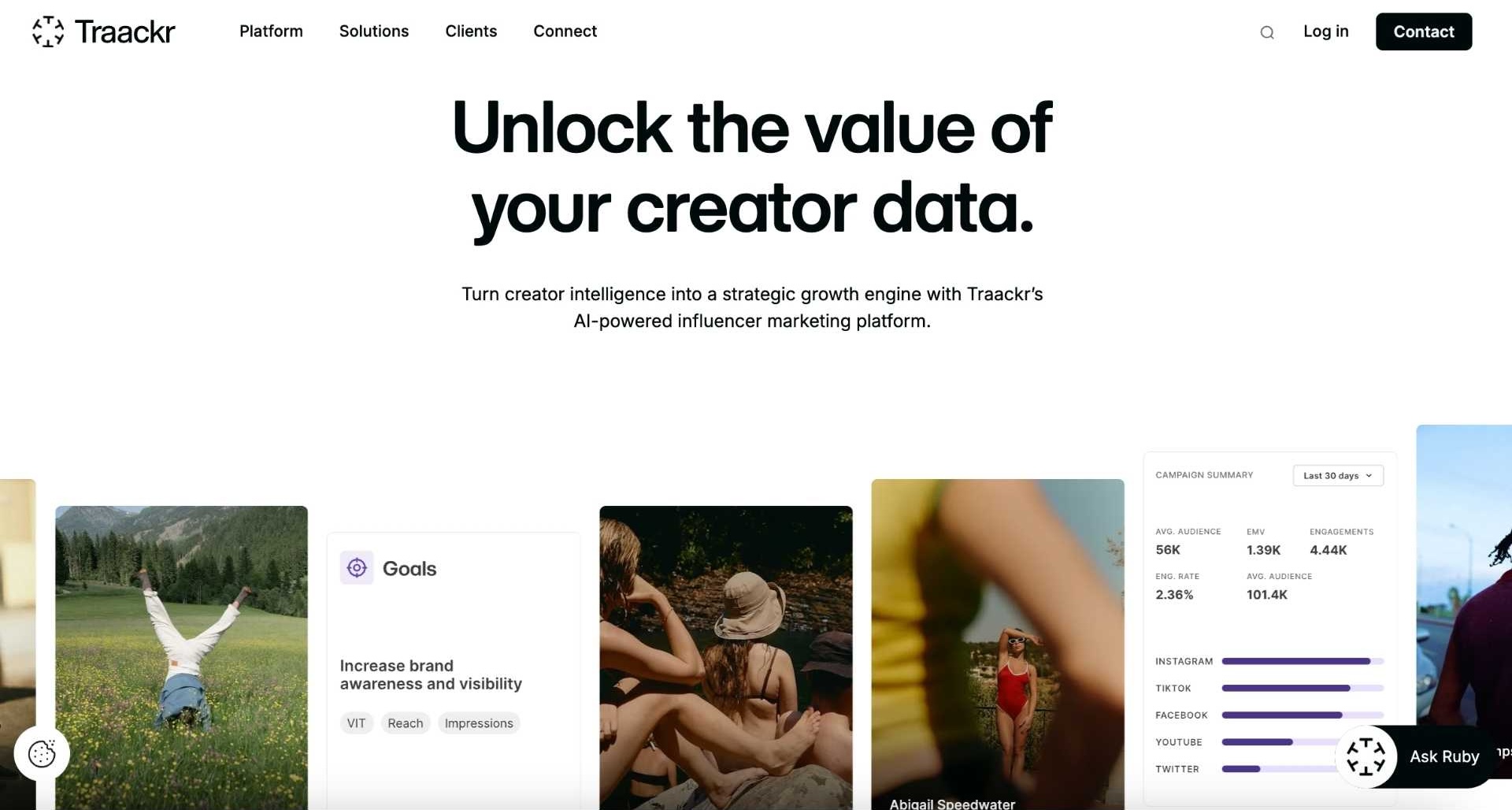
Traackr is an enterprise influencer marketing platform focused on creator discovery, campaign measurement, competitive benchmarking, and spend efficiency. It is especially well known for its benchmarking framework and Brand Vitality Score, which help larger brands measure creator marketing performance beyond vanity metrics.
Key Features
• Influencer discovery and vetting: Traackr provides creator discovery with filters for audience, geography, language, engagement, and past brand relationships.
• Campaign management: Brands can manage campaigns, monitor content, and track creator performance from one platform.
• Benchmarking and market intelligence: Traackr’s benchmark dashboards compare your brand and competitors across creator marketing performance metrics.
• Brand Vitality Score: Its proprietary score measures visibility, impact, and trust to help teams assess brand performance in creator marketing more strategically.
• ROI and cost-efficiency analytics: Traackr emphasizes CPC, CPE, CPV, and related spend-efficiency views rather than only engagement totals.
• Affiliate tracking, gifting, and creator payouts: The platform supports affiliate tracking, product seeding, and global creator payments inside the workflow.
Pricing
• Official pricing: custom / request a quote.
• Public benchmark: pricing starts around $32,500/year for a standard plan, with additional modules available on request.
• Contract type: generally annual enterprise contracts.
Reviews
4.3 / 5.0 (G2)
Pros
• Brand Vitality Score is still one of the clearest differentiators in the category: It gives brands a benchmarking framework that is more strategic than simple EMV reporting.
• Benchmarking is unusually strong: Traackr is built for market comparisons, competitive analysis, and performance ranking across regions and categories.
• Commerce execution has expanded: Shopify-powered product seeding, affiliate tracking, and creator payouts make it more operational than older Traackr perceptions suggest.
Cons
• High cost and annual commitment: Traackr is priced for established programs rather than smaller teams testing influencer marketing.
• User feedback points to occasional lag and tracking delays: Some teams report friction around syncing, exports, or delayed content visibility.
• There is a learning curve: The platform is data-rich, but smaller teams may find it heavier than simpler tools.
Integrations
• Shopify — Connect product seeding to your store so creators can choose products and brands can track order status in Traackr.
• Affiliate tracking — Generate affiliate links, monitor clicks and conversions, and connect creator activity to revenue performance.
• Creator payments — Automate creator payouts in local currencies through Traackr’s payment workflows.
• Recruitment pages — Use branded application pages to collect creator interest for ambassador or casting programs.
• Reporting exports — Export granular campaign and benchmarking data for internal reporting and budget analysis.
Brandbassador vs Traackr
Brandbassador is much more community-led, with gamified missions and ambassador activation at the center. Traackr is much more analytics-led, with stronger benchmarking, cost-efficiency reporting, and market intelligence. If you want to motivate fans and ambassadors, Brandbassador is the better fit; if you need enterprise measurement and competitive insight, Traackr is the stronger alternative.
Influencity
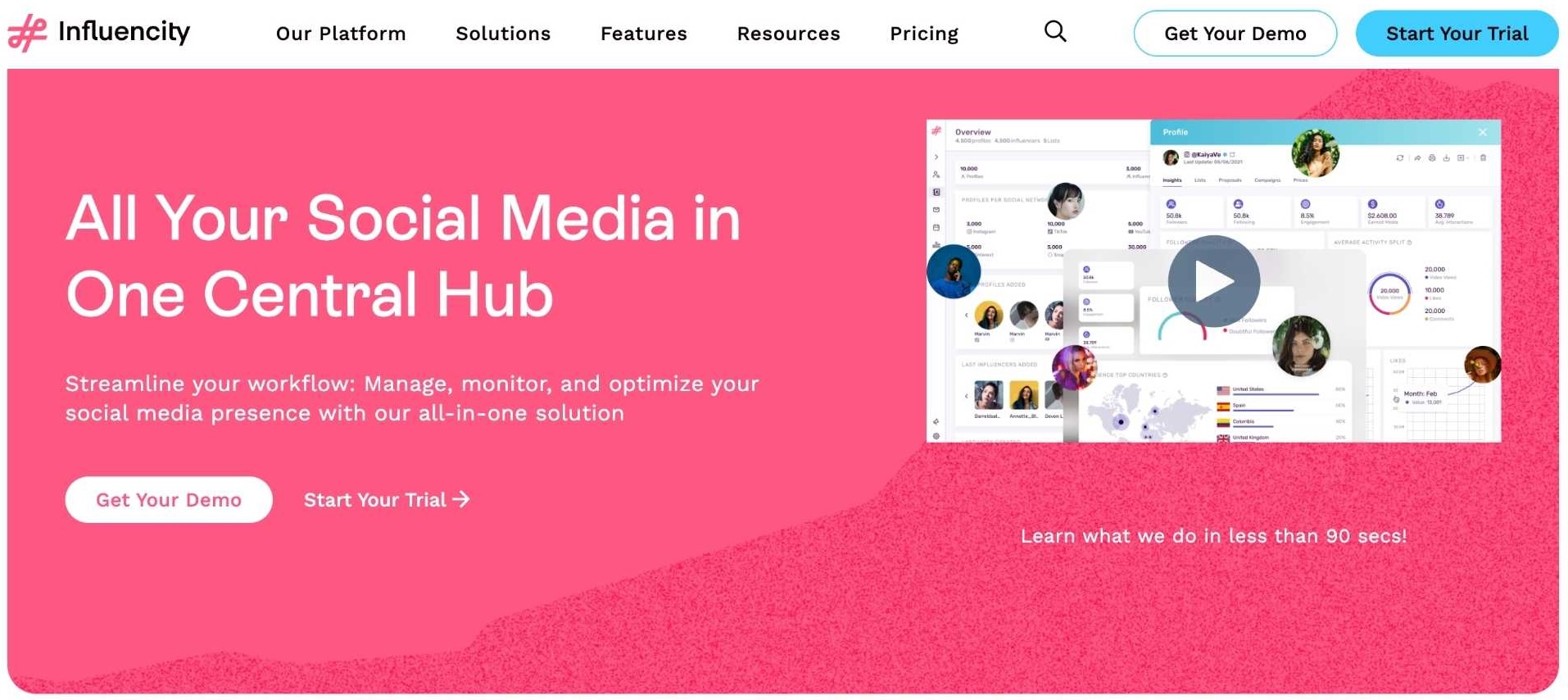
Influencity is an end-to-end influencer marketing platform that combines discovery, influencer relationship management, campaign tracking, payments, and social listening. Its current positioning leans heavily into flexibility: brands can run everything from creator discovery to Shopify-connected seeding and multi-currency influencer payments without long-term account permanence.
Key Features
• Influencer discovery: Influencity offers creator search, analysis, audience filtering, and profile vetting across major social channels.
• IRM and campaign workflows: The platform includes relationship management, approvals, campaign boards, and reporting in one environment.
• Shopify-powered seeding programs: Its newer “Programs” workflow connects Shopify to creator seeding and campaign tracking.
• Payments automation: Influencity supports multi-currency payouts, payment pools, and compliance-friendly payment management.
• Website/blog tracking: Brands can connect websites and blogs to bring owned-site data into reporting.
• Social listening and brand monitoring: Beyond influencer campaigns, Influencity also supports brand management, competitor analysis, and campaign monitoring.
Pricing
Influencity offers three main pricing tiers, along with add-ons:
• Professional Plan: $318/month or $3,816/year
• Business Plan: $798/month or $9,576/year
• Enterprise Plan: Custom pricing
• Auto-Tracker Add-On: $660/year (for 50 influencers)
Reviews
4.3 / 5.0 (G2)
Pros
• Flexible contract model: Unlike many enterprise tools, Influencity explicitly says there is no mandatory permanence, which is a strong differentiator for growing teams.
• Programs + Shopify seeding are meaningful upgrades: The Programs workflow adds stronger product gifting and commerce-connected execution to what was already a capable discovery-and-CRM platform.
• Payments are becoming a bigger strength: Multi-currency creator payouts and payment tracking now sit more centrally in the product than they did in older versions.
Cons
• Some user friction remains around filters and workflow behavior: Reviews mention a learning curve and occasional reset issues when using discovery filters.
• It is more software than service: Influencity’s team supports platform use, but it does not position itself as a marketplace or agency that manages creators for you.
• Public pricing is somewhat inconsistent across sources: The official site shows plan names but not clear public dollar amounts, while third-party listings vary.
Integrations
• Shopify — Connect your store to run seeding programs, sync products, and track influencer-driven results.
• WooCommerce — Track sales and ROI from creator campaigns alongside Shopify-connected workflows.
• Website/blog connection — Install tracking code to bring your site analytics into Influencity reporting.
• Payments module — Manage payment pools, currencies, and influencer payout execution inside the platform.
• Social Hub / Monitoring — Tie influencer activity to broader social management and listening workflows.
Brandbassador vs Influencity
Brandbassador is narrower and more ambassador-centric, focusing on gamified missions and customer advocacy. Influencity is a broader operating system with stronger creator discovery, campaign management, Shopify seeding, and payment workflows. For brands that want a more flexible all-in-one platform rather than a community-led ambassador model, Influencity is the more versatile alternative.
Heepsy

Key Features
• Influencer discovery: Heepsy lets brands search creators by category, location, audience, engagement, and follower size across major social networks.
• Audience quality and fake follower checks: The platform includes authenticity scoring and audience breakdowns to help qualify creators before outreach.
• Bulk outreach and automation: Plus and Advanced plans add email templates, automated follow-ups, and larger monthly contact limits.
• CRM and project pipeline: Heepsy includes project management and CRM-style tracking so teams can organize creators by campaign stage.
• Marketplace and application pages: Brands can post campaign offers and receive creator proposals through the platform.
• Sales tracking on higher plans: The Advanced plan adds eCommerce integrations, promotional code tracking, and automated sales tracking.
Pricing
• Free — limited free access is available.
• Starter — recent official Heepsy blog references place Starter at $89/month.
• Plus — recent official Heepsy blog references place Plus at $249/month.
• Advanced — recent official Heepsy blog references place Advanced at $369/month.
• Heepsy also says users can choose monthly or annual billing, with annual subscriptions discounted versus monthly rates.
Reviews
4.5 / 5.0 (G2)
Pros
• Great value for discovery-led teams: Heepsy offers one of the clearer paths for smaller brands that mainly need search, vetting, and bulk outreach.
• Advanced plan now goes beyond discovery: Sales tracking, promo codes, and store integrations make the top tier more useful for commerce teams than older Heepsy versions.
• Ease of use is a standout: Reviews consistently highlight the clean interface and straightforward filtering workflow.
Cons
• The strongest commerce features are gated to Advanced: Lower tiers are more limited if you need affiliate tracking or revenue attribution.
• Some users want broader creator coverage and better campaign measurement depth: This comes up especially when brands compare it with more advanced suites.
• Support feedback is mixed: Many users like onboarding help, but others report slower or less satisfying support experiences.
Integrations
• Shopify — Track affiliate sales, discount code usage, and creator-driven conversions on Advanced.
• WooCommerce — Connect store sales data to influencer campaigns and automate commerce tracking.
• Email outreach — Send templates, follow-ups, and bulk campaigns from within Heepsy’s outreach workflow.
• Campaign marketplace — Post offers and receive creator applications directly through the platform.
• Content tracking — Monitor creator posts using hashtags and mentions to build campaign reports.
Brandbassador vs Heepsy
Brandbassador is better suited to brands building ambassador communities and repeat mission-driven engagement. Heepsy is better suited to brands that want searchable creator discovery, outreach, and lower-cost campaign management. If your priority is activating your own fans, Brandbassador fits better; if your priority is finding and contacting creators efficiently on a tighter budget, Heepsy is the more practical alternative.
Lefty
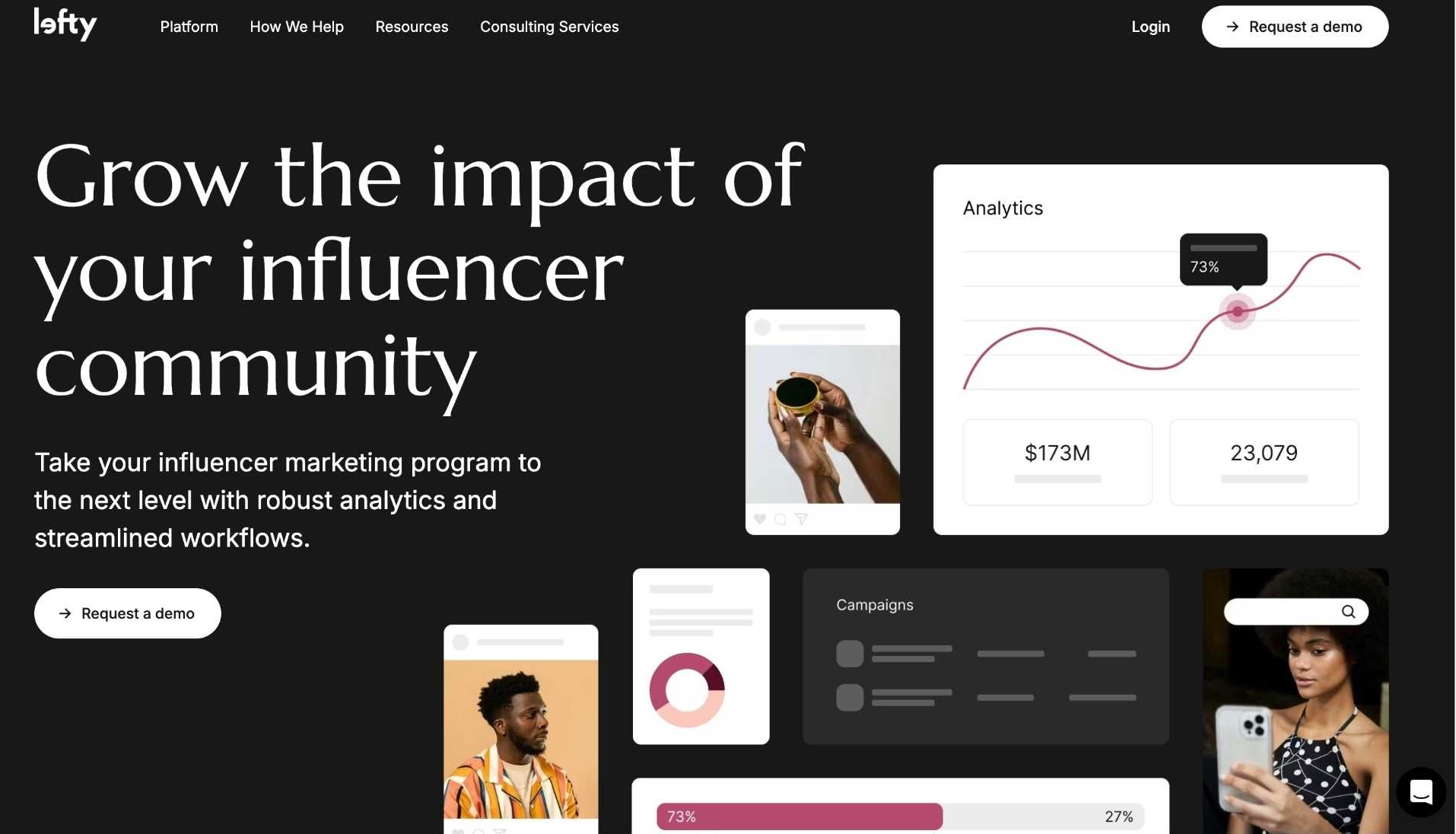
Lefty is an influencer marketing platform aimed primarily at lifestyle, fashion, and beauty brands, with a strong emphasis on analytics, campaign reporting, social commerce, and global team workflows. Its recent product direction has leaned further into eCommerce automation, affiliate tracking, gifting, and payment management for brands that want measurable revenue impact alongside influencer reporting.
Key Features
• Influencer discovery and qualification: Lefty gives brands access to a creator database with audience-fit filters, historical stats, and brand-mention discovery.
• Campaign management and reporting: Teams can build campaigns, auto-capture content, track performance, and export polished presentations for internal or client reporting.
• Social commerce: Lefty supports affiliate links, promo codes, revenue tracking, and commission management inside the platform.
• ECommerce workflow automation: Lefty now supports product gifting, inventory coordination, delivery tracking, and product requests across connected storefronts.
• Influencer payments: The platform supports in-platform influencer payments and payout visibility for commerce-heavy programs.
• Forecasting and organizational dashboards: Review feedback highlights forecasting and global reporting views as helpful for larger brand teams.
Pricing
• Starting Price: ~€590 per month.
• Pro Plan: ~€990/month, including 2 users, 5 campaigns, and unlimited reports.
• Premium Plan: ~€1,690/month, which adds a dedicated manager.
• Premium+ Plan: ~€3,490/month for 10 users and 25 campaigns.
Reviews
4.7/5.0 (G2)
Pros
• Very strong for fashion, beauty, and lifestyle workflows: Lefty’s product and client positioning are especially tailored to premium consumer brands.
• Recent eCommerce updates make it more operational: Product gifting, promo campaigns, affiliate commissions, and payout tooling have all been expanded in recent releases.
• Forecasting and revenue analysis stand out: User feedback highlights its ability to estimate collaboration results and connect influencer activity to sales performance.
Cons
• Pricing is not transparent on the official site: Brands still need a demo or outside listings to estimate real starting cost.
• Contact data coverage can still be a limitation: Some users specifically want better influencer email coverage for outreach.
• It is more niche-positioned than generalist tools: Brands outside fashion, beauty, or lifestyle may find its specialization less compelling.
Integrations
• Shopify — Manage inventory, gifting, affiliate links, promo codes, and influencer-driven sales from your Shopify store.
• Magento — Plug in Magento stores for product gifting, lending, and delivery tracking.
• Salesforce Commerce — Connect Salesforce-based commerce operations to Lefty’s gifting and revenue workflow.
• Gmail — Reach out to influencers directly from Lefty and keep communications tracked inside the platform.
• Outlook — Sync creator outreach and conversation tracking with Outlook-based teams.
Brandbassador vs Lefty
Brandbassador is more ambassador-led, with gamified missions and customer advocacy as the core use case. Lefty is more analytics- and commerce-led, with stronger gifting, affiliate tracking, forecasting, and luxury/lifestyle reporting workflows. For brands that want community activation, Brandbassador remains more specialized; for brands that want premium influencer analytics plus social commerce execution, Lefty is the stronger alternative.
Final Thoughts on Brandbassador Alternatives
Brandbassador stands out for its community-first approach, using gamified Missions to turn customers and fans into long-term brand advocates. However, as explored throughout this guide, many alternatives offer broader capabilities across influencer discovery, outreach automation, CRM workflows, and eCommerce integrations. Platforms like Influencer Hero, Upfluence, and Aspire provide more complete end-to-end solutions, while enterprise tools like CreatorIQ and Traackr focus heavily on analytics, benchmarking, and global scalability. At the same time, tools like Heepsy and Influencity offer more accessible entry points for smaller teams that prioritize discovery and cost-efficiency.
Ultimately, the right alternative depends on your strategy and stage of growth. Brands focused on ambassador programs and UGC communities may still find Brandbassador highly effective, while those looking to scale influencer acquisition, track revenue more precisely, or integrate deeply with their tech stack may benefit from a more flexible or data-driven platform. By evaluating factors like pricing structure, workflow complexity, integrations, and campaign goals, teams can choose the solution that best aligns with their influencer marketing objectives.

.png)


.jpg)