

10 Best Social Native Alternatives for Influencer Marketing
D2C brands today rely heavily on influencer marketing software to streamline creator discovery, automate outreach, manage campaigns, and track real ROI from creator partnerships. Social Native has positioned itself as a strong content-first platform, helping brands source UGC and turn it into high-performing assets across ecommerce and paid media. However, many teams start exploring Social Native alternatives due to limited pricing transparency, a steeper learning curve, and less flexibility for highly customized workflows or lightweight outreach use cases. For brands evaluating influencer marketing platforms, it becomes important to compare tools that better align with their operational needs, budget, and growth strategy.
In this guide, we break down 10 of the best Social Native alternatives—including Influencer Hero, Upfluence, Aspire, CreatorIQ, Later, IZEA, Traackr, Influencity, Heepsy, and Lefty—to help you find the right fit for your influencer marketing stack.
Key Criteria for Evaluating Influencer Marketing Platforms
Core Features
Evaluation of essential influencer marketing capabilities, including influencer discovery, outreach, CRM, campaign management, reporting, and content workflows.
Pricing & Flexibility
Comparison of pricing models, subscription plans, and contract terms to match different budgets and growth stages.
Customer Reviews & Satisfaction
Analysis of user feedback from trusted review platforms, focusing on usability, reliability, customer support, and overall performance.
Pros & Cons
Review of each platform’s strengths and limitations to highlight where it performs well and where it may fall short based on different use cases.
Integrations
Review of the most important integrations (e.g., Shopify and other tech tools), highlighting what each integration enables in one sentence.
Social Native Overview
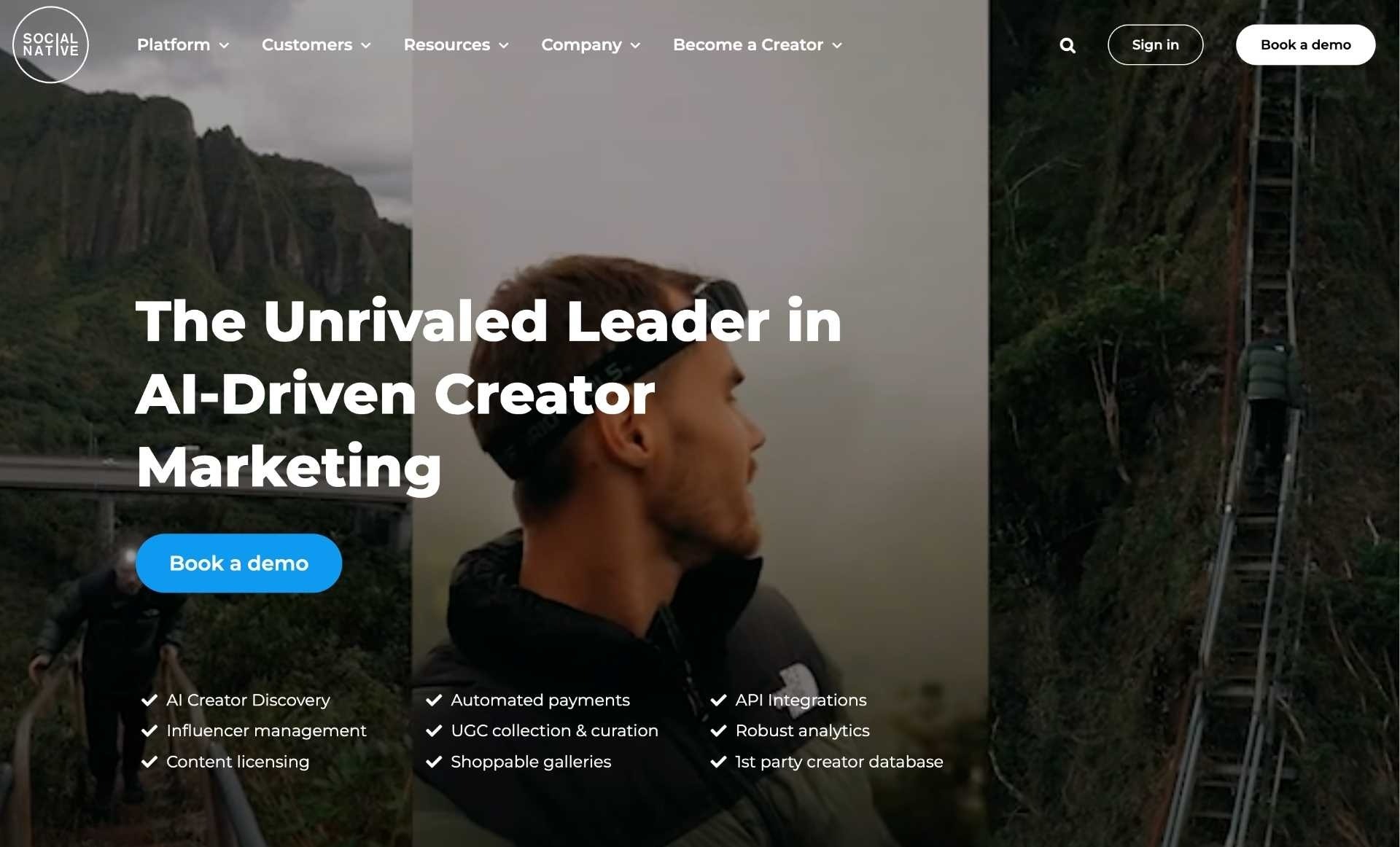
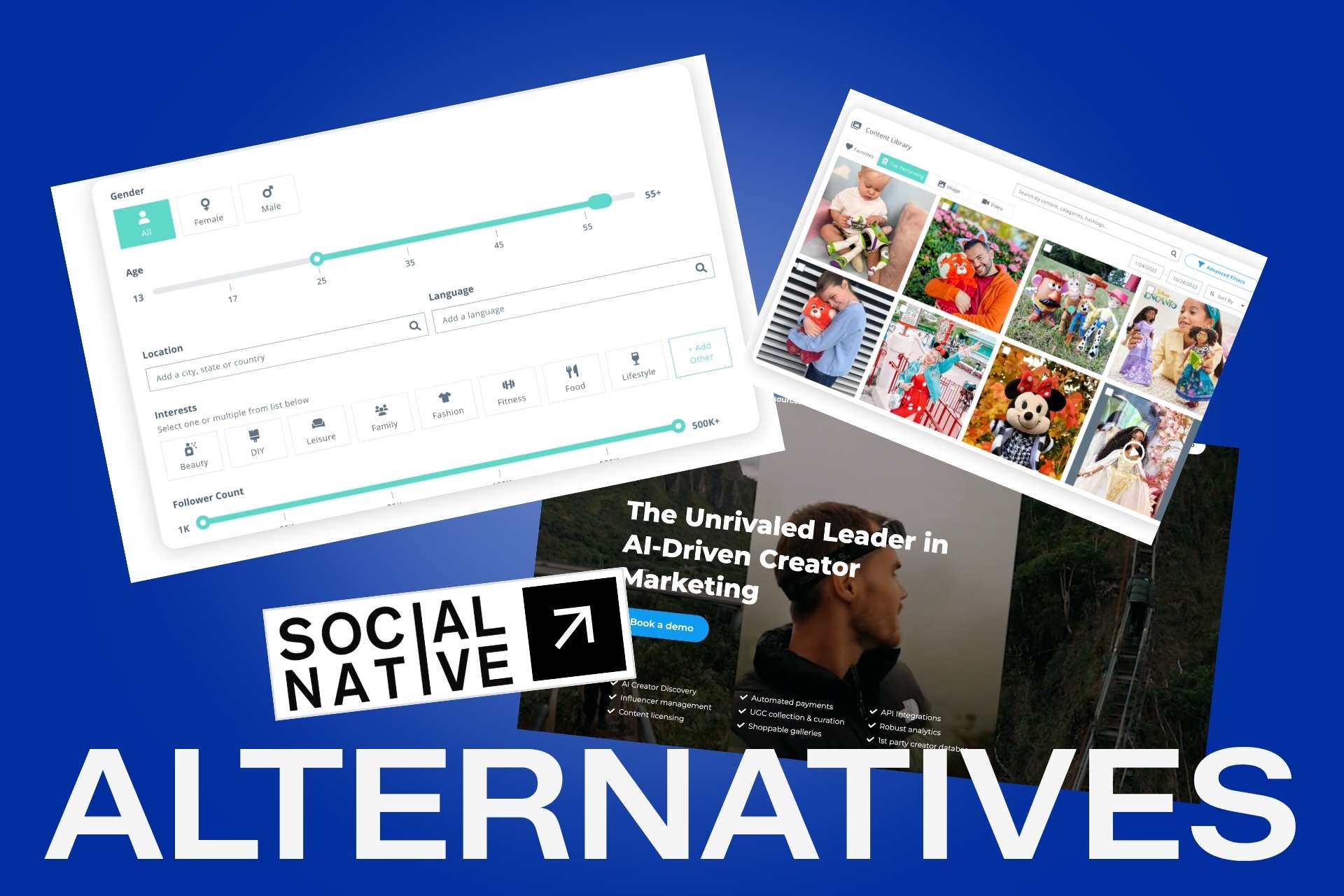
Social Native is a creator marketing and user-generated content (UGC) platform designed to help brands source, manage, and scale creator-driven content across social, paid media, and ecommerce. Unlike traditional influencer marketing tools that focus primarily on discovery and outreach, Social Native positions itself as a full-stack content engine—helping brands turn creator collaborations into high-performing, shoppable assets across the entire customer journey.
The platform is particularly well-suited for brands that prioritize content production and performance marketing, enabling teams to activate creator content across channels like paid social, product pages, and social commerce environments.
Key Features
- AI-Powered Creator Discovery
Social Native offers AI-driven creator discovery combined with a first-party creator network, allowing brands to identify creators based on content style, audience fit, and campaign goals rather than just surface-level metrics. - End-to-End Influencer Management
Manage the full lifecycle of influencer campaigns—from creator onboarding and communication to execution and performance tracking—within a centralized platform. - UGC Sourcing & Content Curation
Collect and curate high-quality user-generated and creator content at scale, making it easier to build a consistent pipeline of authentic marketing assets. - Content Licensing & Rights Management
A standout feature is its built-in licensing workflows, enabling brands to securely obtain, manage, and reuse creator content across paid and owned channels without manual contract handling. - Automated Creator Payments
Streamlines payments with built-in payout workflows, reducing the need for external tools or manual financial processes. - Shoppable UGC Galleries
Embed creator content directly into ecommerce experiences through shoppable galleries that link content to products, improving conversion rates and on-site engagement. - Paid Media Activation
Repurpose creator content for paid social campaigns across platforms like Meta and TikTok, enabling brands to use influencer content as performance-driven ad creatives. - Performance Analytics & Optimization
Track campaign performance, content engagement, and conversion metrics to optimize creator selection and campaign outcomes over time. - Social Commerce Enablement
Supports activation across social commerce ecosystems like TikTok Shop, Instagram Shopping, and Pinterest, helping brands connect content directly to transactions. - Managed Services Layer
In addition to software, Social Native offers operational support for creator sourcing, onboarding, logistics, and campaign execution—acting as an extension of internal teams.
Pricing
Social Native does not publicly disclose pricing.
- Pricing is custom and quote-based
- Requires booking a demo with their sales team
Reviews
Not available
Integrations
- Meta (Facebook & Instagram) – Run creator-led ads and activate influencer content directly within paid social campaigns.
- TikTok – Source and deploy TikTok-native creator content for both organic and paid campaigns.
- Pinterest – Create and optimize visual content for product discovery and shopping-focused audiences.
- Snapchat – Develop and distribute creator-driven content tailored for Snap campaigns.
- X (Twitter) Ads – Extend creator content into additional paid media channels for broader reach.
Pros
- Strong UGC-to-commerce pipeline
Social Native excels at turning creator content into shoppable experiences, making it especially valuable for DTC brands focused on conversion and onsite engagement. - Deep platform partnerships for paid media
Official partnerships with Meta, TikTok, Pinterest, and Snapchat give brands a clear advantage when scaling creator content into paid campaigns. - Content-first, performance-driven approach
Unlike many influencer platforms, Social Native focuses heavily on content performance, attribution, and ROI—making it a strong fit for growth and performance marketing teams.
Common Drawbacks of Social Native
Lack of pricing transparency
No public pricing or plan tiers, requiring sales conversations before evaluation—slows down comparison and decision-making.
Learning curve for new users
The platform’s breadth (UGC, licensing, paid media, analytics) can make onboarding more complex compared to simpler influencer outreach tools.
Limited flexibility for niche workflows
Campaign customization can feel restrictive for brands running highly specific or unconventional influencer strategies.
Not ideal for lightweight influencer outreach needs
Brands looking only for influencer discovery and outreach may find the platform overly complex or feature-heavy for their requirements.
Best Social Native Alternatives
| TOOL | REVIEWS | BEST FOR | TRIAL INFO | PRICING | ||
|---|---|---|---|---|---|---|
1 |

|
⭐ | Influencer CRM & automation | Book Demo | Pricing | Website |
2 |
|
⭐ | Influencer discovery | Book Demo | Pricing | Website |
3 |
|
⭐ | Influencer partnerships | Book Demo | Pricing | Website |
4 |

|
⭐ | Enterprise influencer marketing | Book Demo | Pricing | Website |
5 |

|
⭐ | Social media & influencer campaigns | Book Demo | Pricing | Website |
6 |
|
⭐ | Influencer marketplace | Book Demo | Pricing | Website |
7 |

|
⭐ | Enterprise influencer analytics | Book Demo | Pricing | Website |
8 |

|
⭐ | Campaign management | Book Demo | Pricing | Website |
9 |

|
⭐ | Influencer discovery | Book Demo | Pricing | Website |
10 |
|
⭐ | Influencer analytics & discovery | Book Demo | Pricing | Website |

Influencer Hero
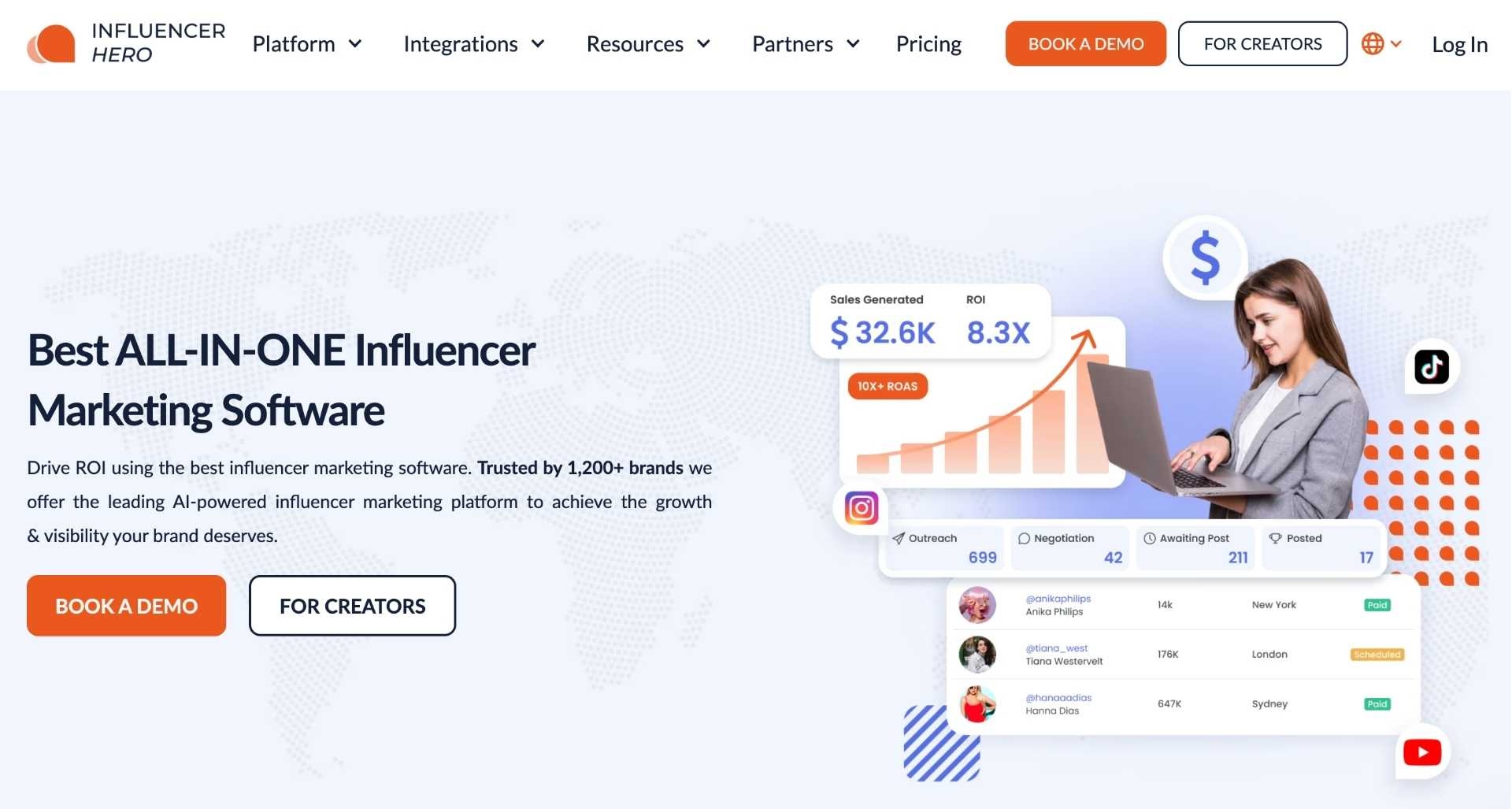
Influencer Hero is an all-in-one influencer marketing platform built for DTC brands and ecommerce teams that want influencer discovery, outreach, CRM, gifting, affiliate tracking, UGC collection, and ROI measurement in one workflow. Its positioning is especially strong for brands that care about automation, campaign orchestration, and tying creator activity back to revenue rather than treating influencer marketing as a disconnected awareness channel.
Key Features
- Influencer discovery
Search creators across major platforms with advanced audience, engagement, location, and niche filters, plus fraud detection and lookalike recommendations - Outreach & automation
Run personalized outreach at scale with AI-assisted messaging, automated follow-ups, and multi-step email sequences - Influencer CRM
Centralize creator relationships with pipeline management for conversations, campaign stages, and deliverables - Gifting workflows
Manage product seeding end-to-end with automated order creation, shipment tracking, and delivery monitoring - Affiliate tracking & payouts
Create trackable links and discount codes, measure performance, and manage commissions and payments in one workflow - Campaign analytics & ROI tracking
Track engagement, clicks, conversions, and revenue through real-time dashboards tied to campaign performance - UGC library
Automatically capture and organize creator content for reuse across paid ads, social media, and eCommerce channels - Application pages & storefronts
Build branded creator application pages and enable influencers to promote products through personalized storefronts - eCommerce integrations
Connect directly with platforms like Shopify and WooCommerce to link influencer activity to sales and attribution - API & integrations
Expand capabilities with API access and integrations such as Klaviyo, Slack, Zapier, and email platforms
Pricing
Influencer Hero offers flexible pricing based on outreach volume and you can have unlimited creators in your CRM:
- Standard — $649/month (up to 1,000 outreach messages per month)
- Pro — $1,049/month (up to 5,000 outreach messages per month)
- Business — $2,490/month (up to 10,000 outreach messages per month)
- Custom / Agency — Tailored pricing
Custom pricing is available for agencies and larger teams
Reviews
4.9/5.0 (Capterra)
Pros
- Campaign-first CRM automation
Influencer Hero stands out for relationship boards, bulk actions, and automated email flows built specifically for high-volume creator programs. - AI-powered workflows built for scale
Influencer Hero streamlines the full campaign lifecycle—from discovery to outreach—with automation, predictive scoring, and smart campaign suggestions, helping teams reduce manual work without losing control. - Highly personalized outreach at volume
AI-enhanced email flows and automated follow-ups generate messages that feel tailored and relevant, improving reply rates, conversions, and long-term creator relationships.
Cons
- Higher pricing for smaller teams
May be less accessible for early-stage brands or those with limited budgets - Steep learning curve
Feature depth means onboarding and setup can take time
Integrations
- Shopify – Connect your store to send products to creators, generate discount codes and affiliate links, and track creator-driven sales.
- WooCommerce – Track affiliate sales and create discount codes for creator campaigns tied to your WooCommerce store.
- Klaviyo – Sync influencer and customer data into lifecycle email workflows and revenue reporting.
- WhatsApp — Sync and manage influencer conversations directly in the CRM, with real-time messaging, automation, and full chat history.
- DocuSign – Send, track, and sign creator contracts faster within the broader influencer workflow.
Social Native vs Influencer Hero
Social Native is more content-activation and UGC-commerce oriented, with a strong emphasis on licensing, paid-media use cases, and turning creator content into shoppable assets. Influencer Hero is more CRM- and operations-centric, with heavier emphasis on outreach automation, creator relationship management, affiliate tracking, and campaign execution tied directly to ecommerce revenue.
Social Native is usually a better fit for brands prioritizing creator content production and cross-channel asset activation. Influencer Hero is the stronger option for brands that want more transparent pricing, a deeper campaign CRM, and better workflow control for discovery, gifting, affiliate programs, and creator tracking in one place.
Upfluence

Upfluence is an influencer marketing platform built around discovery, outreach, campaign execution, affiliate tracking, and payments, with a particularly strong eCommerce angle. Its core pitch is that brands can find creators, activate customers as influencers, sync store data, and measure sales from influencer activity in one place.
Key Features
- Large creator database and advanced search – Upfluence publicly highlights a database of 14M+ creators and supports advanced filtering by audience, niche, geography, performance, and lookalikes.
- AI-assisted discovery and campaign setup – Jaice AI is positioned as an AI co-pilot for discovery, outreach, and campaign creation, helping teams personalize communication and launch campaigns faster.
- Unlimited mass outreach – The platform supports bulk outreach, templates, custom fields, and drip email sequences on higher plans, alongside Gmail and Outlook integration.
- Creator marketplace and recruitment pages – Brands can let creators apply to programs through recruitment pages and an inbound marketplace.
- CRM and relationship management – Upfluence includes campaign tracking, creator records, communication history, and influencer relationship workflows for ongoing program management.
- eCommerce matching and customer-to-creator identification – A standout feature is CMS/database matching that helps brands identify influential customers inside their CRM or eCommerce stack.
- Product gifting and affiliate tracking – Upfluence connects creator activity to gifting, discount codes, affiliate links, conversions, and tracked sales through its eCommerce integrations.
- Bulk payments and compliance support – The Autopilot tier adds budget handling, global creator payouts in local currencies, and support for tax and invoicing processes.
- Real-time campaign analytics – Brands can track likes, reach, impressions, clicks, conversions, and sales, especially when eCommerce integrations are enabled.
Pricing
- Pricing model: Upfluence uses custom pricing rather than a public fixed plan table.
- All plans are custom made. There’s a minimum full year of service you have to commit to with monthly payments. On average plans start around $2,000/month ($24,000 yearly)
Reviews
4.3/5.0 (Capterra)
Pros
- Strong eCommerce stack connectivity – Upfluence is one of the better fits for brands that want influencer discovery directly connected to Shopify, Amazon, and other store systems for conversion tracking.
- Customer-as-creator matching – Its CMS and eCommerce matching capability is a meaningful differentiator because it helps brands find existing customers who may already be strong creator fits.
- Jaice AI across multiple workflows – Upfluence is putting AI deeper into the product, from email assistance to campaign creation, which makes it more automation-forward than many legacy platforms.
Cons
- Pricing is not transparent – Buyers still need to go through sales for firm pricing, and annual commitments remain a common sticking point.
- There is a learning curve – Users regularly describe the platform as powerful but not especially lightweight for first-time teams.
- Campaign editing and workflow flexibility can be limiting – Some users report clunky setup, limited editability once campaigns are built, and friction in list organization.
Integrations
- Shopify – Connect store and customer data, identify influential customers, track sales, and run gifting and affiliate workflows.
- Amazon – Attribute creator performance to marketplace sales and affiliate activity, which is a major differentiator for omnichannel brands.
- WooCommerce – Extend eCommerce campaign and conversion tracking beyond Shopify.
- Klaviyo – Pull customer and email data into creator identification and CRM workflows.
- Stripe – Support payment and financial operations tied to influencer campaigns and creator compensation.
Social Native vs Upfluence
Social Native is stronger as a content and UGC activation platform, especially for brands that want licensed creator assets, paid-media reuse, and shoppable content experiences. Upfluence is stronger for ecommerce performance teams that need creator discovery, affiliate management, customer-influencer matching, and direct revenue attribution through Shopify and Amazon.
If your priority is scaling creator content across paid and owned channels, Social Native has the clearer content-engine advantage. If your priority is turning creators and even existing customers into measurable revenue drivers, Upfluence is usually the better operational fit.
Aspire

Aspire is an influencer marketing platform designed for eCommerce brands that want to run word-of-mouth commerce programs across influencers, ambassadors, affiliates, customers, and UGC. Its positioning is especially strong around combining outbound discovery with inbound creator applications, Shopify-connected commerce tracking, and workflow automation for scaling campaigns.
Key Features
- Inbound and outbound creator discovery – Aspire emphasizes that brands can either search for creators directly or let creators apply, which is one of its most important workflow advantages.
- Large creator marketplace – Aspire says brands can reach 1M+ creators through its marketplace, making it especially strong for brands that want to fill campaign rosters through inbound applications.
- Campaign workflow automation – The platform supports automated business processes for product seeding, sponsored content, contracts, and approvals, helping lean teams manage larger creator programs.
- Affiliate and attributable ROI tracking – Aspire positions itself around measurable sales impact, with affiliate tracking and performance visibility tied to creator activity.
- UGC sourcing and paid media reuse – Aspire highlights its ability to generate high-performing creator content for ads, including claims around more efficient CPM and lower CPC from UGC.
- Shopify-powered gifting and customer matching – Aspire’s Shopify integration supports customer-data enrichment, automated product shipping, performance analysis, and identifying valuable creator prospects inside customer data.
- CreatorStores / Offer Landing Pages – Aspire has recently expanded creator commerce with co-branded microstores and offer landing pages connected to Shopify, designed to improve conversion and capture first-party data.
- Support and optional managed services – Brands can either use the DIY platform or add services from Aspire’s in-house team, which is part of its mid-market appeal.
Pricing
Aspire does not publish full public package pricing on its website. Public and recent market sources indicate:
- Custom pricing
- Often reported at about $2,000+/month
- Recent quoting indicated around $2,300/month for a mid-tier setup
- Typically sold with a 12-month commitment rather than month-to-month self-serve plans
Reviews
4.0/5.0 (Capterra)
Pros
- Strong inbound marketplace advantage – Aspire’s biggest differentiator is still its large inbound creator marketplace, which can materially reduce manual prospecting for brands that want creators to raise their hands first.
- First-party commerce connectivity – Its Shopify connection is deeper than basic discount-code tracking, extending into customer enrichment, gifting, and campaign performance visibility.
- CreatorStores and microshopping – Aspire’s newer creator commerce features, like CreatorStores and offer landing pages, give it a stronger social-commerce angle than many traditional influencer CRMs.
Cons
- Public pricing transparency is limited – Buyers still need to request a quote, which slows down side-by-side evaluation.
- The platform can be expensive for smaller teams – Mid-tier packages can already push into the low-thousands-per-month range.
- Users still report occasional product complexity and technical friction – Reviews mention setup and feature navigation can feel heavy in some workflows.
Integrations
- Shopify – Identify influential customers, automate product gifting, track shipping, and measure creator sales.
- Meta – Use creator content and creator identity for branded content ads and paid social amplification.
- TikTok – Support creator partnerships and paid amplification across TikTok-oriented campaigns.
- Pinterest – Extend creator collaboration into Pinterest-driven discovery and commerce workflows.
- Gmail – Sync creator communications into campaign workflows for more centralized relationship management.
Social Native vs Aspire
Social Native is more centered on sourcing creator content and turning it into licensed, shoppable, paid-media-ready assets. Aspire is broader on the relationship side, with stronger infrastructure for creator communities, inbound recruitment, gifting, affiliate sales, and long-term ambassador-style programs.
For brands that need a content engine first, Social Native usually feels more direct. For brands that want a hybrid of influencer marketing, affiliate commerce, creator recruitment, and paid creator ads, Aspire tends to be the more complete operating system.
CreatorIQ

CreatorIQ is an enterprise influencer marketing platform built for brands that need large-scale creator discovery, structured governance, advanced reporting, and cross-functional operational control. It positions itself as a creator marketing operating system, with AI-powered intelligence, global governance, compliance, and recently expanded brand safety and benchmarking infrastructure.
Key Features
- Enterprise-grade creator discovery and evaluation – CreatorIQ supports search, comparison, recommendations, and content-aligned creator evaluation with deep fields and brand-fit analysis.
- Centralized creator management – The platform is built for global teams that need one shared system for creator records, workflows, performance, approvals, and relationship history.
- Affiliate and commerce workflows – CreatorIQ supports creator affiliate marketing and revenue generation through enterprise-grade integrations and creator commerce tooling.
- Enterprise governance and compliance – Governance is a major part of the product story, with shared CRM, reporting, historical logs, and control across brands, markets, and divisions.
- CreatorIQ Pay – The product suite includes dedicated payment infrastructure for creator payouts and operational simplification.
- BenchmarkIQ – CreatorIQ recently expanded BenchmarkIQ, its competitive benchmarking layer, across 37 markets for more global performance analysis.
- SafeIQ brand safety – SafeIQ is one of CreatorIQ’s major recent launches, adding AI-native brand safety infrastructure designed for enterprise creator marketing.
- Enterprise AI and Creator Graph – CreatorIQ is increasingly packaging AI, trust, and large-scale creator intelligence as core product infrastructure for global brands.
Pricing
There are different plans:
- Basic Plan: Starts at $35,000/year. Includes 1,000 contact creators per month
- Standard Plan: Starts at $50,000/year. Includes 2,500 contact creators per month
- Professional Plan: Starts at $90,000/year. Includes 5,000 contact creators per month
- Enterprise Plan: Starts at $200,000/year. Includes 7,500 contact creators per month
Reviews
4.4/5.0 (Capterra)
Pros
- SafeIQ is a meaningful recent differentiator – CreatorIQ has pushed harder than many rivals on enterprise-grade, AI-native brand safety, which matters for global brands in regulated or high-visibility categories.
- BenchmarkIQ expands competitive measurement – Its benchmarking layer, now expanded across 37 markets, is a strong differentiator for international brands that need comparative visibility beyond campaign reporting.
- Governance and structured scale – CreatorIQ is one of the strongest options when influencer marketing needs to plug into compliance, finance, reporting, and global operating structures rather than just campaign execution.
Cons
- It is expensive and enterprise-led – CreatorIQ is typically out of range for smaller DTC brands or teams that just need lightweight campaign execution.
- The platform has a steeper learning curve – Users often describe it as powerful but complex, especially for new teams.
- Some users still report reporting and freshness limitations – Public reviews mention occasional delays, search issues, or analytics that can feel outdated.
Integrations
- Shopify – Connect commerce data to creator campaigns and revenue reporting.
- Google Analytics – Tie creator activity into broader site traffic and performance analysis.
- DocuSign – Streamline creator contracts and agreement workflows inside enterprise processes.
- Tableau – Feed creator marketing data into executive dashboards and business intelligence reporting.
- Sprinklr – The new Sprinklr partnership helps unify creator, organic, and paid social measurement in one broader reporting environment.
Social Native vs CreatorIQ
Social Native is the better fit when the main goal is sourcing, licensing, and activating creator content across paid, owned, and ecommerce channels. CreatorIQ is the stronger fit for enterprise organizations that need governance, direct-platform data quality, global approvals, compliance controls, and executive reporting across very large creator programs.
In practice, Social Native feels more like a creator-content engine, while CreatorIQ feels more like a creator operating system for large enterprises with many teams, regions, approvals, and reporting stakeholders.
Later
Later is now a broader social and influencer marketing platform that combines social media management, influencer marketing software, full-service campaign support, social listening, Link in Bio commerce tooling, and the Mavely affiliate network under one brand. Since the Mavrck unification and the Mavely acquisition, Later has increasingly positioned itself as a “social revenue platform” rather than just an influencer management tool.
Key Features
- Influencer campaign management – Later Influence helps brands find creators, assess brand fit and risk, set rates, run campaigns, and track sales and ROI.
- Large creator intelligence base – Later says it analyzes 16M+ creators across platforms, using campaign intelligence and first-party data signals to support creator selection and planning.
- Predictive intelligence with Later EdgeAI – EdgeAI is one of Later’s biggest recent product pushes, using social listening, Link in Bio data, campaign intelligence, and creator commerce signals to guide campaign decisions.
- Enterprise reporting with Later 360 – Later 360 is a recent reporting layer that unifies organic, paid, and commerce data to show the broader impact of influencer programs.
- Affiliate marketing through Mavely – Later now integrates Mavely into Later Influence so brands can create affiliate deliverables, send creator links, and track affiliate performance within the same ecosystem.
- Shopify gifting and product workflows – Later offers Shopify integration for product gifting, creator selection, and campaign tracking.
- Social listening and brand health monitoring – Later positions its first-party data and social listening suite as a major input into creator selection and campaign intelligence.
- Social media management in the same ecosystem – A major advantage versus many influencer-only tools is that Later also includes content planning, publishing, analytics, and Link in Bio traffic tools.
Pricing
Later’s influencer marketing platform (Later Influence) uses custom pricing, and brands need to request a demo for exact costs.
Based on our research, there are different plans:
- Essentials Plan: Starts at $28,500/year. Best for brands starting in influencer marketing.
- Pro Plan: Starts at $42,000/year. Best for data and automation to make your campaigns run faster and achieve better ROI.
- Premier Plan: Starts at $60,000/year. Everything you need for a scaled influencer program.
- All plans come with an additional one-time onboarding fee of $5,000 for all new customers.
Reviews
4.4 / 5.0 (Capterra)
Pros
- EdgeAI and performance-intelligence positioning
Later’s current product story is more predictive and performance-oriented than its older reputation as just a scheduling company. - Flexible delivery model
It gives brands a choice between self-serve platform access, hybrid support, or full services, which is useful for teams with different levels of bandwidth. - Strong reporting and commerce linkage
Later combines creator campaign management with sales, social commerce, reviews, and reporting in a way that appeals to brands focused on measurable outcomes.
Cons
- No public pricing transparency
Buyers have to go through sales to understand costs, which makes quick comparison harder. - Some technical and workflow complaints
User feedback still mentions glitches, creator-management friction, and complexity for newer teams. - Best fit leans mid-market to enterprise
Its strongest influencer-marketing packages are not really positioned as lightweight, low-cost starter tools.
Integrations
- Shopify – Automate product gifting, creator selection, promo codes, and campaign tracking through your Shopify store.
- Looker – Pull Later Influence Reporting API data into custom dashboards for campaign and creator analysis.
- Microsoft Power BI – Export Later reporting data into BI dashboards for internal performance reporting.
- Tableau – Use the Reporting API to analyze creator and campaign metrics in Tableau.
- SAP Analytics Cloud / Oracle Analytics Cloud – Connect campaign and creator data to enterprise analytics environments for broader reporting.
Social Native vs Later
Social Native is more specialized around UGC sourcing, licensing, and activating creator content in ecommerce and paid media. Later is broader as a marketing platform, with stronger overlap between influencer campaigns, social commerce, social listening, reporting, and managed services.
If you mainly want creator content to fuel ads, product pages, and shoppable experiences, Social Native remains the more focused choice. If you want a larger mix of campaign intelligence, service support, creator operations, social commerce, and reporting inside a broader social marketing ecosystem, Later is the stronger alternative.

IZEA
IZEA is one of the longest-standing influencer marketing platforms, offering a combination of creator discovery, campaign management, and a built-in creator marketplace. It positions itself as both a software platform and a creator network, enabling brands to run influencer campaigns, commission content, and manage creator relationships at scale.
Key Features
- IZEA Marketplace (direct creator hiring)
A native marketplace where brands can post campaigns, browse creators, and directly hire influencers for sponsored content or UGC deliverables. - Influencer discovery and search
Includes filters for audience demographics, engagement, platform, and content type, along with creator profiles that show historical performance. - Campaign management workflows
Brands can create campaigns, assign deliverables, manage approvals, and track timelines from one dashboard. - Content collaboration and approvals
Provides structured workflows for content submission, revisions, and approvals, ensuring brand consistency across campaigns. - Automated payments and contracts
IZEA handles creator payments, contracts, and invoicing within the platform, simplifying financial operations. - Performance tracking and reporting
Tracks campaign metrics such as engagement, reach, impressions, and content performance. - Flex (enterprise solution)
IZEA Flex offers a more advanced solution for large brands, including deeper analytics, workflow customization, and enterprise reporting. - UGC and content licensing
Brands can license creator content and reuse it across ads, websites, and social channels.
Pricing
- Starter Plan: starts at $130/month.
- Power Plan: starts at $500/month.
- Free trial: 10 days.
- Managed Services: custom proposal-based pricing for fully managed campaigns.
Reviews
3.9/ 5.0 (G2)
Pros
- Dual marketplace + SaaS model
IZEA uniquely combines a self-serve creator marketplace with enterprise software, allowing brands to choose between transactional campaigns or long-term program management. - Built-in payments and contracting
Native payment and contract handling reduce operational complexity compared to platforms that require external tools. - Strong UGC licensing capabilities
IZEA makes it easier to legally reuse creator content across marketing channels, which is increasingly important for paid media.
Cons
- Discovery can feel less advanced than newer platforms
Filtering and AI-based recommendations are not as sophisticated as some newer competitors. - UI and workflow experience can feel dated
Some users find the interface less intuitive compared to newer SaaS tools. - Limited transparency in enterprise pricing
Requires sales conversations, especially for Flex.
Integrations
- Shopify – Connect influencer campaigns to eCommerce performance and track sales impact.
- Google Analytics – Measure traffic and campaign attribution across channels.
- Facebook / Instagram – Sync campaign performance data and manage social content workflows.
- YouTube – Track video campaign performance and creator metrics.
- Stripe / Payment systems – Manage creator payments and financial workflows within campaigns.
Social Native vs IZEA
Social Native is more tightly focused on UGC sourcing, licensing, and turning creator assets into paid-media and ecommerce content. IZEA is broader, with a stronger blend of managed services, creator marketplace workflows, AI-assisted content generation, and full-service campaign support.
For brands that mainly want creator content to fuel commerce and ads, Social Native feels more specialized. For brands that want a hybrid of software, marketplace access, and agency-style support, IZEA is the more flexible option.
Traackr
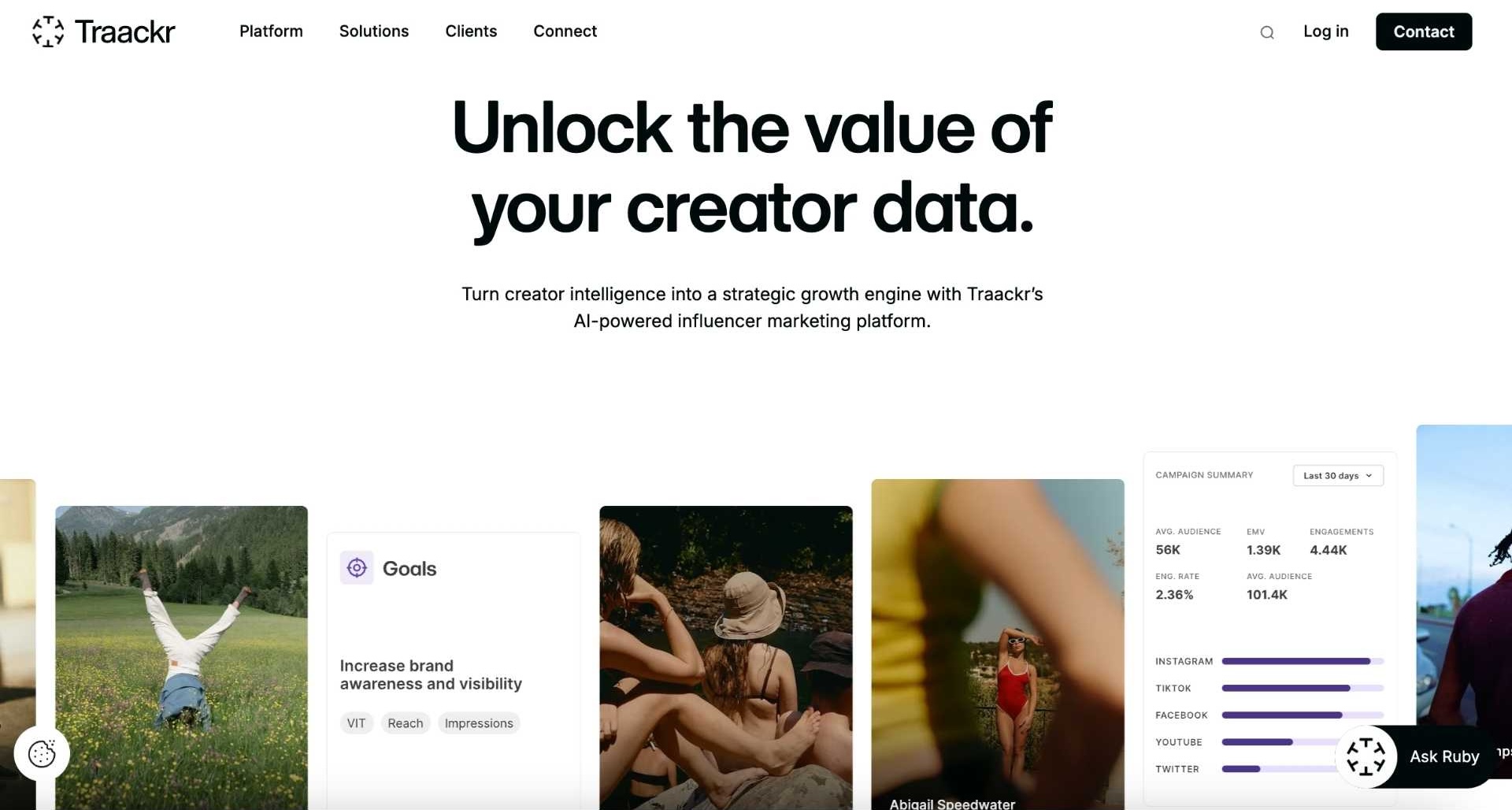
Traackr is an enterprise influencer marketing platform focused on data-driven decision-making, influencer relationship management, and performance benchmarking. It is particularly known for its analytics depth and ability to measure influencer impact across global campaigns.
Key Features
- Advanced influencer discovery and segmentation
Allows brands to find influencers using deep audience insights, brand affinity, and content analysis. - Relationship management (IRM)
Focuses on long-term influencer relationship tracking, including past collaborations, engagement history, and performance. - Competitive benchmarking
One of Traackr’s core strengths—brands can compare their influencer performance against competitors. - Campaign management and tracking
Supports campaign planning, execution, and performance monitoring across multiple markets. - ROI and performance analytics
Tracks engagement, reach, share of voice, and ROI with detailed reporting dashboards. - Global influencer database
Covers multiple platforms and regions, making it suitable for international campaigns. - Brand safety and compliance tools
Includes features to ensure influencer content aligns with brand guidelines.
Pricing
- Official pricing: custom / request a quote.
- Public benchmark: pricing starts around $32,500/year for a standard plan, with additional modules available on request.
- Contract type: generally annual enterprise contracts.
Reviews
4.3 / 5.0 (G2)
Pros
- Best-in-class benchmarking capabilities
Traackr stands out for allowing brands to compare influencer performance against competitors and industry benchmarks. - Strong focus on relationship management
Designed for long-term influencer programs rather than one-off campaigns. - Global campaign scalability
Well-suited for brands running multi-market influencer strategies.
Cons
- High cost and enterprise positioning
Not ideal for small or mid-sized brands. - Complex onboarding and setup
Requires time and training to fully utilize. - Limited focus on UGC workflows
Less optimized for content production compared to newer platforms.
Integrations
- Google Analytics – Connect influencer campaigns to site performance and attribution.
- Salesforce – Sync influencer data with CRM systems for enterprise workflows.
- Adobe Analytics – Enhance reporting with advanced analytics integration.
- Social platforms (Instagram, TikTok, YouTube) – Pull campaign data and performance metrics.
- Data visualization tools – Export campaign data into BI tools for deeper analysis.
Social Native vs Traackr
Social Native is more content-first, with stronger emphasis on UGC licensing, content activation, and commerce-oriented asset reuse. Traackr is more measurement-first, with deeper benchmarking, budget planning, and enterprise analytics for brands that want to quantify influencer performance at a market level.
If the goal is scaling creator content across paid and owned channels, Social Native has the edge. If the goal is benchmarking ROI, spend efficiency, and creator program performance across teams and markets, Traackr is the stronger fit.
Influencity
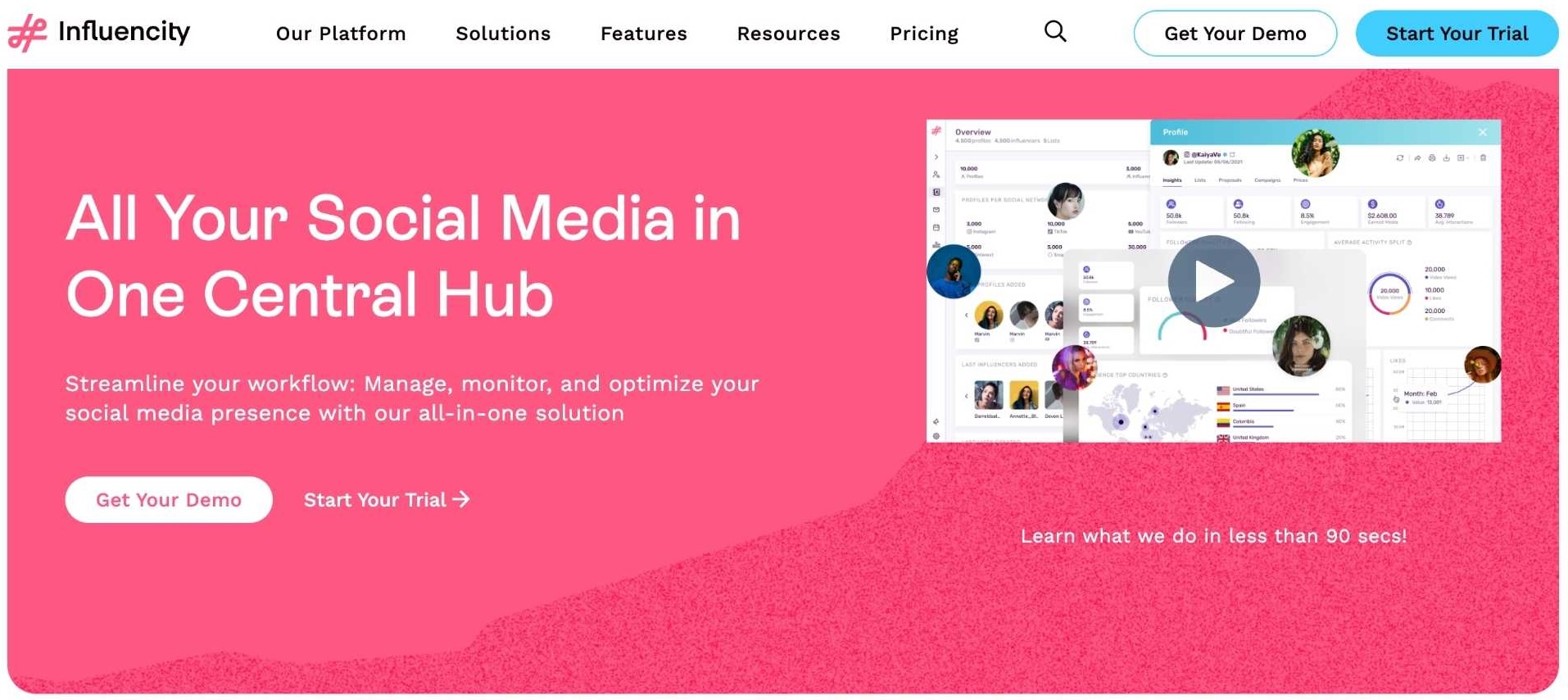
Influencity is a data-driven influencer marketing platform focused on discovery, analytics, and campaign management. It is designed for brands that want strong filtering capabilities and detailed audience insights without the complexity of enterprise-heavy tools.
Key Features
- Advanced influencer search filters
Filter creators by audience demographics, engagement rate, location, interests, and authenticity. - Audience analytics and insights
Provides detailed breakdowns of follower demographics, interests, and behavior. - Campaign management tools
Manage outreach, track deliverables, and monitor campaign progress. - Influencer relationship management
Store and organize influencer data with CRM-like functionality. - Performance tracking and reporting
Measure campaign success with engagement, reach, and ROI metrics. - Lookalike influencer discovery
Identify similar creators based on selected profiles. - Fake follower detection
Helps ensure authenticity and reduce influencer fraud.
Pricing
Influencity offers three main pricing tiers, along with add-ons:
- Professional Plan: $318/month or $3,816/year
- Business Plan: $798/month or $9,576/year
- Enterprise Plan: Custom pricing
- Auto-Tracker Add-On: $660/year (for 50 influencers)
Reviews
4.3 / 5.0 (G2)
Pros
- Highly granular filtering capabilities
Influencity offers some of the most detailed search filters available for precise influencer targeting. - Strong audience analytics
Provides deep insights into follower demographics and authenticity. - Accessible pricing compared to enterprise tools
More affordable for mid-sized teams.
Cons
- Limited outreach automation compared to competitors
Not as strong in automated workflows. - UI can feel data-heavy for beginners
May require time to navigate effectively. - Fewer integrations compared to larger platforms
Ecosystem is more limited.
Integrations
- Shopify – Connect ecommerce workflows for gifting, discount codes, and sales attribution.
- Gmail – Link your inbox to manage influencer outreach from within the platform.
- Office 365 / Outlook – Sync Microsoft email accounts for creator communication and follow-ups.
- TikTok – Use Influencity across TikTok creator search, campaign planning, and performance reporting.
- Instagram / YouTube / Twitch – Run creator discovery and campaign measurement across its supported social channels.
Social Native vs Influencity
Social Native is more specialized in creator content sourcing, licensing, and activation across paid and ecommerce channels. Influencity is broader as an operations platform, combining creator workflows with social management and listening, while also giving brands much more billing flexibility.
Brands that want a content engine and UGC activation workflow may prefer Social Native. Brands that want a more flexible end-to-end tool without mandatory annual contracts may find Influencity more attractive.
Heepsy

Heepsy is an influencer marketing platform focused on discovery, outreach, and campaign tracking, with a strong emphasis on ease of use and affordability. It is particularly popular among small to mid-sized eCommerce brands.
Key Features
- Massive influencer database (50M+)
Provides access to a large global pool of influencers across multiple platforms. - Advanced filtering and search
Filter by niche, location, engagement rate, audience demographics, and authenticity. - Fake follower detection
Includes authenticity scoring to identify fake followers and ensure campaign quality. - Outreach and email automation
Send bulk emails, manage responses, and track outreach progress. - CRM-style campaign pipeline
Visual pipeline to track campaign stages from outreach to payment. - Campaign tracking and reporting
Monitor engagement, content performance, and campaign metrics. - Shopify integration for sales tracking
Track conversions and revenue from influencer campaigns (Advanced plan).
Pricing
- Free — limited free access is available.
- Starter — recent official Heepsy blog references place Starter at $89/month.
- Plus — recent official Heepsy blog references place Plus at $249/month.
- Advanced — recent official Heepsy blog references place Advanced at $369/month.
- Heepsy also says users can choose monthly or annual billing, with annual subscriptions discounted versus monthly rates.
Reviews
4.5 / 5.0 (G2)
Pros
- Affordable and accessible pricing
One of the more budget-friendly influencer platforms with strong core features. - Strong discovery and filtering tools
Allows precise targeting of influencers across niches and geographies. - Simple and intuitive UI
Easy for small teams to adopt quickly.
Cons
- Advanced features locked behind higher plans
Sales tracking and integrations require the Advanced plan. - Limited AI and automation capabilities
Lacks advanced AI-driven workflows. - Fake follower detection is not fully precise
Based on estimates rather than exact data.
Integrations
- Shopify – Track influencer-driven sales and conversions.
- Email tools – Manage outreach campaigns and communication.
- Instagram / TikTok APIs – Access influencer data and metrics.
- CSV exports – Export influencer data for external use.
- Campaign tracking tools – Monitor performance metrics across campaigns.
Social Native vs Heepsy
Social Native is more advanced for UGC licensing, content activation, and enterprise creator-content operations. Heepsy is much lighter and more accessible, with stronger appeal for smaller teams that mainly want affordable discovery, outreach, and Shopify-linked campaign tracking.
If the goal is scaling creator content across paid media and ecommerce experiences, Social Native is the stronger platform. If the goal is finding and contacting creators quickly without a large software commitment, Heepsy is the easier entry point.
Lefty
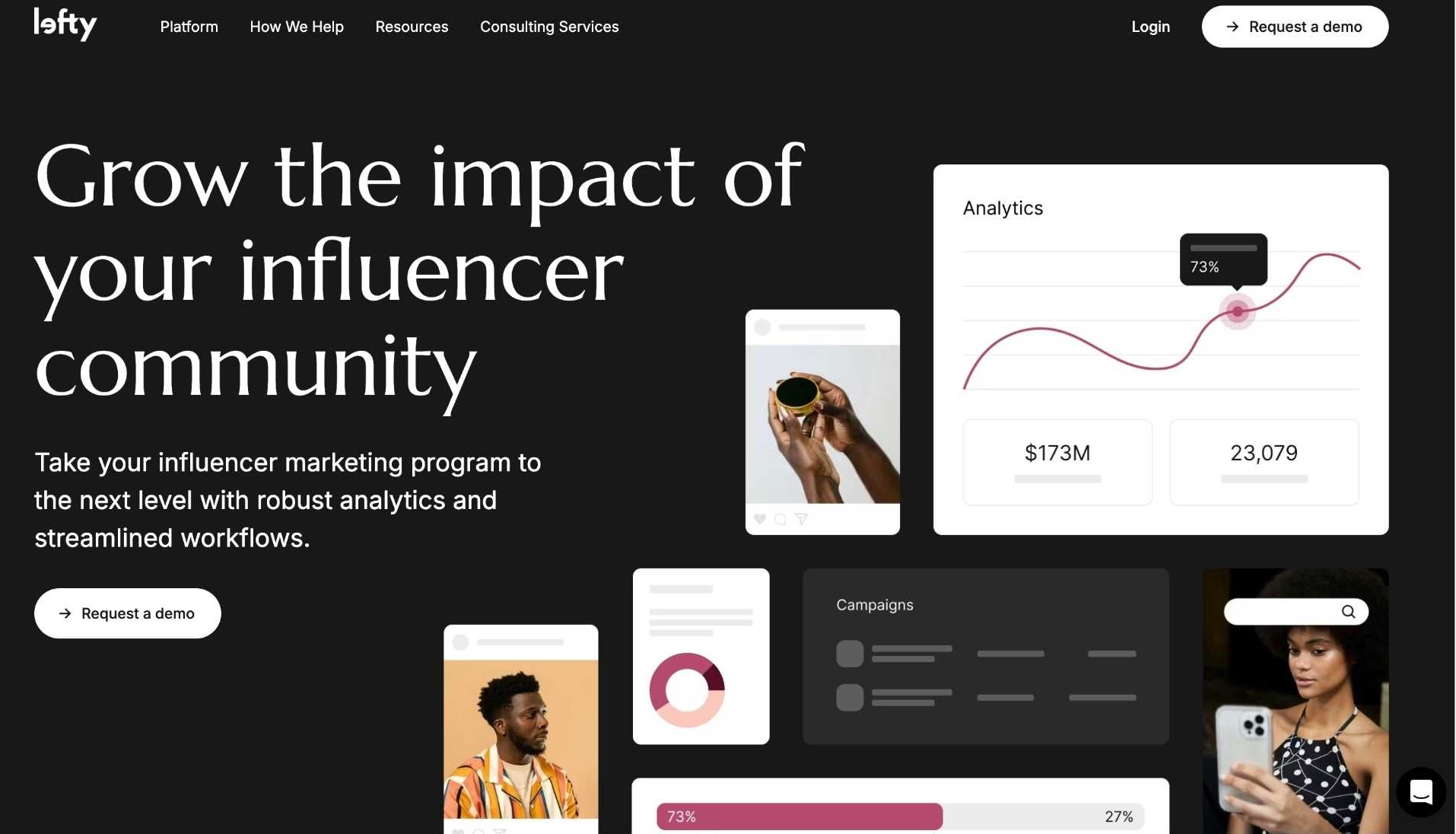
Lefty is an influencer marketing platform designed for brands and agencies that want discovery, campaign management, and performance tracking with a strong emphasis on data and global reach. It is often positioned as a mid-to-enterprise solution with a focus on scalability.
Key Features
- Global influencer database
Access a large pool of creators across multiple platforms and regions. - Advanced search and filtering
Filter influencers by audience demographics, engagement, and content type. - Campaign management tools
Plan, execute, and track campaigns from one dashboard. - Performance analytics and reporting
Track engagement, reach, impressions, and ROI. - Influencer relationship management
Manage long-term creator partnerships and track collaboration history. - Content tracking and monitoring
Automatically track posts, mentions, and campaign deliverables. - Competitive insights
Analyze competitor influencer strategies and campaign performance.
Pricing
- Starting Price: ~€590 per month.
- Pro Plan: ~€990/month, including 2 users, 5 campaigns, and unlimited reports.
- Premium Plan: ~€1,690/month, which adds a dedicated manager.
- Premium+ Plan: ~€3,490/month for 10 users and 25 campaigns.
Reviews
4.7/5.0 (G2)
Pros
- Strong global campaign capabilities
Suitable for brands running multi-market influencer programs. - Comprehensive analytics and reporting
Offers detailed insights into campaign performance. - Balanced feature set across discovery and management
Covers the full influencer marketing lifecycle.
Cons
- Limited pricing transparency
Requires sales engagement to understand costs. - Not as strong in UGC workflows
Less focus on content production compared to newer platforms. - Can be complex for smaller teams
Better suited for agencies or larger brands.
Integrations
- Shopify – Sync inventory, send gifts, and track product seeding directly from your store.
- Salesforce Commerce Cloud – Connect product data and run influencer gifting or affiliate workflows without manual spreadsheets.
- Magento – Plug your Magento store into Lefty for inventory, product requests, and gifting operations.
- Stripe – Manage creator payments globally through Lefty’s native Stripe integration.
- Gmail / Outlook – Connect email accounts to run and track influencer communication from inside Lefty.
Social Native vs Lefty
Social Native is more focused on UGC sourcing, licensing, and content activation across paid media and ecommerce. Lefty is more analytics- and workflow-oriented for lifestyle brands, with stronger emphasis on forecasting, CRM visibility, product seeding, and social commerce reporting.
For brands that want creator content as a reusable commerce asset, Social Native is the more direct fit. For fashion, beauty, and luxury teams that want stronger performance tracking and ecommerce-connected influencer operations, Lefty is a compelling alternative.
Final Thoughts
Choosing the right alternative to Social Native ultimately depends on your priorities—whether that’s content production, influencer relationships, ecommerce integration, or performance tracking. Platforms like Influencer Hero, Upfluence, and Aspire lean toward CRM and revenue-driven workflows, while CreatorIQ and Traackr focus on enterprise-scale analytics and governance. Meanwhile, tools like Heepsy and Influencity offer more flexible and accessible entry points, and platforms like IZEA and Later blend software with managed services. Social Native stands out for its content-first and UGC-driven approach, but brands looking for deeper CRM capabilities, pricing flexibility, or advanced analytics may find stronger alignment with one of these alternatives depending on their specific goals.
.png)


.jpg)