


.jpg)
10 meilleurs outils de notification push pour les marques D2C
Les notifications push sont devenues l'un des canaux de rétention offrant le meilleur ROI pour les marques D2C, permettant une messagerie personnalisée en temps réel sans dépendre des médias payants ni des cookies tiers. Selon Statista, les taux d'ouverture des notifications push mobiles mondiales atteignent jusqu'à 28 % selon le secteur d'activité (Statista, 2024) (https://www.statista.com/statistics/1229965/global-push-notification-open-rate-by-industry/) ce qui en fait un levier puissant pour la récupération de paniers abandonnés, les alertes de réapprovisionnement, les campagnes de baisse de prix et les ventes flash sur les boutiques Shopify.
Pour les fondateurs et les responsables de croissance qui développent les marques D2C, choisir le bon logiciel de notification push web et mobile—intégré à des plateformes comme Shopify, Klaviyo et Meta Ads—peut améliorer considérablement les taux de conversion, la rétention et la valeur de durée de vie du client (LTV).
Meilleurs outils de notification push pour les marques D2C
Dans cet article, nous examinerons les 10 meilleurs outils de notification push pour les marques D2C.
| OUTIL | AVIS | MEILLEUR POUR | INFO ESSAI | TARIFICATION | ||
|---|---|---|---|---|---|---|
1 |

|
⭐ | Récupération de panier | Réserver une démo | Tarification | Site Web |
2 |

|
⭐ | Marketing omnicanal | Réserver une démo | Tarification | Site Web |
3 |

|
⭐ | Engagement des éditeurs | Réserver une démo | Tarification | Site Web |
4 |

|
⭐ | Campagnes automatisées | Réserver une démo | Tarification | Site Web |
5 |

|
⭐ | Ciblage comportemental | Réserver une démo | Tarification | Site Web |
6 |
``````html

|
⭐ | Shopify Notifications | Réserver une démo | Tarification | Site Web |
7 |

|
⭐ | Segmentation d'audience | Réserver une démo | Tarification | Site Web |
8 |

|
⭐ | Shopify Push | Réserver une démo | Tarification | Site Web |
9 |

|
⭐ | Applications mobiles | Réserver une démo | Tarification | Site Web |
10 |

|
⭐ | Messagerie multicanal | Réserver une démo | Tarification | Site Web |
1. PushOwl (Brevo PushOwl : Email, Push, SMS)
Fonctionnement :
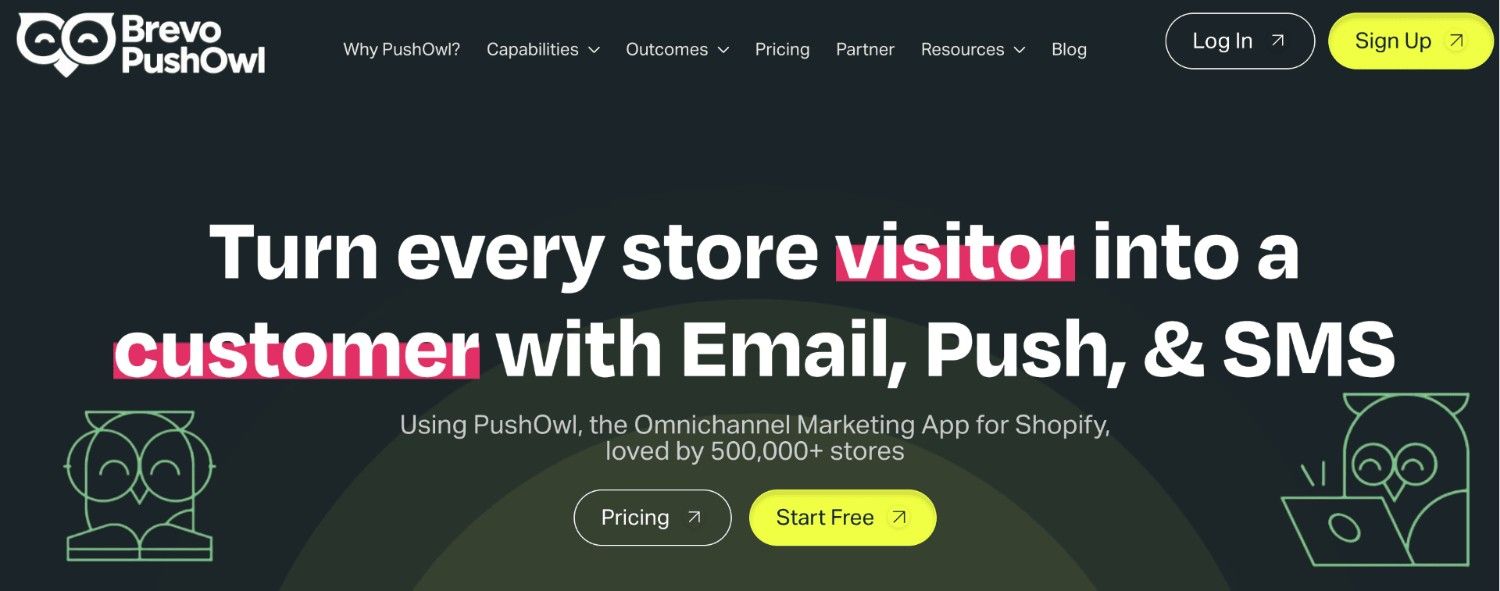
```PushOwl est un outil de web push natif à Shopify (et désormais de messagerie plus large) qui capture les consentements sur votre storefront, puis vous permet d'envoyer des notifications automatisées et basées sur des campagnes (par exemple, panier abandonné, de retour en stock) pour ramener les acheteurs.
Fonctionnalités clés :
- Campagnes web push : Envoyez des promotions, lancements et annonces directement aux navigateurs des visiteurs ayant donné leur consentement.
- Automatisation du panier abandonné : Déclenchez des rappels pour récupérer les abandons sans avoir besoin d'une adresse e-mail.
- Alertes de retour en stock et baisse de prix : Notifiez automatiquement les acheteurs lorsque les produits reviennent ou atteignent les prix cibles.
- Segmentation et ciblage : Ciblez par comportement/attributs pour que les notifications restent pertinentes.
- Gestion multi-magasin : Utile si vous exploitez plusieurs magasins Shopify sous une même équipe/flux de travail (noté par les commerçants dans les avis).
Avantages :
- Sentiment fort de la Shopify App Store et grande base d'avis (bon signal pour les équipes D2C).
- Valeur claire pour les promotions + automatisations de base (surtout pour les marques qui veulent des boucles de « récupération » rapides).
- De nombreux commerçants aiment l'approche « paiement à l'envoi » par rapport aux tarifs basés sur les abonnés.
Inconvénients :
- La portée du web push dépend de la prise en charge du navigateur/appareil ; iOS a historiquement été une limitation mentionnée par les commerçants (ce qui signifie que le push n'atteindra pas tous les acheteurs mobiles).
- Certains commerçants notent des résultats inégaux selon le cas d'usage (par exemple, pas toujours fort pour le panier abandonné).
Intégrations :
- Shopify : Récupère les événements de produit/client/magasin pour les automatisations comme la récupération de panier et le retour en stock.
- Brevo : Utilisez la suite e-mail/SMS de Brevo aux côtés du push pour les flux multi-canaux.
- Loox : Déclenchez/conduisez la collecte d'avis via push (par exemple, notifications de demande d'avis).
- Zapier : Connectez l'activité push à d'autres outils/flux de travail (par exemple, alertes, listes, opérations internes).
- Shopify Admin : Gérez et exploitez depuis le contexte administrateur principal de Shopify (noté comme une connexion prise en charge dans la liste des applications).
Tarification :
Offre gratuite disponible ; les forfaits payants commencent à 19 $/mois (option annuelle disponible) et augmentent vers des niveaux supérieurs (par exemple, 79 $/mois) selon le forfait/les fonctionnalités. Benchmark : bas → moyen.
Avis :
4,8/5 sur la Shopify App Store (1 775 avis).
2. Firepush
Fonctionnement :
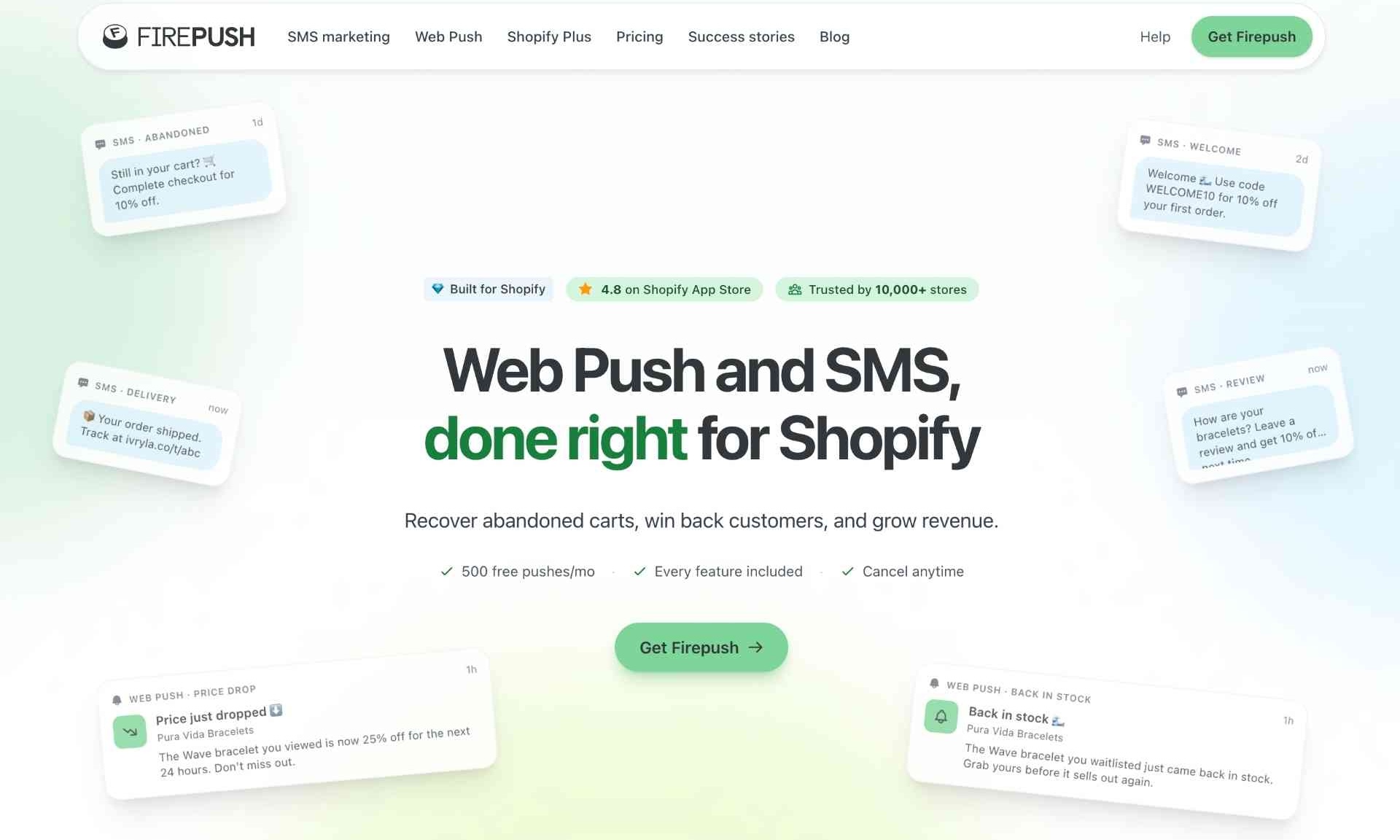
Firepush est une application marketing Shopify axée sur les automatisations et campagnes web push + SMS, avec un accent particulier sur la récupération du panier abandonné et la messagerie du cycle de vie.
Fonctionnalités clés :
- Flux de récupération du panier abandonné : Séquences automatisées pour recibler les abandonneurs via push/SMS.
- Campagnes multi-canaux : Exécutez des campagnes push + SMS coordonnées à partir d'un seul tableau de bord.
- Alertes de retour en stock et baisse de prix : Notifications déclenchées par les événements liés aux modifications du catalogue.
- Segmentation et personnalisation : Ciblez les campagnes en fonction des segments d'audience et des comportements.
- Rapports et suivi du ROI : Suivez l'engagement et les revenus attribués aux campagnes.
Avantages :
- Signal d'adoption solide de la Shopify App Store (148 avis) avec une notation solide.
- Les commerçants louent fréquemment la facilité d'utilisation + l'assistance utile dans les avis.
- Bon choix si vous souhaitez push + SMS ensemble (par rapport au push uniquement).
Inconvénients :
- SMS ajoute de la complexité (conformité, délivrabilité, gestion des coûts) par rapport aux piles push uniquement.
- La valeur dépend d'avoir suffisamment de trafic/consentements ; les petits magasins peuvent se sentir limités par les volumes de push sur les niveaux inférieurs.
Intégrations :
- Shopify Flow : Déclenchez les campagnes Firepush en fonction des événements Shopify/Flow.
- Loox : Utilisez l'activité d'avis et la preuve sociale pour personnaliser la messagerie (Firepush a annoncé l'intégration Loox).
- Growave : Utilisez les données de fidélité/récompenses pour personnaliser les campagnes push (listé comme exemple d'intégration Firepush).
- PageFly : Utilisez les pop-ups/pages PageFly pour augmenter les abonnés et alimenter le ciblage (listé comme exemple d'intégration Firepush).
- Shopify Admin : Opérez avec un accès/une connexion administrateur principal de Shopify.
Tarification :
Plan gratuit disponible ; les forfaits payants commencent à 13 $/mois (10 000 notifications web incluses), avec des niveaux supérieurs comme 49 $/mois. Référence : bas.
Avis :
4,7/5 sur Shopify App Store (148 avis).
3. iZooto
Fonctionnement :
iZooto est une plateforme de notification web qui se connecte à Shopify pour vous permettre de collecter des abonnés aux notifications et d'exécuter des playbooks de retargeting automatisés (par exemple, panier abandonné, baisses de prix), avec segmentation et analytics.
Fonctionnalités clés :
- Flux d'intégration Shopify : Conçu pour être installé et activé via Shopify pour une configuration rapide.
- Playbooks de retargeting : Modèles d'automatisation prédéfinis pour les cas d'usage D2C courants (récupération de panier, promotions, etc.).
- Segmentation et personnalisation : Messagerie ciblée basée sur le comportement/les attributs de l'audience.
- Livraison consciente du fuseau horaire : Aide à envoyer à l'heure locale du client (mise en évidence dans les conseils d'intégration Shopify).
- Suivi des performances : Connectez analytics pour mesurer l'engagement (par exemple, la connexion GA est mentionnée dans les intégrations iZooto).
Avantages :
- Signal d'avis tiers fort sur G2 (utile si vous souhaitez des commentaires au-delà des seuls avis Shopify).
- Construit autour des workflows de notifications « audience propriétaire », idéal pour les boucles d'achat répété.
Inconvénients :
- Les limitations de couverture des notifications web s'appliquent ; les contraintes de notifications web iOS sont explicitement discutées dans le contexte des Q&A G2 d'iZooto.
- Certains commentaires G2 signalent des limites de ciblage/personnalisation selon les besoins.
Intégrations :
- Shopify / Shopify Plus : Configuration de style 1-clic pour exécuter des campagnes de notifications web à partir d'événements de store.
- Google Analytics : Connectez GA pour suivre l'engagement et les rapports de performance.
- Zapier (Shopify ↔ iZooto) : Automatisez les workflows entre Shopify et iZooto via Zapier.
- Shopify (connecteur d'app Zapier) : Utilisez les déclencheurs Shopify (commandes, clients, etc.) pour piloter la logique des notifications via Zapier.
- (Optionnel via Zapier) autres outils : Étendez à des milliers d'apps via la couche d'automatisation de Zapier.
Tarification :
Pour les marchands Shopify, les listes citent couramment des forfaits commençant autour de 25 $/mois. Référence : bas → moyen.
Avis :
4,5/5 sur G2 (95 avis).
4. PushEngage

Fonctionnement :
PushEngage est une plateforme de notification web/app avec support Shopify ; son app Shopify met également l'accent sur la récupération de panier et l'engagement multi-canal (y compris WhatsApp dans la liste Shopify).
Fonctionnalités clés :
- Automatisations de récupération de panier : Rappels automatisés pour les paniers abandonnés.
- Alertes de retour en stock et de baisse de prix : Alertes synchronisées avec le catalogue pour les clients à fort potentiel.
- Segmentation et balises intelligentes : Personnalisez les campagnes à l'aide de balises/déclencheurs et de fuseaux horaires.
- Test A/B et analytics : Mesurez l'impact de conversion et optimisez la messagerie.
- Widget WhatsApp click-to-chat : Ajoutez un point d'entrée click-to-chat et des flux (selon la liste de l'app).
Avantages :
- Note très forte et précoce sur Shopify App Store (petit échantillon, mais note parfaite).
- Utile si vous souhaitez des notifications plus un point de contact WhatsApp depuis un seul tableau de bord.
Inconvénients :
- Volume d'avis Shopify plus faible (donc le « signal » est moins robuste que pour les apps établies de longue date).
- Les fonctionnalités multi-canal peuvent être superflues si vous souhaitez seulement des envois de notifications web simples.
Intégrations :
- Zapier : Créez des workflows et notifiez en fonction d'événements (PushEngage dispose du support d'intégration Zapier).
- RSS par Zapier : Envoyez automatiquement des notifications lorsque votre flux RSS publie (utile pour les mises à jour de contenu/nouvelles arrivées).
- Shopify Checkout/Admin : La liste de l'app indique la connectivité côté Shopify pour les opérations de store.
WhatsApp (intégration de canal) : Utilisez la messagerie WhatsApp + clic pour discuter dans le cadre de l'engagement (par inscription).
- Web push + App push (canaux) : La livraison multi-appareils sur plusieurs plateformes est soulignée dans l'inscription.
Tarification :
Plan gratuit + essai gratuit disponible ; les forfaits payants commencent à 19 $/mois (et affichent une option annuelle dans l'inscription Shopify). Benchmark : bas.
Avis :
5,0/5 sur le Shopify App Store (8 avis).
5. Aimtell
Fonctionnement :
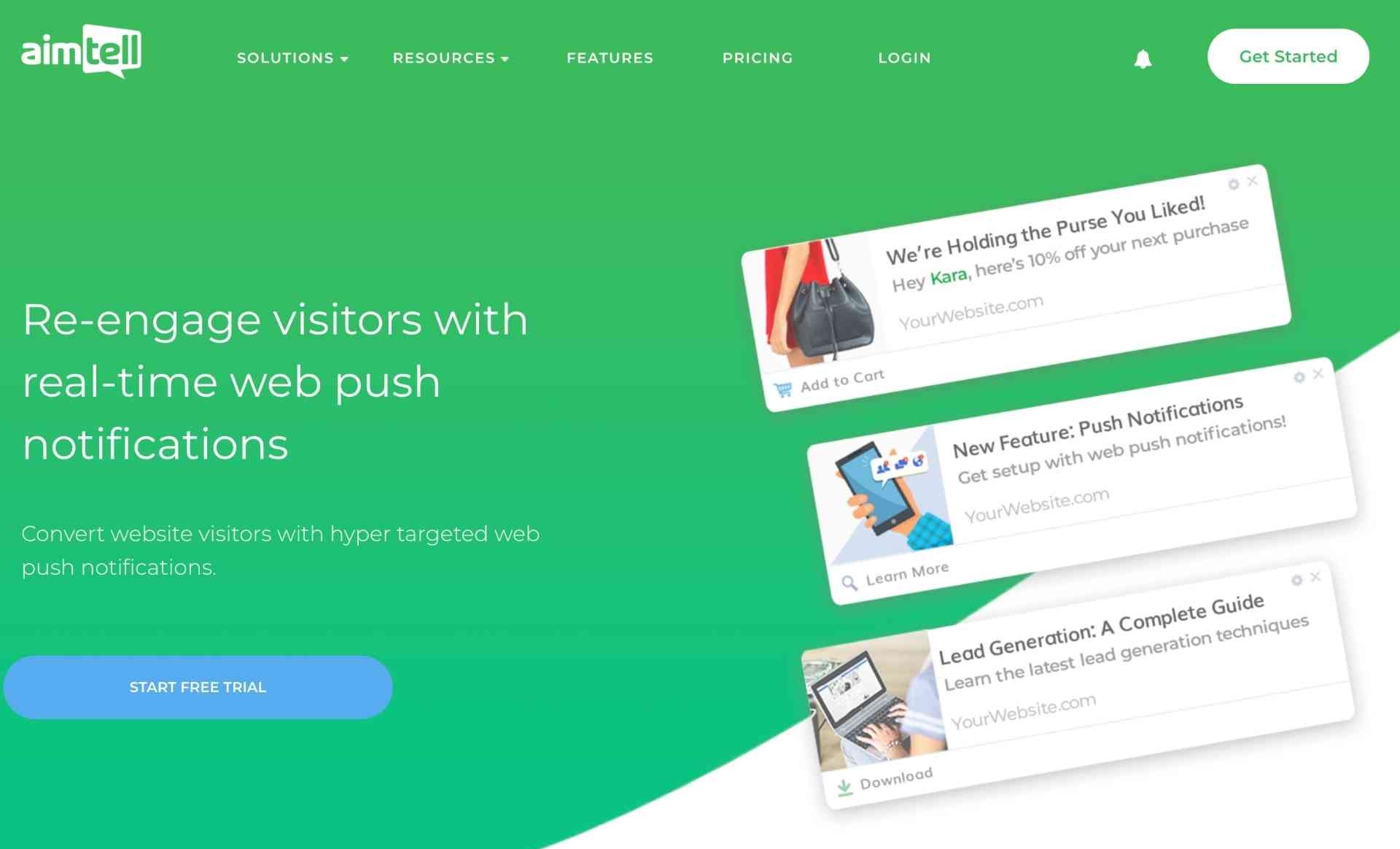
Aimtell est une plateforme de web push qui se connecte à Shopify pour vous permettre de collecter des abonnés sur votre site et d'envoyer des campagnes push ciblées + des automations déclenchées (y compris les comportements d'abandon de panier et d'entonnoir).
Fonctionnalités clés :
- Déclencheurs d'abandon de panier + entonnoir : Ciblez les acheteurs en fonction de l'endroit où ils abandonnent.
- Profondeur de segmentation et de ciblage : Créez des audiences précises pour une pertinence plus élevée.
- Tests A/B : Testez les copies/offres pour améliorer le CTR et les conversions.
- Suivi des conversions : Attribuez les résultats aux campagnes.
- Flux de travail basés sur l'automatisation : Configurez une fois, puis laissez les messages déclenchés s'exécuter continuellement.
Avantages :
- Profondeur de fonctionnalités solide pour le ciblage avancé (souvent mentionné comme un différenciateur dans les avis).
- Les avis Shopify soulignent des résultats de récupération significatifs (un commerçant cite une récupération de 17 % dans un avis).
Inconvénients :
- Outil plus avancé → peut prendre du temps pour l'apprentissage/l'implémentation complète (noté par les commerçants dans les avis).
- La tarification est plus élevée que celle des applications push Shopify d'entrée de gamme une fois que vous augmentez vos abonnés.
Intégrations :
- Shopify : Installez via Shopify app pour capturer les événements/abonnés et exécuter les automations.
- Shopify App (connexion native) : Aimtell prend explicitement en charge l'installation via Shopify App.
- Zapier : Mentionné par les commerçants comme permettant des possibilités d'automatisation plus larges.
- Support navigateur de bureau + mobile : Livrez dans différents contextes d'appareils (fait partie de la proposition de valeur dans l'inscription Shopify).
- Support multi-site : Exécutez sur plusieurs sites sur les forfaits supérieurs (les détails de tarification Shopify font référence à ceci).
Tarification :
Les forfaits commencent à 49 $/mois (jusqu'à 10 000 abonnés push actifs) avec un essai gratuit de 14 jours ; les niveaux incluent 99 $/mois et 199 $/mois. Benchmark : moyen.
Avis :
4,6/5 sur le Shopify App Store (7 avis).


6. Smart Push Marketing
Fonctionnement :
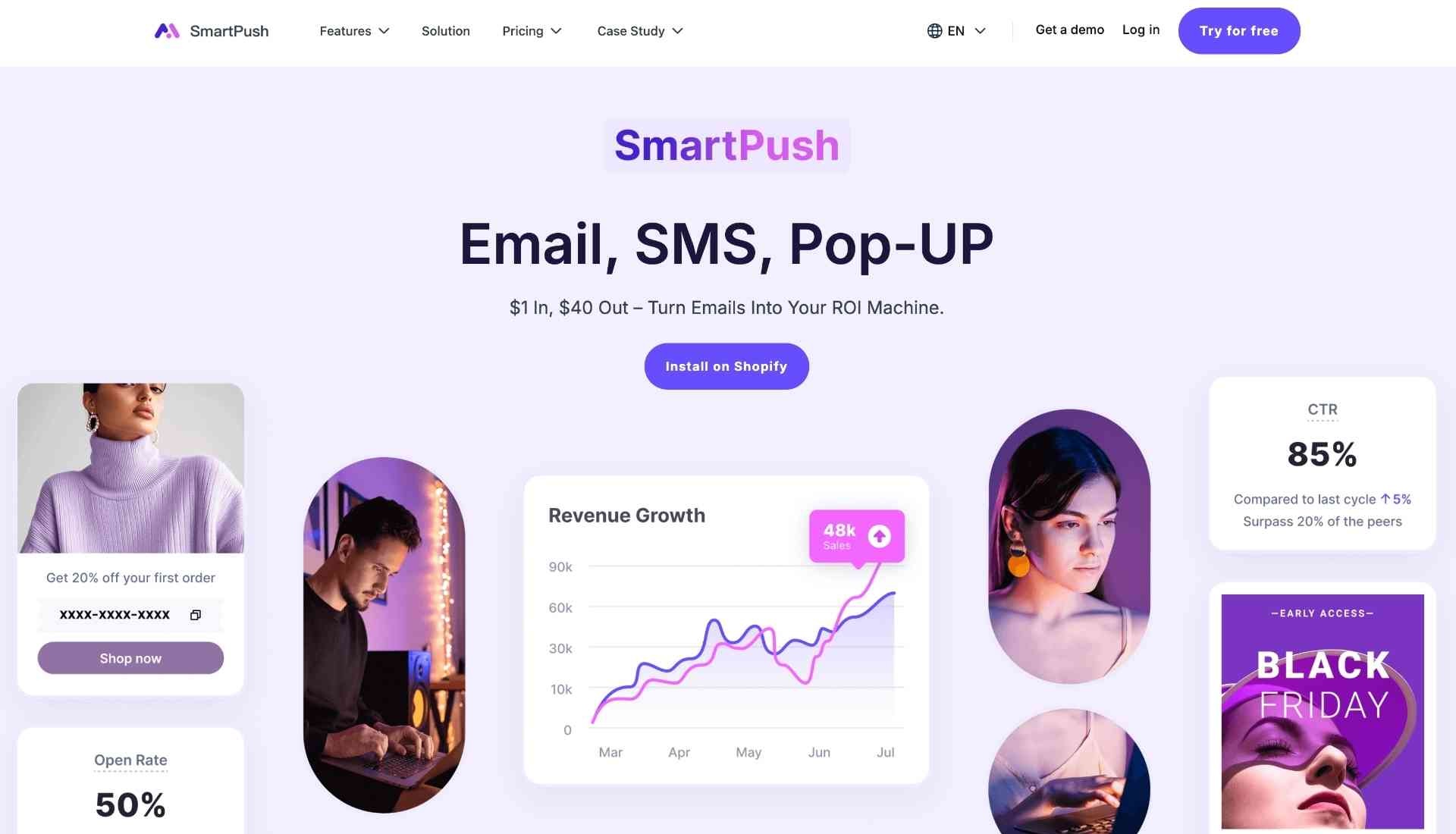
Smart Push Marketing est une application Shopify axée sur les notifications push web qui aident les marques D2C à déclencher la récupération automatique de paniers, les alertes de vente flash et les promotions personnalisées auprès des abonnés ayant donné leur consentement.
Fonctionnalités clés :
- Campagnes push web : Envoyez des alertes promotionnelles comme des réductions, des lancements et des rappels d'événements.
- Notifications de panier abandonné : Reciblez automatiquement les acheteurs qui ont abandonné des paniers.
- Messages déclenchés par le comportement : Déclenchez des notifications push en fonction des actions des utilisateurs, comme les consultations de produits ou l'ajout au panier.
- Segmentation des audiences : Ciblez des groupes d'utilisateurs spécifiques en fonction du comportement ou de l'engagement.
- Suivi des conversions : Surveillez les performances des campagnes selon les métriques ROI.
Avantages :
- La configuration simple rend Smart Push Marketing appropriée pour les commerçants qui recherchent une solution push web directe.
- Contribue à augmenter les visites répétées et les conversions grâce aux déclencheurs automatisés.
Inconvénients :
- Base d'avis plus petite par rapport aux outils plus anciens, ce qui rend la preuve sociale moins robuste.
- Les fonctionnalités sont plus basiques par rapport aux plateformes avancées (par ex., les tests A/B et la personnalisation avancée sont limités).
Intégrations :
- Shopify : L'installation native s'intègre aux événements du magasin pour les déclencheurs automatisés.
- Shopify Admin : Utilisez les données principales du magasin pour la segmentation et les déclencheurs d'événements.
- Suivi des événements clients : Envoie des signaux en fonction du comportement des acheteurs
- Synchronisation du catalogue : Assure que les alertes de produits (par ex., de retour en stock) correspondent à l'inventaire.
- Outils de balisage : Fonctionne avec les balises clients Shopify pour alimenter les segments.
Tarification :
Les niveaux de tarification commencent bas avec une option freemium et passent à des forfaits mensuels payants qui déverrouillent des fonctionnalités d'automatisation avancées. Référence : faible.
Avis :
4,6/5 sur la Shopify App Store (100+ avis).
7. PushAlert
Fonctionnement :
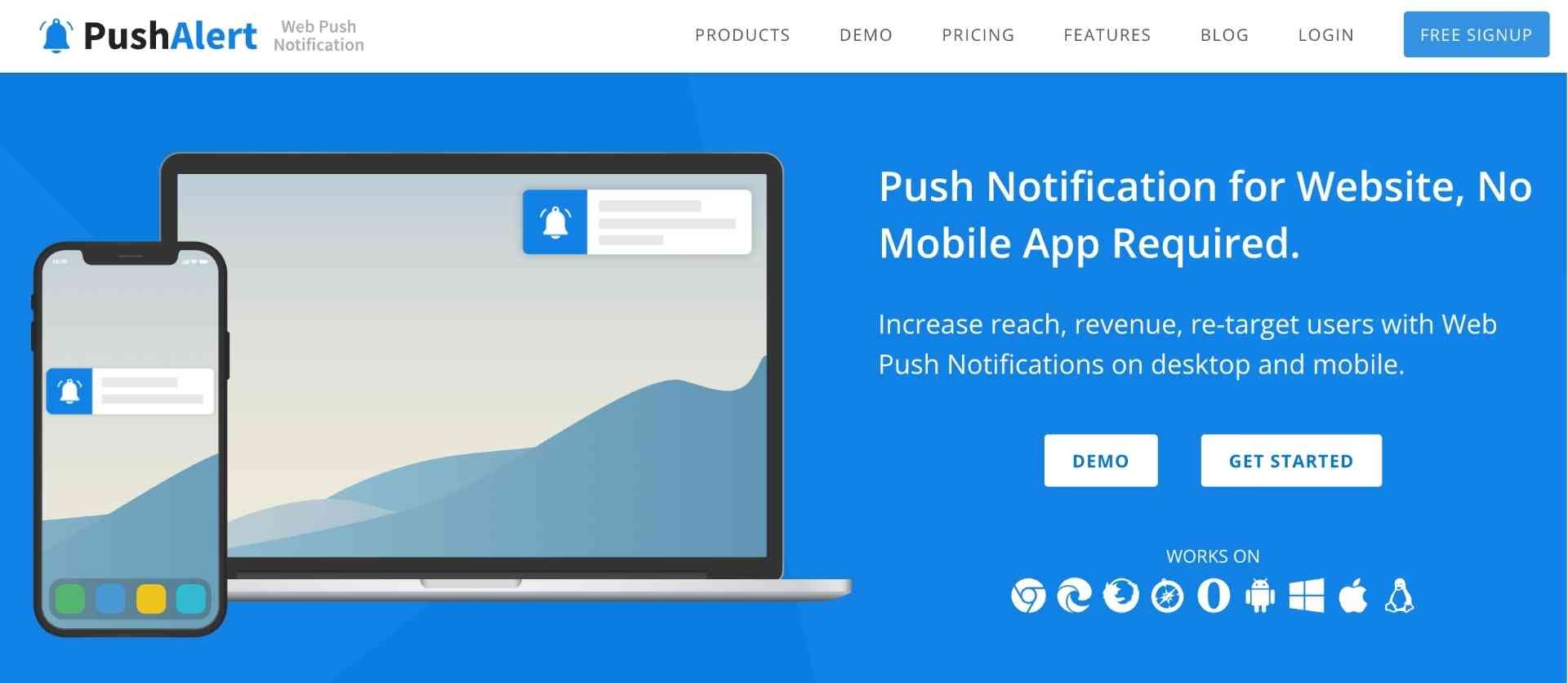
PushAlert est une plateforme de notifications push web qui se connecte aux magasins Shopify pour envoyer des alertes en temps réel pour les promotions, la récupération de panier, le retour en stock et les événements de baisse de prix.
Fonctionnalités clés :
- Campagnes automatisées : Configurez des déclencheurs push automatisés pour les cas d'usage D2C courants.
- Alerte de retour en stock et de baisse de prix : Notifiez les acheteurs lorsque les articles sont à nouveau disponibles ou réduits.
- Campagnes goutte à goutte et planification : Planifiez une séquence de messages dans le temps.
- Segmentation et analyse : Segmentez les audiences et suivez les performances.
- Support multi-navigateur : Les notifications push sont livrées à plusieurs types de navigateurs/appareils, augmentant la portée.
Avantages :
- Bien noté pour la facilité de configuration et la livraison fiable.
- Bon rapport qualité-prix avec une automatisation riche à un prix accessible.
Inconvénients :
- Certains commerçants notent que l'interface semble obsolète ou moins intuitive que celle des concurrents.
- Personnalisation avancée limitée par rapport aux outils d'entreprise.
Intégrations :
- Shopify : Synchronise les événements du magasin pour les déclencheurs d'alerte automatisés.
- WooCommerce (via Zapier) : Étendez les solutions de secours aux magasins non-Shopify via l'automatisation.
- Zapier : Large connectivité avec d'autres outils et flux de travail.
- Google Analytics : Connexion facultative pour suivre les métriques de conversion.
- Intégrations CRM : Via les flux zap pour synchroniser les abonnés ou les données de segment.
Tarification :
Les niveaux de plans commencent bas avec une option gratuite et des forfaits mensuels payants à partir d'environ 15 $/mois. Référence : faible.
Avis :
4,7/5 sur la Shopify App Store (500+ avis).
8. Kanpai Web Push Notifications
``````html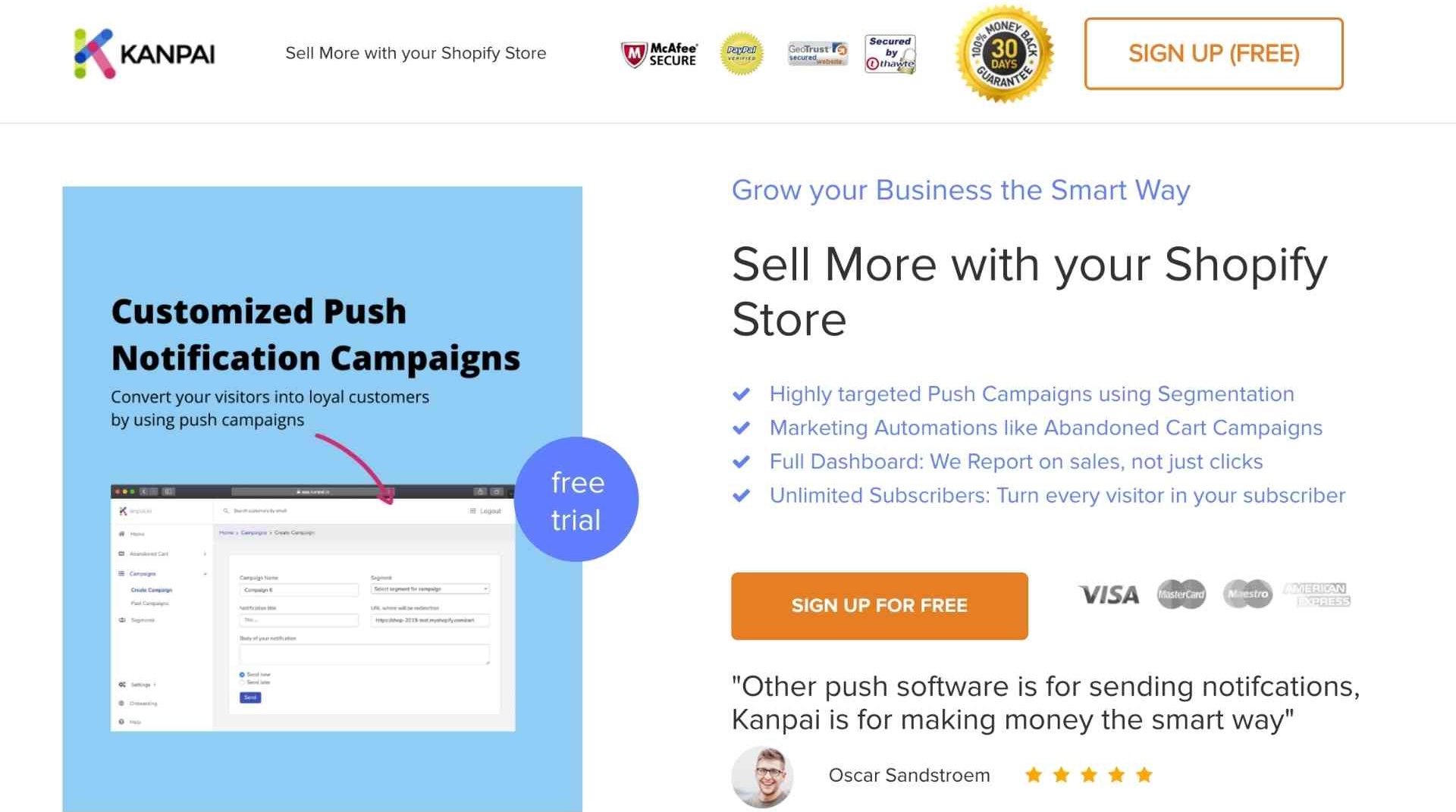
Fonctionnement :
Kanpai est un outil de notification push web minimaliste et bien noté pour Shopify qui permet aux marques d'exécuter des notifications push basiques pour les promotions, les paniers abandonnés et les campagnes segmentées en mettant l'accent sur la simplicité.
Fonctionnalités clés :
- Campagnes push : Envoyez des promos et des annonces aux utilisateurs abonnés.
- Déclencheurs de panier abandonné : Reciblez les clients qui ont abandonné leur panier avec des messages automatisés.
- Notifications segmentées : Groupez les abonnés pour une messagerie ciblée.
- Support de croissance des abonnés : Outils pour aider le commerçant à capturer plus d'abonnements push.
- Tableau de bord analytique : Suivez les métriques d'ouverture et de clic.
Avantages :
- Interface utilisateur très claire et simple avec une mise en place rapide et une création de campagne facile.
- Très bien noté par les commerçants pour la fiabilité et la réactivité du support.
Inconvénients :
- Pas aussi riche en fonctionnalités (manque de segmentation avancée et de SMS multicanal) que les outils plus établis.
- Sophistication d'automatisation limitée.
Intégrations :
- Shopify : L'installation native intègre les déclencheurs push aux événements du magasin.
- Shopify Admin : Utilise le contexte d'interface utilisateur interne pour les paramètres/campagnes.
- Segmentation par balise : Synchronise les balises de client Shopify pour le ciblage.
- Support du navigateur : Fonctionne sur les principaux navigateurs de bureau et mobiles.
- Zapier basique : Connectez-vous aux workflows selon vos besoins.
Tarification :
Plan gratuit avec les éléments essentiels ; le plan payant déverrouille les fonctionnalités avancées à partir d'environ 9 $ à 19 $/mois. Repère : bas.
Avis :
4,9/5 sur la boutique d'applications Shopify (plus de 100 avis).
9. Notifications push mobiles MobiLoud
Fonctionnement :
MobiLoud propose des notifications push mobiles dans le cadre de sa plateforme d'application mobile plus large — permettant aux marques D2C Shopify d'engager les utilisateurs via des alertes push natives iOS/Android liées à l'expérience de l'application mobile de votre magasin.
Fonctionnalités clés :
- Push mobile natif : Envoie des notifications push d'application mobile pour les offres, les remises en stock, etc.
- Déclencheurs de comportement : Déclenchez en fonction des vues utilisateur, des commandes ou du statut de fidélité.
- Analyse approfondie : Suivez l'engagement et la conversion à partir de push mobile.
- Messagerie intégrée à l'application : Messagerie riche au sein de votre application de magasin mobile.
- Segmentation : Ciblez les messages selon le comportement de l'application et les attributs d'audience.
Avantages :
- True native push mobile (pas de push web du navigateur) — augmente la portée et l'engagement.
- Idéal pour les marques qui ont déjà ou souhaitent des applications mobiles (valeur d'audience importante).
Inconvénients :
- Non axé sur le push web ; vous devez utiliser/maintenir une application mobile (surcharge de coûts importante).
- Engagement et prix plus élevés par rapport aux outils push web uniquement.
Intégrations :
- Shopify : Synchronise les données/événements du magasin vers l'application mobile et les notifications push.
- Segment : Utilisez les profils d'audience pour un ciblage plus riche.
- Plateformes d'analyse : Connectez-vous à des outils comme Firebase ou GA pour des informations mobiles.
- Intégrations CRM : Synchronisez les listes push d'applications avec CRM pour une segmentation plus riche.
- Outils de paiement/commande : Intégrations d'interface utilisateur pour déclencher le push lors d'événements d'achat.
Tarification :
Prix de l'application mobile entreprise + push ; généralement des devis personnalisés en fonction de la génération d'applications et du volume de push. Repère : élevé.
Avis :
4,5/5 sur Trustpilot (plus de 300 avis).
10. Notifications push web OneSignal
Fonctionnement :
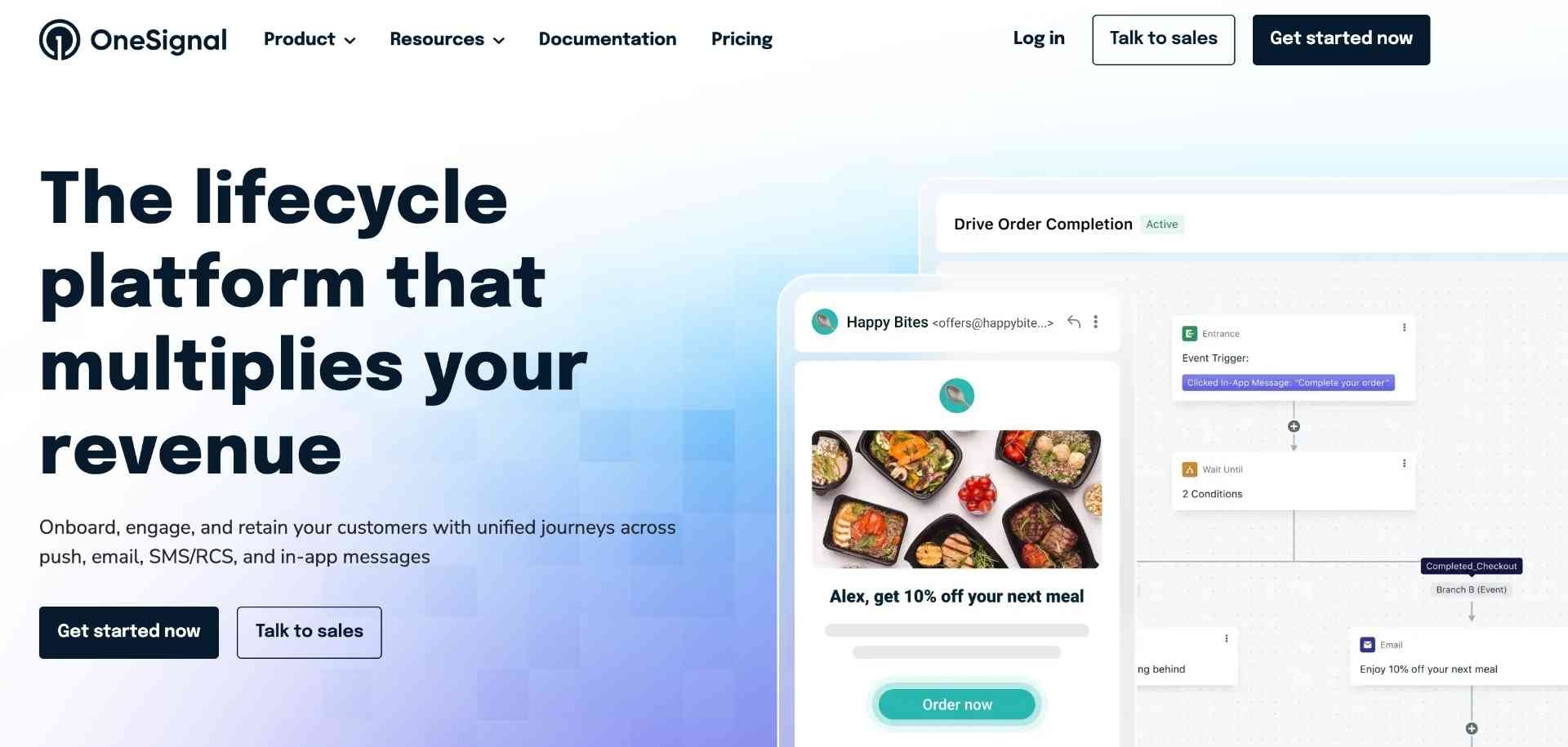
```OneSignal est une plateforme d'engagement client qui permet aux marques de commerce électronique de capturer les abonnés aux notifications push web et d'envoyer des messages automatisés sur les canaux de notifications push web, e-mail, SMS et in-app. Elle aide les marques à récupérer les paniers abandonnés, à annoncer des promotions et à proposer des notifications personnalisées en fonction du comportement des clients.
Fonctionnalités clés :
- Parcours client automatisés : Déclenchez des notifications push en fonction d'actions telles que l'abandon de panier, les achats ou le comportement de navigation.
- Campagnes promotionnelles : Envoyez des messages de diffusion pour les ventes, les lancements de produits et les offres à durée limitée.
- Segmentation avancée : Créez des segments d'audience à l'aide des attributs client, du comportement et de l'historique d'achat.
- Personnalisation : Proposez des messages ciblés avec du contenu dynamique pour améliorer l'engagement.
- Analyse et test A/B : Mesurez les conversions, les taux de clics et optimisez les campagnes avec des outils de test.
- Messagerie multicanal : Coordonnez les notifications push web avec les e-mails, SMS et messages in-app à partir d'une seule plateforme.
Avantages :
- Offre des capacités d'automatisation et de segmentation plus avancées que la plupart des applications de notification push dédiées.
- Supporte plusieurs canaux de communication, ce qui la rend adaptée aux marques construisant des parcours clients omnicanaux.
- Largement utilisée et reconnue pour son évolutivité, sa fiabilité et son plan gratuit généreux.
Inconvénients :
- L'interface et l'ensemble des fonctionnalités peuvent sembler accablants pour les petits magasins ayant des besoins simples en matière de notifications push.
- Certaines capacités avancées sont réservées aux plans de niveau supérieur.
Intégrations :
- Shopify : Synchronise les données client et de commande pour les campagnes personnalisées.
- WooCommerce : Prend en charge la collecte d'abonnés et la messagerie basée sur les événements.
- Zapier : Connecte OneSignal avec des milliers d'applications tierces.
- API personnalisées et SDK : Permettent les intégrations avancées et les flux de travail personnalisés.
- Plateformes analytiques : Compatible avec des outils tels que Google Analytics pour le suivi des campagnes.
Tarification :
Plan gratuit disponible ; les plans payants commencent à environ 9 $ à 99 $ par mois selon le nombre d'abonnés et le volume de messages. Analyse comparative : faible à moyen.
Avis :
4,7/5 sur G2 (400+ avis)
Réflexions finales
Les notifications push restent l'un des canaux de rétention les plus sous-utilisés mais à fort effet de levier pour les marques D2C, en particulier alors que les coûts d'acquisition payante continuent d'augmenter et que le suivi tiers devient moins fiable.
L'outil approprié dépend de votre stade de croissance et de votre mélange de canaux : les plateformes de notifications push comme PushOwl, PushAlert et iZooto sont idéales pour l'automatisation rapide native de Shopify, tandis que les solutions comme MobiLoud conviennent mieux aux marques investissant dans les écosystèmes d'applications mobiles.
En fin de compte, le meilleur logiciel de notification push est celui qui s'intègre de manière transparente à votre pile technologique existante, permet la segmentation et l'automatisation intelligentes, et génère des revenus mesurables grâce à la récupération des paniers abandonnés, aux alertes de réapprovisionnement et aux campagnes promotionnelles personnalisées.

.png)


.jpg)