


.jpg)
10 meilleurs outils de CMS e-commerce pour les marques D2C
Le choix du bon CMS e-commerce est une décision stratégique pour les fondateurs et opérateurs D2C, car il impacte directement les taux de conversion, la vitesse du site, la scalabilité et le coût total de possession. Avec les ventes mondiales de commerce électronique au détail devant dépasser 6,3 billions de dollars en 2024 (Statista, 2024), et des plateformes comme Shopify alimentant plus de 4 millions de sites web actifs dans le monde (BuiltWith, 2024), sélectionner un CMS qui s'aligne sur votre stade de croissance, votre pile technologique et vos ambitions omnicanal est plus critique que jamais.
Dans ce guide, nous analysons les 10 meilleurs outils de CMS e-commerce sur lesquels s'appuient les marques D2C pour gérer le contenu, le commerce, les intégrations et les performances à grande échelle.
Meilleurs outils de CMS e-commerce pour les marques D2C
| OUTIL | AVIS | IDÉAL POUR | INFO ESSAI | TARIFICATION | ||
|---|---|---|---|---|---|---|
1 |

|
⭐ | Croissance rapide | Réserver une démo | Tarification | Site web |
2 |

|
⭐ | Intégration WordPress | Réserver une démo | Tarification | Site web |
3 |
|
⭐ | Marques d'entreprise | Réserver une démo | Tarification | Site web |
4 |
|
⭐ | Entreprises en croissance | Réserver une démo | Tarification | Site web |
5 |

|
⭐ | Petites entreprises | Réserver une démo | Tarification | Site web |
6 |

|
⭐ | Boutiques axées sur le design | ```Réserver une démo | Tarification | Site web |
7 |

|
⭐ | Expansion mondiale | Réserver une démo | Tarification | Site web |
8 |

|
⭐ | Boutiques économiques | Réserver une démo | Tarification | Site web |
9 |

|
⭐ | Commerce axé sur le contenu | Réserver une démo | Tarification | Site web |
10 |

|
⭐ | Sites web flexibles | Réserver une démo | Tarification | Site web |
1. Shopify
Shopify est un système de gestion de contenu e-commerce hébergé (SaaS) qui permet aux marques D2C de créer, gérer et développer leur boutique en ligne sans gérer l'infrastructure. Les commerçants personnalisent les thèmes, gèrent les produits, configurent le paiement et la caisse, et étendent les fonctionnalités via l'écosystème d'applications de Shopify.
Fonctionnalités clés :
- Infrastructure hébergée : Hébergement entièrement géré, sécurité et mises à jour gérés par Shopify.
- Shopify Checkout : Caisse à taux de conversion élevé ; Shopify affirme jusqu'à 15 % de conversion plus élevée en moyenne par rapport aux concurrents (Shopify, 2026)
- Écosystème d'applications : Plus de 8 000 applications pour les abonnements, l'optimisation des conversions, la fidélité, l'UGC et plus encore (Shopify App Store, 2026)
- Shopify Markets :Vente multisaison et internationale depuis un seul backend.
- Vente omnicanale : Vendez via Meta, Google, TikTok, Amazon et PDV depuis un seul admin.
- Analytics intégrée : Tableaux de bord en temps réel et rapports avancés sur les plans supérieurs.
Avantages :
- Temps de mise en marché extrêmement rapide.
- Meilleur écosystème pour les intégrations de pile technologique D2C.
- Parcours d'évolution clair de PME à entreprise (Shopify Plus).
- Communauté forte et réseau de partenaires.
Inconvénients :
- Les coûts des applications peuvent augmenter considérablement les dépenses mensuelles.
- Personnalisation du backend limitée par rapport aux plateformes open-source.
- Extensibilité du paiement restreinte sur les forfaits non-Plus.
- Frais de transaction si vous n'utilisez pas Shopify Payments.
Intégrations :
- Klaviyo : Synchronisation des données client et de commande pour l'automatisation du cycle de vie email/SMS avancée.
- Meta (Facebook & Instagram) : Synchronisation du catalogue de produits et intégration native du commerce social.
- Google Merchant Center : Synchronisation automatisée du flux de produits pour les campagnes Shopping.
- TikTok : Synchronisation de produits et intégration du suivi des annonces pour TikTok Shop et les annonces.
- Influencer Hero : créez des liens d'affiliation, détectez les influenceurs clients & envoyez des produits aux influenceurs.
- Gorgias : Extrayez les données de commande/client dans les tickets d'assistance client pour des flux CX plus rapides.
Tarification :
Milieu de gamme pour la plupart des marques D2C ; élevé au niveau entreprise. Les forfaits commencent à 24 $/mois (De base), 69 $/mois (Croissance), 299 $/mois (Avancé) et 2 300 $/mois (Plus) facturés annuellement (Shopify, 2026). Essai gratuit de 3 jours disponible.
Avis :
4,4/5,0 sur G2
2. WooCommerce
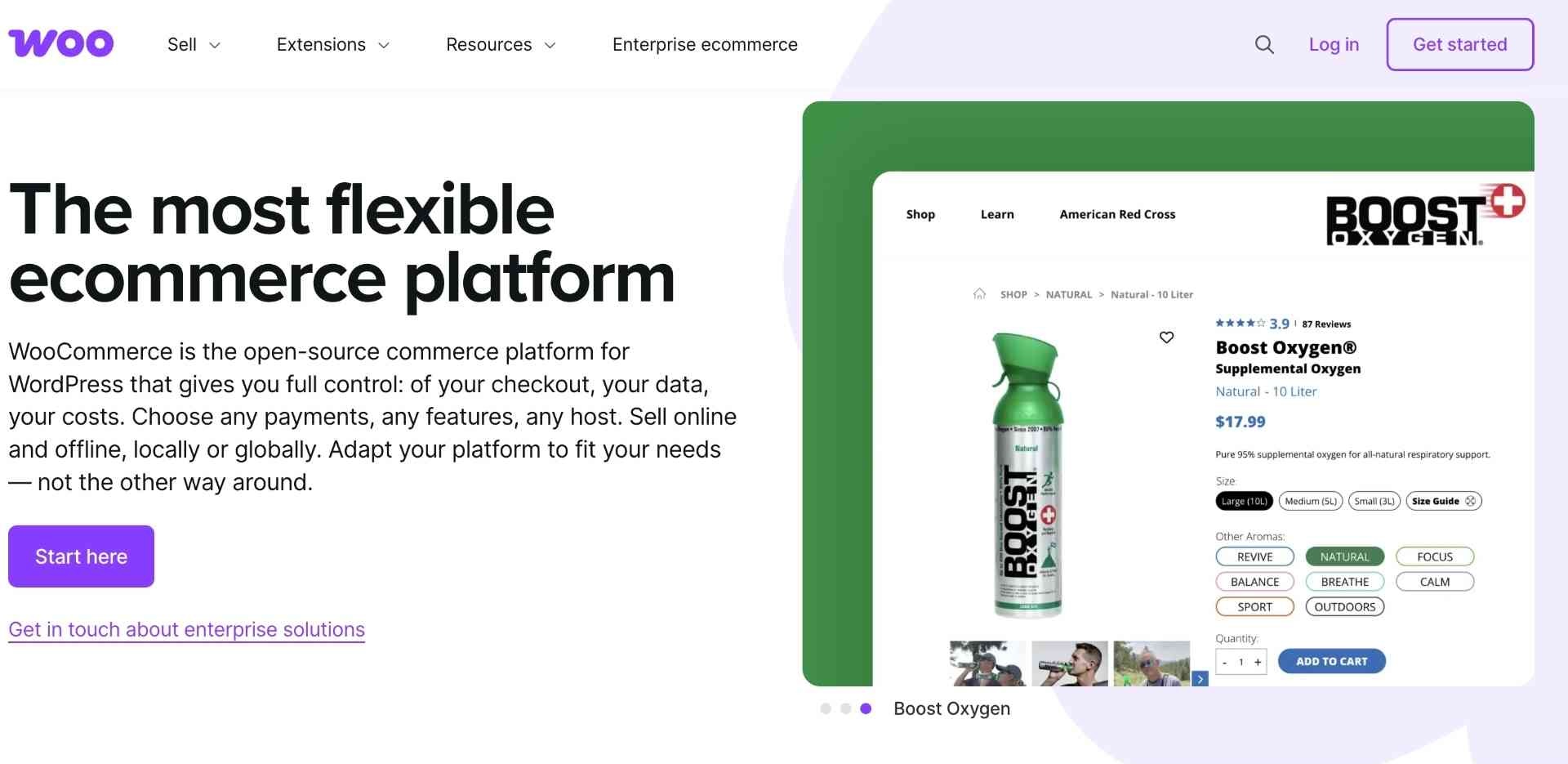
WooCommerce est un plugin e-commerce open-source construit sur WordPress. Les marques hébergent leur propre site Web, installent WooCommerce et personnalisent via des thèmes, des plugins et le support des développeurs.
Fonctionnalités clés :
- Flexibilité open-source : Contrôle complet au niveau du code sur la vitrine et le backend.
- Intégration CMS WordPress : Meilleures capacités de blogage et de SEO de sa catégorie.
- Marketplace de plugins : Écosystème de plugins extensif pour les paiements, les abonnements, les adhésions.
- Pas de frais de transaction de plateforme : Seuls les frais du processeur de paiement s'appliquent.
- Panier et extensions personnalisés : Logique de panier et de paiement hautement personnalisable.
Avantages :
- Propriété complète et contrôle de personnalisation.
- Capacités fortes de SEO et de marketing de contenu.
- Pas de frais SaaS mensuels obligatoires.
- Idéal pour les marques disposant de ressources techniques.
Inconvénients :
- Nécessite la gestion de l'hébergement, de la sécurité et de la maintenance.
- Les performances dépendent de la configuration d'hébergement.
- Des conflits de plugins peuvent survenir.
- La mise à l'échelle peut nécessiter des ressources de développement.
Intégrations :
- Klaviyo : Synchronisation des événements WooCommerce pour l'automatisation email/SMS.
- Stripe : Traitement des paiements mondiaux flexible.
- Influencer Hero : créez des liens d'affiliation, détectez les influenceurs clients & envoyez des produits aux influenceurs.
- Meta : Intégration du catalogue Facebook et du pixel.
- Google Analytics / GA4 : Capacités de suivi e-commerce approfondies.
- ShipStation : Automatisation de l'expédition et de l'exécution.
Tarification :
Plugin principal gratuit (open-source). Les coûts incluent l'hébergement (10–50 $/mois+), les plugins premium et les ressources de développeur. Généralement bas à milieu de gamme, selon la configuration. Pas d'essai gratuit officiel nécessaire.
Avis :
4,4/5,0 sur G2
3. Adobe Commerce (Magento)
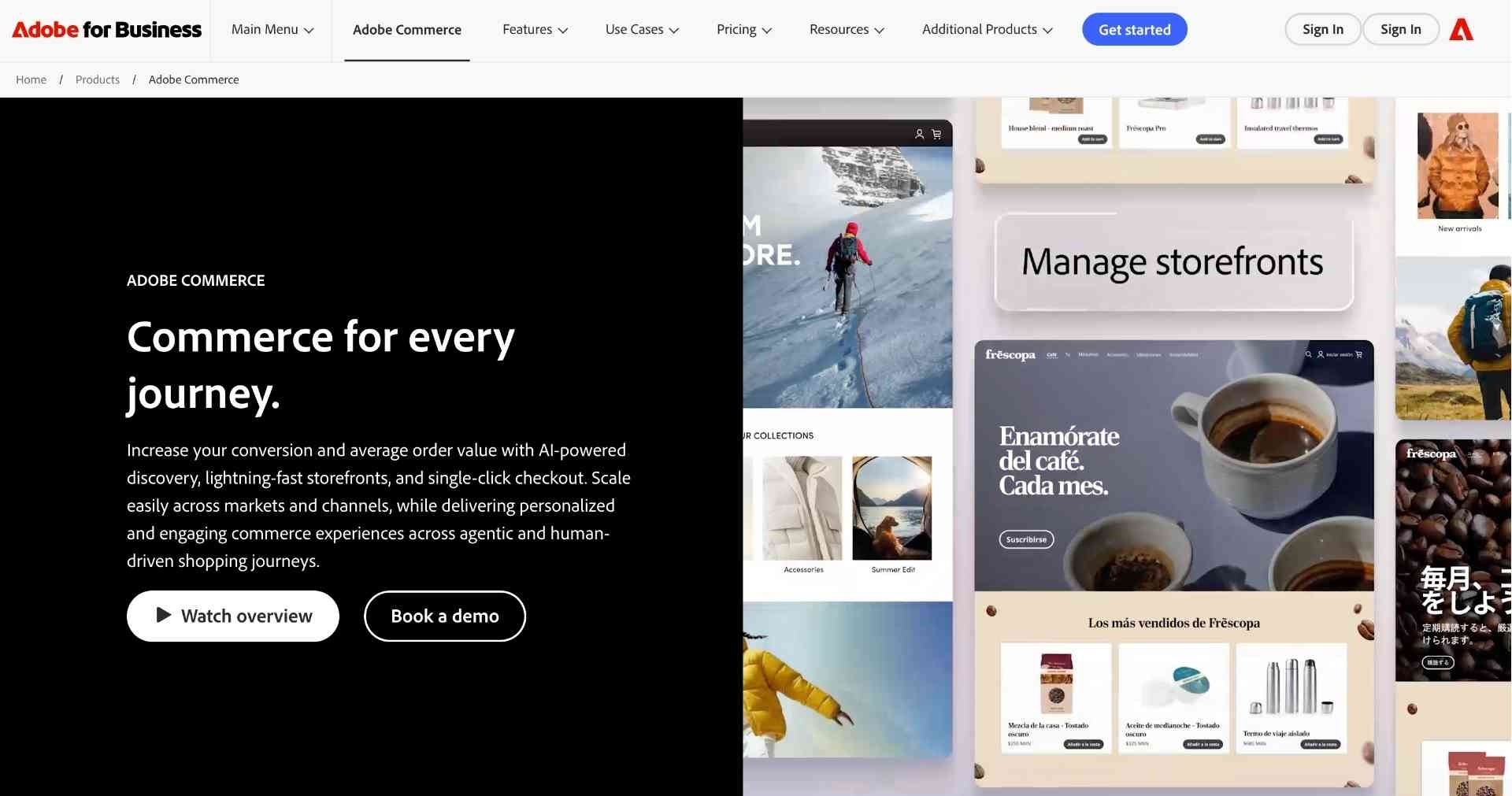
Adobe Commerce (anciennement Magento) est un CMS de commerce électronique de niveau entreprise, hautement personnalisable. Il est disponible en tant que solution auto-hébergée ou hébergée dans le cloud et est conçu pour les grandes opérations D2C et B2B complexes.
Fonctionnalités clés :
- Gestion de catalogue avancée : Gère les grands volumes de SKU et les configurations de produits complexes.
- Support du commerce sans interface : Architecture API-first.
- Capacités B2B : Tarification personnalisée, comptes entreprise, flux de travail.
- Personnalisation alimentée par l'IA : Recommandations basées sur Adobe Sensei.
- Gestion multi-magasins : Exploitez plusieurs marques ou régions à partir d'un seul backend.
Avantages :
- Extrêmement flexible et personnalisable.
- Idéal pour les marques à haut volume de SKU et mondiales.
- Intégrations entreprise solides avec l'écosystème Adobe.
- Fonctionnalité B2B robuste.
Inconvénients :
- Coûts élevés de mise en œuvre et de développement.
- Nécessite une équipe technique ou une agence.
- Délai de lancement plus long.
- Complexité d'hébergement et de maintenance.
Intégrations :
- Adobe Experience Manager : Personnalisation de contenu avancée.
- Salesforce : Intégration CRM et données client entreprise.
- Klaviyo : Automatisation des emails de cycle de vie.
- Stripe : Intégration du traitement des paiements.
- Influencer Hero : créez des liens d'affiliation, détectez les influenceurs clients et envoyez des produits aux influenceurs.
- Algolia : Recherche avancée et merchandising.
Tarification :
Tarification entreprise haut de gamme. La tarification d'Adobe Commerce est devisée sur mesure et commence souvent à des dizaines de milliers par an. Généralement classée comme élevée/entreprise. Essai gratuit non standard.
Avis :
4.0/5.0 sur G2
4. BigCommerce
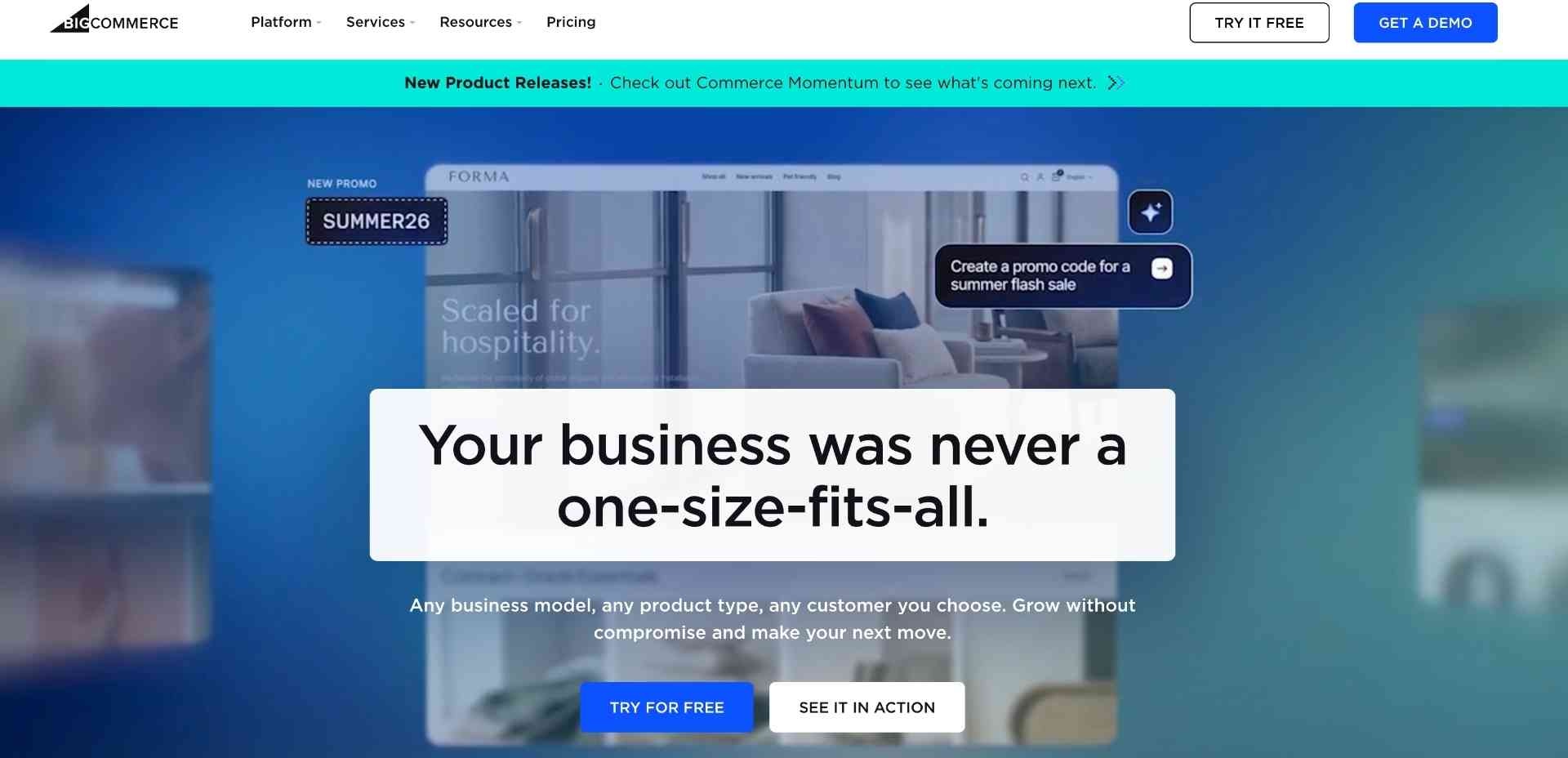
BigCommerce est une plateforme de commerce électronique SaaS similaire à Shopify mais souvent privilégiée par les marques de marché intermédiaire et d'entreprise qui ont besoin de plus de fonctionnalités intégrées sans dépendre fortement des applications.
Fonctionnalités clés :
- Pas de frais de transaction : Ne facture pas de frais de transaction supplémentaires sur la plateforme.
- Fonctionnalité multi-vitrine : Gérez plusieurs vitrines à partir d'un seul backend.
- Architecture SaaS ouverte : Flexibilité API solide.
- Édition B2B : Fonctionnalités B2B natives.
- Prêt pour le sans interface : S'intègre facilement aux frontends sans interface.
Avantages :
- Plus de fonctionnalités intégrées par rapport à Shopify.
- Fonctionnalité B2B forte.
- Bonne scalabilité pour les marques de marché intermédiaire.
- Intégrations API flexibles.
Inconvénients :
- Niveaux de tarification basés sur le chiffre d'affaires.
- Écosystème d'applications plus petit que Shopify.
- Écosystème de thèmes moins intuitif.
Intégrations :
- Klaviyo : Synchronisez les données client et les achats.
- Meta : Commerce social et synchronisation de catalogue.
- Google Merchant Center : Automatisation du flux de produits.
- ShipperHQ : Logique d'expédition avancée.
- Avalara : Conformité fiscale automatisée.
Tarification :
Gamme moyenne à élevée. Les plans commencent autour de 39 $/mois (Standard), avec une mise à l'échelle en fonction du chiffre d'affaires annuel. Essai gratuit de 15 jours disponible. Classé comme SaaS de marché intermédiaire.
Avis :
4.2/5.0 sur G2
5. Wix eCommerce
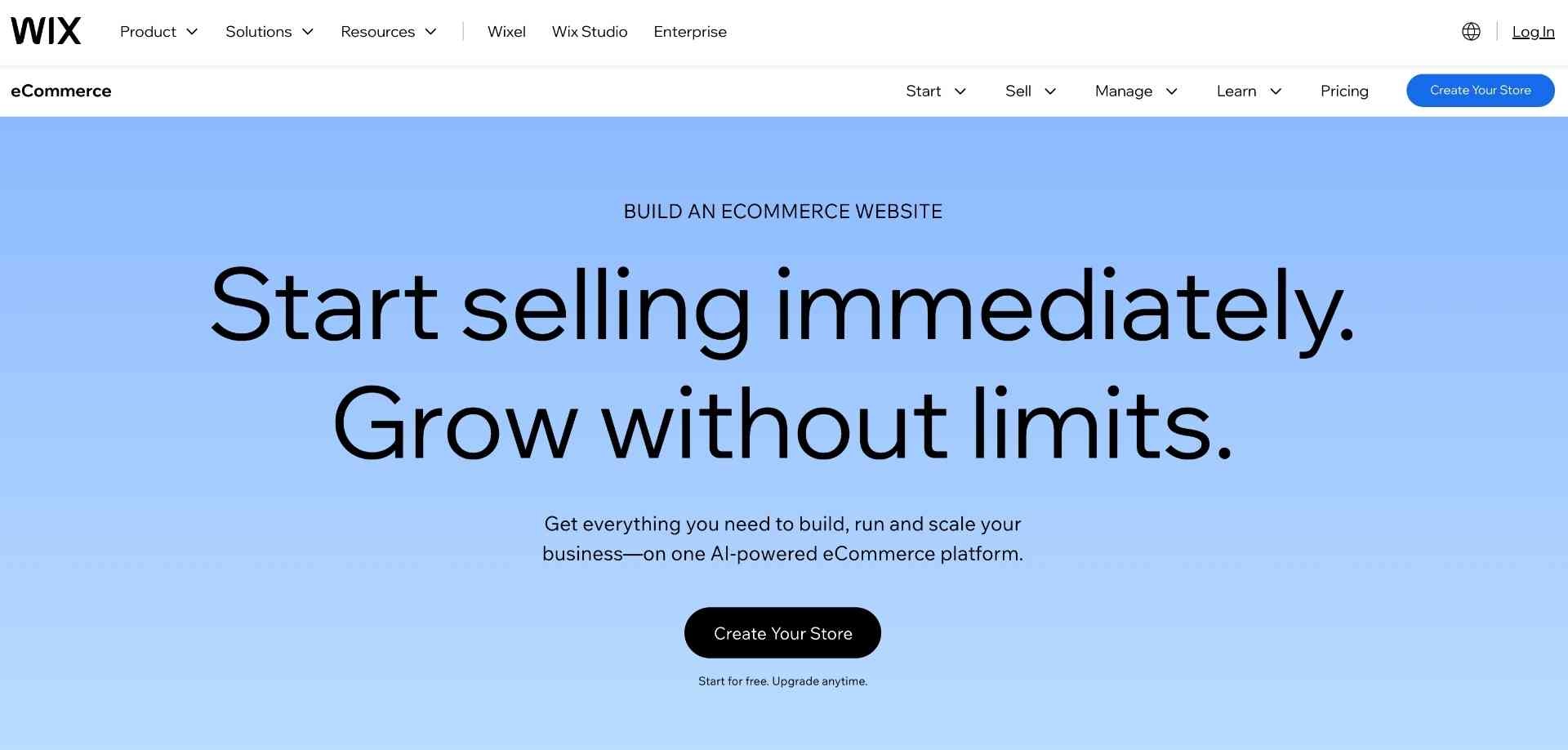
Wix eCommerce est un constructeur de site Web avec fonctionnalité de commerce électronique intégrée. Il est conçu pour les petites et moyennes marques qui privilégient la flexibilité de conception et la facilité d'utilisation.
Fonctionnalités clés :
- Générateur glisser-déposer : Éditeur visuel pour la création rapide de vitrines.
- Hébergement intégré et sécurité : Infrastructure entièrement gérée.
- App Market : Extensions pour le marketing, les réservations et les abonnements.
- Vente multi-canal : Vendez via les plateformes sociales et les places de marché.
- Outils marketing intégrés : Fonctionnalités d'email marketing et d'automatisation.
Points positifs :
- Très convivial pour les débutants.
- Grande flexibilité de conception.
- Barrière à l'entrée faible.
- Tarifs abordables.
Points négatifs :
- Scalabilité limitée pour les plus grandes marques D2C.
- Backend moins robuste pour les catalogues complexes.
- Écosystème plus petit comparé à Shopify.
- Personnalisation avancée limitée.
Intégrations :
- Klaviyo : Intégration d'automatisation email.
- Meta : Synchronisation de boutique sociale.
- Influencer Hero : créer des liens d'affiliation, détecter les influenceurs clients et envoyer des produits aux influenceurs.
- Google Merchant Center : Intégration du flux de produits.
- Shippo : Automatisation des étiquettes d'expédition.
- Stripe : Traitement des paiements.
Tarification :
Les plans commencent à environ 27 $/mois (plan Core) selon la région. Gamme de tarification faible à moyen. Essai gratuit de 14 jours disponible. Généralement classé comme gamme faible à moyen.
Avis :
4,2/5,0 sur G2


6. Squarespace
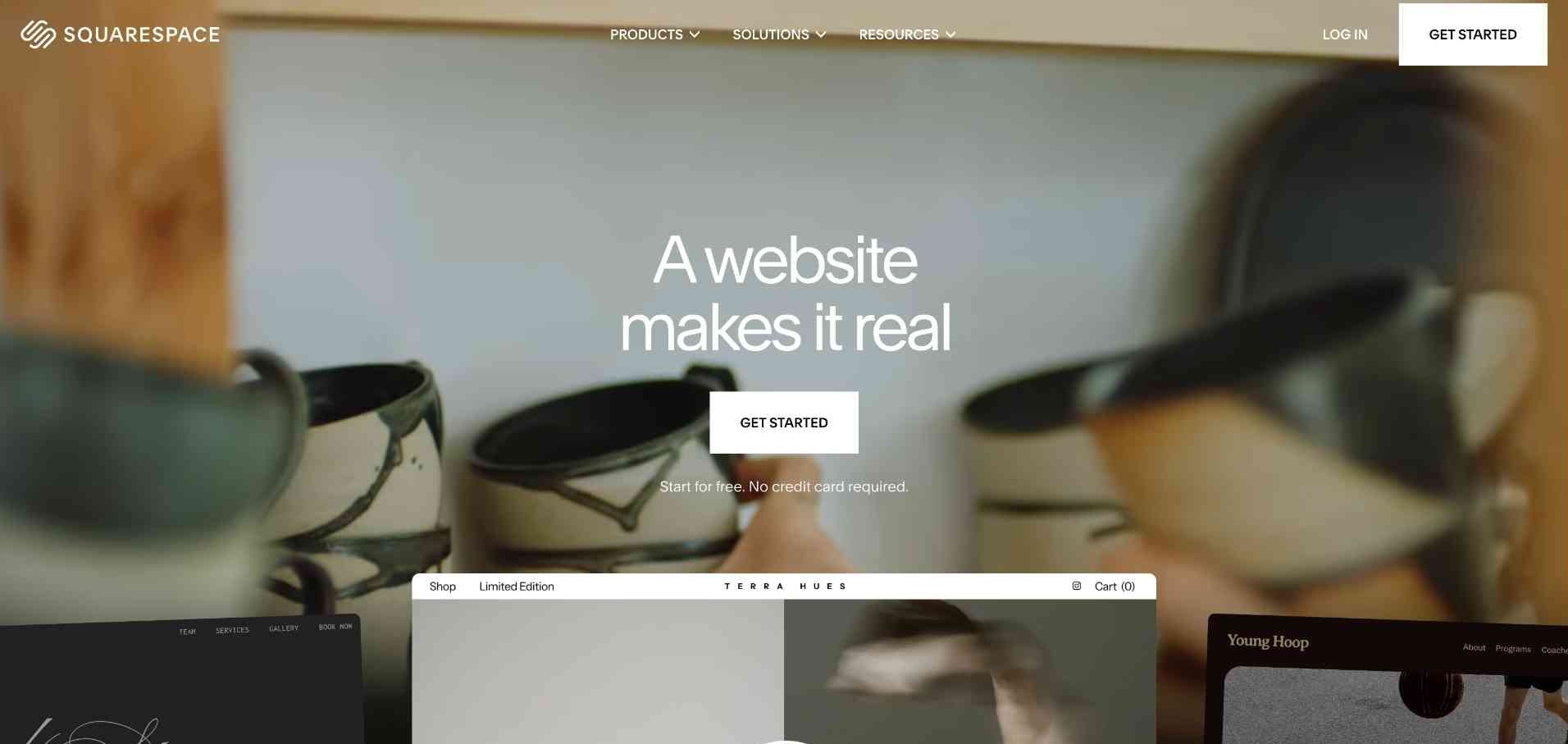
Squarespace est un constructeur de site web tout-en-un avec fonctionnalité de commerce électronique intégrée, conçu principalement pour les marques axées sur le contenu qui souhaitent un contrôle de conception solide sans complexité technique. Les commerçants utilisent des modèles préconstruits, gèrent les produits et traitent le paiement et les transactions dans un environnement hébergé.
Fonctionnalités clés :
- Modèles axés sur la conception : Des thèmes professionnellement conçus optimisés pour la narration visuelle et l'image de marque.
- Hébergement et sécurité intégrés : Infrastructure entièrement gérée avec SSL inclus.
- Analyses de commerce : Rapports de ventes et aperçus de performance dans le tableau de bord.
- Intégration contenu + commerce : Capacités de blog et de contenu solides liées directement aux pages de produits.
- Outils marketing : Campagnes e-mail intégrées, paramètres de SEO et pop-ups promotionnels.
Avantages :
- Capacités de marquage visuel très fortes.
- Facile à lancer sans développeurs.
- Idéal pour les marques D2C axées sur le contenu (beauté, style de vie, mode).
- Tarification transparente avec moins de modules complémentaires nécessaires.
Inconvénients :
- Scalabilité limitée pour les marques D2C à forte croissance.
- Moins de fonctionnalités de commerce avancées comparé à Shopify ou BigCommerce.
- Écosystème d'applications tierces plus petit.
- Moins de flexibilité pour les catalogues de produits complexes.
Intégrations :
- Stripe : Traitement des paiements intégré pour les transactions mondiales.
- PayPal : Option de paiement alternative pour améliorer la conversion.
- ShipStation : Automatisation de l'expédition et de la logistique.
- Google Merchant Center : Synchronisation des listes de produits pour Google Shopping.
- Meta (Facebook & Instagram) : Intégration du catalogue de commerce social.
Tarification :
Les forfaits Commerce commencent à environ 27 $/mois (Business) et augmentent jusqu'à 49 $/mois (Advanced Commerce) facturés annuellement. Essai gratuit de 14 jours disponible. Classé comme gamme basse à moyenne parmi les plateformes CMS.
Avis :
4.4/5.0 sur G2
7. PrestaShop

PrestaShop est un système de gestion de contenu de commerce électronique open-source conçu spécifiquement pour les magasins en ligne. Les commerçants auto-hébergent la plateforme et la personnalisent via des modules, des thèmes et des ressources de développement.
Fonctionnalités clés :
- Noyau open-source : Accès complet à la base de code pour la personnalisation.
- Architecture modulaire : Étendez les fonctionnalités via le marché des modules complémentaires.
- Support multilingue et multidévises : Capacités de vente internationale solides.
- Gestion avancée des produits : Combinaisons et attributs de produits détaillés.
- Tableau de bord analytics intégré : Surveillez les performances de votre magasin à partir du backend.
Avantages :
- Flexibilité de personnalisation élevée.
- Aucuns frais d'abonnement SaaS obligatoires.
- Forte présence sur le marché européen.
- Bon pour les catalogues de taille moyenne.
Inconvénients :
- Nécessite la gestion de l'hébergement et de la maintenance.
- Les modules complémentaires peuvent augmenter considérablement le coût total.
- Écosystème plus petit comparé à Shopify.
- Les performances dépendent fortement de la configuration d'hébergement.
Intégrations :
- Stripe : Intégration de la passerelle de paiement.
- PayPal : Méthode de paiement alternative.
- Mailchimp : Automatisation du marketing par e-mail.
- Google Analytics : Suivi avancé du commerce électronique.
- ShipStation : Intégration d'automatisation de l'expédition.
Tarification :
Le logiciel de base est gratuit (open-source). Les coûts incluent l'hébergement, les modules premium et les ressources de développement. Classé comme gamme basse à moyenne, selon la configuration. Aucun essai gratuit officiel requis.
Avis :
4.3/5.0 sur G2
``````html8. OpenCart
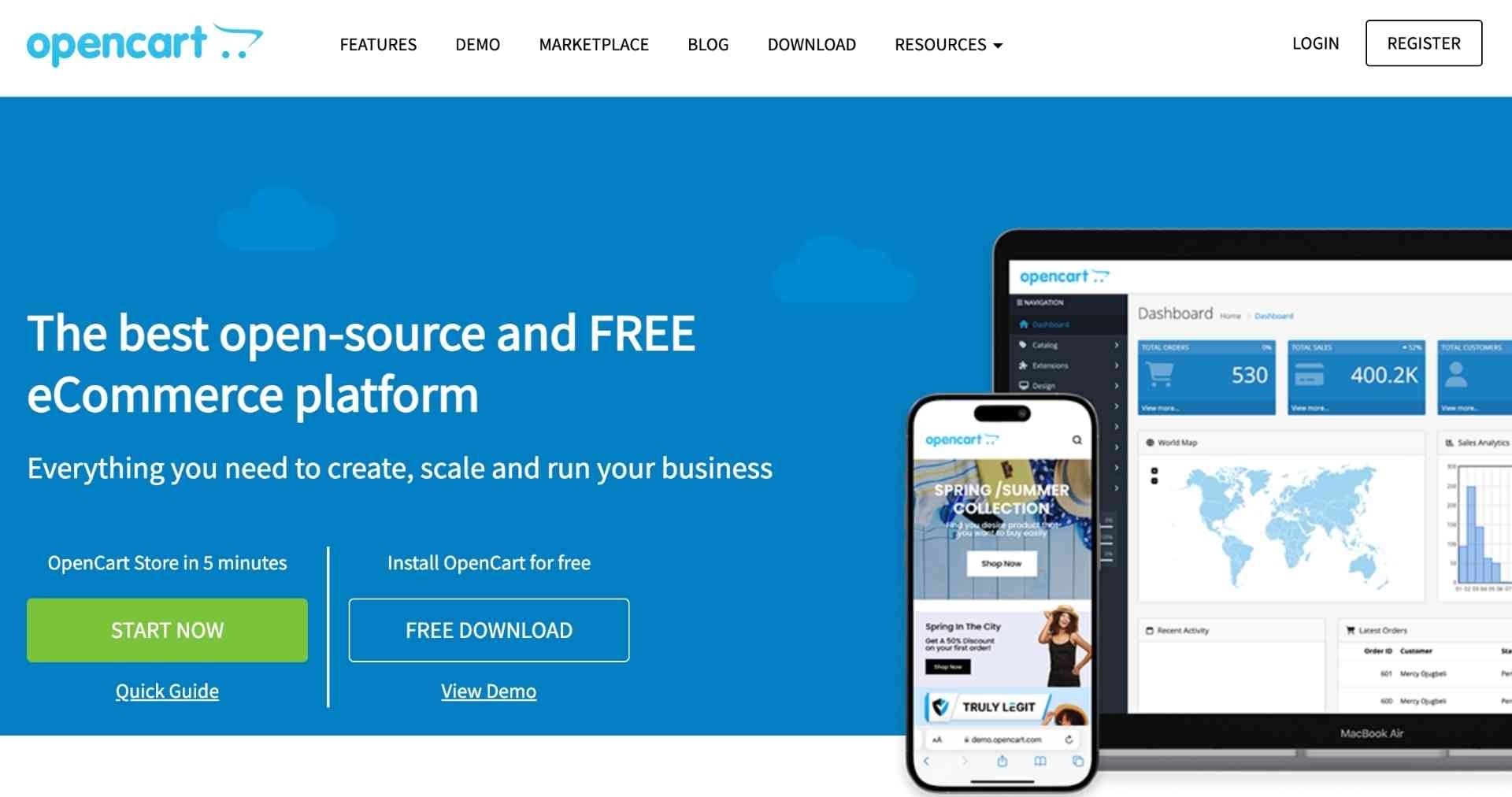
OpenCart est un CMS e-commerce léger et open-source qui permet aux commerçants de créer et gérer des boutiques en ligne avec une marketplace d'extensions modulaires. Il nécessite l'auto-hébergement et une configuration technique.
Fonctionnalités clés :
- Plateforme open-source gratuite : Pas de frais de licence.
- Marketplace d'extensions : Des milliers d'extensions pour les paiements, l'expédition, le marketing.
- Capacité multi-boutique : Gérez plusieurs vitrines à partir d'un seul administrateur.
- Gestion des produits et commandes : Outils de gestion e-commerce intégrés.
- Gestion des utilisateurs basée sur les rôles : Contrôlez l'accès backend pour les équipes.
Avantages :
- Coût d'entrée faible.
- Système simple et léger.
- Flexible avec support développeur.
- Adapté aux boutiques de petite à moyenne taille.
Inconvénients :
- Nécessite une gestion technique.
- Outils marketing intégrés limités.
- Écosystème plus réduit que les principales plateformes SaaS.
- La mise à l'échelle peut nécessiter un développement personnalisé.
Intégrations :
- Stripe : Traitement des paiements.
- Influencer Hero : créez des liens d'affiliation, détectez les influenceurs clients et envoyez des produits aux influenceurs.
- PayPal : Option de paiement alternative.
- Mailchimp : Automatisation du marketing par e-mail.
- Google Analytics : Intégration du suivi e-commerce.
- ShipStation : Gestion de l'expédition et de l'exécution des commandes.
Tarification :
Plateforme principale gratuite. Les coûts dépendent de l'hébergement et des extensions payantes. Généralement classé comme coût faible, mais le développement et la maintenance peuvent augmenter le coût total de possession.
Avis :
4,3/5,0 sur G2
9. Drupal Commerce
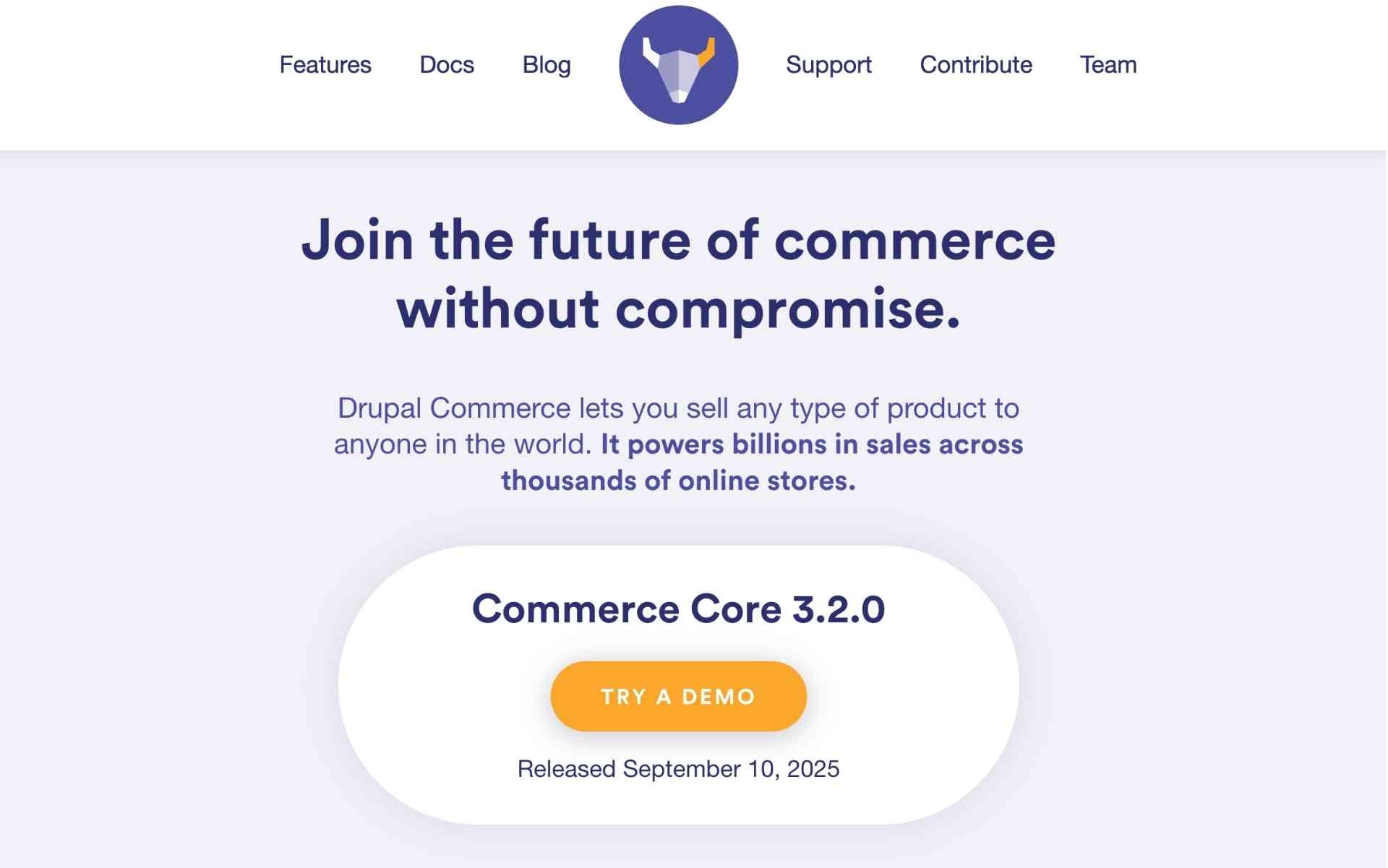
Drupal Commerce est un framework e-commerce construit sur le CMS Drupal. Il est conçu pour les expériences e-commerce complexes riches en contenu et nécessite une expertise en développement.
Fonctionnalités clés :
- Architecture hautement personnalisable : Framework modulaire et orienté API.
- Gestion de contenu au niveau entreprise : Modélisation de contenu avancée et workflows.
- Prêt pour le headless : Support API solide pour les frontends découplés.
- Capacité multi-site : Gérez plusieurs marques à partir d'une seule installation.
- Autorisations granulaires des utilisateurs : Contrôles d'accès backend avancés.
Avantages :
- Idéal pour les marques orientées contenu ou entreprises.
- Réputation de sécurité solide.
- Très flexible et évolutif.
- Excellent pour les intégrations complexes.
Inconvénients :
- Nécessite des développeurs expérimentés.
- Délai de mise en œuvre plus long.
- Coûts de développement plus élevés.
- Pas convivial pour les débutants.
Intégrations :
- Stripe : Intégration des paiements.
- Salesforce : Intégration CRM.
- Klaviyo : Synchronisation de l'automatisation e-mail.
- Google Analytics : Suivi e-commerce avancé.
- Algolia : Fonctionnalité de recherche avancée.
Tarification :
Noyau open-source (gratuit). Les coûts proviennent principalement du développement, de l'hébergement et de la maintenance. Généralement classé dans la gamme moyenne à haute en raison de la complexité de la mise en œuvre.
Avis :
4,4/5,0 sur G2
10. Joomla (avec VirtueMart)
```
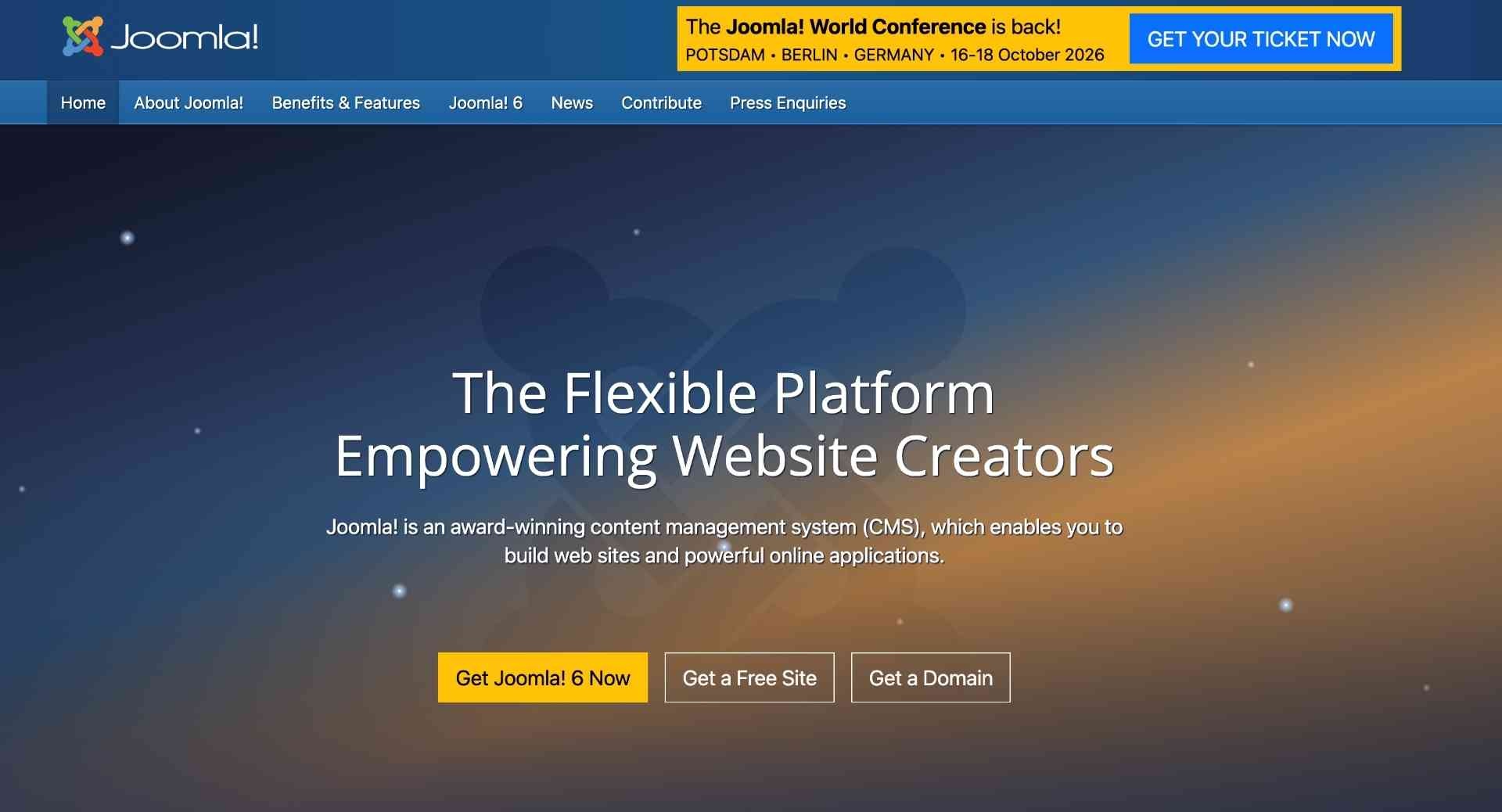
Joomla est un CMS qui devient compatible avec le commerce électronique via l'extension VirtueMart. Il est auto-hébergé et convient aux commerçants qui souhaitent une flexibilité au-delà des constructeurs de sites Web, mais sans la complexité au niveau de l'entreprise.
Fonctionnalités clés :
- CMS open-source : Accès complet à la personnalisation.
- Extension VirtueMart : Ajoute le catalogue de produits, le panier et les fonctionnalités de paiement.
- Support multilingue : Capacités multilingues intégrées.
- Système de gestion des utilisateurs : Contrôles d'accès robustes.
- Système de modèles : Thèmes et mises en page personnalisables.
Avantages :
- Aucun frais de licence SaaS.
- Flexible pour les développeurs.
- Bonnes capacités multilingues.
- Adapté aux projets de commerce électronique de niche ou régionaux.
Inconvénients :
- Écosystème plus petit axé sur le commerce électronique.
- Nécessite une maintenance technique.
- Intégrations D2C modernes moins nombreuses.
- Évolutivité limitée par rapport à Shopify ou BigCommerce.
Intégrations :
- Stripe : Traitement des paiements.
- PayPal : Intégration du paiement.
- Mailchimp : Automatisation du marketing par e-mail.
- Google Analytics : Suivi du commerce électronique.
- ShipStation : Intégration de la gestion de l'expédition.
Tarification :
Le CMS de base et VirtueMart sont gratuits (open-source). Les coûts incluent l'hébergement, les modèles premium et les extensions. Classé comme peu coûteux, mais les ressources techniques peuvent augmenter les dépenses globales.
Avis :
4.0/5.0 sur G2
Réflexions finales
Le choix du bon CMS de commerce électronique dépend finalement du stade de croissance de votre marque, de vos ressources techniques et de vos ambitions d'évolutivité à long terme. Les plateformes hébergées comme Shopify, BigCommerce, Wix et Squarespace offrent de la vitesse, une facilité d'utilisation et des écosystèmes solides, tandis que les solutions open-source telles que WooCommerce, PrestaShop, OpenCart, Drupal Commerce et Joomla offrent une personnalisation plus approfondie et une propriété au prix d'une complexité technique plus élevée.
Pour les fondateurs et opérateurs D2C, la décision clé ne concerne pas seulement les fonctionnalités—c'est le coût total de possession, la flexibilité d'intégration et la façon dont la plateforme soutient votre stratégie de marketing, de rétention et d'expansion internationale. Le meilleur CMS est celui qui s'aligne sur votre feuille de route de croissance et permet à votre équipe de se déplacer rapidement sans créer de goulets d'étranglement opérationnels.

.png)


.jpg)